
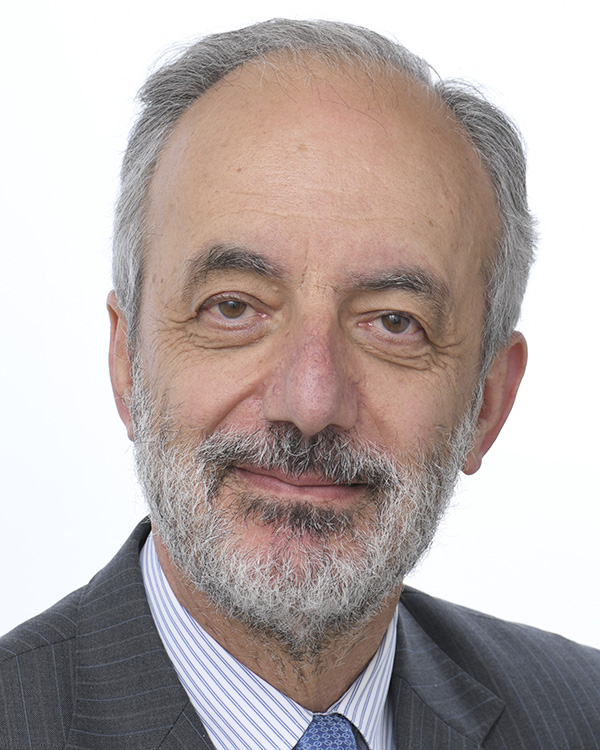





| Rank | Name | Country | Group | Speeches | |
|---|---|---|---|---|---|
| 1 |
|
Lukas Sieper | Germany DEU | Non-attached Members (NI) | 390 |
| 2 |
|
Juan Fernando López Aguilar | Spain ESP | Progressive Alliance of Socialists and Democrats (S&D) | 354 |
| 3 |
|
Sebastian Tynkkynen | Finland FIN | European Conservatives and Reformists (ECR) | 331 |
| 4 |
|
João Oliveira | Portugal PRT | The Left in the European Parliament (GUE/NGL) | 232 |
| 5 |
|
Vytenis Povilas Andriukaitis | Lithuania LTU | Progressive Alliance of Socialists and Democrats (S&D) | 227 |
All Contributions (164)
Debate with the Prime Minister of Estonia, Kaja Kallas - The EU's role in a changing world and the security situation of Europe following the Russian aggression and invasion of Ukraine (continuation of debate)
Madam President, with the Russian aggression against Ukraine, we are in a new geopolitical scenario: Putin's Russia chooses to openly become an enemy, ignores our values and unleashes a war. We have on our eastern borders a cruel adversary who ignores international law and even threatens the use of nuclear weapons. For the European Union, the elections I think are clear. In addition to the necessary solidarity with Ukraine and its citizens, we have three well-known priorities. First: seriously strengthening our foreign and defence policy – fortunately, we are already along those lines; second: diversifying our energy supply, i.e. drastically reducing our dependence on Putin’s Russia; thirdly, to strengthen our relations with the United States, with an administration, such as Biden's, which is much more sensitive and closer to European interests than the previous administration. The EU must also increase its ties with NATO and the like-minded countries in this multipolar world, although a possible rapprochement between Russia and China could make it evolve towards a bipolar order of authoritarianism versus democracy.
EU-Russia relations, European security and Russia’s military threat against Ukraine (continuation of debate)
Madam President, first of all, I would like to send an emotional message of condolence and solidarity to the families of the many fishermen affected by the tragic shipwreck yesterday of the Galician vessel Villa de Pitanxo. Ladies and gentlemen, we have been in Europe for a few weeks now in a very serious situation, unprecedented, due to the enormous accumulation of Russian troops on the border with Ukraine. The European Union must maintain its position in favour of respect for the sovereignty and territorial integrity of this country. The Kremlin follows an anachronistic policy of strength, of zones of influence. It ignores the basic principles of international law and the agreements it signed. Unfortunately, Putin does not share our values and principles: an international order based on rules, multilateralism and the rule of law. The situation of threat and blackmail is already unacceptable, but we must continue the path of uncompromising diplomacy on key points. In recent hours it seems to begin a partial withdrawal of Russian troops and that Moscow would be inclined to dialogue. But it's too early for optimism. We must maintain a united front in the face of Putin's long-standing challenge. The European Union, including France and Germany, must coordinate its responses with the United States and NATO to ensure peace and respect for the basic rules of international law and the European security architecture.
Implementation of the common foreign and security policy – annual report 2021 - Implementation of the common security and defence policy – annual report 2021 (debate)
Mr President, the European Union must be an effective international political actor, capable of defending its interests and values. To achieve this, we need a strong and determined foreign and security policy, including a defence policy. But this requires the political will and cohesion of the Member States. The soft power That's not enough. After the 90s of the last century, the Fukuyama dream ended, the reality of a multipolar world has been imposed, divided, now threatened, among other things, by Putin's irredentist unilateralism. Georgia, Libya, the Syrian war, the unstoppable rise of China, Crimea, the NATO summit in Cardiff, the Trump administration, the withdrawal from Afghanistan and now Ukraine are some recent sites in the evolution of the international community. The diagnosis, very clear. The external and defence dimension of the Union needs to be strengthened. This key message is found in the reports we are debating today. I congratulate the rapporteurs. I welcome Mr McAllister's inclusion of the creation of a Transatlantic Political Council for the coordination of foreign policy with the United States, an indispensable partner for Europeans. I also stress the priority accorded by the neighbourhood policy, where, in my opinion, the credibility of our external action is at stake. And I am also grateful that relations with Latin America feature prominently in Mr McAllister's report.
EU-Africa relations (debate)
Madam President, Africa is very important for the Union, the stability and prosperity of this neighbouring continent, especially the countries of the southern Mediterranean and the Sahel, are essential for Europeans. Most African countries face the weakness of their institutions and the rule of law and the precariousness of their public services. Health, education, institutional strengthening and job creation for the many young people should be priorities of African rulers and also more prominent areas of our cooperation with them. European investment and the intensification of trade in goods and services with African countries must contribute to the continent's economic development and employment, and will also benefit Europe and the management of migration flows. Africa has to be at the centre of our attention. The upcoming EU-Africa Summit is a unique opportunity – as the High Representative said – to strengthen our relations while the Chinese presence continues to grow and Russian influence grows. Development requires security, overcoming conflicts and also the terrorist threat. The European Union must also contribute to achieving these objectives.
Multilateral negotiations in view of the 12th WTO Ministerial Conference in Geneva, 30 November to 3 December 2021 (debate)
Madam President, Vice-President Dombrovskis, I would like to refer to the WTO negotiations on fisheries subsidies. The Geneva Agreement should be fair and protect the interests of the Union and its highly regulated and sustainable fishing fleet. From the Group of the People's Party, we ask the Commission to stand firm and defend the tax exemptions for fishery gas oil laid down in Directive 2003/96. The end of subsidised diesel would also be particularly detrimental to the small-scale fleet. I would like to point out that there is a very important sector of the fleet in Spain, my country, which operates in South Atlantic waters, close to the Falkland Islands. These waters are not covered by a regional fisheries management organisation, given the dispute between Argentina and the United Kingdom. I am very concerned that this circumstance, totally alien to the will of the fleet, will harm this fleet that operates in these waters and, in addition, does so in a regulated way and meets European standards. Vice-President Dombrovskis, we must protect the European fleet wherever it fishes. I ask you not to give in on this point. It's very important.
The European Education Area: a shared holistic approach (debate)
Mr President, Commissioner, first of all, I would like to congratulate Mrs Šojdrová on her comprehensive report. I will focus on the need to strengthen the teaching of European integration in schools. To this end, I find it particularly useful to include in secondary or baccalaureate education plans a specific subject on the European Union that covers the background, objectives and functioning of the EU institutions. The Council of May 2018 has already adopted recommendations along these lines, which I have been advocating for many years. In my country, Spain, there are regions where this European subject is already a reality. For example, in the Community of Madrid students have the option of taking a subject about the European Union in the third and / or fourth of the Compulsory Secondary Education. Also in Galicia, students can take a course on European values. To value something it is necessary to know it. For this reason, in order to give citizens a better understanding of the process of European integration, I believe that this subject should be incorporated into educational curricula. The Erasmus experience is very useful, but I believe that it is also necessary to encourage young people to have a better knowledge of the European Union and its institutions.
Situation in Tunisia (debate)
Madam President, the democratic transition in Tunisia is one of the few successes of the Arab Spring. It is also a neighbouring country, an advanced partner of the EU, but Tunisians in the last decade have prioritised political change and failed to carry out economic and social reforms: the economy and unemployment have only worsened in recent years, and Tunisia is now experiencing a serious political, economic and social crisis, with the discredit of political forces and many institutions. The European Union cannot ignore this neighbour. We are committed to the stability and freedom of Tunisians, but our democratic values include multipartyism and the division of powers - I do not know whether the High Representative listens or only to Mr Castaldo, who has already consumed his time. The solution to Tunisia's problems is not a reversal of the undemocratic formulas of the past; constitutional normality must be restored as soon as possible: the President and the new government must immediately launch a major inclusive dialogue with political and social forces and civil society to agree on a broad process of political, economic and social reforms. It's not just about politics, economic reform is also unpostponable. The European Union must accompany and support Tunisia, this important neighbouring country, in this ambitious process of change.
The future of EU-US relations (debate)
Mr President, I thank the rapporteur, Mr Picula, for his report. The relationship with the United States is the most important strategic partnership for the European Union, and we are at a very opportune time to strengthen it following the departure of President Trump. We now have in Washington an administration that is less nationalistic and more willing to collaborate with Europe. The United States remains the indispensable power, at least for the European Union, although since Obama a certain retreat in its foreign action and its prioritization of Asia is noticeable. I welcome the recent launch of the Trade and Technology Council, but I believe that a transatlantic political council is also essential to strengthen coordination on foreign and security policy. Recent developments, such as Afghanistan and the AUKUS agreement, testify to the need for better dialogue and consultation. We have tabled an amendment to this effect, number 9, which I hope the House will support, as it reflects its traditional position. We need new institutional mechanisms that allow us to avoid unilateralism and coordination failures. I believe that coordinated action by the European Union and the United States in defence of democracy, respect for human rights and the rule of law is particularly necessary in countries such as Venezuela and Nicaragua.
Brexit Adjustment Reserve - Draft amending budget No 1/2021: Brexit Adjustment Reserve (debate)
Mr President, the Brexit Adjustment Reserve has always seemed to me to be a useful instrument to support the fisheries sector. However, I find the final result disappointing, at least from a fisheries perspective as far as my country, Spain, is concerned. The allocation criteria for the 600 million of the Reserve allocated to the fisheries sector are inadequate. I regret that the amendments adopted by the Committee on Fisheries in this House, which proposed a fairer distribution key than the so-called 'dependence criterion', were ignored. Spain, which has the largest fleet in the European Union, will receive only 0.6% of the funds allocated for fishing, out of the 600 million allocated for fishing. It has also not been taken into account that, due to the Brexit, Svalbard's cod quota for the European Union has been greatly reduced and this is particularly detrimental to the Spanish fleet. Moreover, the Committee on Fisheries also called for more money and more time: to extend the validity of the Reserve until July 2026 and also to make use of the unspent funds of the previous European Maritime and Fisheries Fund. These demands have also not been reflected in the final text of the Regulation, which, as I say, is very insufficient as far as Spain is concerned.
Direction of EU-Russia political relations (continuation of debate)
Madam President, thank you to the rapporteur, Mr Kubilius, for his very detailed and ambitious report. Russia is usually in our debates. It is a neighbouring European country with which we have numerous links and is an important international player. Russia cannot be indifferent to us. But, unfortunately, our relations with Russia go through a very negative stage. The war in Georgia in 2008, the illegal annexation of Crimea in 2014 and the conflict in the eastern regions of Ukraine are the main cause, along with the authoritarian drift in Russian domestic politics. We are in a line of growing estrangement. Moscow has interests different from those of the European Union, often opposed, and a different view of the international order from a revisionist and anachronistic position. In addition, its interventionist attitude, helping and promoting destabilising manoeuvres in Member States, is very worrying. Recently, the media has revealed its connections with Catalan secessionists. I find it very difficult that the relationship with Russia, with Russia today, can improve. In terms of democratic values and principles, Putin also seeks to differentiate himself clearly from the European Union.
Situation in Afghanistan (debate)
Madam President, among other lessons, the sad and unexpected events in Afghanistan highlight the need for the European Union to advance its foreign and particularly defence policy. We need more capacity for autonomous action. In light of the latest facts and statements, it is clear that the United States will limit its foreign military action. The context has changed: There is a withdrawal from the United States. We are in a globalized world, multipolar and also very conflictive. The European Union will need to project power abroad, also in those cases where the United States does not want or cannot. We must be aware of the many existing or potential conflicts, for example, in our own neighbourhood, both east and south. We cannot always depend on our allies. The sad events in Afghanistan must be a turning point that unlocks the necessary progress in foreign and defence policy. But for this to happen, it is imperative not only that the European institutions act, but also that all Member States - and I say 'all' - become aware that such progress is imperative.
EU global human rights sanctions regime (EU Magnitsky Act) (debate)
Madam President, the so-called ‘European Magnitsky Act’ is a fundamental tool for the swift adoption of sanctions against those responsible for serious human rights violations. However, as important as the adoption of sanctions is that they are enforced and enforced once they are adopted. I therefore welcome the fact that the excellent resolution prepared by David McAllister and Maria Arena emphasises the need for all EU Member States to comply with and implement restrictive measures swiftly and consistently. Full compliance with European sanctions is a key issue because it affects the credibility of the Union. I want to recall the events that occurred in my country, Spain. In January 2020, the Spanish government ignored the ban on entry and transit into European territory that weighs on Delcy Rodríguez, vice president of the Nicolás Maduro regime. As stated in the order of the Spanish Supreme Court of 26 November 2020, the Spanish Government failed to comply with the European sanctions relating to the situation in Venezuela. I welcome the fact that the European Commission has already announced that it will carry out a review of practices that circumvent sanctions, so that dark incidents such as the one at Barajas airport can no longer go unpunished. As I said, the Magnitsky Act is a fundamental instrument in the Union's foreign policy, so it is also necessary for this House to play an active role. I therefore believe that the European Commission and the Council should be accountable to the European Parliament for the adoption of sanctions and also, in particular, for compliance with them.
Situation in Nicaragua (debate)
Madam President, Mr High Representative, in the run-up to the presidential elections in November, the situation in Nicaragua has become untenable. It has already been said: political opponents deprived of their liberty in a totally arbitrary manner, harassment of independent media, adoption of increasingly restrictive and undemocratic laws, torture in prisons. Ortega's regime cruelly clings to power. It's time to be blunt and clear. Ortega and his vice president and wife Murillo have to meet the demands that the opposition and practically the entire international community have been demanding. Resolving the crisis requires dialogue and open negotiation with the opposition. The release of political prisoners is necessary, as well as an end to the repression of the press. The outcome of the November elections cannot be recognised by the European Union unless the rights of the opposition and the transparency of the process are guaranteed through measures such as the independence of the electoral council and the presence of neutral observers. I would like to ask the institutions of the Union, and in particular the European External Action Service, to pay constant attention these months to the events in Nicaragua. It is necessary, in my view, to expand the list of persons to be sanctioned, including policy makers. I also believe that, as this House requested last October, the application of the so-called democratic clause of the Association Agreement must be studied in a way that does not harm the Nicaraguan population. We want for our Nicaraguan brothers the basic rights and principles that Europeans enjoy: freedom, respect for human rights, the rule of law and prosperity. And from here, from this Chamber, we must also contribute to this.
European Maritime, Fisheries and Aquaculture Fund (debate)
Madam President, the new fund includes many demands from the sea-industry chain in my region – Galicia – to better fish and boost aquaculture and processing. I must congratulate the rapporteur, Gabriel Mato, on this very satisfactory result, and also thank Commissioner Sinkevičius. I particularly welcome the fact that the new EMFAF was born in order to put an end to the bureaucracy, which has traditionally weighed so heavily on its implementation. From now on, all operations that are not expressly prohibited will be allowed and can receive European funds. The EMFAF will contribute to improving living and working conditions on board, a key issue to ensure generational renewal. In addition, for vessels of less than 24 metres in length – most of them in Spain and, of course, in Galicia – the new Fund will be able to finance the purchase of a vessel by young fishermen. It is also great news that, for the first time, shellfishing is included in the definition of artisanal coastal fleet, in order to have a privileged treatment to access European funding. And finally, I welcome the fact that small and medium-sized enterprises in the aquaculture and processing sector can receive direct subsidies.