
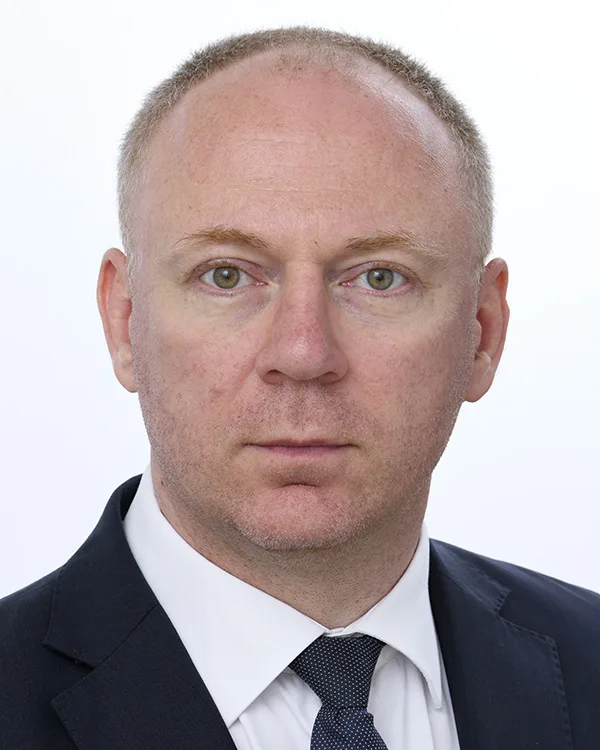
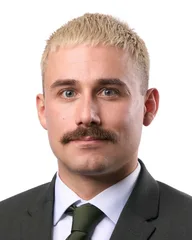
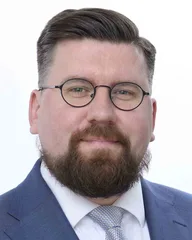
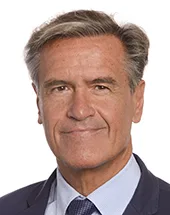
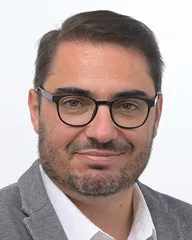
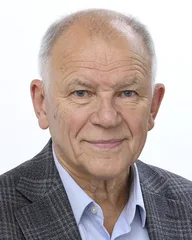
| Rank | Name | Country | Group | Speeches | |
|---|---|---|---|---|---|
| 1 |
|
Lukas Sieper | Germany DEU | Non-attached Members (NI) | 390 |
| 2 |
|
Juan Fernando López Aguilar | Spain ESP | Progressive Alliance of Socialists and Democrats (S&D) | 354 |
| 3 |
|
Sebastian Tynkkynen | Finland FIN | European Conservatives and Reformists (ECR) | 331 |
| 4 |
|
João Oliveira | Portugal PRT | The Left in the European Parliament (GUE/NGL) | 232 |
| 5 |
|
Vytenis Povilas Andriukaitis | Lithuania LTU | Progressive Alliance of Socialists and Democrats (S&D) | 227 |
All Contributions (57)
Need to strengthen rail travel and the railway sector in Europe (debate)
Strengthening Europe's rail sector involves several strategic stages, such as increasing funding for infrastructure, upgrading existing lines and building new connections to increase efficiency and capacity, as well as addressing existing bottlenecks. Improving connections between railways and other means of transport is also essential to simplify travel and improve accessibility. Improving regional connectivity is still a challenge in some Member States where there are regions completely detached from the main corridors. This severely affects their economic well-being and competitiveness. It is essential to ensure that rural and less populated areas are connected to large cities in order to avoid widening bottlenecks and economic disparities between regions.
Rail transport safety in the EU – lessons learnt from the Adamuz accident and three years after the Tempi tragedy (debate)
Madam President, the tragedies in Adamus and Tembi have taken lives and plunged many families into grief. These catastrophes remind us that safety in the railway sector is not a given. It requires constant vigilance, investment and responsible management. Reliable infrastructure and effective safety control mechanisms are vital for the sector. There are still networks in Europe that urgently need to be upgraded to provide safe and reliable connections for citizens and businesses. As the Commissioner noted, in countries such as Slovakia and Bulgaria, incidents and near misses are not uncommon. Therefore, the Commission's plan to build a European high-speed rail network should not remain just an ambitious project. Concrete action is needed to reduce disparities in infrastructure development between Member States. The ubiquitous implementation of the European Rail Traffic Management System is an important step in this direction. Let us honour the memory of the victims with responsible decisions and real actions to ensure that such tragedies do not happen again.
EU enlargement strategy (debate)
Mr President, the enlargement of the European Union must be a predictable process, guided by clear rules. The implementation of the commitments undertaken in the negotiating frameworks of the candidate countries is crucial. The accession of a new country without complying with the Copenhagen criteria will have negative consequences for the whole Union. It is obvious that some countries are making efforts and implementing reforms, while others are trying to trick. It is worth noting that hastily fabricated facade reforms undermine the legitimacy of the process itself and will bring damage in the long run. Delays in the enlargement process will not be overcome by procedural tricks. Article 49 of the Treaty on European Union clearly states that enlargement requires the unanimity of the Member States. Attempts to circumvent this principle in the name of short-term political goals are short-sighted and must stop. Enlargement is a key process that should not be used for political convenience. If abused, European citizens will pay the price.
Time to address economic inequalities in the EU and worldwide (debate)
No text available
Time to address economic inequalities in the EU and worldwide (debate)
Madam President, before we give advice on inequalities in the world, let us first look at those within the European Union itself. For economically catching-up countries such as Bulgaria, inequalities are the norm, incomes remain low, and prices for electricity, food and services are at average European levels. When you join a common market with many times more productive economies, the result is predictable. The stronger have technology, scale and cheap capital and expand their markets, while local businesses have a hard time withstanding. The catching-up countries thus become import markets for, on the one hand, and a source of labour on the other, rather than centres of production with high added value. The Eurozone does not solve this problem. On the contrary, the hasty expansion and over the heads of citizens carries risks. Bulgaria was joined despite serious public dissent and without a referendum. A recording of a conversation that appeared in the public domain and contained evidence of an agreement on the euro area criteria between a former Prime Minister and the President of the European Commission has further shaken confidence in society. And instead of fully channelling the resource into industry, infrastructure and competitiveness, we take on collective debt to finance war without a clear strategy and prospect of exit. If we continue on this path, the differences will deepen. We need a change.
Urgent actions to revive EU competitiveness, deepen the EU Single Market and reduce the cost of living - from the Draghi report to reality (debate)
No text available
Amending Regulations on agricultural products as regards market rules and sectoral support measures in the wine sector and for aromatised wine products (debate)
No text available
Restoring control of migration: returns, visa policy and third-country cooperation (topical debate)
Mr President, it is clear to all of us that the world is changing rapidly - geopolitically, economically and demographically. It is in these times that the European Union must act decisively and protect its own citizens. Restoring migration control is a matter of security, fairness and responsibility. The European Union cannot be strong if it does not control who enters its territory, under what conditions and for what purpose. Today we are faced with a serious contradiction. While labour migration from third countries is encouraged, more than 13 200 000 Europeans are unemployed according to the latest data. Our first duty is to our citizens. The European Union must support and use its internal labour potential before it opens its doors. Lack of control is also a threat to our internal security. Visa policy should not be used to circumvent the rules. Only with clear rules and order can we protect Europe's future. Misguided migration policy threatens even European civilisation itself.
European Council meeting (joint debate)
Mr President, the European Council's decision on a EUR 90 billion loan to Ukraine will have serious and long-term financial consequences. It means less money for key European policies and more burden for Member States. But the problem is not just financial. This is an approach that leaves no room for active diplomacy and prolongs the conflict. When diplomacy is absent and weapons are spoken, the price is paid with sacrifices. Enlargement is a responsible and long-term commitment. When it comes down to a political signal, the credibility of the process itself is undermined. A real positive signal is forward-looking solutions and the protection of the European interest on the global stage. The European Union is not capable of responding to today's challenges. Thanks to many wrong decisions, he is in strained relations with the world's leading powers. It is high time diplomacy turned into deeds, not just words.
CFSP and CSDP (Article 36 TEU) (joint debate)
Mr President, the enormous challenges facing Europe require responsible, wise and decisive action. Bypassing the right of veto formally aims to increase efficiency, but in practice leads to a limitation of the powers of the Member States in the field of foreign policy and security. For frontline countries such as Bulgaria, security solutions are of great importance and should not be imposed through political pressure or supranational mechanisms. National governments are democratically accountable to their citizens and should not be transferred to Brussels. The reports mention diplomacy as a principle, but do not highlight it as a real tool for seeking and achieving peace. There is a lack of concrete mediation initiatives, negotiation formats and a clear path to de-escalation. Sanctions are counterproductive, and an assessment of their effect on the European Union has so far been lacking. A strong Europe is built on strong nation states. The role of Brussels is to support them through dialogue and real diplomacy.
The situation of Christian communities and religious minorities in Nigeria and the Middle East, and Europe’s responsibility to protect them and guarantee freedom of conscience (topical debate)
No text available
EU position on the proposed plan and EU engagement towards a just and lasting peace for Ukraine (debate)
No text available
EU’s diplomatic strategy and geopolitical cooperation in the Arctic (debate)
Madam President, the European Union can be a stabilising factor in the High North if it respects sovereignty and equal cooperation between the countries of the region. Observer status in the Arctic Council is granted unanimously by its eight members. In today's international environment, and given Brussels' short-sighted policy, this seems impossible. It will be interesting to see how the European Commission convinces the Russian Federation to support such a decision. Since Greenland left the Union in 1985, no Member State has landlocked the Arctic Ocean. Therefore, the idea of large-scale infrastructure investments in the Arctic through the Multiannual Financial Framework needs to be considered very carefully, all the more so since it has neither a legal nor a political basis. If it is to be successful, the European Union must encourage dialogue. Blind adherence to the principle of ‘peace by force’ is harmful, and the Union’s inability to obtain observer status in the Arctic Council proves it.
The ongoing assault on the democratic institutions and the rule of law in Bulgaria (topical debate)
Madam President, we strongly condemn all forms of political repression. Justice should not serve those in power. But this tribune must tell the truth. For six years now, Bulgarian Vazrazhdane MPs have been investigated not for corruption, but for participating in civil protests against the water crisis in 2020. About one fifth of our parliamentary group has been charged, not with abuse of power or embezzlement, but with participating in civil protests, including in defence of the right to a referendum in Bulgaria. A right that Renew practically banned when they were in power, and the pinnacle of cynicism is that it is their elected representatives who demand the lifting of the immunities of MPs on a weekly basis. None of Renew supported our resolution against the 33-day political arrest of citizens who participated in protests to defend this right and were eventually released without charge. Then why were you silent? We stand behind the rule of law and against double standards, which undermine trust in democracy and unfortunately find ground here as well.
Institutional consequences of the EU enlargement negotiations (debate)
Mr President, the enlargement of the European Union is a legal and political process. Turning it into a geopolitical instrument undermines the Treaty on European Union itself, and abolishing the right of veto would effectively make it a second Soviet Union. The European Union must be enlarged according to clear criteria and not by convenience. Reform is necessary, but it should not be rushed – let alone used as a cover for authoritarianism or federalisation. Such reform was not carried out before the enlargements to Central and Eastern Europe. On the contrary, the candidate countries themselves have reformed at the cost of enormous deprivation. It must be considered very carefully, preserving sovereignty and the right of veto. The right of veto in the Council of the European Union is clearly an obstacle for the ruling bureaucratic elite. It is called for its abolition. This would turn the partnership between member states into coercion. No unity will be achieved, but domination over dissent. This approach is already yielding absurd results: North Macedonia, which is not yet a member of the European Union, openly advocates qualified majority voting in the Council. This is an attempt to circumvent the commitments Skopje made in 2022 to the entire European Union. Reform is necessary, but it must be the subject of serious analysis and not at the cost of the sovereignty of the member states. Once again, without veto power, the European Union is becoming a Soviet Union.
Recent peace agreement in the Middle East and the role of the EU (debate)
Madam President, I welcome the ceasefire agreement between Israel and Hamas and the release of the remaining 20 living hostages. But let's not confuse freezing the conflict with real peace. A stable peace is built with trust and constant effort. Realism must therefore be a guiding principle in the Commission's strategy for the Middle East. Funding for the reconstruction of Gaza and the West Bank needs to be fully transparent and linked to political reforms. It is unacceptable that Palestinians depend on aid to survive. In this case, the European Union risks becoming the sponsor of another crisis. The European Commission can be useful if it acts as an honest broker and helps Israelis and Palestinians build trust with each other, if it provides humanitarian and expert assistance, without imposing dogmas and without using the situation as a pretext for centralising the European Union's foreign policy. We should also not forget the Christian communities in Gaza and the West Bank, which are about to disappear. A solution for both countries is a necessity. But peace and prosperity will not be possible unless hate speech is rejected and reconciliation is achieved. Only in this way can we create the basis for sustainable peace in the region and avoid future migration crises.
New Strategic EU-India Agenda (debate)
Mr President, India is one of the most active players on the modern world stage. Its foreign policy is pragmatic, driven not by ideology but by the interests of its own citizens. India's open dialogue with everyone, Russia, the United States and China is an example for the European Union. The country is modernising at breathtaking speed and huge infrastructure projects are creating opportunities for European companies. Cooperation on digital, energy, automotive and pharmaceuticals could open up new horizons. Trade between the European Union and India is growing and an investment protection agreement could create legal certainty as long as it is based on the principles of equal partnership. India draws its unity and strength from its cultural and religious identity, and this is the most valuable lesson it can teach us. Instead of teaching others, we should start respecting our own roots and our Christian values.
Common agricultural policy (joint debate)
Mr President, farmers across Europe are under enormous pressure. They face rising costs and market volatility. Trade agreements like the one with Mercosur open the door to unfair competition from countries with lower production standards. The lack of dialogue and common sense, as well as the affinity for the European Commission's war, are bleeding out agriculture. Farmers are losing their place in the food supply chain and rural areas are declining due to depopulation and lack of opportunities for young people. The Common Agricultural Policy proposed by the European Commission will aggravate the crisis in the sector. The instrument that allowed farmers to withstand market fluctuations was cut in the name of war. It is an insult to the people who keep our villages alive and provide bread to Europe. If Europe abandons its farmers, it abandons itself. We are close to European farmers because without them there is practically no Europe.
State of the Union (debate)
Madam President, Mrs von der Leyen, the European Union is in decline, demographic crisis, economic recession, uncontrolled migration, loss of competitiveness, lack of innovation, diplomatic bankruptcy. These are just a few of the problems awaiting a solution. Not only does the Commission not propose solutions, it creates new problems - migration policy and its detrimental effects on nation states, the response during the Covid pandemic, the experiments with the Green Deal. In time, we will also talk about the fiasco "rearmament plan". Europe is not for the lobbyists, but for the citizens. They should be at the heart of every policy. Your misguided policies are a threat to European civilization itself. Today, freedom of speech is also in question. Anyone who thinks differently is branded an extremist. Mrs. von der Leyen, we are not extremists. We protect our countries, our constituents, our families and our peoples. The extremists are you who are leading Europe along the path of war and are not seeking peace or prosperity.
Devastating wildfires in Southern Europe: the need to strengthen EU aid to restore the massive loss of forests and enhancing EU preparedness (debate)
Mr President, this summer, the devastating fires in southern Europe have led to a real catastrophe. And to date, in countries such as Bulgaria, they have not yet been fully mastered. The burned areas, as mentioned, already exceed 1 million hectares, which is the biggest devastation since 2006. Mobilising resources through the Civil Protection Mechanism is important but not sufficient. Faster financial instruments, timely delivery of equipment and, above all, stronger national capacity building are needed. The Commission must monitor spending more closely and push for concrete progress so that Member States can effectively protect people. The interest of citizens must come first. We cannot afford to be left unprepared again in the face of disasters that recur every year and destroy forests, homes and entire communities.
2023 and 2024 reports on North Macedonia (debate)
Madam President, the process of drawing up the annual report on the Republic of North Macedonia has been marked by serious violations, leaks of inside information, indications of foreign interference and disregard for the rules of the European Parliament. Even before becoming a member of the European Union, the government in Skopje is already exerting pressure, violating the ethical norms and procedures of the Parliament. This compromises his work and cannot go unanswered. Regardless of the outcome of the vote, tomorrow we will insist that the investigation into these violations be brought to an end. We cannot allow such interference in favour of third parties next year. The report will go down in history with something else. For the first time, the European Parliament is trying to recognise someone's identity and language. This is not in his power and constitutes a dangerous precedent. And most importantly, in Bulgaria and in North Macedonia there lives a people who speaks one language - Bulgarian. Over 216 thousand citizens of North Macedonia, about 12% of the population have proven with documents Bulgarian origin and on this basis have obtained Bulgarian citizenship, and their number continues to grow. We are one people.
2023 and 2024 reports on North Macedonia (debate)
Madam President, the process of drawing up the annual report on the Republic of North Macedonia has been marked by serious violations, leaks of inside information, indications of foreign interference and disregard for the rules of the European Parliament. Even before becoming a member of the European Union, the government in Skopje is already exerting pressure, violating the ethical norms and procedures of the Parliament. This compromises his work and cannot go unanswered. Regardless of the outcome of the vote, tomorrow we will insist that the investigation into these violations be brought to an end. We cannot allow such interference in favour of third parties next year. The report will go down in history with something else. For the first time, the European Parliament is trying to recognise someone's identity and language. This is not in his power and constitutes a dangerous precedent. And most importantly, in Bulgaria and in North Macedonia there lives a people who speaks one language - Bulgarian. Over 216 thousand citizens of North Macedonia, about 12% of the population have proven with documents Bulgarian origin and on this basis have obtained Bulgarian citizenship, and their number continues to grow. We are one people.
Preparation for the 2025 EU–China Summit - Tackling China's critical raw materials export restrictions
Madam President, the EU-China Summit is an opportunity to prove that, in a world torn by conflict and instability, dialogue remains the strongest instrument for overcoming differences. The European Union and China are two of the leading economies, with a combined share of over 36% of global gross domestic product and trade of over EUR 731 billion for 2024. Yes, differences exist, but there are no unsolvable problems. The possibility of progress in relations between the European Union and China should not be overlooked, on the contrary. Today, when there is a war going on in Europe, we need sensible policies and reliable partnerships. Sanctions turn out to be counterproductive, causing damage to both sides without solving the problems. Over the past two years alone, more than EUR 50 billion of exports from the European Union to China have been affected, and entire sectors such as the automotive industry and mechanical engineering are losing ground. At the same time, the European Union remains highly dependent on Chinese imports in strategic sectors, rare earths, batteries, industrial components. Breaking these chains would have a serious impact on the European economy. The challenges ahead are global, and so are the solutions. Our interest is clear dialogue, respect and strategic cooperation with all major powers. Only in this way will we ensure security, stability and economic growth for Europe.
Institutional and political implications of the EU enlargement process and global challenges (debate)
Commissioner, accession to the European Union must be deserving of real reforms, respect for human rights and fulfilment of the commitments made. Expanding at all costs without institutional and political readiness will bring even more instability, uncertainty and financial problems. It is unacceptable for the European Union to act under political pressure, and even more unacceptable for enlargement to be used as a tool for geopolitical purposes. It is high time to stop irresponsible policies and put solving the problems and interests of citizens first. I strongly oppose attempts to centralise power, abolish the right of veto and weaken national sovereignty. The future of Europe cannot be dictated by bureaucracy. There should be no compromise with rules, values and democracy.
Latest developments on the revision of the air passenger rights and airline liability regulations (debate)
Madam President, Commissioner, passenger protection must remain our primary objective. Arguments for a four-hour threshold probably exist, but should not be approached lightly and to the detriment of passengers. We should also not lose sight of the bigger picture. Refunds are often delayed by airlines by days and weeks, despite clear legal obligations. Passengers do not always receive adequate information about their rights, and ticket pricing is a maze of hidden charges and unclear conditions. Imposing deadlines for complaints limits passenger rights. It is necessary to clearly state what the basic ticket price includes, especially with regard to hand luggage, and offering vouchers instead of monetary compensation is unfair. Regulation should be not just an operational compromise, but a real improvement for the millions of Europeans who travel not for luxury and pleasure, but for their work and their families. We must not miss the opportunity to deliver for the benefit of citizens.