
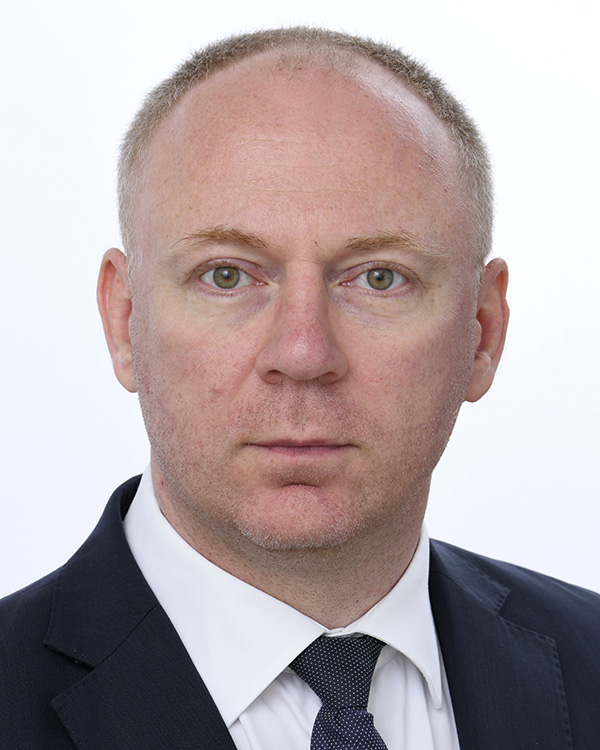





| Rank | Name | Country | Group | Speeches | |
|---|---|---|---|---|---|
| 1 |
|
Lukas Sieper | Germany DEU | Non-attached Members (NI) | 390 |
| 2 |
|
Juan Fernando López Aguilar | Spain ESP | Progressive Alliance of Socialists and Democrats (S&D) | 354 |
| 3 |
|
Sebastian Tynkkynen | Finland FIN | European Conservatives and Reformists (ECR) | 331 |
| 4 |
|
João Oliveira | Portugal PRT | The Left in the European Parliament (GUE/NGL) | 232 |
| 5 |
|
Vytenis Povilas Andriukaitis | Lithuania LTU | Progressive Alliance of Socialists and Democrats (S&D) | 227 |
All Contributions (57)
Institutional consequences of the EU enlargement negotiations (debate)
Mr President, the enlargement of the European Union is a legal and political process. Turning it into a geopolitical instrument undermines the Treaty on European Union itself, and abolishing the right of veto would effectively make it a second Soviet Union. The European Union must be enlarged according to clear criteria and not by convenience. Reform is necessary, but it should not be rushed – let alone used as a cover for authoritarianism or federalisation. Such reform was not carried out before the enlargements to Central and Eastern Europe. On the contrary, the candidate countries themselves have reformed at the cost of enormous deprivation. It must be considered very carefully, preserving sovereignty and the right of veto. The right of veto in the Council of the European Union is clearly an obstacle for the ruling bureaucratic elite. It is called for its abolition. This would turn the partnership between member states into coercion. No unity will be achieved, but domination over dissent. This approach is already yielding absurd results: North Macedonia, which is not yet a member of the European Union, openly advocates qualified majority voting in the Council. This is an attempt to circumvent the commitments Skopje made in 2022 to the entire European Union. Reform is necessary, but it must be the subject of serious analysis and not at the cost of the sovereignty of the member states. Once again, without veto power, the European Union is becoming a Soviet Union.
Recent peace agreement in the Middle East and the role of the EU (debate)
Madam President, I welcome the ceasefire agreement between Israel and Hamas and the release of the remaining 20 living hostages. But let's not confuse freezing the conflict with real peace. A stable peace is built with trust and constant effort. Realism must therefore be a guiding principle in the Commission's strategy for the Middle East. Funding for the reconstruction of Gaza and the West Bank needs to be fully transparent and linked to political reforms. It is unacceptable that Palestinians depend on aid to survive. In this case, the European Union risks becoming the sponsor of another crisis. The European Commission can be useful if it acts as an honest broker and helps Israelis and Palestinians build trust with each other, if it provides humanitarian and expert assistance, without imposing dogmas and without using the situation as a pretext for centralising the European Union's foreign policy. We should also not forget the Christian communities in Gaza and the West Bank, which are about to disappear. A solution for both countries is a necessity. But peace and prosperity will not be possible unless hate speech is rejected and reconciliation is achieved. Only in this way can we create the basis for sustainable peace in the region and avoid future migration crises.
New Strategic EU-India Agenda (debate)
Mr President, India is one of the most active players on the modern world stage. Its foreign policy is pragmatic, driven not by ideology but by the interests of its own citizens. India's open dialogue with everyone, Russia, the United States and China is an example for the European Union. The country is modernising at breathtaking speed and huge infrastructure projects are creating opportunities for European companies. Cooperation on digital, energy, automotive and pharmaceuticals could open up new horizons. Trade between the European Union and India is growing and an investment protection agreement could create legal certainty as long as it is based on the principles of equal partnership. India draws its unity and strength from its cultural and religious identity, and this is the most valuable lesson it can teach us. Instead of teaching others, we should start respecting our own roots and our Christian values.
Common agricultural policy (joint debate)
Mr President, farmers across Europe are under enormous pressure. They face rising costs and market volatility. Trade agreements like the one with Mercosur open the door to unfair competition from countries with lower production standards. The lack of dialogue and common sense, as well as the affinity for the European Commission's war, are bleeding out agriculture. Farmers are losing their place in the food supply chain and rural areas are declining due to depopulation and lack of opportunities for young people. The Common Agricultural Policy proposed by the European Commission will aggravate the crisis in the sector. The instrument that allowed farmers to withstand market fluctuations was cut in the name of war. It is an insult to the people who keep our villages alive and provide bread to Europe. If Europe abandons its farmers, it abandons itself. We are close to European farmers because without them there is practically no Europe.
State of the Union (debate)
Madam President, Mrs von der Leyen, the European Union is in decline, demographic crisis, economic recession, uncontrolled migration, loss of competitiveness, lack of innovation, diplomatic bankruptcy. These are just a few of the problems awaiting a solution. Not only does the Commission not propose solutions, it creates new problems - migration policy and its detrimental effects on nation states, the response during the Covid pandemic, the experiments with the Green Deal. In time, we will also talk about the fiasco "rearmament plan". Europe is not for the lobbyists, but for the citizens. They should be at the heart of every policy. Your misguided policies are a threat to European civilization itself. Today, freedom of speech is also in question. Anyone who thinks differently is branded an extremist. Mrs. von der Leyen, we are not extremists. We protect our countries, our constituents, our families and our peoples. The extremists are you who are leading Europe along the path of war and are not seeking peace or prosperity.
Devastating wildfires in Southern Europe: the need to strengthen EU aid to restore the massive loss of forests and enhancing EU preparedness (debate)
Mr President, this summer, the devastating fires in southern Europe have led to a real catastrophe. And to date, in countries such as Bulgaria, they have not yet been fully mastered. The burned areas, as mentioned, already exceed 1 million hectares, which is the biggest devastation since 2006. Mobilising resources through the Civil Protection Mechanism is important but not sufficient. Faster financial instruments, timely delivery of equipment and, above all, stronger national capacity building are needed. The Commission must monitor spending more closely and push for concrete progress so that Member States can effectively protect people. The interest of citizens must come first. We cannot afford to be left unprepared again in the face of disasters that recur every year and destroy forests, homes and entire communities.
2023 and 2024 reports on North Macedonia (debate)
Madam President, the process of drawing up the annual report on the Republic of North Macedonia has been marked by serious violations, leaks of inside information, indications of foreign interference and disregard for the rules of the European Parliament. Even before becoming a member of the European Union, the government in Skopje is already exerting pressure, violating the ethical norms and procedures of the Parliament. This compromises his work and cannot go unanswered. Regardless of the outcome of the vote, tomorrow we will insist that the investigation into these violations be brought to an end. We cannot allow such interference in favour of third parties next year. The report will go down in history with something else. For the first time, the European Parliament is trying to recognise someone's identity and language. This is not in his power and constitutes a dangerous precedent. And most importantly, in Bulgaria and in North Macedonia there lives a people who speaks one language - Bulgarian. Over 216 thousand citizens of North Macedonia, about 12% of the population have proven with documents Bulgarian origin and on this basis have obtained Bulgarian citizenship, and their number continues to grow. We are one people.
2023 and 2024 reports on North Macedonia (debate)
Madam President, the process of drawing up the annual report on the Republic of North Macedonia has been marked by serious violations, leaks of inside information, indications of foreign interference and disregard for the rules of the European Parliament. Even before becoming a member of the European Union, the government in Skopje is already exerting pressure, violating the ethical norms and procedures of the Parliament. This compromises his work and cannot go unanswered. Regardless of the outcome of the vote, tomorrow we will insist that the investigation into these violations be brought to an end. We cannot allow such interference in favour of third parties next year. The report will go down in history with something else. For the first time, the European Parliament is trying to recognise someone's identity and language. This is not in his power and constitutes a dangerous precedent. And most importantly, in Bulgaria and in North Macedonia there lives a people who speaks one language - Bulgarian. Over 216 thousand citizens of North Macedonia, about 12% of the population have proven with documents Bulgarian origin and on this basis have obtained Bulgarian citizenship, and their number continues to grow. We are one people.
Preparation for the 2025 EU–China Summit - Tackling China's critical raw materials export restrictions
Madam President, the EU-China Summit is an opportunity to prove that, in a world torn by conflict and instability, dialogue remains the strongest instrument for overcoming differences. The European Union and China are two of the leading economies, with a combined share of over 36% of global gross domestic product and trade of over EUR 731 billion for 2024. Yes, differences exist, but there are no unsolvable problems. The possibility of progress in relations between the European Union and China should not be overlooked, on the contrary. Today, when there is a war going on in Europe, we need sensible policies and reliable partnerships. Sanctions turn out to be counterproductive, causing damage to both sides without solving the problems. Over the past two years alone, more than EUR 50 billion of exports from the European Union to China have been affected, and entire sectors such as the automotive industry and mechanical engineering are losing ground. At the same time, the European Union remains highly dependent on Chinese imports in strategic sectors, rare earths, batteries, industrial components. Breaking these chains would have a serious impact on the European economy. The challenges ahead are global, and so are the solutions. Our interest is clear dialogue, respect and strategic cooperation with all major powers. Only in this way will we ensure security, stability and economic growth for Europe.
Institutional and political implications of the EU enlargement process and global challenges (debate)
Commissioner, accession to the European Union must be deserving of real reforms, respect for human rights and fulfilment of the commitments made. Expanding at all costs without institutional and political readiness will bring even more instability, uncertainty and financial problems. It is unacceptable for the European Union to act under political pressure, and even more unacceptable for enlargement to be used as a tool for geopolitical purposes. It is high time to stop irresponsible policies and put solving the problems and interests of citizens first. I strongly oppose attempts to centralise power, abolish the right of veto and weaken national sovereignty. The future of Europe cannot be dictated by bureaucracy. There should be no compromise with rules, values and democracy.
Latest developments on the revision of the air passenger rights and airline liability regulations (debate)
Madam President, Commissioner, passenger protection must remain our primary objective. Arguments for a four-hour threshold probably exist, but should not be approached lightly and to the detriment of passengers. We should also not lose sight of the bigger picture. Refunds are often delayed by airlines by days and weeks, despite clear legal obligations. Passengers do not always receive adequate information about their rights, and ticket pricing is a maze of hidden charges and unclear conditions. Imposing deadlines for complaints limits passenger rights. It is necessary to clearly state what the basic ticket price includes, especially with regard to hand luggage, and offering vouchers instead of monetary compensation is unfair. Regulation should be not just an operational compromise, but a real improvement for the millions of Europeans who travel not for luxury and pleasure, but for their work and their families. We must not miss the opportunity to deliver for the benefit of citizens.
80 years after the end of World War II - freedom, democracy and security as the heritage of Europe (debate)
Madam President, eighty years after the end of the Second World War, we must remember the most valuable lesson that our continent has learned. Peace is the greatest achievement. Europe has paid a heavy price and has twice been turned into a battlefield of world conflicts in which millions have died. The European Union was built on the foundations of dialogue and peace. But today, eight decades after the victory over Nazism, we see the mistakes of the past repeated, and our continent is once again an arena of war. The lessons of history must be learned, and the mistakes of the past must not be repeated. The European continent needs a stable peace, and it will come not through confrontation, but through responsible, sensible policy. The power of the European Union is to find and propose solutions. The future of Europe can be free and peaceful if we join hands and look together for answers to the challenges. Let us remain true to the promise made in 1945. Never again war on European soil.
2023 and 2024 reports on Kosovo (debate)
Mr President, Commissioner, when we talk about Kosovo, we must clearly and firmly uphold the principles of democracy and equality of all national communities. It is deeply disturbing that the petition of nearly 500 citizens who historically identify themselves as Bulgarians has not yet been considered by the Kosovo Assembly. This silence undermines the credibility of Kosovo's commitment to minority rights. Unfortunately, still a huge part of the Bulgarians in Kosovo are listed as gorans in the Constitution, and they are an ethnographic group, an integral part of the Bulgarian people, not a separate ethnicity. I cannot support the report's requirement for a fixed quota of 50% for women and men on electoral lists. The legislation already provides for a threshold of at least 30 percent for each gender. Representation must be fair, but it must stem from the free will of citizens and the quality of candidates, and not primarily from gender. I also remain concerned by the pressure on Pristina to adopt regulations that run counter to public attitudes. We should not use the report as a social engineering tool. Every society has the right to develop its legislation according to its traditions and legal principles. We acknowledge Kosovo's progress in certain areas of transport connectivity. However, work must continue and good results must also be achieved in rail transport. Good transport links are a prerequisite for the economic development of the whole region.
110th anniversary of the Armenian genocide
Mr President, Armenia is the first Christian country in the world and an integral part of European civilization. The Armenian people, although fragmented, continue to preserve their kin, their roots, their language and their memory, something from which all Europeans must take example and inspiration. Armenians remain Armenians, no matter where they live. Today's debate celebrates a tragic page in human history that should not be repeated. 110 years ago we, the Bulgarians, opened our homes and hearts to the Armenian refugees seeking salvation and their contribution to the economic and cultural development of our country is huge. Even today, Armenia has preserved its identity and its faith, although it faces enormous challenges. It is our duty to learn from the past and build a future in which humanity triumphs over genocide.
The importance of trans-European transport infrastructure in times of stalling economic growth and major threats to Europe’s security (debate)
Mr President, the trans-European transport network plays a key role in strengthening our economies and bringing our cultures together. We should not abandon its strategic development. This is where the European Union needs a unified approach. Fragmentation of transport system development plans, especially in the name of militaristic goals, will leave strategic projects unfinished. This will increase disparities in Europe, harming less developed regions. The strategic development of the transport network should prioritise the rapid and convenient movement of passengers and cargo, rather than troops and military equipment. The European Union is a project of peace and that is its strength. We need continued investment, better management and modernisation of our transport systems. We need to dedicate significant resources here. Investment in transport must lead to a peaceful and prosperous Europe. Misplaced priorities will make it even more difficult to strengthen this key sector.
CFSP and CSDP (Article 36 TUE) (joint debate)
Madam President, the vision of European foreign policy presented in the 2024 report is flawed. It is outdated, unbalanced and unrelated to the interests of the citizens of the European Union. The report takes us back to the times of the Cold War, when, ignoring the complex geopolitical dynamics of the modern world, the obsession with Russia and China fuelled an unnecessary escalation, shifting focus and resources away from vital issues such as economic stability and energy security. It demands unrestricted military support for Ukraine, a country outside the European Union and outside NATO, while ignoring the burden on European taxpayers. Worse still, the report pushes the European Union into the role of a global policeman, calling for intervention in regions such as the Pacific. We reject this approach. The European Union must give priority to pragmatic cooperation rather than polarisation. The Union must defend diplomacy, not escalation and endless war. The European Union was created as a peace project. It's time for his foreign policy to reflect that.
Action Plan for Affordable Energy (debate)
Mr President, affordable energy means cheap energy, and the cheapest and most reliable sources today are nuclear and coal energy. Instead of rejecting them under the pressure of ideological dogmas, we should see them as key to the stability of our energy system. We support progress and environmental protection, but this does not mean that we should lightly abandon working and affordable technologies, especially in such uncertain times. Our industries need predictable energy, and citizens need bills they can afford. Affordable energy also means a secure supply of resources. Refusal of energy sources due to the imposition of sanctions means more expensive and therefore less affordable energy. To ensure affordability and economic stability, we need all possible energy sources. Any reckless curtailment of these opportunities leads to higher prices, weaker industry and impoverishment of European citizens.
Accelerating the phase-out of Russian gas and other Russian energy commodities in the EU (debate)
You misunderstood me, I didn't say that in my speech. It is clear to everyone that Europe is not a large-scale producer of natural gas.
Accelerating the phase-out of Russian gas and other Russian energy commodities in the EU (debate)
Mr President, cutting off Russian energy supplies is not a strategic decision. This is a flawed and, as proven, ineffective measure that exposes citizens to high prices and leads to economic uncertainty and even deindustrialisation. If we want stability, we need to use all available resources, from natural gas to nuclear power and coal. A number of countries are already feeling the consequences of the wrong and inefficient energy policy of the European Union, which has led to record electricity prices and hampers economic development. While we are punishing our economies, third countries have willingly accepted the resources that we have given up. We have to be pragmatic. The European Union should not follow lightly policies that weaken its competitiveness and lead to impoverishment. In order to have economic stability, we need a lucrative energy supply. And for this to happen, it is high time for European diplomacy to wake up. It is time to choose a responsible path that solves the continent's problems, not piling them up.
European Council meetings and European security (joint debate)
Madam President, wasting EUR 800 billion, of which EUR 150 billion in new loans, will burden Member States with unbearable debt. The leadership of the European Union, which has already failed spectacularly in a number of cases such as the green deal, illegal migration, war in Europe and economic recession, now expects us to trust it with our security. Leaders who now talk about independence from the United States have long been the first Euro-Atlantic novices. Yes, defending Europe is crucial, but the responsibility for defence must remain in the hands of sovereign nations. We should not loosen the excessive deficit procedure or use cohesion funds to buy weapons. The European economy is already in crisis. The European Union must seek cooperation with its neighbours and with all global powers, secure access to cheap resources and build strategic partnerships. The easiest way to save this huge money, and also to ensure security, is by using diplomacy and restoring normal relations with Russia. If the U.S. can do it, why can't the European Union?
EU-Mercosur Trade Agreement (debate)
Madam President, Commissioner, the trade agreement between the European Union and Mercosur provides opportunities for European industry, as we have heard from you, but it can have disastrous consequences for the agricultural sector and European farmers should not pay the price of this agreement. There is a lack of transparency on the ratification process of the agreement, as well as on the safeguards envisaged by the European Commission. A fund of one billion euros was mentioned, without it being clear either where its funding would come from or whether it would be sufficient. It is also not clear whether this potential fund will be set up in advance or only in the event of market disturbances. Compensatory measures will not protect our agriculture. They often lack clear definitions, do not reach the real harmed, and by the time they enter into force, the damage will already be done. Furthermore, proving, I quote, the ‘serious harm’ caused to producers by the agreement is a complex and bureaucratic process. Let us not betray European farmers this time.
US withdrawal from the Paris Climate Agreement, the World Health Organisation and the suspension of US development and humanitarian aid (debate)
Madam President, the decision of the US administration to withdraw the country from the WHO and the Paris Agreement and to stop USAID is an example of clearly asserting sovereignty and national interest over ineffective and costly international commitments. The World Health Organization failed in its response to the Covid 19 pandemic and burdened Member States with unfair financial obligations. Bulgaria alone has wasted around €75 million on unused vaccines. Meanwhile, the livelihoods of millions of Europeans have been severely damaged by the draconian measures imposed. The Paris Agreement is another example of a policy that weakens the European economy. It imposes unrealistic regulations on us as the countries of Asia and Africa continue to expand their energy capacity. In our quest to make the world cleaner, we have made Europe poorer. Sovereign states should not participate in an organization or agreements that work against their national interests. Let us not turn a blind eye to environmental problems, but re-evaluate the European Union's blind support for failed global policies. It is time to put our citizens first.
Cryptocurrencies - need for global standards (debate)
Madam President, cryptocurrencies offer an alternative to traditional monetary systems regulated by central banks. Over the past decade, projects like Bitcoin have demonstrated their potential to change the global financial landscape through the principles of decentralization and anonymity. Today, Bitcoin boasts a market capitalization of more than $2 trillion, evidence of its undeniable impact and resilience. Therefore, when looking at regulatory frameworks, we need to act with extreme caution. Any regulation must be drafted in consultation with the crypto community and industry experts. Above all, these regulations should preserve the basic principles that make cryptocurrencies so successful, namely decentralization and anonymity. Shaking these foundations risks not only stifling innovation, but also, in general, undermining trust in crypto technology and even rendering it meaningless. Money is created by people and should serve them. Let's keep the crypto world free!
Geopolitical and economic implications for the transatlantic relations under the new Trump administration (debate)
Madam President, Commissioner, the world is changing and this is a good time for Europe to take a more dignified place on the world stage, as it historically deserves. The election of Donald Trump is a chance for the European Union to improve its partnership with the United States, not as a subordinate, but as an equal partner that defends the interests of its sovereign member states. Such a partnership can only flourish if it is based on equality in relations. Unfortunately, however, with a leadership like the present, the European Union shows that it does not respect itself. How do we get others to respect us? The United States looks at global challenges from its own perspective. They're overseas. We, in Europe, are facing a brutal war. Our security interests may be different. It is our responsibility to formulate and protect them. But tell me this: President Trump is a strong leader. If he wanted to talk to a strong leader of the European Union, who would he be? For almost three years now, the European Union has been unable to propose any diplomatic solution to end the war on its own continent. We only have to hope that someone overseas will do it for us, and in the meantime, citizens' trust in the European Union is eroding by the day. In the coming years, we must restore our dignity and strike a balance in our relations with the United States. Let us prioritize reason, achieve stable peace, and work for the well-being of both citizens and industries. A Europe of sovereign nations stands by these principles and will uphold them to the end.
Commission’s plans to include the revision of the outstanding proposals on animal welfare in its work plan for 2025 (debate)
Member of the Commission. - Madam President, improving animal welfare standards needs to be worked on, but in order to have a positive effect, these improvements need to be tailored to the economic realities of the agricultural sector. Manufacturers in Europe need support through clear and concrete instruments, not more regulatory challenges. We need to avoid additional burdens, especially with regard to small and family businesses. We also have a serious problem with lower animal welfare standards outside the European Union. We do not want to achieve the opposite effect by closing European production and replacing it with imports from more inhumane ones from third countries, do we? How the European Commission will ensure reciprocity, against the backdrop of trade agreements like the one with Mercosur, is a question without a clear answer. I recall that, through the Strategic Dialogue, the European Commission is committed to simplifying policies and rules and to legislative proposals based on scientific evidence and robust impact assessments. At the moment, this is not the case. Our aim must be to raise animal welfare standards, but without creating undue pressure.