

| Rank | Name | Country | Group | Speeches | |
|---|---|---|---|---|---|
| 1 |
|
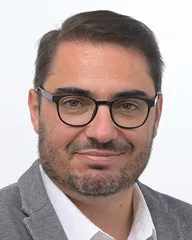
Lukas Sieper | Germany DEU | Non-attached Members (NI) | 390 |
| 2 |
|
Juan Fernando López Aguilar | Spain ESP | Progressive Alliance of Socialists and Democrats (S&D) | 354 |
| 3 |
|
Sebastian Tynkkynen | Finland FIN | European Conservatives and Reformists (ECR) | 331 |
| 4 |
|
João Oliveira | Portugal PRT | The Left in the European Parliament (GUE/NGL) | 232 |
| 5 |
|
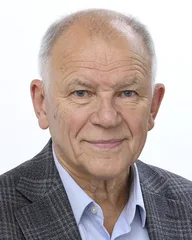
Vytenis Povilas Andriukaitis | Lithuania LTU | Progressive Alliance of Socialists and Democrats (S&D) | 227 |
All Contributions (55)
Immunity of International Criminal Court officials and the activation of the EU Blocking Statute to strengthen EU strategic autonomy (debate)
Madam President, ladies and gentlemen, dear Commission, when the International Criminal Court is attacked, Europe is attacked, our values are in the crosshairs: human dignity, international humanitarian law, peace, the independence of the judiciary. The Court brings justice to victims of atrocities and condemns war criminals. That's why she gets hit. Those working on the Ukraine case have been threatened, sanctioned, sentenced to prison in Russia, such as First Vice-President Rosario Aitala. Then the United States imposed sanctions against eleven judges and prosecutors working on the Palestine case: They want to force the court to bow to foreign powers. This can't happen. For this reason, the blocking regulation must be activated now. And, dear Commission, that it is not perfect is not an excuse not to activate it: for the rule of law, for the dignity of the victims, for our judges, for Europe. If Europe does not act, other citizens, other companies will end up in the crosshairs. The Court is only the beginning. We have been asking you for a year to activate the Blocking Statute and to protect the Court. It has to be done now. What are you waiting for?
EUCO and situation in the Middle East (joint debate)
We know that many people are fleeing this attack these days, and we know that countries in the region are already hosting millions of refugees. In Lebanon, for example, Syrian refugees are again fleeing Lebanon and trying to return to Syria after attacks by Israeli forces in the south of the country. I am very worried about the situation. Since you care a lot about the rights of migrants and refugees, do you have any more information to give us on this issue?
Spain’s large-scale regularisation policy and its impact on the Schengen Area and EU migration policy (debate)
No text available
Situation in Northeast Syria, the violence against civilians and the need to maintain a sustainable ceasefire (debate)
Madam President, ladies and gentlemen, Commissioner, we cannot hide: The European Union remained silent during the violent advance of Syrian Transitional Government forces in the north-east of the country. We rushed to conclude the agreement with the new president, closing our eyes to his past, and we abandoned the Kurdish people to their fate. The Kurds, who fought against ISIS and defeated it at a very high price. The Kurds in Rojava have built an extraordinary experiment in grassroots democracy, ecology and feminism. Now, understandably, we have lost credibility in the eyes of Kurds across the region. But if we want to show that we really believe in people's self-determination and democracy from below, there is still something we can do: opening humanitarian corridors and monitoring the peaceful implementation of the ceasefire, introducing human rights conditionalities in our relations with Syria, accountability, liability, and targeted sanctions for those who have committed violations against civilians in the last month. The lives of tens of thousands of people have been disrupted by recent violence. Let's not leave them alone again. Spas!
Voting time
Mr President, ladies and gentlemen, there is a moral degradation that seriously endangers the values of European democracy. This is what the President of this Parliament, our dear David Sassoli, said five years ago in front of those European states that were asking for walls to remove migrants. The Union cannot become a fortress against poor people fleeing war, hunger or infamous regimes, he said. Protecting our borders, especially when they are threatened by authoritarian regimes, is a duty to our citizens. But to build walls against desperate people would be to deny our values and lose our humanity. Here we are, dear colleagues, you have not been able to raise walls, but you have done worse: You are using the law as a wall. Today you are voting to destroy the right to asylum in Europe. We will abandon human beings to their fate. We will be much more blackmailed by the foreign powers with whom you want to make agreements. Will it make us safer? On the contrary: It will make our democracies more fragile and less credible. Today you are not hitting migrants, today you are hitting Europe. Congratulations!
A new action plan to implement the European Pillar of Social Rights (debate)
Madam President, Commissioner, ladies and gentlemen, the new action plan is not just an opportunity to relaunch the European Pillar of Social Rights. It is also an opportunity to show that, amid fear and uncertainty, the European Union still cares about the social security of citizens. Let's look at the results of the last Eurobarometer. He asks where the money from the European budget should go and mostly citizens reply: employment, social policies, public health, education. This is because there are 93 million people at risk of poverty in the European Union, 21% of the population. There are about a million homeless people. In some Member States, early school leaving is above 12%. And do we seriously think it is a good idea to move money from the European Social Fund to arms? If they're hungry, if they don't have bread, let them eat bullets? Maybe not. The pillar can be a response to the deep security needs of our population, human security. This is what European Union funds are for. May the new action plan truly meet the needs of our peoples.
Restoring control of migration: returns, visa policy and third-country cooperation (topical debate)
Mr President, ladies and gentlemen, disinformation always flies when we talk about immigration in this House. ‘There is uncontrolled migration’: false. 97% of the world's population lives in the country where they were born, and the numbers have been that way since we collected them. And Frontex also tells us that arrivals and asylum requests are decreasing. "They want to invade Europe": It's very false. Most people who leave their country remain in the surrounding region. "They come here and they don't want to do anything", "they come here and steal our work": On this the right should agree, which of the two? ‘Life-saving NGOs are accomplices of human traffickers’: It's a lie. Opening doors to migrants means letting terrorists in. It's a lie. And I could go on for a very long time, but I only have one minute. That is why I dwell on that point of propaganda which is most indignant to me when I hear in this House that we must close our borders in order to protect our women. Those who say these things are the same people who, when it comes to voting to give more rights to women, vote against it. And that when it comes to establishing sexual and affective education in schools, against gender-based violence, against femicides, they oppose it. This is what should be done to protect women, not to lie about immigration.
The deepening democratic crisis in Georgia (debate)
Mr President, Commissioner McGrath, ladies and gentlemen, in this House we are discussing the disturbing anti-democratic drift that is taking place in Georgia. Meanwhile, upstairs, the Commission, Council and Parliament are agreeing to include Georgia on the European list of safe countries of origin. This year's government crackdown in Georgia was brutal: arbitrary detentions, torture of demonstrators, proposals for dissolution of opposition parties, criminalisation of the media, etc. We can talk for hours about the collapse of fundamental freedoms in Georgia, yet - I repeat - today the European Union is defining Georgia as a safe country of origin for its citizens. So, from today, those who want to seek protection in Europe – perhaps a political opponent, perhaps a journalist like Mzia Amaglobeli, to whom we awarded the Sakharov Prize just yesterday – will have far fewer guarantees to seek protection in Europe and will have far fewer rights. Yesterday we all said thank you to the Georgian people who resist and fight for democracy. Today, perhaps, we should apologise to the Georgian people.
Application of the ‘safe third country’ concept (vote)
Madam President, ladies and gentlemen, I am afraid, however, that we have a problem: Either we are very confused or we are very hypocritical. Yesterday we awarded the Sakharov Prize to Mzia Amaglobeli, a Georgian journalist, two weeks ago we voted on a resolution condemning the human rights situation in Tunisia, two months ago on repression in Serbia and the deterioration of democracy in Turkey. Today, however, you will vote to consider these countries as safe and destroy the right to asylum. I have a question, especially for the people: Why? And why two years ago did you swear not to work with the far right and today you are writing laws with them? And, above all, do you know – if you have read them – what is written in the documents on which we have worked and which we are not allowed to make public to the citizens? Because it is already written in these documents that most of those countries are not safe. These two texts are the negation of all the values on which Europe was founded. For us socialists they are a red line that we do not intend to cross. We won't be your accomplices.
Recent developments in Palestine and Lebanon (debate)
No text available
Rule of law and human rights situation in Tunisia, particularly the case of Sonia Dahmani
No text available
Gaza at breaking point: EU action to combat famine, the urgent need to release hostages and move towards a two-state solution (debate)
I wanted to go back to the word genocide. The 1948 Convention on the Prevention and Punishment of Genocide Crimes is the legal basis on which we observe, read and compare what is happening in Gaza and the West Bank and conclude, like all the organizations that mentioned my colleague Botenga, that a crime is taking place. They're not Facebook pages, it's a very, very serious thing: All the acts are described and we compare them with what is happening in Gaza and the West Bank, and the result is: acts of genocide are committed. There is also the intention of ethnic cleansing, expressed by Israeli ministers on television. So my question for you is: Have you ever read the Convention on the Prevention and Punishment of Crimes of Genocide?
Situation in the Middle East (debate)
Madam President, ladies and gentlemen, I too wanted to make a couple of clarifications. One for my fellow right-wing MEPs, who used to say they were very concerned about Iran's nuclear power: I am, too, but I wanted to say that there is a country, in the Middle East, that has a secret nuclear program, where inspectors cannot enter, a country that has not signed or ratified the nuclear non-proliferation treaties. That country is Israel. Instead, I wanted to remind the Commission of its obligation to do everything in its power to stop not only the ongoing carnage in Gaza, but also apartheid in the West Bank. And it must be done not out of kindness, charity or to be able to look in the mirror without shame – which is very important anyway – it must be done because it is an obligation of conduct, which derives from international law: Don't cooperate with those who are doing these things. If we don't, we risk ending up on the side of the criminals.
Resumption of the sitting
Madam President, I would like to raise a point of order on a possible breach of Article 7, Annex 1 of the Rules of Procedure. The Gaza Humanitarian Foundation apparently was welcomed in the European Parliament on 2 July and met with several MEPs, including the chair for the Delegation for relations with Israel, yet, to date, GHF is not listed in the transparency register, so such meetings are in disregard of our internal transparency procedures. Moreover, we know that GHF has been condemned by all relevant actors for violating the core principles of humanity, impartiality and independence. According to Amnesty International, 500 people were killed and nearly 4 000 injured in four weeks at GHF distribution hubs. I think it should be a political and moral duty of this Parliament not to give legitimacy to an actor who is clearly not in line with EU values and even with our transparency rules. Thank you very much for clarification and appropriate actions.
Stopping the genocide in Gaza: time for EU sanctions (topical debate)
Madam President, ladies and gentlemen, dear Commissioner, the Government of Israel has attacked Iran, another violation of international law, and continues to commit acts of genocide in Gaza. In the Strip I have a brother, Gennaro Giudetti, a UN humanitarian worker. We talk almost every day. That's what he told me last night. One: the management of aid through the Gaza Foundation It is inhumane. The distribution takes place only in two large centers, where people are forced to crowd and quarrel over each parcel of flour. Every time dozens of people die under Israeli fire. Aid management has to be in the hands of the UN, not this stuff here. Two: 82% of the Strip is under evacuation order. People don't know where to go. They sleep on the beach, on the sidewalks, at the roundabouts. Three: In a couple of days, we'll run out of fuel. Then no more generators for hospitals, no ambulances, nothing at all. The work of the UN is severely limited, humanitarian workers die together with civilians and Europe fails to do anything to stop the massacre. Europe wake up! We have the tools to stop Netanyahu, we have to want to use them.
The EU's response to the Israeli government's plan to seize the Gaza Strip, ensuring effective humanitarian support and the liberation of hostages (debate)
Madam President, ladies and gentlemen, I have just returned from the Rafah crossing, where we heard the sound of bombs every two minutes: There are 80,000 square meters of humanitarian aid that Israel has been blocking since March 2, while people are literally starving to death in Gaza. The day before yesterday very few trucks entered, a drop in the ocean, and even these, this morning, had not been distributed: It was just cruel propaganda. The Palestinian men and women we met these days all told us one thing: Europe, be brave. Yesterday there was finally an important step: the decision to revise the EU-Israel agreement. But that's not enough in the face of genocide. Europe must stop the criminal plan to conquer the Strip, it must demand the unlimited and unimpeded entry of humanitarian aid, which must be managed by the United Nations and not by an obscure militarized American foundation. We must stop the sale of weapons to and from Israel, demand the end of the war.apartheid and the return of illegally occupied territories. Gentlemen, everything we do every week – and rightly so – for Ukraine, we must also do for Palestine.
80 years after the end of World War II - freedom, democracy and security as the heritage of Europe (debate)
Mr President, ladies and gentlemen, if Europe deals only with the internal problems of individual countries, the causes of conflicts, militarism and wars will remain. This is what Altiero Spinelli and the other founders of the European Federalist Movement wrote at the height of the Second World War, which ended 80 years ago. A sad prophecy. Today the boys and girls of Europe study the horrors of the Second World War, the genocide of the Jews, the extermination of the disabled, Roma, Sinti, homosexuals and ask: Could anyone stop this horror and didn't? In a few years we will also be on the history books: Commission, Council, this Parliament. We'll be on a black page. Eighty years after the Holocaust, the citizens of the world look at the genocide of the Palestinian population theorized and carried out by the government of Israel and ask us: Why don't you stop the massacre? Why do you keep selling weapons to Israel? Why are you complicit in all this? Why? 80 years have passed and, as Gramsci said, history teaches but has no schoolchildren. What a shame!
EU Preparedness Union Strategy (debate)
Madam President, Commissioner, ladies and gentlemen, I do not agree with almost anything the Commission is doing to prepare us for the great challenges ahead. I, in my bag of resilience, have put international humanitarian law, which is under attack every day and is torn apart, not only by Putin. Let me quote another case: The Netanyahu government. In my purse are the very important international conventions, such as the Ottawa Treaty and the Oslo Convention, which prohibit the production of anti-personnel mines and cluster munitions; A number of European countries want to leave in the name of security. In my purse there is a Europe working for disarmament, not proliferation. And there is also a huge tax on the extra profits of the war industry, because I don't think anyone should get rich on the suffering of the civilian population; there is the fight against inequalities, because peace is not the absence of war but the fullness of one's rights; There is the Charter of Fundamental Rights of the Union, which is something else that we are a bit torn apart. There are countries that, in the name of security, are carrying out collective pushbacks, which are prohibited. Here, dear Commissioner, I am concerned because if, in the name of security, we agree to reduce the protection of people's rights and agree to reduce our laws and values, I fear that we do not have much left to defend.
EU Preparedness Union Strategy (debate)
Madam President, ladies and gentlemen, I wanted to come back for a moment to Mr Vannacci's speech. In addition to sharing what my colleague stressed, I would also like to point out that the aggressive tones she has used towards Commissioner Lahbib, as well as the final part of her speech in which she invites us to learn to run because it could serve, are, I believe, from all those who have ears to listen, perceptible as threats. Aggressive tones and threats against the Commissioner are not acceptable in this House, so perhaps they are good tones in her movement, but certainly not in this House.
The need for EU support towards a just transition and reconstruction in Syria (debate)
Madam President, dear Commissioner, ladies and gentlemen, in December this House welcomed the end of the regime of Bashar al-Assad. Unfortunately, already in the following days, many politicians took the opportunity to ask for the repatriation of Syrian refugees, ignoring the difficulties of the transition. The country remains unstable: rights are not guaranteed, as also demonstrated by the summary executions of Alawite citizens on the west coast in recent days. We want to hope that the words of the new Syrian leadership on the inclusion of minorities and women are not just words. Europe has a duty to listen and protect the Syrian people, everything: civil society organizations, the different religious denominations, the extraordinary experiment that is Rojava's confederalism, founded on democracy, ecology and feminism. We hope that the summit on the future of Syria can go in this direction. Unfortunately, the lack of involvement of civil society is not a good sign. In the short term, the commitment to provide humanitarian aid to the population and long-term support for a truly democratic and inclusive path for the future of Syria remains crucial.
Presentation of the proposal on a new common approach on returns (debate)
Yes, in my experience, but in reality also in the experience of academics who have been putting data together for thirty years, we know that the only way to avoid irregular migration, to avoid having people without valid documents, in this country, the only way is to open safe and legal access channels. In the experience of those who study the subject are the closed borders that generate illegal migration and that generate the overpowering of human traffickers. We should start opening borders and giving visas again. And, by the way, the same academics always tell us that people move because there is a need for manpower here. This is the pull factor: It's us.
Presentation of the proposal on a new common approach on returns (debate)
Madam President, dear Commissioner, ladies and gentlemen, this regulation contains dangerous things. There is talk of repatriating people to third countries that, very generally, must respect rights, but without any specific requirement, such as being signatories to international human rights conventions. What will happen to people when they are in the third country? No one knows. Moreover, there is no obligation of transparency to make these agreements with third countries public. Why? Again: Those found on European soil without valid documents can be detained for up to two years – before they were 18 months. The data, incidentally, tell us that the longer the detention period, the less likely repatriation becomes. But that's another matter. For families with unaccompanied minor children, detention would be the last option, but it really shouldn't be an option. Does the European Union really think that it can put children who have not committed any crime in cages for two years? There are many unacceptable things in this proposal that we will monitor and work on. Dear Commissioner, we often hear that the European approach must be firm and fair and so far we have seen the firm side very well: But we also want to see the right part.
Links between organised crime and smuggling of migrants in light of the recent UN reports (debate)
Madam President, Commissioner, ladies and gentlemen, over the last 30 years, governments have invested enormous resources in militarising borders, trying to stop migratory flows and irregular immigration. Did it work? No. Why? Because all the data tells us that closing borders is not the solution, it is part of the problem. Because every time you close a legal route, illegal ones open up and traffickers gain power. We need to break this vicious circle. How? Opening more secure and legal access channels. It's the only way. In the meantime, however, we must fight criminals and exploiters. Isn't that right? That's right. Do you know what just happened in Italy? A Libyan criminal, wanted by the International Criminal Court for crimes against humanity, involved in human trafficking, was quietly in Italy, at the stadium, watching the game. He was arrested, but the government did not hand him over to The Hague: He was sent back to Libya. The Italian government had promised to fight smugglers across the globe. Unfortunately, at the moment the only thing it fights are human rights, international law and even the Criminal Court.
Links between organised crime and smuggling of migrants in light of the recent UN reports (debate)
I just wanted to ask Mr Mantovani if he knows that he has just carried out a defamation, because there have been several requests to bring to judgment non-governmental organisations that carry out rescue operations at sea. In the Mediterranean there has never even been a trial, all archived because the fact does not exist: Non-governmental organisations are not sea taxis, they are not in league with smugglers. What you have said is defamation on the part of non-governmental organisations and Mr Rackete, I hope he is aware of this.
Situation in Venezuela following the usurpation of the presidency on 10 January 2025 (debate)
Mr President, ladies and gentlemen, in the midst of the very serious political crisis that is sweeping the country following the contested elections, there is the Venezuelan people, who are clamoring for respect, peace and social justice. A people that has been facing for years a deep socio-economic crisis that has seriously jeopardized the provision of public services and respect for civil rights. A crisis that has also prompted five million people to emigrate. To support the Venezuelan population, today there are also many European citizens in the country, and today I would like to recall one of these European citizens who are in the country to lend a hand: one of my compatriots, Alberto Trentini, an Italian collaborator who was arrested two months ago. Nothing has been known about him since then. There are no charges against him. Just silence, a very long silence that leaves his family in anguish. That is why we call on all institutions, from Venezuela to Europe, to work together for the release as soon as possible of this innocent man, a friend of the Venezuelan people, who was only there to do his job, that is to help those in need. Alberto, we're waiting for you at home.