
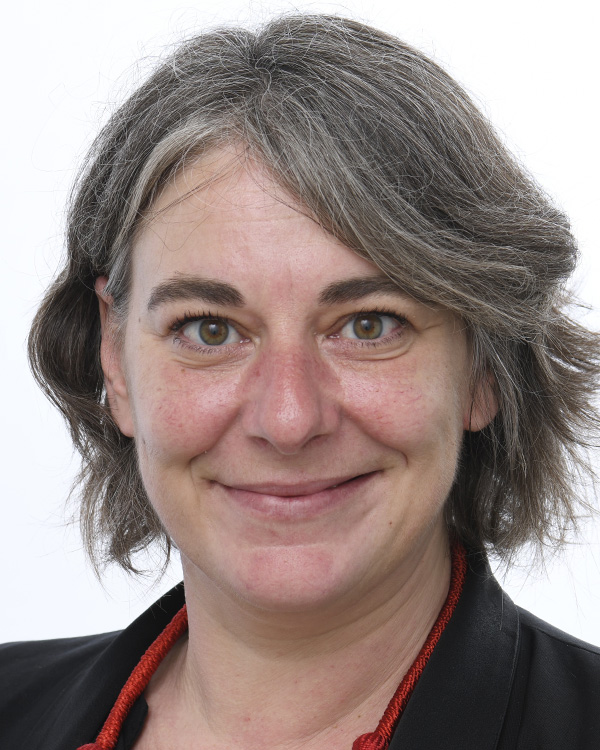






| Rank | Name | Country | Group | Speeches | |
|---|---|---|---|---|---|
| 1 |
|
Lukas Sieper | Germany DEU | Non-attached Members (NI) | 390 |
| 2 |
|
Juan Fernando López Aguilar | Spain ESP | Progressive Alliance of Socialists and Democrats (S&D) | 354 |
| 3 |
|
Sebastian Tynkkynen | Finland FIN | European Conservatives and Reformists (ECR) | 331 |
| 4 |
|
João Oliveira | Portugal PRT | The Left in the European Parliament (GUE/NGL) | 232 |
| 5 |
|
Vytenis Povilas Andriukaitis | Lithuania LTU | Progressive Alliance of Socialists and Democrats (S&D) | 227 |
All Contributions (55)
Gaza at breaking point: EU action to combat famine, the urgent need to release hostages and move towards a two-state solution (debate)
I wanted to go back to the word genocide. The 1948 Convention on the Prevention and Punishment of Genocide Crimes is the legal basis on which we observe, read and compare what is happening in Gaza and the West Bank and conclude, like all the organizations that mentioned my colleague Botenga, that a crime is taking place. They're not Facebook pages, it's a very, very serious thing: All the acts are described and we compare them with what is happening in Gaza and the West Bank, and the result is: acts of genocide are committed. There is also the intention of ethnic cleansing, expressed by Israeli ministers on television. So my question for you is: Have you ever read the Convention on the Prevention and Punishment of Crimes of Genocide?
Situation in the Middle East (debate)
Madam President, ladies and gentlemen, I too wanted to make a couple of clarifications. One for my fellow right-wing MEPs, who used to say they were very concerned about Iran's nuclear power: I am, too, but I wanted to say that there is a country, in the Middle East, that has a secret nuclear program, where inspectors cannot enter, a country that has not signed or ratified the nuclear non-proliferation treaties. That country is Israel. Instead, I wanted to remind the Commission of its obligation to do everything in its power to stop not only the ongoing carnage in Gaza, but also apartheid in the West Bank. And it must be done not out of kindness, charity or to be able to look in the mirror without shame – which is very important anyway – it must be done because it is an obligation of conduct, which derives from international law: Don't cooperate with those who are doing these things. If we don't, we risk ending up on the side of the criminals.
Resumption of the sitting
Madam President, I would like to raise a point of order on a possible breach of Article 7, Annex 1 of the Rules of Procedure. The Gaza Humanitarian Foundation apparently was welcomed in the European Parliament on 2 July and met with several MEPs, including the chair for the Delegation for relations with Israel, yet, to date, GHF is not listed in the transparency register, so such meetings are in disregard of our internal transparency procedures. Moreover, we know that GHF has been condemned by all relevant actors for violating the core principles of humanity, impartiality and independence. According to Amnesty International, 500 people were killed and nearly 4 000 injured in four weeks at GHF distribution hubs. I think it should be a political and moral duty of this Parliament not to give legitimacy to an actor who is clearly not in line with EU values and even with our transparency rules. Thank you very much for clarification and appropriate actions.
Stopping the genocide in Gaza: time for EU sanctions (topical debate)
Madam President, ladies and gentlemen, dear Commissioner, the Government of Israel has attacked Iran, another violation of international law, and continues to commit acts of genocide in Gaza. In the Strip I have a brother, Gennaro Giudetti, a UN humanitarian worker. We talk almost every day. That's what he told me last night. One: the management of aid through the Gaza Foundation It is inhumane. The distribution takes place only in two large centers, where people are forced to crowd and quarrel over each parcel of flour. Every time dozens of people die under Israeli fire. Aid management has to be in the hands of the UN, not this stuff here. Two: 82% of the Strip is under evacuation order. People don't know where to go. They sleep on the beach, on the sidewalks, at the roundabouts. Three: In a couple of days, we'll run out of fuel. Then no more generators for hospitals, no ambulances, nothing at all. The work of the UN is severely limited, humanitarian workers die together with civilians and Europe fails to do anything to stop the massacre. Europe wake up! We have the tools to stop Netanyahu, we have to want to use them.
The EU's response to the Israeli government's plan to seize the Gaza Strip, ensuring effective humanitarian support and the liberation of hostages (debate)
Madam President, ladies and gentlemen, I have just returned from the Rafah crossing, where we heard the sound of bombs every two minutes: There are 80,000 square meters of humanitarian aid that Israel has been blocking since March 2, while people are literally starving to death in Gaza. The day before yesterday very few trucks entered, a drop in the ocean, and even these, this morning, had not been distributed: It was just cruel propaganda. The Palestinian men and women we met these days all told us one thing: Europe, be brave. Yesterday there was finally an important step: the decision to revise the EU-Israel agreement. But that's not enough in the face of genocide. Europe must stop the criminal plan to conquer the Strip, it must demand the unlimited and unimpeded entry of humanitarian aid, which must be managed by the United Nations and not by an obscure militarized American foundation. We must stop the sale of weapons to and from Israel, demand the end of the war.apartheid and the return of illegally occupied territories. Gentlemen, everything we do every week – and rightly so – for Ukraine, we must also do for Palestine.
80 years after the end of World War II - freedom, democracy and security as the heritage of Europe (debate)
Mr President, ladies and gentlemen, if Europe deals only with the internal problems of individual countries, the causes of conflicts, militarism and wars will remain. This is what Altiero Spinelli and the other founders of the European Federalist Movement wrote at the height of the Second World War, which ended 80 years ago. A sad prophecy. Today the boys and girls of Europe study the horrors of the Second World War, the genocide of the Jews, the extermination of the disabled, Roma, Sinti, homosexuals and ask: Could anyone stop this horror and didn't? In a few years we will also be on the history books: Commission, Council, this Parliament. We'll be on a black page. Eighty years after the Holocaust, the citizens of the world look at the genocide of the Palestinian population theorized and carried out by the government of Israel and ask us: Why don't you stop the massacre? Why do you keep selling weapons to Israel? Why are you complicit in all this? Why? 80 years have passed and, as Gramsci said, history teaches but has no schoolchildren. What a shame!
EU Preparedness Union Strategy (debate)
Madam President, Commissioner, ladies and gentlemen, I do not agree with almost anything the Commission is doing to prepare us for the great challenges ahead. I, in my bag of resilience, have put international humanitarian law, which is under attack every day and is torn apart, not only by Putin. Let me quote another case: The Netanyahu government. In my purse are the very important international conventions, such as the Ottawa Treaty and the Oslo Convention, which prohibit the production of anti-personnel mines and cluster munitions; A number of European countries want to leave in the name of security. In my purse there is a Europe working for disarmament, not proliferation. And there is also a huge tax on the extra profits of the war industry, because I don't think anyone should get rich on the suffering of the civilian population; there is the fight against inequalities, because peace is not the absence of war but the fullness of one's rights; There is the Charter of Fundamental Rights of the Union, which is something else that we are a bit torn apart. There are countries that, in the name of security, are carrying out collective pushbacks, which are prohibited. Here, dear Commissioner, I am concerned because if, in the name of security, we agree to reduce the protection of people's rights and agree to reduce our laws and values, I fear that we do not have much left to defend.
EU Preparedness Union Strategy (debate)
Madam President, ladies and gentlemen, I wanted to come back for a moment to Mr Vannacci's speech. In addition to sharing what my colleague stressed, I would also like to point out that the aggressive tones she has used towards Commissioner Lahbib, as well as the final part of her speech in which she invites us to learn to run because it could serve, are, I believe, from all those who have ears to listen, perceptible as threats. Aggressive tones and threats against the Commissioner are not acceptable in this House, so perhaps they are good tones in her movement, but certainly not in this House.
The need for EU support towards a just transition and reconstruction in Syria (debate)
Madam President, dear Commissioner, ladies and gentlemen, in December this House welcomed the end of the regime of Bashar al-Assad. Unfortunately, already in the following days, many politicians took the opportunity to ask for the repatriation of Syrian refugees, ignoring the difficulties of the transition. The country remains unstable: rights are not guaranteed, as also demonstrated by the summary executions of Alawite citizens on the west coast in recent days. We want to hope that the words of the new Syrian leadership on the inclusion of minorities and women are not just words. Europe has a duty to listen and protect the Syrian people, everything: civil society organizations, the different religious denominations, the extraordinary experiment that is Rojava's confederalism, founded on democracy, ecology and feminism. We hope that the summit on the future of Syria can go in this direction. Unfortunately, the lack of involvement of civil society is not a good sign. In the short term, the commitment to provide humanitarian aid to the population and long-term support for a truly democratic and inclusive path for the future of Syria remains crucial.
Presentation of the proposal on a new common approach on returns (debate)
Yes, in my experience, but in reality also in the experience of academics who have been putting data together for thirty years, we know that the only way to avoid irregular migration, to avoid having people without valid documents, in this country, the only way is to open safe and legal access channels. In the experience of those who study the subject are the closed borders that generate illegal migration and that generate the overpowering of human traffickers. We should start opening borders and giving visas again. And, by the way, the same academics always tell us that people move because there is a need for manpower here. This is the pull factor: It's us.
Presentation of the proposal on a new common approach on returns (debate)
Madam President, dear Commissioner, ladies and gentlemen, this regulation contains dangerous things. There is talk of repatriating people to third countries that, very generally, must respect rights, but without any specific requirement, such as being signatories to international human rights conventions. What will happen to people when they are in the third country? No one knows. Moreover, there is no obligation of transparency to make these agreements with third countries public. Why? Again: Those found on European soil without valid documents can be detained for up to two years – before they were 18 months. The data, incidentally, tell us that the longer the detention period, the less likely repatriation becomes. But that's another matter. For families with unaccompanied minor children, detention would be the last option, but it really shouldn't be an option. Does the European Union really think that it can put children who have not committed any crime in cages for two years? There are many unacceptable things in this proposal that we will monitor and work on. Dear Commissioner, we often hear that the European approach must be firm and fair and so far we have seen the firm side very well: But we also want to see the right part.
Links between organised crime and smuggling of migrants in light of the recent UN reports (debate)
Madam President, Commissioner, ladies and gentlemen, over the last 30 years, governments have invested enormous resources in militarising borders, trying to stop migratory flows and irregular immigration. Did it work? No. Why? Because all the data tells us that closing borders is not the solution, it is part of the problem. Because every time you close a legal route, illegal ones open up and traffickers gain power. We need to break this vicious circle. How? Opening more secure and legal access channels. It's the only way. In the meantime, however, we must fight criminals and exploiters. Isn't that right? That's right. Do you know what just happened in Italy? A Libyan criminal, wanted by the International Criminal Court for crimes against humanity, involved in human trafficking, was quietly in Italy, at the stadium, watching the game. He was arrested, but the government did not hand him over to The Hague: He was sent back to Libya. The Italian government had promised to fight smugglers across the globe. Unfortunately, at the moment the only thing it fights are human rights, international law and even the Criminal Court.
Links between organised crime and smuggling of migrants in light of the recent UN reports (debate)
I just wanted to ask Mr Mantovani if he knows that he has just carried out a defamation, because there have been several requests to bring to judgment non-governmental organisations that carry out rescue operations at sea. In the Mediterranean there has never even been a trial, all archived because the fact does not exist: Non-governmental organisations are not sea taxis, they are not in league with smugglers. What you have said is defamation on the part of non-governmental organisations and Mr Rackete, I hope he is aware of this.
Situation in Venezuela following the usurpation of the presidency on 10 January 2025 (debate)
Mr President, ladies and gentlemen, in the midst of the very serious political crisis that is sweeping the country following the contested elections, there is the Venezuelan people, who are clamoring for respect, peace and social justice. A people that has been facing for years a deep socio-economic crisis that has seriously jeopardized the provision of public services and respect for civil rights. A crisis that has also prompted five million people to emigrate. To support the Venezuelan population, today there are also many European citizens in the country, and today I would like to recall one of these European citizens who are in the country to lend a hand: one of my compatriots, Alberto Trentini, an Italian collaborator who was arrested two months ago. Nothing has been known about him since then. There are no charges against him. Just silence, a very long silence that leaves his family in anguish. That is why we call on all institutions, from Venezuela to Europe, to work together for the release as soon as possible of this innocent man, a friend of the Venezuelan people, who was only there to do his job, that is to help those in need. Alberto, we're waiting for you at home.
Recommendation to the Council on the EU priorities for the 69th session of the UN Commission on the Status of Women - EU priorities for the 69th session of the UN Commission on the Status of Women (joint debate - EU priorities for the upcoming session of the UN Commission on the Status of Women)
Mr President, Commissioner, ladies and gentlemen, women's rights and real gender equality are essential to achieving many of the goals we have – both at European and UN level – such as those on peace, climate change and economic prosperity. The data tells us: Gender equality would bring between 6 and 11 million new jobs by 2050, with an increase in gross domestic product per capita of up to 10%. Equality would benefit not only women, but society as a whole. On the contrary, we know that the lack of economic independence keeps women in a vicious circle of poverty, isolation and inequality, where it is impossible to exercise their fundamental rights. We must therefore work on training, on education for financial autonomy and on access and permanence in the world of work. We must put in place all possible instruments to reduce women's pay inequality and economic dependence. A woman without economic autonomy is not a free woman! So, I'd like to close by paraphrasing Desmond Tutu: we are no longer interested in picking up the crumbs that fall from the table of someone else who considers himself our master; We want the full menu of rights. And we want it now!
Promoting social dialogue and collective bargaining and the right to strike in the EU (debate)
Mr President, Commissioner, ladies and gentlemen, last week in Italy the Minister for Transport, Matteo Salvini, tried once again to end the duration of a strike. This is not the first time: He had tried to shorten strikes in May 2023, then in November, then again in May 2024, in view of the Formula 1 weekend in Monza, because according to the minister, obviously, we cannot do without Formula 1, but we can do without the rights of workers. The problem, of course, is not just him: In Italy there is a systematic attack on the right to strike and demonstration. A liberticide bill is under discussion in the Italian Senate that directly attacks those who promote street demonstrations, providing punishments worthy of the darkest times in our country; A bill that punishes even nonviolent passive resistance. To all the governments that punish the protest we would like to say: if one day you have the misfortune not to make it to the end of the month or to work in conditions as exhausting as many – too many! – European citizens, you will finally understand why the rights of association, strike and demonstration are protected by the Nice Charter and the constitutions of all the Member States. And because it is right that it should be so!
Toppling of the Syrian regime, its geopolitical implications and the humanitarian situation in the region (debate)
Mr President, Madam High Representative, ladies and gentlemen, we do not yet know what will happen in Syria after the fall of the bloody Assad, but we already know the extent of the crisis that was underway. A devastated country that needs to be rebuilt. 16 million people – two thirds of whom are children – in need of humanitarian assistance. A mosaic of ethnic and religious minorities demanding autonomy and respect, like the Kurds who, after helping us fight the Islamic State, now risk becoming the new cross-target of Turkey and radical formations. Since the beginning of the civil war, half of the Syrian population has been uprooted from their homes, with 7 million internally displaced persons and 6 million refugees or asylum seekers abroad. All in Europe? Definitely not. Three-quarters of the refugees are in countries bordering Syria, 3 million in Turkey alone. In recent months half a million Syrians have been forced to return from Lebanon fleeing the bombs, a crisis in the crisis. In Europe, according to the European Union Agency for Asylum, as of September this year, there were no more than 180,000 asylum applications from Syrians. Now, we don't know what will happen but some European countries have already decided what to do: Italy, Germany, Norway and Sweden suspend the assessment of asylum applications, Austria already thinks about returns. On the other hand, the suspension of the right to asylum seems to be a popular trend in the European capitals, starting with Warsaw, which is preparing to assume the presidency of the Council, and with the not too hidden endorsement of the European Commission, according to what was written in the last, worrying communication that clears the use of "measures that may involve serious interference with fundamental rights". We don't know how the situation in Syria will evolve, but we do know this: Today, as in the past, it is time to protect the Syrian people, not to drive them out or leave them alone.
Stepping up the fight against and the prevention of the recruitment of minors for criminal acts (debate)
(IT) Mr President, ladies and gentlemen, Commissioner, thinking about combating youth crime with security methods is a failed approach. Just look at what's happening in my country: since the Italian government, approving the Caivano decree, decided to use an iron fist against minors, the Italian juvenile penal institutions have become overcrowded and this obviously to the detriment of training and reintegration activities. When those girls and boys are released from juvenile prison, they will return to their ghettoized neighborhoods abandoned by the institutions, where, if we do not offer them real alternatives, they risk returning to the orbit of crime. The prevention of juvenile crime is done by giving tools and opportunities to boys and girls raised in vulnerability, not by throwing them in jail to keep them away from our sight. Securitarianism abandons the weakest, stamps them as scum, leads us to think that children, unaccompanied foreign minors, are dangerous criminals rather than the first victims. But it is an approach that does not solve the problem, on the contrary. Let Europe not follow the destructive example of the Italian government: There are other, more just and more effective avenues to pursue.
Prison conditions in the EU (debate)
No text available
Continued escalation in the Middle East: the humanitarian crisis in Gaza and the West Bank, UNRWA’s essential role in the region, the need to release all hostages and the recent ICC arrest warrants (debate)
No text available
Managing migration in an effective and holistic way through fostering returns (debate)
Madam President, ladies and gentlemen, Commissioner, in recent weeks there has been a lot of talk about the centres in Albania inaugurated by the Meloni government, as something that Europe could look at with interest, as a model for our future actions. Last week, the first 16 asylum-seeking migrants were taken to the centre. Here are the results: two were minors, two were vulnerable, should never have been brought to Albania and were brought back to Italy. The other 14 were not from safe countries according to the judges. Therefore, the accelerated border procedure could not be applied: They should not have been brought to Albania either. All this, incidentally, cost much more, for each individual person, than it would have cost if the procedures had been carried out directly in Italy. The centre in Albania, therefore, is a logistical nightmare, a legal disaster, because it does not respect international conventions and EU legislation itself. It is a serious threat to human rights and is also a rather significant economic damage. Can the center in Albania be a model? Yes, a model of how things should not be done. Europe is on the side of law and people's rights.
Strengthening the security of Europe’s external borders: need for a comprehensive approach and enhanced Frontex support (debate)
Mr President, ladies and gentlemen, Mr Vice-President, today we are talking about the Union's external borders. I would like to talk about that liquid frontier which is the Mediterranean Sea. At least 30,000 people have died in the Mediterranean in the last decade. Do you know how many? They are all employees of the European Parliament, plus all our partners, plus all our children. There's a lot of them. But these deaths are not fatalities, they are the result of our political choices, because when we close safe and legal access channels, we leave people abandoned in the hands of human traffickers on illegal routes. They have drowned, but we should drown in shame, I think, because many Member States think that the solution to all this is to outsource borders, to push them a little further. What does that mean? It means paying someone else to do the dirty work for us. Close your eyes to death, rape and human rights violations. Human rights violations committed at the borders we outsource are all documented. What do we earn? Somebody gets votes, and maybe we'll keep some criminals away. What are we missing? We lose the lives of tens of thousands of innocent people, but we also lose ourselves, all the values that should distinguish Europe, because Europe is either based on justice and respect for human rights or it is not Europe.
Situation in Sudan (debate)
Mr President, ladies and gentlemen, there have been two coups in Sudan over the last five years. The clash between the Sudanese armed forces and the paramilitaries of the rapid support forces has now become a bloody conflict that does not spare the defenseless civilian population. This is also confirmed by the latest report of the mission established by the UN Human Rights Council. Both sides are responsible for war crimes and gross human rights violations. That is why we must support the work of the International Criminal Court with a view to desirable arrest warrants for those responsible for these atrocities. I very much appreciated the recent statement by the High Representative condemning the escalation in Al-Fāshir, the Darfur area theoretically subject to the international arms embargo, but in practice flooded with weapons, which many organizations trace back to companies registered in China, Russia, Serbia and the United Arab Emirates. In view of the forthcoming summit of cooperation between the Union and the Gulf States, I hope that the Union will forcefully ask them to respect the embargo, failing which trade relations and sanctions for those who violate it will be suspended. Finally, according to the World Food Programme, more than 20 million people are suffering from hunger and acute malnutrition, especially children. I believe these are the priorities for the international community. Cease fire and open doors to humanitarian aid.
Escalation of violence in the Middle East and the situation in Lebanon (debate)
Madam President, ladies and gentlemen, over the past year, Netanyahu's government has committed war crimes on a large scale, effectively causing a humanitarian catastrophe. To all my colleagues who say, 'Oh, but Hamas started,' I would like to say that it is not appropriate to talk so much about who started because there were 75 years of occupation before October 7. Then we are faced with a humanitarian catastrophe before which I would like to remind you that Europe has an instrument to protect the civilian population, which is Directive 55 of 2001 on the temporary protection of populations fleeing war. It was first applied in 2022 to protect the Ukrainian population fleeing wars. I believe that this Parliament should ask the Commission and the Council to apply it to all the people who are trying to escape, to the few who manage to escape from the Middle East as a result of this humanitarian disaster over the last year.
The reintroduction of internal border controls in a number of Member States and its impact on the Schengen Area (debate)
(IT) Mr President, ladies and gentlemen, dear Commissioner, the reintroduction of controls at the Union's internal borders regularly returns to public debate, used and flaunted by the government in office to give the impression of having everything under control or to pretend that citizens can be protected simply by closing borders. It should be a temporary and exceptional measure. However, in the last ten years it has become a practice that undermines trust and cooperation between Member States - and the Court of Justice has also ruled it illegal on a number of occasions - and obviously reduces the fundamental freedom of citizens to move within the Union. But has this practice yielded results? Do Europeans feel or are they more secure? I do not believe, because security is not only public order, it is the security of rights. Have a decent job, home, pensions, medical care when you're sick. This is the security and protection that we must give to the citizens of Europe. And it is certainly not achieved with more border controls, but with social justice policies. It is certainly not achieved by dividing Europe and the Member States, but only by uniting them even more under the banner of rights and solidarity.