
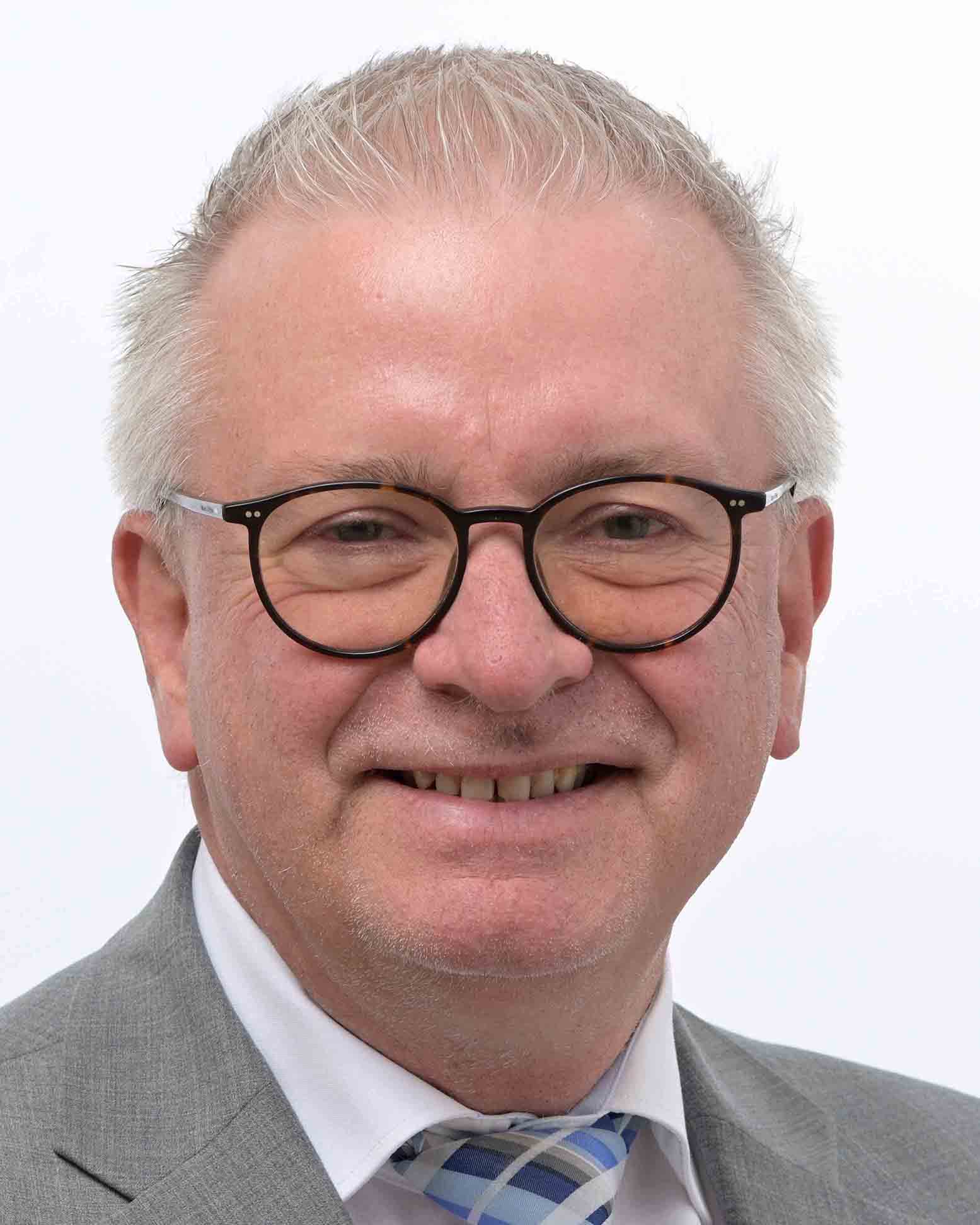

| Rank | Name | Country | Group | Speeches | |
|---|---|---|---|---|---|
| 1 |

|
Lukas Sieper | Germany DEU | Non-attached Members (NI) | 390 |
| 2 |

|
Juan Fernando López Aguilar | Spain ESP | Progressive Alliance of Socialists and Democrats (S&D) | 354 |
| 3 |

|
Sebastian Tynkkynen | Finland FIN | European Conservatives and Reformists (ECR) | 331 |
| 4 |

|
João Oliveira | Portugal PRT | The Left in the European Parliament (GUE/NGL) | 232 |
| 5 |

|
Vytenis Povilas Andriukaitis | Lithuania LTU | Progressive Alliance of Socialists and Democrats (S&D) | 227 |
All Contributions (162)
Cooperation on the fight against organised crime in the Western Balkans (debate)
Mr President! The report on cooperation in the fight against organised crime in the Western Balkans highlights existing problems in this area, but also highlights achievements in the fight against organised crime. Fighting organised crime there is also a high priority for us in the EU, as we are very closely intertwined with the region. The structures there affect us in the EU. However, it is primarily a problem for the people of the region, as it undermines their right to security and social cohesion, as well as their trust in the democratic system. Organised crime also creates obstacles to democratic reforms and hinders the accession process, as the threat posed by Western Balkan criminals has been used as an argument against EU accession in some EU Member States. The report stresses that depriving the Western Balkan countries of a European perspective worsens the situation with regard to organised crime and that only by accelerating the EU integration process and cooperation with Member States can the situation improve. The rule of law and the fight against corruption and organised crime are the main areas where the Western Balkan countries need to achieve results in order to progress on their path towards the EU. The report therefore calls on the governments of the Western Balkans to step up their efforts to promote the necessary reforms. The EU should continue to support them through financial assistance and practical cooperation. The report points out that organised crime is a structural problem. Links between organised crime, politics and business existed before the disintegration of Yugoslavia and continue to exist. In the report, we therefore call for the archives of the former Yugoslavia to be opened and, in particular, for access to the files of the former Yugoslav secret service (UDBA) and the secret service of the Yugoslav People's Army (KOS), and for the files to be returned to the respective governments upon request. Cooperation and exchange of intelligence with international partners such as the United States, the United Kingdom and international organisations such as the Organisation for Security and Co-operation in Europe and the United Nations Office on Drugs and Crime (UNODC) are critical to uncovering and dismantling criminal networks. The report focuses not only on the problems but also on the successes in the fight against organised crime and highlights the excellent cooperation with Eurojust, Europol and Frontex. At the same time, the report calls for such agreements to be concluded with those countries which do not yet have cooperation agreements with Eurojust, Europol or Frontex. Political considerations should not stand in the way of successful cooperation in the fight against organised crime, which benefits all our citizens. Finally, the report underlines the crucial role of civil society organisations and independent media in monitoring the work of governments and detecting corruption, and calls on the competent authorities to strengthen the protection of whistleblowers in order to increase the capacity to dismantle organised criminal groups.
Situation at the Ukrainian border and in Russian-occupied territories of Ukraine (debate)
Mr President, ladies and gentlemen. Mr High Representative, I am grateful for your comments and would like to stress the seriousness of the situation. Yes, we are now in deterrence mode. This renewed Russian build-up of troops is unprovoked, unless one considers the simple existence of an independent Ukraine as a provocation – a country that seeks to stabilise and develop democratically, economically and socially. Putin's myth of the threat of NATO, on the other hand, is ridiculous. He knows that, Brezhnev already knew that. NATO, as an alliance of saturated democracies, does not attack anyone. It is not the weapons of NATO, but the way in which one organizes oneself in freedom, which then becomes a provocation, if that could even be successful in Ukraine. The continued aggression against Ukraine since 2014 has not affected Ukraine’s determination to establish a functioning democratic state. Because here it is so clear who the aggressor is, equations of victim and perpetrator are also not appropriate. The aggressor must de-escalate by withdrawing troops. Ukraine has every right to defend itself under Article 51 of the UN Charter, and I am grateful to all those who help it with weapons. We as the EU – hopefully coordinated with our transatlantic partners – will respond civilly to military aggression, but effectively. And we should hold up the instruments for that. It will hurt if SWIFT is turned off. It will also hurt the system profiteers if all long-term visas are cancelled. And one thing should also be clear: A Nord Stream pipeline will deliver nothing if war is waged at the same time, because we will not finance the war with the revenues from that pipeline. (The speaker speaks a few words in Ukrainian.)
Situation in Bosnia-Herzegovina (debate)
Madam President, ladies and gentlemen, There is much in the Argen in Bosnia-Herzegovina. The Presidency has raised a number of issues, but the biggest challenge the country, the EU and the international community are currently facing is the threat to the territorial integrity of the country, yes, the attempt to bury the Dayton peace agreement. This threatens peace not only in Bosnia-Herzegovina, but in the entire region. The person who does this has a name: Milorad Dodik. I wonder why the Council is not in a position to address this clearly – on 15 November, for example. This man, who at least undercover Supported by certain circles in Belgrade and certainly from Moscow, it must feel confirmed if it is not explicitly addressed. I ask the Council and the Commission: For example, how do you coordinate with the High Representative on this issue? Are you ready, for example, to increase the ALTHEA mission visibly? Or to practice in both entities the transfer of the troops, which are in readiness outside Bosnia? Then there is a Council decision of 26 March providing for restrictive measures and sanctions against persons who undermine the territorial integrity and constitutional order of Bosnia and Herzegovina. Are you prepared to initiate sanctions against Mr Dodik and his associates? I believe that this requires a clear answer here in this Parliament.
The outcome of the Western Balkans summit (debate)
Mr President, instead of technocratically confirming already taken decisions and bureaucratically assessing any pre-accession progress, I wonder why the danger of a break-up of Bosnia Herzegovina has not been an issue in this summit. The recent concrete steps towards the secession of the Republika Srpska undertaken by the nationalist leadership under Milorad Dodik should ring all alarm bells. The votes in the Republika Srpska (RS) Assembly foreseen for next week are without precedent and, being illegal and unconstitutional as well as violating the Dayton Agreement, have the potential to generate concrete grounds for the RS leadership to pursue their secessionist agenda and thereby endangering stability and even peace in the whole Western Balkans. I therefore urge the Office of the High Representative (OHR) and the EU to issue a strong and possibly joint statement condemning the vote in strong terms, as well as declaring it illegal. Further, I trust that in the coming weeks, the EU and the OHR will use all possible diplomatic influence and, finally also, the OHR Bonn powers to bring the nationalist forces in the Republika Srpska leadership to reason. I wonder what concrete measures, including sanctions, or the removal from office of those responsible are being considered in order to maintain the territorial integrity of Bosnia Herzegovina and the peace in the region. You know what happens if we allow Dodik to declare independence? The next day he will be recognised by Putin, who takes revenge for Kosovo, and the green men are probably already on standby somewhere, perhaps in a niche in the Russian information centre. We cannot allow that to happen. Let us react properly and in time.
EU-Taiwan political relations and cooperation (debate)
Mr President, dear colleagues, first of all, my sincere thanks to the rapporteur for the cooperative approach he has taken. There is an island off the coast of mainland China that organises a Chinese society in a democratic and prosperous way and is therefore, as such, a provocation for the Communist one-party state. I welcome this first report on the EU-Taiwan relations in which we explore the potential of extending and deepening relations with this island. We are not crossing red lines. To the contrary, we want to preserve the status quo across the Taiwan Strait and demand that no unilateral steps be taken and certainly no violent steps from mainland China. In return, we should not unilaterally change the status by recognising Taiwan diplomatically, but an acronym EBFDR, everything but formal diplomatic recognition, should encompass a bilateral investment agreement. We should, for instance, have an interest to secure the supply of semiconductors from Taiwan and facilitate Taiwanese investment in this field in the EU. So I ask the Commission to push the Member States in this regard and be it with the argument that we have all reason to apply it with the democratic part of the Chinese society, when we have already concluded it with the dictator part. It is also in our interest to see Taiwan as an observer in relevant international organisations such as the World Health Organization, or the International Civil Aviation Organization, and it is good to see that Taiwan is a stable factor when we look at our Indo-Pacific strategy. We can also learn a lot from how Taiwan has built up resilience against Chinese cyber war activities and in that regard I welcome the visit of our INGE Committee next week in Taiwan.
Situation in Tunisia (debate)
Madam President, ladies and gentlemen, The fact that the economic, social and pandemic situation in Tunisia is difficult has not only been known to all those involved since this spring. By the way, there are many countries that are in a complex transformation process, where, for example, there is also the problem of corruption. Nevertheless, I would not recommend any of the presidents there to send a democratically elected parliament home. President Saied did not pursue the dissolution of Parliament with the aim of new elections, but he invoked a state of emergency Article 80 in the event of imminent danger to the country, its security or independence, which undermines the normal functioning of the public administration – I quote the Constitution. There is no dispute between Parliament and the President. At the latest after that, he left the framework of the Constitution. He should have first consulted the Head of Government and the President of the Parliament, and he should have taken into account the fact that, in accordance with Article 80(2), in this situation, Parliament is considered to be in permanent session. Instead, he suspended it indefinitely, declaring its decrees above the Constitution by Decree 117. In my opinion, this is nothing more or less than a breach of the constitution from above, and it cannot be cured by the fact that there is applause from the street. Instead of lonesome decisions outside the constitution, the country needs a national dialogue, perhaps coordinated by the Quartet, which has already been helpful in the past and has received the Nobel Peace Prize for it. And as a parliamentarian, I say: This includes, of course, the democratically elected parliament.
The state law relating to abortion in Texas, USA
Mr President, I speak today on behalf of the PPE Group in order to announce that our Group will not participate on the substance of this debate. This debate does not address a case of breaches of human rights, democracy and the rule of law. This debate rather constitutes yet another example of abuse of this House’s so far well—established and highly respected procedure of addressing urgent cases of breaches of human rights, democracy and the rule of law in third countries where they are most at risk. In countries where there is no rule of law, where laws are applied arbitrarily, where there is no freedom of expression, or where individuals or groups are systematically harassed, and where courts are obedient executers of the ruler’s will. None of that is the case in the United States. To the contrary; this controversial law is not in force yet, has been addressed and continues to be evaluated in different court instances. Just yesterday, a federal judge stopped the application. And of course, further instances will follow. So who are we to put such a situation on the same level and address it with the same discussion instrument as when we discussed China’s stance on Hong Kong or the Uighurs, or Russia’s, or Belarus’s, or Cuba’s multifold human rights violations? For some, it’s probably yet another expression or occasion of general anti—Americanism. I call on the more reasonable colleagues in the Group that signed not to support this motion as we will not support this motion.
The situation in Belarus after one year of protests and their violent repression (debate)
Mr President, dear colleagues, the Lukashenko regime just prevented my arrested innocent friend Pavel Sieviaryniec from attending his father’s funeral. My sincere condolences to his family. Such behaviour shows the evenly Stalinist and fascist character of this regime. We must keep the Belarus issue on the agenda. Personal sanctions must be extended to all involved in the persecution of political prisoners. They must be more effectively implemented and extended to private economic profiteers and those state industries that create income for the regime. And let’s add those Russian entities that buy industries in Belarus as we speak. What we need is to strengthen the legitimacy of the opposition. I wish that the Commission prepares the suggested conference on the future of Belarus, which would involve the leaders of the opposition and civil society to discuss how to implement the pledged financial package for a democratic Belarus once it is emerging. What we do not need is ambassadors from Member States who refuse to meet Svetlana Tsikhanouskaya, and I wonder whether that is an act of appeasement rather or of personal convenience not to be declared persona non grata. In both cases, not acceptable. (Exclamation in Bielarusian)
The future of EU-US relations (debate)
Mr President, ladies and gentlemen. If you look at a world map and mark the liberal democracies with which we share common values, if we then complement the existing trade flows and, as a third element, the security arrangements, then the close links between the EU and the US become particularly clear. In order for them to remain our most important strategic partner in the long run, we need to do our homework. In the area of global security, we must jointly evaluate who is threatening our way of living in freedom and democracy. In doing so, we must become more attractive as a partner for the USA, an ally who is also able to act autonomously in certain parts of the world and certain situations, who can also assume his part of the responsibility when the USA is not there. At present, we appear to be more of an ally in need. We can no longer afford to stay that way. In the area of trade, we need to realise the full potential by first ending mutual sanctions, then looking at the areas where tariffs are mutually abolished, standards are mutually recognised or harmonised in the future. The Trade and Technology Council is certainly a suitable body for this purpose. In fact, I would like to see a free trade agreement with the United States in the not-too-distant future. Based on enhanced bilateral cooperation in the areas of security and trade, we will then be able to establish global trade and security cooperation with like-minded partners in the future. Only an alliance of democracies can permanently meet the challenge of a totalitarian China and, in Europe, of an aggressive Russia.
Situation in Afghanistan (debate)
Madam President, dear High Representative! What lessons we have learned from Afghanistan and what consequences we draw with regard to other conflicts, but also in general, from what instruments we will use in the future in foreign, security and defence policy or create ourselves anew, will be discussed in detail elsewhere. In the short term, I think we all agree that we must also bring humanitarian aid directly into the country, above all through the channels of the United Nations, in order to avert the likely famine. We continue to all agree that we are the vulnerable groups who have worked for us, or even those who are the focus of the Taliban, whether they are journalists or civil society activists, especially women’s rights activists or also teachers or public servants in an exposed position – we must ensure that they can come to us. To do this, we need to talk to the Taliban – right – but without formally recognising them. On the one hand, I think we have now stopped development aid for the first time. I think we have to look at this project-by-project or sector-by-sector, for example, in the field of agriculture, to see whether it is possible to come to the conclusion that these projects can still be carried on with the local cooperation partners who remain there. However, this must be left to a further assessment. And we also need to ensure that neighbouring countries receive immediate support when it comes to ensuring that people who may be fleeing are accommodated in a dignified manner.
Situation in Tigray, Ethiopia (debate)
Mr President, I’m glad to see that apparently there’s broad consensus in the analysis, both from the Council, the Commission, and I assume also from us here in Parliament, when we assess the situation in Ethiopia. I think it is a high need to get our act together and to push towards those who are responsible on the ground allowing, in the first place, the access of humanitarian assistance. I think what has been described – that is a ceasefire since the 28 June and that the troops have to withdraw and talks have to start – is positive to note. That is right, but the most urgent thing now is to get the EU humanitarian aid to the millions of people who are internally displaced and who are exposed to immediate famine. Accordingly, I think one thing that is really doable is to ask the responsible people in Addis to allow the airports to be used, because I think that is the access that is possible. If bridges are destroyed and there is no road access, at least the airports must be made available. There should be no such thing as a flying prohibition. That is, I think, what we have to concentrate on. We also call for a UN—mandated, independent, transparent and impartial international investigation on the alleged war crimes, which is indispensable to start a process of national reconciliation.
EU global human rights sanctions regime (EU Magnitsky Act) (debate)
Madam President, ladies and gentlemen, It is good that since December last year we have had the opportunity to use this sanctions regime to sanction individuals who have been guilty of serious human rights violations. It is an advantage that we do not have to impose sanctions on an entire country, but can use it very specifically against the individual offenders. However, as has already been mentioned, we believe that the mechanism is incomplete. Certainly, it would have to be considered to include the aspect of corruption in a reform or, as the British have done, to introduce a separate mechanism in this context. I am flexible. But in the matter itself, I think it is right that we include corruption here. Another deficit is certainly unanimity, and we should talk about it with the Member States concerned. In fact, it cannot objectively be the case that, if one finds a human rights violation, then in extreme cases 26 Member States take the view that: Yes, this person is responsible, and only one Member State claims the opposite. In fact, this can only be based on non-objective considerations, such as financial interests, and we consider this to be politically unacceptable. That is why, I think, we should also use the normal legislative approach in the case of an amending regulation. That is to say, there is a proposal from the Commission, which then goes to the Council and Parliament, and then it is decided in codecision. And then, I think, on the one hand, we will be able to involve corruption, but we will also be able to talk to the Member States concerned, which have so far been opposed to the lifting of unanimity.