

| Rank | Name | Country | Group | Speeches | |
|---|---|---|---|---|---|
| 1 |
|
Lukas Sieper | Germany DE | Renew Europe (Renew) | 487 |
| 2 |
|
Juan Fernando López Aguilar | Spain ES | Progressive Alliance of Socialists and Democrats (S&D) | 454 |
| 3 |
|
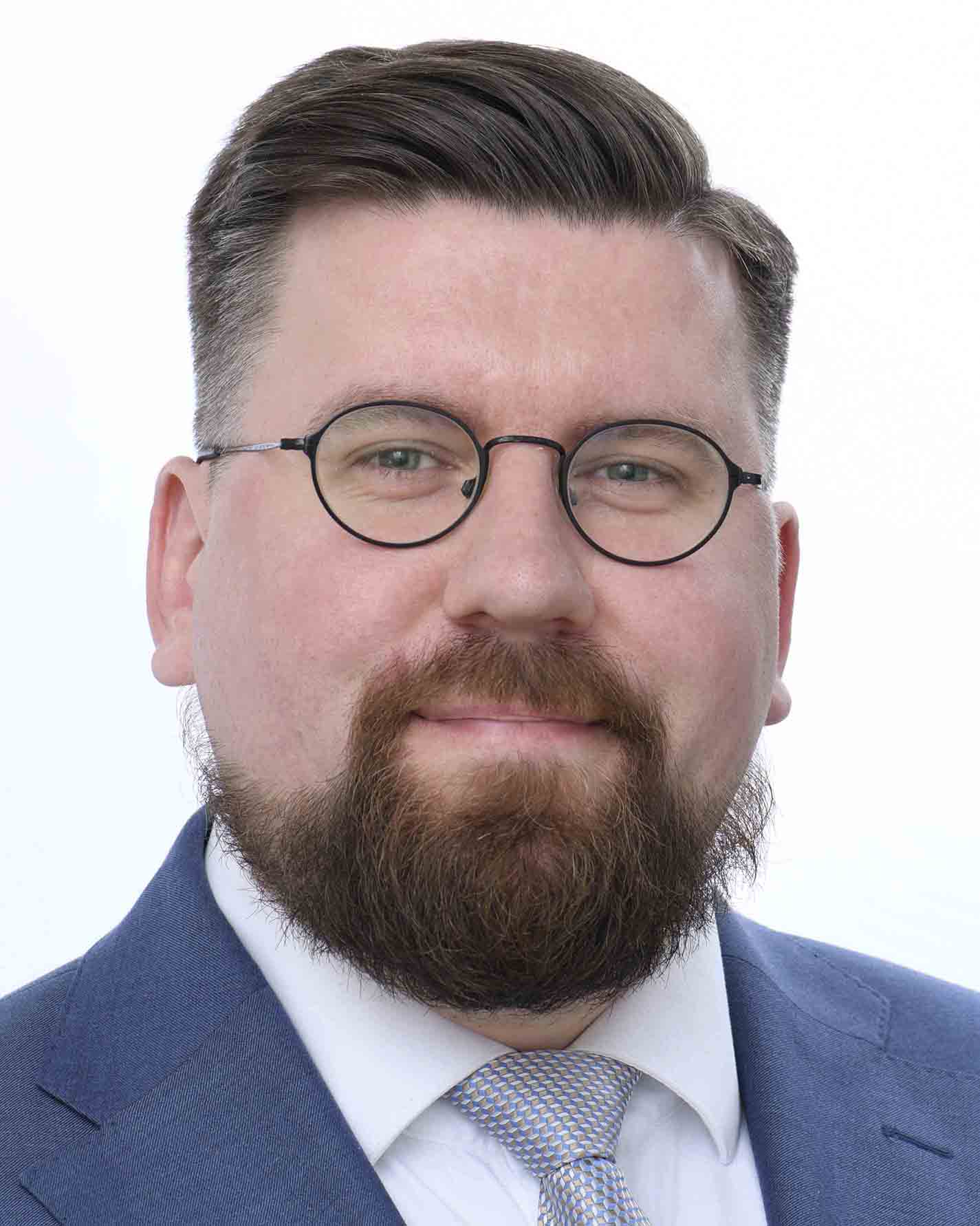
Sebastian Tynkkynen | Finland FI | European Conservatives and Reformists (ECR) | 451 |
| 4 |
|
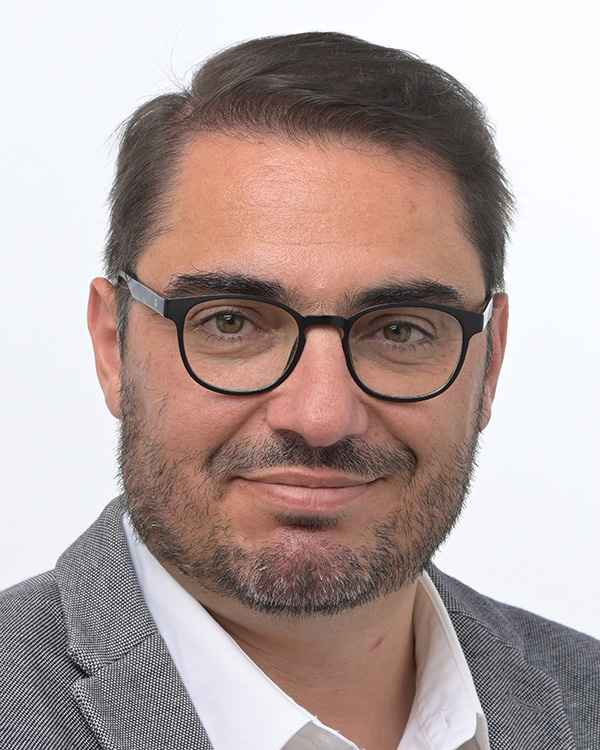
João Oliveira | Portugal PT | The Left in the European Parliament (GUE/NGL) | 284 |
| 5 |

|
Vytenis Povilas Andriukaitis | Lithuania LT | Progressive Alliance of Socialists and Democrats (S&D) | 273 |
All Speeches (79)
Presentation by the President-elect of the Commission of the College of Commissioners and its programme (debate)
Date:
27.11.2024 10:50
| Language: DE
Speeches
Madam President, Madam President of the Commission! In the Commission you are proposing, every government can once again appoint a commissioner. But to conclude that you can freely change majorities in this spectrum is a fallacy. This degrades this House to a notary of the Commission. A self-esteem that we already had to experience during the hearings. Those who prefer to form narrow majorities with the right-wing extremists rather than work out a stable pro-European solution with us should not be surprised if we refuse our support at some point. Before the summer, the SPD gave you a leap of faith to build a commission along the political forces that underpin it. With the promotion of Mr Fitto to Vice-President and the fact that since then your party family, the EPP, has been forming a majority with right-wing extremists against the parties of your original pro-European majority, we have come to a point where we have to tell you: That goes too far, take it seriously.
The important role of cities and regions in the EU – for a green, social and prosperous local development (debate)
Date:
23.10.2024 18:37
| Language: DE
Speeches
Mr President, Commissioner, ladies and gentlemen! Local authorities and the European Union are in a boat. The Member States are giving us more and more tasks, but no money. In such a situation, you have to be particularly good at budgeting. It was a particularly bad idea for the Commission to put the money from the EU budget into an overall package and then – in a nutshell – send it over to the Member States without any further specifications. The consequence of this is that a targeted use of EU funds by mayors, by state governments, is no longer possible. Even worse is the erosion of parliamentary rights. If that happens, we in the House will no longer be able to define democratically what European funds are used for in cohesion policy. We need to ease the burden on the Commission due to shallow water level reports; The case of Hungary has shown that, unfortunately, the Commission does not cover itself with glory when it releases funds politically arbitrarily. This is unacceptable! Therefore, please make sure in the Commission that this idea will never, ever see the light of a proposal.
U-turn on EU bureaucracy: the need to axe unnecessary burdens and reporting to unleash competitiveness and innovation (topical debate)
Date:
23.10.2024 13:28
| Language: DE
Speeches
Mr President, Commissioner, ladies and gentlemen! This debate, as I predict it now, will be a strange one. For all, I suppose all, will say here: Yes, cutting red tape is important and right, and we have to tackle that – and yes, I say so. But the really exciting thing is: What do you mean by that? I am annoyed in this debate that this buzzword is always thrown around with bureaucracy reduction, and that no concrete reduction proposals are made at all. I'm annoyed that you talk about percentages, but can't even name the reference to which this is made. I'll tell you what I don't mean by this: For me, it must not be a wolf in sheep's clothing, namely the grinding of political standards and goals that the bureaucracy is capable of achieving, or the pushing away of all the annoying environmental and social standards; I say no to that. But I say yes to the merging of reporting obligations, I say yes to the use of digital tools. Above all, I say 'yes' to an administration which, in its administrative practice, abandons full-fledged mentality and puts itself at risk. But I am clearly saying no to lowering standards of protection under the guise of cutting red tape.
Statement by the candidate for President of the Commission (debate)
Date:
18.07.2024 10:52
| Language: DE
Speeches
Madam President, Mrs von der Leyen, ladies and gentlemen! It is the noblest task of the European Commission to organise the protection of Europe from its internal and external enemies and adversaries. We must not underestimate the enemies from the inside, they come in the guise of open rejection – we have seen a few splendid examples here today – or in the sheep's clothing of those who appear so cooperative in the Council but rebuild their land at home. Mrs von der Leyen, we in the S&D Group are reaching out to you to join us in fighting the opponents of Europe's right-wing EPP through a policy against inequality. The election today involves a responsibility that begins today and ends only in five years, namely that the pro-European and democratic forces come together. You and the EPP must resist the temptation to simply build majorities with the forces to the right of the EPP. They have a responsibility to reject any concession to right-wing extremists today and to keep it that way in the future. Mrs von der Leyen, the supporters in Europe are sitting in this House and not in the Council. You sit here to the left of the EPP and not to the right of it. That's what we're going to measure you against today, that's what we're going to measure you and your EPP against in five years.
Prohibiting products made with forced labour on the Union market (debate)
Date:
22.04.2024 20:03
| Language: DE
Speeches
Madam President, dear Vice-President of the Commission, ladies and gentlemen! This week is an important one: With the vote on the ban on forced labour products and the EU Supply Chain Act, we are creating nothing less than a reprogramming of our internal market. We are finally using our global economic power, not only to set product standards worldwide, but production standards. We say now: If you want to make a profit with the hard-earned euros of our European consumers, you have to work for the protection of human rights and the environment. We say: No one should have a competitive advantage because human rights are being disregarded and the planet is being desecrated. The worst injury is forced labour. Thanks to Samira Rafaela and Maria-Manuel Leitão-Marques for their work on this regulation. With the EU Supply Chain Act, we require companies to use their private power to protect human rights. By banning products derived from forced labour, the state also assumes its responsibility and prevents the market access of the worst human rights abuses. Finally, ladies and gentlemen, at last we dare to weigh all our economic weight in order to make this world a better place. Let us not allow this to perish in the tumult of cutting red tape!
Madam President, Commissioner, ladies and gentlemen! In fact, this was already a special plenary debate, as I heard a word of criticism, but otherwise cross-party broad support throughout the House. When you hear something like this, you have to say: Either we did everything wrong, or we did everything right. Of course, I think the former is the case. There are many reasons why this was possible, which also shows us how we can make good policies for citizens in the future mandate. I want to combine my thanks with that. First of all, I would like to thank Commissioner Reynders for his unfamiliar resistance to the Regulatory scrutiny boards He quit and brought the proposal anyway. To the shadow rapporteurs who supported the work, supported the ambition and participated in finding a high result, rather than agreeing on the lowest common denominator. We have a Council Presidency that, at the right moment of the trilogue, dared to take another step so that we could have a real right to repair and went beyond both the Council mandate and the Commission proposal, as well as staff at all levels who have worked hard to achieve this result under a fierce timetable. This combination shows how we can achieve good results in the next mandate. We now have a quick and easy answer for the upcoming election campaign to the question we always get: What does Europe bring me? The answer is: A right to repair. But that's not the end of the story. The history of product development shows: There must be no rust. Therefore, let us not forget that even in this right to repair, there are still brakes that we need to solve. We need to expand the product categories, and I am counting on the Commission to take an ambitious and swift approach here. And we need to take intellectual property to remove the last brakes on a real right to repair.
Madam President, Commissioner, ladies and gentlemen! This mandate, which is coming to an end this week, was under the impression that our generation must overcome the greatest challenge here, namely to stop man-made climate change. A challenge that doesn't end on June 9. Our economy must face this challenge in the same way. However, the market does not always seem to be able to produce products that take on this challenge and face it. A phenomenon that falls into this category are products that are becoming more and more short-lived and end up in the e-waste yard in the shortest possible time. We are polluting the environment, and we are wasting important and critical raw materials. There are reasons for this. Our economic model is based on fast consumption. We've been educating our consumers over the past few decades to take their broken devices to their seller, who can do a lot but in most cases doesn't fix them. However, a full department store with many new devices that convince us that every new generation of a particular smartphone is the disruptive innovation of recent decades. If we want to change this, we need concrete rights for consumers. Specifically: If consumers repair their products instead of buying a new one, then we are changing the basis for the misdevelopment described above. With the right to repair that we're putting to the final vote this week, we can do it. We make repairs more attractive during the statutory warranty period. By extending the statutory warranty period by a flat rate of one year, the consumer then decides on the repair. On top of that, we create a claim against the manufacturers that they have to repair a product even after the warranty period has expired. And we are creating an obligation for all Member States to promote repair in their territories. However, in order for this to actually work in practice, it is above all necessary to strengthen an actor, namely independent repairers, who can repair the goods at home around the corner, and at affordable prices. Price driver number one for repair by independents, these are the spare parts prices. Therefore, in our right to repair, we create a claim to market-oriented spare parts prices, so that moonlight prices, in which a mirror in a car costs 900 euros, are a thing of the past. Above all, we prohibit obstacles to repair for hardware, software or contractual reasons, such as the famous discontinuation of the contractual warranty when using non-manufacturer spare parts. However, all these important elements are limited to certain product categories, namely those for which EU law itself provides for repair requirements. This is understandable in order to somehow match the foresight of manufacturers. Unfortunately, it is not convincing. It is a real right to repair, if we can also apply it to every product category, as we do with our normal right of withdrawal, and especially when it comes to the obstacles to repair. But I take the Commission, and Commissioner Reynders in particular, at the wording of the trilogue, to say that the Commission will expand the list of applicable product categories as soon as possible. What is still ahead of us is a discussion about the role of intellectual property, which is still often mentioned in order to create obstacles to repair. Something more needs to be done in the future. Now, however, with the right to repair, we are taking the decisive step to transform our single market into a real market that puts sustainability at its core and plays its part in combating climate change.
European Semester for economic policy coordination 2024 – European Semester for economic policy coordination: employment and social priorities for 2024 (joint debate – European Semester)
Date:
13.03.2024 14:49
| Language: DE
Speeches
Mr President, Commissioners, ladies and gentlemen, Let me briefly discuss a few things from this debate, first of all the role of the European Parliament in the Semester. I think it is a bit absurd that there are actually elected MEPs who refuse to give the European Parliament more rights of influence. When we look at the role of the European Parliament in the Semester, we are thrown away with information – fantastic. But if we find something that doesn't suit us, we have no way of making any consequences of it. The sharpest instrument we have is this debate here and now – and I do not know whether Valdis Dombrovskis or Nicolas Schmit have just produced a milliliter of sweat more during this debate and now in this response to it. But it also has something to do with ourselves. Because we, as the European Parliament, must then at least take ourselves seriously with what we have. This means that we must get out of our ideological trenches if we are to formulate our own requirements for the Commission. I would therefore like to express my thanks to Mr Johan Van Overtveldt's contribution, because in his presentation he showed how we can formulate a common idea at a high level here, beyond the right and the left. Yes, it is about competitiveness, and when it comes to competitiveness, we need innovation. Then universities must be freed from the neoliberal delusion of writing third-party funding applications, but real research must be driven. Private capital must be brought into ideas so that they become market-ready and do not lose themselves in shareholder value. We need a competition policy that will then protect small businesses from being taken over by larger ones so that they can grow, so that we can create creative destruction in our single market. And yes, then we also need to complete the internal market. Yes, and that's what I say as a Social Democrat: There is more potential through more liberalization. But then I'll say the same thing: We like to reach out to the other side of the house if we create high social standards and high standards of protection at the same time. Then we find ourselves on the highest common denominator instead of the smallest, which then the European Commission really need not be afraid of.
European Semester for economic policy coordination 2024 – European Semester for economic policy coordination: employment and social priorities for 2024 (joint debate – European Semester)
Date:
13.03.2024 13:34
| Language: DE
Speeches
Mr President, Commissioner, honourable Presidency of the Council, ladies and gentlemen! The challenges for European economic and budgetary policy are enormous. Above all, we need to make our economy fit for the fight against climate change, including its opportunities. We need to ensure our competitiveness in a world where all other economies open the tax money cock to support their industries. At the same time, in the face of threats from the East and the withdrawal of our partners in the West, we must strengthen or partially rebuild our defence capabilities. All this against the background that people are suffering from increased costs of living due to inflation and cynical take-away effects from dominant companies. There are many households wondering how they can even shoulder the increased prices, mortgages and other costs. The call for an effective state is growing – and this is where the European Semester comes into play. It is only through a good interplay of Member States' economic and budgetary policies that we prevent the emergence of macroeconomic imbalances that put pressure on our euro. And when we look at this in the European Semester, there are some question marks. The European Commission itself estimates that there is an investment need of 700 billion euros per year, just to get the green and digital transformation added. How can this be achieved? States that could do it with their own public funds – like my home country, Germany – cannot do it because we have shot ourselves in the foot with an absurd debt brake. States that are allowed to do so, however, cannot do so because they do not have the fiscal capacity at all. The reform of fiscal rules will not change that. What we need is a permanent European investment fund, which is also gladly financed from new own resources. The FTT is on the table here – Member States just have to raise their hands. At the same time, we note that the European Semester makes it very easy. It has a social imbalance. The country-specific recommendations by which the Commission addresses Member States’ policies are themselves limited to enforcing the national recovery and resilience plans. And the social scoreboard is becoming less and less relevant. Unfortunately, the number of social recommendations has been reduced. This must be different, because if the social imbalance becomes greater, the economic imbalances grow, and then we have to use even more resources so that the euro does not come under pressure. After the reform of the fiscal rules, the semester will therefore become even more important than it already is. I therefore call on the Commission to make even more use of this new instrument, as we are now going to change it in the fiscal rules, and also to tackle the social imbalance by inserting the social dimension of the semester. And I call upon us as legislators: Let's clear the way for a permanent European investment fund that mobilises the public funds we need so that we can succeed in the green and digital transformation of our economy and at the same time take everyone with us!
State of play of the corporate sustainability due diligence directive (debate)
Date:
12.03.2024 19:33
| Language: DE
Speeches
Madam President, Commissioner, ladies and gentlemen! The EU supply chain law is now a tragedy of Shakespearean proportions. First act: to the Member States. What kind of theater are you playing? To the FDP or Italy – you put your own Council troop to the test. The Presidency of the Council is doing everything it can to enforce the requirements of the Member States, is making a deal, and then it says: Etch, no matter. Or to France: You'll get it all! The finances are out and not even optional anymore. And at one point you shy away from it again, arrive with the poisoned offer: Hey, offer limit to 5,000 employees. How should we deal with these negotiating positions in the future and take them seriously? Or do we want to say goodbye to serious politics and close the shop? Second act: Fake news, bureaucracy. So either you forgot that the reporting requirements have long been adopted with the votes of the FDP and the EPP, and the Supply Chain Act just said that's enough. The scandal here is the imprinting of reporting obligations from the big to the small – but that is what we have just tackled in the EU law. The problem for some is the German Supply Chain Act. They aim at German law and shoot the European – insane. Well done. All of this is just cynicism. They want to produce paper to then prove themselves freely in a possible liability lawsuit. However, it means: They don't want to change anything. I'm just saying: Pfui, scandal! Stop the gossip! It is not too late to get together and vote for the trilogue result.
Substantiation and communication of explicit environmental claims (Green Claims Directive) (debate)
Date:
11.03.2024 18:47
| Language: DE
Speeches
Mr President, Commissioner, ladies and gentlemen! How nice it would be if we, as consumers, could go to the store and spend our hard-earned money on products that don't harm the planet. As soon as you arrive at the store, you are flooded with climate-neutral and ecologically valuable products. After that, the planet would have to become cooler rather than warmer. Wouldn't it be wonderful if all this was true? But it doesn't. There is Wildwest in the eco-information, if you can pull the money out of our pocket. The worst offense we have, thanks to the prohibition of greenwashing and consumer empowerment. Now, however, it is important to create trust in environmental statements. We want our money to go in the right direction. And can we do this without prior scrutiny by the authorities? But I don't believe it when you look at today's situation in the shops. Therefore, it is right to stick to the previous test, and I call on the House to support that as well. And while we're at it: Almost as often as it is claimed that products are green, it is claimed that they are socially valuable. It is also time for an social claims-Regulation.
Regaining our competitive edge - a prosperous EU in a fragmented global economy (topical debate)
Date:
28.02.2024 14:50
| Language: DE
Speeches
Mr President, Commissioner, Minister, ladies and gentlemen! Europe has a competitiveness problem. We tackle this by making Europe a place of creative destruction. It's not government money that will save us, it's innovation. But what about Europe? In universities, everything takes place except research. Instead, researchers are placed in vast amounts of research funding applications that have little success. A product is hardly brought to market because there is a lack of capital and capital thinks more about stakeholder value than promoting the idea. The market does not pay attention to market power, but does not protect the little ones when they come. Killer acquisitions is the keyword. What do we need? We need universities that become the place of research by freeing them from the neoliberal grip on the market model of our universities. Second, capital needs ways to innovate through a corporate legal form that is committed to the company's purpose. And thirdly: Above all, we need a competition policy that combats market power and not just abuses, and therefore our little ones before the killer acquisitions protects.
The case of Dentsu tracking and the lack of transparency of the European Commission with regard to the tobacco industry (debate)
Date:
08.02.2024 15:06
| Language: DE
Speeches
Mr President, Commissioner, ladies and gentlemen! People's trust must be earned hard, and that trust from our citizens is so extremely important for the work we do here. In principle, it has always been three to zero when the EU starts to regulate. We are expected to act in the public interest when we act here. A trust that we build up hard over years, decades, but can be smashed in milliseconds; Unfortunately, this House is also an example of this. This makes it all the more important for the European Commission, above all, to lead the way as a shining example and not to leave questions unanswered – this is the case here with Dentsu Tracking. It is bizarre that such an expensive contract for the control of tobacco products is awarded and then a senior official of the Directorate-General for Health, who is responsible for it, goes to this company of all people. Yes, this may have somehow been in line with the rules, but a Gschmäckle, as we say in southern Germany, already has it – and that must be prevented. No, the revolving door effects that we have, on the other hand, the Commission is still not immune. It leads to concrete questions about the integrity of the contract and the choice of the contractual partner. Commissioner, I have heard you report on the terms of the contract and what the terms of the contract look like - please make the contract public! Make it transparent so that we can see whether the conditions have actually been tightened, whether Dentsu is actually the most suitable contractual partner for this. Create special transparency here! Show the European Commission in the fight against tobacco that it is not such a typical Von der Leyen mega headline that we fight against something, but in the end only hot air and nothing comes out of it! Where are the proposals that the Commission announced in 2021 on tobacco regulation and then quietly withdrew? We naturally ask ourselves the questions if we want to take such an ambitious approach against tobacco as the main cause of cancer, which is the best and easiest to prevent. Why isn't there anything coming? We do not see transparency about the fact that lobbyists have access to the Commission. Yes, internal examination is now to be carried out, but that is not enough for a long time. We ask ourselves why we want to fight tobacco, but do nothing. And we see a contract that has been awarded, where we do not know what it looks like, and where a senior official of the responsible Directorate-General works in one fell swoop at this corresponding company. Let us look at this together as an opportunity to create full transparency here now and, if possible, to make it quite clear in this legislature how the Commission intends to tackle the fight against tobacco. Then maybe we can pull something good out of this whole affair.
Empowering consumers for the green transition (debate)
Date:
16.01.2024 13:01
| Language: DE
Speeches
Mr President, Commissioner, ladies and gentlemen! Our economic model is a discontinued model. More and more quickly we have to buy new products at ever cheaper prices. Our planet can't stand it anymore. Our growth is unsustainable. That's why we need nothing less than a transformation of our economic model so that we can buy better and sustainable products that are durable. For this purpose, products must also look and be offered in this way. We have now completed this with ecodesign. Consumers need to know what they are doing. And they must be strengthened not to be led astray. We have this on the table. Now consumers also need to get real rights, such as a real right to repair with a legal claim against manufacturers, with a ban on hardware, software and contract techniques to make repair more difficult; to ensure that spare parts are available and priced in line with the market and to incentivise consumers to opt for repair instead of a new device – this needs to be empowered by consumers. This has been put to the vote today, we have succeeded in doing so here, and then we must put an end to the right to repair.
Jurisdiction, applicable law, recognition of decisions and acceptance of authentic instruments in matters of parenthood and creation of a European Certificate of Parenthood (debate)
Date:
13.12.2023 17:29
| Language: DE
Speeches
Mr President, Commissioner! What kind of union do we want to be? Should a status that we have legally obtained as EU citizens in one Member State be recognised throughout the EU? Or are our citizens losing their rights when they cross the border? A child is a child in one Member State and an orphan in the other? Clearly the former. It is not for nothing that the European Court of Justice sees it this way. What the Commission has proposed here is not news. Therefore: Thank you to the Commission for making this proposal and thank you very much to the rapporteur, Maria-Manuel Leitão-Marques, for the report she has presented here. But, of course, we have the risk that it is a legal basis that requires unanimity in the Council. I therefore ask the Commission whether, if the proposal fails in the Council, it is willing to recognise that this proposal serves the free movement of citizens of the Union and can therefore be adopted on the legal basis for the free movement of citizens of the Union, which not only allows for a majority decision, but also regulates the core element of the status of citizen of the Union here.
Threat to rule of law as a consequence of the governmental agreement in Spain (debate)
Date:
22.11.2023 16:56
| Language: EN
Speeches
Mr President, Mr Commissioner, dear colleagues, it is emotionally understandable that the right side of the house is frustrated after the Spanish elections. Yet it is rather surprising that the Commission gets involved in an internal legislative process even before a draft law is adopted. The Commission should, at least in my understanding, stand beyond party politics. But more importantly, the amnesty law has nothing to do with EU law. Amnesties are a common instrument in Europe in order to overcome difficult political situations, where you arrive at a point of ‘tourner la page’. Whether or not they are used is a highly political and sensitive matter, closely linked to the national specificities, something that politically is hard to judge by outsiders in the European Union, including Germans, such as me. Yet EU law can also limit the consequences of such amnesty, admittedly, namely in two cases that the EU Charter of Fundamental Rights violated or the directive on the fight against fraud of Union financial interests. So, let’s have a look at this law that was sent to the Spanish Parliament on 13 November. The Charter is interested that core crimes are not undermined, and these are the crimes related to torture or inhumane treatment. The amnesty law does not apply to these cases. There is the just mentioned directive on the Union financial interests, Article 2 of this law. The amnesty law does not apply to offences against financial interests of the European Union. Colleagues, the Spanish Government did in this law everything to accommodate the requests of European Union law, and the Commission will not come to a different conclusion. What remains is a political question – whether the amnesty is a way to find out the situation in Spain or not. And that is what is to be debated. But it is for the Spanish Parliament to debate this and not the European one.
Reducing regulatory burden to unleash entrepreneurship and competitiveness (topical debate)
Date:
22.11.2023 15:38
| Language: DE
Speeches
Madam President, Vice-President of the Commission, ladies and gentlemen! Cutting red tape is on everyone's lips, but I have to say, it's really an absurd debate. Let the EPP decide. A few weeks ago, they invited Anu Bradford from the United States and cheered her for the Brussels effect, which means: Everyone in the world wants to imitate our product standards, and that's why it's the single market that dominates everything. And at the same time, they want to eliminate just that. Yes, do we shoot ourselves in the knee with our rules now, or is that actually the way to our World Cup? You don't know for sure. But what exactly is bureaucracy? We hear: reporting obligations; new rules; And worst of all: Miserable regulations with bizarre exceptions. Why do we have reporting obligations? We have reporting obligations so that capital can invest in any instruments that can prove that they are sustainable by producing nuclear energy and natural gas energy. This shows that it is not quite the right way to go. Yes, let's take real action! Yes, and that is exactly what we are doing now in the EU Supply Chain Act. Therefore: Welcome to support us in this! And then: Why do we actually have these miserable, gigantic regulations? Every time the Commission sends us a draft, we get bombshells of emails, with friendly amendments from the industrial lobby. They are then brought into the legislative process copy-and-paste, and we get ridiculous regulations. Therefore: Definitely a moratorium. Please, ladies and gentlemen, no more lobbyist amendments in this House! We will also reduce bureaucracy.
Common rules promoting the repair of goods (A9-0316/2023 - René Repasi) (vote)
Date:
21.11.2023 12:19
| Language: EN
Speeches
Mr President, dear colleagues, thanks a lot for this very huge majority supporting the report, which will boost our negotiations with the trilogue to come. In order to do so, Mr President, I would like to request the matter to be referred back to the committee in order to start interinstitutional negotiations, pursuant to Rule 59 of our Rules of Procedure.
Mr President, Commissioner, ladies and gentlemen! Thank you for the debate and, above all, thank you for the broad support that this debate has shown in this House from right to left – above all, not only in supporting the Commission proposal, but in being even more ambitious. This is a clear message to the Council, which it should also take home very much. I would still like to touch on one aspect; he was mentioned by the Commissioner in his first contribution, this link with ecodesign. Yes, it is correct: The market has failed in part – in large part – and produced products that cannot be repaired. In the event of such a market failure, the legislator must intervene through product specifications in the form of ecodesign. But: A consumer right, an individual right such as the right to repair, must not depend on market failure. The right to repair must cover all products. Now I understand why the Commission has proposed the narrowing, and I have partially followed it, but the right to repair is not a worm process of ecodesign – no. There are products that can be repaired without any legal requirements. And shouldn't such a product have a right to repair? I mean no. That is why, as a Parliament, we are including bicycles in the annex. Because the bicycle market, that's the dream market. We have products that are perfectly repairable. We have a well-functioning repair network. Consumers choose to repair. Here everyone can see what it must look like. And that is the vision we should work towards. Secondly, let me go into the form. The Commission wanted all companies to provide very comprehensive information. However, this means that many small repairers no longer find small repairs interesting, because the bureaucracy is far too great compared to the cost estimate for the neighbor around the corner. And in this respect it is correct that the person who wants to use it can make use of the possibility, but who does not want this, is not prevented from repairing it. That's why I take Sandro Gozi's suggestion with me. We, the Parliament, have to negotiate hard here with the Council, because there is still a lot to negotiate here. That is why I am counting on a large, broad majority tomorrow, so that I can face the Council with a broad cross and work out a good result with the support of the Commission.
Madam President, Commissioner, ladies and gentlemen! The Commission has calculated that every year we produce 35 million tonnes of waste simply because we do not repair goods that are actually functional, but throw them away. The majority of citizens want to have their products repaired. But what happens today if you want to have your defective product repaired? Within the statutory warranty period, the seller, who himself cannot repair at all or does not have his own network for repair, but has a storage room full of brand new products, points out to us that it is much better to take a new product instead of having it repaired. The manufacturer, who has the necessary repair knowledge, refers us to the seller. This is what European law wants. After the statutory warranty period has expired, the seller will send us home empty-handed anyway. The manufacturer shakes his head: No, I don't have to fix it. And the independent repairer next door sends us a cost estimate, where the spare part is more expensive than the new purchase of a product from the cheap class. So it's no wonder that this doesn't really work with the repair. And that is exactly what we have to change if we want to have the change from the disposable company to the repair company. It was therefore good that the Commission presented its proposal for a right to repair in March. We need to be more ambitious. Ladies and gentlemen, we need to change the behaviour of consumers. For this, we need more than a legal priority of repair. We need incentives for people to choose repair. Such incentives are: the introduction of an additional one-year warranty period for repaired goods – after all, consumers receive a full two years when they receive a new product. Consumers need a replacement device if the repair takes longer than expected, and they must be allowed to contact the manufacturer if they wish to have it repaired. The manufacturer then fulfils the claim to remedy the defect vis-à-vis the seller as his vicarious agent. The same incentive structure must also apply to the repair after the expiry of the statutory warranty period if the repair is in competition with the cheap new product. Let me now turn to the heart of the right to repair – these are the independent repairers. We consumers do not want to send in our products for repair, but have them repaired quickly around the corner. However, the repairer faces the challenge that some spare parts are not available at all or only at absurd moon prices, or that there are hardware or software specifications of the manufacturer that make repair impossible. Cost-effective spare parts from the 3D printer are suppressed. This must end! We therefore demand that such requirements, as well as disproportionate and discriminatory prices for spare parts, be prohibited. After all, we must not lose sight of those who are not concerned with the choice between repair and new equipment, but between repair and nothing at all. We want all Member States to put in place support measures that make repair affordable for the poorest. With all these measures that we want to decide tomorrow, we will succeed in a real right to repair. On the way here, I would like to thank in particular the shadow rapporteurs of the political groups in the Committee on the Internal Market and Consumer Protection, whose excellent cooperation has led us to this conclusion, which is now before us by a large majority. A large majority of this House will send a signal to the Commission, but above all to the Council, that we need an ambitious and genuine right to repair, where we have to do something more than the Commission has proposed – but certainly not less.
Fighting disinformation and dissemination of illegal content in the context of the Digital Services Act and in times of conflict (debate)
Date:
18.10.2023 19:31
| Language: DE
Speeches
Mr President, Commissioner, ladies and gentlemen! Law is only as good as its enforcement. That is why it is good, Commissioner, that you have acted. When dealing with fake news and hate messages, social media has once again confirmed that self-regulation does not work, especially if self-limitation interferes with commercial interests. This is precisely the moment when the law must intervene with its full force. Let's make one thing clear: Hate speech is not protected in the offline world, nor is it protected in the online world. Many have claimed that the Digital Services Act is beautiful words, but Big tech Didn't take care of it. Elon Musk is testing us by infiltrating our democracy under the guise of freedom of expression. That is why, Commissioner, I am grateful that you are now intervening with full force. Please stay tuned! Stay strong! Enforce our Digital Services Act so that we can show everyone that we are right here, that we are actually enforcing it and that it works.
Financial services contracts concluded at a distance (debate)
Date:
05.10.2023 09:23
| Language: DE
Speeches
Mr President, Commissioner, ladies and gentlemen! Dark patterns are a plague of the internet. It's bad enough that we consumers on the Internet are regularly tempted to make decisions that we don't actually want, to buy products that we don't actually need. Such behaviors are particularly vile when they let people run into debt traps. It's good to have something Dark patterns have entered into this Directive. However, I do not understand why we do not want to put a clear end to these maladministrations in the outcome of the negotiations and why the Member States want to put their entire arsenal into position in order to: Dark patterns ban and prevent financial services, as we, the European Parliament, have called for in our position. This is a disgrace to the Council that it has not allowed any more. That's why they are insured: We, the European Parliament, will stay on the ball here to Dark patterns Get rid of it everywhere.
The 10th consecutive increase in reference interest rates decided by the ECB and its consequences (debate)
Date:
03.10.2023 22:05
| Language: DE
Speeches
Mr President, Mr Vice-President, Commission, ladies and gentlemen! Today we are debating the tenth consecutive increase in interest rates by the ECB. That is to say, we are discussing here the increase in the price of loans for necessary investments, the increase in the price of mortgages, and yes, very rightly, Commissioner, it is the poor who are much harder hit by this when we have monetary policy measures. It is also true what you say: The ECB is independent. But it is also true that monetary policy is not everything, especially if the reason for the price increase is profits. Here, Commissioner, the Commission is very much to be held accountable. Because if prices are no longer in line with the market, then there is an infringement of competition. Why has the Directorate-General for Competition not long since launched and finalised the procedures to bring prices down, so that we are not forced to discuss interest rate increases and therefore do not have to hit the poorest the most? Commissioner, the Commission is called upon to support the ECB in its fight against inflation.
Regulation of prostitution in the EU: its cross-border implications and impact on gender equality and women’s rights (debate)
Date:
13.09.2023 22:01
| Language: DE
Speeches
Mr President, Commissioner, ladies and gentlemen! We agree that we want to protect people here from human rights violations, violence and exploitation, especially those who, for lack of alternatives, find themselves in a life situation where they are exposed to gender-based, psychological, physical and sexual violence. What to do? The state – the public sector – must be able to use all its possibilities, and that means above all its law enforcement authority. It is wrong to criminalize the people who are in these hopeless situations. Conversely, is it right to sideline law enforcement agencies in the absence of criminalisation of any person? I mean no. It is the demand for sex in which mutual consent is replaced by money, which is the source of exploitation. Let me be clear, there is no entitlement to sex. Demand must therefore be clearly countered by the means of law enforcement, and this calls for the criminalisation of demand and the free. Therefore, the approach of Maria Noichl's report is correct. Decriminalisation of victims, prostituted women, criminalisation of the free, de-stigmatisation of victims and assistance to those affected.
Madam President, Commissioner, ladies and gentlemen! Crises always develop the same way: In the beginning is the hubris, in the end we panic. If you look closely, however, crises are slowly developing with concrete alarm signs, as can be seen from scientific studies after the crisis and in retrospect. In the crisis, however, such alarm signs are hardly seen. Instead: In the beginning, hubris. Some say euphorically: “This time it's different”, as the scientists Carmen Reinhart and Kenneth Rogoff have developed on financial and economic crises. Or others say, downplaying the facts: It's gonna be all right. Until the crisis eruption comes in one fell swoop. Then: panicking, clamping and closing borders. Therefore, it shows that conscious action, rational action is necessary in crisis and emergency situations. It is a challenge for the EU because it wants to keep its borders open. So is the EU a fair weather union? Is our internal market law a fair weather law? Hybris and panic are human reactions in governments and corporations. And that is why it is necessary to respond to this, with obligations for governments and companies alike. In this respect, we welcome the fact that Parliament's report insists on maintaining priority contracts vis-à-vis companies established in Europe. However, we regret that legal obligations for companies have completely disappeared. No, volunteering ends in hubris and panic. But even more important than that is: We cannot predict the next crisis. But what we can say very well is this: If the executive gets interference rights here, then Parliament must be strong. Democratic legitimacy is even more important when the hour of the executive is beating in the crisis. That is why it is so important that these enormous innovations and innovations in the parliamentary position also come through, that the emergency situation is activated by a vote of the European Parliament in the legislation. If one claims here that parliaments are supposedly slow, then this is a fig leaf of the executive branch, which wants to escape the control of Parliament. This does not give support to citizens. No, more parliament is needed in times of crisis and need. That is why this result must come through. And I rely on the Commission's support for the fact that Parliament's participation is still present here in the final version of the trilogue.