



| Rank | Name | Country | Group | Speeches | |
|---|---|---|---|---|---|
| 1 |
|
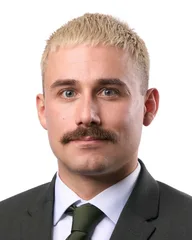
Lukas Sieper | Germany DEU | Non-attached Members (NI) | 390 |
| 2 |
|
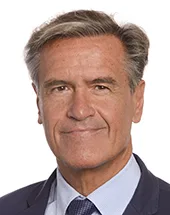
Juan Fernando López Aguilar | Spain ESP | Progressive Alliance of Socialists and Democrats (S&D) | 354 |
| 3 |
|
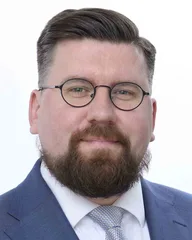
Sebastian Tynkkynen | Finland FIN | European Conservatives and Reformists (ECR) | 331 |
| 4 |
|
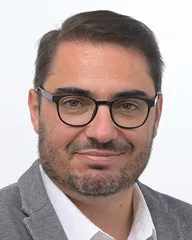
João Oliveira | Portugal PRT | The Left in the European Parliament (GUE/NGL) | 232 |
| 5 |
|
Vytenis Povilas Andriukaitis | Lithuania LTU | Progressive Alliance of Socialists and Democrats (S&D) | 227 |
All Contributions (84)
Fighting disinformation and dissemination of illegal content in the context of the Digital Services Act and in times of conflict (debate)
Mr President, Commissioner, ladies and gentlemen! Law is only as good as its enforcement. That is why it is good, Commissioner, that you have acted. When dealing with fake news and hate messages, social media has once again confirmed that self-regulation does not work, especially if self-limitation interferes with commercial interests. This is precisely the moment when the law must intervene with its full force. Let's make one thing clear: Hate speech is not protected in the offline world, nor is it protected in the online world. Many have claimed that the Digital Services Act is beautiful words, but Big tech Didn't take care of it. Elon Musk is testing us by infiltrating our democracy under the guise of freedom of expression. That is why, Commissioner, I am grateful that you are now intervening with full force. Please stay tuned! Stay strong! Enforce our Digital Services Act so that we can show everyone that we are right here, that we are actually enforcing it and that it works.
Financial services contracts concluded at a distance (debate)
Mr President, Commissioner, ladies and gentlemen! Dark patterns are a plague of the internet. It's bad enough that we consumers on the Internet are regularly tempted to make decisions that we don't actually want, to buy products that we don't actually need. Such behaviors are particularly vile when they let people run into debt traps. It's good to have something Dark patterns have entered into this Directive. However, I do not understand why we do not want to put a clear end to these maladministrations in the outcome of the negotiations and why the Member States want to put their entire arsenal into position in order to: Dark patterns ban and prevent financial services, as we, the European Parliament, have called for in our position. This is a disgrace to the Council that it has not allowed any more. That's why they are insured: We, the European Parliament, will stay on the ball here to Dark patterns Get rid of it everywhere.
The 10th consecutive increase in reference interest rates decided by the ECB and its consequences (debate)
Mr President, Mr Vice-President, Commission, ladies and gentlemen! Today we are debating the tenth consecutive increase in interest rates by the ECB. That is to say, we are discussing here the increase in the price of loans for necessary investments, the increase in the price of mortgages, and yes, very rightly, Commissioner, it is the poor who are much harder hit by this when we have monetary policy measures. It is also true what you say: The ECB is independent. But it is also true that monetary policy is not everything, especially if the reason for the price increase is profits. Here, Commissioner, the Commission is very much to be held accountable. Because if prices are no longer in line with the market, then there is an infringement of competition. Why has the Directorate-General for Competition not long since launched and finalised the procedures to bring prices down, so that we are not forced to discuss interest rate increases and therefore do not have to hit the poorest the most? Commissioner, the Commission is called upon to support the ECB in its fight against inflation.
Regulation of prostitution in the EU: its cross-border implications and impact on gender equality and women’s rights (debate)
Mr President, Commissioner, ladies and gentlemen! We agree that we want to protect people here from human rights violations, violence and exploitation, especially those who, for lack of alternatives, find themselves in a life situation where they are exposed to gender-based, psychological, physical and sexual violence. What to do? The state – the public sector – must be able to use all its possibilities, and that means above all its law enforcement authority. It is wrong to criminalize the people who are in these hopeless situations. Conversely, is it right to sideline law enforcement agencies in the absence of criminalisation of any person? I mean no. It is the demand for sex in which mutual consent is replaced by money, which is the source of exploitation. Let me be clear, there is no entitlement to sex. Demand must therefore be clearly countered by the means of law enforcement, and this calls for the criminalisation of demand and the free. Therefore, the approach of Maria Noichl's report is correct. Decriminalisation of victims, prostituted women, criminalisation of the free, de-stigmatisation of victims and assistance to those affected.
Single market emergency instrument (debate)
Madam President, Commissioner, ladies and gentlemen! Crises always develop the same way: In the beginning is the hubris, in the end we panic. If you look closely, however, crises are slowly developing with concrete alarm signs, as can be seen from scientific studies after the crisis and in retrospect. In the crisis, however, such alarm signs are hardly seen. Instead: In the beginning, hubris. Some say euphorically: “This time it's different”, as the scientists Carmen Reinhart and Kenneth Rogoff have developed on financial and economic crises. Or others say, downplaying the facts: It's gonna be all right. Until the crisis eruption comes in one fell swoop. Then: panicking, clamping and closing borders. Therefore, it shows that conscious action, rational action is necessary in crisis and emergency situations. It is a challenge for the EU because it wants to keep its borders open. So is the EU a fair weather union? Is our internal market law a fair weather law? Hybris and panic are human reactions in governments and corporations. And that is why it is necessary to respond to this, with obligations for governments and companies alike. In this respect, we welcome the fact that Parliament's report insists on maintaining priority contracts vis-à-vis companies established in Europe. However, we regret that legal obligations for companies have completely disappeared. No, volunteering ends in hubris and panic. But even more important than that is: We cannot predict the next crisis. But what we can say very well is this: If the executive gets interference rights here, then Parliament must be strong. Democratic legitimacy is even more important when the hour of the executive is beating in the crisis. That is why it is so important that these enormous innovations and innovations in the parliamentary position also come through, that the emergency situation is activated by a vote of the European Parliament in the legislation. If one claims here that parliaments are supposedly slow, then this is a fig leaf of the executive branch, which wants to escape the control of Parliament. This does not give support to citizens. No, more parliament is needed in times of crisis and need. That is why this result must come through. And I rely on the Commission's support for the fact that Parliament's participation is still present here in the final version of the trilogue.
One-minute speeches on matters of political importance
Madam President, ladies and gentlemen, On July 12th, the time has come: This is the moment that many Swifties have been waiting for. The ticket pre-sale for Taylor Swift's Germany tour begins. Tickets for megastars like Taylor Swift and Beyoncé are not only driving up inflation in Sweden, they are also creating golden times for ticket sellers. The phenomenon is called dynamic pricing or Dynamic pricing. An algorithm checks not only the Internet supply and demand, but also the respective user's surfing behavior, the device with which he moves on the Internet, or the operating system with which he goes on the Internet to the map search. Ticket prices of up to $5,000 will be generated at Bruce Springsteen's last concert in the United States. This is usury, this is money-making on the backs of consumers. That is why I ask the Commission: Do you consider such price discrimination to be covered by existing EU consumer protection law? If so, do something about it. If not, then we need the necessary drafts as soon as possible.
Make Europe the place to invest (debate)
So, in parts of the analysis, I thought: Yeah, now it's getting interesting. When I heard the question of slowing down Fit for 55 in order to make investment more attractive, I really couldn't go along with it anymore. It has already been said more often today in the debate: Standstill is regression. We must achieve the Paris climate goals; This is not pseudoscience, this is a fact. If we want to make our economy future-proof, it is by speeding up Fit for 55, not by slowing it down. So we have the jobs for the future and will not just be a consumer market for other markets.
Make Europe the place to invest (debate)
Madam President, Commissioner, ladies and gentlemen. We are discussing here how to make Europe a place for investment. And we're actually asking ourselves the question: How beautiful is the bride? – the question we asked ourselves when the Americans arrived with their Inflation Reduction Act. In my opinion, we are placing our light too much under the bushel here. The answer seemed to be this: Just more aid. But, ladies and gentlemen, we do not need state aid competition with the other side of the Atlantic, we need a functioning internal market. The heart of our single market is competition for performance. And if the performance is right, then you also like to invest. What we do not need is competition between the Member States with the largest fiscal capacity. German companies are nice to invest in, but if you have to make Europe a place to invest, you have to do it all over Europe. For this, we need proper public infrastructure, which some states can no longer afford. If we want to make investment attractive, we have to put this at the heart of the reform of the stability rules, but also of the reform of the budget. This is why it is very central: Education, education, research, research. No cuts in the budget of Horizon Europe, just to invest in any things that represent dead stones. (The speaker agreed to respond to an intervention under the blue card procedure)
Competition policy - annual report 2022 (debate)
Mr President, Madam Vice-President, dear colleagues, I think this was a good debate on the annual competition policy report – a debate that is hopefully having its implications and impact on the European Commission’s course of action in conducting competition policy. As it is the exclusive competence of the Commission to do so, parliamentary involvement is, from my perspective at least, lacking. I think you made the right reference just in your remarks that there’s enough of green industry, but we need to accelerate. I do believe if there’s one thing about all these words about State and competition policy that we have heard today, that it is to learn that we need to use the power of the public money that we have, to force it into the right direction. And it makes it that we must make more use of conditionality for social and environmental goals so that State aid is directed into the right direction in order to precisely accelerate the green industry. I also believe the internal market doesn’t have to be totally afraid of the United States when we look at the Inflation Reduction Act, since we do have knowledge, since we do have experience in our internal market – it is not simply fiscal capacity that defines our strength, it is many more that defines our strengths. I believe you also rightly mentioned here now, it is also for the regulator to heal markets. But as you know, we as legislator, we are very much dependent on the Commission to initiate a legislative procedure so that we get proposals that we can work with. I therefore would like to reiterate the claim made by my colleague, Paul Tang, that when we look at digital markets and the main incentivising the digital tech giants, namely digital advertising, we need a proposal to work on this element that is distorting the digital markets without having an abusive practice. That is the problem that we see in competition law. Let me conclude, and I think you also experienced this here in this debate, that this Parliament has a lot of knowledge and understanding of EU’s competition policy, at times better than the Council and Member States’ governments. So I therefore think it is time to give the European Parliament its proper involvement by means of ordinary legislative procedure and make use of the passerelle clause in Article 48, paragraph seven, and simply transform all decision—making procedures that we have into an ordinary legislative procedure.
Competition policy - annual report 2022 (debate)
Mr President, dear Madam Executive Vice-President of the Commission, dear colleagues, we are currently experiencing tectonic shifts in US economic policy under the acronyms of NZIA, CRA, SMEI, ASAIP, or the Chips Act acronym. Competition policy is affected by these shifts and must take a position. It must be underlined, the competition policy is an autonomous policy field and not subject or a tool of any other EU policy. Yet, your competition policy must adapt. In my eyes, it has to give up on much cherished concepts, but also hold briefly and firmly onto others. Briefly, we must move away from a narrow understanding of consumer welfare as the basis of competition law. You must understand that competition policy cannot be pursued in isolation, but is embedded in an economic and social context and is committed to all Union goals. And most importantly, we must protect the integrity of the internal market by all means. We should never forget what is the beating heart of European integration that is securing our peace and welfare. It is the internal market being a place in which large and small economies can compete with each other on the basis of merits and not of fiscal capacity. We have enough of national public money injected into national economies that disturb the balance within the internal market. Yet, we definitely need more public investments, but not at the expense of our internal market. Any relaxation of State aid rules must be accompanied by an equally strong European fund that is accessible for fiscally weak Member States, otherwise, we risk losing our internal market over it. The functioning of some markets is cursed by the bigness of the main players on it. Without committing abuses of their dominant position, these players have distorted the structure of the markets to such an extent that innovation is suffocated and competition by merit is suspended. It is competition policy’s most noble task to address this curse of bigness in order to achieve innovation and competition based on merits. We need healthy market structures that allow smaller competitors to enter a market, to survive the entry and to grow. That is the formula that underlies the success of the internal market and should not be dumped by policy initiatives that intend to govern by setting reference values which are then to be achieved by all means. A competition policy that protects market structures, needs tools to act against the dominant market player distorting markets without its behaviour meeting the threshold of abusive behaviour. It requires the use of structural remedies and to split up dominant undertakings. We need to be bold and create a legal basis for unbundling measures already in situations where such unbundling would improve conditions for competition significantly. It requires a merger control that protects innovative undertakings from being killed by a merger with large companies. Let us be clear, when the Court of Justice does not confirm the Commission’s current way of dealing with killer acquisitions, we need to revise the merger regulation. Finally, I believe that competition policy has a role to play in tackling inflation. In the recent monetary dialogue with the European Parliament, the ECB president, Christine Lagarde, confirmed our view that there is sellers’ inflation, and that is, I quote, ‘perfectly called for (for) competition authorities to look into excessive prices, driving inflation’. Dear colleagues, competition policy has to evolve from a policy that is mainly concerned by consumer welfare to a policy that untangles the curse of bigness, ensures the level playing field of our internal market and shapes competitive market structures.
Corporate Sustainability Due Diligence (debate)
Mr President, Commissioner, ladies and gentlemen! Money moves the world – a world where companies are hardly impressed by understaffed state regulators and liability claims, the preconditions of which are difficult to prove by plaintiffs and plaintiffs. No, in this world they are only afraid that the money tap will be turned on them if they do not care about human rights and the environment in their value chains. Governments in the Council have pulled this tooth by wanting to remove finances from the supply chain law. This tooth wants to pull the right side of the house, which is not even present today. She succumbed to the siren chants of the financial lobby. Whoever makes big profits in Europe, whoever makes them, has the damn duty to use these profits to protect human rights and the environment. In this respect, I can only appeal to the right side that is not present: Come on over to the good side of power. It's not too late.
Empowering consumers for the green transition (debate)
Madam President, Commissioner, ladies and gentlemen! I have just heard that the position that we, as the European Parliament, have adopted by a majority in committee and will probably also adopt by a majority in plenary, goes beyond what the Commission would like. This is the question of dark patterns. There will be a report, then there will be elections, then there may be a new Commissioner, a new Commissioner, then there will be a new proposal. Now, three years later, we want to ban something that everyone and every woman knows is harmful, that it's an unfair business practice, that we're misled here, misled into doing something we don't want at all, and come out with a skinny sense of a transaction that we don't want at all. We have tried to address this in the Digital Services Act, we have tried to address this in the Digital Markets Act, but what is crucial is that the consumer is given the opportunity to take action against it by having it banned, by failing to do so, by receiving compensation for the damage he suffers as a result of being misled, and by allowing consumer associations to bring an action against it. Ladies and gentlemen, Commissioner, I do not need an expert opinion to know that we must ban this. We, as parliamentarians, have decided that we want to ban this. That is why we are using this now and are completing the legislative process in such a way that: Dark patterns It is finally completely banned.
Revision of the Stability and Growth Pact (debate)
Mr President, Mr Vice-President, ladies and gentlemen! The reform of the Stability and Growth Pact was more than overdue. Overdue because the rules were simply not adhered to, because the fantasy world of fiscal rules had nothing to do with economic reality in any way. It is therefore positive that the Commission has learned lessons, that it has created a spending rule. It is good that the Commission has learned the lesson and is away from rigid dismantling rules. The consequence of this is that the Commission now wants to negotiate behind closed doors with each Member State what its budgetary situation should be. And I'm wondering: Where are the parliaments? The proposal simply repeats the old economic dialogue, and that is of no use to us. No, if the Commission wants to have more power – and, ladies and gentlemen from the right, the Commission is elected! – but then it must be properly controlled, and more so than before. The medium-term structural fiscal plans in the Member States should, please very much, be discussed in the national parliaments and, please very much, adopted by the national parliaments. Then we take it one step further. And, dear Commission, where has the investment clause gone? We need more flexibility, but this is only against purpose limitation.
Digital euro (debate)
Mr President, Commissioner, ladies and gentlemen! The digital euro is an exciting project, born in response to Libra, of which hardly anyone speaks today. It raises an important question: What role can public money play in contrast to private bank money and private digital money? The answer to this question tells us how to shape a digital euro. I believe that the central task of the digital euro is to give everyone access to financial services. There was a lot of talk about freedom today. However, it is important that people are given the freedom to participate in financial services at all. Financial poverty as a result of a lack of access to a bank account – this is the key issue. 3.6% of European households do not have a bank account. Firstly, this means: Consumers need direct access to the ECB with their own account. Secondly: It must be possible to use the digital euro offline. And thirdly: Consequently, it must be possible to use the money as an investment without fuelling speculation.
The need for a coherent strategy for EU-China Relations (debate)
Mr President, High Representative, ladies and gentlemen! In principle, it is easy to have a coherent strategy for EU-China relations. Firstly, it is right for us to define our strategic autonomy – whatever we may understand in detail – ourselves or independently, without being guided by the interests of our partners or non-partners. This means that we need to diversify our trade relations in order not to be blackmailable – by anyone. A hard lesson to learn from the Russian war of aggression. Another lesson – secondly – is that the EU can and must never be neutral and speak with one voice in the event of a war or threat thereof. In order to be able to respond appropriately, the EU still needs to strengthen itself – our core homework, we are not there yet. For me it is clear: The status quo in the Strait of Taiwan must not be changed unilaterally or by the use or threat of force. These are the cornerstones of a coherent strategy for the EU and all its Member States vis-à-vis China. However, we must all adhere to it, and the strategy must not again be placed under the shadow of national interests.
General Product Safety Regulation (debate)
Mr President, Mr Vice-President, ladies and gentlemen. It was necessary to adapt the 2001 Product Safety Directive to modernity – perhaps even postmodernity. Consumers are now buying online, they are increasingly buying products from third countries and there are more and more new products, in particular those linked to software. This had to be addressed. It is therefore good that we get this product safety regulation and have the update. Above all, it is very good that we get a responsible person in the European Union who takes responsibility and can be held responsible when third-country products that have reached the European internal market through third-country marketplaces and are harmful have come onto the market here. It is also good that we have named online marketplaces. But we need more than naming online marketplaces. We need concrete obligations for online marketplaces to act. They are the key door for harmful third-country products on the internal market. The Digital Services Act This is a good basis and a good cross-cutting act. But that's not enough. This is not the final rule. We need more! That is why I call on the European Commission: Please submit your own legal act for online marketplaces so that we can create the appropriate level of security for consumers here. Very important: The right to repair. It is good that we have now clarified in the area of product safety that consumers have rights in the event of a recall after the expiry of the two-year warranty period – specific rights. But these are still subject to what manufacturers allow them to do. However, consumers must be able to afford to go for the repair. There is a need for a duty to repair, and that is one that manufacturers cannot simply reject, as is contained in the current proposal on the right to repair. Therefore, let us build on this good foundation which we have been given, but which is far from sufficient to ensure consumer protection in Europe. And the right to repair is the next opportunity – a socially secure right to repair and one that actually produces a true circular economy.
Cross-border adoptions from third countries (debate)
Madam President, Commissioner, ladies and gentlemen! Separating children from their parents in order to give them to other people for adoption is a crime against all those involved: the children who are torn from their families, the parents from whom the child is taken, and ultimately the adoptive parents. To prevent this from happening internationally, we have – Commissioner said this – the Hague Convention on the Protection of Children and Cooperation in the Field of International Adoption, to which all EU Member States belong. There are good reasons to allow international adoptions only in respect of those countries that have ratified the Hague Convention. Many Member States have already taken this path. At the same time, however, it would be wrong to place all international adoptions under general suspicion if it is, as it were, better for the best interests of the child than to grow up in an orphanage in a family with children who love them. At the same time, there are legitimate children's wishes in people who cannot fulfill them for various reasons. Legal systems allow adoptions only for married couples. Legal systems only allow adoptions for parents of different sexes. I just remember the Baby Sara saga. That is why we need a clear law in the EU that recognises such adoptions, so that the water is dug up here for child trafficking.
Establishment of an independent EU Ethics Body (debate)
Mr President, Madam Vice-President, Madam Minister! Yes, people to whom their own beliefs mean so little that they put them up for sale do so, no matter how strict the rules are and how harshly they are enforced. There is, and yes, there will always be; Let's not fool ourselves. But we can – yes, we must do everything we can to make it as unattractive, as difficult as possible for such people to be influenced by third parties. Ideally, they don't want to run in the first place. Here is what Mario Draghi said in another context: Whatever it takes. This means that we need an independent institution, with its own powers, with its own competences. And the scale must be like Draghi's: We need to create something that, ideally, never needs to take action. In addition to enforcing the rules, which we must tighten here, we must also do homework with us. We must have party proceedings in such a way that those figures who avoid the light of transparency do not even enter our house. We must also tell journalists: Full spotlight on what's happening here! We need more people to watch what's happening in this house and control us. And so together we can build a system in which such figures, who put their own beliefs for sale, can be influenced, can no longer do their bad work here.
EU funding allocated to NGOs incriminated in the recent corruption revelations and the protection of EU financial interests (debate)
Madam President, Commissioner, ladies and gentlemen! I listen to the debate here and I ask myself the question – all the time: What is this really about? Why are we discussing this today? NGOs in the Transparency Register must disclose their funding. Ja, tun sie jetzt schon. NGOs that do not disclose their funding should not talk to us MEPs – very gladly. Please join me in tightening this up. Should NGOs be tackled more sharply than commercial lobbyists? No, absolutely not. Why then? Do they all work harder? But I'd love to. No, ladies and gentlemen. It is about the following: There are two tango dances. It's about whether and how we let those who are responsible influence us. My colleague talked about manipulation. That is why it is up to us to reject this influence. And it cannot be the case that there are colleagues who accept amendments from corporate lobbyists, for example in the EU Supply Chain Act. copy and paste Get them in here and get them into the process. This is the scandal. It is necessary to take action against this, and not one-sided blame game of NGOs Play here.
The Global Gateway Initiative (debate)
Mr President, Commissioner, ladies and gentlemen! This plenary week has a narrative: On Monday we celebrated the 30th. On Wednesday we had a debate on the global competitiveness of the European Union and on our response, our response to the American Inflation Reduction Act. Today we are discussing the Global Gateway initiative. What is the narrative? What does that hold together? The single market, ladies and gentlemen, is a political peace project that brings people together by breaking down barriers between states in the economic area. Our global competitiveness in response to the Inflation Reduction Act cannot be achieved by a renationalisation of economic policy, cannot be achieved by State aid competition, which can only lead to a Survival of the fittest in our internal market. The Global Gateway initiative is the external understanding of European economic policy based on cooperation and values. In this way, and only in this way, the Global Gateway initiative becomes a counter-draft to the Chinese Silk Road Initiative. It cannot be achieved by blind copy-and-paste of what the Chinese are doing there. Our approach is to empower our partners and not make them dependent. What does that mean? Investing in critical infrastructure. But no, it creates dependencies and puts us in debt traps. In the Delegation of the European Union for relations with China, we recently noted the ruthlessness with which China invests in our communities and makes them dependent. This is exactly what we do not want to achieve, even if we want to compete with China here. Yes to investing in sustainability. No to partnership agreements that gag. Yes to a systemic competition, but this systemic competition does not mean “you get more money from us”. This system competition is called ‘We support you so that you are on an equal footing and do not come into dependencies, but can independently improve your values’.
An EU strategy to boost industrial competitiveness, trade and quality jobs (debate)
Madam President, Commissioner, Minister, ladies and gentlemen! The risk of delocalisation of future industries has been properly analysed. The focus on digitization and green energies has been correctly presented. They are beautiful and right goals. But, let’s face it: As a European Union, we do not have the financial means to do so. Just because we think this is a good thing here in plenary does not change anything in the European economy. We need government money to steer our economy in the right direction. But where does that come from? Either from the EU, but we have no money, certainly a single market. Or from the Member States, there are some money, but no single market. Please do not put the single market at stake. Just because some Member States can afford it, we must not loosen the state aid rules to such an extent that we knock competition and the internal market into the ton. Competition law and, above all, merger control can move away from Consumer Welfare Standard Put yourself at the service of transformation. But above all, we need more EU firepower, and the MFF is not sufficient for this. We need permanent debt-financed investment funds. And that is what we need to talk about if we are not to sacrifice the single market and European competition.
30th Anniversary of the Single Market (debate)
Mr President, ladies and gentlemen. ‘L’Europe ne se fera pas d’un coup, ni dans une construction d’ensemble. Elle se fera par des réalisations concrètes créant d’abord une solidarité de fait». This foundation of the EU, as Robert Schuman described it in 1950, was first laid by the common market of the EEC and for 30 years now by the internal market. The single market thus serves a larger objective, a political one: Dismantling national barriers. This serves to bring people together, creating solidarity that governments can no longer tear apart. The single market and solidarity therefore go together. Yes, we can be proud of the economic strength and success of this single market, the encounters and convergence it has brought. But solidarity means more than economic freedoms. We need an equivalent level of protection standards and redistribution. The single market needs an unmistakable social Europe. And that means consumer protection that goes beyond information obligations, posting rules that protect against social dumping, EU tax rules that make tax optimization impossible, and rules for online markets that do not allow loopholes for harmful products.
Chinese government crackdown on the peaceful protests across the People's Republic of China
Madam President, Commissioner, ladies and gentlemen! My notes are there, but after the previous speaker, you can't just hold down your speech in that one minute. Because what has been said here is scandalous. We are talking about a dramatic violation of human rights. We have a resolution that is clear in its wording that what we have seen there in China, the suppression of expression, the oppression of women above all, is strongly condemned. This is our duty, our noble duty as the European Parliament, to say this in the strongest possible terms. The problem with the scandals we have seen here in recent days is that we have not fulfilled this duty because we have watered things down. That's not what we're doing here, and that's why it's a different situation. Here the House must stand together and say clearly that we are in solidarity with the women and the men who take to the streets here, who stand up for their freedom of expression, where we see what happens when you don't have a proper vaccination rate, because you imprison people and take away their liberties, where there is no freedom of the press, no freedom of expression. There, damn it, the European Parliament must have a unified position and make it clear that it stands in solidarity. This is our only competence in foreign policy. Let's use them responsibly and not mix things up!
Upscaling the 2021-2027 Multiannual Financial Framework (debate)
Madam President, Commissioner! Combating the social and economic consequences of the war in Ukraine is becoming expensive. And in times when the ECB is fighting inflation, it fails as a savior of states. This morning we have Europe's response to the Inflation Reduction Act The United States is discussing. Either we have to massively withdraw EU State aid control so that strong Member States can compete with it. Then, however, the price is the disintegration of the single market. Or we need EU-wide resources. But let's be honest: 1% of Europe's GDP is far from enough to keep up with the US or China. That's why we need an additional one, I quote: “permanent special instrument beyond the limits of the MFF” as stated in the report under point 66. That is the crucial line. Only in this way can we be competitive as Europe and keep up with the Americans. The Federal Constitutional Court is no problem here. That court did not rule that a mechanism could not be permanent. No, the debt-financed funds may not exceed only the own resources of the budget.
EU-China relations (debate)
Madam President, High Representative, ladies and gentlemen! Our strategy vis-à-vis China is a major challenge because it poses the question: What do we want to be ourselves as a European Union at the end of the period of turboglobalisation through pandemic and war? Do we want to be a big market with rich consumers where you can sell your products cheaply? Or do we want to be a self-confident middle power? We are also facing this decision, especially with regard to China. For this we have to do our homework, because my decision is for the second. And homework means that we need an EU supply chain law inside by seeing that we get our trade relations diversified, that we ban forced labour, that we tackle our cybersecurity and that we are a strong space for ourselves accordingly. This means costs for our consumers – products are becoming less and they are becoming more expensive. But this is the price we want to pay if we are to act strategically autonomously vis-à-vis China. I want to defend this autonomy here. And I would like to call on you here, as High Representative, to fight for this autonomy. However, this also means staying in touch with China, but please speak with one voice, no matter who speaks it.