
| Rank | Name | Country | Group | Speeches | |
|---|---|---|---|---|---|
| 1 |
|
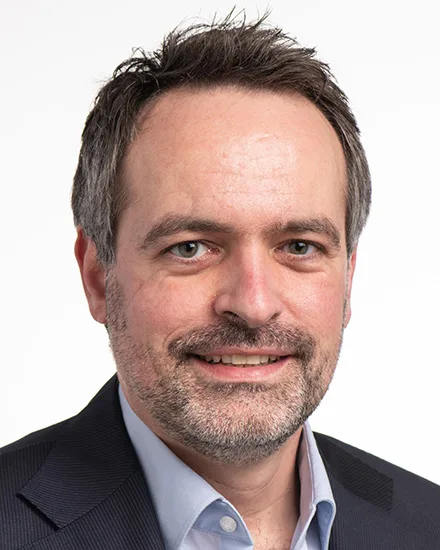
Lukas Sieper | Germany DEU | Non-attached Members (NI) | 390 |
| 2 |
|
Juan Fernando López Aguilar | Spain ESP | Progressive Alliance of Socialists and Democrats (S&D) | 354 |
| 3 |
|
Sebastian Tynkkynen | Finland FIN | European Conservatives and Reformists (ECR) | 331 |
| 4 |
|
João Oliveira | Portugal PRT | The Left in the European Parliament (GUE/NGL) | 232 |
| 5 |
|
Vytenis Povilas Andriukaitis | Lithuania LTU | Progressive Alliance of Socialists and Democrats (S&D) | 227 |
All Contributions (84)
Immunity of International Criminal Court officials and the activation of the EU Blocking Statute to strengthen EU strategic autonomy (debate)
No text available
EUCO and situation in the Middle East (joint debate)
No text available
Accession of Montenegro to the Convention of 2 July 2019 on the Recognition and Enforcement of Foreign Judgments in Civil or Commercial Matters - Accession of the Republic of Albania to the Convention of 2 July 2019 on the Recognition and Enforcement of Foreign Judgments in Civil or Commercial Matters (joint debate)
Mr President, Commissioner, ladies and gentlemen! Mr Voss and Mr Kyuchyuk have made it clear what this is about: It is common ground that the Hague Convention on the Recognition of Judgments beyond the borders of the European Union constitutes a genuine simplification for businesses and citizens, creates legal certainty and predictability of investments. It is also clear that we welcome the accession of the EU candidate countries Albania and Montenegro. But this is really about more: It is a question of whether the extension of its territorial scope does not also fall within the scope of an international treaty, to which we must unquestionably agree at the time of ratification. We, as a Parliament, determine that a treaty binds us. We as Parliament decide on the mutual recognition of judgments in internal relations – and this must also prevail in external relations. If we are in one of non-objection In addition, the territorial scope will have to be extended – even then, Parliament will have to be consulted. This is clearly stated by the Court of Justice of the European Union, for example in the decision on the Mauritius Agreement. That is why, Commissioner, I ask you to reconsider the practice of the Commission, to take seriously the principle of the loyalty of the institutions to one another and, accordingly, to allow us to vote in such situations as well. We reserve the right to bring an action before the Court of Justice of the European Union. Parliamentary participation is non-negotiable.
Presentation of the programme of activities of the Cyprus Presidency (continuation of debate)
Madam President, Mr President, honourable Commission, ladies and gentlemen! First of all, the best wishes for recovery to the colleague, who just had to be carried out here. Mr President, I am proud to be a European. In a world that is getting darker and darker and in which the Bullis are resurrected from their sinking, we are the torchbearer of hope. We no longer have to explain to anyone on the street that Europe is important. Quite the contrary. We need a strong, sovereign Europe. We need more internal market with high standards of protection. We need a real European bond in which unsettled capital can find refuge. We need more trade agreements with the world on an equal footing and reliability. We need a European army. This is a major challenge for the Cyprus Presidency. Because they need to get governments to finally jump over their national shadow. Take up the European Parliament's proposals to rid the EU of the scourge of unanimity and start the treaty change process. And: We have to defend ourselves against Trump. Activate the anti-compulsive tool. The answer to the changing world is not vassalism, slimy and cuddly, but European sovereignty and European patriotism.
The 28th Regime: a new legal framework for innovative companies (debate)
Madam President, Mr Commissioner, dear colleagues, thanks a lot for the debate and let me turn to some of the remarks made during the debate on the report. I believe the core contribution was the one by Pascal Canfin who said, rightly, we have a problem in growth and scaling up, not a problem of innovation. That is precisely the point why we need this 28th Regime in order to remain competitive. That means we need to be ambitious in substance. It must be fast to create this new legal forum, it must be all digital, it must be once only. There must be unhindered free movement within the entire EU internal market and, if I may add, colleague Walsmann is right, there must be fast decision making in front of courts. If we have this ambition in substance, then Damian Boeselager is right to say we need to have this fast. And yes, if we want to make it even better, then we have it as a directly applicable regulation that does not require any implementation and does not allow for any sort of gold‑plating. Let's be clear: that ambition is shared by the Parliament. We want this regulation, but we want to have it adopted by the qualified majority. Sometimes we want a lot as the European Parliament. If we look at the possible legal basis, then we have one for the regulation, but that requires unanimity, and we have one for a qualified majority that only allows us for a directive. If we do have to choose between ambition and substance or ambition in form, then I would always choose for the ambition and substance, and let's go for the fully harmonised directive, which was criticised by a Finnish colleague on the right side. Fully harmonised rules and directives. We know as consumers, we all know about our right to withdraw from contracts that we do not want to have and within the period in which we can do so – that was not created by a regulation, but by a fully harmonised directive. So here, all citizens know about their rights and that is precisely what we wanted to create. So, let's be ambitious in substance if we have to make a choice and do not be ambition in form. Go for an instrument that allows us to create this 28th Regime as quick as possible in order to meet the dreams that Lukas Sieper was presenting here as one: founding a company that wants to act cross‑border.
The 28th Regime: a new legal framework for innovative companies (debate)
Madam President, Commissioner, ladies and gentlemen! The 28th For some, the regime stands for their dreams of finally overcoming the fragmentation in the internal market, of ending the uncertainties of national transposition of directives and of building new barriers on the basis of this transposition, the so-called "regime". Gold plating. For the others, it stands for their nightmares of a Europe that drags long-won and well-acquired intellectual property rights onto the altar of free movement. I believe that the hopes of some can be fulfilled if the concerns of others are taken seriously. Our vision for a 28. Regime for innovative companies of the S.EU is therefore clear: If you dare to jump out of research into the shark pool of the free market with a bold idea, you must be able to limit your personal risk as quickly as possible. This means: A limited liability company must be able to be established within 48 hours and completely digitally. This form of society must be open to all. An artificial limitation to innovative leads only to the next omnibus. Innovation is not a label, but a process. A S.EU, once established, must enjoy unlimited freedom of movement within the internal market. Only in this way can an innovative idea make use of the full potential of the internal market. For venture capitalists, it must be clear that the S.EU is subject to the same rules, no matter in which Member State it is active. In order to provide investors with EU-wide legal certainty, we call for a single, quasi-equity debt instrument with the same insolvency treatment for each Member State. Innovation comes from talent. However, a start-up can rarely keep up with the salaries of the very big ones. You can sell a dream. That is why we need uniform rules across the EU for the participation of employees in the capital of the S.EU. And: Companies must be able to protect themselves against hostile takeovers, but also to safeguard their innovations and research. Entrepreneurial action, which thinks in long lines and which wants to give the company's profits completely to innovation, must be understood as a strength. In Denmark, more than 60% of the stock index is held responsible. In Spain, we have models where workers are owners. A true European form of society must guarantee founders who want to develop an innovative idea in a company that is also innovatively organised the same access to the benefits of free movement as traditionally organised companies. Finally: If the 28th If the regime is to become a successful model for innovators, then it must not become a vehicle for charlatans. Anyone who founds an S.EU in order to escape labour law protection standards is detrimental to the new form of company. Once it has the reputation of a bypass construction, neither investors nor talents trust its name. Therefore, the 28th The regime is abusive. It's not enough to say the 28th. The regime does not affect labour law. Corporate co-determination is corporate law and is a decisive competitive advantage. It creates participation and justice in the world of work. Their protection requires clear rules, even in the 28th century. regime. If this does not succeed, the project is doomed to failure, as it has happened in previous attempts at company law. Commissioner, this report has received the support of the EPP, Social Democrats, ECR, Liberals and Greens. When was the last time that happened? It is a complete package. Build your design on this and you will see a broad majority of this house behind you.
2030 Consumer Agenda (debate)
Madam President, Commissioner! Dear colleagues! $7 billion – that's how much Meta earns each year from having high-risk ads. scams on its platforms – $7 billion to put consumers on the cross. In the area of financial services, people lose their lifelong savings, which they have put aside for old age, because they scams fallen victim. And it happens even to people who work for financial service providers themselves. Here we have a huge problem that we have to tackle. In the Payment Services Ordinance, which we finished negotiating three weeks ago, we finally get a liability for online platforms if consumers agree to a Scam with logos of their house bank have fallen victim. We need to build on that, and we need to expand it. Anyone who earns money from harmful advertisements that lure unsuspecting consumers into a trap that costs them financial existence must be responsible for these damages. Commissioner, act!
Preparation of the European Council meeting of 18-19 December 2025, in particular the need to support Ukraine, transatlantic relations and the EU’s strategic autonomy (debate)
Madam President, Dear colleagues! We are facing what is probably the most important European Council since its inception. And this has something to do with the fact that when we talk about Russian assets, it's not just a matter of fact, but rather whether Ukraine still gets air to breathe or whether it has arrived at the end of the flagpole and has to submit to an American-Russian dictatorial peace. What matters here is whether, after the rhetorical solidarity we have been hearing from the heads of state and government for years, it is now being delivered. Not letting Belgium stand in the rain is not only a question of intra-European solidarity, but whether Europe can come together and stand together in the hour of need and whether the beautiful words of solidarity with Ukraine are followed by real deeds. That is why I call on the Council and the Heads of State and Government to: Pull yourself together! Find a solution where Russian assets are used for Ukraine and where all Member States share the risk. Then Ukraine will have a chance to negotiate peace on an equal footing. And that is in our interest and in our responsibility.
The decision to impose a fine on Google: defending press and media freedom in the EU (debate)
Mr President, Madam Vice-President, ladies and gentlemen! As much as I welcome the Google decision itself, it raises many questions that I ask myself. Namely: Why was Big tech once again imposes only a fine that it can pay from the post office, instead of ordering a partial dismantling, as the Commission threatened in 2023? Why was this fine so low? Is it true that the decision was withheld by the Commission leadership for fear of punitive tariffs from the Trump administration and corrected downwards? Three years ago, when the Digital Markets ActCelebrating ourselves and our courage, Big tech to protect our citizens. What's left of it? Either we have that courage and impose sanctions that Big tech really hurt – like a partial smash – or we chase in front of schoolyard bullies like Trump whenever things get tricky. Then, however, this will be nothing with the protective power Europe, which we are so happy to uphold in our Sunday speeches. That is why you continue to act, but above all: Act vigorously.
State of the Union (debate)
Madam President, Madam President of the Commission, ladies and gentlemen! The kneeling of Scotland has painfully shown us that it is not our strongest strength, but our weakest weakness that defines our position in the world. I don't want to blame you, Mrs. von der Leyen, for this: You have to play with the cards you get. But I ask you to do everything you can to prevent us from being pushed around by the schoolyard bullies next time; I've heard the right headlines today, but I've heard them many times. We need to move from the European champion of announcements to action. Instead of roadmaps, I want to see hard law how we protect good work in Europe. Instead of paying lip service to our digital legislation, I would like to see real penalties against Big tech see. And I want to see real new investments in new funds instead of old wine – that's what it will be.
Gaza at breaking point: EU action to combat famine, the urgent need to release hostages and move towards a two-state solution (debate)
Madam President, ladies and gentlemen, At the age of 17, I took part in a student exchange with German, Jewish and Arab youth from Israel. My friends said at the time: We want something like your EU – two states, united in diversity. Nearly 30 years later, the dream has burst. Hamas has committed the largest mass murder of Jewish people since the Holocaust. In Gaza, we are experiencing man-made hunger, destroyed families, lost lives. Civil society on both sides is bleeding and suffering – because of Hamas and the Netanyahu government. I would also like to appeal to Israeli civil society: We see you, and we support you! Your protest against the war and against Netanyahu does not fade away. For you too, my Europe, which stands for peace and international law, must not remain silent – it must act! There must be no taboos. That is why I call for the immediate release of all hostages, an immediate ceasefire and an immediate end to the humanitarian blockade.
Investments and reforms for European competitiveness and the creation of a Capital Markets Union (debate)
Madam President, Commissioner, ladies and gentlemen, Our weakening competitiveness is one reason Scotland fell on its knees in early August. If we no longer want to act internationally from a position of weakness, then we must radically get to the root of our competitiveness, and that is not to delete a few regulations here or there. Rather, we need to bring the great ideas of our researchers to market maturity in Europe. For this, we need much more venture capital in Europe, and we need venture capital funds that invest not only in their own country, but across borders. We know what is necessary for this. We now need the appropriate proposals and the courage of governments to cut off old braids at home. If we don’t, Europe will become a museum of American and Chinese tourists – I don’t want that.
Preparation for the 2025 EU–China Summit - Tackling China's critical raw materials export restrictions
Madam President, Madam President of the Commission, ladies and gentlemen! EUR 300 billion is the trade deficit between the EU and China. Are Chinese goods really so much better than European goods under fair competition conditions? Hardly. Our companies face barriers to market access in China, unfair subsidies that make fair competition impossible, and a political leadership that uses economic power as a means of pressure. China rightly demands respect, but wrongly refuses reciprocity. This is not a partnership. It is an imbalance. Partnership means reciprocity, transparency and respect. Respect for our political culture also means that elected representatives cannot be sanctioned for their freedom of expression. I therefore call for the lifting of the Chinese sanctions against both former MEP Reinhard Bütikofer and our colleagues in the national parliaments. This would be a clear signal and an important step towards real partnership.
80 years after the end of World War II - freedom, democracy and security as the heritage of Europe (debate)
Mr Colleague, I am aware that things still need to be improved in the relationship between Germany and Poland and that there are also corresponding discussions between the former Federal Government and the new Federal Government and the Polish Government in this regard. I cannot and will not prejudge these conversations, but your question was whether I am aware of it. And yes, I am aware of that. Incidentally, I stand here as a person of German nationality, but I am the son of a Hungarian who fled Yugoslavia – and in this respect I am well aware of reprisals from family history. That is why one must not forget and that is why one must also act and one must not close one's eyes.
80 years after the end of World War II - freedom, democracy and security as the heritage of Europe (debate)
Mr. Colleague! What Nazi Germany has done to the world is never reparable in the sense of compensation. This crime has an intensity that it can never leave us Germans, but with us Germans, us Europeans and all citizens of the world, because it represents a responsibility for our everyday actions. That's why you can't free yourself from this responsibility, nor can you free yourself from it, and today you can't say that everything is good again. It is not, and it will never be. This is the political responsibility that we as Germans, but also as citizens of this European Union, will bear forever.
80 years after the end of World War II - freedom, democracy and security as the heritage of Europe (debate)
Mr President, ladies and gentlemen. 80 years after the end of the Second World War, the last survivors of the Shoah, the concentration camps of the war, leave us. With them, we don't just lose eyewitnesses. We lose voices that have warned firsthand what can happen when hatred and indifference come together. We must never allow their experiences to be silenced. We must be their eyes, their hearts, their thoughts. You have seen the incomprehensible. You've suffered. You warned me. And they were hoping for us. Now more than ever, it is time not to forget this memory. For us Germans, the end of the world war was a defeat – not in the sense of national disgrace, but as a necessary break with a criminal system. European integration, which arose on the ruins of the world war, was born to overcome nationalism, which knows only what divides us and leads us on the way to war. It is our responsibility to protect and strengthen this work of peace. Peace is not everything, but without peace everything is nothing.
Competition policy – annual report 2024 (debate)
Madam President, Vice-President of the Commission, ladies and gentlemen! Our markets in Europe are destitute, encrusted. As Mr Ferber rightly said: Innovation is hardly happening in Europe. Let's look at digital markets: Overdominance of American companies that buy away from any approach to innovation. They do not misbehave, do not abuse their dominant position, as we say in competition law, yet they prevent competition and destroy markets and innovation. This is the curse of greatness that Louis Brandeis already branded in 1934. Our competition law only penalises the misconduct of companies, but closes the eyes to power inequalities. You must put an end to this, Commissioner. Create the tools to heal market structures with dominant companies. Change merger control to prevent killer takeovers of European innovation.
A revamped long-term budget for the Union in a changing world (debate)
Mr President, Commissioner, ladies and gentlemen! Budget law is rightly referred to as the royal law of parliaments. And this debate about the future financing of the European Union is nothing more than the exercise of this royal right. I can therefore only warn the Commission to erase this royal right, and that is what you would do if you converted the Union budget into a large pot of money from which you would grant global grants to central governments of the Member States in return for political reforms you have defined. Parliaments are then out in defining the allocation of funds, and they are out in controlling the use of funds. This is unacceptable. My message to you today is here: We reject any form of centralisation of cohesion policy. Regions and federal states must define the allocation or use of funds in the driver seat Stay seated. And: The 10th Research Framework Programme must remain autonomously in the budget under the management of the European Research Council. This is stated in the coalition agreement of the new German federal government. This is also the position of the SPD in the European Parliament.
Savings and Investments Union (debate)
Mr President, Commissioner, ladies and gentlemen! Every day the marmot greets us when we talk about the European capital market. We are aware of the need for a genuine EU internal market for capital. We know for ourselves what it takes and where it gets stuck. Uniform insolvency law: The sea quietly rests in the Council. Tax unequal treatment of debt and equity: messed up in the Council. Not to mention withholding taxes and supervisory rules. Dear Governments in the Member States! It must be over with the Sunday speeches about the Capital Markets Union or whatever you might call them now, without you wanting to jump over your national shadows. Commissioner! I would like to suggest that you try to step up cooperation between a subset of states more quickly. And most importantly: Do not let the Council buy the cutting edge in your proposals for uniform supervision!
European Council meetings and European security (joint debate)
Madam President, ladies and gentlemen, After the bizarre scenes in the White House eleven days ago, we know: The European-American friendship no longer has reliable friends on the other side of the Atlantic. We must face the bitter reality: We are solely responsible for our safety. This requires real effort and no air bookings. 650 billion euros more in possible national debt does not lead to 800 billion euros more money for our defense. I call for an ambitious proposal that sees defence as a European task that takes real European money into its hands without weakening social cohesion. This requires common debt for common defence tasks without increasing national debt. Let's be brave! The external dangers of our continent are the pandemic of our time.
Collaboration between conservatives and far right as a threat for competitiveness in the EU (topical debate)
Mr President! Colleagues! I see a clear way in which we can make the great strength of our continent – our single market – fit for the challenges of this century: by daring more Europe together; by breaking down existing boundaries and barriers that still separate our companies and jointly creating high standards of protection for workers and the environment; by becoming an attractive place for professionals from all over the world; by making our capital market interesting for investors; by using public investment to create the infrastructure for the climate-neutral economy of tomorrow; by providing the economy – as a policy – with the reliability and predictability of our decisions. But instead, I see Conservatives drifting from the political centre to the right in Europe. It is the new fashion not only to want to control our internal borders, but to close them completely. European law becomes optional – it should only be respected if it fits into one’s own political opportunity. The predictability of politics is thrust into the ton when the chairman of the CDU only announces that in Parliament not "even once a random or actually produced majority with which comes from the AfD", and two months later all this is obsolete. It was two weeks ago in the German Bundestag to put no small thing, such as a debate on the agenda. It was about making right, and that right only had a chance to win a majority with the votes of the far-right. For the first time since the end of the Second World War! This only went well once again, because after the political breach of the dam, when the legally meaningless motion for a resolution was adopted, a group of uprights refused to vote on the bill. However, the land damage is enormous, resulting from an unreflected, approving acceptance of a majority of right-wing conservatives with the far-right party. Where is that supposed to stop? Together with the far-right, for example, their tax cuts can be enforced for the rich. The Centre for European Economic Research then quantifies the funding gap at EUR 47 billion, not including additional expenditure on defence. The AfD is drastically more so. If at the same time one speaks out against new debts and the hoped-for economic growth remains in these times of crisis, then only – only – remains! – the reduction of social benefits. This is redistribution from bottom to top! The working center finances the relief of the richest. Also the Green Deal You can get rid of it like that. Tomorrow's jobs will be created elsewhere. Europe is finally becoming an industrial museum. None of what has been achieved politically in the middle today will appear secure tomorrow if it can be swept away so easily with the far right. Opportunity, unfortunately, now stands for integrity. I criticize the fact that conservatives evade the game of fire, the struggle with the Democrats for common political solutions. In doing so, they are damaging the internal market, undermining planning security and making political decisions unpredictable. Competitiveness is deprived of its basis. It doesn't have to be that way. Stay in the middle, resist the siren songs of the right-wing extremists clearly and credibly! Don't confuse competitiveness with the wild west anarchy of megalomaniac tech billionaires! It is not about unrestrained deregulation, but about the fact that people in Europe will still have secure jobs tomorrow, earn good wages and be able to live off their work. If you want reliability, a strong internal market and a competitive European economy, you need to take a stand now.
Presentation of the programme of activities of the Polish Presidency (debate)
Madam President, ladies and gentlemen, especially the Prime Minister! It is good that at a time like this, someone who is a convinced European – the other Donald – takes over the presidency. In a world where the rule of thumb of the supposedly stronger is experiencing a renaissance in which everyone claims all freedom for themselves, but does not allow others, the European ‘Together we are strong!’ must not only be proclaimed, but also actively implemented. Poland is under your leadership. You put the right emphasis on the topic of safety. In order to do so, however, we must also throw our beloved self-evidentities overboard – and I say this consciously as a German Member of Parliament – and trust each other. Precisely as chairman of the German Social Democracy in this House, I am giving you my hand so that together in the political centre we can make our internal market fit for the challenges, strengthen our companies and do not sacrifice our high standards of protection on the altar of populist high priests.
Preparation of the European Council of 19-20 December 2024 (debate)
Madam President, Commissioner, ladies and gentlemen, It is very welcome that the European Council will address the issue of the EU in the world. In a world that is becoming more and more united, the EU must resist the temptation to do an umbilical gaze, as it were. Instead of a return to the national, we must dare more Europe. We need to upgrade our single market to stay on par with the US and China. We need to invest in our future and attract capital to Europe. We need a defence union that is worth the name. And yes, we also need trade agreements like Mercosur for that. For this, we must throw beloved national dogmas overboard, including German ones. It needs a strong axis around Germany, France and Poland. And there is a need for stable pro-European majorities in the centre here in the European Parliament, without experimenting with narrow majorities with the right-wing populists. Everything else only weakens us.
Presentation by the President-elect of the Commission of the College of Commissioners and its programme (debate)
Madam President, Madam President of the Commission! In the Commission you are proposing, every government can once again appoint a commissioner. But to conclude that you can freely change majorities in this spectrum is a fallacy. This degrades this House to a notary of the Commission. A self-esteem that we already had to experience during the hearings. Those who prefer to form narrow majorities with the right-wing extremists rather than work out a stable pro-European solution with us should not be surprised if we refuse our support at some point. Before the summer, the SPD gave you a leap of faith to build a commission along the political forces that underpin it. With the promotion of Mr Fitto to Vice-President and the fact that since then your party family, the EPP, has been forming a majority with right-wing extremists against the parties of your original pro-European majority, we have come to a point where we have to tell you: That goes too far, take it seriously.
The important role of cities and regions in the EU – for a green, social and prosperous local development (debate)
Mr President, Commissioner, ladies and gentlemen! Local authorities and the European Union are in a boat. The Member States are giving us more and more tasks, but no money. In such a situation, you have to be particularly good at budgeting. It was a particularly bad idea for the Commission to put the money from the EU budget into an overall package and then – in a nutshell – send it over to the Member States without any further specifications. The consequence of this is that a targeted use of EU funds by mayors, by state governments, is no longer possible. Even worse is the erosion of parliamentary rights. If that happens, we in the House will no longer be able to define democratically what European funds are used for in cohesion policy. We need to ease the burden on the Commission due to shallow water level reports; The case of Hungary has shown that, unfortunately, the Commission does not cover itself with glory when it releases funds politically arbitrarily. This is unacceptable! Therefore, please make sure in the Commission that this idea will never, ever see the light of a proposal.