
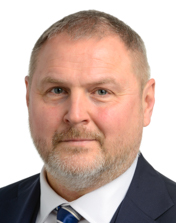






| Rank | Name | Country | Group | Speeches | |
|---|---|---|---|---|---|
| 1 |
|
Lukas Sieper | Germany DEU | Non-attached Members (NI) | 390 |
| 2 |
|
Juan Fernando López Aguilar | Spain ESP | Progressive Alliance of Socialists and Democrats (S&D) | 354 |
| 3 |
|
Sebastian Tynkkynen | Finland FIN | European Conservatives and Reformists (ECR) | 331 |
| 4 |
|
João Oliveira | Portugal PRT | The Left in the European Parliament (GUE/NGL) | 232 |
| 5 |
|
Vytenis Povilas Andriukaitis | Lithuania LTU | Progressive Alliance of Socialists and Democrats (S&D) | 227 |
All Contributions (62)
The EU’s Foreign, Security and Defence Policy after the Russian invasion of Ukraine (debate)
Madam President, Russia’s war against Ukraine has been going on for more than eight years now. The full-scale military offensive that Putin launched on 24 February has lasted more than 100 days. The lessons identified from the ongoing war must make the European Union move faster and start delivering in the security and defence field. The report that we are discussing tonight brings up many vital issues. They must be dealt with if we want the EU to become more serious. Defence must get the attention it deserves. Defence ministers should be meeting at Council level on a regular basis. The EU must cooperate more closely with NATO and find the necessary resources for the flagship projects such as military mobility. I would also like to emphasise the need for the EU to foster closer cooperation between the private sector, academia and governments in the field of defence technologies. What we have witnessed from the war in Ukraine is that high-end military technologies can make a huge difference in fighting the enemy and saving our own soldiers’ lives. We need more solutions and they can only be implemented in close cooperation with the private – and research and technology – sector from Europe.
Artificial intelligence in a digital age (debate)
Dear Mr President, ladies and gentlemen, Parliament’s special committee, set up last year, which analysed and proposed artificial plants [artificial intelligence] on the question, has drawn a line to his work today. I highly appreciate the initiative taken by Parliament in setting up the special committee. Artificial intelligence and the development of technology based on its use are extremely rapid, and obviously there are many important issues related to artificial intelligence, which this report dealt with. In my opinion, when looking ahead, we must bear in mind the following important factors in relation to the implementation of artificial tails and the regulation of their use. We also need a balanced approach to legislation and we need to avoid overregulation, which hampers innovation and the uptake of artificial intelligence in the field of security and defence. Overregulation limits our possibilities for the technological development of artificial intelligence, especially bearing in mind that there are no restrictions on our competitors. Attention must certainly be paid to close transatlantic cooperation in the field of artificial intelligence. The United States is the European Union's most important partner in this area. We must avoid regulations that interfere with our cooperation. I am convinced that the European Commission needs to plan more resources in the field of artificial intelligence. Any technological development will require significant investments. In my opinion, emerging and disruptive technologies in general, including artificial intelligence, could become a common area of work for the European Union and NATO. NATO is developing a strategy for artificial intelligence in the field of defence. I would expect the European Union, in particular, to finance the implementation of artificial plant protection through the Defence Fund and other relevant financial instruments. Once again, I would like to thank my colleagues from the Special Committee on Artificial Chicken. And I very much hope that the Commission's conclusions, as well as the issues I have highlighted, will continue to receive sufficient attention in the European Union in the future. We certainly need to keep up with our competitors on the issue of artificial intelligence and avoid falling behind – this is a matter of our competitiveness.
Question Time with the Vice-President of the Commission/High Representative of the Union for Foreign Affairs and Security Policy - Security and the EU's strategic compass
Vice—President, I very much appreciate that you took the decision to visit Kyiv together with President von der Leyen and I really hope that you will have more to announce than just grave concern or moral support to Ukrainian nation, which is standing up for our values today, and every day, in this very awful war. I have followed the process of the strategic compass, and I appreciate that the changes made after 24 February are aiming the needle of the compass in the right direction, which means it aims towards the East, where the existential threat to our values and our way of life is coming from. Now, my question is more about MFF. I understand that you said that nations should not invest more because it is waste of time. In my opinion, every nation in Europe needs to increase its defence spending and robustly and work together because there are so many gaps in the European defence. My question is, is it possible to reallocate resources in the framework of MFF to fill some of these gaps? For example, how can we make military mobility work. Thank you.
Debate with the Prime Minister of Estonia, Kaja Kallas - The EU's role in a changing world and the security situation of Europe following the Russian aggression and invasion of Ukraine (continuation of debate)
Madam President, Madam Prime Minister, dear Kaja, thank you very much for being with us in this Hemicycle today. And I also want to join the people who have thanked you for your leadership in these very difficult times. I certainly agree with the assumption that we are in there in this for a long haul. That makes us responsible of making the right decisions today. That demands from us committing adequate resources and building up the European Pillar of Defence, together with NATO. This pillar must not be an oversized construct or an empty buzzword, but a well-funded and coordinated effort, which means, if not today, then when should we reach the 2% of minimum of defence spending in all of Europe? But at the moment we need to act as one to paralyze Putin. Full embargo and the deepest cuts against aggression, combined with maximum military support, air defence, planes to Ukraine. Thank you. Slava Ukraini!
EU-Russia relations, European security and Russia’s military threat against Ukraine (debate)
Madam President, there is no need to remind you of the severity of the ongoing crisis. Putin’s Russia is working according to the plan: a strategic plan that has no less a goal than challenging the West and changing Europe’s security architecture. Building up a military presence and tightening the noose around Ukraine, day by day, is not just a military drill. It is Russia getting ready to attack one of its neighbours. The war in Ukraine has already been going on for eight years. The strategic end state Putin has in mind has not been delivered yet. Ukraine has not collapsed, and there is no puppet regime in Kyiv to follow the master’s orders. Putin’s attempt to correct this mistake he made could take place at any moment. Don’t let yourself be deceived by the dislocation of troops. Moving units back and forth is what you do when you prepare for attack. Russia is not de-escalating; they are escalating by adding pressure with cyber attacks. The West should not leave Ukraine. Diplomats and the media should stay in place. Politicians should visit Ukraine daily. This is what Ukraine needs now, in addition to material support from friends and partners. Last but not least, the EU must reaffirm strongly and openly that Ukraine has the perspective to join the Union one day.
Implementation of the common foreign and security policy – annual report 2021 - Implementation of the common security and defence policy – annual report 2021 (debate)
Madam President, Europe is on the brink of war – closer to a major escalation than we’ve ever been since the peak of the Cold War. The next days and weeks will tell if we were successful against bullying and threats from Russia and Putin. Europe faces Russia and China as the two main aggressive competitors wherever we look in the world. It is very important for us to stand our ground globally, defend our interests, help and assist our partners. Europe’s defence starts from Europe. We need more investments into defence, closer co-operation to overcome the technology gap, better co-ordination of our resources – be it in intelligence, military planning or mobility. We cannot afford security and defence budget cuts similar to the current Multiannual Financial Framework – I consider this extremely irresponsible.
Situation at the Ukrainian border and in Russian-occupied territories of Ukraine (debate)
Madam President, the tensions around Ukraine are escalating day by day. In addition to the build-up of a large military presence on the borders of Ukraine, Russia has switched into full information warfare mode. This is meant to target the home audience, ordinary Russian people, and to create a symbol of the enemy. This is meant to establish casus belli, so to speak. Following the Biden-Putin meeting last week, Russia has increased demands and repeated ultimatums. According to these claims, the West is to blame, Ukraine is guilty of genocide in the Donetsk region, Russia is being encircled by hostile countries, and the list goes on. Altogether, this is extremely dangerous and requires the strongest possible response from the European Union. Ukraine is part of Europe. The EU must stay united and resolute behind Ukraine. The upcoming European Council must address the crisis with the full seriousness that it deserves. The sanctions that Russia will get if it attacks Ukraine must be clearly articulated, effective immediately upon military aggression and cut deeply.
Situation in Belarus and at its border with the EU and the security and humanitarian consequences (debate)
Madam President, we are discussing a situation at the European borders today that continues to be extremely serious. This aggressive pressure where migrants are used as weapons continues to threaten the EU, our way of life, our values, our solidarity. I want to thank Poland for standing its ground. I also want to emphasise the solidarity this crisis has created among European countries. It is of the utmost importance to keep this solidarity strong. Attacking our solidarity is the centre of gravity of the operation controlled by Putin and implemented by his sidekick, Lukashenko. It is vital not to accept and talk to dictators as equals. By doing that, the EU loses control over the narrative, and that is unacceptable.
The escalating humanitarian crisis on the EU-Belarusian border, in particular in Poland (debate)
Dear Mr President, Last week, two dictators, Putin and Lukashenka, met to confirm a joint Russian-Belarusian military doctrine. Today, it is clear that Lukashenka, who swore eternal allegiance to Putin, has been particularly eager to implement this doctrine. Attacks against the external borders of the European Union are part of a broader strategy aimed at attacking the Western value space. Breaking divisions and crumbling solidarity within Europe. Putin is leading the game, and Lukashenka is his loyal vassal, trying to negotiate more favorable rental terms from Moscow. Today we need to send a clear message – we stand in solidarity with Poland. Poland is not a problem, it is a front country today. What we are seeing is not a refugee crisis, but an attack on the European Union using women and children as human shields. The European Union must finance the construction of border infrastructure if such a request is made. Sanctions must be taken forward, as many European companies that make money and pay taxes in Belarus are supporting the criminal regime. Airlines transporting people to Belarus must also be subject to sanctions. There must also be strong pressure on the countries of origin to stop favouring organised trafficking in human beings. Thank you.
The Arctic: opportunities, concerns and security challenges (debate)
Dear Mr President, I thank my fellow Members for the report on the Arctic and I strongly recommend voting in favour of it. Arctic issues are of a strategic nature and have a significant impact on the future of Europe. We are talking about environmental, economic and security impacts. The race to the Arctic has gained new momentum with the retreat of the ice sheet and the opening of the North-East Passage. This will affect the competitiveness of various global powers and will significantly shape the global economy in the near future. This report also deals with the strategic interests in the region of Russia and China, two of Europe's sharp competitors. Implementing these interests will change the global security environment. The opening of the North-East Passage to maritime transport is a great trump card for both Russia and China. Russia's geographical position on the one hand, and China's global ambitions and economic power on the other. China is developing a cable project that would cross the North-East Passage and, in addition to ultra-fast data communication, would also allow for the application of sensor technology for intelligence purposes. This is highly deplorable if, through the new transport corridor, opportunities are created for China to influence the security of Europe and the West as a whole. We certainly need to come back to this issue soon in the European Parliament. We must make every effort to ensure that Chinese projects in the North-East Passage are not supported with the help of European Member States or their companies. Thank you!
State of EU cyber defence capabilities (debate)
Dear Mr President, I thank my good colleague Urmas Paeta for carrying the report on cyber defence. This is a topic that touches almost every area of life very closely, because the threats and vulnerabilities that come with the development of information technology are universal for us. I am convinced that today we are not contributing enough to raising awareness and countering cyber threats. It is therefore very important that we in Parliament keep a constant eye on activities that would help to improve the efficiency of cyber defence for our citizens, for the Member States and for the European Union at large. Most cybersecurity is related to the prevention and consequence management of cybercrime. It is an ever-expanding type of crime, it most directly affects us all. Access to essential services, as well as entrepreneurship and everyday life, is increasingly the target of cybercrime. In addition, we have to deal more often with security and defence-specific cyber threats emanating from the attack armoury of authoritarian regimes. There needs to be purposeful cooperation between the European Union and NATO. We must make good use of the capabilities of both the European Union and NATO in order to protect both our citizens and our Member States. I would definitely recommend voting in favour of the report.
Connecting Europe Facility - Streamlining measures for the realisation of the TEN-T - Railway safety and signalling: Assessing the state of play of the ERTMS deployment (debate)
Dear Mr President, Commissioner, ladies and gentlemen, It is extremely positive that an agreement was reached on the Connecting Europe Facility, and I call on all colleagues to vote in favour of approving the agreement. It is an important tool to support the connection of peripheral regions with the rest of Europe through the development of infrastructure networks. The competitiveness of the European Union on a global scale depends precisely on how competitive all Member States are. Convergence between Member States is therefore in the interest of the Union as a whole. It should also be borne in mind that infrastructure development does not contradict climate objectives. The environmental performance of a means of transport depends primarily on the fuel used and not on the infrastructure on which it travels, be it road or rail. Investment in infrastructure is, in any case, an investment in the future.