
| Rank | Name | Country | Group | Speeches | |
|---|---|---|---|---|---|
| 1 |
|
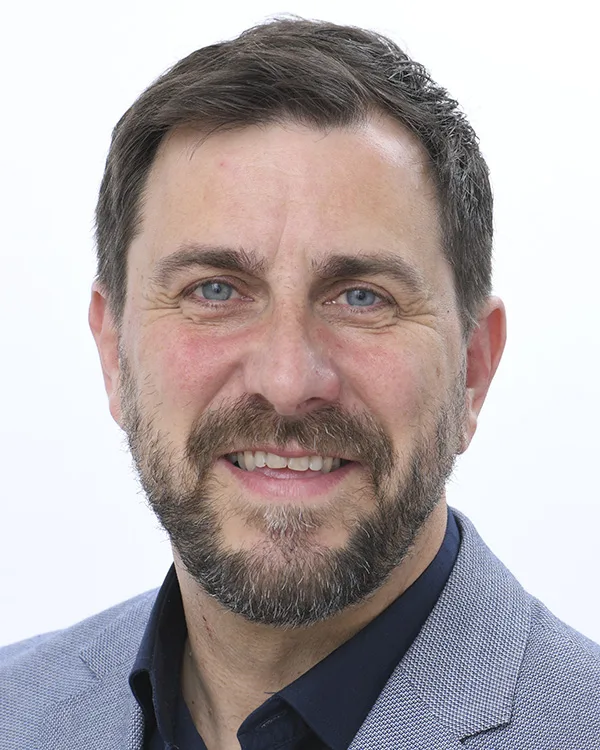
Lukas Sieper | Germany DEU | Non-attached Members (NI) | 390 |
| 2 |
|
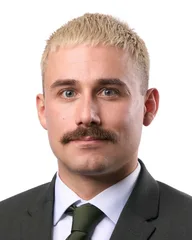
Juan Fernando López Aguilar | Spain ESP | Progressive Alliance of Socialists and Democrats (S&D) | 354 |
| 3 |
|
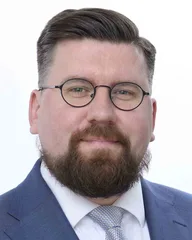
Sebastian Tynkkynen | Finland FIN | European Conservatives and Reformists (ECR) | 331 |
| 4 |
|
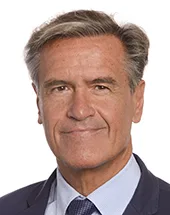
João Oliveira | Portugal PRT | The Left in the European Parliament (GUE/NGL) | 232 |
| 5 |
|
Vytenis Povilas Andriukaitis | Lithuania LTU | Progressive Alliance of Socialists and Democrats (S&D) | 227 |
All Contributions (64)
The attack on climate and nature: far right and conservative attempts to destroy the Green Deal and prevent investment in our future (topical debate)
Mr President, ladies and gentlemen, we cannot ignore science. Scientists have been sounding all the alarms for far too long. We're in an emergency. Climate change, rising temperatures will worsen and ecosystem degradation will not stop. We need to act now. We are late because nature does not wait. And we must bear in mind that the cost of not acting and not enforcing environmental policies is much greater than the cost of acting. But there's one other thing we can't ignore: If we do not share fairly the costs of this management, of these environmental policies in a socially just way, we will not achieve the political majorities necessary to make all these urgent changes. If the working classes, the most vulnerable groups of the population perceive that they are burdened with a disproportionate share of these costs, we will not succeed. That is why we must be able to convince the most vulnerable not to go against the Green DealWhy go against the Green Deal This means going against the well-being of society as a whole, but above all of the most vulnerable people and regions.
Discharge 2022 (debate)
Mr President, ladies and gentlemen, Commissioner, from the Committee on Development we want to share the three main points of our opinion for this to the European Commission. First of all, we wanted to underline the decisive role of this Parliament in terms of monitoring the implementation of the Global Gateway, as well as to ensure that projects financed from the resources of this instrument have a positive impact on the development priorities of partner countries, to ensure that the Global Gateway It serves the development of partner countries. Secondly, we recalled that the Commission must inform Parliament before mobilising the NDICI-Global Europe guarantee for unforeseen crises and ensure that it is actually used for its initial purpose, i.e. for the response to unforeseen crises. It wasn't always like that. Finally, we have been particularly insistent in asking the Commission to prioritise local NGOs in partner countries in the implementation of EU-funded actions and thus to make it easier for these organisations to access our funding. Local NGOs and civil society organisations are absolutely necessary to manage and implement EU development policies on the ground and we therefore call on the Commission to prioritise these organisations to ensure that local people take ownership of our development projects.
The immediate risk of mass starvation in Gaza and the attacks on humanitarian aid deliveries
Mr President, only a ceasefire in Gaza will prevent the famine to which the Palestinian population of the Strip is now exposed. More innocent dead? And we'll look at it without doing anything? That is why we demand from the Government of Israel a cease-fire, unconditionally and immediately. In the same way that we demand from Hamas, with the same forcefulness, the release of all hostages, also without conditions and also immediately, of course. That is why we unequivocally and emphatically condemn the Israeli military offensive in Gaza, which is killing tens of thousands of innocent people. The European Union cannot continue to export weapons to Israel when we know that they are being used in this appalling massacre. We cannot be complicit in genocide. And with the same resounding condemnation of the Hamas attack of October 7, which killed more than a thousand innocent people in Israel. Of course. The solution remains, today as yesterday, the one that the United Nations once dictated: two states. The Palestinian State is a right of the Palestinian people, but it is also the only real guarantee that the State of Israel can live in safety and peace. Thus, the recognition of the Palestinian state, which is absolutely necessary, will be for the benefit of the two peoples: of the Palestinian people and the Israeli people.
Compulsory licensing for crisis management and amending Regulation (EC) 816/2006 (debate)
Mr President, ladies and gentlemen, we have a 2006 regulation that theoretically allows the use of compulsory licences so that European pharmaceutical companies, in a situation of health crisis and with the authorisation of their national authorities, can produce and export both within the Union and to third countries, but in practice this is a farce because the procedures are so complex that they have almost never been used. This new regulation aims to create a European licence, in the sense that the authorisation depends on the Commission to make the procedure more agile, but does not allow exports to third countries. What a scandal! We are saying that when a health crisis hits not only the Union but also the global South, our pharmaceutical companies can produce cheap drugs for us, but not for the rest of the world. When the license is ineffective you can export, but when it is effective then no! So much hypocrisy. Protecting the profits of the pharmaceutical sector also against developing countries: Only pharmaceutical lobbying butlers could have proposed such an immoral proposal. I therefore call for full and complete support for the amendment tabled by the Committee on International Trade which seeks to correct this error. We allow the export to third countries of medicines produced under the new European compulsory license.
State of play of the corporate sustainability due diligence directive (debate)
Madam President, Commissioner, the blocking of the Due Diligence Directive by the Council is a disgrace, as it puts at risk human, labour and environmental rights in the Global South, which depend heavily on its approval. Are we aware of the serious consequences of not approving this directive or of contenting ourselves with an extremely diluted version? Should we allow the bad practices of our big companies in developing countries to continue? Is that what we want? Because it is precisely this impunity that the Directive seeks to combat. Perhaps we have not yet understood that, precisely because of its colonialist past, Europe has a particular responsibility to respect human rights in the Global South. The defence of sustainable development and human and labour rights is precisely what sets us apart from hostile powers such as China and Russia in the struggle for influence in the countries of the Global South. Any inconsistency in these areas weakens us geopolitically. I call on the Member States blocking this directive to lift their veto and reaffirm the EU’s commitment to human, labour and environmental rights globally.
Deepening EU integration in view of future enlargement (debate)
Mr President, Commissioner, ladies and gentlemen, it is not a question of discussing whether or not it is necessary to enlarge the European Union. Obviously, once the candidate countries meet the established criteria, they must be able to access the European Union, because the Union is not a closed club and must have the doors open to the countries of the Balkans, Ukraine, etc. But this necessary and historic expansion – inevitable – must take place responsibly and the institutional reform of the Council's decision-making system is a precondition for any enlargement. It is necessary to put an end to unanimity on many issues that cannot be approved today, because of the majority rule and therefore simply cannot be approved. The European Council can no longer function with unanimity. We all know that unanimity does not favour European construction but holds it hostage to the individual interests of each country: We all know that. Therefore, without institutional reform, any enlargement will lead to greater paralysis. It is not that the new states penalise the Union, but that they benefit from it as an area of democracy, social justice and prosperity. And only a more effective union can continue to serve his... (The President took the floor from the speaker)
Implementation report on the EU LGBTIQ Equality Strategy 2020-2025 (debate)
Madam President, ladies and gentlemen, if the Union is not a community that protects the freedoms of its citizens, it is nothing. And one of these freedoms, one of the most precious, is the freedom to love whoever we want. Who could be against it? For what reason? The Commission's LGBTQ+ strategy has been an important step forward, but it can be improved. For example, with regard to the fourth pillar, which drives the demand for LGBTQ+ equality worldwide, we have failed to ensure non-discrimination based on sexual orientation in countries that are signatories to the Samoa Agreement with African, Caribbean and Pacific States. Nevertheless, we must support these communities in those countries, such as Uganda, where they are seriously threatened. We must support human rights defenders who put themselves at risk on the ground to defend the rights of LGBTQ+ people. But the strategy is being fought too many times even from within the European Union, from the far right. Just yesterday, for example, the Vice-President of the Valencian Government in Spain did so. It is necessary to intervene at the legal level, but also to go to the roots of the causes of LGBT-phobia and cure the resentment that feeds it. It is a cultural battle, which we will do with all serenity, but also with all our determination.
State of play of the implementation of the Global Gateway and its governance two years after its launch (debate)
Mr President, the Global Gateway strategy aims to provide a credible perspective on China’s new silk routes and to strengthen the EU’s overall influence in the global South. To achieve these policy objectives, Global Gateway needs to be a mechanism that effectively addresses development needs in partner countries. Ten years after its implementation, we need to think about: Do we really align our efforts with the interests of our partners? Success depends on our ability to choose projects that resonate with the priorities of partner countries, including local and regional governments, but also on our ability to ensure that our efforts make a significant contribution to the Sustainable Development Goals and have a tangible impact on people's lives. Furthermore, Global Gateway should catalyse private investment in sectors that can best benefit from it, while ensuring that private sector involvement in key areas such as education or health does not replace public sector involvement. Finally, to ensure the success of Global Gateway, we need to deploy partnerships that chart a coherent path towards sustainable development and that create a difference for our partners in the Global South compared to the offerings of our geopolitical competitors, such as China and Russia.
Russiagate: allegations of Russian interference in the democratic processes of the European Union (debate)
Mr President, Russia seeks to destabilise the Union, indeed. To this end, Putin has sought allies within. And he found them: Not only is Orbán, but so are the far-right parties in various Western European countries. Who has practiced dangerous friendships with the Putin regime? Eurosceptics, those who, from within the Union, fight the project of European integration. But instead, we have heard again accusations related to Catalonia. False – you know – everything is false. Catalan independence has no link with Russia and is not anti-European. On the contrary, it is in a more integrated Union that we have always placed our hopes, because what we are looking for in a Catalan state within the Union, not against the Union. In fact, it is thanks to the European courts that we can do politics from exile. Putin's alliances may destabilize the Union, but what is sure to destabilize it is that there are parties that use defamation and lies to attack their political rivals. And the most serious thing is that there are judges to protect them. Enough. Enough defamation. Enough of lawfare. Without impartial justice there is neither the rule of law nor democracy. And the European project will be impossible.
Presentation of the programme of activities of the Belgian Presidency (debate)
Madam President, Prime Minister, we are very pleased that the Belgian Presidency places the defence of the rule of law as a top priority. But yesterday it was revealed that the Spanish government of Mariano Rajoy, from Dolors Montserrat’s People’s Party, investigated prospectively, without judicial authorisation and outside the law on pro-independence parties, with false accusations from the police with the approval of the Ministry of the Interior. And this operation initiated the repression of hundreds of Catalans in blatant violation of the rule of law. Spain may be the only EU state where politicians who violate the rule of law go unpunished, while innocent politicians have had to go to prison or exile. This has been recognised by the Belgian courts in the case of my colleague Luis Puig. As Belgium has always done with political exiles, from Victor Hugo to the present day with Catalan exiles, the amnesty law and the recognition of this persecution suffered by the separatists is the way to stop it. With regard to the priority on the links between culture and European identity, we ask this presidency to work on making Catalan official in the European Union. Catalans simply want Catalan, the only language with two million speakers that is not yet integrated into the European Union, to be recognised.
Defence of democracy package (debate)
Madam President, it is positive that the Commission is preparing proposals to increase the Union’s resilience to interference from third countries, but to ignore that the resilience of democracy in the Union starts here at home would be to lie to ourselves. The EU must also do its duty to ensure that our democracy can work. First, it must improve transparency and anti-corruption measures. For as we have seen with the ‘Qatargate’, for example, opaque procedures not only undermine democratic quality, but are also used by third countries to interfere in the EU’s deliberations. Secondly, we need to ensure that the EU effectively protects fundamental rights. To give a few examples, the fact that several Member States use spyware such as Pegasus and do not intend to part with it is an attack on democracy in the European Union. The fact that several Member States also impose restrictions on freedom of expression under various apologies is also an attack on democracy in the European Union. Wherever it is, their judicial dome twists the penal code for political purposes, thus violating the fundamental values and principles of the EU. This is also an attack on democracy in the European Union. Let us protect ourselves from external interference, of course, but also from internal threats.
Threat to rule of law as a consequence of the governmental agreement in Spain (debate)
Mr President, Mr Weber, the Amnesty Law, when published, will annul, among others, the sentences handed down by the judges of the Spanish Supreme Court against my colleagues in the Catalan Government on the events of 1 October. They were sentenced to between nine and thirteen years in prison. The judges of his country, the judges of Schleswig-Holstein, judged these same facts. And you know what they said? They said it wasn't rebellion. They said it wasn't sedition. They said they weren't even public disorders. They said it was an exercise of fundamental rights. Who was right, Mr. Weber? German judges or Spanish judges? Who was right? Judges who consider that the unity of the homeland is above fundamental rights or those who understand that fundamental rights are precisely the higher purpose of a true rule of law? Who was right, Mr. Weber? Amnesty law is not an attack on the rule of law. The attack on the rule of law was the abuse of criminal law by Supreme Court judges. What is a threat to the rule of law is the Trumpist drift that the PP is making from the hand of Vox. And what is a threat to the rule of law is that you, Mr Weber, are accompanying them on this journey... (the Chair took the floor from the speaker)
Proposals of the European Parliament for the amendment of the Treaties (debate)
Mr President, it is necessary to increase the democratic legitimacy of the Union and for that, this Parliament must have the right of legislative initiative, like all parliaments in the world, and must act as co-legislator on the MFF. It is also essential to reverse the roles of Parliament and the Commission in the election processes of the Commission Presidency in order to strengthen the democratic legitimacy of this institution and transform it into a true European executive. It also goes in the direction of more democracy. Secondly, unanimity in decisions on the common tax policy must be eliminated. Only in this way will we be able to build a genuine European tax system, which is now absolutely essential. And in addition, we need more direct democracy. We need to establish the European referendum, strengthen subsidiarity, and take better account of regional parliaments with legislative powers. Finally, the necessary eastward enlargement will not be viable until we eliminate the unanimity requirement in common foreign policy decisions. Enlargement will only be possible if the unanimity rule is discarded. If the situation is already untenable today with the 27 Member States, what will happen when we reach 33 or 35 States without a reform of the Treaties? It is the immobility that awaits us and, as a result, the decline of the Union. The stakes are historic.
System of own resources of the European Union (debate)
Madam President, the NextGenerationEU funds were financed by a joint debt issue and therefore the COVID pandemic has broken the taboos of European banks. It was a big advance, but now comes the time to return this money to the creditors. And we know that there are only three ways to do that. Either we increase national contributions, which we all know generates a debate that easily poisons the relationships between contributors and net beneficiaries of the EU budget. Either we reduce the programmes and policies of the Community budget, which is the dream of Eurosceptics. Either we are making a decisive, if not historic, increase in the EU’s own resources. I am pleased that this Parliament supports the third of these options, increasing own resources, and that it is doing so with these three tax instruments: an increase in the percentage of what is collected on European markets in carbon emissions, carbon border adjustment mechanisms and an own resource based on business profits. Thus, we are taking the first steps towards a European tax system. But this is only the first step. We have to go much further. It should not be forgotten that the EU cannot function as an economic and monetary union without a fiscal union. That must be the end goal, and reforms like the ones we are discussing today are helping us move towards that goal.
Outcome of the SDGs Summit (18-19 September 2023, New York) – transformative and accelerated actions leading up to 2030 and beyond (debate)
Madam President, ladies and gentlemen, the recent Agenda 2030 summit confirmed what we already knew: No country in the world, no one, is advancing fast enough to achieve the Sustainable Development Goals, the SDGs. Therefore, it is imperative to accelerate the involvement of the European Union in the SDGs. But what can we do? Funding plays a key role in achieving the SDGs. The Union must lead decisively in mobilising adequate and sufficient financial resources to support the progress of the SDGs. However, none of these efforts will be enough without alleviating the debt of many countries in the Global South. For this reason, the Union should push for the multilateral amnesty of part of the external debt of the most indebted countries, provided that these countries make concrete commitments to achieve the SDGs. In addition, the Union should promote the flow of special drawing rights the International Monetary Fund to developing countries and multilateral development banks. This would allow these countries to increase their capacity to invest in the SDGs without accumulating additional debt. Finally, the Union should lead by example and establish a high-level Commissioner to coordinate the implementation of the SDGs at all levels of Union competence. It's time to act. The Union must lead the way in accelerating progress towards this global social pact that is the SDGs, the only one that can guarantee peace, stability and justice on a global scale.
Urgent need for a coordinated European response and legislative framework on intrusive spyware, based on the PEGA inquiry committee recommendations (debate)
Mr President, Poland, Hungary, Greece, Cyprus and Spain are the Pegasus champions according to the European Parliament report. Can we therefore rely on the Member States to defend citizens' rights? Can we continue to believe that, simply with state regulations, the political freedoms of dissident minorities will be protected? The answer is no. In Spain, Catalan independence activists who are victims of Pegasus cannot assert their rights before the courts; Hungary and Poland still do not comply with the judgments of the Strasbourg Court; the Council of Europe has brought the states of the European Union to the level of autocracies as consolidated as Azerbaijan. It is not only necessary for the European institutions to monitor the use of Pegasus, but also to ban it. Programmes like this violate our rights structurally and break the very foundations of the European Union. We cannot allow these mass espionage manoeuvres to be carried out with impunity in the house of European democracy, because those who carry out these attacks do not behave like European democrats. It is therefore a shame that the Commission has ignored mass cyber espionage in its rule of law reports. We urgently demand (inaudible word) a strong response from the institutions. European inaction is complicit in state authoritarianism. We Catalans know this very well. And with regard to Mr. Cañas' speech, to foolish words, deaf ears (the Chair took the floor from the speaker).
Water scarcity and structural investments in access to water in the EU (debate)
Mr President, there is no doubt about the link between climate change and the droughts we are experiencing. A drought that is a dramatic consequence of this – and requires immediate action – and persists across almost the entire EU. But in southern countries like my own, Catalonia, drought requires more urgent action. The main idea is to give water a second life: no drop can be wasted. This requires optimising consumption, reducing losses in our distribution networks, reusing water, applying the principles of the circular economy and the polluter pays. Combating drought is everyone's responsibility, but the costs must be borne by those who cause and fuel climate change. We cannot place the economic burden of this problem on the water bills of European citizens. The fight against climate change is also a fight against inequalities and the social divide. Those who pollute must invest so that we can purify the waters, preserve the ecological flows of the rivers and create closed-loop systems, where no drops are lost. This is an urgent action.
Need to complete new trade agreements for sustainable growth, competitiveness and the EU’s strategic autonomy (debate)
Madam President, ladies and gentlemen, a trade policy based on a purely mercantilist approach to free trade is incompatible with the Union's strategic autonomy. So, we need to think about our trade policy from a geopolitical perspective. There are two ways to tackle this challenge: recover protectionist logics, which as a Union we cannot afford to support, or distribute our dependencies in a balanced way among reliable partners, with the aim of responding to our strategic goals, such as, for example, countering the influence of geopolitical adversaries such as Russia and China, accelerating the green transition and the fight against poverty in the global South, or promoting our values, such as multilateralism and respect for human rights. To achieve this there are several trade agreements that need to be accelerated. The clearest example is the EU-Mercosur agreement, which is still pending ratification. Deepening ties with the Mercosur countries allows for a more balanced transatlantic relationship. A triangular relationship between Europe, Latin America and the United States will allow us to maintain solid ties with the latter without being overly dependent on them. The time has come for the ratification of the trade agreement with Mercosur.
Situation in Nagorno-Karabakh after Azerbaijan’s attack and the continuing threats against Armenia (debate)
Madam President, Commissioner, we cannot remain impassive in the face of the human tragedy of Azerbaijan's aggression and ethnic cleansing in Nagorno-Karabakh. We know why this happened. On the one hand, Turkey, protector of Azerbaijan, provided it with the necessary armament, but also Russia punished Armenia for its pro-European orientation and its condemnation of the invasion of Ukraine, thus withdrawing its historical support for this country. The European Union's response is not acceptable. The repression and ethnic cleansing in Nagorno-Karabakh began, as you said, as early as 2020 and despite this, the Union concluded the energy memorandum with Azerbaijan for gas and is still seeking to conclude a more comprehensive cooperation agreement. Will Azerbaijan stop in Nagorno-Karabakh? Or will the next target be Armenia? The Union must guarantee Armenia's security by contributing with the necessary means to its self-defence. This is in line with the values of the Union but also with its geostrategic objectives. Indeed, this would reduce Russian influence in the South Caucasus by facilitating Armenia's exit from the Russian-led military alliance. Armenia clearly wants to move towards Europe. Today, it ratified the statutes of the International Criminal Court. Let us act accordingly, beginning by severely punishing those responsible for this awful ethnic cleansing.
Guatemala: the situation after the elections, the rule of law and judicial independence
Madam President, we cannot remain unmoved by the interference of the prosecution to alter the outcome of the democratic elections in Guatemala. We've all said it. We all share this position. Prosecutor Curruchiche tried to prevent the Seed Movement from competing in the second round of the elections, has criminally prosecuted the Supreme Electoral Tribunal, has just raided the headquarters of this body to break the chain of custody of the votes and previously banned the candidacy of the indigenous leader Thelma Cabrera. What's next? The Union must therefore be very firm in the face of this abuse and must act directly against those responsible. The United States, for example, has already sanctioned the prosecutors who are doing this attack on democracy by order of local oligarchies. And Europe should do the same. It is therefore extremely urgent for the Commission to propose to the Council that the EU sanctions regime be amended to include corruption as a punishable offence and that those responsible for this interference against the democratic will of the people of Guatemala be prosecuted without delay. Arévalo won the election. Your result must be respected. This slow-motion coup d'état must end immediately and, if it persists, the European Union must make it very clear to those responsible that trade relations with Guatemala will suffer.
State of the Union (debate)
Madam President, the future of the Union is inextricably linked to the future of its Member States. In 1978, the Spanish state underwent a crucial political negotiation that allowed the transition from dictatorship to democracy and paved the way for Spain’s accession to the European Union a few years later. At the time, Europe understood that this negotiation that led to the 1978 regime was decisive, not only for Spain, but also for Europe, its future and its stability. Today, the Spanish state is approaching what could probably be the most transcendent and decisive political negotiation since the transition. And as at the time, the stability of Europe also depends on it. Because it is only if the Spanish state is able to find a solution to its conflict with Catalonia based on human rights, democracy and respect for the principles of the International Covenant on Civil and Political Rights, i.e. the right to self-determination, that this solution will be solid and lasting. That is why we believe that the Commission should closely follow this possible negotiation, which is so important not only for Catalonia, but also for the EU and for the Spanish State itself, and approach it with a responsible and constructive attitude.
The water crisis in Europe (debate)
Madam President, a few minutes ago, I was able to vote in favour of the Nature Restoration Act. Restoring nature is essential if we do not want to find ourselves in situations like the one we are currently living in: a period of historic drought, which no longer knows North-South borders, because the factors that cause it affect us all. Winters are increasingly warm, dry and mild across the EU, especially in southern and western Europe. It is unacceptable that some propose to press the ‘pause’ button when it comes to tackling climate change. The Nature Restoration Act, which some countries and political groups in this Parliament are seeking to stop, is already proposing to restore aquatic ecosystems, which are responsible, among other things, for fighting floods and floods. There is an urgent need to adapt EU water framework legislation because we have less water, and its quality has declined. It is vital that any legislation that allows us to mitigate the consequences of climate change is defended by this Parliament without hesitation. Our common future is at stake.
Lessons learnt from the Pandora Papers and other revelations (debate)
Madam President, ladies and gentlemen, tax havens are estimated to cause the governments of the world to lose almost $500 billion a year. Yes, a five and eleven zeros. The Pandora Papers remind us that tax evasion is one of the most important problems facing the world today. It undermines the tax bases of the Welfare State in the countries of the North and the resources that are lost due to tax evasion would allow the fairly immediate eradication of extreme poverty in the countries of the Global South. In the European Union, we must be much more energetic in the fight against tax havens. First: We need to update our blacklist of non-cooperative tax jurisdictions so that there are the twelve countries where corporate tax and 0 %, there is no one today, and so that there are also countries that do not have transparency criteria regarding the ownership of registered companies. Second: The monitoring list should also include countries with a corporate tax below 15% as set out in the OECD Agreement. In addition, there is an urgent need to speed up the creation of the European Anti-Money Laundering Authority. Tax evasion is an attack on any idea of justice on a global scale. That is why the fight against tax havens should be a top priority on our political agenda.
IPCC report on Climate Change: a call for urgent additional action (debate)
Mr President, we read the IPCC report and we will find that our inconsistency is monumental, every effort made today to combat global warming will be more effective than if it were made tomorrow. The same effort, if made in a year, will have less impact than if it were made now. If we do it in five years, there will be less profit than if we did it in two years. This is how nature works, this is how the scientists of the IPCC report confirm it. So why do we delay our decisions? To extend the negotiations? More than thirty years have been lost in international negotiations with little or no fruit, which have led to unnecessary controversy and above all inertia. Thirty years during which gas emissions accumulate and as a result, the opportunities to reduce the most negative consequences of climate change are much smaller today than they were yesterday. In my country, Catalonia, it has not rained enough for 25 months, and we are not an exception in Europe. We need to do more and do it faster. We're wasting time.
Universal decriminalization of homosexuality, in light of recent developments in Uganda (debate)
Mr President, yes, the Ugandan Parliament has passed a criminal law against the LGBTI community. But the EU dropped the LGBTI community in the negotiations of the post-Cotonou agreement with ACP countries, including Uganda. It did not ensure that the agreement included an explicit commitment to the rights of that community, which is also mine. Given the level of violence and persecution suffered by these groups in many ACP countries, it is clear that we, the EU, are facing a dramatic human rights failure in the light of this post-Cotonou agreement. In negotiations as important as these, the EU needs to be more courageous, much more courageous, to defend those who see their rights, their physical integrity, or even their lives threatened because of their sexual orientation. The EU must be the hope of all LGBTI men and women on the planet, not only as a place to live one’s sexual orientation without discrimination, but also and above all as a geopolitical power that will always strive, with all the democratic means at its disposal, to combat the persecutions of the LGBTI community, wherever they occur.