
| Rank | Name | Country | Group | Speeches | |
|---|---|---|---|---|---|
| 1 |
|
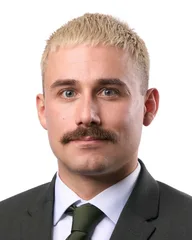
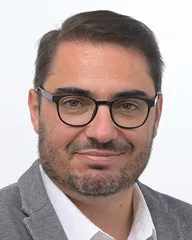
Lukas Sieper | Germany DEU | Non-attached Members (NI) | 390 |
| 2 |
|
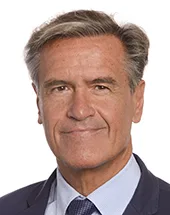
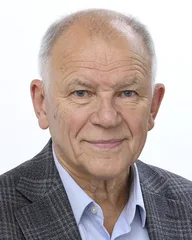
Juan Fernando López Aguilar | Spain ESP | Progressive Alliance of Socialists and Democrats (S&D) | 354 |
| 3 |
|
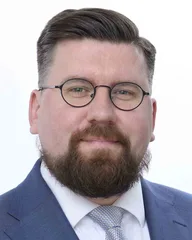
Sebastian Tynkkynen | Finland FIN | European Conservatives and Reformists (ECR) | 331 |
| 4 |
|
João Oliveira | Portugal PRT | The Left in the European Parliament (GUE/NGL) | 232 |
| 5 |
|
Vytenis Povilas Andriukaitis | Lithuania LTU | Progressive Alliance of Socialists and Democrats (S&D) | 227 |
All Contributions (64)
Deliberations of the Committee on Petitions in 2021 (debate)
Madam President, the right to petition is a fundamental component of European citizenship and it is therefore very important that the Committee on Petitions rigorously examines all petitions from citizens relating to the competences of the Union. But we have a problem, Commissioner, which, incidentally, has already been pointed out by several parliamentary groups this year: the Chair of the Committee. Mrs Monserrat instrumentalizes this committee, prioritizing petitions that are either in the interest of Spanish nationalism or that of her party, the Spanish Popular Party. For example, we are spending time and resources repeatedly processing petitions on the school system in Catalonia, ignoring that the Commission has already said, on all occasions, that the European Union is not competent in this matter. I was chairman of the Committee on Petitions of the Parliament of Catalonia and it would never have occurred to me to make such a sectarian use of my office. Ladies and gentlemen, we need the Committee on Petitions to cease to be the instrument for the national or partisan interests of its Chair and to return to its original role: a democratic instrument to defend the rights of European citizens.
Defending democracy from foreign interference (debate)
Mr President, ladies and gentlemen, with external interference against democracy in the European Union, we are referring to the fact that, for decades, globalised financial markets have been subverting the will of democratic governments. Tell that to the Greek people, who suffered a bailout twelve years ago only to save some European banks at the cost of destroying their social protection system, and now it was the Commission that had to apologize to the Greek people. However, I understand that this is not the debate today, but what concerns the interference of the autocratic countries against the European Union as a paradigm of freedom, democracy and the rule of law. It is inevitable, in this case, to mention the Qatargate and other examples, such as Putin's Russia and his dangerous friendships with far-right parties in the European Union, which he funded in a non-disinterested manner. Por cierto, enough ya de fake news Sobre las relaciones entre Putin y el independenceismo catalán. Por favor, no more ya. When we talk about foreign democracy, the reflection is obvious: How do we want to protect ourselves from those who violate the rule of law if we look the other way when these violations are committed in the Union by the Member States themselves? We will not tire of repeating it, the violation of civil and political rights in Spain due to the Catalan conflict leaves us unarmed in the face of all Putins and all autocrats on the planet, whether they are from the Gulf or elsewhere.
Turkish airstrikes on northern Syria and the Kurdistan Region of Iraq (debate)
Mr President, Turkey presents itself to the EU as a necessary mediator between Russia and Ukraine, but it poses serious threats to Europe’s security. This month, we witnessed bombings of Kurdish territories in Syria and Iraq, which targeted, among other things, the Kobane pediatric hospital. Not only are these bombings and Turkey’s ground invasion of Syria’s Kurdish territories having grave humanitarian consequences, but they are preparing the ground so that the jihadists, against whom the Kurdish forces have been our best allies, can again endanger the security of the region and our own security. In addition, there are indications that Turkey is helping Russia to evade EU sanctions. Worse than anything, Turkey regularly and openly threatens to militarily attack an EU Member State. Ladies and gentlemen, we have a problem with Turkey, and this Parliament must react. Who protects Turkey in the EU? Why is High Representative Josep Borrell not here? Why does Spain’s policy of letting Erdoğan do so become that of the whole of Europe?
EU response to the increasing crackdown on protests in Iran (debate)
Madam President, ladies and gentlemen, an elderly woman says, it is incredible how many women, especially young women, go out on the streets without a veil. Ours is a revolution, but our struggle is not just about the veil. We want a secular democracy. We are fighting for freedom. Marhane, one of the thousands of protagonists of this revolution explains that the purpose of the veil is to humiliate women, the outward sign that you are not a free human being. But behind it is everything else. Iranian women inherit half of the men and girls can be married by their parents from the age of 13. We need the permission of our father and husband to work, to get a passport, to travel. We can't even ride a bike or motorbike, Marhane explains. That is why the Iranian women's revolution does not stop, despite repression. According to Iran Human Rights, 342 protesters were killed by the police and according to the United Nations, 14,000 people were arrested and at least five of them were sentenced to death. A new generation of Iranians, led by women, has decided to replace grief with anger, fear with determination. Every time a woman takes off her veil she puts her life at risk, but she sends a message of freedom to the world and the Union will fail in its values and mission if it is not able to accompany this revolution to the end.
Question Time (VPC/HR) - The impact on third countries of Russia’s war of aggression against Ukraine in relation to the “Black Sea Grain Initiative” agreement
Mr President, yes, Mr Borrell, I was also asking you about Turkey's role in evading EU sanctions on oil imports. Therefore, not only the flow of exports from Turkey to Russia, but the flow of import of Russian oil from Russia to Turkey. And the question about Kurdistan is related and justified, because what we are asking is whether Turkey's growing geopolitical role... (the Chair took the floor from the speaker).
Question Time (VPC/HR) - The impact on third countries of Russia’s war of aggression against Ukraine in relation to the “Black Sea Grain Initiative” agreement
Mr President, it is certainly good news for the food security of many developing countries that the grain export agreement from Ukraine via the Black Sea has been fully re-established. This will certainly help prevent the worst-case scenario for these countries in the global south, which are vitally dependent on Ukrainian grain imports. With regard to Turkey, I would like to point out that we all know that Turkey's role as a facilitator and guarantor of compliance with this agreement has been very important and, therefore, Turkey's geopolitical importance for the European Union is reinforced. All right. But we also know that Turkey is a country with destabilizing factors. For example, Turkey has not adopted European Union sanctions against Russia, we have clear indications that Turkey is helping Russia evade European Union sanctions on oil, Turkey is maintaining an openly hostile stance towards two Member States in the Eastern Mediterranean and Turkey shows signs of planning a full-scale invasion in Syrian Kurdistan. Therefore, three very specific questions: What will the Council propose in relation to sanctions against those responsible for evading sanctions against Russia if they are proven? What measures will the Council propose to defend the territorial integrity of the two EU states threatened by Turkey? And three, what... (The Chair took the floor from the speaker.)
Corporate Sustainability Reporting Directive (debate)
Madam President, ladies and gentlemen, the adoption of this directive is an important step towards an ambitious public corporate information system, which provides consumers and investors with all the data relating to the impact of business activities on the environment, human rights, workers' rights, the rights of indigenous peoples and the governance system of all developing countries. It is a way of ensuring that large European companies act in accordance with the values and principles of the European Union, those values that the Union proclaims as a geopolitical bloc, namely democracy, human rights, the fight against climate change, the development of the countries of the Global South, because it is of little value that our speeches and policies are inspired by these principles if the practices of our companies, when operating in the rest of the world, openly contradict them. Achieving these objectives requires not only the commitment of public administrations but also, crucially, that of the private sector. In fact, consumers and investors can be a formidable driver of change towards a business model that overcomes the most blatant injustices of global capitalism, and this directive clearly helps to activate this engine.
General budget of the European Union for the financial year 2023 - all sections (debate)
–Mrs President, Commissioner, I had the honour of being the rapporteur for the opinion of the Committee on Development for the 2023 budget, and as such, I would like to make it clear that we have – I believe you will agree – a very serious problem: the spending margin authorised by the Union’s multiannual financial framework for the 2021-2027 cycle is fully exhausted, which does not allow the Union to address the urgent challenges of its external action. There was first the COVID pandemic and then the brutal Russian aggression against Ukraine, with its global effects, such as the food security crisis and the energy crisis. All this has significantly increased the need for humanitarian aid and, above all, put the Sustainable Development Goals in a critical situation. In this regard, the situation is of particular concern with regard to the objectives related to the climate emergency and the need to support our partner countries in implementing climate change adaptation and mitigation actions. There is, of course, a discrepancy between events, which happened unexpectedly, and financial forecasts and the EU. To address this situation, however, it is extremely urgent that Member States reform the Multiannual Financial Framework. This is a difficult objective – it is easy to say, it is not easy to do – but we must assume this objective and approve a very ambitious increase in the budget chapter dedicated to external action, especially for geopolitical intelligence. If the EU does not show itself as a reliable partner for the development of partner countries, our geopolitical competitor China will not miss the opportunity. We must have this geopolitical ambition and make it a reality through the budget.
Mental health (debate)
Mr President, ladies and gentlemen, there are two main challenges to our mental health policies. First, be fully aware of social determinants. All the indicators of recent years confirm the devastating effects of the economic crisis, both that of 2008 and that derived from Covid on mental health. Rates of acute and non-acute pathologies, suicide rates, etc., rise rapidly in adults, but especially in children and young people, but these impacts are not evenly distributed, the most vulnerable social classes are those in which mental health worsens most dramatically, poor and unemployed families are the weakest class of our society and their children are therefore the weakest link of these families. This is where mental health is most threatened. The second challenge is the transformation of our healthcare system. We need to move decisively towards the community paradigm and that means at least three things: generate all the diversity of open devices, alternatives to institutionalization, so that people with mental disorders can develop their lives without being separated from the community, put patients and their families at the center of the planning of the care model and health in the first person and, finally, promote the necessary cultural change so that we all learn to live with people with mental health problems in our daily lives, seeing them above all as citizens with our own right to happiness.
Commission proposal for measures under the Rule of Law Conditionality Regulation in the case of Hungary (debate)
Madam President, the comparative grievance between the treatment of countries such as Hungary and Poland by the European Commission and that of Spain is constantly increasing. What's happening in the last few months confirms it. In mid-September, the Commission proposed to the Council to withhold €7.5 billion in funding for Hungary for breaches of the rule of law. A much-needed step. But in the meantime, in Spain the Government refuses to collaborate in the investigation of the Pegasus case, the Supreme Court ignores the ruling of the Luxembourg Court last July, according to which President Puigdemont and I retain our immunity from displacement; the Supreme Court ignores it and keeps our arrest warrant, etc. Spain fails to comply with Community law and more than 60% of the judgments of the Strasbourg Court. But the Commission says nothing. He doesn't do anything. What's going on? Do they only dare to sanction the Member States if they are small and from the east? What if they are big and from the west, like Spain, then they have an open bar? Is this it? Ladies and gentlemen of the Commission, the Treaty obliges you to act impartially and neutrally. And you are blatantly failing in this duty. The institution that is supposed to be the guardian of the Treaties is the first to violate them. And that is how the European project is dynamite.
European Centre for Disease Prevention and Control - Serious cross-border threats to health (debate)
Madam President, the pandemic has forced us, the European Union, to take a step forward in the area of health policies, and we have done so. This is the best that could be done for health, and this regulation is a concrete expression of it. We are pleased that, following the last trilogues, the final version of this standard incorporates some of the proposals we have made. Ensure, for example, that regional authorities are involved in the development of prevention and preparedness plans for cross-border health threats. Governments like the one in Catalonia, of which I was a health adviser, have a lot to say about this. But there is more in this regulation that we celebrate: the holistic view, for example, that these preparedness plans will take into account the impact of epidemiological threats on mental health and other non-infectious diseases, or the incorporation of the One Health fundamental principles. The pandemic has made us understand better than ever the link between human, animal and environmental health, and has made us rethink all our health policies. How, then, could we carry out prevention policies without recognising the central role of social determinants? There is no doubt that the approval of this regulation is good news for the right to health of European citizens, and we welcome it.
Taxing windfall profits of energy companies (debate)
Mr President, I do understand that the Member who has spoken after me in this debate has failed to comply with the Rules of Procedure which require respect among Members and, for this reason, I ask the Chair of this debate to call her to order in application of the Rules of Procedure of this House. Mrs Benjumea, I am not a fugitive from justice, as you said, because I came to Belgium on 30 October 2017, making use of a right that I have as a European citizen, which is the right to free movement. And I am accountable to justice, against what you have said, because I am accountable to a real justice, which is Belgian justice, a democratic justice, like Belgian justice, and not Franco's justice. Mrs Benjumea, I am not a fugitive from justice as you said, because I am a MEP elected by the citizens of my country, which is Catalonia, who voted for me, who gave our list, who won the elections, more than a million votes. And we are not fugitives from justice, we represent more than a million citizens. But I know that you probably don't care about this, because you don't care about democracy, because the Spanish right has had a very serious problem with democracy for decades.
Taxing windfall profits of energy companies (debate)
Mr President, Spain is one of the countries in Europe with the greatest experience in energy oligopolies, which explains, among other things, that in one year the price of electricity, from March to March, has multiplied tenfold. On the occasion of the war in Ukraine, the large Spanish energy companies had an increase in their profits of up to 226 % compared to the previous year, 11 billion euros. In Spain, the owner of water, mills and gas is usually the same. And, for this reason, until now the electricity companies sold water at the price of gas, making exorbitant profits fallen from the sky. Now, with the cap on the price of gas and paying for water at the price of water and gas at the price of gas, in three days more gas has entered the system than in the entire previous month. It is a scandal, it is proof that there is no transparency, that there is no fair play in energy management. There are structural problems in Spain that have never been solved. Today, as in Francoism, the government still does not prevent the excessive profits of the oligopoly. It subsidizes the price of oil, all right. Approve a rate on profits fallen from the sky, all right. But they are temporary measures and loaded with exceptions. This Parliament's proposal to impose a tax on profits falling from the sky is a step in the right direction, no doubt. But if we do not end the oligopolies in Spain and ... (the Chair took the floor from the speaker).
2021 Report on Kosovo (debate)
Madam President, ladies and gentlemen, this report is right when it calls for Kosovo to be admitted as a candidate country for membership of the Union and it is right when it asks the Member States not to veto the request that Kosovo intends to formalise in this regard at the end of 2022. If, when this request arrives, states such as Spain oppose it, they will clash head-on against the will of this Parliament. Kosovo has taken important steps since 2021 towards the democratisation of its political system and if we close the door to it, these efforts will lose momentum. What do we prefer? A democratic Kosovo within the Union or a failed Kosovo state close by, but outside the Union? Spain and other states that still do not recognize Kosovo's legitimate unilateral declaration of independence will obstruct its European path, a declaration that complies with international law according to the International Court of Justice. If a unilateral declaration of independence can be legal in accordance with international law, it goes against the European values that there are currently five EU Member States, including Spain, that do not want to recognise it.
Revision of the EU Emissions Trading System - Social Climate Fund - Carbon border adjustment mechanism - Revision of the EU Emissions Trading System for aviation - Notification under the Carbon Offsetting and Reduction Scheme for International Aviation (CORSIA) (joint debate – Fit for 55 (part 1))
– Mr President, Commissioner, as we know perfectly well, the countries of the South have historically contributed the least to climate change, but, conversely, suffer the most from it. This is a global and systemic injustice, which the EU cannot ignore, especially since our industrial system has been, over the centuries, one of the main culprits behind this temperature escalation. At the COP in Copenhagen in 2009, the international community pledged €100 billion to finance the fight against climate change in the Global South. Thirteen years later, there is still time to achieve this goal. Today, we are taking an important step towards realising this commitment, and it is an honour for me to have contributed to it, since the DEVE Committee, as rapporteur for an opinion on a report on the reform of the EU Emissions Trading System. Because, indeed, in this opinion of DEVE a proposal was born which incorporates the ENVI report and which, we hope, will be approved today. This text proposes that EU Member States allocate a minimum percentage of revenues from the auctioning of CO2 emission allowances to policies – mainly adaptation – to combat climate change in low- and middle-income countries, revenues which, with the gradual reduction of free emission allowances, will increase in the coming years. We welcome the fact that one of these percentages, which was 5% in the original DEVE proposal, was increased to 10%. We are not yet able to calculate everything accurately, but we are talking about around €2 billion. Although this figure is considerable, it is still insufficient. Nevertheless, we are celebrating this important step and, at the same time, in the immediate future, we will continue to demand new measures to go further in the areas of climate finance in the Global South.
Minimum level of taxation for multinational groups (debate)
Madam President, Commissioner, the OECD agreement makes it possible to introduce this global minimum corporate tax; This is certainly good news, but we believe that setting the minimum tax at 15% of profits is not enough, especially at a time when there are large companies, such as energy companies, which have made extraordinary profits of more than EUR 200 billion from the rise in gas and oil prices. That is why we cannot applaud the Commission's proposal to transpose the agreement into the European Union: because it does not increase the percentage of 15% and, above all, because it has many, too many exceptions in its application. We need a tax collection that allows the EU to implement sufficient social policies against the consequences of the pandemic, the war in Ukraine, the climate crisis, etc. Therefore, we must go further not only in the implementation of the OECD agreement, but also in the construction of a strong, permanent international tax cooperation, much more ambitious than the current one, which leads us, for example, to adopt a tax on international financial transactions: is a priority. Global tax harmonisation should be just the other side of the coin of much deeper tax harmonisation within the Union.
The case of Osman Kavala in Turkey
Mr President, Commissioner, Osman Kavala reminds us once again that Turkey is a state that systematically violates human rights and ignores the judgments of the Strasbourg Court and this is not a new precedent. In the case of Demirtas, the president of the pro-Kurdish party, Turkey has already refused to comply with the resolution of the European Court of Human Rights ordering his release. So how can we keep Erdoğan’s Turkey as a candidate country for EU membership? We need the EU to stand firm in the face of unbridled repression against activists like Kavala, the democratic opposition and the Kurdish national minority. The EU is now a passive accomplice. Sanctions must be imposed on those responsible for this repression. And finally, the Turkish government has admitted that Spanish precedents of persecution of Basque and Catalan politicians have served as examples for it to do the same against elected politicians and Turkish activists. Brussels’ inaction in the face of Spanish repression against us thus becomes the best alibi for authoritarian regimes like the Turkish regime, which can continue to violate human rights.
Use of the Pegasus Software by EU Member States against individuals including MEPs and the violation of fundamental rights (topical debate)
Mr President, the question is not whether espionage with Pegasus is legal or not. If it is not legal, should those responsible for this crime be convicted? Does anyone have to take political responsibility? And if Spain does not have the capacity to detect criminals, then it is not a reliable rule of law. The correct question is: if our espionage is part of a democratic regime. I was spied on in the days leading up to the great concentration in Perpignan of the Catalan government in exile in January 2020, where I headed the organization of this concentration. If a Spanish judge authorized my espionage in those days, it means that he believed that my actions could constitute possible criminal offenses. At the same time I was engaged in negotiations with the French police to ensure the security of the concentration. At that time, for France, such concentration was an exercise of the right to demonstrate, but for the Spanish State it was an alleged offence. This is the difference between a democratic state and one that is not. My case perfectly illustrates this difference. In this regard, I do not want to leave without asking one last question for the gentlemen of the Spanish People's Party and Socialist Party and Ciudadanos: Why do you in the European Parliament support the creation of a committee of inquiry into Pegasus and yesterday you voted against such a committee in the Spanish Congress? To look good in front of our European colleagues, but to deny transparency when they do not look. Is that it?
Cooperation and similarities between the Putin regime and extreme right and separatist movements in Europe (topical debate)
Madam President, it is not normal that just a few days ago the leader of the largest parliamentary group in this House gave credence to the fake news that tries to link Putin with Catalan independence. Or do they not know that it was the European Commission itself that acknowledged in a written reply that the supposed European report on which these fake news are based does not exist, Mr Zarzalejos? Let's investigate, yes, let's investigate everything you want, Mrs. Pagazaurtundúa. It has not been Catalonia that has been cooperating with the Putin regime, doing business with it for all these years; It has been some of the great European states that have been feeding that regime. Putin is leaving Ukraine strewn with mass graves and some are taking advantage of these deaths to legitimize his obsession with Catalonia. It's immoral! It's immoral! Putin is a good student of Franco, because Spain has also been full of mass graves for ninety years, and those who do not want to open these graves and those who do not want to cut with Francoism are the allies of the European People's Group – the lords of the PP – and the allies of their allies – the lords of VOX –, thanks to whom the PP governs in four autonomous communities. In the conflict between Catalonia and Spain it is the right that represents an authoritarian political culture, which today Putin embodies like no one else worldwide in the war with Ukraine. (the Chair took the floor from the speaker).
Sixth Assessment Report of the United Nations Intergovernmental Panel on Climate Change (IPCC) (debate)
Madam President, the war in Ukraine is pushing us to replace fossil fuels with renewable energy even faster. However, the Union is now caught in a shameful contradiction between its interests and its principles. We want to stop the aggression against Ukraine, and to contribute to this goal we need to stop buying Russian gas and oil. But we do not want to assume the consequences of this decision for the European economy. Meanwhile, the latest report of the Intergovernmental Panel on Climate Change eloquently explains that climate change mitigation requires changes in our consumption patterns that allow our societies to reduce their energy demand. However, we know that, paradoxically, these changes can end up costing families more, and the most vulnerable households should not face them without public support: Hence the crucial importance of the Social Climate Fund – a fund that requires sufficient funding – to ensure a socially just energy transition, but also to promote income redistribution. Only in this way can we prevent climate-denial populism from conquering the most vulnerable groups and classes in our society.
The situation of journalists and human rights defenders in Mexico
Madam President, in 2021 many journalists were killed in Mexico, but also 42 human rights defenders, of whom 30 were defenders of the rights of indigenous peoples over their ancestral lands. Obviously, Mexico must improve its insufficient Protection Mechanism for Human Rights Defenders and Journalists, but the Union must also commit itself to this endeavour. First, we need European Union delegations in countries such as Mexico to be involved in the effective implementation of the Council Guidelines for the Protection of Human Rights Defenders. Secondly, the Union cannot accept projects by large European companies in Mexico and the rest of Latin America that violate the rights of indigenous peoples, degrade the environment, harm labour rights, undermine the rule of law, including the participation of organised crime, or establish a neo-colonial economic structure. That is why the future process in this Parliament of the Directive on the due diligence It is far-reaching and must meet all these objectives.
The deterioration of the situation of refugees as a consequence of the Russian aggression against Ukraine (debate)
Madam President, there is no adjective to describe the human catastrophe caused by Russia’s military aggression against Ukraine. There is no reason to justify this invasion with all the death and horror it leaves in its wake. Among other excuses, Putin cynically claims that he is leading this invasion to protect Russian and Russian-speaking minorities in Ukraine, while the civilian population of Russian-majority cities, such as Kharkiv and Mariupol, suffers the most from the invasion in eastern and southern Ukraine. It is intolerable that Putin manipulates peoples’ right to self-determination to justify the territorial ambitions of his authoritarian nationalism. The right to self-determination cannot be repressed by authoritarian states, nor can it be manipulated to legitimise armed aggression against free nations. The EU must take a stand and work to end the Russian aggression, the war and its humanitarian consequences. The first of its obligations is to support Ukrainian refugees entering the EU and it is therefore good news that the Council approved temporary protection for Ukrainian citizens last Thursday. Of course, all Member States must participate jointly in the effort to welcome these refugees.
The Rule of Law and the consequences of the ECJ ruling (debate)
Madam President, today, the Court of Justice of Luxembourg, by dismissing the action of Hungary and Poland, confirmed the regulation that allows access to the EU budget to be suspended if Member States do not respect the principles of the rule of law, but only when such a breach seriously affects the proper implementation of those budgets. However, where these breaches of the rule of law do not directly affect the management of EU funds, what instruments does the EU have at its disposal to defend its fundamental values and principles? Today, we are all looking at Hungary and Poland, because they ignore the judgments of the Luxembourg Court. But do you know that the Spanish Supreme Court in 2020 refused to recognise the decision of the Luxembourg Court of the previous year, on the basis of which this Parliament recognised President Puigdemont, Clara Ponsatí and myself as MEPs? When Polish or Hungarian courts ignore the Court of Justice, these countries are sanctioned. But when the Spanish Supreme Court does, nothing happens. However, this double standard only weakens the EU and its raison d’être. The rule of law will only be saved if the Commission and the Council defend it in the same way in all EU countries. Either he's saved everywhere, or he won't be saved anywhere.
Strengthening Europe in the fight against cancer(debate)
Madam President, this report, of which I have been a member of a special committee, can be truly satisfied, is a milestone in the history of European policies to combat cancer. It will help our governments to better strategies in the field of oncology, no doubt. If I had to summarize it, I would choose two concepts: prevention and equality. Prevention is always the best health policy and oncology is no exception. To reduce the incidence of cancer in our societies we must transform habits and lifestyles, as well as social and environmental conditions of our population. The field that remains to be covered in order to achieve this goal is still immense. In this respect, our amendments have had an impact on the concept of health in all policies and we welcome the fact that they have been taken into account. Combating inequalities between countries and regions in cancer treatment must be our undisputed priority as Europeans. There are still unbearable differences between our citizens in terms of screening, early detection, overtreatment and therapeutic innovations. In conclusion, I would like to point out that we can understand that the genetic code conditions the probability of survival in the face of an oncological diagnosis, but what we cannot accept, in any way, is that this probability depends on the postal code.
State of play of the RRF (Recovery and Resilience Facility) (debate)
Madam President, ladies and gentlemen, the good news is that the European Court of Justice has confirmed the link between respect for the rule of law and NextGenerationEU funds. It dismissed the actions brought by Poland and Hungary against the regulation establishing that link. However, this Regulation only requires respect for the rule of law as regards the management of funds only. What happens when a state circumvents the rule of law in other areas? In this case there is no automaticity derived from a regulation, in this case there is the discretion of the political decision, which can also block funds, for example by not approving the reform plan on which the request for funds submitted by each State to the Commission depends and the European Council has used it, because the Polish plan has not yet been approved. What will happen if a Member State breaches the provisions of the European Court of Justice regarding the rule of law in the future, but has already approved its plan in NextGenerationEU? For example, the Spanish Supreme Court has leaked that, as far as our immunity is concerned, it considers Spanish law to be superior to European law. So what will the Commission do in this case to avoid a scandalous double standard with Poland and Hungary? Is it taboo for the Commission to sanction a Western EU country?