| Rank | Name | Country | Group | Speeches | |
|---|---|---|---|---|---|
| 1 |
|
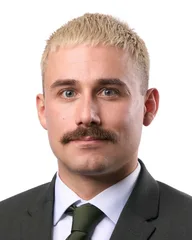
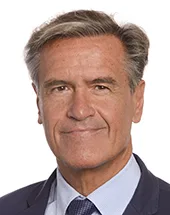
Lukas Sieper | Germany DEU | Non-attached Members (NI) | 390 |
| 2 |
|
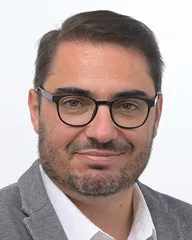
Juan Fernando López Aguilar | Spain ESP | Progressive Alliance of Socialists and Democrats (S&D) | 354 |
| 3 |
|
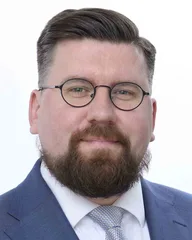
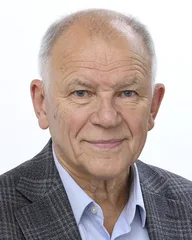
Sebastian Tynkkynen | Finland FIN | European Conservatives and Reformists (ECR) | 331 |
| 4 |
|
João Oliveira | Portugal PRT | The Left in the European Parliament (GUE/NGL) | 232 |
| 5 |
|
Vytenis Povilas Andriukaitis | Lithuania LTU | Progressive Alliance of Socialists and Democrats (S&D) | 227 |
All Contributions (390)
Commission’s plans to include the revision of the outstanding proposals on animal welfare in its work plan for 2025 (debate)
I really apologise to the interpreters, who do a very good job. I was going to say that improving animal welfare in Europe is not only ethical, but it is also essential to achieve a healthy and sustainable society and it will limit the spreading of zoonotic diseases. So the EU must push for the highest possible standards and the Commission must deliver on their promises, which they have been doing for the last years. Thank you very much and Merry Christmas.
Commission’s plans to include the revision of the outstanding proposals on animal welfare in its work plan for 2025 (debate)
Madam President, dear Commissioner, for many years European citizens have been asking for a revision of EU animal welfare legislation. So far, too little has been done and this must change. While we welcome a Commissioner for animal welfare, the Commission must ensure that any pending proposal will be delivered by 2026. This is in line with the recommendations of the strategic dialogue on the future of EU agriculture. It also reflects the will of millions of citizens that collected signatures for citizens' initiatives such as 'End the Cage Age' and 'Fur Free Europe'. Improving animal welfare issues in Europe is not only ethical, but it also is essential. (The President interrupted the speaker)
Recommendation to the Council on the EU priorities for the 69th session of the UN Commission on the Status of Women - EU priorities for the 69th session of the UN Commission on the Status of Women (joint debate - EU priorities for the upcoming session of the UN Commission on the Status of Women)
Mr President, Commissioner, what do the 1949 Women’s Union for Peace in Belgium, the Mothers of May Square in Argentina and this year’s Sakharov Prize finalists Women Wage Peace and Women of the Sun have in common? Well, these are women’s movements for peace. In these turbulent times and on the occasion of the 69th session of the UN Commission on the Status of Women, I believe it is urgent to recall UN Resolution 1325 on Women, Peace and Security, which stresses the important role of women in the peace process, including conflict prevention, management and resolution. There is an urgent need for Europe to commit to implementing this resolution, on the eve of its 25th anniversary. While women’s contribution to the reconciliation process is welcomed, it is still not integrated into formal peace negotiation processes. Yet women are at the forefront of peaceful movements, agents of change and the linchpins of post-conflict social and economic recovery. So we must bring that voice, their voice, into the world, for a more just, more humane and more egalitarian world.
Need to update the European strategy for the rights of persons with disabilities (debate)
Madam President, Discrimination against people with disabilities persists in all areas of our leisure and professional lives – and this is unacceptable. And how can we treat people with disabilities on an equal footing if we cannot even agree on a uniform definition of disability in Europe? How can we speak of a social and equality union when our EU funds still exclude them from the labour market? We need to stop perceiving disability as a problem. Rather, we need to understand that people with disabilities represent an exceptional pool of talent and strengthen our social union. Greater inclusion of people with disabilities means, above all, promoting the diversity of our workforce, reducing poverty, investing in human capital to create wealth that benefits all. This is precisely why we need to strengthen the EU Disability Strategy. I am also thinking of investing in the social economy, introducing reasonable accommodation across the board and introducing quotas in companies and administrations. Let's tackle it! And, Commissioner, I am convinced that we will do this together with you and your team.
Strengthening children’s rights in the EU - 35th anniversary of the adoption of the United Nations Convention on the Rights of the Child (debate)
Madam President, today we celebrate the first international instrument to recognise children as human beings entitled to fundamental freedoms and human rights. 35 years later, we must continue strengthening these children's rights here in Europe. Therefore, comprehensive and age-adapted sexuality and relationship education is an essential tool to prevent sexual abuse, paedophilia and violence, and it is critical for the health of children and young people. In a world where sexual abuse, gender-based violence, unwanted pregnancies, AIDS and STDs pose a risk to the well-being of young people, education becomes a very powerful instrument. However, despite the clear evidence of the benefits of sexuality education, it is still challenged. Dear colleagues, the health and well-being of children cannot be politicised. It is not about ideology, it is about human rights. And together, we need to fight for a more resilient society without leaving behind vulnerable groups like children living with disabilities, LGBTI young people, rainbow families, refugee and migrant children. Children are our future, but let's not forget they are also our present.
Recent legislation targeting LGBTQI persons and the need for protecting the rule of law and a discrimination-free Union (debate)
Madam President, in a union of equality, there is no room for discrimination. I ask the right side of this House, would you not be outraged if one of your relatives or one of your friends would be discriminated against because of the colour of their skin, or because of their religion, or because of their disability? Why are some of you not shocked when people continue to suffer, on a daily basis, discrimination and violence because they are lesbian, gay, bi, trans, non-binary or an intersex person? In a union of equality there is no place for double standards. In Europe the anti-gender movement – notably supported by Putin, Orbán and Meloni and others – is getting increasingly vocal and is taking discriminatory measures against the LGBTI community. Europe must counter this axis of hate and actively oppose legislation that undermines equality, freedom and rule of law. Europe must denounce discriminatory laws and ensure compliance with EU law and the case law of the ECJ. The Commission must not hesitate to launch infringement procedures. We Socialists & Democrats will never sell our values for political gain, and we will never waver in our commitment to workers' rights to human rights, including LGBTQI+ rights.
Urgent need to tackle the gender pay gap (debate)
Madam President, dear Commissioner Dalli, a 13 % gender pay gap in our Union is a scandal and is a slap in the face of our core values. And while I welcome EU legislation and in particular the Pay Transparency Directive, we must face the facts: these initiatives will only be successful if there is real political will for change. And I can hear those in this House who will claim that the administrative burden of this legislation is too high – that's not true – and it's the EU and not we are responsible for that – it's the exact opposite. It is up to our Member States, up to our companies to guarantee gender equality and to ensure the principle of equal pay for equal work. If they had respected our treaties and the Commission recommendations, Europe would not have had to legislate. We all have a responsibility in transforming patriarchy into a Union of equality. And to those who want to portray this fight as an invention of what they call gender ideologists: equal pay is enshrined in our treaties since 1957. Therefore, they must stop blaming the progressives. They should stop making women and workers feel guilty and rather look at their own inability or unwillingness to guarantee equality. Enough is enough. Let us together put an end to the gender pay gap. And thank you very much, Commissioner Dalli, for all the work you have done.
Closing the EU skills gap: supporting people in the digital and green transitions to ensure inclusive growth and competitiveness in line with the Draghi report (debate)
Mr President, dear all, closing the EU's skills gap is a must for all transitions that our society, our workforce and our economy are facing now and in the future. When it comes to the climate and to digital transitions, we need to come back to a positive narrative – highlighting the opportunities, but of course also addressing fears and doubts. To close our skills gap, we also need a true single market of skills by facilitating the recognition of the competencies of our workforces between our Member States. I want to thank Commissioner Nicolas Schmit for the work already delivered with the European Years of Skills, individual learning accounts and the extension of the Erasmus+ mission. All this has improved access to vocational education and training for all, and we must continue on that path. If the new Commission wants to use 'skills, skills, skills' as a mantra, we must not forget that our citizens, our workforce, young and old, will only embrace this if lifelong learning and upskilling lead to better jobs, to quality jobs. Indeed, when we discuss skills, we have to address the social dimension of competitiveness and jobs, and cherish social dialogue.
Empowering the Single Market to deliver a sustainable future and prosperity for all EU citizens (debate)
Madam President, the single market is the crown jewel of the European construction, and in my eyes gives the EU a competitive advantage. A stronger single market means a more competitive Europe. Mr Letta, as your excellent report shows, we can improve a lot and we must perfect it. We need better implementation of the existing rules. We need to ensure that it contributes to a more sustainable and a more social Europe, and we need to consider strengthening integration in crucial sectors, as a stronger single energy market, for example, driven notably by better interconnectivity, can lead to more secure and affordable energy and cheaper electricity bills for companies and our citizens. Furthermore, for the S&D Group, more integration means more competitiveness for our companies, better consumer protection and more prosperity for Europeans – while adopting national solutions will lead to more fragmentation and ultimately a weaker Europe. Further harmonisation of rules also means less bureaucracy and a reduced administrative burden for our companies, especially for SMEs, which will no longer have to navigate through a jungle of 27 different sets of national rules. So let us leverage the power of integration to tap into the full potential of the single market.
World Mental Health Day - need for a comprehensive EU strategy on mental health (debate)
Mr President, the increasing mental health challenges in Europe are a silent pandemic, affecting people who often suffer alone and out of sight. One in six persons is affected by mental health problems, and one quarter of the population suffer from loneliness and the second leading cause of death of young people is suicide. If we look beyond mere statistics and numbers, the reality becomes even harder to bear, with millions of individual tragedies. And this year's World Mental Health Day theme is 'prioritise mental health at the workplace', a topic which is very dear to me and my political group, the Socialists and Democrats. Common risk factors in the workplace include extreme workload, toxic work culture, AI surveillance, discrimination and blurred lines between private and professional worlds with little or no right to disconnect. The impact is also very high on our economy: every year, around 12 billion working days are lost due to depression and anxiety. Commission Vice-President, the challenges are massive and we need to tackle them together without taboos and combating discrimination. The EU has an important role to play to support Member States and also this Parliament will prioritise this important subject.
Taxing the super-rich to end poverty and reduce inequalities: EU support to the G20 Presidency’s proposal (topical debate)
Mr President, Vice‑President of the Commission, colleagues, in Europe and all across the world we are confronted with a glaring injustice: the super rich are amassing grotesque amounts of wealth due to paying little or no taxes, and to due to avoiding measures and the tricks they use. They also disproportionately contribute to climate change. At the same time, ordinary people, small businesses, are diligently paying their taxes and are increasingly facing difficulties to make ends meet and are receiving insufficient support to master the many challenges they face. We can no longer accept this status quo. At a time when poverty is on the rise, when tackling climate change is super-urgent and rampant inequality is corroding our societies, we need to ensure that the super rich pay their fair share. As Socialists and Democrats, we welcome the G20 presidency proposal to elaborate a tax on the super rich, and polls show that the public are equally supportive. We now have to move towards a fairer society, with more revenues for governments to fight poverty and climate change and to invest in public services. The EU and all its Member States should lead by example in combating tax avoidance and ensuring adequate taxation of the super rich, and should play a leading role in this process in the appropriate fora.
Recent attempts to deny dictatorships and the risk of Europe returning to totalitarianism (debate)
The next item is the debate on the Council and Commission statements on the recent attempts to deny dictatorships and the risk of Europe returning to totalitarianism (2024/2709(RSP)).
Forging a sustainable future together: economic, social and territorial challenges for a competitive, cohesive and inclusive Europe (debate)
The debate is closed. Thank you to all the participants.
Forging a sustainable future together: economic, social and territorial challenges for a competitive, cohesive and inclusive Europe (debate)
Thank you very much, dear colleague Marques, for your excellent work in this House.
Forging a sustainable future together: economic, social and territorial challenges for a competitive, cohesive and inclusive Europe (debate)
The next item is the debate on the Council and Commission statements on forging a sustainable future together: economic, social and territorial challenges for a competitive, cohesive and inclusive Europe (2024/2705(RSP)).
La Hulpe declaration on the future of social Europe (debate)
Thank you very much, Secretary of State, this debate is now closed.
La Hulpe declaration on the future of social Europe (debate)
Dear Sylvie, as a member of this great family of the Committee on Employment and Social Affairs, I would also like to thank you for your commitment and above all for your courage.
La Hulpe declaration on the future of social Europe (debate)
Thank you very much, dear colleague Agnes Jongerius, and thank you for your 10 years of engagement in this House. I’m sure you will continue your work with a lot of competence for a just Europe in different arenas than this Parliament.
La Hulpe declaration on the future of social Europe (debate)
The next item is the debate on Council and Commission statements on the La Hulpe declaration on the future of social Europe [2024/2707(RSP)].
The European Parliament's right of inquiry (debate)
The sitting is now suspended for a few seconds and it will resume with the votes. (The sitting was suspended for a few moments)
The European Parliament's right of inquiry (debate)
The next item is the debate on – the oral question to the Commission on the European Parliament’s right of inquiry by Salvatore De Meo, Domènec Ruiz Devesa, Rainer Wieland, Maite Pagazaurtundúa, Damian Boeselager, Helmut Scholz, on behalf of the Committee on Constitutional Affairs (O-000006/2024 - B9-0013/24) (2024/2598(RSP), and – the oral question to the Council on the European Parliament’s right of inquiry, by Salvatore De Meo, Domènec Ruiz Devesa, Rainer Wieland, Maite Pagazaurtundúa, Helmut Scholz, Damian Boeselager, on behalf of the Committee on Constitutional Affairs Commission (O-000007/2024 - B9-0014/24) (2024/2598(RSP).
The sixth Anti-Money Laundering Directive - Anti-Money Laundering Regulation - Establishing the Authority for Anti-Money Laundering and Countering the Financing of Terrorism (joint debate - Anti-money laundering)
The joint debate is now closed. I thank all the speakers for their input, and also the Commissioner and everyone who took part. The vote will be held today at 17.00.
The sixth Anti-Money Laundering Directive - Anti-Money Laundering Regulation - Establishing the Authority for Anti-Money Laundering and Countering the Financing of Terrorism (joint debate - Anti-money laundering)
Thank you very much, Mr Tang. Your ten years here have been very much appreciated by all the colleagues. Good luck for the future of your career.
Agenda of the next sitting
The next sitting is tomorrow, Thursday 11 April, at 9.00 in the morning. The agenda has been published and is available on the European Parliament website. I would like to thank all the interpreters, the ushers, all the Secretariat members, all the staff of Parliament still here, and all the Members who are still here.
Standards for the qualification of third-country nationals or stateless persons as beneficiaries of international protection (A8-0245/2017 - Matjaž Nemec)
That concludes the explanations of vote.