
| Rank | Name | Country | Group | Speeches | |
|---|---|---|---|---|---|
| 1 |
|
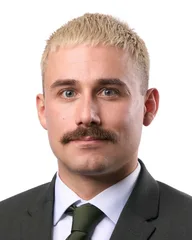
Lukas Sieper | Germany DE | Renew Europe (Renew) | 487 |
| 2 |
|
Juan Fernando López Aguilar | Spain ES | Progressive Alliance of Socialists and Democrats (S&D) | 454 |
| 3 |
|
Sebastian Tynkkynen | Finland FI | European Conservatives and Reformists (ECR) | 451 |
| 4 |
|
João Oliveira | Portugal PT | The Left in the European Parliament (GUE/NGL) | 284 |
| 5 |
|
Vytenis Povilas Andriukaitis | Lithuania LT | Progressive Alliance of Socialists and Democrats (S&D) | 273 |
All Speeches (356)
Combating violence against women and domestic violence (debate)
Date: N/A | Language: EN Written StatementsFor far too long, women and girls have been victims of patriarchy, not only in their private life but also in their professional life. Domestic violence, genital mutilation, sexual harassment and cyber-violence are concrete examples of what too many women experience in their daily lives. It can happen to our mothers and our daughters. In Europe, every six hours, a woman is killed. Two in ten women have experienced physical and/or sexual violence by a partner or a friend; three in ten by a relative or family. This must stop! As Socialists and Democrats, we want a Europe where women in all their diversity can live free from fear. By adopting the new directive on violence against women, we will have stronger legislation when it comes to forced marriage, female genital mutilation and cyber-violence. This directive is a first positive step for change; a catalyst to move forward in building a strong Union of Equality.
2024 Annual Rule of law report (debate)
Date: N/A | Language: FR Written StatementsThe defence of human rights, in particular LGBTIQ+ people, is at the heart of EU policy. During the previous legislature, many actions were implemented such as the activation of Article 7 against the previous Polish government and Hungary, as well as the introduction of the principle of conditionality in the allocation of EU funds. However, the issue of LGBTIQ+ rights does not end in Hungary or Poland. Today, the anti-gender movement is very successful. I am thinking in particular of the recently adopted anti-gender law in Bulgaria which prohibits any propaganda, promotion or information relating to the situation of LGBTIQ+ people in schools. I am also thinking of Italy, which deprives entire families of their parenthood. Another example is Romania, which contravenes ECHR decisions by refusing to recognise the marriage of rainbow families. The application of dual standards cannot therefore be tolerated. This is why it is crucial that this new Commission continues the work started under the previous legislature and takes active action to restore EU law within it. It is high time we took the measure of our collective responsibility towards future generations.
The need for targeted criminal provisions and platforms’ responsibility to effectively address cyberbullying and online harassment (debate)
Date:
29.04.2026 16:12
| Language: EN
Speeches
Madam President, dear Commissioner, dear colleagues, one quick, anonymous click for the aggressor has long-lasting consequences for the victim. Online spaces have become a fertile ground for harassment and cyberbullying, affecting children especially. Parents feel powerless, children continue to suffer, families are left alone to deal with tragedy. The European Union must respond and must do more. Children across our Union deserve the same level of protection regardless of where they live. That requires a coordinated and consistent European approach. As Socialists and Democrats, we have welcomed the Commission's action plan seeking to build a common understanding of cyberbullying, improving reporting and strengthening prevention. But let us be clear: we already have strong instruments. The Digital Services Act and the AI Act give us means to act against harmful content and unsafe systems, but implementation remains patchy. Why does Europe still hesitate to hold platforms accountable, even when the well-being of our children is at stake? We call on the Commission and on the Member States to fully enforce existing rules and ensure that platforms take real responsibility. We also want a streamlining of criminal law in the Union and in the Member States. This is about protection, dignity and safety, and our children deserve nothing less.
Mr President, I think the speaker just mentioned that in the Netherlands they would like to legalise the marriage between man and a beast, and I think this is unacceptable language in this House, and we should report that to the President and see how we can deal with such horrible discourse expressions here in the House.
Mr President, dear Commissioner, colleagues, the rule of law is a fragile thing – it takes time to dismantle it, but then one day, you realise it's gone. Ask the Hungarians, they know all about it. They watched judicial independence and media freedom go down the drain. They were stripped of fundamental rights when trying to challenge the system. They saw government accountability and transparency vanish into thin air while corruption reached unimaginable levels. All of this happened one amendment at a time – little by little, year after year – fuelled by constant and shameless disinformation. But most importantly, Hungarians had to live with the economic consequences – because when the rule of law and fundamental rights are gone, economic development also vanishes. This month, Hungarians, despite threats and legal obstacles, finally managed to shake off the shackles of autocracy, and I wish them the very best in rebuilding the rule of law and democracy. But let this also be a lesson to all aspiring Orbáns in the European Union: illiberal democracy is a failed concept, and in case you had doubts about it, without the rule of law and fundamental rights, there is no prosperity, no security and no future.
Situation of fundamental rights in the European Union in 2024 and 2025 (debate)
Date:
28.04.2026 17:31
| Language: EN
Speeches
Mr President, dear colleagues, dear Commissioner, fundamental rights are at stake in our Union. Our democracies are under great pressure and civil society is under attack. Women's rights are being rolled back. LGBTIQ+ people and minorities are increasingly being targeted. But, thank God, recently, the Charter of Fundamental Rights of the European Union turned 25: a moment of celebration and reaffirmation. But we as a Parliament uninvited ourselves from the party because, once again, in the European Parliament's Committee on Constitutional Affairs, the EPP voted together with the far right and killed the report on the implementation of the Charter of Fundamental Rights, leaving the European Parliament the only institution turning its back on fundamental rights on this 25th anniversary. Dear colleagues, fundamental rights are the cornerstone of our Union. The Charter is not symbolic: it is a binding, constitutional pillar of EU law. Defending these rights is not an ideological exercise. It is our duty. And, as Socialists and Democrats, we will continue defending fundamental rights and the Charter.
European Citizens’ Initiative 'Ban on conversion practices in the European Union' (debate)
Date:
25.03.2026 19:05
| Language: EN
Speeches
Madam President, dear Commissioner, dear colleagues, verbal and physical abuse that can go as far as corrective rape, forced injections of hormones, exorcism and much more – that is what young gays, lesbians, trans and intersex persons must endure in this so‑called conversion therapy. That is torture. So, let me thank all the activists of ACT who organised the European Citizens' Initiative, supported by 1.1 million Europeans, to ban conversion therapies. Torture is never therapy. And anyway, there is nothing to heal, nothing to fix and nothing to repair in queer people and in me. I am gay. Not because I learned about it in school or because I read it in a book, nor because I saw a movie about homosexuality. No, I am born gay as a result of the beautiful diversity of nature. Those who believe that lesbians, gays, bisexuals, trans and intersex persons are mistakes of nature, please look around. Look at yourself. We are all different and that is precisely what makes us human. The culture of everyone must be the same and of a perfect human, that has a name. It is called Nazism. That is what the Nazis preached and I absolutely refuse that history be ignored and repeated by those who cannot accept differences. This is why we Socialists and Democrats call on the European Commission to develop strong recommendations in order to introduce a full ban of conversion practices across all European Member States because we believe in a Europe that defends human dignity. In such a Europe, we cannot tolerate torture.
Mr President, Madam Commissioner, dear colleagues, EU enlargement is a historic responsibility, a necessity and a testament to what we can achieve when we stand together. But a Union that grows must also be able to act. In this Parliament, in this mandate, we have agreed to adapt our institutions by expanding the use of qualified majority voting and to make full use of the flexibilities within the Treaty, including passerelle clauses, enhanced cooperation and constructive abstention. We also must have the courage to adopt targeted Treaty changes. Institutional reform and enlargement go hand in hand, but enlargement must also be fair for people. It must serve people in their daily lives. Too often, social reforms are treated as secondary. Too often, the social dimension is underestimated in the accession process. Yet across many candidate countries, inequalities and poverty remain high. We must place social progress at the heart of enlargement, because convergence must not only be economic or institutional – it must also be social.
Gender pay and pension gap in the EU: state of play, challenges and the way forward, and developing guidelines for the better evaluation and fairer remuneration of work in female-dominated sectors (debate)
Date:
09.03.2026 20:43
| Language: EN
Speeches
Mr President, dear Commissioner, dear colleagues, I remember very well one lesson when I was one of the negotiators for the S&D Group on the Pay Transparency Directive: that when we talk about equality, everybody applauds; but when equality comes with a cost, then suddenly too many become silent. And that is intolerable. To those who are calling to repeal or dilute this directive, we Socialists and Democrats recall that equal pay between women and men for equal work or work of equal value is one of the European Union's fundamental founding principles, enshrined in our Treaties since 1957. So it's not about ideology. We warn: don't mess with women's rights and don't mess with workers' rights. Together with the trade unions, we progressives will not let this directive be thrown away. Enough is enough. We will not tolerate a backlash on equality. The facts are clear. Member States that implemented strong legislation after the Commission's recommendation in 2012 brought results – Belgium, Luxembourg. An administrative burden? Come on. There is software, there is artificial intelligence, which calculates this very easily. It's more administrative burden to organise a board meeting than to deal with pay transparency. So don't touch this directive. Don't weaken it. Implement it and work together for fairer salaries in female-dominated sectors.
Addressing subcontracting chains and the role of intermediaries in order to protect workers’ rights (debate)
Date:
11.02.2026 19:47
| Language: EN
Speeches
Mr President, Commissioner, colleagues, across Europe, subcontracting chains have become a blind spot in labour law, in construction, agriculture, transport and logistics. Some chains reach even 6 or 7 levels, leaving workers unprotected. When wages go unpaid and accidents happen, all responsibilities vanish. Millions of mobile workers and migrant workers are affected and often forced to pay illegal fees through unregulated intermediaries. The result is shameful: social dumping, unfair competition and systematic violations of basic labour and social rights. This is not an enforcement problem. This is a rules problem. As long as responsibility can be diluted, exploitation will continue. The Commission faces a political choice: either we tolerate a two-speed Europe of work, or we adopt an ambitious directive on subcontracting chains. As socialists and democrats, we call for a directive that includes: a full-chain liability, where the client and its subcontractor are liable for labour and social rights violations; a limit on subcontracting layers; and a strict framework on intermediaries, which must be registered in the European Union and subject to clear standards and obligations to avoid any risk of gangmaster practices.
Urgent actions to revive EU competitiveness, deepen the EU Single Market and reduce the cost of living - from the Draghi report to reality (debate)
Date:
11.02.2026 11:41
| Language: EN
Speeches
Madam President, 2028 – both the Commission President and the European Council declared 2028 as the deadline to complete the single market. Yes, the single market is an undeniable economic success story. But today, we need to reignite the fire of the single market to bolster our competitiveness and to allow Europe to politically stand firm in today's adversarial world. Like it or not, as long as a certain strategic areas are excluded from the single market, Europe will not reach its full potential. We need an investment and savings union to unleash capital in the real economy and innovation. The long-awaited energy union can finally bring down energy prices for families and companies. Integration of telecommunications can lower prices and improve infrastructure and connectivity. We need simplification through harmonisation rather than deregulation. We need European rules rather than the labyrinth of national legislation. Member States are fond of underscoring the importance of the single market and competitiveness. The question is, are Member States ready to politically do what is necessary and commit on deepening the single market in these areas? All eyes are on 2028. Let's deliver together.
Presentation of the action plan against cyberbullying (debate)
Date:
10.02.2026 18:26
| Language: EN
Speeches
Mr President, behind the statistics and the reports on cyberbullying, there are real people – children, young adults and families – whose lives are deeply affected, sometimes irreversibly. Some are especially exposed: girls, children with disabilities, queer youth, migrants, just to name a few. For them, the online world too often becomes a place of fear rather than freedom. This is why we, as Socialists and Democrats, welcome the Commission's action plan – an instrument of prevention, protection and empowerment to safeguard children and youth in the digital sphere. Dear colleagues, let's remember that cyberbullying does not end with age; it follows victims into adulthood, leaving lasting scars in our societies. This fight is about the kind of society and values we choose to defend. Yet protection remains unequal in in our Union. Cyberbullying is a crime only in some Member States. We need a clear, EU-wide definition of cyberbullying, and a common legal framework to ensure equal protection for every child and every citizen in Europe. Thank you to Commissioner Micallef and Vice-President Virkkunen for this excellent action plan, which we must translate into reality in the 27 Member States.
Joint action addressing the increased use of death penalty (debate)
Date:
22.01.2026 15:05
| Language: EN
Speeches
Madam President, dear Commission Executive Vice-President, dear colleagues, in the European Union, the death penalty seems like an anachronism, a thing of the past. But let us remember that the last Member State who completely abolished the death penalty did so in 2012, not even 15 years ago. The path towards the abolition of the death penalty and scrapping it from our legal system was not obvious. It often took great political courage to advocate for this position, and I am very glad that many Social Democrats, such as in my home country, Luxembourg, Robert Krieps, in Sweden, Astrid Bergeren, or in France, Robert Badinter, but many others played such a prominent role. I would like to pay tribute to Madame Colette Flesch, a former Liberal Member of this House and Deputy Prime Minister of Luxembourg and mayor of the city of Luxembourg, who sadly passed away yesterday at the age of 58. She was in our country, a fervent advocate against the death penalty and a woman truly ahead of her time. Today, we need to rekindle that fervour to oppose the death penalty throughout the world, and we as Socialists and Democrats will continue to be relentlessly in advocating for the universal abolition of capital punishment. Dear colleagues, executions, as the Commissioner mentioned, are increasing ‑ record year 2024. Moratoria are being lifted. And new capital offences are being introduced. This is not happening at the margins of the international system. It is happening in plain sight, while we are claiming to defend the rule of law and human dignity. Many of our citizens still believe that the death penalty concerns only the most extreme criminals, the so-called worst of the worst. Believing this is comforting, but it is false because once the state grants itself the power to kill, the definition of who deserves to die is never stable. In Uganda, for example, today, the simple fact of being homosexual can lead to death penalty. Not for violence, not even for crime. Just for identity. In Iran, and thank you, Commissioner, for mentioning Iran, women can be sentenced to death for refusing submission, for protesting, for demanding freedom. But there is another truth we must name clearly ‑ the death penalty is not only about the crime committed, it is also about social inequality. Across countries that still apply death penalty, one factor is constant. Those sentenced to death are overwhelmingly the poorest, the most marginalised, those without access to competent legal defence. No money means no good legal defence. No legal defence means harsher judgments, fewer appeals and more death sentences. Capital punishment does not punish crimes alone. It punishes poverty, exclusion, and social vulnerability. And once this machinery exists, it expands, morality shifts, political power changes, rights once considered protected can disappear within a single electoral cycle. We have seen this even in longstanding democracies. For the European Union, this reality demands more than statements. We must act. Continue to act. First, the abolition of death penalty must be systematically integrated into EU external actions, including trade and development cooperation policies. Second, the EU must strengthen its leadership within the United Nations by actively promoting and defending moratoria with partners. And third, we must increase the financial and political support for civil society organisations, lawyers and human rights defenders who challenge their sentences on the ground. And thank you already for the engagement the European Commission does in this, and Commissioner, you recalled this before. Fourth, we must ensure coherence. No silence, no double standards, no strategic relativism. When the right to life is at stake. If the death penalty is gaining ground today, it is not because it delivers justice, but because we have taken the arc toward abolition for granted. It is time to act jointly: the Commission, the Parliament, the Council. When we do this together, we are stronger!
A new action plan to implement the European Pillar of Social Rights (debate)
Date:
22.01.2026 11:17
| Language: EN
Speeches
Madam President, dear all, the social dimension is in the DNA of the European project and our Treaties commit the Union to have a competitive social market economy aiming at full employment and social progress. That is why competitiveness and social cohesion are two sides of the same coin. Europe cannot compete by lowering wages or weakening rights. A strong economy requires quality jobs, strong collective bargaining, and workers equipped with the skills needed for the green and digital transitions. The European Pillar of Social Rights provides the compass for this. Today we need a renewed and coherent action plan to unlock the full potential of this pillar. This action plan must include concrete actions, like prioritising the reduction of child poverty, protecting workers in the digital world, especially against algorithmic management, promoting the social economy, and tackling the housing crisis and homelessness. And let us not forget the equality dimension in the European Pillar of Social Rights. Delivering and funding a stronger social Europe and a Union of equality are not optional, they are not nice to have: they are Treaty obligations and they are protecting democracy. They are protecting all of us.
Human rights and democracy in the world and the European Union’s policy on the matter – annual report 2025 (debate)
Date:
20.01.2026 21:26
| Language: EN
Speeches
Madam President, since the Second World War, the United States and Europe and a few others have stood together in defending human rights and democracy. That alliance helped secure peace and prosperity for decades, but today, that reality has changed. Trump's actions have shown a clear disengagement from multilateral institutions, human rights mechanisms and international cooperation, and losing this important partner in defending human rights cannot be ignored. The excellent report we are discussing today shows it clearly: democracy is retreating, journalists are silenced, civil society space is shrinking, women's and LGBTIQ rights are being attacked. If we stay silent, if we apply double standards, people lose trust in politics, and that loss of trust fuels fear, resentment and the rise of the extremes. Dear colleagues, we cannot afford to back off in this battle. Our peace, our security and our future are at risk. Europe must step up, speak clearly, act firmly by sanctioning perpetrators of grave human rights violations, deepening our support for human rights defenders and civil society. And we must continue fighting for more financial means in the next seven‑year European budget to enforce human rights and promote development cooperation. Investing in defending human rights and democracy pays off.
Tackling AI deepfakes and sexual exploitation on social media by making full use of the EU’s digital rules (debate)
Date:
20.01.2026 10:20
| Language: EN
Speeches
Madam President, were we even surprised when news broke that Grok, the AI tool developed by Elon Musk’s company, allowed the generation of women and minors’ nude and sexualised material? And Elon Musk’s response was emblematic for Big Tech. He said he was not aware of this and that people making these images are to blame. Musk failed once again to show a modicum of human decency. That’s Big Tech for you: all money, no responsibility! And that is not the European way! We need strong rules in the digital world and must make companies responsible. First, the Commission must step up the enforcement of its current rules. Enforcement has been too slow, too timid and too cautious. Corporations need to finally feel the full force of our legislative arsenal and be sanctioned when they violate our rules. Secondly, weakening our digital rules could further embolden platforms and undermine people’s protection and fundamental rights. We therefore urge the Commission to reconsider its approach on deregulating our digital ruleset. Finally, as socialists and democrats, we hope that we can all support additional protections of consumers and minors online in the upcoming Digital Fairness Act. The Grok case shows once again that our work is not yet done.
Madam President, Commissioner, colleagues, imagine crossing a border within the European Union and discovering a wider choice of basic everyday products – detergents, cosmetics, beverages – at lower prices, for no apparent reason. In a Union that rightfully takes pride in its single market, this should not happen. Yet, for millions of consumers, it's a long‑standing reality. A reality caused by the continued existence of territorial supply constraints, practices whereby suppliers refuse to sell, restrict quantities, or apply different prices, simply based on the buyer's geographical location. This ultimately leads to fewer choices, higher prices, and a higher cost of living for some Europeans. We cannot accept such fragmentation. Our consumers should not be penalised because of where they live. We, as the Socialists and Democrats, therefore welcome the Commission's commitments in the 2030 Consumer Agenda and in the single market strategy to tackle unjustified territorial supply constraints, as mentioned by many other colleagues before. But commitments must be followed by concrete tools, including legislative measures, to finally remove these barriers. Let's protect our consumers and let's not harm them.
Preventing sexual harassment in public institutions: latest revelations and resignations in Spain and institutional responses (debate)
Date:
17.12.2025 16:49
| Language: EN
Questions
Mr President, I will speak in English to remind us that we are in the European Parliament here. Sexual harassment has no place in private or in public life. Recent revelations and resignations in Spain show that sexual harassment in public institutions remains a serious challenge and a warning for all. I call on you not to be naive. We know that this can happen in other countries and in other political parties as well. And this is why it is so important to recall that the party concerned previously introduced a protocol, including a whistleblowing system. And this demonstrates their support for victims and for the #MeToo movement, ensuring cases are addressed openly and responsibly and avoid letting things remain under the carpet. Our political group of Socialists and Democrats fully supports transparency and accountability. Nothing should be hidden. Debate must be encouraged and consequences must follow. In this case and in every other case, every institution, every company and every political party should do the same. And I hope all other political families share this approach and do not become vocal only when it's politically convenient, otherwise you are hypocrites. I hope that all those who will speak also today will defend the Istanbul Convention, and words alone are not enough. Action is needed.
The urgent need to combat discrimination in the EU through the horizontal anti-discrimination directive (topical debate)
Date:
17.12.2025 14:05
| Language: EN
Speeches
Mr President, dear Commissioner, dear colleagues, the European Union has very strong anti‑discrimination laws in the field of employment, and we are proud of this achievement. But equality and dignity cannot start and stop at the door of our workplace. That is why we must extend anti-discrimination and equality protections to everyday life, and that is what we are discussing today. This is not about ideology – it's about fulfilling our commitments under the European Treaties. These enshrined values must become tangible for our citizens. And we must ask ourselves one fundamental question: why do we invest so much in security and defence in Europe? Well, it is to protect our values and our European way of life, these enshrined values, and to defend our common peace project built on democracy, respect for human rights and equality. To truly guarantee these values and to strengthen our shared European identity, we must make this principle real in the daily lives of our citizens. So it is time to unblock this directive and close this legislative gap after almost 16 years, because we want to strengthen our Union of equality by guaranteeing equal treatment. And we know we want our Member States to profit from the social and economic benefits of this directive.
Digitalisation, artificial intelligence and algorithmic management in the workplace – shaping the future of work
Date:
16.12.2025 23:22
| Language: EN
Speeches
Mr President, dear Commission Vice-President, dear colleagues, every day millions of people go to work without realising that an invisible manager is already there: an algorithm that decides their task and measures their performance. At first, the systems promised efficiency and fairness, but too often they are black boxes. Workers can no longer understand or retrace how decisions are made, why opportunities disappear or why pressure keeps increasing. This is also a reality of algorithmic management. Artificial intelligence can and must improve work; but without clear rules, it can also undermine dignity, privacy and trust. This is why Europe must act and protect. We Socialists and Democrats say this very clearly: the future of work should not be decided by invisible, non-transparent algorithms. It should be built in a human-centred framework for artificial intelligence and accompanied by social dialogue. Colleagues, let me also recall a political truth. This initiative report is not only supported by the progressive spectrum of this House; the support also comes from inside the EPP itself. And it was President Ursula von der Leyen herself who explicitly said in the mission letter to Commission Vice-President Mînzatu that we need action and legal action for AI in the workplace. This commitment is being reflected in the Quality Jobs Roadmap presented by Vice-President Mînzatu. To those using business interests as an argument to reject this report, I say: you are mistaken. First, because failing to legislate means higher psychosocial risks, rising burnout and absenteeism, and less social peace: bad for businesses. Second, failing to legislate at European level means risking 27 different national legislations, fragmenting the single market: bad for businesses. And third, the absence of harmonised rules creates legal uncertainty and high costs for compliance in SMEs: bad for businesses. Dear colleagues, it's in our hands. By adopting this report, we protect our citizens and our businesses. By rejecting this report, you are in favour of a society where workers are controlled and can be fired by an algorithm – by a machine – instead of a human.
EU strategy for the rights of persons with disabilities post-2024 (debate)
Date:
26.11.2025 17:32
| Language: EN
Speeches
Madam President, dear Commission Vice-President, dear colleagues, during the last term, we made a lot of progress in our Union when it comes to people with disabilities, especially with the Disability Card, which improves recognition across borders and facilitates access to key services. But improving mobility means little if accessibility is not a guaranteed right. In this Hemicycle, everybody claims to support disability rights. But when concrete investment is required, too many pull back. We are failing our obligations under the UN Convention on the Rights of Persons with Disabilities. Look at the Council, where certain conservative-led governments are still blocking the horizontal anti-discrimination directive because equality supposedly costs too much. Let those governments explain to persons with disabilities, to their families, to caregivers why autonomy and accessibility are treated as an expense rather than a right. It is time for Europe to stop managing disability policy as a cost. We need a new ambitious and inclusive European disability strategy, which is in line with the UN convention – a strategy that makes physical and digital accessibility universal, participation unconditional and autonomy non-negotiable. Only then will every person living with a disability be able to live, to move and to participate fully in our European society.
Madam President, Commissioner and colleagues, our youth are growing up fully immersed in the digital world – a world full of promise and opportunities that shapes and moulds them, yet does not have their safety, health and well-being in mind. And we see the tragic consequences: cyberbullying, self-harm, mental health problems and, yes, suicide. And this must stop! Why would we put our children at the mercy of algorithms that operate in the dark and are accountable to no one but their masters in Silicon Valley and China, who monetise our children's attention? Parents cannot fight against big tech alone. Platforms and online services must bear the primary responsibility to ensure that their services are safe. Therefore, as the S&D, we call for legislation that guarantees age-appropriate design and safety by design. We need a Digital Fairness Act that addresses targeted advertising, influencer marketing, addictive design and dark patterns. We need age limits and age verification mechanisms. Finally, let's also give young Europeans a voice in designing and regulating the spaces that define their presence and their future.
Madam President, dear all, too many women in Europe are still fighting for safety, dignity and control over their own lives and bodies. Too many are still paid less, heard less, expected to accept violence and inequality as normal. This isn't just the way things are. It's a system built by power, protected by power and serving power. So whoever supports the rollback of women's rights, the deletion of gender from laws and agendas, or says that equality has gone too far, is protecting a world where women stay quiet, compliant and controlled. This must stop. Democracy cannot survive on that foundation. Equality is not a bonus feature; it is the test. It shows whether we believe in freedom for everyone or only for those who already have it. So, yes, we need political will and resources, because the cost of doing nothing is enormous: wasted talent, wasted strength, wasted futures and billions in economic growth lost.
Combating violence against women and girls, including the exploitation of motherhood (debate)
Date:
23.10.2025 10:01
| Language: FR
Answers
Definitely. You are a woman, you are elected, but you belong to political groups that always vote against women's rights. When we voted on the pay transparency directive to have the same pay for men and women, your political group voted against it. And I could cite other examples. Yesterday in our resolution on the budget, there were quite a few votes from your group that went against gender equality. When it comes to surrogacy, if it's ethical, if there's not... I have a friend. She couldn't have children. His sister offered him a GPA. She did, and they're all very happy. So I don't have a problem with surrogacy when it's not commercial.
Combating violence against women and girls, including the exploitation of motherhood (debate)
Date:
23.10.2025 09:59
| Language: EN
Speeches
Madam President, Commissioner, colleagues, one in three women in Europe has faced physical or sexual violence, and the majority of these atrocities happen behind closed walls as intimate partner violence is the most common form of violence against women. We are talking about the lives of millions of women being marked by fear, silence and injustice. And while women fight for safety and equality in the private and public sphere of life, the far right and ultra-conservative movements are working to turn back the clock. They glorify so-called 'traditional values' based on the confinement of women to obedience, to motherhood within patriarchal walls, stripped of their choice and of their voice. They say they defend families, but what they truly defend is control. Real families are built on equality, shared rights, responsibilities and opportunities. Equal rights do not destroy families, they strengthen them. Equal rights do not threaten our values, they fulfil them. Violence against women and girls is rooted in control, dominance and inequality that is relentlessly promoted by the patriarchal far right. We progressives will keep fighting until equality becomes a reality. An exploitation of motherhood is, for me, the devaluation of care work, treating unpaid domestic work as women's responsibility rather than as a shared responsibility.