
| Rank | Name | Country | Group | Speeches | |
|---|---|---|---|---|---|
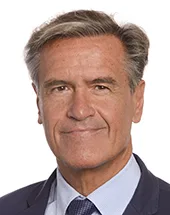
| 1 |
|
Lukas Sieper | Germany DEU | Non-attached Members (NI) | 390 |
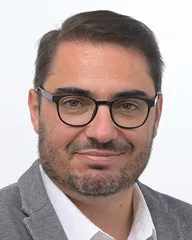
| 2 |
|
Juan Fernando López Aguilar | Spain ESP | Progressive Alliance of Socialists and Democrats (S&D) | 354 |
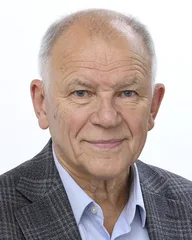
| 3 |
|
Sebastian Tynkkynen | Finland FIN | European Conservatives and Reformists (ECR) | 331 |
| 4 |
|
João Oliveira | Portugal PRT | The Left in the European Parliament (GUE/NGL) | 232 |
| 5 |
|
Vytenis Povilas Andriukaitis | Lithuania LTU | Progressive Alliance of Socialists and Democrats (S&D) | 227 |
All Contributions (390)
Approval of the minutes of the sitting and forwarding of texts adopted
The Minutes of this sitting will be submitted to Parliament for its approval at the beginning of its next sitting. If there are no objections, I shall forward forthwith the resolutions adopted at today’s sitting to the persons and bodies named in the resolutions.
Availability of fertilisers in the EU (B9-0101/2023)
That concludes the explanations of vote.
Developing an EU cycling strategy (B9-0102/2023)
Dear colleague, I heard you were speaking on the minimum income resolution, which was not on the vote. We are on cycling right now, so it’s just ‘get on your bike’.
Explanations of vote
The next item is the explanations of vote.
European initiative to promote civic engagement to protect and better support European volunteers (debate)
The debate is closed. Written statements (Rule 171)
European initiative to promote civic engagement to protect and better support European volunteers (debate)
The next item on the agenda is the debate on the European initiative to promote civic engagement to protect and better support European volunteers (2023/2564 RSP)
Approval of the minutes of the previous sitting
The Minutes and Texts Adopted of yesterday’s sitting have been distributed. Are there any comments? I see no comments. (The Minutes of the previous sitting were approved)
The erosion of the rule of law in Greece: the wiretapping scandal and media freedom (topical debate)
The next item is the topical debate under Rule 162 on ‘The erosion of the rule of law in Greece: the wiretapping scandal and media freedom’. I should like to inform Members that for this debate there is no catch-the-eye procedure and no blue cards will be accepted.
Approval of the minutes of the previous sitting
The minutes of yesterday’s sitting and the texts adopted are available. Are there any comments? I see no comments in the room so the minutes are approved.
A Green Deal Industrial Plan for the Net-Zero Age (continuation of debate)
That concludes the debate. Written statements (Rule 171)
A Green Deal Industrial Plan for the Net-Zero Age (continuation of debate)
So far I would like to thank colleagues for respecting the speaking time. This makes it very easy for me during my first chairing not to use the hammer. Thank you very much, and I hope it will continue like this!
A Green Deal Industrial Plan for the Net-Zero Age (continuation of debate)
We now resume our debate on the Council and Commission statements on ‘A Green Deal Industrial Plan for the Net-Zero Age’ (2023/2559(RSP)). I would also like to inform you, dear colleagues, that we will finish the list of registered speakers and, due to the time constraints, we will not have a catch-the-eye on this debate.
Following up on measures requested by Parliament to strengthen the integrity of European institutions (debate)
Madam President, dear Vice-President of the Commission, dear colleagues, the scandal of corruption put all of us in a state of shock. This is now not the moment to defend the status quo that allowed the poison of corruption to fester. We have to act quickly and forcefully to protect the integrity and increase transparency of the Parliament and the European Union as a whole. That is why my political group has been so proactive when dealing with the case and supporting the judicial investigation. That is why we welcome President Metsola’s commitment and her proposals on strengthening integrity, independence and accountability as a good first step. And that is why we, the S&D Group, have set up an internal inquiry and put forward a 15-point plan to prevent and combat corruption and corruptive political interference to complement President Metsola’s proposals. And that is why we as the S&D Group will unilaterally start to implement our plan where possible to lead by example. We hope that our proposal can also be the basis for stronger rules for the Parliament as a whole, and we are looking forward to having that discussion with the other political groups. My political group strongly supports the revision of the Parliament’s Rules of Procedure to align them with the EU Whistleblower Directive. We will also continue to advocate for an ethics body overseeing EU institutions and agencies to be set up before the end of this legislature. We therefore call on the Commission to urgently come up with a proposal in this regard. It is indispensable that we tighten the screws when it comes to the implementation of the current provisions of the interinstitutional agreement on the transparency register. And we must also increase the information for the public, for example, by making it compulsory to publish all scheduled meetings with lobbies and interest representatives. We equally welcome the proposed strengthening of the Special Committee on Foreign Interference in all Democratic Processes in the European Union, including Disinformation, allowing it henceforth to identify measures to remedy shortcomings in the European Parliament’s rules on transparency, integrity, accountability and anti-corruption. Madam President, a high level of transparency can minimise the possibility for corruption and restore the trust that was lost by the criminal acts of a few. Let us all work together to restore that trust.
Revision of the European Works Councils Directive (debate)
Mr President, dear Commissioner, dear colleagues, if we want a successful green and digital transition, it is crucial that we involve the workers in decision—making. When workers are empowered to shape decisions, we know that productivity, innovation and working methods improve. Good governance requires more democracy at work, and strong trade unions are playing a key role related to health and safety measures, in job retention schemes and organising new trends like telework. So empowering trade unions also strengthens social Europe. Reinforcing the European Works Council Directive when it comes to the right to information and consultation for representatives of employees – and particularly, as we heard yesterday again, during restructuring processes – is an absolute necessity and an incredible tool to strengthen the role of employees vis—à—vis employers in policy—making on the daily life cycle of the company. The recast directive on the European Works Council failed in its original objectives. Indeed, employers can easily stall or completely block the establishment of a European Works Council. European Works Councils are often informed after final decisions have already been taken and transnational and confidentiality clauses are too often misused. So it is now time to solve this issue with legally binding changes by ensuring timely and meaningful consultation; clarifying the scope of confidentiality; improving dispute resolution; introducing effective, dissuasive and proportionate penalties, but also by granting access to justice for the representatives of workers and securing resources and access to trade union experts and support. Companies have to show their willingness to work in close cooperation with their workforce and the unions in order to make the digital and green transition a success for all. The implementation of the European Works Council Directive has been ongoing for 15 years already, without enough concluding results and successes. The European Commission can no longer hide behind case studies and recommendations. It is time to deliver now and to turn this report into concrete legislative proposals. Dennis Radtke and the shadow rapporteurs did a fantastic job. Thank you so much, Dennis, for having invited so many participants who know how it works on the ground. They told us where corrections were needed and you did it in your report, so thank you very much.
Conclusions of the European Council meeting of 15 December 2022 (debate)
Madam President, Commission President, Vice—President, President, dear colleagues, the cost—of—living crisis affecting our European citizens unfortunately persists, and we are therefore concerned that the European Council conclusions fail to prioritise the support for our citizens and the cushioning of the crisis’ social consequences. While we support the European Council’s efforts to safeguard Europe’s industrial and also technological base, we urge the European Council not to neglect strong measures for households to bring the bills down. The Socialists and Democrats believe that especially our vulnerable citizens must be protected from getting their electricity and their gas disconnected. No one should have to live in a cold home in the midst of this winter. More broadly, we need to strengthen European fiscal capacity, support employment and equality, as well as to facilitate investment to accelerate the just transition. Better working conditions for platform workers, a strengthened framework for fair taxation and an economic governance that foresees a permanent fiscal capacity inspired by Next Generation EU will support social and economic progress. We expect the Council to work on these files with urgency and with determination. ‘ And now more than ever, it is crucial that we remain all united in our unprecedented support to Ukraine. We should push for qualified majority voting in foreign policy decisions to respond to Putin’s attempt to undermine our unity. Russia’s disinformation campaigns and attempts to interfere with our democratic systems, as well as the corruption allegations, show that we need vigorously to defend our democracies from external threats and we welcome the proposed joint actions. We must equally stand firmly behind a European perspective for Ukraine, for Georgia, and for the Republic of Moldova. In the Western Balkans we must accelerate the enlargement process and we must prove our credibility. We therefore welcome the decision to grant candidate status to Bosnia and Herzegovina. Further, we would like to reiterate that for the Socialists and Democrats, the rule of law is not negotiable. We deplore the practice of some Member States that threaten to deploy vetoes on essential files to achieve a softer approach on the rule of law, and for my political group, it is also very crucial to uphold our core values when it comes to migration. We reject the narratives of fear, and we want to finally advance on finding sustainable solutions based on solidarity and the individual right of asylum. Madam President, this Parliament and our Union must remain strong and we must remain united to face all these challenges.
Towards equal rights for persons with disabilities (debate)
Madam President, ladies and gentlemen, many reports have been voted on in this Chamber concerning the rights of people with disabilities, whether it is a harmonised approach to the definition of disability, company quotas for greater inclusion, or good social security coverage for people living with disabilities. The European Parliament calls with one voice for concrete actions to put an end to the social injustice suffered by people with disabilities. It would be unacceptable if none of our calls or promises were translated into concrete actions under this mandate. I therefore turn to the Commission: work hand in hand to ensure that this legislative proposal on the establishment of a European Disability Card is adopted during this parliamentary term. There is a need for a multi-tasking map, which is not limited to the benefits of transport, but also extends to culture, leisure, sport, education and employment, and an inclusive map, which takes into account the type of disability through differentiated pictograms and QR codes, thus facilitating contacts of people with sometimes non-visible disabilities with front-line rescue services. What is at stake is our credibility vis-à-vis our voters. Thank you to Mrs Pelletier for her excellent report. I trust the Commissioner that this file will move forward quickly and intelligently with us.
Legal protection for rainbow families exercising free movement, in particular the Baby Sara case (debate)
Mr President, first the Coman—Hamilton case in 2019, and now the Baby Sara case. How many European Court of Justice cases do we need to guarantee the mutual recognition of administrative documents and parenthood between Member States? How many court decisions will be needed for children’s rights to be respected in Europe? This is not merely another LGBTIQ question, but concerns the rights of children and European citizens, which are openly flouted by some of our governments. And despite the adversarial stance of these nationalist and populist governments, the reaction of the European Commission, which is responsible for protecting the core values of the EU, has been rather weak. ‘Human rights apply to all EU citizens in all their diversity’, this is, in short, the tenet that the Commission has promised to defend since the beginning of this mandate. These words must be translated into legislative texts and into sanctions against those who choose to undermine them. And when I see the relentless fight of rainbow families for the respect of their rights, I am both inspired and I am mad. Inspired for the fortitude for these families who persevere through their struggle, even though their struggle often looks like a battle between David and Goliath. And mad because our institutions do not adequately support them in the fight for their rights. When I entered politics, I made a pledge to myself: I will always stand by the most vulnerable groups, no matter how much time and energy I will have to expend for their causes. In this battle, you can count on me. I’m happy to see that, as a co—chair of the LGBTI Intergroup, but also as an S&D member of this House, I am not alone. I can count on the Queer community, but also on our allies in the Parliament and beyond. Here are my questions: is the Commission ready to use legal tools to ensure enforcement of free movement law? What actions will the Commission take to ensure that a national measure does not preclude implementation of judgments and to make sure EU law is not violated? Dear Council and Commission, on which side of the fight do you want to be? Recognising diverse families benefits everyone, and it takes no one’s existing rights away. Europe must guarantee all children to see their family acknowledged and validated by law. By the way, baby Sara is not a baby any more – she will turn three years old, and is still undocumented.
Gender balance among non-executive directors of companies listed on stock exchanges (debate)
Madam President, Commissioner, dear colleagues, it is a sad fact that only 30.6 % of board members in our largest companies are women, knowing that girls do better in schools than boys and knowing that in the European Union 60 % of new graduates from universities are women. Many studies show that gender quotas are the most effective instrument for increasing women’s presence on company boards. Voluntary regulations without sanctions does not work. Therefore we Socialists and Democrats are pleased that we finally, after 10 years, adopted this Women on Boards Directive. This directive will improve gender equality by ensuring that at least 40 % of non-executive director posts or 30 % of all director posts are occupied by the underrepresented sex and this by 2026 through transparent, clear and neutral appointment criteria. This directive also rightly foresees dissuasive penalties for non-compliance and it’s a great success for us Socialists and Democrats. Our fight against gender inequalities can no longer wait and it will go on. I call on more men, I call on all men to speak up for gender equality and fight the patriarchal model that subsists in our society. Gender equality is a recipe for prosperity. This directive is not only good for women, it is good for the progress, the sustainability and the success of our European companies and economy.
Racial justice, non-discrimination and anti-racism in the EU (debate)
Mr President, let me start by thanking Evin Incir for this excellent report on racial justice. And it is right that the report mentions cases of double standards and discrimination at the EU borders based on skin colour, including recently against some people fleeing Russia’s war in Ukraine. Therefore, the call for equal treatment at the European Union’s borders is so important. And this is not only a call of the European Parliament, but also to citizens during the Conference on the Future of Europe, and the Migration Working Group demanded this. I want to thank Commissioner Dalli for the Commission’s commitment to the Union of Equality. The European Parliament is an ally supporting all the Commission’s equality strategies, be it the anti-racism action plan, the gender and LGBT equality strategy, the EU Roma strategic framework, the disability strategy. We are also an ally when it comes to intersectional discrimination, and it is therefore important not only to address intersectionality in documents and in speeches, but also in EU legislation. And here I urge the Council, which is unfortunately absent today, to stop banning intersectionality. To fight racism and discrimination in the European Union, we need our Member States on board.
Growing hate crimes against LGBTIQ people across Europe in light of the recent homophobic murder in Slovakia (debate)
Dear President, Commissioner, Deputy Prime Minister and colleagues, hate speech, especially when coming from public figures, leads to hate crime. This must stop. Last Wednesday it was Matúš and Juraj who were brutally murdered by a far-right radicalised student in Bratislava. Today our thoughts are with their families and friends. Next week, anyone belonging to the queer community – one of your kids, one of your grandkids, someone from this Parliament – could be a victim of a coward homophobic or transphobic crime. In too many Member States, far right, conservative and populist parties and religious fundamentalists spread LGBTIQ-phobia, copying the Kremlin’s narrative. They scapegoat and publicly target the LGBTIQ community to divide societies. This must stop. And therefore, I urge the Commission to take concrete sanctions against Member States not complying with EU values. I call on the Council to finally unblock the horizontal anti-discrimination directive, to come forward with an agreement on the Gender-based Violence Directive and to unblock the inclusion of hate crime and hate speech to the list of EU crimes. I encourage the Members of the Slovak National Parliament to establish – just like recently in Hungary – an LGBTIQ intergroup to work closely with civil society and monitor discrimination, hate speech and hate crime. LGBTIQ rights, just like women’s rights and children’s rights are human rights. (The President cut off the speaker)
Guidelines for the employment policies of the Member States (debate)
Mr President, dear Commissioner, dear colleagues, we need to invest in our workforce. And when it comes to the digital and environmental transition, our human capital must be at the heart of all our action. For my political family, the Socialists and Democrats, this is self—evident. But all too often, curiously, we find that others seem to backtrack or to oppose such policies. What more noble cause is there than to invest in the people that make up our society and work for our common prosperity? And that means investing in all our citizens, women and men in all their diversity, persons with disabilities, minorities, vulnerable groups and people who were granted temporary protection. And there will be no better moment to invest in our human capital than in these challenging times. Delaying our action will lead to a loss of trust, not only into our common European project, but also in politics at national level. It is therefore crucial that the excellent report of our S&D colleague Alicia Homs calls for minimum income, universal access to health care, affordable housing, the implementation of the child guarantee, the prolongation of SURE, the social rescue facility and fair and progressive taxation. These are concrete actions to support our human capital in these difficult times. We cannot afford to leave anyone behind. Until now, our citizens have been resilient. It is time to learn from them, to truly listen to them, and to make our proposals a reality for all.
AccessibleEU Centre in support of accessibility policies in the EU internal market (debate)
Madam President, more than 87 million people in our Union have some form of disability and they still face considerable barriers in accessing too many areas of life. Accessibility is an essential precondition for everyone to enjoy human rights and fundamental freedoms. Therefore, the aim of the European Union must be to identify and to overcome all gaps and inconsistencies in the current legislation and standards, and to create an accessible environment for all. In this regard, I am looking forward to the upcoming Commission initiative related to rules for applying for the disability card in order to facilitate mobility of persons with disabilities within the internal market. Creating the AccessibleEU Centre is the right step in the right direction, but we also must make sure that each Member State will correctly implement the existing and forthcoming accessibility requirements in order to overcome existing and possible further fragmentations in the single market. To achieve our goal we need appropriate financing and also the provision of the adequate human resources, and it is also important to establish inclusive national accessibility hubs to facilitate the coordination among relevant stakeholders. Madam President, we can be proud of this Parliament that in many, many committees we highlight the promotion of the rights of people with disabilities.
Implementation of the Updated New Industrial Strategy for Europe: aligning spending to policy (debate)
Madam President, dear Commissioner, dear colleagues, first of all, let me thank the rapporteur Mr Berendsen but also the IMCO rapporteur, Ms Carvalho, and colleagues in IMCO for the good cooperation we had. I am glad that the European Parliament will call for developing a more resilient, sustainable and also efficient single market that can better tackle supply disruptions on critical products such as food or pharmaceuticals. A resilient single market prevents over—dependency in energy and raw materials. For the Socialists and Democrats Group, it is also important that we call for an ambitious single market emergency instrument to ensure the resilience of the single market in a time of crisis. At the same time, I also have to underline that this should not undermine the effort to improve the single market in non-crisis contexts. We also underline the need to accelerate the green and the digital transition and we highlight the importance of public procurement which reflects economic, social and environmental considerations to support the twin transition. And finally, of course, we did not forget to mention the importance of investing in innovation, research and development, and to address the skills mismatch, gender gap and precarious working conditions.
Existence of a clear risk of a serious breach by Hungary of the values on which the Union is founded (debate)
Mr President, Commissioner, ladies and gentlemen, this morning the President of the Commission, Mrs von der Leyen, recalled the importance of the media, the opposition and civil society when a state is in danger of switching to totalitarianism. For almost a decade, this Parliament has consistently called for European action in Hungary to uphold the independence of the media and the independence of the judiciary. It is important to support the counter-power in the face of a deviant government. In Hungary, when it is not the cause of women, it is the cause of LGBTI rights that is instrumentalised to pit individuals against each other, to divert attention from the proven corruption of Orbán’s relatives. And Europe in all this? Rather than seeing her as an ally, Orbán accuses her of all evils to hide her intentions belonging to a world of the past. This attitude is abominable and cannot remain without reaction on our part. Europe must act and live up to its ambitions. The Commission’s words on the rule of law must be followed by concrete action. My political group calls for the principle of conditionality to be strictly applied and for the European Parliament, the only European institution composed of directly elected members, to be involved in the process and monitoring of the application of the facts.
Adequate minimum wages in the European Union (debate)
Mr President, dear all, this historic directive introducing an adequate minimum wage and strengthening collective bargaining in Europe is a very important step towards a more social Europe. And my political family, the Socialists and Democrats, we do not stand alone in this fight. We have the trade unions on our side, but not only them. We have the citizens on our side – in recent Eurobarometer polls this is proven. And also the participants in the Conference on the Future of Europe want a stronger social Europe. Some 24 million citizens will directly profit from this directive. And Commissioner, you are right to mention the essential workers, many of them women, because they deserve it. Let us not forget that adequate minimum wages, strong collective bargaining and strong trade unions are crucial elements for any recovery strategy. They are tools to fight against social dumping. They are tools to fight against wage dumping. And they are tools to reach upward convergence in Europe. And all this is not only good for the people, but it is also good for the economy. Now it is important that the Member States will swiftly transpose and implement this directive. Many thanks to all who participated in this important work.