
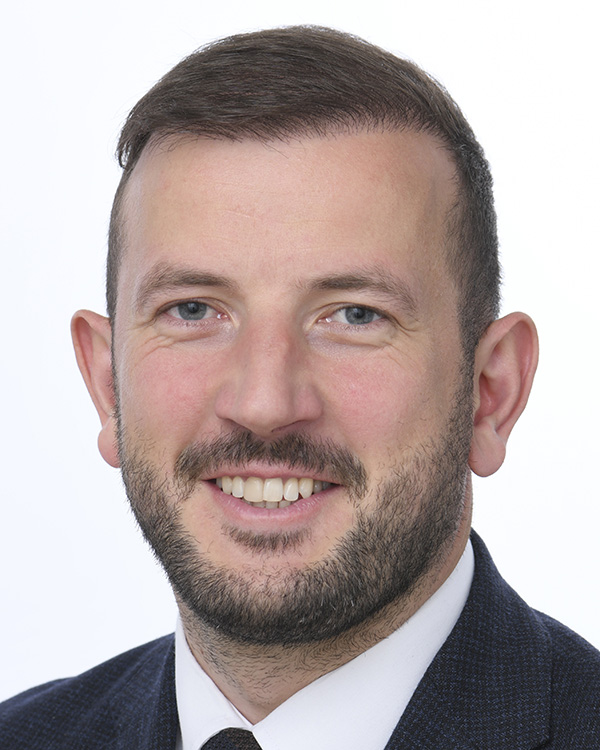






| Rank | Name | Country | Group | Speeches | |
|---|---|---|---|---|---|
| 1 |
|
Lukas Sieper | Germany DEU | Non-attached Members (NI) | 390 |
| 2 |
|
Juan Fernando López Aguilar | Spain ESP | Progressive Alliance of Socialists and Democrats (S&D) | 354 |
| 3 |
|
Sebastian Tynkkynen | Finland FIN | European Conservatives and Reformists (ECR) | 331 |
| 4 |
|
João Oliveira | Portugal PRT | The Left in the European Parliament (GUE/NGL) | 232 |
| 5 |
|
Vytenis Povilas Andriukaitis | Lithuania LTU | Progressive Alliance of Socialists and Democrats (S&D) | 227 |
All Contributions (206)
The human cost of Russia’s war against Ukraine and the urgent need to end Russian aggression: the situation of illegally detained civilians and prisoners of war, and the continued bombing of civilians (debate)
Madam President, dear colleagues, every day Russia's war against Ukraine brings new pain. Civilians are killed in their homes, children lose their parents. Russian bombs hit schools, hospitals and energy plants. Cities are left in darkness and people continue to live in fear. And the suffering does not end at the frontline. Thousands of civilians and prisoners of war are held illegally by Russian forces. Many of them face torture, abuse, rape and even execution, including children. At least 75 of those cases are documented, and this is not a single event. This is a systemic terror against Ukrainian people. And these are not just numbers. These are lives. So every attack, every act of cruelty is a crime against humanity. But words are not enough. We must act. We must deliver aid, secure the immediate release of all detainees, support Ukraine's defence and demand accountability. The Council must tighten sanctions and close every loophole that fuels Russia's war machine. The world cannot be silent. The human cost is too high. And it's time to bring justice to Ukraine.
The human cost of Russia’s war against Ukraine and the urgent need to end Russian aggression: the situation of illegally detained civilians and prisoners of war, and the continued bombing of civilians (debate)
Madam President, dear colleagues, every day Russia's war against Ukraine brings new pain. Civilians are killed in their homes, children lose their parents. Russian bombs hit schools, hospitals and energy plants. Cities are left in darkness and people continue to live in fear. And the suffering does not end at the frontline. Thousands of civilians and prisoners of war are held illegally by Russian forces. Many of them face torture, abuse, rape and even execution, including children. At least 75 of those cases are documented, and this is not a single event. This is a systemic terror against Ukrainian people. And these are not just numbers. These are lives. So every attack, every act of cruelty is a crime against humanity. But words are not enough. We must act. We must deliver aid, secure the immediate release of all detainees, support Ukraine's defence and demand accountability. The Council must tighten sanctions and close every loophole that fuels Russia's war machine. The world cannot be silent. The human cost is too high. And it's time to bring justice to Ukraine.
Russian energy phase-out, Nord Stream and the EU's energy sovereignty (debate)
Mr President, dear colleagues, let me speak plainly: every single day that we delay the phase‑out of Russian energy we are wiring billions straight into the war chest of Putin's aggression against Ukraine. Now the Commission's plan is definitely a significant step in the right direction. But let's be clear: a step is not enough – not when the challenge demands a significant leap. The Nord Stream chapter must be closed and closed for good. Because Nord Stream was never just about gas; it was a geopolitical weapon. It bypassed Ukraine and Poland. It handed the Kremlin a tool to divide Europe, to distort competition, to threaten over 100 million people from the Baltics to the Balkans. Let's be honest, it weakened our solidarity when we needed it most. So, no, we cannot afford another strategic blunder, and we cannot afford to trade one dependency for another. So swapping Russian gas for fossil fuels or nuclear from other authoritarian regimes, that's not a plan; that's another trap. True energy sovereignty means renewables, modern grids. The time for half‑measures is over.
EU support for a just, sustainable and comprehensive peace in Ukraine (debate)
Mr President, Minister, Commissioner, dear colleagues, three years ago the world watched as Ukraine stood alone against a storm of aggression, and today Ukraine stands not alone, but with the full force of European solidarity. The EU's support for a just, sustainable and comprehensive peace in Ukraine is not a slogan: it's a lifeline and a promise. The European Parliament has welcomed a proposed possible 30‑day ceasefire, but nobody is fooled by Putin's empty promises. He talks peace while at the same time his troops keep shelling Ukrainian cities and killing civilians. Using ceasefire offers as a smokescreen to regroup and push his agenda. Let us be clear: peace without justice is surrender, and surrender is not peace. The EU must reject any so-called peace that rewards aggression or forces Ukraine to trade its freedom for silence. We demand a full withdrawal of Russian forces, the return of abducted children and accountability for war crimes, because only justice can build the foundation for lasting peace. Our vision is bold: we support Ukraine's peace formula, which calls for the restoration of territorial integrity and robust security guarantees. We are mobilising unprecedented financial, humanitarian and military assistance, and we will use every tool – from sanctions to reconstruction funds – to ensure Ukraine emerges not as a survivor, but as a future member of the European family. And this is not just Ukraine's fight: it's a battle for the security of Europe and the rules‑based world. Recent shifts in US policy underscore the EU's increased responsibility. Our message is simple: there is no lasting peace without Ukraine and no lasting peace without the EU at the table.
A unified EU response to unjustified US trade measures and global trade opportunities for the EU (debate)
Mr President, dear Minister, dear Commissioner, dear colleagues, the recent US tariffs don't just hit our exports, they strike at the heart of what should be a fair and trusted partnership. Over EUR 500 billion-worth of EU goods could be affected. Behind that figure, there are real people – our workers, our businesses and the values that we stand for – and the only correct response is with unity, with calm and with purpose. Yes, we have introduced proportionate countermeasures, but we are also keeping the door wide open for a dialogue, for an honest dialogue, offering to boost imports of US goods by EUR 50 billion to help restore balance. Still, this is much more than just a dispute. It's about Europe shaping its own path – building stronger, more diverse partnerships and standing up for a global trade system based on rules and mutual respect. Across Europe, people also reacted. People are frustrated. Boycotts and anti-American sentiment are rising. But our message is clear. We want solutions, not a trade war. If the US is ready to negotiate, so are we. If not, Europe will stand tall, united, and turn this challenge into an opportunity.
Safeguarding the access to democratic media, such as Radio Free Europe/Radio Liberty (debate)
Mr President, dear Commissioner, dear colleagues, in times of rising disinformation and geopolitical tensions, independent media is not just important, it is essential. Free and fearless journalism is one of the strongest foundations of a healthy democracy. It gives voice to the voiceless, holds power to account, and ensures that citizens have access to truth. That is why the recent situation faced by Radio Free Europe (RFE) is so alarming. Earlier this month, the Trump Administration abruptly moved to cut RFE's funding and dismantle the agency that oversees its operations. And while this happened outside the EU, its message echoes loudly here. When a respected outlet, like RFE, can be threatened so easily, we must ask ourselves, who is next? And what are we doing to protect the space for independent journalism within and beyond our borders? We must ensure that RFE and other essential outlets have access to long-term, stable funding, including from the European Union. This is not just about filling a gap, but about preparing for a future where transatlantic support for independent media can no longer be taken for granted. Let's support those who risk everything to report the truth, not only with words, but with action, funding and solidarity. Because defending the media is, first of all, defending democracy.
Conclusions of the European Council meeting of 20 March 2025 (debate)
Madam President, dear President of the Council, dear Commissioner, let me begin by welcoming the fact that 26 Member States have firmly reiterated their commitment to providing Ukraine with regular and predictable support. Our backing for Ukraine's independence, sovereignty and territorial integrity within its internationally recognised borders remains steadfast. Let's not make a mistake. We do want peace, but in these circumstances, peace needs to be protected. Ukraine must be equipped to defend itself militarily, economically, politically. We will continue working with our allies to provide the comprehensive support it needs. The recent talks that were held in Saudi Arabia showed that Ukraine is ready to negotiate. Ukraine is ready to take steps to de-escalate. But peace requires much more than just proposals – it demands political will, and so far, Russia has shown zero of that. The return of unlawfully deported Ukrainian children, the release of civilians and the exchange of prisoners of war. They are not optional. They are humanitarian imperatives. They could be the first steps to show willingness to come closer. We must be prepared to further increase pressure on Russia – with stronger sanctions, with tighter enforcement – until it ends its aggression. Peace can be achieved not with the surrender of Ukraine; peace can be achieved when Russia withdraws its troops.
Accelerating the phase-out of Russian gas and other Russian energy commodities in the EU (debate)
Mr President, Commissioner, dear colleagues, it's unacceptable that despite some efforts since 2022, the EU continues to finance Russia's war of aggression in Ukraine through the purchases of Russian fossil fuels. And the stark reality is that some EU countries remain complicit in funding the very conflict we claim to oppose. Just today, this House adopted two important resolutions, supporting Ukraine and regarding the defence white paper. So our continued reliance on Russian energy severely undermines our security. It is unbelievable that EU spending on Russian fossil fuels exceeded its financial aid to Ukraine in 2024. On 1 January, Ukraine took a courageous step by cutting off Russian gas transit. Yet some countries still treat Russian gas as just another commodity. It's not; it's a weapon that is used to divide and weaken us. In 2025, the EU is still importing a significant amount of Russian pipeline gas and LNG, and this must end immediately, not by 2027. Commissioner, you outlined it correctly. The phase-out of Russian gas is essential for our autonomy and defence, and that can be achieved by prioritising clean energy, by rapidly scaling up renewables and energy efficiency: this can reduce Russian gas imports quickly. Let us seize this moment to transform our energy landscape and stand firmly against Russian aggression.
White paper on the future of European defence (debate)
Mr President, dear Commissioner, dear colleagues, the upcoming white paper on the future of European defence is a crucial step. But the expectation is that it's going to be finally more than just a paper. It must be a real catalyst for action. We cannot afford to continue business as usual. The security of our citizens and the integrity of our borders depend on our ability to act swiftly and decisively. We must accelerate our efforts to enhance interoperability among Member States' armed forces. This is not just about spending more on defence; it's about ensuring that our forces can work seamlessly together. We need also to integrate our defence industries and streamline our procurement processes to avoid duplication and inefficiencies. We also should move beyond intergovernmental agreements and build a genuine European Defence Union. Our support for Ukraine is not just a moral imperative. It's a strategic necessity. We must provide more arms and ammunition, expand training operations and integrate Ukraine's defence industry into our own. In doing this, we must remember that our ultimate goal is peace. We are strengthening our defence to avoid war, protect our values and ensure that the EU remains a beacon of stability in the world.
US AI chip export restrictions: a challenge to European AI development and economic resilience (debate)
Madam President, dear colleagues, the EU cannot afford to fall behind in AI development. Imagine a world where AI-powered medical diagnostics can detect diseases years before symptoms appear, potentially saving millions of lives. And this is not science fiction, it's actually happening now. Yet with the recent US restriction on AI chip export, we risk losing access to the very tools needed to make this breakthrough a reality across Europe. So we must act decisively. First of all, we need to mitigate impacts on Member States facing export caps, ensuring solidarity across the EU – and here I count especially on the Polish Presidency, because Poland, just like Lithuania, found itself on the other side of the Iron Curtain. Secondly, we have to accelerate domestic AI chip production. The recently announced EUR 150 billion investment in European AI over the next five years is a step in the right direction. Finally, we must also create a unified EU export control regime to prevent third country actors from dividing us and deliberately targeting our single market.
Preparedness for a new trade era: multilateral cooperation or tariffs (debate)
Madam President, dear colleagues, the United States imposed tariffs on EU steel and aluminium. This action is not only unjustified, but it's also deeply concerning for the future of the transatlantic cooperation. Let me be clear: we do not desire this outcome. Imposing tariffs between allies is counterproductive and frankly absurd. Nevertheless, the EU has to respond firmly. Even so, trade wars weaken our shared economic strength and global influence. That said, tariffs and targeted economic measures can be important tools when dealing with regimes that threaten global security and stability, such as Russia and Belarus. In such cases, targeted action is not just justified, it is crucial. The Commission's proposal to impose tariffs on Russian and Belarusian agricultural products and fertilisers is a step in the right direction, helping to reduce dependencies, strengthen domestic production and diversify our supply chains. We must fully utilise this tool and remain united in upholding a rules-based international order.
Need to detect and to counter sabotage by the Russian shadow fleet, damaging critical undersea infrastructure in the Baltic Sea (debate)
Mr President, dear colleagues, today we confront a critical issue at the core of the EU's commitment to Ukraine, global security and economic stability. The shadow fleet is fuelling Russia's oil trade and, of course, the Russian oil chest. While the recent oversight and monitoring efforts are commendable, they are sort of like painting over rust – a temporary fix that, at the end of the day, fails to address the root cause. The reality is clear: Russian oil finds its buyers, including here in Europe. This revenue funds the war in Ukraine and funds destabilisation in Europe too. So to address this, I propose a five-step action plan. First of all, the G7 oil price cap needs to go down even further to USD 30 per barrel. Secondly, expanding sanctions to target shadow fleet vessels and their enablers. Thirdly, enhancing EU maritime surveillance. We need to close loopholes allowing Russian oil imports, such as in Bulgaria. And finally, establishing an EU task force to improve intelligence sharing and the enforcement of sanctions. So I call for action now, not to wait for further sabotage in the Baltic Sea. We have a unique moment with the Polish Presidency of the EU, but also with the Commission, and I call to ensure unity in this matter and to take measures as soon as possible.
Russia’s disinformation and historical falsification to justify its war of aggression against Ukraine (debate)
Madam President, dear colleagues, the Kremlin is waging a war not only on Ukrainian soil, but also on the very fabric of reality itself. As a Lithuanian, I know what it means to stand on the front line of history. We endured Soviet occupation, where lies rewrote textbooks, dissent was silence and the truth was treated as a threat. We have seen how disinformation divides families, erodes trust and weakens nations. Today's Russian disinformation machine is more precise, more powerful and even more dangerous. From spreading false de-nazification narrative to exploiting social media platforms like TikTok, the Kremlin floods our societies with manipulative stories, seeking to divide Europe and discredit Ukraine. We need stricter transparency for political advertising, and we must hold platforms accountable when profit-driven algorithms amplify hatred and lies over truth. We must fight for a world where fact, not fiction, shapes our shared reality. The future of Ukraine, the stability of Europe and the health of our global democracy depend on it.
Critical infrastructure vulnerabilities and hybrid threats in the Baltic Sea (debate)
Madam President, dear colleagues, the recent incidents involving undersea communication cables in the Baltic Sea have raised alarm bells across Europe. The possibility of sabotage is now at the centre of discussions, which reflects the tense geopolitical climate that we are living in. The fact that two fibre optic cables were affected simultaneously has only fuelled suspicions. But one thing is clear: the situation underscores the vulnerability of undersea infrastructure. The civilian vessels might be used for strategic disruptions without direct military engagement. So, that is why it is becoming urgent to better address these challenges at EU level and we need a fully coordinated approach also with NATO. This should include enhancing intelligence sharing among Member States, investing in robust cybersecurity measures, increased surveillance, and conduct joint exercises to improve readiness. The EU must act swiftly and decisively to protect its critical infrastructure, rather than waiting for another accident to occur.
Reinforcing EU’s unwavering support to Ukraine against Russia’s war of aggression and the increasing military cooperation between North Korea and Russia (debate)
Madam President, dear colleagues, first it was Crimea, then it was Luhansk and Donetsk, and now for three years, full‑scale invasion of Ukraine. And yet, we still have Putin proxies here calling to force Ukraine into ceasefire. Call Russia into ceasefire. Force Russian imperialism into ceasefire. Now, with Iran, North Korea supporting Russia even with the troops on the ground, there is a clear formation of an axis of evil. And when you ask a question – 'What is the logical end?' – I have an answer for you. The logical end is to destroy institutions like this, to destroy democracy, to destroy human rights, dignity, everything what we have been fighting for, everything what this world has built after the Second World War. This is the aim of Putin, and here he is not going to stop in Kyiv, in Vilnius. The Iskanders that are in Kaliningrad – they aimed at Berlin. Do not forget that.
Enhancing Europe’s civilian and defence preparedness and readiness (debate)
Madam President, dear colleagues, dear President Niinistö, first of all, of course, thank you for this report. A timely call to redefine how we approach crisis preparedness. With global tensions on the rise, Europe can no longer rely on old assumptions about security guarantees. While NATO remains our cornerstone, Europe needs to take on more responsibility and your report captures this urgency, pointing out that the EU must move beyond ad hoc solutions and fragmented defence strategies. We hope with the new Commissioner appointed for defence, EU countries must better use their funds. EU countries spend roughly EUR 240 billion each year on defence, but much of this is duplicated among Member States. So that is why joint procurement across the EU is essential. I also welcome the proposal for a single operational EU crisis management centre. This would be an essential step to unify our efforts, especially as we face increasingly sophisticated hybrid threats. This is not just about efficiency, it's about cementing our global credibility and influence.
Consequences of the devastating forest fires in the Amazon and the importance of the Amazon for climate change (debate)
Madam President, Commissioner, colleagues, the fires that have been ravaging the Amazon once again are not just an environmental crisis, they are a true planetary emergency. This summer alone, the Amazon fires have released an estimated 31.5 million tonnes of CO2, a figure close to the total amount of Norway. These blazes – primarily man-made and driven by deforestation for agriculture – are aggravating global warming, pushing the Amazon ecosystems closer to the irreversible tipping point and they are also devastating for local communities. Europe is a major consumer of products linked to deforestation. First of all: beef, soil, palm oil. They all have the potential to drive change by demanding a more sustainable supply chain. European policies, first of all the Deforestation Regulation, can play a pivotal role in stopping this devastation and I truly hope that one year from now, this regulation will be finally and fully applied.
Strengthening Moldova's resilience against Russian interference ahead of the upcoming presidential elections and a constitutional referendum on EU integration (debate)
Mr President, dear Commissioner, dear colleagues, Moldova is at a historic crossroads, choosing between embracing democratic values and European integration, or remaining under the influence of external interference and restrictive governance. With the presidential elections and a referendum on EU integration approaching, we must recognise the gravity of the moment. Moldova is not just another country under pressure; it is a battleground for the values that we hold dear: freedom, democracy and the right of self-determination. Russia is relentlessly attempting to undermine Moldova's sovereignty through cyberattacks, disinformation campaigns and funding pro-Russian groups. They have channelled over EUR 100 million to generate chaos and doubt. And that is why the European Union and international community must intensify their support for Moldova, combating disinformation and amplifying the voice of Moldovan civil society. In addition, we must work hand in hand with Moldova on fulfilling all accession requirements so that the country can join the EU as swiftly as possible, because this is what the people of Moldova deserve. If we fail Moldova now, we send a dangerous signal to those who want to see a fractured Europe.
The crisis facing the EU’s automotive industry, potential plant closures and the need to enhance competitiveness and maintain jobs in Europe (debate)
Madam President, dear Commissioner, dear colleagues, the European automotive industry is at a defining moment, as some manufacturers are warning of potential plant closures and job losses due to unfair competition and high production costs, and there are also calls to roll back CO2 regulations. But stepping back on our climate goals is not the solution. We hear the concerns of workers, and we stand by them in the effort to protect jobs and secure a sustainable future for Europe. So instead, we must use this challenge as a catalyst to lower energy costs and foster innovation. The recent decision to impose tariffs on electric vehicles from China is a positive step in protecting our industry from unfair competition. However, we also need a comprehensive green industrial action plan for the automotive industry, covering all stages of the value chain. It is crucial to invest more in Europe's own electric vehicle production, reinforcing our battery supply chains and accelerating the development of recharging and refuelling infrastructure. Rather than loosening CO2 limits, we should focus on creating sustainable long-term jobs by supporting electric vehicles, exploring alternative fuels like hydrogen, and implementing retraining programmes for workers. Europe cannot only maintain jobs but must lead the transition to clean technology.
Droughts and extreme weather events as a threat to local communities and EU agriculture in times of climate change (debate)
Mr President, dear Commissioner, dear colleagues, we have all witnessed the devastating floods across Central and Eastern Europe, particularly in the Czech Republic and Poland, as well as the severe forest fires in Portugal. These are clear signs of the climate instability that is no longer distant; it's already here affecting us now. Climate change is intensifying. Droughts, extreme weather events and floods are not only devastating to ecosystems, but also endanger the livelihoods of our farmers and entire communities in the European Union. Preparing for those challenges means investing better in land and water management, and focusing on more sustainable and climate‑resilient farming practices. At the same time, it's also crucial to effectively implement Union disaster resilience goals, promoting stronger cooperation and coordination among Member States to improve risk prevention and enhance civil protection.
Continued financial and military support to Ukraine by EU Member States (debate)
Mr President, soon it will be 1000 days. This very November, we shall mark 1000 days of rape, looting and murder, deliberate bombings of children's hospitals and maternity wards, and cynical breaking of all possible international agreements and charters. All that is called Russian imperialism. All that taking place on European soil, and how exactly we will greet the millions of victims with this terrible mark upon us? Will we once again say that we are together until the end? Yet we have not defined anywhere what the end supposed to entail. How is that? That we still can tell with certainty what support Ukrainians can expect and for how long? How still that can be. This simple answer is it cannot. For the term 'European values' to still mean anything, this must be changed. So therefore, I call on all of us to start this mandate by carrying a very concrete task: ensure a steady and predictable military and financial support streams for Ukraine, for as long as the war continues, with the very clear and only goal of winning the war.
Gradual roll-out of Eudamed, information obligation in case of interruption of supply and the transitional provisions for certain in vitro diagnostic medical devices (C9-0010/2024) (vote)
– Madam President, I promise I’ll be short. But I have to read it. President, honourable Members, the Commission will continue supporting the implementation of the Regulation 2017/745 on Medical Devices and Regulation 2017/746 on in vitro diagnostic medical devices, with a view to reaching the objectives set by the co-legislators at the time of their adoption. At the same time, recognising that challenges have been encountered in the implementation of this regulation, the Commission will undertake a targeted evaluation of these two regulations. In particular, the Commission will evaluate the structural challenges related to the implementation of the two regulations as a first step towards identifying sustainable solutions for the future. The Commission remains fully committed to a legislative framework for medical devices that is sustainable and efficient, that fully safeguards patient safety and at the same time fosters the innovation, capacity and competitiveness of the medical device system in the EU.
Framework of measures for strengthening Europe’s net-zero technology products manufacturing ecosystem (Net Zero Industry Act) (debate)
– Mr President, dear Members of the Parliament, thank you for your interventions. Let me reiterate once more the importance of the Net Zero Industry Act. With this file we have set the bar high. We are sending a powerful signal for the EU to boost its clean tech manufacturing competitiveness via our benchmarks, with the ambitious permitting and access to market provisions, and by using, in a smart and holistic way, all of the necessary levers, including public procurement skills and innovation. It is crucial step forward also in the wider context, both for the twin green and digital transition, but also in view of the EU’s European competitiveness and economic security agenda, which will continue to be at the centre stage in the coming years. Implementation is key now. The Commission looks forward to advancing swiftly and efficiently, together with Member States, industry and all relevant stakeholders. On behalf of the Commission, thank you again to all of you for the excellent cooperation.
Framework of measures for strengthening Europe’s net-zero technology products manufacturing ecosystem (Net Zero Industry Act) (debate)
– Mr President, honourable Members, dear rapporteur Mr Ehler, ladies and gentlemen, on behalf of the European Commission I am delighted to take part in this plenary debate on the Net Zero Industry Act. You are about to adopt a piece of legislation that is simply crucial. It’s going to spur the EU towards a decarbonised and resilient energy system, building on a competitive domestic supply of net-zero technologies. And we know this won’t be easy, as already witnessed with the taking place at international level in some of these key technologies. And I’m thinking of solar panels, wind turbines or batteries, for instance. So I would like to start by congratulating all of you, the European Parliament and in particular Committee on Industry, Research and Energy for having been able to negotiate and reach an agreement with the Council within such a short time frame. It shows how convinced we all are that the EU needs to remain a major producer of net-zero technologies. This is a prerequisite for reaping the benefits of the ongoing energy transition, for remaining competitive and for avoiding to replace a dependency on fossil fuels by a dependency on net-zero technologies. With this regulation we will help speed up clean industrial production in Europe in a way that no other EU instrument has done before. Take, for example, the benchmark that we set for our net-zero-technology manufacturing capacities: at least 40% of the Union’s annual deployment needs by 2030. The Parliament has played an important role in maintaining this very high ambition. The final text reflects this also, by requiring that the Union’s share for net-zero manufacturing is increased to reach 15% of world production by 2040. Another crucial element secured and improved by the Parliament is the annual 50-million-tonne CO2 storage target by 2030. It can now be supported through full CO2 value-chain projects for new industrial climate solutions for hard-to-abate emissions. With the Net Zero Industry Act we will have the first legal building block for the EU’s industrial carbon management strategy we recently adopted. Another important element concerns the scope of application. The Net Zero Industry Act, in its final form, will now focus on the entire supply chain, meaning that important industrial decarbonisation projects in energy-intensive sectors will also be eligible. Now we have to set this framework into motion and we have to do it fast. Let me reassure you that a quick and true implementation of the Net Zero Act remains a top priority for the Commission. Preparatory work is already ongoing across several work-streams, pending the entry into force of the regulation. Among the most immediate deliverables is the launch of the Net-Zero Europe platform. The platform is important to create a governance structure that oversees implementation. Member States, Commission and industry will work closely together with the Parliament as an observer to make sure that we are on course. As part of this governance structure, we will also set up an industry group to ensure continuous feedback from all net-zero sectors, as well as a net-zero regulatory burden scientific advisory group. We need to make sure that the work starts as soon as possible, and that we deliver on the promise to reduce administrative burden for all industrial activities in the framework of this Act. The Commission is also pleased with the Act’s focus on the strategic energy technology plan, which was important to the Parliament. We are already getting a full swing, making sure that the bridge between innovation and manufacturing is reinforced. We are also working on a system for granting strategic project status from July onwards. Net-zero projects will also be able to apply for this important status, and it will give them priority at national level, with faster permitting. We will give particular attention to these projects through the Net-Zero Europe platform also with regards to their financing. The Commission is also already preparing the implementation to the public procurement and renewable energy auctions provisions. In that sense, the chapter on access to markets is a fundamental step forward in our resilience-based and sustainable approach. We have no time to lose to start applying such provisions. In view of this, the Commission has also already started the necessary work on the related implementing and delegated acts. Some Member States have also already started applying this logic in national support schemes, which the Commission very much welcomes. With regard to the lack of skilled workers and acute bottleneck in the upscaling of our manufacturing capacities, the Commission is already preparing the launch of the first European net-zero industry academies. Finally, in order to carry the political momentum forward, the Commission decided to organise a high-level event dedicated to the Net-Zero Europe platform. It will take place ahead of the Compete Council on 23 May 2024.
Pre-enlargement reforms and policy reviews (debate)
– Madam President, honourable Members, thank you for your contribution. I’ve taken good notes of your valuable comments. And I hope even if some of you are not going to be in the Parliament, you’re still going to be as passionately advocating for the expansion, for the enlargement of the Union, not only to the Commission, but also across the Member States, because the willingness of 27 is also extremely important. And we know that in 2019, where you together, when the Commission was approved, we entered this House, enlargement wasn’t a topic on the table. Now the situation has significantly shifted and we have an opportunity. An opportunity, which I fully agree with you, we have to seize and speed up ensuring that countries, the Western Balkans, Ukraine, Moldova, Georgia, they not only see the open door, but they have a possibility to truly walk into the European family. Let me underline that, once again, the purpose was to kick off the work on the in-depth policy reviews announced by President von der Leyen in her State of the Union Address in 2023. And the reviews may take different forms depending on the sectors and should benefit from stakeholders’ input on the specific impacts of a larger Union on individual policies. Building on the outcome of the reviews than substantive reform proposals in individual sectors, including in the preparation of the Commission proposal for the next multiannual financial framework, could then be a second step in this process. Having said that, honourable Members, I want to reassure you. In doing so, the Commission will continue to be driven by the irrevocable belief that completing our Union is the best investment in peace, security and prosperity for the continent, and be assured that the Commission will always support those who want to reform the EU to make it work for better for its citizens.