
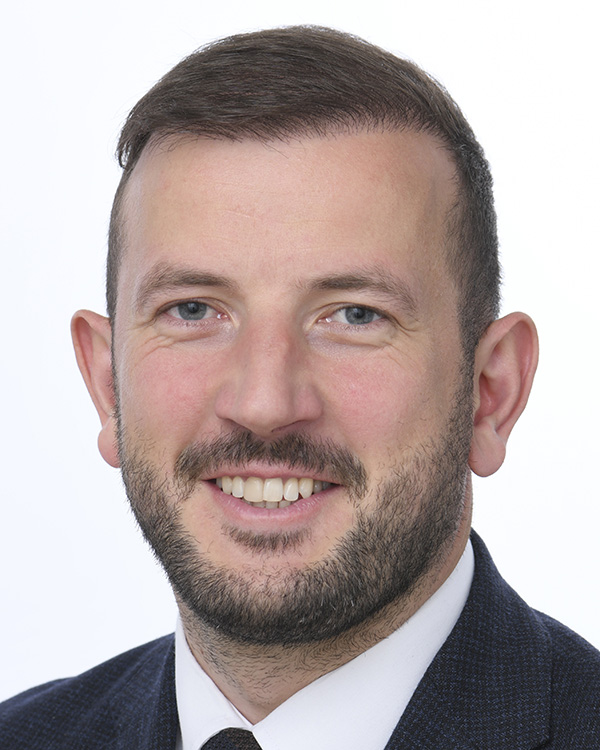






| Rank | Name | Country | Group | Speeches | |
|---|---|---|---|---|---|
| 1 |
|
Lukas Sieper | Germany DEU | Non-attached Members (NI) | 390 |
| 2 |
|
Juan Fernando López Aguilar | Spain ESP | Progressive Alliance of Socialists and Democrats (S&D) | 354 |
| 3 |
|
Sebastian Tynkkynen | Finland FIN | European Conservatives and Reformists (ECR) | 331 |
| 4 |
|
João Oliveira | Portugal PRT | The Left in the European Parliament (GUE/NGL) | 232 |
| 5 |
|
Vytenis Povilas Andriukaitis | Lithuania LTU | Progressive Alliance of Socialists and Democrats (S&D) | 227 |
All Contributions (206)
The situation of indigenous and environmental defenders in Brazil, including the killing of Dom Phillips and Bruno Pereira
– Madam President, honourable Members of the European Parliament, the worsening situation of indigenous, environmental and human rights defenders in Brazil is a key concern for the EU, which is regularly addressed in the EU—Brazil mechanism for political dialogue and cooperation at different levels. Brazil is one of the EU’s strategic partners, traditionally a strong advocate for human rights and a partner in multilateral fora. During the recent dedicated EU—Brazil dialogue on human rights held on 16 June, the EU’s Special Representative for Human Rights, Eamon Gilmore, stressed the deteriorating situation for human rights defenders in many parts of Brazil. He specifically addressed the brutal murder of Dom Phillips and Bruno Pereira and emphasised the need for a full investigation. These specific, tragic cases highlight the need for a more comprehensive effort in Brazil to address the challenge of violence against indigenous and environmental defenders, including full and transparent investigations to bring those responsible to justice. Over the past few months, these concerns have been voiced in a series of high—level visits to Brazil, including by EU High Representative Borrell in November, by the EU’s Special Representative for Human Rights Gilmore in December, and by myself in April, when I visited Brazil to discuss in particular our legislative proposal on deforestation, which aims to protect the rich biodiversity of our forests, which as many of you tonight mentioned, are the lungs of our planet. And protection of our forests was also what Dom Phillips and Bruno Pereira were fighting for. Our outreach encompassed meetings with the federal and state authorities, including the legislative and judiciary bodies, as well as with indigenous peoples’ organisations and human rights and environmental defenders. Diplomatic outreach is also carried out by the EU delegation in Brazil in a Team—Europe approach at all levels – federal and sub—federal, with state and non-state actors. Continuous engagement with civil society, including human rights, indigenous and environmental defenders and organisations, is another important component of our ongoing work to show our support and to raise awareness. We also provide financial and technical support through our cooperation activities. Current EU cooperation to support indigenous peoples under the European Instrument for Democracy and Human Rights and civil society organisations and local authorities totals more than EUR 3 million. Our actions focus on the urgent protection of the rights of indigenous peoples and forest defenders, with a special focus on women, as well as on supporting indigenous groups, advocating for their rights at national and international levels, and promoting sustainable development. In addition to the dialogue with human rights defenders across Brazil, the EU delegation also supports the National Human Rights Council to protect human rights defenders and freedom of expression. I want to reassure this House and their families, to whom I reiterate my personal and sincere condolences, that the EU will continue to monitor closely the case around the brutal murder of Dom Phillips and Bruno Pereira. We recognise the European Parliament’s strong commitment on this important matter and reiterate the EU’s determination to work with Brazil in supporting the rights of indigenous people and human rights defenders, notably in the Amazon.
The arrest of Cardinal Zen and the trustees of the 612 relief fund in Hong Kong
– Madam President, 1 July marked the 25th anniversary of Hong Kong’s handover and China’s promise to guarantee for 50 years Hong Kong’s high degree of autonomy and freedoms. With the imposition by Beijing of the draconian national security law in 2020, China broke its promise 27 years before the deadline it had agreed. We have witnessed the rapid dismantling of one country, two systems. This is a breach of China’s international commitments, notably the 1984 Sino-British Joint Declaration registered at the UN as an international treaty. We have seen the rapid shrinking of space for civil society, the step-by-step shut—down of independent media, the silencing of voices of dissent. The law has been used to stifle political pluralism and the exercise of human rights and fundamental freedoms that are protected under Hong Kong law and international law. The arrests of 90-year-old Cardinal Zen, pro-democracy former lawmaker Margaret Ng, pop star Denise Ho Wan-see and scholar Hui Po-Keung for alleged conspiracy to collude with foreign powers marked another step in this grim trajectory. Another trustee of the 612 Humanitarian Relief Fund, former Legislative Council member Cyd Ho, was arrested on the same charges while already serving a prison sentence. Hong Kong has moved from being a spatial administration region of China characterised by democracy, pluralism and a vibrant civil society, to hosting one of the fastest growing populations of political prisoners in the world: 1 014 political prisoners have been held in Hong Kong since June 2019. More than three quarters of them are under 30 years old. The EU has spoken out repeatedly about the deterioration of the situation in Hong Kong. Last week, on 1 July, the EU again reiterated publicly its concerns at the removal of fundamental freedoms previously enjoyed by the people of Hong Kong. On the ground, the EU is committed to supporting the civil society that still remains, notably by attending hearings and trials such as the first hearing of the subjects of today’s debate. China claims that what is happening in Hong Kong is an internal matter. We reject this. The EU has a strong stake and interest in Hong Kong and will not cease its support for universal values within and beyond its borders. We will continue to stand by the people of Hong Kong.
Protection of the EU’s financial interests – combating fraud – annual report 2020 (debate)
– Madam President, I would like to thank the honourable Members for today’s debate on this very important subject, and in particular the rapporteur for her extremely important work. I think it’s clear to all of us that effective protection of the financial interests of the EU requires our collective and coordinated efforts. As we heard during the debate, allowing EU funds to land in the wrong pockets is not only about the intended recipients losing out. Misguided public funds can actually create additional harm. The Commission will, therefore, continue to do everything in its power to improve and increase the level of protection that is already in place. We will do so by developing all tools at our disposal, bridging sectors and work streams. We will work closely with our partners across the EU, both at European and at national level, to make sure that EU funds are protected from those that would do it harm. I look forward to working with you to make sure that we are as good as we can be in this respect.
Protection of the EU’s financial interests – combating fraud – annual report 2020 (debate)
– Madam President, honourable members of the European Parliament, first of all, let me thank the rapporteur Ms Cseh and all colleagues involved for this thorough and well—balanced report that covers a range of important issues. The Commission and Parliament agree that the protection of the EU budget, both in terms of expenditure and revenue, is of the utmost importance. And the efforts of the Parliament, Commission and Member States in the fight against fraud have been remarkable in recent years, and particularly given the challenges caused by the COVID—19 pandemic. To help Europe recover from the pandemic, the EU has set up an unprecedented financial package through the new multiannual budget and the Next Generation EU, amounting to more than EUR 2 trillion. Protecting this money from fraud, corruption and other illegal activities is key. We at EU level and with our partners in the Member States need to use all available tools to ensure we are more effective than ever before in ensuring that money is properly spent. We have no other choice. It is for this reason that the Commission, like the Parliament, welcomes the results achieved by the European Anti-Fraud Office in 2021 and the European Public Prosecutor’s Office in its first year of activity. Another of the latest additions to our toolkit is the Conditionality Regulation, which allows for measures when breaches to the principles of the rule of law threaten the EU financial interest. As you know, the Commission sent a written notification to one Member State and we are currently assessing the reply we got. We also continue assessing the situation across Member States. This regulation is the latest brick added to a revamped EU anti-fraud architecture, which has been built up in recent years, and comprises strengthened investigative functions for the European Anti-Fraud Office, the just mentioned European Public Prosecutor’s Office, the coordinating role of Eurojust, the support of Europol and close cooperation with and between the national authorities. We must ensure that this architecture remains fit for current and future challenges. And I will highlight three main themes in this respect: coordination and harmonisation; digitalisation of the fight against fraud; and stepping up the fight against corruption and organised crime. So first, our complex architecture needs coordination and harmonisation. All Member States against which the Commission has launched infringement procedures should swiftly take action and modify national legislation to correctly transpose the so-called PIF Directive. Furthermore, the Commission has made great efforts to promote the adoption of the national anti-fraud strategies. Their number is increasing and the Commission welcomes this development and has supported Member States with guidance and knowledge—sharing. Secondly, digitalisation and the availability of quality data on the recipients of EU funds and their beneficial owners is also important. The targeted adjustments of the Financial Regulation will be an opportunity to enhance protection of the EU budget by reinforcing the use of the digitalisation of controls and audits, and improving interoperability and the quality of the data for controls and audits, including both through the use of a single integrated IT system for data mining and risk—scoring. It will also be an opportunity to enhance transparency and public scrutiny with regard to the use of the EU budget, notably by requiring Member States implementing the Union budget under the shared management to send information to the Commission on the recipients of Union funding at least once a year. The Commission would then centralise this information on a single website. We have also proposed to extend the early detection and exclusion system to funds and the shared management for serious misconduct. The Commission’s anti-fraud strategy, adopted in 2019, has largely been implemented. The results will be included in the next report on the protection of financial interests. We are now considering a revision of the action plan accompanying the strategy in line with our high anti-fraud ambitions. Digitalisation will be an important topic. Thirdly, fighting corruption is a key element of the European Semester, as reflected in country specific recommendations and in the measures included by Member States in their recovery and resilience plans. Concerning organised crime, we have developed a comprehensive and integrated approach under the EU Security Union strategy and the most recent EU strategy to tackle organised crime adopted in 2021. The European Public Prosecutor’s Office is also competent to investigate crimes affecting the Union budget committed by criminal organisations such as VAT carousel fraud. These initiatives are prime examples of our continuous engagement in the fight against fraud. So I thank you for your attention and I look forward to a constructive debate.
The Post-Cotonou Agreement (debate)
– Mr President, thank you for this debate and I welcome your efforts to keep the Post-Cotonou Agreement high on the agenda. Today’s debate just confirmed that the Commission and Parliament are on the same page in this regard and I really appreciate the very strong support from this House in stressing the urgency on this matter. To be credible towards our citizens, our partners, in our commitments to deepening relations with the African, Caribbean and Pacific regions we need to swiftly move forward with the signature and provisional application of the Post-Cotonou Agreement. If there is one thing the current geopolitical context clearly shows us it is that we need to act swiftly and firmly, that we need to forge stronger relations with our allies, and that we have to do that together, unified as a Team Europe. So with this, I very much hope that we can count on the Council to sign the Post-Cotonou Agreement in the very near future.
The Post-Cotonou Agreement (debate)
– Mr President, honourable Members, I am glad that thanks to this House we are having today the opportunity to exchange on the Cotonou Agreement, the foundation of our strategic engagement with the African, Caribbean and Pacific regions. These three regions, covering 79 states and inhabited by 1.5 billion people, constitute an international force and are of strategic interest to the European Union. We have all agreed that we wish to strengthen and deepen our relationship with those regions in order to better address emerging needs and global challenges – be it climate change and biodiversity, the pandemic or peace and security. On that basis, we negotiated a modern and ambitious agreement, reached a political deal in December 2020, and Minister Dussey from Togo and Commissioner Urpilainen initiated the draft new agreement in April 2021. It lays down the common principles of our partnership for the next 20 years and marks a step towards a new era for the relationship between the EU and Africa, the Caribbean and Pacific regions. Our relations with these three regions are vivid and dynamic. Since the initiating ceremony, the EU deepened its partnership with Africa at the successful sixth EU—African Union Summit and renewed relations with the Indo-Pacific region at the Indo-Pacific Forum in February 2022. We are also working to reinforce our partnership with the broader Latin America and Caribbean region. Honourable Members, we are, however, missing an important piece of the puzzle. We have still not signed and applied the draft post—Cotonou Agreement. This delay has not gone has not gone unnoticed. On 9 June, our partners expressed, in the Council of Ministers of the Organisation of the African, Caribbean and Pacific States, their serious concerns about the delay in signing the new agreement. They urged the concerned EU Member States blocking the approval to positively consider facilitating the normal functioning of relations. Given this circumstance, we had to extend the current Cotonou Agreement once again until June 2023 so as to avoid any legal vacuum in the relations with our partners. It is high time that we follow through so that people in the EU, Africa, the Caribbean and the Pacific will fully benefit from this agreement. This is also essential for unlocking the full potential of our global gateway and regional strategies. I believe that the Commission and the European Parliament share the same sense of urgency to sign and apply the agreement as soon as possible. The ball is at the moment not in the Commission’s court. In order to apply and for the agreement to come into effect, it is for the Council to adopt the relevant decision on signature and provisional application. This should be a top priority for the Council of the EU, and we hope that it will adopt such a decision very soon so as to be able to move towards the signature of the new agreement swiftly. The current geopolitical context, characterised by instability and insecurity makes this even more urgent. We just lived through a pandemic which left its mark on our society and economy. Now, Russia’s military aggression against Ukraine is further aggravating the situation. I firmly believe that in times of geopolitical instability and global challenges, strong partnerships are key in finding solutions. In this spirit, let me reiterate my call to the Council to take action and come up with a clear timeline detailing the steps towards the signature of the post—Cotonou Agreement.
Question Time (Commission) Increasing EU ambitions on biodiversity ahead of COP 15
– First of all, we all sitting at the same table, we all share the same urgency. Yes, there are different ideas of how to implement, what steps should be taken. But I think we are all sitting at the same table because we are talking about the biodiversity and ecosystem loss, which is a loss of our lifeline basically, of our health support system. So I think, you know, what's extremely important is, as I mentioned multiple times during my answers, is the framework of implementation of how to put the right mechanism into place to ensure that we can do checks and balances later on, that we can return and we can monitor what has been done and what has been achieved and what impact it had. That's not easy. One of the ways could be through the funding mechanism, as I've mentioned, through the agreed possible fund per project, where that could be possibly achieved. Secondly, of course, monitoring can be done always returning back at the meetings, at the COP meetings, where we could evaluate the progress and then, of course, the reporting also has to be very clear. So it's not an easy way through that. But I think what's very important, first of all, is to reach the commitment of all, all sitting at that table and agreeing on the urgency. Then secondly, we have to meet that urgency with funding mechanisms which would allow us to then ensure the implementation of the proposed targets.
Question Time (Commission) Increasing EU ambitions on biodiversity ahead of COP 15
– Of course, when we see the current situation, it’s very difficult, and I really appreciate the Dutch Government’s efforts to deploy a plan with the funding to solve this issue. But this issue aggravated, not yesterday and not even a year before, the implementation of the Nitrates Directive has been hanging there since around the 1960s. So the answer here is of course very simple, even so, that it is hardly applicable for today. But in order to be compliant with the EU rules, you had to take measures since the very beginning, and of course over time that wouldn’t be so drastically painful. But unfortunately, when the measures were taken in the opposite direction, we find ourselves in a very difficult situation which will require now a significant investment from taxpayers’ money to ensure that of course there is a full compliance with EU legislation. Just this morning I was discussing with Spanish colleagues the situation in Mar Menor, in which a very dynamic, very touristy area became basically uninhabitable. This is what happens at the end of the day when you have a nutrient runoff. So I think we have agreed a very clear plan with the Dutch Government of how to implement the legislation. Many Member States went through that and did the implementation, and I think we will find a way forward with the Dutch Government as well. It’s very important that the funds that are allocated would be of course precisely used for those who will be affected most in that transition.
Question Time (Commission) Increasing EU ambitions on biodiversity ahead of COP 15
– So, first of all, I fully agree with you and now I think our nature restoration legislation is exactly addressing that we find in bad or poor quality around 81% of our ecosystems. So, of course, deploying for 20% nature restoration, just not to mix it with rewilding because it’s not the same. Nature restoration efforts would of course, allow us to bring that back to around 40%. But of course, we want to go even beyond that; the 2030 and 20% target, this is what it is realistic to achieve. Even so, it’s quite ambitious but further on we want, of course, to deploy nature restoration efforts on all ecosystems that are in bad or unfavourable status. Now, when we speak, what we’re able to do. So, first of all, of course, we need to lead by example. We need to prove that our legislation works. We need to use the High Ambition Coalition. During the Lisbon COP, we welcomed the 101st country to the High Ambition Coalition for Nature, which I think is a very positive step, which shows that there is a strong club of ambitious countries which clearly understand the need. We, of course, need to push, together with them, for an ambition which would be implementable, realistic, but yet would allow us to reach a common agreement. Last but not least on artificial intelligence: I think this is very much an untapped potential, an area which I think can be very well addressed now, during the Czech Presidency, where the Czech Presidency of the Council put the digital and green transitions together, and I think in a very good way we can really rethink on where the digital solutions are going to be crucial to implement our Green Deal ambition. And very quickly, we will be able to see that without the digital solution, we cannot really advance much. So far in speaking about the COP15 and its resolution, there is no mention of the use of artificial intelligence. But again, I think when it comes to implementation across the board, across the countries, it will be very vastly used.
Question Time (Commission) Increasing EU ambitions on biodiversity ahead of COP 15
– You know, talking about the COP15 agreement, of course I hope and I count on support from Parliament as well and we will be getting that agreement and negotiating together. Now as regards the harmful substances, I think one core element which we maybe didn’t mention in our debate today is, of course, the ‘do no significant harm’ principle in our spending – as regards our funds, as regards our multiannual financial framework, as regards our other funds. If that is kept in line, I think that will already have a significant contribution, especially also looking at the recovery and resilience plans from the Member States, which have a very clear notion of ‘do no significant harm’, which was kept in the plans but of course, it’s very important that it would be kept also in the implementation phase.
Question Time (Commission) Increasing EU ambitions on biodiversity ahead of COP 15
– Thank you for your question. And again, thank you for your work on the ETAP, which I think we have achieved a great result. So first of all on the first part on harmful subsidy, so the work is already ongoing and as it’s framed in the ETAP, we will propose it in 2023. We started, of course, with the stakeholder consultations and so we will move on, work with the Member States and then finalise the proposal in 2023. As regards the footprint and reduction of waste, so of course one thing is our waste legislation. Secondly, our ecodesign sustainable product policy, which is really transformative legislation. And last but not least, of course, our proposal on food waste. These all will have a major impact on reduction of the footprint. I think what’s very clear, of course, we have to implement the circular economy action plan. The circular economy action plan will help us to significantly reduce the footprint of our consumption, allowing, first of all, to take responsibility for the consumption patterns that we have here in the EU. But secondly, we also have to look at other legislation which can also significantly contribute. And of course, I count on Parliament’s support on the proposals that already are put on the table. As regards the binding targets in COP 15, so first of all we have to agree on what those targets are. And then depending, I guess, on the outcome of negotiations, depending on the possibilities of funding, we can see what is there to be achieved. At the moment it doesn’t look like the binding targets would be accepted and approved, but we of course must work to ensure and find a way, let’s say, to ensure that what is going to be agreed is implemented. So that’s why the review clauses, the implementation review mechanism and monitoring mechanism can be those tools, and there are many reasons for that. It is not only – I am very sorry I am over the time – there are many reasons for that because for some countries to accept the binding targets is extremely difficult due to national rules, etc., so we also have to bear that in mind. Therefore, I think we have to put very clear and very strong implementation mechanisms.
Question Time (Commission) Increasing EU ambitions on biodiversity ahead of COP 15
– Thank you very much. I think that call was well addressed in REPowerEU as regards the clear need for deployment of renewable technologies and fast—track procedures. The proposal by the Commission is on the table and now I think it will be, of course, in the hands of the co-legislators. I hope for a swift adoption which will allow us, of course, a swift transition and faster permitting procedures for private investments.
Question Time (Commission) Increasing EU ambitions on biodiversity ahead of COP 15
– I mean, of course, I think our Green Deal policy through these two and a half years from the very beginning when it was adopted, then of course, we had we heard tries to shut down the Green Deal during COVID. We hear similar calls as regards Russia’s war in Ukraine. But we kept on implementing the Green Deal. And the Green Deal proved to be the right direction. And I think this is a very clear signal to the market. I do not really think that the market needs additional calls to really see the way forward and where to deploy their capabilities, what decisions will be needed for us, for example, to transit, to fully decarbonise our economy. But then when you look at the opportunities and the funding opportunities, they are all there. First of all, our Horizon Europe programme, which very well funds the transition and so on, Member States deploying their research action to the green policies. So I think there are very clear opportunities for the market, for the private sector and I don't really think that it's going to be left behind. Left behind can be only those who didn’t believe, didn't invest and then find themselves in a few years in a disadvantage position. But at the end of the day, I think all that demand is very much going to be created by the market. And when we speak about agricultural policy, transport, energy policies, we clearly see where the trend is going and where the biggest investments are being put. So there is no chance of implementing the Green Deal without solutions that are coming and going to come from the private sector. And most importantly, I truly count that our companies, those who, let’s say, are early on this transition path, they will be able to reap the advantages and we will be the ones leading in this technological change, which will require an enormous amount of technology as regards the transition. But just to finalise - I’m very sorry I’ve gone over the time - but you know, I remember very well when we proposed our decarbonisation goals. There were just a few countries on board and now we have quite a club which formed. And that’s also a very clear signal to companies that the market for clean technologies is there.
Question Time (Commission) Increasing EU ambitions on biodiversity ahead of COP 15
– So as regards the Blue Carbon Coalition, you know, EU usually supports the ambitious coalitions, coalitions which lead to example. I’m a bit afraid that after the COP in Glasgow there is more and more coalitions created. But as long as that leads to result and we not devalue the meanings of coalition and we really manage to get the countries, like—minded countries together to make a push, that’s fine. Now, as regards the announcement by the French President, I was of course extremely happy to hear it. And, of course, that depends on Member States if they will be able to join. But my call remains the same. We also put a very clear language into our nature restoration legislation that such activities can be only done when we have a clear scientific evidence, which means that at the moment they cannot be happening and deployed and, of course, I’m happy by President Macron’s clear leadership here and a clear call for other Member States as well to join.
Question Time (Commission) Increasing EU ambitions on biodiversity ahead of COP 15
– First of all, thank you for your leadership as regards the oceans and their protection. Of course, it was great to meet such a large group of European parliamentarians in Lisbon, which clearly showed that international ocean governance is a key question for the European Union. Now, as regards the progress made in Lisbon, I have had numerous meetings with my counterparts discussing the possibilities and the outcome of the BBNJ agreement and the meeting in New York. But, as always in negotiations, everything will be done at the very last moment and to say we have made progress or not, is very hard. I hope that we are very close. But even our closest allies have to make a step towards a middle ground in order for us to advance. I think that would be an historic step, which we have to deploy all the possibilities, all the efforts, all the pressures in order to get it done. So my team is currently focusing mainly on the August meeting. We are reaching out to stakeholders. We welcomed additional countries in our high ambition coalition. Hopefully all these efforts are going to help. But, as I said, you know, it’s extremely hard to predict the outcome of the negotiations. I was going to the WTO negotiations with a good mood, and thought that we had a deal in sight. Then it took two additional days and nights to get at least a partial deal. So I won’t estimate what I think we should deploy all the possible efforts and then of course ensure that it’s really, really happening. I think that can have a fundamental role than going to Montreal and COP.
Question Time (Commission) Increasing EU ambitions on biodiversity ahead of COP 15
– So the measurable targets are probably the crucial part. First of all, of course, the overarching target ‘30 by 30’ is the fundamental one. Secondly is, of course, we want to have a measurable target on nature restoration, also the same as we just proposed within the EU of 20%, most likely 10% for the oceans, 10% for terrestrial areas. And then, of course, looking at direct and indirect drivers of ecosystem loss, addressing them within the targets and then not only having those measurable targets, but also very clear milestones, how we reach those targets, having a very clear review mechanism, returning back every two years to the target and see are we able to reach that first, second or third step towards the ‘30 for 30’ target, how the implementation is done and what measures are deployed in one or the other ecosystem. As I said, a lot can be done not only within the COP 15. We have already some very strong proposals on the table as regards the marine resources, as regards our oceans, so if we are able to agree on rules beyond national jurisdiction and protect the high seas, which was mapped by scientists as the rules that requires and could be protected. Secondly, of course, we have our proposal as regards the ocean around Antarctica that would protect 1% of the world’s ocean. So there are already even clear proposals on the table which we could be advancing with. And I think that would be the best way to go forward: measurable and concrete. And for that, of course, we could do our utmost to raise the fund. There is another idea, you know, returning to funding coming from Colombia as regards the working project where we would have additional fund and then certain projects implemented from that fund, that is also measurable and implemented on the ground, which could be considered.
Question Time (Commission) Increasing EU ambitions on biodiversity ahead of COP 15
– Thank you for your very concrete question. Don’t get me wrong, the momentum is actually just arrived, I would say, and that will pick up with the clear date and place of COP15 happening due to postponement of the event. I think that’s why the momentum wasn't there. Now it’s there for sure. What can we do? I think, first of all, of course, President von der Leyen made a huge step when she announced the doubling of our resources for biodiversity outside the EU. Doubling it from three and a half billion to 7 billion. We, of course, need to get everyone else on board as well, especially here I am speaking about the G20 countries. They also have to increase and chip in to have as large as possible amount. Secondly, there are different ideas floating. I fully agree with you that demands from Global South are based on their needs. But we also have to see what is the reality to get this money actually on the table. Not to create fake expectations and not to over promise what actually have been done before and then that failed to reach the goal. So my first aim is to raise as many funds as possible. Use the resources that are not only international development funds, but also private funds, philanthropies etc., which also can play a crucial role. And then try to use that amount as efficiently as possible. Finding the possible agreement with the Global South. Their demands also have to be realistic. Creating additional funds, raising 800 billion per year, that’s going to be extremely difficult in this very short time. We can look at the timeline. We should see what is going to be realistic. But also we cannot only focus on funds because with funds obligations and implementation must also come. And it has to be very clear. And so far, I don’t really see it happening as well. Well, all the goals are still in brackets.
Question Time (Commission) Increasing EU ambitions on biodiversity ahead of COP 15
– I can only say that we always listen to the majority of citizens and I’m extremely happy to see huge involvement into our policies from citizens. Every policy or proposal that had a large amount of citizens’ signatures behind it usually went through this House also extremely successfully. So we always call for citizens’ involvement and very carefully listen to their voice. The European Green Deal was actually a result, and one of the first proposals – actually the first – of this Commission very carefully listening to what our citizens want. So I am sure we will continue to do so, matching the differences that we have between our regions, between the Member States and between the Members of this Parliament.
Question Time (Commission) Increasing EU ambitions on biodiversity ahead of COP 15
– Thank you very much for your remarks. I can only say that, absolutely, our trade agreements overall, our policies when it comes to environmental protection or the fight against climate change, has to be horizontal and of course, has to intake our Green Deal policies. Otherwise, it’s going to be extremely difficult to implement the Green Deal if we will see the Green Deal or the environmental policies such as nature restoration legislation or others as some nature beauty legislation, that’s not the case. So, absolutely that also has to be addressed in the economic activities. And trade agreements can be an excellent tool which can successfully export our Green Deal to other regions. That would, of course, ensure also a level playing field. So I think there is still a lot to be done in the future as regards to looking at the trade agreements and introducing the Green Deal component into our trade deal agreements.
Question Time (Commission) Increasing EU ambitions on biodiversity ahead of COP 15
– Mr President, so speaking about the funding, of course we have a LIFE fund which could be helpful, which is our environment fund. Even so, it’s a very little fund. Secondly, I think what’s very important when we speak about natural areas, about the management and so on, that also should be a part of the Member States’ recovery and resilience funding, which can be addressed through those funds. Some Member States actually took that into account and of course, I hope that is going to be implemented.
Question Time (Commission) Increasing EU ambitions on biodiversity ahead of COP 15
– Thank you very much for your question. First of all, it’s our responsibility what is planted and what management plans are prepared, especially for Natura 2000 areas. Usually for Natura 2000 areas that’s extraordinary cases, but we see this trend more dangerous outside Natura 2000 areas. I think one of the major aims of our 3 Billion Trees initiative is not only to plant the 3 billion additional trees in Europe, but it’s actually education – education that there must be a right tree at the right place planted, which would be resilient to future shocks, because we have a very diverse ecosystem across Europe, north and south, different geographical locations, and we’ve seen the mistakes done in the past where species that were planted unfortunately today have proved one of the major impacts on forest fires as well in some regions. So of course we have to avoid such mistakes. We have to also educate people who really passionately takes the duty of planting more trees. But, as you said, we need to build the forest of the future. So through the 3 Billion Trees initiative that can be addressed. As regards the Natura 2000 areas, these have to have solid management plan, and within those plans, of course, such questions also must be addressed.
Question Time (Commission) Increasing EU ambitions on biodiversity ahead of COP 15
– I think it’s not mentioning and highlighting any Member State, because I think what’s extremely important is ensuring a level playing field to our fishermen and that the rules should be applicable across the board. Only then can we advance with the implementation and ensure that our fishermen and women, first of all, by doing their activities, will respect the rules. So a level playing field is, of course, crucial here.
Question Time (Commission) Increasing EU ambitions on biodiversity ahead of COP 15
– Thank you very much for your question. So, as regards the marine resources protection, we are working on the plan, which will be finalised this year, as regards the marine resources protection action plan. Then, as regards fisheries activities, of course, our CFP has to play a crucial role, but not only CFP, also our fisheries fund, which is actually aimed at investing into more sustainable fisheries practices, helping our fishermen to transition. Secondly, I think that what’s extremely important when we talk about deep-sea mining is that we cannot rush. We cannot rush things here, and we have to ensure that we have a proper impact assessment of what such activities would have as regards the sea’s ecosystems and environment in general. Only by having these results could we advance. But I am already really happy about the calls of the European leaders at the Lisbon Ocean Conference for actually halting such activities, which I think, especially as regards when we speak about the MPAs, is a crucial element. So I think there is a lot of work to be done as regards stepping up, the protection of the MPAs. We should not forget the principle of, of course, how the MPA is done, and there is always research and evidence behind the MPA into what is protected and what is aimed to be protected. But clearly, I think it has to address, first of all, the seabed, which is crucial for a thriving ecosystem.
Question Time (Commission) Increasing EU ambitions on biodiversity ahead of COP 15
– Thank you very much for your question. So absolutely. That’s what I probably meant by saying that implementation is crucial. So, of course, traceability and monitoring, verification of data that is received based on geolocation data at the source by operators is crucial to have. Then we can ensure that our legislation reaches its aims and we have approved data that can prove the origin of the commodity rather than, you know, we know that very often through the value chains, the product can travel through a few countries. And then we do not receive accurate data and might be misled and that would leave a major loophole. So we have to ensure that, of course, the monitoring framework is strong ensuring that the implementation is fully deployed.
Question Time (Commission) Increasing EU ambitions on biodiversity ahead of COP 15
– Thank you very much for your question. So our proposal was based on an impact assessment, and it addressed the six commodities that have the biggest impact currently on deforestation. We account that in our impact assessment these six commodities are responsible for 80% to 85% of deforestation globally. So of course we wanted to ensure addressing the biggest part, let’s say, of deforestation, but we also have included a very clear review clause which will allow market monitoring. If we see that certain product groups or deprived products or commodities are responsible for deforestation and that number is increasing, we would, of course, be able to include it into our legislation. The work is now, of course, within co-legislators. We have a Council opinion and Parliament will be soon voting on their opinion and then we will have three trilogues where I think also these questions can be addressed. I think at the end of the day, what’s most important is not the long list of commodities – even though I think that including two additional commodities can be an important step forward – but it’s implementation on the ground. We have to ensure that we learn the past lessons, lessons which showed that very often coming out with a very ambitious proposal and really good aims, we ended up with no implementation and unfortunately seeing the catastrophic numbers, with every year a larger and larger area being destroyed due to deforestation. So I think what’s most important is the implementation on the ground, working mechanisms across the value chain, ensuring that our proposal is actually the largest nature protection act, which is what we want.