
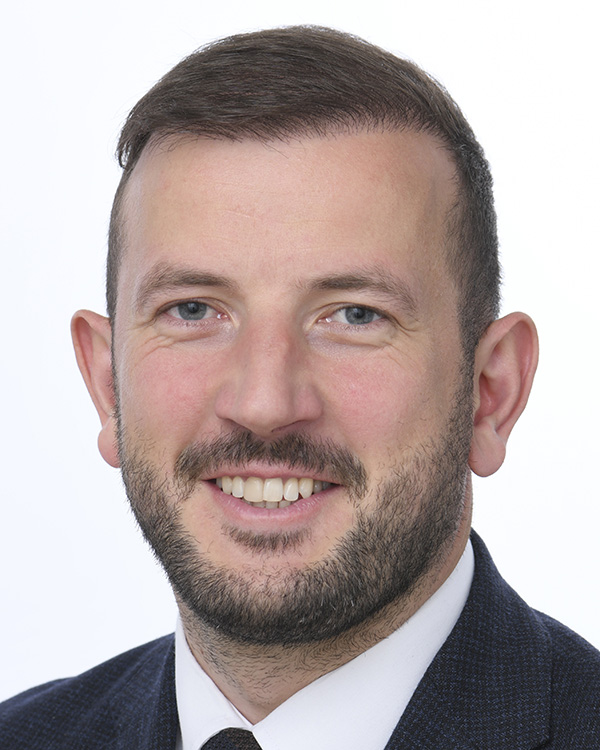


| Rank | Name | Country | Group | Speeches | |
|---|---|---|---|---|---|
| 1 |

|
Lukas Sieper | Germany DE | Renew Europe (Renew) | 487 |
| 2 |

|
Juan Fernando López Aguilar | Spain ES | Progressive Alliance of Socialists and Democrats (S&D) | 463 |
| 3 |

|
Sebastian Tynkkynen | Finland FI | European Conservatives and Reformists (ECR) | 451 |
| 4 |

|
João Oliveira | Portugal PT | The Left in the European Parliament (GUE/NGL) | 284 |
| 5 |

|
Vytenis Povilas Andriukaitis | Lithuania LT | Progressive Alliance of Socialists and Democrats (S&D) | 276 |
All Speeches (184)
Control of the financial activities of the European Investment Bank Group – annual report 2024 (debate)
Date:
27.04.2026 17:50
| Language: LT
Speeches
Mr President, dear colleagues, Commissioner. Well, first of all, the 2024 report of the European Investment Bank shows impressive figures. More than 68 billion euros were invested, of which almost 450 million were invested in Lithuania, i.e. 0.6%. Lithuania's GDP, and these funds reached over 1,500 Lithuanian companies. It sounds impressive, but we still have to measure not only those absolute figures, but any real impact the European Investment Bank's investments had in Europe, including Lithuania, how many companies did not receive financing due to bureaucratic obstacles. And this is very important, as the European Parliament points out in its report, that very often, however, through intermediaries, small and medium-sized enterprises do not get the access they need. The second is the mandate. Indeed, we welcome the European Investment Bank's investments in critical infrastructure, defence and security. In general, when it comes to the mandate, it must focus on the strategic independence of Europe. Energy, infrastructure, defence and security are the most pressing issues today, where the European Investment Bank, with its own finances, with its own capital, must come and be the catalyst to attract additional financing from the private sector.
Building Europe's clean, independent and secure energy following the 2026 North Sea Summit (debate)
Date:
11.03.2026 14:52
| Language: EN
Speeches
Madam President, dear Commissioner, colleagues, Europe used to talk about energy mainly in terms of market and prices. Today, we clearly understand: energy policy is a security policy. Energy keeps our homes warm and our industries running, and when Russia weaponised gas, we saw how dependence can be used against Europe. That is why cooperation on clean energy today matters so much. When European countries connect their grids, build offshore wind together and invest in shared infrastructure, we are doing much more than just building turbines. We are building resilience, a system that is less exposed to geopolitical shocks and volatile fuel prices. We see why this matters today. As the war in Iran pushes oil towards USD 100 per barrel and drives gas prices up again, Europe is reminded how vulnerable importing fossil fuel makes us, and the more renewable electricity Europe produces itself, the less we pay for those shocks and most importantly, our citizens are less exposed. So, this is not only environmental transition, as some like to call it; it's a strategic transformation.
Urgent actions to revive EU competitiveness, deepen the EU Single Market and reduce the cost of living - from the Draghi report to reality (debate)
Date:
11.02.2026 10:48
| Language: EN
Speeches
Madam President, colleagues, Commissioner, last year Mario Draghi told us something uncomfortable: Europe is drifting and not running. He reminded us that our companies pay energy prices two or three times higher than their competitors in the US – and that is not an abstract statistic; that is, at the end of the day, the difference between investing here in Europe or actually leaving. And we have responded: strategies, roadmaps, compasses. That is, of course, welcome. But between announcements and reality there is still a long way to go. And businesses are stuck walking through it every day. Where is the genuine single market for services? We've been discussing that for years. Where is the one simple rule book that allows companies to grow from Lisbon to Vilnius without drowning in 27 different systems? Draghi was very clear. This should not take months. It should take days here in Europe. Now it takes actually years, not months. So my message today is straightforward: let's create the 28th regime this year and make an affordable energy action plan felt in every household and every factory in Europe.
European response to the attacks on the Ukrainian energy system causing a humanitarian crisis (debate)
Date:
10.02.2026 14:08
| Language: EN
Speeches
Mr President, Russia is a terrorist state. It's deliberately bombing Ukrainian heating facilities, water‑cleaning facilities, leaving people without heating, without water, without availability to switch on the light, while outside there is -27°C. And it is all done deliberately, strategically. These strikes are strategic and are designed to freeze Ukrainian people into submission and to weaken European resolve. We, as Europeans, I very much welcome that we are sending generators, humanitarian aid. But it is not enough. Humanitarian support alone won't stop terrorist attacks on Ukrainian people. Europe must go further. We need to accelerate a robust air defence cooperation shield and shield the Ukrainian people.
Attempted takeover of Lithuania’s public broadcaster and the threat to democracy in Lithuania (debate)
Date:
21.01.2026 19:04
| Language: LT
Answers
Thank you, Vytenis, for your question. Again, LRT leaders basically responded to these attempts to politicize, but I will say it very simply: These are all within the framework of existing laws. That's one. And secondly, I think that the law applies to everyone, as well as the LRT. And if you, Vyteni, sincerely want to correct the rule of the LRT, you could have gathered that working group, which was gathered after the protests, much earlier. Unfortunately, this only happened after the protesters. First of all, there was the question of how to remove the leader.
Attempted takeover of Lithuania’s public broadcaster and the threat to democracy in Lithuania (debate)
Date:
21.01.2026 19:02
| Language: EN
Answers
Thank you very much for your question. I think the fundamental principles on which independent Lithuania was built are democratic principles, and one of them is the freedom of speech. So therefore I will always say that media freedom, freedom of speech has to be separated from the politicians. And yes, this is not a truly nice moment to talk about my great country, but that's the reality on the ground that is happening. And I am truly proud that there were thousands of brave people who came out on the streets and defended freedom of speech.
Attempted takeover of Lithuania’s public broadcaster and the threat to democracy in Lithuania (debate)
Date:
21.01.2026 19:01
| Language: LT
Answers
I honestly think he's not overwhelmed by the Conservatives. Dear Peter, for me this is a fundamental principle that the media and especially the national broadcaster must be separated from any possible interference and manipulation by politicians. And it does not matter who is in power – Social Democrats with anti-Semitic Remigijus Žemaitaitis, Conservatives, Democrats, it does not matter. Media freedom is inviolable. Just like the Constitutional Court, which has been politicised for a second term. These are fundamental things, and I will always say so.
Attempted takeover of Lithuania’s public broadcaster and the threat to democracy in Lithuania (debate)
Date:
21.01.2026 18:58
| Language: LT
Speeches
Mr President, colleagues. Well, let's face it, no one is happy to stand here and discuss the threats to democracy in our country. And not only the attempt to politicize, take over the national broadcaster is a threat to democracy in our country. The foundations of democracy that our parents and grandparents have won – and most recently we mentioned 13 January – are based primarily on trust in the institutions, in the Constitutional Court. And all this, the current ruling majority, together with the coalition partner convicted of anti-Semitism, is washing these foundations from within and poses a real threat to democracy. A lot of people say that this is not the name. Most democracies do not fall after a military coup, but they are slowly collapsing with the hands of the people who democratically come to power. And all this could possibly happen in Lithuania, if not tens of thousands of those brave people who, not afraid of the cold, went out into the street and stopped the night bulldozer of the ruling ones. Therefore, we cannot allow populists to undermine and politicise the Constitutional Court, journalists and civil society.
Attempted takeover of Lithuania’s public broadcaster and the threat to democracy in Lithuania (debate)
Date:
21.01.2026 18:50
| Language: LT
Questions
Dear Vytenis, I respect you very much as a politician, but I feel that you are very ugly manipulating here. You picked up the ratings for 2025, which obviously did not really appreciate the nightly reforms that the rulers are still trying to implement. So what do you think, if the order of dismissal were changed, would Lithuania remain at the same high level in those media freedom rankings where, by the way, Estonia ranks third in the world? And the second thing you said about violations of the law, very gross violations of the law. The head of the audit, Mrs. Segalovičienė, said that, in principle, the law had been complied with. Who among you is lying?
Madam President, Commissioner, colleagues, when you buy a plane ticket, you expect just a few simple things. First of all, you always wish to arrive on time. Secondly, have at least a small bag with your personal belongings. And then, of course, if you purchase a ticket with your family, you want to sit next to your children without a surcharge. And finally, if you have a disability, you must receive an assistance. And that's nothing radical that Parliament is asking. That's absolute basic. Today's passengers get compensation after three hours delay. And that rule works. People understand it and people rely on it. The Council now wants to push that threshold further, meaning that, for most delays, passengers would get absolutely nothing. Why should we, the Parliament, who democratically represents people, accept worse rights than already exist? Why should families pay for sitting together? Why should basic luggage become a luxury? Parliament is ready to negotiate constructively, but we will not accept a worsening of passenger rights.
Preparation of the European Council meeting of 18-19 December 2025, in particular the need to support Ukraine, transatlantic relations and the EU’s strategic autonomy (debate)
Date:
17.12.2025 11:20
| Language: EN
Speeches
Mr President, Commissioner, dear colleagues, the European Council will be a real test of our credibility on Ukraine, on solidarity, and most importantly, on whether Europe can take responsibility when it matters. The Russian frozen assets are held across Europe. They are mainly in Belgium, but also in countries like France or Luxembourg. And this is not Belgium's or those countries' problem; it is a European responsibility. If Europe decides to use these assets to support Ukraine, which is absolutely critical at this moment, Europe must also stand behind that decision, and that means clear EU-level guarantees. No Member State should ever be left alone to carry the risk of a decision that we are taking together, and that means a real European solidarity that can be understood across Europe. Ukraine cannot wait and Europe cannot hide behind legal doubts while asking one country to assume all the burden. So strategic autonomy, first of all, for us, means acting together. So, this Council must deliver a clear message: European solidarity is real, concrete, and it comes with responsibility.
Continuous Belarusian hybrid attacks against Lithuania (debate)
Date:
16.12.2025 22:52
| Language: LT
Speeches
No text available
Thank you very much for your question. So there is enough for you to find publicly in the media which parties accepted bribes from Russia, which parties' campaigns were fuelled by Russian money. There are plenty – and unfortunately it's not targeted just at one Member State. If you want me to share this media news with you, I am happy to do that.
Mr President, dear colleagues, Commissioner, clearly it's a sad day when you have radical parties that were fuelled by Russian money, have taken bribes from Russia, today quoting the United States' national security strategy. But that's the reality we have to accept, and send a clear message that without military mobility, without deterrence, we will be functioning as 27 separate systems. We cannot accept it. Forty-five days for tanks to move from Paris to Bucharest is not acceptable. The worst is that this journey is prolonged by bureaucracy. On top of that, of course, we need sufficient funding for our infrastructure, because otherwise military mobility should not be seen as a sort of defence niche. It's what allows Europe's security to operate as one. This is the fundament on which we can truly build our defence readiness by 2030. Otherwise, it's just a slogan and we will be watching radicals smiling and showing us security strategies that we are not part of.
Phasing out Russian natural gas imports and improving monitoring of potential energy dependencies (debate)
Date:
16.12.2025 09:47
| Language: EN
Speeches
Madam President, dear colleagues, let me start by, first of all, thanking the Commission for putting this brave proposal on the table. Let me thank our rapporteurs for their great work and also the advisers, I know that they worked tirelessly and very hard to finalise this file. Today, Europe makes a choice about who we are and what we will no longer accept, because for decades, our energy system was built on a dangerous illusion that dependence on Russian gas was somehow cheap, stable and harmless. And we see the truth. We see what's happening in Ukraine, that energy was used as leverage, as a pressure, as a weapon. And finally, we end it. By phasing out Russian natural gas, Europe is reclaiming its freedom. We are saying clearly that our homes, our industries and our future will never again be held hostage. Europe, choose courage over comfort, and history will forever remember this vote.
EU response to the continuous airspace violations and sabotage of critical infrastructure in the EU originating from Russia and Belarus (debate)
Date:
26.11.2025 14:21
| Language: LT
Speeches
No text available
EU position on the proposed plan and EU engagement towards a just and lasting peace for Ukraine (debate)
Date:
26.11.2025 11:29
| Language: EN
Speeches
Madam President, dear Commissioner, dear colleagues, let us be very clear: the so‑called peace plan is not a peace plan at all. It forces Ukraine to concede territory, forgives war crimes such as rape, killings of civilians, 20 000 abducted children, and just rewards the aggressor. It can be called a business plan. But here in Europe, we do not sell our dignity and freedom. It also can be seen as a licence to continue, and if you look at the Russian position, when is the best time to test us? When is the best time to attack Europe? Right now, when we are still not ready, when we are still discussing our military capabilities, frozen assets, continuous support to Ukraine. Right now is the best time to test us with such a business deal that the US is offering.
European Defence Industry Programme and a framework of measures to ensure the timely availability and supply of defence products (‘EDIP’) (debate)
Date:
25.11.2025 09:45
| Language: EN
Speeches
Madam President, dear Commissioner, colleagues, while society and cities in Ukraine still bear the scars of Russian aggression, the world debates peace plans in which Europe has no seat, no say and no signature. When decisions about our continent are made without us, one truth becomes painfully clear: we are at a time where, unfortunately, you are either at the table or on the menu. This is why Europe's defence industry programme is not about just steel, ammunition, supply chains, common procurement; it's about sovereignty. It's about our capacity to defend freedom on our European soil and to ensure that never again will others decide our fate while we are watching from the sidelines. This framework of measures boosting industrial cooperation, securing access to critical materials and ensuring rapid production is Europe's insurance policy against uncertainty. We must guarantee the timely availability and supply of defence products because deterrence delayed is security denied, and Europe cannot rely on goodwill or distant guarantees. We must rely on ourselves – united, capable and ready to defend what defines us: peace, democracy and dignity.
Ending all energy imports from Russia to the EU and closing loopholes through third countries (debate)
Date:
22.10.2025 22:12
| Language: EN
Speeches
Mr President, dear colleagues, dear Commissioner, three years into Russia's war against Ukraine, Europe is still paying billions to Moscow. Every euro for Russian gas or oil fuels aggression against Ukraine and supports hybrid attacks against democracies here in the EU, and this must stop now. We in Parliament choose action over delay and we insist that oil from Russia must stop in 2026. Gas and LNG must cease by 1 January 2027, a full year ahead of the original Commission timetable. Our position is clear: no new or amended contracts, no temporary storage, and no more loopholes that allow Russian energy to reach our market through third countries. We also refuse any exemptions from certain Member States, and this ban must apply equally to all. We ensure robust verification and full transparency and strict penalties. Now, the Council must match our ambitions because Europe's security cannot wait until 2028. Let's turn off the tap of the Kremlin's energy money permanently and prove that Europe stands united and independent.
Stepping up funding for Ukraine’s reconstruction and defence: the use of Russian frozen assets (debate)
Date:
21.10.2025 18:13
| Language: EN
Speeches
Madam President, Commissioner, colleagues, when we speak about Ukraine, we are not only speaking about a nation under attack. We are speaking about the very foundation of international law and human dignity. Every destroyed home, every child displaced, every mother grieving – they remind us that justice delayed can become justice denied. The aggressor must pay. Russian-state and oligarch‑linked assets frozen in Europe are the lawful way to do it. These assets are not ours to appropriate; they are instruments of accountability under the rule of law. International law, including the principles of counter‑measures, under the law of state responsibility, that gives us a very clear path: those who destroy must pay for what they have destroyed. We need one solid mechanism, clear legal basis, due process and independent oversight. We are not seizing property in vengeance. We are ensuring that aggression does not yield impunity. Using frozen Russian assets within a legal framework for reconstruction for hospitals, for schools in Ukraine transforms financial punishment into moral restoration. It strengthens the credibility of our sanctions regime and shows that Europe's justice has both heart and a spine. Let us remember, the rebuilding of Ukraine is not a charity. It is a restitution necessary and righteous. The aggressor must bear the cost of its aggression. If we truly believe in a rule‑based order, then it is time for the rules to serve the victims, not the violator.
Europe’s automotive future – reversing the ban on the sale of combustion cars in the EU (topical debate)
Date:
08.10.2025 13:43
| Language: EN
Speeches
Mr President, Commissioner, dear colleagues, nobody disputes the importance of the automotive industry, which directly and indirectly employs more than 13 million people – not only in Germany, France, Spain or Italy, but all across Europe. However, the worst would be if our automotive industry has a Nokia moment, where at some point it has almost 50 % of the market share and then it just diminishes. The competition is not coming in the combustion engine; nobody cares and nobody competes with European industry on combustion engine. Nobody wants to do a better turbodiesel or whatever. The future of automotive – like it or not – lays in battery and software. As simple as that. What we must do to truly protect our industry is to ensure that we secure supply chains, first of all, and we are waiting for an important battery booster proposal from the Commission. Secondly, we need cheap energy; we cannot compete with expensive energy, but it was a mistake basing our energy mix in Russian hands. Thirdly, we need to ensure that we have a workforce, a workforce that is future-oriented and able to compete. And finally, if we want an uptake from the market, we cannot fail our people. There must be, first of all, infrastructure – which is not there, we are far behind the goals – and lastly, cheap energy. That will help our industry.
United response to recent Russian violations of the EU Member States’ airspace and critical infrastructure (debate)
Date:
08.10.2025 11:13
| Language: LT
Speeches
Dear Commissioner, Minister, dear colleagues. Every minute of our silence, every doubt is an open invitation to Russia, Putin to test our defence capabilities, to test our unity. And what's happening, those violations in the airspace, the drones invading, the fighter jets over Estonia - it's not a gust of wind, it's our systematic testing. Let's stop being naive. You can talk to anyone. You can also talk to criminals. But the question is, how do we want to talk? Do we want Europe to talk on its knees? This is exactly what this half of Parliament is looking for. Do we want to talk to a criminal in The Hague? And this is a fundamental question. And today we have to act. Europe must close its sky. Europe must restore its defence architecture. Not paper, but real. Don't wait for tomorrow, do it today.
United response to recent Russian violations of the EU Member States’ airspace and critical infrastructure (debate)
Date:
08.10.2025 09:57
| Language: EN
Questions
You spoke about diplomacy. So first it was the occupation of Crimea, then it was Luhansk and Donetsk. then Putin invaded the whole of Ukraine. Now he is flying drones over Copenhagen, Brussels, Poland. When is the end of that diplomacy? Trump rolled out the red carpet for him in Alaska. US troops on their knees were rolling out that carpet. Diplomacy doesn't work with Putin. When will you and your colleagues realise that?
Madam President, High Representative, dear Commissioner, dear colleagues, Ukrainian cities are under the heaviest bombardment in months, and this just after the red carpet was rolled out to Putin in Alaska. Power stations, hospitals and homes are being hit night after night, and yet Ukraine still finds the strength to push forward with reforms from justice to decentralisation, because the Ukrainian people know their future is European. Last week in Paris, 26 nations pledged to form a reassurance force to protect Ukraine once there is a peace agreement. This is not a theory anymore: it is Europe showing it can act even when Washington hesitates. Dear colleagues, let us be honest: Moscow has zero interest in peace. It wants time to rearm, not to reconcile. And that is why the EU must lead. Our responsibility is to deliver weapons fast, close all the loopholes in sanctions, and keep Ukraine's accession path alive while giving it real security guarantees. That will deter the next possible attacks. If we get this right, we will not be protecting just Ukraine. We will be protecting...
Mr President, dear Commissioner, dear colleagues, it is clear it's not just about the tariffs – it's about what kind of Europe we want to be. Right now, President Trump is simply trying to bully Europe. He says, 'Take this deal or pay the price'. And if we don't agree, of course, our exports could face huge tariffs. Up to now, it sounds like 200 % on pharmaceuticals, and that of course means jobs at risk, economic slowdown. But this is much bigger than just trade. When one leader uses threats and deadlines, it's not about partnership – it's pressure. Trump's approach is clear: tariffs first, negotiations second. And that's not how we build a future for Europe. We cannot give in. We cannot trade away our values for a quick fix where we don't know if there is even a standstill clause on that. We need a deal that helps people and protects Europe's future. And that means clean industry and not dirty shortcuts, fair supply chains with strong rights for workers everywhere, and digital rules that protect freedom and privacy. The message to Washington is simple: we seek cooperation and not capitulation. And Europe must show that it can be strong and fair at the same time. So let us show the world what we stand for, that we stand united as one Europe.