

| Rank | Name | Country | Group | Speeches | |
|---|---|---|---|---|---|
| 1 |
|
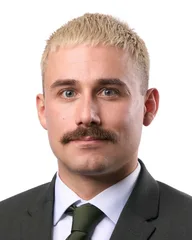
Lukas Sieper | Germany DEU | Non-attached Members (NI) | 390 |
| 2 |
|
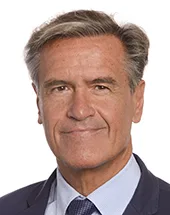
Juan Fernando López Aguilar | Spain ESP | Progressive Alliance of Socialists and Democrats (S&D) | 354 |
| 3 |
|
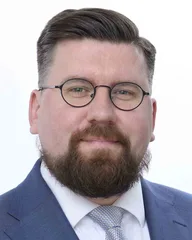
Sebastian Tynkkynen | Finland FIN | European Conservatives and Reformists (ECR) | 331 |
| 4 |
|
João Oliveira | Portugal PRT | The Left in the European Parliament (GUE/NGL) | 232 |
| 5 |
|
Vytenis Povilas Andriukaitis | Lithuania LTU | Progressive Alliance of Socialists and Democrats (S&D) | 227 |
All Contributions (63)
Towards a more disaster-resilient EU - protecting people from extreme heatwaves, floods and forest fires (debate)
Climate change is making its dramatic effects felt more and more intensely, more widely and much faster than we anticipated. The effects of climate change are unfortunately not only measured in the devastation of agricultural and forest areas, the destruction of natural ecosystems and the economic losses for thousands of families, which are serious in themselves. They are measured in lost lives, such as those we mourn in the fires and floods that battered Greece, in the floods that caused a human tragedy of unimaginable dimensions and in the thousands of climate refugees. Few have the courage to deny that climate change is a reality. But many continue in their daily action to effectively block the implementation of the necessary measures. It is therefore crucial to continue to make determined progress in the implementation of the European Green Deal. An implementation that can never lose the notion of social justice and the necessary support for a transition to a more decarbonized society. The global dimension of the problem also requires a growing effort in EU climate action in the various international fora, in bilateral dialogues with third countries and in supporting their action on climate change mitigation and adaptation.
Production and marketing of plant reproductive material - Production and marketing of forest reproductive material (joint debate - Plant and forest reproductive material)
Mr President, ladies and gentlemen, rapporteur, ladies and gentlemen, the circulation of seeds and agricultural propagating material is something of common interest which serves a number of objectives well described, moreover, in the Commission's legislative proposal, such as ensuring the quality and diversity of choice of plant reproductive material available to farmers and contributing to the conservation and sustainable use of plant genetic resources and agrobiodiversity. Contrary to what some claim, these goals complement each other, not antagonize each other. All the objectives – including those I have set out – are important and everyone must be given the necessary conditions for their effective pursuit. Only in this balance can the best possible result be guaranteed for all European farmers, in full respect of their agricultural production system choices and the diversity of realities of European agriculture. Now, I think that we have managed to ensure this balance, after intensive negotiations at the level of the Committee on Agriculture, in a text that I hope will be defended here and I believe that we will thus have a strong mandate from the European Parliament for negotiation in future trilogues. Mr President, as this is my last speech in plenary, because I am ending my term of office here, allow me and allow me all to thank above all our interpreters and, in particular, the Portuguese booth, which will be celebrating the Portuguese language on 5 May. It's nice to be able to say thank you to everyone and everyone in Portuguese.
Promised revision of the EU animal welfare legislation and the animal welfare-related European citizens’ initiatives (debate)
Mr President, Commissioner Ferreira, today we are debating the promise to revise European animal welfare legislation. Much has been said and will be said this morning. But because I was co-rapporteur of the Committee of Inquiry on the Protection of Animals during Transport, I could not fail to be here to underline the failure of the current Commission on animal welfare legislation, because nothing or very little will be done in this mandate. I know from experience how delicate animal welfare issues are, sometimes seem irreconcilable, and I know how much they require from a negotiating point of view, and above all they require time, a lot of time – time that no longer exists in this mandate. I hope, at least, that the time that remains will serve to listen to all sectors, NGOs, scientists, but also all those who, in the rural world, have in extensive livestock farming, in particular, and in grazing their way of life. That they therefore provide such important ecosystem services, and sometimes so little valued, and that they prevent the desertification of our territories. I would like to take this opportunity to ask the Commissioner how this issue of animal welfare is already being addressed in the framework of the structured dialogue with farmers and pastoralists, understanding that this is not her area, and that other Commissioners should be here to answer these questions, and I thank her in advance for her presence.
Empowering farmers and rural communities - a dialogue towards sustainable and fairly rewarded EU agriculture (debate)
Madam President, ladies and gentlemen, my first word is one of solidarity and goes to farmers, in particular young farmers who, regardless of their Member States, are fighting for something as simple as this: dignification of their way of life, decent incomes for an activity that is essential to everyone and less, much less bureaucracy in accessing the funds to which they are entitled. I would also like to welcome the struggle of small farmers, small livestock farmers and pastoralists, who are many in Europe and who, for the most part, do not even have access to CAP funds. This is your fight. It is not the struggle of the right or the far right, a right that so much wants to be the herald defender of farmers that even pits European farmers against European farmers, as we saw last week. And this is a struggle of the rural world and this struggle deserves respect, it deserves quick responses that help farmers in the just transition to a more sustainable agriculture. Yes, because farmers who love their land do not create, it is not they who create the fallacious separation between agriculture and nature.
EU Action Plan: protecting and restoring marine ecosystems for sustainable and resilient fisheries (debate)
Mr President, ladies and gentlemen, Commissioner, protecting marine ecosystems is an ethical imperative for the future of humanity itself. These ecosystems face enormous challenges, such as climate change, acidification, pollution, overfishing. Therefore, no one in good faith can say that we do not need urgent measures, nor do we need to adapt fishing gear to where it is used. But it is precisely at this point, in the generalization on impacts, that the action plan has its greatest flaw. Firstly, the environmental impact of a fishing gear is not the same in all places where it is used. And secondly, we need to know what are the social and economic impacts caused by the discontinuation of a fishing gear, and we need to define what will be done with the communities most affected by these impacts. I end by stressing that the Commission's efforts to achieve, through this plan, a more consistent implementation of the European Union's environmental policy are to be welcomed. But I must remind you that fisheries management measures emerge and must always emerge from the ordinary legislative procedure.
Implementation of the Common Fisheries Policy and future perspectives (debate)
Mr President, ladies and gentlemen, let me just stress once again that fishing and aquaculture activities must be environmentally sustainable in the long term, but they must also be managed in a way that is consistent with the objectives of achieving economic and social benefits, and it is clear that this tripartite sustainability must always be based on the best available scientific knowledge and assessments of the impacts of the decisions taken. The Common Fisheries Policy should be a balanced policy capable of effectively, transparently and fairly monitoring the long-term management of fishing and aquaculture activities, helping them to position themselves in an economy that is increasingly driven by circularity, digitalisation and the energy transition, but which is also increasingly competitive at global level.
Recent ecological catastrophe involving plastic pellet losses and its impact on micro plastic pollution in the maritime and coastal habitats (debate)
Mr President, ladies and gentlemen, millions of pellets on Galician beaches are an environmental disaster. Regional authorities may say that they are not toxic, but we are talking about large-scale non-biodegradable material, which remains indefinite in marine ecosystems, harming, threatening those ecosystems, thereby also threatening the fishing and shellfish industry itself, and the Galician communities that also live off coastal tourism. Of course, immediate action is needed to try to mitigate the environmental and economic impact, because that yes, I think it will still make itself felt when summer comes. But, after the immediate response, the European Union really needs measures to help prevent accidents of this nature, especially the requirements to be imposed on fleets under flags of convenience, which operate under safety and environmental protection standards far below those of Europe. I therefore welcome the Commissioner's words and look forward to further concrete action.
Improving the socio-economic situation of farmers and rural areas, ensuring fair incomes, food security as well as a just transition (debate)
Madam President, ladies and gentlemen, there are recent - and even positive - figures showing an increase in the average incomes of European farmers, and this is the result, first of all, of a great effort on the part of farmers to invest in improving the value of their production. But this average increase hides many realities. It hides marked geographical differences, it hides the income gap between men and women and between generations in almost the entire rural world. I recall that generational renewal is one of the biggest challenges for the future of the agricultural sector, and it will not be possible to overcome it without ensuring a fair, dignified and equitable income for the rest of society. At a time when we are already talking, starting to think about the direction of public policies post-2027, it must be borne in mind that the future of agriculture is decided today, already, in the support given to farmers for the development of an environmentally, but also socially and economically sustainable agriculture.
Sustainable use of plant protection products (debate)
Madam President, Commissioner, ladies and gentlemen, if we have said here - like science - that it is essential and urgent to reduce dependence on the use of pesticides by our agriculture, not least for the health of our farmers, but also for all of us and for the environment, then we cannot deny the imperative need to have targets. But I would remind you that, in order to meet targets, investment in alternatives that are viable from the point of view of substances, but also their costs, must be strengthened, and a more efficient and uncomplicated legislative and procedural framework must be created for the approval of new biological control methods. Let me also remind you of the importance of an effective and harmonised implementation of integrated pest management, and I therefore consider it very appropriate to strengthen it in this proposal for a regulation. In fact, it is important to ensure greater homogeneity in its application in the Union, within a framework that naturally allows room for local specificities and advances in scientific knowledge itself.
Generational renewal in the EU farms of the future (debate)
Mr President, Commissioner, ladies and gentlemen, everything I could add on this report has been said here and very well by all my fellow Members. I want to thank you very much, not for the praise for the report, but for the unequivocal way in which you have demonstrated your commitment, our commitment to all young farmers, the commitment to this noble cause. Commissioner, you see that it has been made very clear here that we are committed to defending generational renewal in agriculture as a matter of urgency. I therefore ask the European Commission and, by the way, the Council to help us not to defraud our young farmers. I'm very confident. We are all very confident here that this report will be seen as a strong contribution to shaping future policies to support our young farmers. And we look forward to the response and action of the European Commission and the Council to the proposals set out therein. Let me finish by saying that I noticed several social media posts by young farmers who said: 'What a pity that so few people in the Chamber are participating, at least listening to this debate.' I want to say to these young people that at least those who have been here may be few, but they are committed. This Parliament is committed and I am sure that this will also be expressed in today's vote, in support of this report for generational renewal in agriculture, which is basically the same as defending the future of Europe itself.
Generational renewal in the EU farms of the future (debate)
Mr President, Commissioner, ladies and gentlemen, allow me first of all to express my sincere thanks for the commitment, commitment and dedication of all the rapporteurs in this process and also to the teams that have worked together to produce this report. A report on the future. The future of our farmers, the future of European agricultural production, the future of 80% of the European territory and 30% of the population living there, the future of citizens, the future of the rural world and our territorial cohesion. Today, agriculture is at the centre of many challenges, but I dare to say that, of all the challenges, it is generational renewal that most challenges the future and nature of this important sector, based mainly on small and medium-sized family farms, thanks to which our rural fabric is still alive. The ageing of farmers is a fact: in 2020, only 11.9% of EU farm managers were under 40. This is where the action of the European socialists and democrats is also stated: an action that does not evade the political responsibility to project the future beyond the foam of the days; an action that is not held hostage to mere tactics for electoral purposes; an action that knows that only with a decent and fair income for farmers and their families can young people and new people be attracted to agriculture; an action that reinforces the importance of territorial cohesion and the promotion of inclusive communities, with a particular focus on young people, migrant workers and women, because everyone, everyone, should benefit from social protection and decent working conditions on farms; an action that does not forget that young farmers, today and tomorrow, will always be the most affected by the impacts of climate change and biodiversity loss. Barriers to access to agricultural activity are well known: access to land and finance, fair remuneration of work, access to knowledge and training are some of the most relevant. Added to these are other daily challenges, ranging from social isolation, greater difficulty in accessing education services, healthcare, digital connectivity to limited access to leisure and cultural services. These are all challenges that have been identified for a long time, but which have not yet found adequate responses. Ladies and gentlemen, Commissioner, that is why this Parliament is calling for stronger responses from national and European public policies. That is why we call on Member States to develop coherent and long-term strategies to promote generational renewal, combining different measures, such as financial support for the setting-up of young farmers, tax incentive policies and measures that improve the links between European policies and policies at national and regional level. The recognised specific nature of agricultural land requires action to regulate land markets. Let us be clear, access to land remains one, if not the most important, obstacle to the setting up of young and new farmers. And if what's been done doesn't work, then we have to do it differently. That is why we ask the Commission to assess the possibilities for action at European level, including through legislative instruments, and the development of an Agricultural Land Observatory as part of the Rural Observatory. A more harmonised approach across the European Union could help improve the functioning of agricultural land markets. This is why we also call on Member States to promote better regulation and enhance the transparency of these markets: better information and communication, e.g. in relation to land sale, land planning and land concentration monitoring. Commissioner, there are other points that I would like to make in this report, but it is also very important that we listen to the colleagues present here and so I will stop here now in my presentation.
European protein strategy (debate)
Mr President, Commissioner, ladies and gentlemen, we have a large deficit in the production of vegetable proteins in the European Union, which results in a high dependence on imports. I therefore support this resolution's call for the development of a comprehensive and ambitious protein strategy in the European Union. We need a strategy that includes a clear focus on promoting the production of protein crops for food and feed, also benefiting from the positive effects of incorporating these crops in rotations, for soil health, breaking pest cycles, among others. As production systems are more demanding, there is still much to be done to improve their profitability and stability. This requires better plant material, adapted to agro-climatic conditions, and research into better cultivation methods and knowledge transfer. We need a strategy that also incorporates measures to promote a balanced protein diet from sustainable animal and plant production, not from laboratories. More than inventing, we must learn to value rational diets that already exist, recognized, moreover, as the material and immaterial heritage of humanity, as is the case with the Mediterranean diet.
European Citizens' Initiative 'Fur Free Europe' (debate)
Madam President, ladies and gentlemen, the COVID-19 pandemic, for example, has brought us much pain and suffering. However, from the blackness from which we emerged, there came with it a light, a light on a sector that went unnoticed in the eyes of the majority of European citizens and that does not have, cannot have, a place in today's world. The proponents of this citizens' initiative describe the various aspects that show us indelibly, not ideologically, why breeding animals for the exclusive production of fur is unacceptable. It is an attack on animal welfare, it is a risk to public health, it is a risk to the environment... But the basic question I even ask is this: for what? What is the added value for the well-being of our society? None of this is acceptable. The rearing of animals for the exclusive production of fur is a thing of the past and has, I repeat, no place in a society that proclaims respect for animals as a fundamental value. Let us put an end to this delusion which is the objectification of animals in the name of an economy of vanity.
Water scarcity and structural investments in access to water in the EU (debate)
Mr President, ladies and gentlemen, Commissioner, the lack of water is not just a problem for the countries of the South, it is a European problem! I therefore welcome President von der Leyen's announcement that a European Commission initiative on water resilience will soon be launched. I hope that this is not just a reflection paper, because the time for reflection has passed. This is the time to act: to move towards a truly integrated strategy for water management, with a strong focus on circular water management, and I must say that Portugal, my country, is already taking steps to move towards circular water management, whether in urban, industrial or agricultural contexts. Commissioner, we need a real European strategy and a corresponding action plan to ensure that all European citizens will have access to water in the future. This, or else we risk being in a few years' time lamenting the population and environmental deserts that have spread throughout Europe. The time, ladies and gentlemen, was yesterday.
Implications of Chinese fishing operations for EU fisheries and the way forward (short presentation)
Madam President, sustainable fishing, transparency of practices, respect for human rights do not seem to easily enter the lexicon of the People's Republic of China. When we talk about the working conditions often reported as inhumane on board some Chinese vessels, when we talk about the conservation of natural resources or the fight against marine pollution, none of this seems to disturb the People's Republic of China. The only thing we know to be truly clear is the lack of transparency on the part of the Chinese authorities regarding the size of their fishing fleet. As there is no accurate data, it is almost impossible to monitor and regulate the activities of that fleet and to combat unfair competition from our fishermen. I know that we can do little or nothing but persist in trying to improve the conditions for dialogue and cooperation between the European Union and China. But that little is much, and we must continually engage in it. That is why this report is so important, because what is at stake is respect for our fishermen, the protection of the oceans and the defence of our own human rights.
Fisheries control (debate)
Madam President, ladies and gentlemen, I should like to begin by congratulating and thanking Clara Aguilera for her excellent work, together with the whole of Parliament's team involved in these complex, difficult and much-needed negotiations. The Fisheries Control Regulation is a cornerstone of the Common Fisheries Policy, whether in the context of the sustainable management of marine resources, the prevention of overfishing, the recovery of overexploited stocks or the dignification of fishing activity itself. This is not a regulation made against fishermen, but where transparency and accountability emerge as principles in defending the sector itself. More accurate reporting of vessels’ catches and activities not only makes it possible to combat illegal, unreported and unregulated fishing, but also results in the protection of all those in fishing who comply with the rules and deserve due recognition. Understanding better and preventing more timely the impacts of fishing activities on different species, especially the most sensitive ones, seeking to reduce their incidental catches, is not an affront to fishermen, but the right path, both in defending their way of life in the long term and in ensuring that we will continue to have fisheries resources essential to our food.
The proposed extension of glyphosate in the EU (debate)
Madam President, Commissioner, we are discussing here the renewal of the authorisation of a product which European society itself has long rejected. What is more, we are debating the possibility of extending the presence of this product in what will be the crucial decade of the transition to more sustainable agriculture. When what we should be doing is discussing exactly what the European Union's strategy is to invest in scientific research and help find alternative substances, safer active substances, that will ultimately help our farmers to wean - I am sorry for the expression - this product that has been with us for decades. It could be argued that EFSA, in its report, says it has not identified critical areas of global health concern arising from the use of glyphosate in agriculture. But EFSA also says clearly that it failed to complete the risk assessment for a number of important parameters, which is the same as saying: please invest more in science and research. So, in conclusion, Madam President, the answers to the use of glyphosate must not be to give another decade - the decade of agriculture of the future - to a product clearly of the past.
Nature restoration (debate)
Madam President, ladies and gentlemen, the law for the restoration of nature is not to set forests on fire, nor to steal land from farmers, but to guide us in the regeneration of natural resources, because without that, yes, there will be neither economic sustainability nor food security. Restore habitats sensitive marine species, such as spawning grounds, is not to attack fisheries, but to ensure that they will continue to exist. Farmers know that without living soils, without water, without biodiversity, without pollinators, there is no agriculture. Fishermen know that without fish there is no machete. Therefore, stop instrumentalizing these two sectors with objectives, these yes, ideological and mere party-political calculation. What we are going to vote on tomorrow is not the Commission's proposal, but it is the work of this Parliament towards a law that allows Member States flexibility in defining their restoration plans until 2030. This is not the time to postpone. This is the time to act, because what is at stake is much greater than all of us. It's our own survival!
Management, conservation and control measures in the area covered under the Southern Indian Ocean Fisheries Agreement (SIOFA) (debate)
Madam President, Commissioner, ladies and gentlemen, I should like to begin by thanking my fellow Members for their speeches and, in particular, for our rapporteur's very honourable position in defending Parliament as co-legislator. It is unfortunate, we know, to have to be here and come to this need to propose rejecting the Commission's proposal. However, we cannot accept that the Commission would argue on this issue as just a matter of divergences as to the legislative technique it has chosen for RFMO forms to be used by operators. I recall that there are judgments of the Court of Justice of the Union, in particular the judgments of James Elliot and Stichting and also the recent opinion, only two weeks old, of the Advocate General of the Court of Justice in Case C-588/21P which clearly and consistently state that no measure can replace the obligation to publish all information in an official journal. To defend the publication of all information in the official languages of the Union in the Official Journal is to ensure the accessibility and application of official documents to all citizens, in particular, it is the way to guarantee legal certainty for our operators. It is not a matter of technical divergence. We have on several occasions asked the European Commission to withdraw this proposal in order to correct it properly, because Parliament can and should only do its job and nothing else.
The water crisis in Europe (debate)
Madam President, ladies and gentlemen, there is no longer any doubt about the presence of climate change in our lives. Extreme phenomena, such as floods and severe droughts, arise in an increasingly violent and devastating way. Let us think of the human and environmental drama of the recent floods in Italy and, in the case of drought, let us look at Portugal, which in May already had its entire territory in drought, with 35% in severe or extreme drought. These scenarios have very serious consequences for the whole of society, but, first of all, for agricultural production, for extensive livestock farming, for our entire rural world. It is therefore vital that immediate support measures help the most affected farmers and rural populations to at least mitigate these impacts. But drought is, and will continue to be, above all a critical factor for food security in Europe. That is why we cannot ignore the fact that we need a genuine European water management strategy. Otherwise, we risk creating population and environmental deserts across Europe.
Ensuring food security and the long-term resilience of EU agriculture (debate)
Madam President, ladies and gentlemen, food safety is not a given in the European Union, it is not a given for millions of European citizens, for whom the costs of food are a source of daily concern. That is why, of course, we must respond to the immediate pressures that European agricultural production and food prices have suffered as a result of the pandemic and Russia’s war against Ukraine, which have an impact on the living costs of millions of citizens and on the incomes of our farmers. But, ladies and gentlemen, let us not be distracted by the short term about the future, and the future now clearly tells us that there is an urgent need to safeguard the sustainability of our food systems. Our future cannot afford not to have a fully conscious and supported agriculture for this purpose, as we have always said, as regards its crucial role in the preservation of natural resources. And because young people will suffer the most from the impacts of environmental degradation and climate change, I recall that only agriculture aligned with environmental sustainability will be attractive to new generations.
Assessment of the new Commission communication on outermost regions (short presentation)
Madam President, I would also like to thank the excellent work of the rapporteur and all my fellow rapporteurs for this collaboration and for this spirit of compromise that has gone far beyond political issues, because we have sought above all to defend uncompromisingly the sustainable development of our outermost regions. And I say ours, not just by reference to Portugal, Spain and France, but to all 27 Member States of the European Union. And it is very important that they become aware of the relevance of the geostrategic value of these territories, their enormous environmental wealth, the great contribution they can bring to the sustainable blue economy, to science, among so many other dimensions. But these territories are fragile, they face unique challenges and, therefore, their full potential for the European Union needs to be properly supported, first and foremost, through a clear increase in financial allocations that allow these regions to respond to important investments in key sectors, such as sustainable agriculture, sustainable fisheries, tourism, renewable energy, always in harmony with their communities. I will conclude, Madam President, by saying that what really matters are concrete actions that contribute to promoting the balanced and sustainable development of the ORs and that truly bring them to the heart of Europe and not just to political discourse.
Geographical Indications for wine, spirit drinks and agricultural products (debate)
Madam President, I would like to begin by congratulating Mr De Castro, our rapporteur, on his commitment to a dossier that is particularly important and relevant to our rural world, or where geographical indications do not have a deep connection with our communities and with the entire cultural heritage of our rural areas. That is why it is so important to ensure that they are consistent with agricultural and rural development policies, and I believe that this will be better ensured if they are jointly managed as proposed here. The revision of the regulation on geographical indications is an opportunity to strengthen the defence of this valuable instrument in promoting diversified agricultural production, more harmonious with the environment and greater economic value for our farmers. In parallel, it is also an opportunity to respond to many of the new challenges, whether through e-commerce or the use of processed products. Therefore, I believe that Parliament's report includes very relevant elements to help us respond to these challenges and that it will allow us to strengthen the protection of our geographical indications.
Towards a strong and sustainable EU algae sector (debate)
Mr President, Commissioner, a strong and sustainable algae sector has everything to be a key player in a sustainable and circular blue economy. The versatility and applicability of algae is enormous, as has already been said. It ranges from animal feed to energy production, from cosmetics to pharmaceutical production. And, rich as they are in protein, algae can still be used as an important complementary source of human food. However, to achieve this potential, the European Union needs to implement measures to help strengthen the sector, for example: invest in scientific and technological research and development to improve the cultivation, processing and extraction of algae-based products, seeking to improve their quality and competitiveness on the market; create a regulatory framework for the development of quality and safety standards for algae-based products; direct support measures towards the production and marketing of such products, thereby increasing investor confidence; stimulate circular economy projects that integrate algae into diverse circuits, e.g. wastewater treatment or fertilisation of agricultural soils. The algae sector will certainly not be a panacea, but it will be and is a whole new world, with enormous environmental and economic potential that the European Union must be able to support.
Protecting and restoring marine ecosystems for sustainable and resilient fisheries - Agreement of the IGC on Marine Biodiversity of Areas Beyond National Jurisdiction (High Seas Treaty) (debate)
Mr President, I should like to begin by thanking you for your efforts in trying to clarify some sensitive points here. I believe we do need ambitious restoration and conservation targets as a matter of urgency. But, Commissioner, these targets must also be realistic and realism, in my view, can only come from two paths: science and impact studies that also address the social and economic dimension. Science shows us the urgency and points the way. And impact studies must serve to create concrete strategies to address the impacts of the transition to less destructive fishing. It is in this balance that is the sustainability of the oceans and that is the guarantee of the way of life of our fishermen. It is disappointing to think that we do not need to protect marine ecosystems. We must fight for responsible and sustainable fishing. But it is also a disappointment to those who think that this struggle will succeed without proper concrete solidarity with our fishing communities. They are essentially the ones who have their eyes on us right now.