

| Rank | Name | Country | Group | Speeches | |
|---|---|---|---|---|---|
| 1 |
|
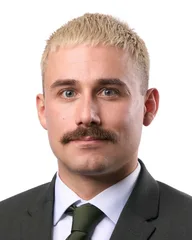
Lukas Sieper | Germany DEU | Non-attached Members (NI) | 390 |
| 2 |
|
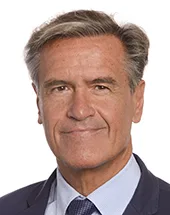
Juan Fernando López Aguilar | Spain ESP | Progressive Alliance of Socialists and Democrats (S&D) | 354 |
| 3 |
|
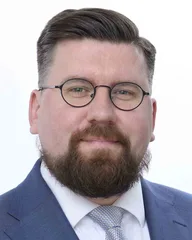
Sebastian Tynkkynen | Finland FIN | European Conservatives and Reformists (ECR) | 331 |
| 4 |
|
João Oliveira | Portugal PRT | The Left in the European Parliament (GUE/NGL) | 232 |
| 5 |
|
Vytenis Povilas Andriukaitis | Lithuania LTU | Progressive Alliance of Socialists and Democrats (S&D) | 227 |
All Contributions (63)
Nature restoration (debate)
Madam President, ladies and gentlemen, the law for the restoration of nature is not to set forests on fire, nor to steal land from farmers, but to guide us in the regeneration of natural resources, because without that, yes, there will be neither economic sustainability nor food security. Restore habitats sensitive marine species, such as spawning grounds, is not to attack fisheries, but to ensure that they will continue to exist. Farmers know that without living soils, without water, without biodiversity, without pollinators, there is no agriculture. Fishermen know that without fish there is no machete. Therefore, stop instrumentalizing these two sectors with objectives, these yes, ideological and mere party-political calculation. What we are going to vote on tomorrow is not the Commission's proposal, but it is the work of this Parliament towards a law that allows Member States flexibility in defining their restoration plans until 2030. This is not the time to postpone. This is the time to act, because what is at stake is much greater than all of us. It's our own survival!
Management, conservation and control measures in the area covered under the Southern Indian Ocean Fisheries Agreement (SIOFA) (debate)
Madam President, Commissioner, ladies and gentlemen, I should like to begin by thanking my fellow Members for their speeches and, in particular, for our rapporteur's very honourable position in defending Parliament as co-legislator. It is unfortunate, we know, to have to be here and come to this need to propose rejecting the Commission's proposal. However, we cannot accept that the Commission would argue on this issue as just a matter of divergences as to the legislative technique it has chosen for RFMO forms to be used by operators. I recall that there are judgments of the Court of Justice of the Union, in particular the judgments of James Elliot and Stichting and also the recent opinion, only two weeks old, of the Advocate General of the Court of Justice in Case C-588/21P which clearly and consistently state that no measure can replace the obligation to publish all information in an official journal. To defend the publication of all information in the official languages of the Union in the Official Journal is to ensure the accessibility and application of official documents to all citizens, in particular, it is the way to guarantee legal certainty for our operators. It is not a matter of technical divergence. We have on several occasions asked the European Commission to withdraw this proposal in order to correct it properly, because Parliament can and should only do its job and nothing else.
The water crisis in Europe (debate)
Madam President, ladies and gentlemen, there is no longer any doubt about the presence of climate change in our lives. Extreme phenomena, such as floods and severe droughts, arise in an increasingly violent and devastating way. Let us think of the human and environmental drama of the recent floods in Italy and, in the case of drought, let us look at Portugal, which in May already had its entire territory in drought, with 35% in severe or extreme drought. These scenarios have very serious consequences for the whole of society, but, first of all, for agricultural production, for extensive livestock farming, for our entire rural world. It is therefore vital that immediate support measures help the most affected farmers and rural populations to at least mitigate these impacts. But drought is, and will continue to be, above all a critical factor for food security in Europe. That is why we cannot ignore the fact that we need a genuine European water management strategy. Otherwise, we risk creating population and environmental deserts across Europe.
Ensuring food security and the long-term resilience of EU agriculture (debate)
Madam President, ladies and gentlemen, food safety is not a given in the European Union, it is not a given for millions of European citizens, for whom the costs of food are a source of daily concern. That is why, of course, we must respond to the immediate pressures that European agricultural production and food prices have suffered as a result of the pandemic and Russia’s war against Ukraine, which have an impact on the living costs of millions of citizens and on the incomes of our farmers. But, ladies and gentlemen, let us not be distracted by the short term about the future, and the future now clearly tells us that there is an urgent need to safeguard the sustainability of our food systems. Our future cannot afford not to have a fully conscious and supported agriculture for this purpose, as we have always said, as regards its crucial role in the preservation of natural resources. And because young people will suffer the most from the impacts of environmental degradation and climate change, I recall that only agriculture aligned with environmental sustainability will be attractive to new generations.
Assessment of the new Commission communication on outermost regions (short presentation)
Madam President, I would also like to thank the excellent work of the rapporteur and all my fellow rapporteurs for this collaboration and for this spirit of compromise that has gone far beyond political issues, because we have sought above all to defend uncompromisingly the sustainable development of our outermost regions. And I say ours, not just by reference to Portugal, Spain and France, but to all 27 Member States of the European Union. And it is very important that they become aware of the relevance of the geostrategic value of these territories, their enormous environmental wealth, the great contribution they can bring to the sustainable blue economy, to science, among so many other dimensions. But these territories are fragile, they face unique challenges and, therefore, their full potential for the European Union needs to be properly supported, first and foremost, through a clear increase in financial allocations that allow these regions to respond to important investments in key sectors, such as sustainable agriculture, sustainable fisheries, tourism, renewable energy, always in harmony with their communities. I will conclude, Madam President, by saying that what really matters are concrete actions that contribute to promoting the balanced and sustainable development of the ORs and that truly bring them to the heart of Europe and not just to political discourse.
Geographical Indications for wine, spirit drinks and agricultural products (debate)
Madam President, I would like to begin by congratulating Mr De Castro, our rapporteur, on his commitment to a dossier that is particularly important and relevant to our rural world, or where geographical indications do not have a deep connection with our communities and with the entire cultural heritage of our rural areas. That is why it is so important to ensure that they are consistent with agricultural and rural development policies, and I believe that this will be better ensured if they are jointly managed as proposed here. The revision of the regulation on geographical indications is an opportunity to strengthen the defence of this valuable instrument in promoting diversified agricultural production, more harmonious with the environment and greater economic value for our farmers. In parallel, it is also an opportunity to respond to many of the new challenges, whether through e-commerce or the use of processed products. Therefore, I believe that Parliament's report includes very relevant elements to help us respond to these challenges and that it will allow us to strengthen the protection of our geographical indications.
Towards a strong and sustainable EU algae sector (debate)
Mr President, Commissioner, a strong and sustainable algae sector has everything to be a key player in a sustainable and circular blue economy. The versatility and applicability of algae is enormous, as has already been said. It ranges from animal feed to energy production, from cosmetics to pharmaceutical production. And, rich as they are in protein, algae can still be used as an important complementary source of human food. However, to achieve this potential, the European Union needs to implement measures to help strengthen the sector, for example: invest in scientific and technological research and development to improve the cultivation, processing and extraction of algae-based products, seeking to improve their quality and competitiveness on the market; create a regulatory framework for the development of quality and safety standards for algae-based products; direct support measures towards the production and marketing of such products, thereby increasing investor confidence; stimulate circular economy projects that integrate algae into diverse circuits, e.g. wastewater treatment or fertilisation of agricultural soils. The algae sector will certainly not be a panacea, but it will be and is a whole new world, with enormous environmental and economic potential that the European Union must be able to support.
Protecting and restoring marine ecosystems for sustainable and resilient fisheries - Agreement of the IGC on Marine Biodiversity of Areas Beyond National Jurisdiction (High Seas Treaty) (debate)
Mr President, I should like to begin by thanking you for your efforts in trying to clarify some sensitive points here. I believe we do need ambitious restoration and conservation targets as a matter of urgency. But, Commissioner, these targets must also be realistic and realism, in my view, can only come from two paths: science and impact studies that also address the social and economic dimension. Science shows us the urgency and points the way. And impact studies must serve to create concrete strategies to address the impacts of the transition to less destructive fishing. It is in this balance that is the sustainability of the oceans and that is the guarantee of the way of life of our fishermen. It is disappointing to think that we do not need to protect marine ecosystems. We must fight for responsible and sustainable fishing. But it is also a disappointment to those who think that this struggle will succeed without proper concrete solidarity with our fishing communities. They are essentially the ones who have their eyes on us right now.
The role of farmers as enablers of the green transition and a resilient agricultural sector (continuation of debate)
Mr President, Commissioner, ladies and gentlemen, some political groups on the right are trying to make an equivalence between rejecting current legislative proposals and an alleged defence of farmers. That, to defend farmers, nothing can change or that this is not the time for change. A fallacious rhetoric that purports to be on the side of farmers, but is not. It is not, because the vast majority of farmers want to move forward, to contribute to the restoration of nature, to protect biodiversity, and to combat climate change, which results in extreme droughts, such as the one that farmers in my country, in Portugal, are already facing again. What they are asking for is that they be given the means, the resources, to continue to be guardians of nature. What farmers are asking for is not to stop, but for us politicians here to understand that the social and economic characteristics of our farming communities do not allow them to make every effort overnight. But that's why we're here. This is our responsibility: finding solutions that deliver clear social, economic and environmental benefits for all farmers today and tomorrow.
Schools scheme for fruit, vegetables, milk and dairy products (short presentation)
Mr President, in fact, international studies indicate that, on average, less than half of children eat fruit on a daily basis and consumption is even less frequent at ages 13 to 15. The fruit, vegetable and milk distribution scheme is therefore of great value in countering this trend and promoting access to healthy and sustainable nutrition for all European children, regardless of their socio-economic status. It is therefore crucial to ensure a more robust budget in order to reach more children and promote simplification and streamlining of administrative processes, often blocking the implementation of this programme on the ground. I would also stress the importance of strengthening educational measures that encourage children to become involved in agriculture, teach them about healthy eating habits, encourage organic food and introduce objective criteria that include seasonality and availability of local products, environmental, ethical and health considerations.
European Citizens’ Initiative "Save bees and farmers! Towards a bee-friendly agriculture for a healthy environment" (debate)
Mr President, Commissioner, the European Citizens' Initiatives are one of the most enriching and demonstrative instruments of the vitality of the civic participation of our citizens, and so my first word is a strong and special greeting to all the authors of this initiative. Protecting pollinators is vital for the future of agricultural production and our food security, in particular as regards crop diversity. Farmers are deeply committed to building systems that are more balanced with nature, but to do so they need support and concrete alternatives to fight pests and diseases. Reducing the risk and use of pesticides is an undisputed path. That is why we need a strong focus on biological control methods and other non-chemical methods, as well as on advising our farmers, in particular by strengthening warning systems networks. Within this framework, the systematic and comprehensive implementation of IPM in the European Union is undoubtedly one of the most powerful weapons at our disposal. But we need – I stress – a clear commitment from all and this requires a strong investment from all Member States in this matter.
Availability of fertilisers in the EU (debate)
Commissioner, ladies and gentlemen, we must learn lessons from these moments of crisis. And one of the lessons of this crisis is clearly the need to increase the strategic autonomy of the European Union, also in the area of fertiliser production, one of the most important and cost-intensive factors of production – as we have heard here. The strategic autonomy of the European agricultural sector therefore requires less dependence on inputs external, with increased fertiliser production in Europe and based on the use of renewable energy and nutrient recycling. In fact, greater autonomy in the production of fertilisers should include, in particular, a clear commitment to more circular systems from the point of view of nutrient management, which place the promotion of a living and healthy soil at the centre of agricultural practice. Circularity should be promoted either by reducing nutrient losses and more efficient application systems that reduce the need for fertilisers or by recovering nutrients from various organic waste streams so that they can be reused in agricultural production. Complex problems cannot have simplistic and unique solutions. We must be able to rethink our production systems and move on several fronts towards more sustainable food systems in harmony with the environment and the health of our citizens.
Small-scale fisheries situation in the EU and future perspectives (debate)
Madam President, I would like to begin by welcoming the work of the rapporteur and the shadow rapporteurs on this report, which is important – it has been said here for around 76 %, but there are even figures pointing to 85 % of the European Union fishing fleet; I'm talking about the small-scale fleet. We know that, because of human characteristics, working at sea has always been more difficult than working on land. It is therefore no coincidence that fishing is considered a high-risk activity. High-risk activity, in particular for these small-scale coastal vessels, as their size leaves them particularly vulnerable, especially when fishing takes place under adverse weather conditions. In this context, it is essential to develop coordinated policies and measures aimed at mitigating the risks of the activity, increasing the safety and comfort of fishermen on board, while seeking to develop technological solutions that allow the adaptation of small vessels to the demands of reducing the carbon footprint. This is the ideal scenario, but the reality is that, due to their size and gross tonnage rules, small-scale vessels can hardly provide safe and comfortable spaces on board today. And that translates into obvious risks for their fishermen. The limitation of gross tonnage for these vessels therefore needs to be rethought and adapted to the reality of the sector, the need to improve the safety and working conditions of fishermen, the need to accommodate technical changes, more compatible with the environmental sustainability of boats, and the very need for the small-scale fishing sector to be able to attract something so difficult, but so important, that it is the new generations of male and female fishermen.
Question Time (Commission) - Food price inflation in Europe
Commissioner, I am here on this side, I do not know if you have seen where I am, since you have always looked in another direction, and not exactly here. I appreciate the detail of the information you brought. In any case, it is always a question of what else the Commission can then do to protect the interests of the most vulnerable consumers. Thank you for your explanations and details.
Question Time (Commission) - Food price inflation in Europe
Mr President, Commissioner, we know that the main problem with food safety in the European Union is not availability, but accessibility to food. This rise in the prices of energy, fertilisers, and also – it is good to say – some speculation in the markets has led to an escalation in prices, and this is reflected and constraining above all for the most vulnerable households, and we know that these factors have a huge weight on household spending on food. That is why, for example, in our group, S&D, we have strongly advocated the creation of packages of measures in what we call a solidarity winter package for families and businesses, and we have also advocated permanent management instruments to support the labour market, limit energy prices, etc. All this seems important to us. I would like to know from the Commission what other measures can still be effectively implemented, and should be implemented, not only to support our farmers, but also to help the weakest families in the European Union.
A long-term vision for the EU's rural areas (debate)
Madam President, Commissioner, I did not address you a moment ago, because I had not yet seen you while I was speaking. It was a pleasure listening to you. I would like to say very briefly that, in fact, I would like to thank all the colleagues and shadow rapporteurs who have collaborated on this report very strongly. I have to say that it was a very committed and very intense work in order to achieve a text that mirrored what our different views on the rural world are, but that touch on so many points. I'll say it again, just look at how many colleagues are here. This is proof that the rural world does not move crowds. There are so few opportunities we have to talk about the rural world. So what I ask colleagues is to remember the following: The 80 paragraphs of this report are about and are for these 137 million people who live in the 80% of rural areas of our territory, of the European Union. It is for them this report, it is about them, it is about their problems, it is not against carnivores, it is not against wolves. Let this be very clear. Anyone who honestly and seriously reads paragraph 36 of this report and compares it with the drafting of the resolution on carnivores of the last plenary session fully understands the negotiating effort it has required. Either it was this, or it was simply having nothing and ignoring something that is deeply impacting on populations. It is the rural people who are making us aware of their concern and we have to help them. Nobody convinces me that opening up the Habitat Directive on time and eventually means killing wolves, unless there are lobbyists who want it, because that doesn't have to be the solution. In my country, for example, we did the relocation, the relocation, the displacement of these populations that were practically decimated. There will certainly be other possibilities that do not involve the death of these beings, but this report is not about wolves, it is not about wild boars, it is not about bears, it is about people. Let us have the courage, the political decency, to ever acknowledge the importance of these 137 million people who expect us to be consistent in our messages. I am very grateful for the Commissioner's words and, finally, for the Commission's commitment to meeting these demands so that we really do have a bright and resilient future for our rural world, moving beyond paper and rhetoric.
A long-term vision for the EU's rural areas (debate)
Madam President, ladies and gentlemen, I see rural areas as decisive in addressing the major societal challenges that we face, particularly in these difficult times, with an ongoing war in Ukraine inflicted by Russia and the consequences of the pandemic. The future of rural areas, which cover 80% of the European Union's territory, is more important than ever for Europe's food security and the success of the European Green Deal. But more than that, it is above all the ethical and political imperative that men, women, children, young people, the elderly and, finally, all people living in rural areas should have the same conditions as any other citizen of the European Union in order to be able to make full use of their citizenship. So, ladies and gentlemen, we must do much more and better, because what we have seen is more than insufficient. I have already said here at other times that the European Commission's communication on the long-term vision for the European Union's rural areas is very welcome, but I must regret that it was presented so late, precisely at an advanced stage in the programming of the main instruments of the multiannual financial framework, in particular those linked to cohesion policy and agricultural policy for rural development. I also regret the lack of explicit concrete targets to be achieved. The rural pact, the mechanism rural proofing, the rural observatory and the action plan are very positive initiatives, but now need to be materialised, with clear targets for delivery. More immediate action is also needed now, because rural areas, Colleagues, cannot wait. The Commission should first ensure that the rural territorial dimension is duly taken into account in the design of legislative action and should annually assess its implementation and impact on CAP Strategic Plans, Cohesion Policy programmes and Recovery and Resilience Plans. In parallel, all European Union policies and funds, both under shared management and under direct management, should be called upon to contribute to the development of rural areas. The Commission should also adopt legislative and non-legislative measures in order to improve the effectiveness of current policies, for example by working on removing remaining obstacles in the approach to multi-funds and helping to develop more integrative approaches in rural areas, as well as improving synergies and coordination between EU funding instruments and between them and national instruments. We also call for swift legislative measures to enable, for example, the extension of the core fund approach to interventions co-financed by more than one shared management fund and the simplification of its implementation, as well as the possibility of transferring financial resources between all shared management funds when, and only when, it aims at implementing concrete rural territorial strategies, something that is not possible at the moment. At the same time, Member States should also take into account the specific challenges of their rural areas during the implementation of the current Multiannual Financial Framework programmes. In particular, they should provide the necessary investments for social inclusion, job creation, fostering the competitiveness of the rural economy and stimulating a truly fair digital and green transition. They should also promote the partnership principle, overcoming the resistances that still exist at this level, as well as the stronger involvement of local actors in the construction of solutions adapted to their communities. This is also the time to start reflecting on the next programming period and on creating a context that ensures prosperity and well-being for our rural communities. The long-term vision for rural areas must evolve into a genuine rural strategy at European Union level, including all the different policies relevant to its implementation, so as to be fully integrated into future programming periods. Madam President, ladies and gentlemen, this is the time to send a clear and consistent message to rural areas across Europe that we want to be an active part in defending their communities and revitalising their territories, that we are genuinely committed not only to proclaiming it, but actually to doing so.
Global food security as follow-up to the G20 Agriculture Ministers meeting (debate)
Mr President, ladies and gentlemen, we know today that there are 75 to 95 million people, new people, living in extreme poverty; 150 million more people are chronically undernourished; there are about 828 million people affected by different levels of hunger. Now, all G20 agriculture ministers have shown themselves to be aware of this data and are well aware of the multiple reasons that explain this dramatic condition of food insecurity for millions of people. You know this is in climate change, but it's also in the pandemic, but it's also in greed, it's also in speculation and it's also in wars. And so I can only regret, for example, that the same states have not been able to agree, in a clear and unequivocal way, to condemn the Russian aggression against Ukraine and its serious repercussions on agricultural production, food security and nutrition for millions of people. It is this hypocrisy that we cannot accept and we are surely attentive to it.
The urgent need for an EU strategy on fertilisers to ensure food security in Europe (debate)
Mr President, Commissioner, ladies and gentlemen, our farmers are living through very difficult times, facing successive crises, from one of the worst droughts in memory, with particularly devastating effects in southern Europe, to the impacts of the Russian war against Ukraine, with a focus on shortages and the brutal increase in the price of fertilisers. These and other recent disruptions have a strong impact on agriculture, food production and, of course, also on the cost of agricultural food products and also increase the risk of food insecurity for millions of citizens in Europe. Systems, as we well know, do not change overnight, and we cannot fail to protect the most vulnerable, so all short-term measures that support farmers and food production by facilitating the supply of fertilisers on the domestic market in the short term will always be useful. But this crisis must also be understood as an opportunity to rethink the entire production system and move towards action on multiple fronts. For example, we need to diversify the source of raw materials, we need to bet on decarbonising the European fertiliser production sector and we need to do this through a clear investment in renewable energy. But, at the same time, it is important, above all, that we know how to make the transition to more efficient and more circular nutrient management systems, which allow us to sustainably reduce the need for chemical fertilisers, as advocated in the Farm to Fork strategy, with clear benefits for our farmers, society and the environment. There needs to be a clear focus on optimising nutrient recycling, particularly waste recycling and agro-ecological practices, and I am therefore pleased to note, Commissioner, that you have announced a future communication on fertilisers and nutrient management here. But I hope that the communication will not just come with an essentially punitive focus and that it will actually serve for us to think about nutrient management and to think about this issue from a point of view of the strategic autonomy of fertilisers for Europe. One day we can't announce a communication and another day we can announce a nutrient management plan. We must have a focus, we must have a path and we will be here to assist in this construction.
Question Time (Commission) Tackling depopulation through cohesion policy instrument
Mr President, I would just like to thank the Commissioner for her answer and I believe that she confirms - if I may interpret it freely - the importance of actually having a rural strategy in the next European Union funding programme, accompanied, of course, by national and regional strategies. This is because it is very useful, effectively, this idea that is conveyed here and that we know is working from the beginning. integrated territorial instruments. But then it is important to ensure or to ensure that, in fact, the vision of what the rural is and even the functional definition of the rural area is not lost. I believe that the strategy for the rural world will be extremely important there.
Question Time (Commission) Tackling depopulation through cohesion policy instrument
Commissioner, as we know, according to Expon, by 2050 the population of Europe's urban regions is expected to increase by about 24 million people, while people in rural areas will, in principle, have a reduction of about 8 million. So we are talking here about a loss and, if we think that this happens particularly when we talk about young people and more qualified people, this puts rural areas, as we well know, in a perpetual vicious cycle of decline which, in some cases, may even result in the absence of human capital that will then allow them to respond to their own development. A good policy mix is essential to combat it. Therefore, going to the point - and I know that it is also extremely sensitive in this matter - I ask, in particular, how the Commission can, for example, improve and simplify multi-fund approaches so that there is an even more effective articulation between policies, and this is one of the points most frequently highlighted by all the Member States. stakeholders What does it mean to work with the rural world?
Striving for a sustainable and competitive EU aquaculture: the way forward (debate)
Madam President, I should like to begin by thanking Mrs Aguilera and the shadow rapporteurs for their excellent work, both for their competence and technical rigour and for their clear ability to strike the right balance between the three pillars of sustainability for the aquaculture sector. Competitive and resilient aquaculture is key to achieving the objectives of Europe’s strategic food autonomy. Alongside the provision of healthy food, with high nutritional value and a low ecological footprint, this is a sector that, if well targeted, can greatly assist in protecting the environment and biodiversity, reducing pressure on marine resources and supporting the effective restoration of fishing stocks. It is therefore important to consider the importance of strengthening support to enable this sector, in partnership with science and technological innovation, to develop solutions that allow it to further reduce the impact of aquaculture production on the environment. This will be the path that seems to me vital, fundamental, to lessen the pressure on the oceans, ensuring the strategic food autonomy of our populations.
Momentum for the Ocean: strengthening Ocean Governance and Biodiversity (debate)
Madam President, in this brief speech I would like to welcome the commitment of all those who are actively involved in this important work. The health of the oceans and their biodiversity is essential to life, as we already know, as well as to the long-term sustainability of the different sectors of the blue economy. From contributing to the food security of millions of people, to providing renewable energy and mineral resources, to creating jobs in coastal communities, the oceans are a source of life and also of immense wealth. However, ensuring the good health of the oceans also means ensuring, among other measures, of course, that the European Union fleet continues to comply with the measures for the management and conservation of fishing stocks. It is essential to ensure that harmonised rules are granted to the EU fleet, regardless of the geographical area in which it operates, and that the conditions of fair competition for all fleets operating under international conventions are not overlooked. This means, finally, that there must also be a continuous effort to ensure that the conservation and management measures adopted under the various regional conventions are as close as possible to the ambitious objectives of the common fisheries policy, as a way of extending the language of ocean sustainability to all latitudes.
Economic, social and territorial cohesion in the EU: the 8th Cohesion Report - EU border regions: living labs of European integration (debate)
Madam President, Commissioner, cohesion policy has indeed been crucial in promoting convergence within Europe. And yet many regions are lagging behind, with a clear focus on our rural areas. The Union’s policies and actions, combined with those at national and regional level, are, as has been said so often, key to enabling rural European citizens to meet the challenges of demographic loss, lack of access to basic services, lack of quality job opportunities, climate pressures, reduced connectivity and limited access to innovation. I have repeatedly welcomed the strategy, not the strategy, the long-term vision for rural areas. But I always remember, and here I also take the opportunity to say so, that this vision needs to become a genuine European rural strategy, to be fully integrated into future programming periods and accompanied by national rural strategies. It is imperative to demonstrate to all regions and all our citizens that the European Union is there to support them. Only in this way do we really promote the true spirit of European solidarity. Allow me just one last word of enormous thanks and gratitude for the great woman who is our Constanze Krehl, and she knows how her extraordinary work in this House is in our hearts.
Consequences of drought, fire, and other extreme weather phenomena: increasing EU's efforts to fight climate change (debate)
Mr President, Commissioner, climate change is clear! Europe is experiencing a dramatic drought that, according to the JRC, may even be the worst in 500 years. The scenario is particularly severe in southern Europe. Just to give you an idea, Commissioner, as early as May this year, in my country, 97% of the entire territory was in severe drought, and since July the whole territory has been in severe or even extreme drought, which, added to the extremely high temperatures, has unfortunately created the conditions for severe fires to occur during this summer. The immediate result is the second worst cereal season since there have been records in my country, Portugal, and sharp drops in fruit production and in the vegetative development of pastures and fodder. And so what I am asking the Commission, which is not original but is necessary, is to continuously and thoroughly assess the effects of the drought situation on food production and the viability of farms, taking into account the diversity of regions, and promoting the necessary action for now and for the future.