
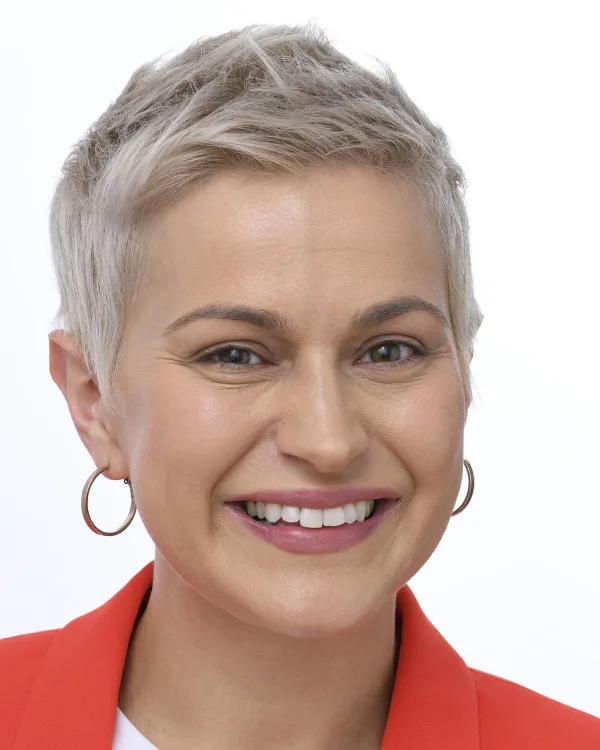

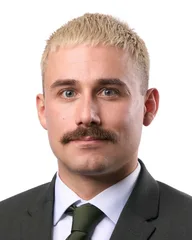
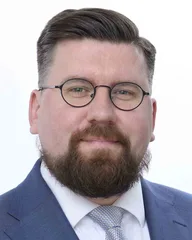
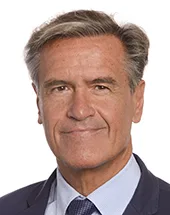
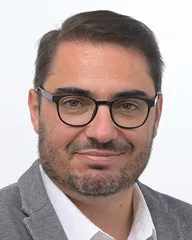
| Rank | Name | Country | Group | Speeches | |
|---|---|---|---|---|---|
| 1 |
|
Lukas Sieper | Germany DE | Renew Europe (Renew) | 494 |
| 2 |
|
Juan Fernando López Aguilar | Spain ES | Progressive Alliance of Socialists and Democrats (S&D) | 463 |
| 3 |
|
Sebastian Tynkkynen | Finland FI | European Conservatives and Reformists (ECR) | 460 |
| 4 |
|
João Oliveira | Portugal PT | The Left in the European Parliament (GUE/NGL) | 288 |
| 5 |
|
Vytenis Povilas Andriukaitis | Lithuania LT | Progressive Alliance of Socialists and Democrats (S&D) | 276 |
All Speeches (116)
How to secure a sustainable future for the EU livestock sector in light of the need to ensure food security, farmers’ resilience and the challenges posed by animal diseases? (debate)
Date:
30.04.2026 10:21
| Language: EN
Speeches
Mr President, there is one topic that is rarely discussed in this House – a natural resource that remains underused despite its clear economic and environmental value. And that is wool. Legal barriers to handling, marketing and exporting wool are preventing farmers from using it effectively or restoring its value. Across Europe, particularly in Ireland, the wool industry has nearly disappeared, and prices have fallen so low that farmers no longer can cover the cost of shearing. As a result, wool is piling up on farms – unused, undervalued and treated as a waste. This is a narrative we so desperately need to change. Commissioner, while not in your direct wheelhouse, I ask your support in removing regulatory barriers within the outdated animal by-product rules so farmers – particularly our sheep farmers – can access practical, workable solutions. In Ireland and across Europe, we understand the value of what we produce and this has to be reflected. Our sheep sector has to be respected in our upcoming CAP. Wool is certainly not a waste and it's time our policies reflect that also.
The need for targeted criminal provisions and platforms’ responsibility to effectively address cyberbullying and online harassment (debate)
Date:
29.04.2026 16:21
| Language: EN
Speeches
Madam President, every day, like you, I read another story of a child harmed by the online world – another statistic, another life changed. And when children are on platforms they are not supposed to be on, harm only increases. Today, the European Commission has preliminarily found that Meta may be in breach of the Digital Services Act for failing to properly prevent minors from accessing platforms like Facebook and Instagram. This absolutely matters – because when age safeguards fail, children are exposed earlier, longer and more intensely to environments where cyberbullying thrives. Algorithms amplify harmful content, and abuse spreads faster than it can be contained. I am proud that Ireland has taken action that targeted laws and cyberbullying. Since Coco's Law was introduced, we have seen over 400 charges and summons issued. That shows progress. It shows accountability can work. But one country acting alone is simply not enough. We need EU-wide legislation that holds both perpetrators and platforms accountable, real enforcement, clear rules and real consequences. We need to do this for the mother called Jackie Fox. And of course, we owe it to Nicole 'Coco' Fox.
Importance of consent-based rape legislation in the EU (debate)
Date:
27.04.2026 19:23
| Language: EN
Speeches
Mr President, Commissioner, colleagues, 92. That was the number of times it is estimated that Gisèle Pelicot was raped over the course of a decade. 1 000 is the number of users in a private Telegram group dedicated to sharing advice on how to drug and rape their partners. 31 % is the number of women in the EU right now who have experienced physical or sexual violence and that was from 2025. 41 % is the number of Irish women who experienced physical or sexual violence in 2025. Colleagues, we know – a majority of us do know – that each of these figures represent not just data, but lives altered by sexual violence and too often by systems that fail to respond adequately. Across our European Union, we still see legal frameworks in which if there is no physical force, threat or coercion, the act may not be recognised as rape. We all know only yes means yes. Anything else is not consent. Defining rape and EU law on the basis of consent is long overdue. We now have a chance to correct the gap that was not delivered on the Directive of violence against women because of Member States. We now have an act to finish it.
European Citizens’ Initiative 'Ban on conversion practices in the European Union' (debate)
Date:
25.03.2026 19:28
| Language: EN
Answers
Thanks for gifting me my own personal story, because like my colleague MEP Angel, – we call him 'angel' in this House – I'm a gay kid living from a rural part of Ireland, very Catholic-driven when I was growing up, and I couldn't even imagine the psychological, the spiritual, the physical degree of discrimination that I would go through if I was another kid living in different part of Europe. And the fact of the matter is, I'd like to openly share that while there's a small cohort here tonight, every time there is a debate on LGBTI+ rights, every time there is an amendment to be placed, every time there is a vote to be had, there is a growing number of MEPs, Commissioners and Councillors – while we might feel that small, but they are out there and they are speaking large. And to specifically shout to our NGOs and CSOs, who do not have the luxury of coming in here defending their rights every day, we are with them in great spirit and love.
European Citizens’ Initiative 'Ban on conversion practices in the European Union' (debate)
Date:
25.03.2026 19:26
| Language: EN
Speeches
Madam President, colleagues, often we hear the term 'conversion therapy', we imagine something from the past: an outdated practice that no longer takes place in our community and is banned in our laws. We've heard several colleagues refer to that to date, but that is simply not true. Only eight EU countries have banned these so-called therapies, and as an Irish MEP, it is difficult to accept that Ireland, my own Member State, is not among them. Despite being a country that has shown real leadership on LGBTQI+ rights, notably by being the first country that voted for marriage equality by popular vote over ten years ago, sadly, we still haven't banned conversion therapy. Despite clear commitments and two programmes for government, we simply do not have legislation. Legislation that would ban conversion practices would not just be symbolic; it would clearly say that we do not accept practices that seek to erase who people fundamentally are. So, I am calling on my own country to finally act and bring forward this legislation, I am calling on the Commission and not just the Commission, but our Council leaders, who ultimately have the decision to make this change, and to take this citizens' initiative seriously. A total of 1.2 million people have signed it. They are asking Europe to stand up and defend and protect their fundamental rights, rights that we debate and discuss and vote on here in this House. We cannot continue to let our rainbow community suffer silently. I am just conscious, even in tonight's debate that hundreds of LGBTI+ kids are going through conversion therapy – hundreds – and we simply are sitting here with an empty Chamber yet again, talking about the protection of our citizens.
Recommendation to the Council on EU priorities for the 70th session of the UN Commission on the Status of Women (debate)
Date:
12.02.2026 09:12
| Language: EN
Speeches
Mr President, as we will hear in the debate this morning, colleagues, the United Nations Commission on the Status of Women is holding its 70th session this March. In its 70 years of existence, we have come some way in the journey of recognising inadequacies in gender equality, but we sure haven't come far enough. As it stands – and hopefully you will hear about this in this morning's debate – it will take us 123 years to achieve gender equality. As the EPP shadow for this year's opinion on the recommendation to the Council on the EU's priorities for the 70th session, it is very important for me to highlight an issue that risks completely backtracking our progress towards gender equality – deepfake technology. The digital world is not separate from the real world. We know that the harms experienced online are very real and deeply damaging. Today, AI-generated deepfakes are being weaponised overwhelmingly against and disproportionately target women and young girls. The spread of non-consensual intimate images to discredit women in politics and public life and to intimidate women and young girls into silence is rapidly escalating and is a serious threat. Deepfakes erode trust, damage, reputations and silent voices. If left unchecked, they risk pushing more women out of public life and undermining democratic participation in itself. If we in the European Union are really serious about defending gender equality, then our position at the 70th Commission must reflect this reality that women face in 2026. Technology-facilitated gender-based violence must be recognised as a threat to gender equality. This 70th session gives us an opportunity to set the tone for the next decade on policy. When my colleagues and I travel to New York next month, we will represent a Europe that stands firmly for a digital future where technology empowers women and does not exploit them. I must say, picking up from our FEMM Chair, less than 30 colleagues are in the Chamber right now. We have 720 MEPs. And when women go to make a vote and hear their voice, remember who's showing up for you.
Madam President, Executive Vice-President of the Commission, findings from the European Institute for Gender Equality show us that women face higher risk of poverty than men in the EU. As we recently discussed in the FEMM Committee, central to this poverty hold is the gender pay and pension gap. In 2026, women across the EU still earn less than men for the exact same work and over the course of a woman's lifetime, the results in lower pensions mean less financial security and choice. For instance, in my Member State of Ireland, women earn on average 9.6 % less per hour than men. Research also shows that the average pension pot for Irish women is roughly 31 % less for women compared to men, meaning women retire with substantially lower retirement savings and yet are living longer. The EU anti-poverty strategy must tackle this head on. We need transparency and pay, stronger enforcement of equal pay laws and policies that support women in the workforce, including those in part-time or care work, which is often unrecognised and unpaid. Closing these gaps is not just about fairness. It's also ensuring economic security and dignity – fairness – for millions of women across our EU. If we are serious about reducing poverty, we need to pay close attention to poverty among women, especially these issues like pay gaps and pension fairness.
State violence in Minneapolis and the rule of law in the United States (topical debate)
Date:
11.02.2026 12:59
| Language: EN
Speeches
Madam President, despite what the previous speaker said, today, I speak not only as an Irish MEP but also as an American citizen. I was born in the United States, raised in Ireland. I lived there for many years in my 20s. I still have very close family there, and this week, for the first time in my life, I found myself worrying about their safety. Late last year, an Irishman by the name of Seamus Culleton was taken by ICE agents and moved over 4 000 kilometres to a detention centre in Texas. A man living with his family in the city of Boston, a man who holds – despite what previous speakers said – a very valid work permit and sadly, a man who has now become a warning to many Irish families who live and work and contribute to American society. The case of Seamus reminds us that the days of 'no Irish need apply' are no longer a relic of the past. The signs found in the shop windows and offices of England in the 1980s are now returning to the United States of the 21st century. The US of today is not a land of opportunity for people like you or I. It's not a place for immigrants. It's not a place for LGBTQI+ and, sadly, not even a place for women. And the trajectory of travel shows us it's no longer a place for the Irish. Ahead of our annual Saint Patrick's Day visit, I'm calling on our Prime Minister, Taoiseach Micheál Martin, to raise the case of Seamus and the other Irish who are detained illegally – illegally. Our relationship with the US has been strong and enduring, but it is because of that friendship, we must speak honestly and ensure the words of 'no Irish need apply', and the anti-immigrant rhetoric coming from the right never again become a reality for people, especially for the 3.7 million people who identify as Irish, who are legally American citizens working in the United States, contributing to society and ultimately making the world and the United States a hell of a lot better place than the rhetoric you just spit.
Presentation of the action plan against cyberbullying (debate)
Date:
10.02.2026 17:50
| Language: EN
Speeches
Mr President, Commissioner, colleagues, the WHO reports that in Europe, 1 in 7 children and young people under 19 is currently living with a mental health condition. Among teenage girls, the figure rises to 1 in 4. The WHO explicitly identifies online environments as a contributing factor to this growing crisis. But these are not just numbers: these are children in our classrooms, in our sports fields, in bed, lying awake with their phones lighting up. Children are growing up online and we know that online platforms are failing them. Every day, we read the headlines and hear another story of relentless online abuse. Many of you will know of Coco's Law, named after Nicole 'Coco' Fox, a young Irish girl who was bullied in person and online for over three years. After her tragic death, her mother, Jackie, refused to let that suffering be ignored. She turned grief into action and, because of her tragedy, we now have legislation that treats online abuse as what it is: serious harm. So, Commissioner, I welcome the Commission's new action plan against cyberbullying. I welcome its focus on vulnerable young people. All of this matters. But this plan must become a strategy with teeth. We need binding rules, clear enforcement and, above all, we need to have the Commission work with this House to finally criminalise cyberbullying across our EU. Cyberbullying kills, and we have a responsibility to make sure we do everything in our power to prevent more tragedies and protect the mental health of our young people.
Preventing sexual harassment in public institutions: latest revelations and resignations in Spain and institutional responses (debate)
Date:
17.12.2025 17:06
| Language: EN
Speeches
Mr President, across Europe, 31 % of women have experienced sexual harassment at work. 31 %. Recent revelations in Spain once again expose how deeply sexual harassment is embedded within the halls of our public institutions. And this is not solely a Spanish problem. Hence the reason why I am very disappointed we do not have more people in the Chamber right now. It's not just a Spanish problem. When the highest offices in the world model contempt for women and treat sexual harassment as locker-room humour, it sends a very clear message: harassment will be tolerated and accountability is optional. So we have to ask ourselves, what are we actually going to do to stop this? The European Union passed a historic Directive on combating violence against women, but this legislation is absolutely meaningless if public institutions remain a place where women are advised to endure or expect harassment, and we need to ensure effective implementation of this Directive. I can go on and include the Istanbul Convention. If we are serious about change, no public institution can be a space where sexual harassment is anticipated or excused. If the halls of power cannot lead by example, then we are not confronting the problem. We are simply reinforcing it.
The urgent need to combat discrimination in the EU through the horizontal anti-discrimination directive (topical debate)
Date:
17.12.2025 13:37
| Language: EN
Speeches
Mr President, there's one thing I agree with on the right side of the house today, and that is that this directive should not be something we are still debating in this House in 2025. I have had countless conversations, both in this Chamber and beyond, about this directive, and too often those conversations are clouded by confusion and misinformation. And this is where I will leave the right to themselves. So let's be absolutely clear on what this means: this directive is about ensuring an EU where every person can rely on fair and equal treatment. But for some, that vision seems too 'woke', too left. Our moral arguments alone are not getting us over the line, so let me speak about economics – because we know money talks. If we pass the equal treatment directive, the full elimination of discrimination could generate between EUR 450 billion and EUR 500 billion in additional GDP and tax revenue. In just five years alone, it is projected to benefit EUR 1.23 billion, with positive impacts felt across all Member States. Labour market participation would rise, productivity would grow, economies would strengthen and, hell, representation in this House would look a lot better to the 450 million citizens that we represent now, because I can tell you this: we're not doing it and we're not doing it justice. At a time when this Union speaks endlessly about competitiveness, I ask you this: how can we fail to see that equality is not a cost, it is a competitive advantage? This directive has been given a chance at rebirth this year, thanks to my colleagues, and I am looking at the next Council presidencies, including my own, to show leadership and pass it. We delay too long and we simply cannot afford to not implement this directive.
European Citizens’ Initiative ‘My voice, my choice: for safe and accessible abortion’ (debate)
Date:
16.12.2025 20:54
| Language: EN
Speeches
Mr President, colleagues, 'My voice, my choice' is a citizens' initiative – you've heard this from many colleagues tonight – signed by over 1.2 million people who want to improve hospital support and medical care for women in areas where abortion is banned. This is about access to healthcare – safe and accessible abortion healthcare. It does not have some arbitrary, ulterior motive to infringe on national competences or change the EU Treaties, despite what even my own colleagues in the EPP Group believe. It is an entirely voluntary opt-in scheme to allow for the provision of safe and accessible abortion for women. Every day, women across the EU make a very difficult decision to have an abortion – every single day. In 2023 alone, over 5 000 women in Europe will have been forced and have been forced to travel outside their Member State. I believe this is a conservative number and not representative of the full truth of a woman's journey to her own autonomy of choice. I come from a country where, not too long ago, women were denied access to a full suite of healthcare, including abortion. And I can assure you all very well that ignoring the reality that abortions do not take place in our countries, in our communities, only leaves a stain on both our conscience and history, and most importantly, leaves each and every woman isolated. Every European woman – every woman, for that matter – deserves safe and accessible abortion care, nothing less.
Escalation of the war and the humanitarian catastrophe in Sudan (continuation of debate)
Date:
25.11.2025 17:33
| Language: EN
Speeches
Madam President, the starvation and mass execution of civilians in Sudan continues at an appalling state, and we've heard that here from colleagues. Condemning these atrocities from this privileged Chamber is very easy, but what is far more difficult and far more important is asking what role the EU plays when innocent people are being massacred. There is credible evidence that the RSF are currently being aided and abetted by the UAE, a country in which the EU is actively negotiating a trade deal. The EU prides itself on embedding human rights into every free trade agreement, but these clauses are meaningless unless we enforce them in all trade negotiations. Surely the UAE's support of the RSF militia, who are accused of ethnic cleansing, must now call these negotiations into question. Is the EU prepared to sign blank checks while mass killings unfold, or have we learned nothing from the consequences of lending our political capital to states supporting unbelievable atrocities over the past two years? Just to be clear, this is not a question just for the Commission, it is also for EU leaders.
One-minute speeches on matters of political importance
Date:
24.11.2025 22:05
| Language: EN
Speeches
Madam President, Commissioner, across the European Union there are almost 13 million people employed in social enterprises. These organisations make a vital contribution to local economies, social cohesion, and the green and digital transition. However, there remains a disproportionate distribution of EU funding for social enterprise development across Member States – in particular, in Ireland, my own country, which consistently draws down the least amount of funding per capita. This is due not to the lack of demand or innovation within the sector, but rather to the absence of a coordinated national framework or dedicated body to engage effectively with EU programmes, support applications and represent the interests of social enterprises at an EU level. My questions to you are as follows. What steps did the Commission recommend to ensure that all Member States, and particularly Ireland, can access EU funding for social enterprises on an equitable basis? Does the Commission consider that establishing a national coordinating body or mechanism in Ireland would help improve participation and funding uptake in the sector?
Enhancing police cooperation in relation to the prevention, detection and investigation of migrant smuggling and trafficking in human beings; enhancing Europol’s support to preventing and combating such crimes (debate)
Date:
24.11.2025 20:08
| Language: EN
Speeches
Madam President, colleagues, we know the fight against migrant smuggling and human trafficking is not an abstract challenge. It affects communities all across the EU, and criminal networks profit enormously from these horrific crimes, with estimated earnings of EUR 4.7 billion to EUR 6 billion each year. These criminals prey on the most vulnerable, especially women and young girls. Updating our legislation to strengthen police cooperation is, therefore, not only a matter of security – it is a fundamental obligation to protect human rights. That is why I welcome the proposals in this report. Strengthening Europol's mandate and modernising its tools are essential if we want Member States to benefit from better intelligence, stronger cross-border coordination and faster operational support. And we know this approach works. Most recently, specialists in my own country of Ireland, in An Garda Síochána, took part in a Europe-led operation targeting human trafficking conducted through online platforms. A total of 33 potential victims of trafficking and 31 suspected perpetrators were identified during the four-day operation. Cooperation simply works. As Members of this House, it is our duty to ensure that our legislation empowers those who protect our communities, and equips them to act swiftly and effectively. I want to thank my colleague Jeroen Lenaers for this work, and may we actually vote on this and begin the work in providing, as I said, those members of our force with great support and funding.
One-minute speeches on matters of political importance
Date:
20.10.2025 21:10
| Language: EN
Speeches
Madam President, thank you very much. Colleagues, tonight I wanted to share some of the latest findings from my Member State of Ireland that are deeply distressing. In the past 15 months, Gardaí have identified 55 children in Ireland who have suffered online sexual abuse. These are not just numbers; these are children whose lives have been violated and forever changed. At the start of this month, the European Commission issued a reasoned opinion to Ireland, alongside Bulgaria and Spain, for failing to correctly transpose provisions of the Child Sexual Abuse Directive. That any Member State, including my own, still falls short is unacceptable. Across all existing legislation and new proposals aimed at combating child sexual abuse, we cannot allow bureaucracy, politics or misinformation to distract from the real fight, which is protecting children from abuse. It is imperative that our responses match the scale of this growing crisis. If we want to see a genuinely safer Europe for our children, then we must offer more words than of sympathy; we must offer concrete actions and protections.
The decision to impose a fine on Google: defending press and media freedom in the EU (debate)
Date:
20.10.2025 19:47
| Language: EN
Speeches
Mr President, the Commission's decision to fine Google sends a powerful message: Europe is not afraid to stand up to big tech. But while Google now feels the force of EU rules, many other platforms continue to violate them with little to no consequences. Nowhere is that failure more damaging than in the treatment of women online. On paper, EU laws protect women and girls in digital spaces, in practice, they are falling short. Deepfakes, in particular, are causing real harm. Manipulated images or videos that often place an innocent person's face onto somebody else's body in sexually explicit scenes, with women and young girls making up 99 % of the victims. They are designed to humiliate, control and dehumanise, and they spread across the internet, often hosted and shared without any responsibility. The Commission must now show the same courage it demonstrated in holding Google to account, and apply that to protecting women online. We need real consequences for platforms that host deepfakes and clear responsibilities for those who create and distribute this content. Europe has led the way on digital regulation. Now we must lead the way on digital justice.
World Mental Health Day - addressing the socio-economic factors (debate)
Date:
09.10.2025 11:31
| Language: EN
Speeches
Mr President, Madam Commissioner, colleagues, today – or, I should say, tomorrow – is World Mental Health Day, as many of our colleagues have pointed out. And I wish to speak of those whose mental struggles are too often overseen: our farming community. Across our Member States, farmers are facing the perfect storm: a reduced CAP budget, mounting climate pressures, volatile markets and financial constraints. In a recent survey of Irish farmers, 54 % said they do not know how to contact a local mental health clinic and 22 % do not know where to get information about mental illness. This is why organisations like Embrace FARM – based in my constituency, in County Laois – are vital. They stand beside families after farm accidents or sudden deaths, by offering emotional and practical support when the unthinkable happens. So, colleagues, if we're truly going to value the farming industry, we need to ensure that upcoming agricultural supports include investments in services such as Embrace FARM. Can I also highlight: in 2021, 47 000 deaths by suicide occurred here in our European Union – 47 000. That is not good enough. And we need to do everything we can do across all political groups to end the loneliness of people across our 27 Member States.
Declaration of principles for a gender-equal society (debate)
Date:
09.10.2025 09:49
| Language: EN
Speeches
Mr President, Commissioner, colleagues, the fight for gender equality is not confined to history books – it unfolds every single day across the world. Here in this House we represent 450 million citizens, yet less than 4 % of MEPs representing those 450 million citizens are in this chamber – that's a disgrace. Colleagues who are pro-European, pro-equality, pro-choice, pro-female, however they identify, continue to fight in our communities, in our votes, in our words that we speak in this very chamber. Yet despite decades of progress, this fight is far from over. In this house, we have seen a recent disgraceful campaign that seeks to ban the hijab in the name of gender equality, and we have continuously seen members of the House targeted online and offline simply for defending equality. If we cannot uphold respect and solidarity within these walls, if pro-European parties in the centre will not match their words to action for gender equality, a core value enshrined in our treaties, then how can we expect to deliver true equality to the 450 million citizens we represent? We have to do better.
Mr President, this week we are voting on two reports that promise simplification and fairness: two things that our farmers desperately need and which, in theory, we should all welcome. But the reality is far from simple and far too complicated. On one side, we hear about easing burdens, cutting some farm‑level checks. That sounds great, an absolute step forward. But on the other hand, we risk drowning our farmers and cooperatives in even more paperwork. And then there's the elephant in the room: the uncertainty about the future budget. Our farmers, especially our young farmers, are frustrated, disappointed and downright scared. Questions that I've been asked are: Will there be a future for us in agriculture? Can we build our lives, support our families, and make a living out of the work? Can we really talk about simplification and fairness if the CAP budget shrinks and uncertainty grows? Commissioner, you know this world from the inside, and we all respect the enormous challenge you face, along with other Commissioners. But I stand here on behalf of the thousands of young farmers – particularly in Midlands–North-West, where I come from –, people whose lives depend on stable, sustainable European agriculture policy and the funding that goes with it. And I urge you and your budget colleagues to provide the predictability, the financial support and the clarity these farmers so desperately need, because without stability, the ones already here will stop investing, and the ones dreaming of farming will turn away, afraid to take a leap in such an uncertain future.
One-minute speeches on matters of political importance
Date:
06.10.2025 21:13
| Language: EN
Speeches
Madam President, the International Council for the Exploration of the Sea has recommended a devastating 70 % cut to the EU mackerel quota next year. A cut like this could cost Ireland, my own Member State, over EUR 66 million. Mackerel is more than just a fish to Ireland. It's worth EUR 94 million in exports and supports thousands of hard‑working families in our coastal and island communities. Our quota has already plummeted from over 75 000 tonnes in 2020 to just 10 800 tonnes projected in 2026. If we don't act, we risk losing an industry and a way of life that has sustained generations. I urge the Commission to deliver fair quotas, a long‑term plan for the sector and real financial support for those who depend on fishing, and ultimately, to stop third countries from overfishing in Irish and EU waters. We must protect both our natural resources and the livelihoods of our people.
China’s unjustified decision to impose duties on imports of pork products from the EU and the need to support European farmers and workers (debate)
Date:
10.09.2025 17:09
| Language: EN
Answers
That's a good question, colleague, and I appreciate the opportunity to reply. I mean, in many ways, yes, this is where politics – and bad politics – impacts the pockets and the tables of every EU citizen right now, and indeed international person. Because tariffs – as we heard from the President of the Commission today and we've heard repeatedly – only impact those at the end of the food supply chain, which is farmers and those that eat it. For me, I think it's a really important, regardless of whatever happens outside of the EU Member State bloc, that we're really clear, concise, and we're working forward and protecting those that are impacted the most, which, for me and my constituency, are farmers.
China’s unjustified decision to impose duties on imports of pork products from the EU and the need to support European farmers and workers (debate)
Date:
10.09.2025 17:07
| Language: EN
Speeches
Mr President, why should Irish pigmeat producers have to bear the brunt of political trade disputes, with a market as crucial as China? Just a few years ago, China accounted for 40 % of Ireland's total pork exports. But recent trade tensions have seen this figure drop to only 19 % last year. Hardworking producers are now slapped with import duties ranging from 15 % to a staggering 62 %. Commissioner, I ask why these measures that have been proposed, which are weakening Ireland's pork sector at a time when our farmers are striving to compete fairly on the world stage, while at the same time working hard to maintain the food standards we have set here in this House for them. The Commission must urgently rethink its trade approach to ensure that Irish farmers, and indeed the wider farming community, are not treated as a bargaining chip in political negotiations, but rather supported as vital contributors to our economy and food security.
Madam President, Commissioner, in just a few days, we'll know what the Commission's proposal for the next CAP will look like. And I want to stress, like many colleagues here, how critical it is not to reduce our support to areas that depend on rural development funding. Let's take young farmers: they're struggling to enter farming and make a real living, yet they're the ones that put food on our tables and will do so for decades to come. Let's take women: despite their tremendous contribution to our rural areas, they continue to face challenges in accessing financing, land and training. And third, let's take the leader programme: their community-led projects are essential for local development and rural employment, but they see their funds being threatened. I agree with what my colleague Mr Buda said earlier, without proper funding and effective incentives for them, we risk turning our rural areas into museums, and we cannot afford to leave them behind and still expect a thriving rural economy. So let's help them. Let's show that being risk averse is not right now. Let's show them that we're there for them.
Mr President, there is no winner when it comes to tariffs between two of the world's largest economies. We've heard this repeatedly throughout this debate. Jobs are lost; prices of goods go up; the cost of doing business goes up. And, ultimately, no one benefits from it – not Americans, not Europeans. Neither consumers nor companies gain from what is going on. Giving up on trade relations is not the answer, when more than EUR 4 billion worth of goods are crossing the Atlantic. In my own country of Ireland, particularly the west of Ireland, pharmaceutical products, world-leading Irish alcohol – like whiskies and gins – other agricultural products – like butter and cheeses – worth billions, meet the demand for quality products of the American consumer. We now have an additional three weeks to reach an agreement with the US, and I hope that this delay is a signal that the Trump Administration recognises that economic growth stems not from isolation, but from well-functioning relationships with reliable trading partners. And I hope we ourselves reform the single market, get better supports for our businesses and continue to grow the EU.