
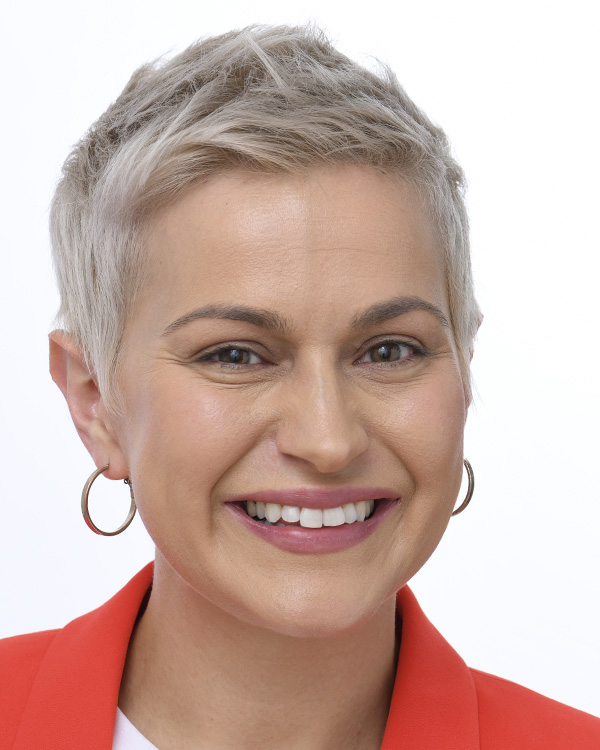






| Rank | Name | Country | Group | Speeches | |
|---|---|---|---|---|---|
| 1 |
|
Lukas Sieper | Germany DE | Renew Europe (Renew) | 494 |
| 2 |
|
Juan Fernando López Aguilar | Spain ES | Progressive Alliance of Socialists and Democrats (S&D) | 463 |
| 3 |
|
Sebastian Tynkkynen | Finland FI | European Conservatives and Reformists (ECR) | 460 |
| 4 |
|
João Oliveira | Portugal PT | The Left in the European Parliament (GUE/NGL) | 288 |
| 5 |
|
Vytenis Povilas Andriukaitis | Lithuania LT | Progressive Alliance of Socialists and Democrats (S&D) | 276 |
All Speeches (116)
One year after the 7 October terrorist attacks by Hamas (debate)
Date:
07.10.2024 18:26
| Language: EN
Speeches
Madam President, most of us know where we were on this day 12 months ago. But a year from now, where will we be? Will we be inside this very Chamber, marking the second anniversary of 7 October, while an escalating war continues to wage outside? Some 42 988 people have died, 105 400 people are injured and that, dear friends, is just what's been reported. While we must reflect on the past 12 months of loss and savagery, we must also urgently focus on the 12 months ahead of us. Sadly, we cannot change the events of the past, but we can commit ourselves to never allowing loss of innocent lives to happen again. If we fail to look at the next 12 months with hope and with absolute commitment to protecting innocent lives, well, we are failing, and we are simply failing as ourselves, in a privileged position here as EU representatives. Peace is possible, but we must take necessary and hard steps to get there. And it will be a shame on all of us if we simply allow repeated events to happen this time next year. Violence can't go on.
War in the Gaza Strip and the situation in the Middle-East (debate)
Date:
17.09.2024 20:08
| Language: EN
Speeches
Madam President, over six months ago, the Irish Government called for an urgent review of the EU-Israel Association Agreement. Time has since passed. Thousands of innocent Palestinians have been killed and innocent hostages on the Israeli side, not yet released. And yet the Commission and many Member States in the European Union have failed to answer any calls. The EU is Israel's largest trading partner, with the agreement worth over EUR 46 billion last year. And one of the essential components of the agreement is respect for human rights. I'm not the first MEP to say that tonight and I won't be the last. However, what is happening to Palestinians right now is a human-rights violation of its highest order. And we can call it many different things. I have used the term genocide because that is what I believe it is. Following on from a letter sent to President Ursula von der Leyen with my colleagues, I once again urgently call for immediate review of the agreement. The EU's response or dare I say, lack of response, over these some 345 days is a defining moment for us all. What began as the world's most successful peace project cannot now turn its back on one of the most violent and lethal atrocities of the 21st century.
War in the Gaza Strip and the need to reach a ceasefire, including recent developments in the region (debate)
Date:
27.02.2024 16:51
| Language: EN
Speeches
Madam President, over 30 000 lives have been lost over the last 143 days. The citizens of our European Union have spoken continuously, sharing their activism on the streets, speaking out on their social media platforms and leading. And they have been looking for you and I, their political leaders, particularly in the Commission and Council, in the European Union, to lead them. And what are we doing? The consistent and brutal violation of fundamental rights needs to end, and it’s obvious to us all that the violence will not end without USA, EU and UK intervention. In the name of the Palestinian women and children killed, we demand a permanent ceasefire in the name of the Palestinian women and children killed, we demand immediate humanitarian assistance, in particular food and medical supplies. In the name of the Palestinian women and children, I re-echo the Irish Government’s call to immediately review – may I add, end – the EU-Israel Association Agreement? We are witnessing a genocide. We must lead with our hearts, our humanity... (The President cut off the speaker)
Implementation report on the EU LGBTIQ Equality Strategy 2020-2025 (debate)
Date:
07.02.2024 19:54
| Language: EN
Speeches
Madam President, Commissioner, as always, here for a late-night debate on LGBTI rights. Thank you very much for your continued support. Colleagues, the right to equal treatment and non-discrimination is a fundamental right enshrined in the EU Treaties. On 8 March, Ireland will hold two referendums that directly impact the LGBTI+ community: one question focuses on the family and the second on care. These are progressive referendums that, in my eyes, will ensure the empowerment of our citizens to shape their country’s future, uphold democratic values, and promote equality, dignity and respect for all families. Let me focus on the first one, which is to amend Article 41. The positive impact in revising the definition of ‘family’ is to explicitly provide a wider concept of family beyond just the traditional concept of marriage. If passed, we will recognise the diversity of families that exist in our society, ensuring rainbow families, one-parent families and couples – regardless of sexual orientation or gender identity – are recognised in the Irish Constitution, acknowledging their rights as equal members of our society. I urge Irish people to continue to follow the path to progress, to vote and safeguard the rights for families and gender equality, and collectively continue to adapt our Constitution to a modern Europe in a modern European Union. Constitutional change sends a powerful message of acceptance, equality and inclusion. This is the type of Member State and EU change we need to see progress in the future of all and any LGBTI strategies. I welcome this review. I’m just always disappointed – and I’m going to use my last few seconds here – to say that at 8 o’clock at night yet again on a Wednesday of plenary, we have about less than 30 colleagues, led by Commissioner Dalli, in probably one of the most politically incised conversations we have in our time. LGBTQ+ communities, minority groups, people who are seen as ‘other’ will be used as a political ping pong game. And it’s up to us 30 and hopefully many more allies to end this ridicule and injustice for all.
The fight against hate speech and disinformation: responsibility of social platforms within the Digital Services Act (topical debate)
Date:
07.02.2024 15:46
| Language: EN
Speeches
Madam President, Commissioner, parliamentarians, illegal hate speech has no place in our society online or offline. Illegal hate speech needs to be met with a level of punishment set at EU level. In Ireland, the Oireachtas is currently working on a new criminal justice bill specifically dedicated to hate speech. In December, our capital city of Dublin witnessed riots which were motivated by hate and by violence, fuelled by those who want to see us divided. Those who purposely peddle hate speech, who incite violence, have become smarter, unfortunately. They use social media platforms as a tool to take advantage of people by bombarding them with false information or by dressing their hate speech in subtle language, so the line between freedom of speech and hatred is blurred. Elon Musk has tried to create outrage by saying that the Digital Services Act will result in armed police storming people's houses. He can pretend that he defends free speech, but do not be confused: he and some others who shout against this legislation are focused only on their own self-interests. We cannot allow them to continue to be unchecked. We must ensure that the Digital Services Act, another law introduced to eradicate hate speech, holds those who continue to undermine our democracy, our equality and our peace to account.
Addressing urgent skills shortages and finding the right talents to boost job creation (European Year of Skills) (debate)
Date:
17.01.2024 21:51
| Language: EN
Speeches
Madam President, digital literacy is not just a specific and lucrative job skill set. It is also part of understanding and navigating the world we live in. If we are to remain competitive, we need to keep pace with the evolving digital world. Member States, like my own, Ireland, have taken steps in developing a digital inclusion roadmap, which is working to increase digital literacy to 80% by 2030. A major gap I do see though, and continuously see, is in the gender digital divide. We need more policies and programmes like the Women Reboot programme, designed for women who have taken time out of their career in technology and are ready to reignite their careers in a unique, supportive environment that considers the specific needs and challenges faced by women to ensure inclusivity and equality in the digital landscape. Digital upskilling is essential for women in closing gender gaps in employment and income, offering access to greater opportunities, and thus for empowering women to shape their own future.
Gender aspects of the rising cost of living and the impact of the energy crisis (debate)
Date:
17.01.2024 21:05
| Language: EN
Speeches
Madam President, Commissioner, gender has a cost, and this cost is referred to as ‘pink tax’, a form of discriminatory pricing based on gender-targeting products and services for women. On the surface, it might seem like a trivial concern, but closer examination reveals a system that perpetrates gender-based economic inequality. Items such as razors, deodorants and dry cleaning, when marketed towards women, more often come from a higher price tag compared to the male targeted counterparts. Period products, which are essential health products, fall victim to the pink tax, resulting in inflated prices solely because of their gender association. This discriminatory pricing exacerbates period poverty and leaves many unable to afford these necessary items. Breaking the bank for essential products seems wrong, don’t you think, In today’s 2024 era? Addressing the pink tax requires a collective effort. Transparency in pricing and challenging companies to re-evaluate their practices is crucial. No one should bear a price tag for their gender, and it is time to put an end to pink tax too.
Quality jobs in a competitive future-oriented social market economy (topical debate)
Date:
17.01.2024 13:23
| Language: EN
Speeches
Mr President, Union strives to stay competitive on the global stage, we must not forget or take for granted the pivotal role that quality jobs must hold across industries and sectors in shaping our future. Our policies must continue to support upskilling, innovation, research and development, with a robust digital infrastructure to develop cutting-edge industries and foster collaboration between academia, research institutions and businesses. But let me reiterate something I’ve said in this chamber many times before this debate: our policies are needed to ensure these quality jobs are more accessible and sustainable for women, and I welcome the Commissioner’s words on gender balance – because for women and mothers in the workforce, it’s simply not good enough. We need policies that break down barriers to allow women to re-enter the workforce after taking some time as a caregiver, policies that foster a workplace that values work-life balance, respects diverse family structures, ensures equal pay for equal work, and understands the unique challenges faced by working mothers. Gender equality isn’t just a social justice issue; it’s an economic imperative.
Jurisdiction, applicable law, recognition of decisions and acceptance of authentic instruments in matters of parenthood and creation of a European Certificate of Parenthood (debate)
Date:
13.12.2023 16:53
| Language: EN
Speeches
Mr President, Commissioner, it is quite a sad debate this evening, isn’t it? ‘Parenthood’, as defined by the Oxford Dictionary, is the state of being a parent and the responsibilities involved. Ironic, isn’t it? As, within the European Union, this definition only applies to some, not all. It’s a hard one to fathom, as you heard from my colleagues, that in 2023, blended families, those who adopt, those who go through altruistic surrogacy, and our rainbow families have limited to no protection nationally. I welcome the Parenthood Certificate, as it clarifies the rights as a parent and a family across the EU, while ensuring that children do not lose the protection of their parents. And our children deserve this protection. Just yesterday, the Irish Government announced legislation that will approve and recognise surrogacy arrangements. This means the parent or parents who have cared for and nurture their children, yet have not been legally recognised as parents, will finally be recognised as such. I commend the work done on the certificate, as it ensures an additional step forward for equality but we need to recognise national legislation and this EU certificate must also recognise LGBTI+ families. After tomorrow’s Parliament vote on this file, the final decision on this legislation will be taken by Member States, as family law sadly falls under national powers. And so, I plead with the Commission and all Member States to ensure that their national laws and policy reflects and supports all families, not just some. I say this in honour of baby Sarah.
EU strategy to assist young people facing the housing and cost of living crisis (topical debate)
Date:
13.12.2023 13:40
| Language: EN
Speeches
Madam President, Commissioner, the rising cost of living is affecting everyone, with people spending more of their income on basic living expenses such as housing, food and utilities. However, it is the younger generation who are more affected than most as they balance part-time jobs with lower wages, instability in these roles, and the struggle to find decent housing solutions relative to their work, study and circumstance. In many European cities, particularly capital cities and major urban areas, housing costs have surged, making it impossible for younger generations to afford homes. A record number are living at home with their parents with a sense of hopelessness. And how could they not feel hopeless when the average house price in Berlin is over EUR 700 000, Paris showing over EUR 1 million, and Dublin with a starting sale price of EUR 600 000. Since the financial crash, we’ve seen a shortage of construction workers. We have lost generations of apprentices who were forced to emigrate for work. Even now, we have significant delays and bureaucratic red tape in planning permissions, all leading to a slower pace of construction. These factors have contributed to the insufficient supply of homes in Ireland and across the EU. Periods of underinvestment in housing and the subsequent increase in demand due to population increases have exposed the need for more investment in the construction of new homes, revamping of derelict buildings and development zones that have not been built on for over a decade. This is a crisis and the EU must respond. The EU has supported initiatives as outlined by the Commissioner, like the affordable housing, energy efficiency and urban development and more is needed, specifically targeting our young people. Creating more affordable housing options is of utmost importance and we need a continued EU targeted strategy that enhances education and skills to develop a more skilled workforce, increase funding for affordable housing, continue with programmes like we have in Ireland for first-time buyers, even though opposition wants to cut it, and promote private sector investment in construction. I call on all of us, as a collective, to develop tangible solutions in Europe’s housing crisis. A home is more than a shelter. It is security.
Madam President, I wish to follow in the footsteps of my colleague MEP Cerdas by spending this time to remind our farm families and rural communities that, just as you and your families tend to your land on behalf of us Europeans, please also tend to the mental health also. Farmers’ hard work sustains us all, and yet, day in and day out, our farmers’ day can be overwhelming. It can be isolating, and face constant change in policy, driven here by the Parliament, leaving their mental health to be destroyed at times. A terrifying reality is that suicide ideation is twice as high among farmers than in the general population. So I’m pleading to all our farmers to break the silence, the stigma and the fear, and ask for help. In my own country of Ireland, we have taken steps in the right direction with programmes such as ‘On Firm Ground’ and ‘Make the Move’, and research recently done by UCD School of Agriculture and Food. But I plead with the Commission today to make mental health a real political priority. We need mental health initiatives and continuous funding at an EU level to stop death by suicide, and substantially support our farmers, colleagues, friends and families faced with this silent pandemic in our society today.
International day for the elimination of violence against women (debate)
Date:
23.11.2023 10:23
| Language: EN
Speeches
Mr President, there will always be more tears, more women murdered by their partners, women kidnapped and tortured in war zones, women raped by strangers. Femicide, female genital mutilation, sexual assault, revenge porn, online abuse – women live in fear. Irishwoman Ashling Murphy went for a very simple run on a bright Wednesday afternoon in January, and she was one of 12 women murdered in Ireland last year. Every year we shed tears over senseless and inhumane acts of violence against women, and there are times where I wonder whether we have become desensitised to it all. Certainly, my colleague who spoke before me has no emotion at all towards us or women who lose their lives. Many women no longer feel safe when they are out for a walk or waiting for a bus. For many, home is not even safe. Most of us know someone who’s been sexually assaulted. More and more of us are recognising that we or people we know have experienced domestic or emotional abuse, and those numbers are rising. And there are tears. Fearful, empathetic, angry tears. There are always more victims. There are always more women we have failed to protect. And today, let us take the time to recognise that we have not made European women feel safe. And let us take a moment to recognise the fear still remains. Let us also take those tears, that emotion, that anger, and turn it into change and fundamentally call out the nonsensical commentary from the extreme right, like my colleague before. We cannot drag our heels on the Violence against Women Directive, and I call on EU governments – Spanish missing here today – to push for an agreement on this immediately if we are serious about protecting women and young girls.
Madam President, Commissioner, colleagues, many of us in this Chamber have discussed at length the plight of people living in the silent pandemic that is our mental health crisis. While the EU institutions have been more open to discussing the stigma and discrimination faced by people – thanks to Commissioner Kyriakides and her department’s communication prioritising sound mental health for all – are we doing enough? Harrowing statistics outlined by leading agencies like the WHO, UNICEF, Mental Health Europe are telling us, are screaming at us that people’s mental health is getting worse, drastically worse. We live in a European Union where death by suicide is a leading cause of death for our young people. We need more horizontal planning and funding. The Commission has the responsibility to examine all relevant possibilities to this approach, irrespective of EU competency, and we must urgently create an EU mental health strategy that works for all. Shifting focus to EU workplaces, rapid technological advancements, environmental and societal changes, and sadly, threats of terrorist attacks and raging wars are affecting and damaging the ability of people to cope. Reports tell us that 50 % of European workers identify stress that is so common that it is contributing to over half of the absenteeism in our workplaces. Therefore, mental health must be included in the Occupational Health and Safety Directive. You will hear other colleagues call for this. Good mental health and well-being at work is fundamental to ensuring quality of life for every worker and their family because we take our mental health home and we take it to the workplace, as well as positive economic outcomes for society as a whole. Only by firmly placing psychosocial aspects of work at the heart of the new EU Occupational Health and Safety Framework will we really create tangible benefits that will impact workers and their families right across our European Union.
Situation of Ukrainian women refugees, including access to SRHR support (debate)
Date:
17.10.2023 21:09
| Language: EN
Answers
Thank you very much, colleague, and thank you for giving me an opportunity to highlight, even within the EU, our EU citizens – again disproportionately affecting women – in my country of Ireland have been underserved at a national, local and an EU level in terms of access to sexual reproductive healthcare. Many are still fleeing to the United Kingdom or further afield, many are not seeking and getting the support they need in their local GP or hospital. And unfortunately, we have a very darkened history of such. When you look at the clerical abuses and the institutional abuses of the Magdalene Laundries, of the mother and baby homes of other institutions where we’ve swept the support around sexual abuse, sexual violence, the requirement for abortions, and the decision by women to have a choice over their bodies further afield. So we know too well what many of these women are going through.
Situation of Ukrainian women refugees, including access to SRHR support (debate)
Date:
17.10.2023 21:06
| Language: EN
Speeches
Mr President, colleagues, Commissioner, a report by the United Nations outlined that Russian forces have committed an array of war crimes, including torture, rape and other acts of sexual violence against Ukrainian civilians. And in the face of this extremism, this barbarism, millions of Ukrainian women and girls are forced to face the aftermath of this violence and make impossible decisions. For refugees who have experienced this violence, a lack of health care, a removal of inclusive reproductive care, forces them to return to Ukraine and return to their war-torn country to access essential reproductive health care, including maternal health and abortion care – all of this because they cannot get access legally in all European countries. These women are victims and survivors of violence, dealing with compounding trauma, health scares and concerns, mental health damages and supports – the slew of endless mental and physical health conditions, all without the basic services and support they deserve from us in the EU. The provision of sexual reproductive health care saves women’s and girls’ lives, and we cannot leave anyone behind. (The speaker agreed to take a blue-card question)
The spread of ‘anti-LGBTIQ’ propaganda bills by populist parties and governments in Europe (debate)
Date:
04.10.2023 19:32
| Language: EN
Speeches
Madam President, today, human rights in Europe are in great danger as we witness the spread of anti-LGBTIQ propaganda by populist parties and governments, both online and offline. Not only does anti-LGBTIQ propaganda threaten the fundamental human rights of European citizens, it breaches EU law and undermines core EU values of freedom and equality. And let me share some harrowing reports. In Belgium in August, a study outlined one in four LGBTI+ people have been subject to threats or physical assault in Slovakia. Last October, two young men were murdered by a gunman outside one of Bratislava’s queer bars. We debated it right here in this house. In Finland this past August, in two different towns, where pride parades were being celebrated, homemade bombs were detonated. In my own country of Ireland, last year, two men were brutally murdered in separate homophobic attacks in the town of Sligo. And these are just what made the headlines. Growing abuse, attacks on the streets, discrimination online, local and national governments reneging, rolling back financial support for organisations dedicated to our rainbow communities – hell, even here in this House, politicians use in rhetoric that gay people are paedophiles and groomers. We are witnessing this anti-LGBTI+ rhetoric and it’s destroying the freedom and equality of our citizens. We are witnessing it, but our rainbow community are feeling it and are living it. We’ve a responsibility to stand together as Member States united and determined to protect European citizens from discrimination, irrespective of their sexuality or gender identity. And I call on all Members of this Parliament, of the Commission and the Council to protect fundamental human rights, to support the community and to denounce the spread of any anti-LGBTI propaganda once and for all.
Madam President, just as our debate started, not so long ago, a protest led by the Union of Students in Ireland marched with hundreds of students to Leinster House, our government building, in protest of adequate and affordable housing. They share their lived experiences of couch-surfing, exorbitant rent prices, lack of dedicated university student accommodation, living in their cars, travelling over eight hours a day to attend their course. This crisis does not just face Irish students, but all our students across the EU. Housing is now the highest item of expenditure for European citizens, affecting their well-being, mental health and quality of life. Young people and families need certainty and housing security. I acknowledge that the Commission has approved under EU state aid rules an EUR 450 million Irish scheme to support the construction of apartments to be sold to buyers intending to reside in the properties. But of course we need more, and our students need more. EU policies, funding programmes and financial instruments can, and need to, make a real impact, particularly for our young people.
Recommendations for reform of the European Parliament’s rules on transparency, integrity, accountability and anti-corruption (debate)
Date:
12.07.2023 19:46
| Language: EN
Speeches
Madam President, our political integrity cannot exist without transparency. Without transparency, integrity and accountability, our ability to lead is questionable. The laws that we can pass can be picked apart, and the laws to protect the human rights of citizens are questioned, and rightly so. We can never be complacent; as policy makers with the trust of our citizens, we are accountable to those we represent. Which is why I, along with many others, were incredibly disappointed after scandals brought our democratic institution into disarray. We must rebuild the trust of our citizens. I welcome the Special Committee’s work on behalf of this House to pinpoint any and all issues. As MEPs, we need to ensure our transparency records are updated and public. As MEPs, we need to ensure our financial records are in compliance with the requirements set by this House. As MEPs, we need to ensure we are not a driver of misinformation or disinformation, especially online. We need to ensure the culture in this House reflects what we broadcast outside of this House. I will continue to demand and defend that transparency, integrity and accountability are at the centre of our European Union for our citizens, most importantly.
Fighting cyberbullying of young people across the EU (debate)
Date:
10.05.2023 19:10
| Language: EN
Speeches
–Mr President, ‘It’s not a criminal offence.’ This is what police said to Jackie Fox after her daughter Nicole had suffered extreme torment which resulted in her ending her life. Jackie’s dedication to ensuring that Coco’s law was delivered in Ireland has ensured that what is a crime offline is made a crime online. But as we speak, thousands of young Europeans are living with cyberbullying, being threatened with violence, being told to end their lives. Suicide is the second leading cause of death for young people under the age of 19 in our EU. What does that say about our policies if our young Europeans have nowhere to turn to for protection? We cannot allow them and their families to go through this trauma and heartbreak. Online bullying will not stop without legal consequences. EU legislation on cyberviolence and cyberbullying cannot wait. And I ask you all to please ensure Coco’s law is put in place throughout our EU in the name ‘Coco’s Law’ for Jackie and the spirit of her daughter, Nicole.
Universal decriminalization of homosexuality, in light of recent developments in Uganda (debate)
Date:
19.04.2023 18:33
| Language: EN
Speeches
Mr President, the Universal Declaration of Human Rights states that all human beings are born free and equal in dignity and rights, without distinction of any kind, regardless of their sexual orientation or gender identity. Currently, as mentioned, there are 64 countries that have laws that criminalise homosexuality. Homosexuality is already illegal in Uganda, and last month we saw the parliament in Uganda vote to strengthen anti—LGBTQI laws. Members of the LGBTQI community in Uganda now face up to life imprisonment. This bill is an assault. It’s an assault on freedom and human dignity, and seeks to further institutionalise discrimination, hatred and prejudice. This bill could also stigmatise HIV prevention efforts and criminalise people with HIV regardless – even if they’re heterosexual or, of course, homosexual. As an Irish MEP, I am reminded quite sadly that homosexuality was only decriminalised 30 years ago. It was an Irish senator’s – Senator David Norris – landmark case at the European Court of Human Rights, where it was ruled that Ireland’s criminalisation violated the right to privacy in personal affairs. We as a European Union must always stand for the protection of fundamental rights and the rights of LGBTQI people, both within the EU and across the world. Enough is enough. I’m tired of saying this to an empty plenary, but I do hope our LGBTI community in Uganda and across those 64 countries hear us united on this.
Mr President, Commissioner, colleagues, the EU Global Health Strategy aims to ensure our health policies protect our citizens in the best possible way, and I welcome the Health in All Policies. A coordinated approach between EU Member States serves our citizens best when it comes to health and social policy. However, it is fundamentally lacking, I believe, when it comes to the protection of our citizens mental health. Our health services and facilities are not fit for purpose when it comes to addressing both preventative and reactive mental healthcare. In France, the incidence of depression has doubled in the years since the beginning of the pandemic, and the rates of attempted suicide are among the highest in Europe. Mental health care in Poland is described as being in a permanent state of crisis. Rates of death by suicide remain much higher in Polish men compared to the EU average. In my own country of Ireland, 1 in 10 adults have attempted to die by suicide. Reports show in EU right now, the second-leading cause of death for our young people is death by suicide. Across the EU, our spending on mental health remains low, and charities and civil society organisations have plugged the gap for far too long. If we are truly to protect people’s physical and mental health in the EU, strategies on health need to include such and finally end the underinvestment in mental health services and facilities.
Question Time (Commission) - Legacy of the European Year of Youth
Date:
18.04.2023 15:55
| Language: EN
Speeches
Madam President, Commissioner Gabriel, good afternoon to you and your team and colleagues here. The objective of our 2022 European Year of Youth was to shine a light on the importance of Europe’s youth in building a better future, a brighter future, and to very much put them at the centre of decision-making. Yearly youth conferences and events should take place across all four corners of our Union, really fostering local debates and encouraging young people to give their valued input into developing policy here that is debated and passed. And in September I was delighted to welcome four aspiring parliamentarians from Midlands—North—West constituency in Ireland to the Parliament as part of the EPP’s Youth Week. And I saw first-hand their commitment: our young people having to really put Europeans’ future at the core on the table, and hear their invaluable perspectives that they offer. I would like to ask the Commissioner, the youth unemployment rate stands at 13% in the EU. That’s over double the overall EU unemployment rate, and again I would like to ask how they will make vocational education and training programmes more visible, accessible and attractive to really showcase the wealth of opportunities that can be offered at national and at EU level.
Strengthening the application of the principle of equal pay for equal work or work of equal value between men and women (debate)
Date:
30.03.2023 09:20
| Language: EN
Speeches
Mr President, good morning, colleagues, Commissioner, what a day. Today, the gender pay gap in the EU stands at just under 13 % – 12.7 % – but this directive is going to change that. This pay gap remains unexplained for many and cannot be linked to the individual worker, education or working time. And we need this directive, as greater levels of pay transparency will uncover unjustified gender-based differences and empower the victims – many victims – of pay discrimination to seek redress. Our workers need the tools to compare salaries and ensure that they are paid equally for the work that they do, and this directive is that tool. With Ireland celebrating its 50th anniversary as a member of the EU, we can reflect on the leading role the EU has played in striving for gender equality. We must not forget that it was the EU law when we signed in 1973 which forced Ireland to abolish the Marriage Bar – an unjust piece of legislation which pushed thousands of Irish women out of the workforce based solely on their marriage status. Today, that struggle for gender equality reaches another milestone. It’s time we finally deliver on the promises of equal pay – a founding principle of the European Union since the 1957 Treaty of Rome. We, as a European Parliament, must legislate for income equality and eradicate the gender pay gap, once and for all. Ladies watching and sitting in the chamber, particularly those up here in the gallery: this today does not have to be an exception; it has to be the norm. In about a year’s time, we will go to the polls at European level, and many countries, Irish country myself, and many European countries will ask people to put their names forward for local elections. This is the time to see the 50 % in this chamber and across the European Union. Let this not be the exception. Let this be the norm.
Combating discrimination in the EU - the long-awaited horizontal anti-discrimination directive (debate)
Date:
15.03.2023 21:33
| Language: EN
Speeches
Mr President, Article 14 of our European Convention on Human Rights specifically outlines our right to not face discrimination, and yet, many members of our society face discrimination every single day. In Ireland, people from minority backgrounds like our travelling community, our LGBTI+ community are much more likely to face and experience discrimination in their everyday lives. While we can continue to implement laws gradually, creating separate rules for different grounds of discrimination creates significant barriers for people. A single directive would not only be easier to implement, but it would also ensure that our citizens can clearly understand their rights. If we cannot provide our citizens with a comprehensive framework which protects our citizens against discrimination, how can we ever make progress? Commissioner, colleagues, I put to you: equality and discrimination are two sides of the same coin. Often in this chamber, late at night, we discuss the importance of equality, of fundamental rights, of our European values, and we cannot allow our Member States to continuously put a halt on progress. We’ve three presidencies left under this mandate, three chances for EU leaders to push to unblock this directive. There has been discussion amongst Member States, as already shared, about separating parts of this directive, as they believe some parts will be easier to introduce than others. I call this utter nonsense. All 500 million citizens deserve equality today. All European citizens deserve the same standing and respect within our EU. We need to move. We need to unblock this directive. It is our citizens who are at risk if we don’t get this right. May I use the last ten seconds to acknowledge Commissioner Dalli and her team for continuously calling for this directive to be unblocked, one of the rare few commissioners to do so.
The EU priorities for the 67th session of the UN Commission on the Status of Women (debate)
Date:
14.02.2023 15:05
| Language: EN
Speeches
Mr President, Commissioner, colleagues, this year I welcome the UN’s focus on utilising digital education to achieve gender equality and empower women and girls. Eighty-five per cent of our jobs today won’t exist in seven years due to digital growth. Over half of our Member States include digital skills in their primary education curriculum, and it’s welcomed. But while we push to excel our digital footprints, we must ensure the safety of women and girls online. Research shows 1 in 10 women over the age of 15 in our European Union have experienced online violence. Therefore, online safety is urgently required and needs to play a central part in the teaching of digital skills. In order to truly and fully empower our young people, we must create a safe space to work, study and connect through online platforms. If we are ever to achieve gender equality for our young women, which they so richly deserve, we must eradicate gender—based violence online also.