
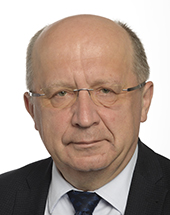


| Rank | Name | Country | Group | Speeches | |
|---|---|---|---|---|---|
| 1 |

|
Lukas Sieper | Germany DE | Renew Europe (Renew) | 494 |
| 2 |

|
Juan Fernando López Aguilar | Spain ES | Progressive Alliance of Socialists and Democrats (S&D) | 463 |
| 3 |

|
Sebastian Tynkkynen | Finland FI | European Conservatives and Reformists (ECR) | 460 |
| 4 |

|
João Oliveira | Portugal PT | The Left in the European Parliament (GUE/NGL) | 288 |
| 5 |

|
Vytenis Povilas Andriukaitis | Lithuania LT | Progressive Alliance of Socialists and Democrats (S&D) | 276 |
All Speeches (114)
Madam President, the European Union is hit by two geopolitical crises: Russia’s war against Ukraine and Hamas’ attack against Israel. The reason of the first crisis is our geopolitical mistakes in the past. Ukraine was left in the grey zone of geopolitical security without clear perspective of integration towards the West. If the EU wants really to play an important geopolitical role worldwide, first of all, it needs to effectively realise its most important strategic responsibility to take care of stability, democracy and the spread of prosperity in its own neighbourhood. That can be achieved first of all by enlargement of the EU. This is the most powerful instrument for neighbourhood transformation, but unfortunately, quite often the EU forgets how powerful it can be. From another side, the EU can become geopolitically strong. We shall get rid of our impotence and we shall start to really defend our external borders, and we shall start to decisively fight international terrorism without the difference whom they are attacking Arabs, our citizens or Israeli. Let us make the European Union great again.
The despicable terrorist attacks by Hamas against Israel, Israel’s right to defend itself in line with humanitarian and international law and the humanitarian situation in Gaza (debate)
Date:
18.10.2023 10:54
| Language: EN
Speeches
Mr President, dear colleagues, it is not enough to say that Israel has the right to defend itself. Our position should be very clear. Hamas needs to be destroyed and eliminated as a terrorist organisation. That should be done not only by Israel but by all the democratic community. There is no other way. Like was done with ISIS and al-Qaeda. Second, in our war against terrorism, the life of civilians should be protected. Humanitarian assistance for civilians should be provided. But there is no way how Hamas can be destroyed in a peaceful way. There is no miracle solution. There will be collateral damage and victims. But that is the price of our war against terrorism. Today, the alternative is very clear: either we shall destroy terrorism or terrorism will destroy us.
Mr President, dear colleagues, the fact is that Russia still is able to continue and to finance its war against Ukraine. Russia recently announced that in 2024 its defence budget will be increased by nearly 70% and will reach EUR 107 billion. From the very beginning of the war, we introduced sanctions on Russian oil and gas exports, as the major source of Russian financial income. First of all, of course we need to see that those sanctions are working: Russia gets two times less income from exports of gas and oil than they were receiving before the war. The most painful sanctions were established last December with the introduction of the oil price cap, since the oil is bringing the biggest amount of income. Despite the fact that the price cap sanctions hit Russian incomes very heavily, still Russia is able to get around EUR 700 million a day from its fossil fuel exports, and the EU is still sending to Russia around EUR 2 billion per month for the import of oil and gas. It is time for us to look at how we can increase the effectiveness of our sanctions policy, especially on gas and oil. I would like just to name the next steps what we need to do. First, to further lower the cap on the crude oil price from the current USD 60 per barrel to USD 30 per barrel. Second, to impose an embargo on Russian LNG imports. Third, to introduce restrictions on fuel imports if fuels are produced by third countries using Russian oil. Fourth, to introduce a price cap on Russian ammonium fertiliser exports. Fifth, to prohibit trans-shipment of Russian oil and LNG through EU territorial waters and exclusive economic zones. Six, to introduce restrictions on European tanker services, on sale of tankers, as well as on European insurance services for tankers, if these are used to export Russian oil. And seventh, to introduce an enforced and centralised EU-level oversight of sanctions implementation. In addition, let’s introduce sanctions on companies which are building the Russian Arctic-2 LNG terminal. Let’s introduce sanctions on exports of Russian aluminium and on Rosatom and exports of nuclear fuel. It depends on us if Russia will continue to be able to finance its war.
Mr President, dear colleagues, today we are discussing one of the most important European Union geopolitical initiatives. I can just congratulate the Commission on the proposal to establish a Ukraine facility and to allocate EUR 50 billion for the period of 2024-2027. But as the Commission put into explanatory notes, there will be a need of EUR 384 billion during the next 10 years. That is why a facility with EUR 50 billion is just the beginning. We need to see from where and when additional financial resources will come, and it is time to make a bold decision on counter measures and to confiscate all the EUR 300 billion of frozen Russian assets. In addition, we need to be very clear with the establishment of needed institutional architecture for the whole, almost EUR 0.5 trillion-reconstruction plan. From my point of view, because of the geopolitical significance of the whole reconstruction, there is a need for a special dedicated EU agency, like it was done with the EU Agency for Reconstruction of the Western Balkans. Also, there is a need of special high-level EU envoy for reconstruction, like the Americans did with the appointment of Secretary Pritzker for such a task. I see also a need of a clearer IPAIII-type framework in the facility, since it is declared that this facility also will replace the IPA instrument. Now, we need to approve the EUR 50 billion-instrument. But looking into the future, we need more: more money and more effective institutional arrangement on the EU side.
Mr President, dear colleagues, Moldova is not only the country which is showing great strength in reforming itself, in building a successful democratic country, but also is a litmus test for us, for the EU itself. It’s obvious that Moldova and Ukraine deserve to be invited at the end of this year to start negotiations for the membership in EU. That would be the major step forward and that is needed not only for Moldova or Ukraine, but for the EU itself. Those countries cannot be left anymore in the ‘grey geopolitical’ zone, because such an EU approach to Moldova and Ukraine during the last decades created temptation for Putin to start a military invasion into Ukraine. That is why it is important not only to start negotiations, it is very important to have an ambitious agenda to conclude negotiations within the next three or four years, like it was done with Central Europe and the Baltic States. For that to happen, first of all we need to bring back the trust among the candidate countries and among ourselves that enlargement really can happen. We allowed such a trust to be lost in the Western Balkans. Moldova can be a good possibility for us to bring back this trust in enlargement, with Moldova becoming an EU member by 2030, without any temptations of gradual integration on our side.
Situation in Nagorno-Karabakh after Azerbaijan’s attack and the continuing threats against Armenia (debate)
Date:
03.10.2023 17:51
| Language: EN
Speeches
Madam President, I will not repeat what others have said, but I would like to stress that the future of democracy in Armenia is at stake and is deliberately targeted by the Kremlin with assistance of Azerbaijan and partly by Turkey. That is why the EU needs to show its unwavering support to the democratically elected Pashinyan government, which clearly is making steps to distance Armenia from Russia. What is important now? First, by the real perspective of very harsh EU sanctions Azerbaijan needs to be stopped from any attempts to build an extraterritorial transit corridor from Nakhichevan to Azerbaijan. There is a possibility to have a civilized transit arrangement, based on the example of the EU rules established for transit of Russian goods to Kaliningrad through Lithuania. Second, the EU needs to be ready to be open for much stronger security and economic cooperation with Armenia. It is absolutely clear that Russia will go for painful economic sanctions against Armenia. The EU needs to be ready to assist Armenia and to upgrade the CEPA agreement into an Association and Free Trade Agreement. Also, Prime Minister Pashinyan should be invited by the Commission President to visit Brussels and to make a statement at our plenary session.
Madam President, dear colleagues, the free choice of Belarussian people has been stolen by Lukashenko and freedom is denied. But even in such circumstances, Belarusians are making very important choices on their future. In August, the meeting of ‘New Belarus’ opposition community under the leadership of Sviatlana Tikhanovskaya has made a very important declaration on the membership of Belarus in the European Union. I want to quote from the declaration: ‘We, the democratic forces of Belarus, express our desire for the democratic development of our country and its membership in the European Union. Full membership of Belarus in the EU is a clear and unequivocal answer to the current challenges, which will allow future generations of Belarussians to live in a free and democratic Belarus’. It is a remarkable statement, which is changing the future of Belarus. Democratic Belarus belongs to Europe in the same way as Ukraine, Moldova or Lithuania belongs, and we need to guarantee such a future for Belarusian people. Our support for such a choice should start from simple steps: to put representatives of ‘New Belarus’ into those chairs, which till now we are keeping empty after we kicked out dictator Lukashenko. First of all, into delegations for Belarusian relations with the European Parliament. In addition, Sviatlana Tikhanovskaya should be invited to represent ‘New Belarus’ during Eastern Partnership summits. After that, Commission, together with representatives of ‘New Belarus’, should start to prepare the draft of an Association Agreement with Belarus, which will be signed when Belarus will return to democracy. (The speaker used a slogan in a non-EU language) future Member of the European Union.
Ukrainian grain exports after Russia’s exit from the Black Sea Grain Initiative (debate)
Date:
12.09.2023 19:30
| Language: EN
Speeches
Madam President, dear colleagues, according to it’s association agreement and the Commission decisions, Ukraine has the legal right to sell its goods in the single market of the European Union. EU Member States have the legal obligation not to create artificial obstacles for Ukrainian goods, including grain, to enter single market. There are also our moral obligations to Ukrainians, who are defending all of us, including our farmers, against Russian aggression. Our moral obligation is to support Ukraine not only militarily, but also by all economic means. Unfortunately, some Central European governments exchange moral and legal obligations to domestic populism. The Commission needs to stop the violation of our legal and backsliding on our moral obligations. We should look at how to help Ukraine to become an EU member and part of EU single market and we should not be afraid of normal economic competition with Ukrainian producers.
Question Time (VPC/HR) - Relations between Armenia and Azerbaijan and the situation in Nagorno-Karabakh and at the Lachin Corridor
Date:
13.06.2023 16:25
| Language: EN
Speeches
High Representative, as you have mentioned, the issue of relations in between Armenia and Azerbaijan is really very complicated. We have seen two wars. One was won by Armenia, then Azerbaijan was complaining that territories are occupied; now it’s won by Azerbaijan. Of course, there is still a lot of pain. So that is why really I would like to use this opportunity to praise Armenian Prime Minister Pashinyan for his very clear statement on recognition of Azerbaijan sovereignty on Karabakh territory. That is really what now possibly will open the doors for settlement of a long-term peace agreement. I would like to also praise the EU Council President for his engagement in these negotiations. But as was mentioned, really one issue still is pending. It is very clear that Armenians are worried about the human rights of Armenian people who are living in Karabakh. My question would be very simple. I understand that Armenia do not trust Azeri promises to keep those human rights under protection. Is it possible that EU would play some kind of very specific role trying to be in between and trying to settle down very clear in our agreements how those human rights can be protected?
Humanitarian and environmental consequences of the destruction of the Nova Kakhovka dam - Sustainable reconstruction and integration of Ukraine into the Euro-Atlantic community (debate)
Date:
13.06.2023 09:46
| Language: EN
Speeches
Mr President, dear colleagues, let me be blunt: the war was started not only because Putin is a criminal aggressor, but also because of our great strategic geopolitical mistakes in the past. The biggest mistake was to leave Ukraine for long decades in the grey zone, without clear membership perspective in NATO or European Union. That created temptation for Putin to imagine that both NATO and the EU are weak and afraid of him and that he can grab territories of Ukraine, but the West will continue its dialogue with Putin. Now it’s time for us to correct our past mistakes, which cost thousands of Ukrainian lives. Ukraine should get an invitation to join NATO during the Vilnius Summit and should become a member after the war, and Ukraine needs to start EU accession negotiations at the end of this year in order to conclude them before the end of this decade. This is the only way sustainable peace, which is needed for all of us, can be created on the European continent – because our policy of removing grey zones on European continent, in the end, will help Russia transformation back to normality and democracy.
Madam President, dear colleagues, let’s talk straight. All the complaints about Ukrainian cereals, it has very little to do with Ukraine itself. Let’s be clear: the European single market was opened for export of Ukrainian cereals one year ago. A year ago, the EU also decided to open transit solidarity lanes for Ukrainian grains when Russia closed traditional transit through the Black Sea. Most of those instruments were well functioning without big problems and complaints till the spring of this year. What has changed at the beginning of this year? Not EU policy or its implementation, but the global prices for cereals changed very radically in the course of last year. From the beginning of this year, they started to go down. If the global price for wheat before the war was USD 200 per tonne, in the middle of last year, it jumped up to USD 450 per tonne. European farmers, including farmers from Central Europe, were very happy with such a price and were forecasting that this price, in the spring of this year, will increase even more. But from the beginning of this year, the prices for grain went down in the same way as prices for oil, gas or fertilisers. Now the price for wheat is only USD 250. Farmers in Central Europe became very unhappy. The predicted profits evaporated. They started to look who can compensate that. The EU did it. But Ukrainian grain has nothing to do with such a global development. As a European, I feel ashamed that some EU Member States are behaving in such a way that it looks like that not-received profits are more important than survival of Ukraine.
Repression in Russia, in particular the cases of Vladimir Kara-Murza and Alexei Navalny
Date:
19.04.2023 19:43
| Language: EN
Speeches
Madam President, dear colleagues, there is no need to explain who Vladimir Kara-Murza is and what the Kremlin regime is doing with him when they put him into prison for 25 years because he was criticising the Kremlin’s war against Ukraine. I know Kara—Murza personally. I admired his fight for Global Magnitsky sanctions legislation, for democracy in Russia, for a different, for a normal Russia. With Vladimir we were dreaming about such a different Russia during our webinars of the Forum of the Friends of European Russia. He decided not to leave Russia. In the same way like Navalny, Yashin and others. He was twice poisoned. Now we know that it is normal Kremlin practice to poison its opponents. Navalny suffered the same. Both Navalny and Kara-Murza are facing a rapid deterioration of their health condition. The regime would be very happy if they would simply die while in prison. Boris Nemtsov, whom I knew also personally, earlier was simply killed. The Kremlin has waged two wars at the same time: a war of aggression against Ukraine and a war of oppression against the Russian people, against the opposition. We Europeans, we are living in the XXI century with humans rights, the rule of law, democracy. Putin is bringing Russia back to the years of Stalin, where instead of the rule of law, human rights or democracy there is only brutal persecution. Here the question comes to us: can we stay only as silent watchers, who are able to make only traditional bureaucratic statements of concern and deep concern? Kara-Murza, Navalny, Yashin, sacrifice and suffering, should be the strongest argument for a new type of our strategic fight for the freedom of oppressed people – at least on the European continent in Russia, in Belarus. All the prosecutors, judges and others, responsible for inhuman detentions and tortures should be personally named by the European Parliament and immediately included on the sanctions list. Second – it’s clear that only sanctions are not stopping the regime and its henchmen. What they are perpetrating may amount to crimes against humanity, and such crimes should be investigated by the ICC or a special tribunal. Nothing will be forgotten, nothing will be forgiven.
Children forcibly deported from Ukraine and the ICC arrest warrant for Vladimir Putin (debate)
Date:
19.04.2023 10:12
| Language: EN
Speeches
Mr President, dear colleagues, it is so important that the ICC issued an arrest warrant to President Putin with suspicions in this terrible war crime of children deportations. Not only the ICC, but also a special tribunal for crime of war aggression should do its job of justice. For that reason, a special tribunal should be established without delay, and the EU needs to play a leading role in implementing what this Parliament is demanding. Putin and Lukashenko also are perpetrating crimes against humanity when they are persecuting – in the most brutal ways – their domestic opponents. This is a conclusion of a recent report of the United Nations Human Rights Council. The crimes against humanity which Russian and Belarussian people are facing should be also investigated by the ICC or a special tribunal. The consequences of the ICC arrest warrant are clear. Nobody in the West should go for the dialogue with a war criminal and nobody from business or political elite around the war criminal in the Kremlin should expect an end of international isolation. Justice is coming, Mr Putin.
Madam President, dear colleagues, I would like to use this opportunity to remind us that on 17 March, two weeks ago, the International Criminal Court issued the arrest warrant to President Putin for the war crime of the unlawful deportation of Ukrainian children. Let us congratulate the ICC with this very important decision. Ukraine really deserves international justice against the inhuman and criminal behaviour of Putin’s regime. From another side, Madam President, I would like to remind you that some time ago this House overwhelmingly supported the establishment of a special tribunal for the crime of war aggression, which is the mother of all the war crimes, and asked EU institutions to lead the international process for establishment of such a tribunal. We are still awaiting for the implementation of our political will on the creation of special tribunal and, Madam President, we need your leadership for it to happen. Madam President, there is one more related and urgent issue. In two days’ time, Russia for the month of April will take a rotating Presidency in the Security Council of the United Nations. The question is very clear: can the war criminal head the United Nations Security Council? Democracies should boycott Security Council procedures while Russia will be in the Presidency and I would like to suggest that you should issue a special statement on behalf of all of us to support such an international boycott initiative.
The challenges facing the Republic of Moldova (debate)
Date:
14.03.2023 20:17
| Language: EN
Speeches
Well, first of all I know that the Government of Moldova is doing great reforms in order to become not only a candidate country but to start negotiations and to become a member of EU. That is not only in the interests of Moldova, but also of us. And that is why we need to give all the support which is needed. And since Moldova really is facing different challenges, including energy and budgetary ones. And as we have heard from the Commissioner, the Commission is supporting in such a way which is really very much needed for Moldova. So I see all the possibilities to have success of Moldova, both for Moldovan people and for us.
The challenges facing the Republic of Moldova (debate)
Date:
14.03.2023 20:14
| Language: EN
Speeches
Mr President, it is very clear that Kremlin is afraid of success of democracies in Ukraine and Moldova, because those successes can inspire Russian people to seek the same democratic development in Russia itself. That is why autocracy of Kremlin started military aggression against Ukraine and continuous hybrid aggression against Moldova. Kremlin is using oligarch Prigozhin, who is spending dirty money to hire mercenaries of Wagner group to attack Bakhmut in Ukraine. Kremlin also is using pro-Kremlin oligarch Ilan Shor in Moldova, who is openly spending dirty money to hire protesters against Maia Sandu’s government in Chișinău in order to destroy that government. We know how to help Ukraine, which is facing Kremlin military aggression: weapons, weapons and weapons. In order to help Moldova against Kremlin hybrid aggression, we need to use our most powerful geopolitical weapons: to start membership negotiations this year and implement ambitious integration, integration, integration. Kremlin needs to know that they will be defeated in both cases: in Ukraine and in Moldova. (The speaker agreed to respond to a blue-card speech)
Mr President, dear colleagues, we know very well how strongly the Georgian people want to join the EU. But today, Georgia as a State has a problem on the way to achieve such a strategic goal. And that problem has the name of Bidzina Ivanishvili. Unfortunately, formal and informal authorities in Georgia are united in their tactics to deliberately create new and new problems on that path of integration. That is why Mikheil Saakashvili and Nika Gvaramia are kept in prison. And that is why we recently witnessed a story with ‘foreign agents’ law. The initiative of foreign agents law was a deliberate political provocation of the Georgian authorities against the people of Georgia. Such a behaviour of authorities is absolutely opposite to what the EU is demanding from Georgia – to depolarise political life. It is good that Georgian people in the streets managed to defend their road towards integration, but we should not be naive. This is not the last political anti-European provocation of the authorities. The Prime Minister of Georgia, Mr Garibashvili, yesterday made an important statement. Quote: ‘The European Parliament would better take care of itself. 100 MEPs are involved in a corruption scandal. Their desire was and is to involve Georgia in the war and to destroy it together with Ukraine.’ The Kremlin should envy for such type of propaganda. But it does not lead to the candidate status. Despite that, we shall continue to stand together with Georgian people!
This is Europe - Debate with the President of Lithuania, Gitanas Nausėda (debate)
Date:
14.03.2023 11:08
| Language: EN
Speeches
Madam President, Your Excellency Mr President, dear colleagues, I would like to welcome the President of my country in this House, which in the European Union has the strongest institutional adherence to European values of democracy, human rights, liberty, solidarity and respect to dignity of each human being, despite what is his or her colour of the skin, and what is his or her sexual or political orientation. The European Union will be strong if it will be based on those values without compromises, if it will be based on those values not only here in the European Parliament or in some other EU institutions, but also on a national, regional and local level. This is the only way how those values can be established also on the whole European continent. Why is it so important to talk about those basic principles and values? Because this is the only way how sustainable peace can be established on the European continent, since there is a very well—known law of geopolitics: only democracies are not fighting with each other. That is why defence of those values everywhere in our Union and the spread of democracy and basic human values into the eastern side of European continent is the most important strategic geopolitical goal for all of us, and especially during this war. We need to recognise, all of us in the European Union: we are not perfect back home in this area. There are things which we need to improve and to strengthen, also in Lithuania. But today I want to elaborate on what our President was speaking about. What should our common strategic agenda be in order to assist the nations in the eastern part of the European continent to enjoy the same European values of democracy and human rights? I want to repeat: sustainable peace on European continent will be established only when Belarusian and Russian people will have a possibility to enjoy those values and to live in normal European conditions. Such a strategic agenda will be implemented only if we shall proceed with a very clear strategic action plan. First, Ukraine needs to decisively defeat Putin’s Russia during this year, and that will create possibilities for big political changes in Russia and Belarus. Our most important obligation: weapons, weapons, weapons… and sanctions. Second, the absolute geopolitical priority for you during this year: to start membership negotiations with Ukraine and Moldova. That would be the most powerful European geopolitical answer to Kremlin hybrid offensive activities in the region, especially in Moldova and perhaps also in Georgia. Third, the integration of Ukraine, Moldova and possibly Georgia towards the EU should be concluded till the end of this decade, since that is the only way how successful and prosperous democracies can be created in those countries. The success of those countries would be an inspiration for Belarusian and Russian societies to follow. Fourth, Ukraine needs to get membership in NATO, if not during the Vilnius summit this year, then during the Washington summit next year. It would help Russian people to abandon their dream to restore empire because Ukraine will be gone. Fifth, the EU needs to show clear perspective. Democratic Belarus will have possibility to integrate into the EU. Democratic Russia will have a special and very practical relationship with the EU. We Lithuanians want to be part of a European Union which is able to implement such a democracy action plan because this is an action plan for sustainable peace on the European continent.
The recent deterioration of the inhuman imprisonment conditions of Alexey Navalny and other political prisoners in Russia
Date:
15.02.2023 22:23
| Language: EN
Speeches
Madam President, I hope that everybody knows that since his arrest, Navalny has been subject to ill treatment, including torture, arbitrary punishment and psychologic pressure, including sleep deprivation and lack of medical care. Recently, as all of us have been informed, Navalny was moved to a ‘penal confinement cell’. His lawyers report his deteriorating health. Alexei Navalny was not allowed to have visits for the last eight months. New trial with new charges against Navalny is set for March or April, with risk of new prison sentence of up to 35 years. The behaviour of the Kremlin regime with political opponent and political prisoner Alexei Navalny is simply inhuman. It reveals the nature of the Kremlin regime, which is a clear brutal tyranny. Today Kremlin has the two major enemies: a democratic and free Ukraine and a freedom-loving, but freedom-denied Russian people. There is no hope that the Kremlin regime will come back to an endorsement of the principles of human rights and the rule of law. But it is clear that Putin very soon will be on trial, not only by special International Tribunal for the crime of war aggression, but also by the justice system of democratic Russia for the crimes against the Russian nation. We stand together in solidarity with Alexei Navalny, Vladimir Kara-Murza, Ilya Yashin, Aleksey Gorinov and all other brave Russian people and their families, with their personal sacrifice and in solidarity with their fight for democracy in Russia. We urge the EU institutions and the EU Member States to give all the support to those who are struggling for the freedom of the Russian nation. For us it is clear that very soon, both Ukraine and democracy in Russia will win, and both victories will be a victory for Alexey Navalny. Therefore, we call upon the EU and the whole democratic community of the West to have a clear strategy how to assist both victories: one of Ukraine and the other of democratic Russia. We are convinced that such a victory is the best action of our solidarity with Alexei Navalny and all the others who are fighting for the democratic future of Russia.
One year of Russia’s invasion and war of aggression against Ukraine (debate)
Date:
15.02.2023 10:27
| Language: EN
Speeches
Mr President, this war can be stopped tomorrow if Mr Putin will decide to withdraw his troops from Ukraine. However, since it is not realistic, the only way to end this international crime is to defeat Russia in the battlefield. The first year of a brutal war has shown that the combination of highly motivated Ukrainian defenders and the Western weapons are much stronger than the Russian military capacity. That is why the delivery of the Western weapons is the most crucial factor which can bring the end of this war. I repeat, it depends only on the West how long this bloody war will continue. I am convinced that all the possibilities to help Ukraine to achieve its victory during this year. For that to happen, the West has to stop being afraid of Russian defeat impact on the future of Russia. On the contrary, in order to have a sustainable peace on European continent, Russians need to be convinced to abandon their nostalgia of an empire. That will happen if Russia will be defeated in Ukraine, if Putin will be brought before the International Criminal Court, and if Ukraine will be invited to join NATO. Slava Ukraini!
Madam President, dear colleagues, the keys to a sustainable peace on the European continent are in the hands of Ukraine. Sustainable peace in Europe is possible only if Russian people will transform their country back to democracy, because democracies are not fighting each other. The West needs to have a strategy of how to assist such a transformation. First of all, Russia needs to be ‘deputinised’. This means the total military defeat of Russia, an international tribunal for Putin and an invitation for Ukraine to become a member of NATO. Such an invitation would send the most powerful signal to Russians that their dream to restore their empire is gone. From another side, the EU needs to assist Russians with the inspirational example of the success of Ukraine. Such a success of Ukraine can be created only through Ukraine’s integration into EU, just like the success story of the Central Europe was created. Ukraine’s geopolitical integration into the West is no less important than Leopards or Abrams for Ukraine’s defence because this is the only way to sustainable peace on the European continent. And that is why the summit should establish the ‘Integration Ramstein’ in order also to deliver integration.
The establishment of a tribunal on the crime of aggression against Ukraine (debate)
Date:
17.01.2023 21:01
| Language: EN
Speeches
Madam President, dear colleagues, if we want peace, those who are destroying peace should be punished, in a heavy way. Justice is needed not only for Ukrainians. Justice is needed for all of us. Justice is needed for peace. Such justice cannot be delayed, since justice delayed is justice denied. There are three types of crimes during the war: war aggression as such; war crimes as in Bucha; and crimes against humanity as a genocide. The crime of war aggression is called the ‘mother of all the war crimes’. It is a crime against peace and it is a leadership crime, since only the leadership of the state is deciding to start war aggression. War crimes and crimes against humanity are investigated by the ICC. But the ICC has no direct mandate to investigate the crime of war aggression. That is why we need a special tribunal, not only for Putin but also for Lukashenko, since he allowed territorial Belarus to be used for criminal Russian aggression. The way back to peace starts from the establishment of a special tribunal. At least let us not be late with the tribunal when still we are late with Leopards.
The EU’s response to the appalling attack against civilians in Dnipro : strengthening sanctions against the Putin regime and military support to Ukraine (debate)
Date:
17.01.2023 20:29
| Language: EN
Speeches
Madam President, dear colleagues, what we witnessed in Dnipro is pure and simple state terrorism. This terrorist attack reminded me of another terrorist attack on 11 September 2001, when Al-Qaeda attacked and destroyed the Twin Towers. I do not see any difference between those terrorist attacks and the aims of terrorists. I see only a big difference in how the West was and is reacting. In my view, the difference comes from the simple fact that al-Qaeda attacked big cities of the West while, for the time being, Putin – as a terrorist – is attacking only Ukrainian cities. Let’s not make a strategic mistake. It’s only a question of time until Kremlin terrorism will come to our cities. You cannot stop such terrorism just with statements of condemnation or statements of solidarity with the victims. I do not expect that NATO will be involved in the fight against this sort of terrorism like it was after the al-Qaeda attack. But I hope and expect that the EU in the end will manage at least to put the Wagner Group and other Russian military groups on the EU terrorist list, as was done with al-Qaeda. The Dnipro tragedy brings an additional argument that this cannot be delayed anymore.
Presentation of the programme of activities of the Swedish Presidency (debate)
Date:
17.01.2023 11:35
| Language: EN
Speeches
Madam President, I say to the Prime Minister and my dear Swedish colleagues: first of all I would like to congratulate the Swedish Prime Minister for such a clear statement on Ukraine, on Ukraine being a major strategic priority for the Swedish Presidency. And I would like to stress the importance of just a few points of this broad Ukraine agenda. It would be very important that during Swedish Presidency decisions should be made in order to start EU membership negotiations with Ukraine and Moldova during this year. We need to win not only military battles, but also political and geopolitical battles against Kremlin. Second, as it was mentioned by my colleagues during this week, the European Parliament, I hope, will pass a resolution on the establishment of a special tribunal for the crime of war aggression. I hope that Swedish Presidency, together with the Ukrainian authorities, will do everything for this tribunal to be established during this year. And the last point: after the Kremlin has made one more terrorist attack, this time against apartment buildings in Dnipro, I hope the Swedish Presidency will put Wagner and other Russian military groups on the EU list of terrorist organisations, as the European Parliament recently demanded. Good luck – lycka till.
The humanitarian situation in Ukraine due to Russia’s attacks against critical infrastructure and civilian areas (debate)
Date:
15.12.2022 10:27
| Language: EN
Speeches
Madam President, colleagues, Commissioner, of course, the best humanitarian assistance to Ukraine would be more arms deliveries – guns, guns, guns – because this is the only way this war can be ended in the near future. And the war brings humanitarian catastrophe to all the people of Ukraine. I would like to make just two comments on the humanitarian assistance issue, and what we need to do as the EU. Really, the EU is doing a lot, but I would say we need to stop talking about how much we did and how much we delivered – for example, 1 000 or whatever generators. We need to ask what the needs of Ukraine are – and for generators, 25 000 are needed – and how we are going to cover the difference between what is needed and what is delivered. That’s, I think, one of the most important issues for us. I would also like to see the EU coordinating the efforts of all the citizens of the EU who want to assist Ukraine. And in each village or city of the EU, everybody should know the phone number of the EU coordinator. Secondly, I would like to suggest the same idea as President Zelenskyy proposed at the very beginning of the war: that each EU Member State should take patronage of an individual region of Ukraine – for example, Estonia for Zhytomyr, Lithuania for Lutsk, and so on – and take care of the humanitarian assistance to that region especially. In order to achieve that, the EU needs to take the role of effective coordination between the EU Member States and the regions of Ukraine. We can do more!