
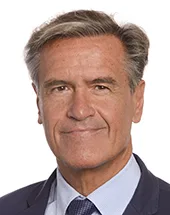
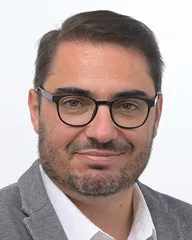
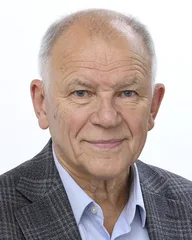
| Rank | Name | Country | Group | Speeches | |
|---|---|---|---|---|---|
| 1 |
|
Lukas Sieper | Germany DEU | Non-attached Members (NI) | 390 |
| 2 |
|
Juan Fernando López Aguilar | Spain ESP | Progressive Alliance of Socialists and Democrats (S&D) | 354 |
| 3 |
|
Sebastian Tynkkynen | Finland FIN | European Conservatives and Reformists (ECR) | 331 |
| 4 |
|
João Oliveira | Portugal PRT | The Left in the European Parliament (GUE/NGL) | 232 |
| 5 |
|
Vytenis Povilas Andriukaitis | Lithuania LTU | Progressive Alliance of Socialists and Democrats (S&D) | 227 |
All Contributions (57)
Building Europe's clean, independent and secure energy following the 2026 North Sea Summit (debate)
No text available
Urgent actions to revive EU competitiveness, deepen the EU Single Market and reduce the cost of living - from the Draghi report to reality (debate)
In the European Union, slow growth threatens Europe's ability to maintain low levels of inequality and among the most vulnerable countries is Bulgaria, where purchasing power is at the bottom of the European Union, almost a third of that of France and Germany. The gap between the regions in Bulgaria is widening and 20% of Bulgarian citizens cannot heat their homes and young people can hardly buy a home. What is happening here in the centre of Europe? In recent days, there have been conflicting messages about federalization, as well as about a two-speed Europe. This is already a recognition of the failure of cohesion policy. I see no ambition to counteract inequalities in the proposal of the new International Financial Framework. In it, cohesion policy and the common agricultural policy are in a common budget, for which both farmers and local authorities will have to compete. Ms von der Leyen just said that our strength lies in our economic power, but that means combining the advantages of all Member States to achieve a result.
Presentation of the European Affordable Housing Plan (debate)
No text available
Communication on the Democracy Shield (debate)
Mr President, in democratic societies, the right of association is fundamental. People should be able to freely organize and defend their causes. This is important and I respect the Commission's efforts, but democracy has a clear principle: Power is vested in institutions elected by citizens. Civil society has a role to play, but it cannot override the democratic mandate. If we are to introduce new mechanisms to defend democracy, the rules must be crystal clear. Uncertainty becomes an instrument of abuse. For example, who will determine which NGOs will observe the elections? Who will be responsible if they abuse this role? On the media, they must be free from both political influence and pressure from private bodies, including NGOs. We risk transferring power from democratically elected institutions to unelected organizations. This does not strengthen freedom, it only blurs its boundaries. If we really want to defend democracy, we must use tools that give clarity, transparency and balance, not those that can undermine the very foundation of our democratic system.
The ongoing assault on the democratic institutions and the rule of law in Bulgaria (topical debate)
Madam President, political interference against the independent judiciary in Bulgaria should not be allowed. What we are seeing today, however, is an attempt by one of the opposition parties to attack the independent judiciary. The occasion for today’s debate is the arrest of one of the mayors of ‘Continuing the Change’, who runs Bulgaria’s third largest city. There are reports of corruption against him, and the party leader even resigned over an investigation into corrupt practices in the capital. Now imagine, colleagues, a situation in which the institutions in Bulgaria had not reacted to the signals just because they were mayors of a formation that is opposition to the government. Unthinkable, isn't it? For many years, Bulgaria has received recommendations from the European Union on how to improve the fight against high-level corruption. What does the opposition offer? To turn a blind eye to corruption only because it is corruption, to constantly destroy trust in institutions, to question the judiciary. Colleagues, this path leads only to the collapse of statehood.
The EU’s role in supporting the recent peace efforts for Gaza and a two-state solution (debate)
Mr. President, President Trump's new peace plan brings real hope for a definitive end to the war in Gaza. It sets out clear steps for the release of hostages, the exchange of prisoners, the disarmament of Hamas, international governance and the reconstruction of Gaza. Thanks to this plan, all parties are now at the negotiating table and for the first time we are seeing real progress, supported by other key countries in the region. I welcome this plan and call on Hamas to fully accept it. Now is the time to choose peace over destruction, and I call on the European Commission to develop its own proposals and take a more active role in this process. We must be able to do more, because even after peace is achieved, Europe will be needed. Europe will be needed to protect civilians and support the reconstruction of Gaza.
State of the Union (debate)
Mrs von der Leyen, the success of the European Union lies in the strength and dignity of each Member State. During your visit to Bulgaria on August 31, the world news agencies came up with false information that your plane was hovering for 1 hour over Plovdiv due to a possible jamming of the GPS signal. You know that this false information caused a serious blow to the image of Bulgaria. So far, you have not commented. For 10 days now, the name of Bulgaria has been associated with this so-called "news". In this complex geopolitical situation, any misinformation can lead to dangerous consequences and reactions. Bulgaria is among the safest aviation zones. Therefore, please confirm from this rostrum that there was no breach of your security during this flight. Mrs von der Leyen, can you really confirm that there was no security breach, no security issue during your flight? Because Bulgarian aviation safety is part of European security.
Situation in the Middle East (debate)
Madam President, dear colleagues, in the Middle East, the crisis is spreading fast: from Palestine, to Lebanon, to Yemen, and now to Iran. People need urgent help, but peace feels farther away than ever. This is already our sixth debate on the Middle East since our new mandate began last July. And honestly, it feels like we keep saying the same things. We call for peace, we ask for action, but very little changes. Each time we meet, the situation gets worse, and each time our words stay the same. We are stuck in helpless debate while humanitarian help is very much needed, while lives are lost. So I ask our High Representative, when will we finally see a real EU plan for peace? We need strategy. The European Union cannot just watch from the sidelines. You must do more. And we must do it now.
EU support for a just, sustainable and comprehensive peace in Ukraine (debate)
Madam President, the attempt to impose peace by force in Ukraine is a path to an escalation of war with enormous consequences for European citizens. And the longer the fighting continues, the more Ukraine will lose both people and territories. That's the reality. For three years, the European Union has not sought a way to negotiate and stop the conflict. The new US administration is trying to stop the war, but Europe is acting as if it is sabotaging the negotiations, and the road to peace goes through the search for compromise solutions. There has been a decline in the European economy over the past five years. And what does Europe do? He's arming himself. Instead of making machines that make the lives of European citizens better, we are starting to produce tanks. Instead of talking about strategic security through diplomacy, we talk about nuclear weapons with ease. Europe, the most successful peace project since two world wars, today wants to take the path of war. No pasarán.
Safeguarding the access to democratic media, such as Radio Free Europe/Radio Liberty (debate)
We have long believed that censorship is inherent in authoritarian regimes. Today, however, it is taking over the media in Europe with security arguments and the fight against disinformation. There is already correct and incorrect information, and critical thinking, journalistic investigation, we replaced with fact-checking. Freedom of speech is increasingly implied by the provision of pre-approved, government-aligned information. Often the tools to enforce this correct, filtered information are state-funded, often by foreign governments. For example, the U.S. Agency for International Development, as well as private foundations such as Soros, have funded media outlets in Eastern Europe that not only influence certain policies, but shape public opinion for decades. Filtering the content of media information, banning certain sites, blocking topics and individuals because they have deviated from the official line of power, these are part of the problems today and we must solve them if we want Europe to be free and not to move towards a new Cold War.
Wider comprehensive EU-Middle East Strategy (debate)
Mr President, dear colleagues, today we face a critical challenge once again: the future of the Middle East. And we find ourselves asking, how can the European Union make a meaningful impact? The answer lies in our commitment to a two‑state solution. And this is not just an option – it's the only path to true and lasting peace. The recent hostage deal is a vital step for the good example of diplomatic settlement. It's about bringing people back to their homes, back to their families. And this process must continue without pause until every hostage, every man and woman, is free and safe. I believe the Munich Conference this week will provide a clear perspective, and I hope the European Union will take these matters into account in every discussion.
Continued escalation in the Middle East: the humanitarian crisis in Gaza and the West Bank, UNRWA’s essential role in the region, the need to release all hostages and the recent ICC arrest warrants (debate)
Mr President, dear colleagues, the humanitarian situation in Gaza is an urgent matter that affects hundreds of thousands of Palestinian refugees. We must acknowledge the essential role played by the humanitarian agencies actively working on the ground. UNRWA is a leading organisation providing food, shelter and health care to nearly 2 million people and it's responsible for 63 % of primary health care just in Gaza. It's the only UN organisation, UN agency educating more than 350 000 children in Gaza and in the West Bank. Those services are crucial for the well‑being and dignity of the people there. Yesterday, positive news regarding the possible peace deal for Lebanon offers a hope, a powerful reminder that peace is achievable. We must extend similar efforts to Gaza, promoting a two‑state solution. As the Union, we have the capacity to play a more active role in fostering peace.
One-minute speeches on matters of political importance
Mr President, dear colleagues, how can you possibly turn a blind eye to the humanitarian crisis in Yemen? With more than 18 million Yemenis facing food insecurity and 4.5 million displaced, we cannot afford to remain silent. The urgency of the situation calls for our immediate actions, especially for the most vulnerable: women and children. Imagine the children suffering from malnutrition and a lack of urgent medical treatment. Consider the women who wants to protect their loved ones. The European Union has a crucial role to play. We take the lead in offering humanitarian aid that prioritises the medical treatment of those in desperate need. We must generate EU initiatives that deliver immediate medical assistance, restore hope and rebuild lives. Together, we can make a profound difference in the lives of Yemeni people.
Managing migration in an effective and holistic way through fostering returns (debate)
Madam President, if you want the European migration policy to be fair to those who need protection, it should be firm and effective to others who don't have the right to stay. Almost half of the people who arrive in Europe do not receive asylum status. Last year, less than 20 % of those with return decisions were actually returned. Yes, Commissioner Dalli, we need to do more. Returns is the missing puzzle in the European Union migration policy. We need a new and effective return policy, but we also need the right approach. Lessons must be learned from the Italian–Albanian deal. Such deals are expensive and ineffective, and open the door to legal challenges. What is most worrying, some Member States see this as a way to avoid the implementation of the migration pact. Instead, we should focus on working with countries of origin, establishing sustainable partnership and implementation of the migration pact without delay.
Strengthening the security of Europe’s external borders: need for a comprehensive approach and enhanced Frontex support (debate)
Thank you for your question. I think that the main instrument we have today to be able to effectively manage the external border of the European Union is the Pact on Migration and Asylum. It gives us all the tools we need to be able to manage the external borders of the European Union. Of course, much depends on its implementation and that is why our efforts over the next two years will focus on the effective, efficient implementation of the Pact on Migration and Asylum.
Strengthening the security of Europe’s external borders: need for a comprehensive approach and enhanced Frontex support (debate)
Dear Mr Schinas, Europe's security depends on the security of our external borders. In recent years, Frontex has shown that it can carry out effective reform and provide assistance to frontline countries, including Bulgaria. But let us not delude ourselves that by strengthening Frontex, by strengthening the external borders of the European Union, we can stop migration to Europe and hide from the problem. More than 20% of asylum seekers come to Europe legally. They don't need visas. Adequate support is therefore needed for all the home affairs agencies of both Frontex and Europol and the European Asylum Agency. But, colleagues, the long-term solution is already in our hands, and this is the Pact on Migration and Asylum. It is our responsibility today that Europe does not step back from its effective, from its full implementation.
Escalation of violence in the Middle East and the situation in Lebanon (debate)
Madam President, dear colleagues, the humanitarian crisis in Gaza is deeply concerning, with over two million people in desperate need and thousands of lives lost. This crisis extends beyond Gaza, affecting neighbouring countries like Lebanon. We find ourselves in a crucial situation after a year of escalating conflict. I am asking Mr Borrell: are we truly powerless to break this cycle of violence? Is the European Union powerless? Despite our numerous statements of concern, the reality on the ground remains unchanged and this is simply unacceptable. The loss of a single child's life should drive us to foster peace. This is the essence of what the European Union should represent to the world. We have a crucial responsibility to advocate strongly for peace grounded in the vision of two-state solutions. This is the only path to achieving lasting stability and coexistence in the region.
One-minute speeches on matters of political importance
Madam President, today I want to address a critical issue: the need to uphold international law standards for children in the Middle East. International law is a moral compass guiding our responsibility to protect the most vulnerable: the children. Many of these children are caught up in war. During my visit to Yemen two weeks ago, I witnessed the struggle faced by its people. Children urgently need our support in medicine and education. And we need to give them hope. Over 2 million children in Yemen suffer from malnutrition. More than 2.5 million are out of school. Similarly, the children in Gaza have limited access to healthcare and no access to education today. The European Union has a moral obligation to act. Our goal should be to promote peace through open dialogue and engagement with all parties involved.
Iran’s unprecedented attack against Israel, the need for de-escalation and an EU response (debate)
Mr. Chairman, I'm going to speak Bulgarian. Dear Mr Borrell, colleagues, Europe must be a leader in the Middle East peace initiative. Unfortunately, the conflict is growing and endangers both the interests of the European Union and the security of European citizens. A concrete example is the daring attacks of Yemen's Houthis in the Red Sea and the three European citizens taken hostage six months ago - two Bulgarians and one Romanian. The European Union cannot leave this battle to the Member States. If we are talking about leadership, it must be shown precisely on the field of diplomacy with a strong and very proactive position. Mr. Borrell, we're also talking about double standards here. Would it have come to this if they were citizens of larger European countries? This undermines the credibility of the European Union and its ability to protect all European citizens regardless of their nationality. I'm addressing you, Mr. Borrell. Monsieur Borrell, j’espère que vous allez soutenir une initiative diplomatique menée par l’Union européenne en vue de la libération des otages. J’invite la Commission à donner la priorité aux efforts diplomatiques, sans délai. Je vous remercie par avance pour votre réponse.
Madam President, Commissioner, ladies and gentlemen, it has been clear for more than a decade that the current European migration policy is not working. This policy is not effective either for Member States, in particular those under pressure at the external borders of the European Union, or for asylum seekers. For the first time, the European Union will have a permanent relocation system that will help Member States under pressure, not just through a voluntary mechanism. We agreed on fair and effective procedures for assessing asylum claims as well as clear rules for managing crisis situations. All this should provide a common European solution and put an end to the chaos at the external borders. And Commissioner Johansson, Commissioner Schinas, I would like to thank you for your personal commitment to the Pact.
The immediate risk of mass starvation in Gaza and the attacks on humanitarian aid deliveries
Mr President, thank you for giving me the floor. Colleagues, we need a European peace initiative to help civilians in Gaza and free the hostages held by Hamas. Yes, humanitarian aid entering Gaza via Cyprus is vital. But Europe can and must do more to make humanitarian aid more effective. This means stepping up diplomatic efforts between the EU and countries in the region neighbouring the conflict, seeking logistical support from them and providing additional financial resources to ensure effective delivery. In addition, limiting access to Gaza for humanitarian organisations is a significant challenge. Europe needs to advocate for greater transparency and cooperation on the part of all parties involved.
European Media Freedom Act (debate)
Mr President, Commissioner, ladies and gentlemen, in recent years there have been serious attacks on media freedom in Europe. Pressure on journalists by the government and the business community has weighed heavily on media freedom. It is clear that we cannot always rely on national governments to improve the situation. That is why I am pleased that we have finally focused on media freedom at European level. Commissioner Jourová, I would like to thank you for your efforts in this regard. The new Media Freedom Act will give more transparency on media ownership, establish clear rules for media content on online platforms and protect journalists from pressure and spyware. But we need to be vigilant about the application of new rules in the coming months, as already stressed by Ms in't Veld and Mr Kouloglou. Mrs Jourová, the Commission has a key role to play in this regard, and I count on your support.
War in the Gaza Strip and the need to reach a ceasefire, including recent developments in the region (debate)
Madam President, ladies and gentlemen, the conflict in the Gaza Strip requires an approach that respects the rights of all parties involved. Recent developments have only aggravated the suffering of innocent civilians caught in the crossfire. It is crucial to recognize the legitimate right of Palestinians and Israelis to live in peace and security. And I applaud the efforts of Vice-President Borrell to resolve this complex issue. His commitment underlines the importance of international cooperation to resolve this long-standing conflict. But his commitment alone is not enough. After all, we need to be united around a clear vision, which is the two-state solution. To achieve this, Europe must take the lead in revitalising efforts towards the two-state solution and we will need to establish a roadmap and start working.
Need to fight the increase of antisemitism and anti-Muslim hatred (debate)
Mr President, a united Europe was born out of the resistance that millions of citizens have shown to Nazism, but today we increasingly hear calls for intolerance towards people of other faiths. Neo-Nazism breeds anti-Semitism and Islamophobia, calls into question the Holocaust. Today, monuments to those who defeated fascism during World War II are already crumbling. Today, they are already publicly glorified by the people who participated in the genocide against Jews, Slavs and Roma, against the people who were declared second-class people. Inhumans called them. This torchlight procession of hatred and destruction, which has once again gone through Europe today, must stop. Greetings with your hand up. The so-called ‘Roman’ greeting with which Mussolini and Hitler marched through Europe is now legal. And today or tomorrow, if someone from this tribune raises his hand with the same greeting, it will be our fault, because we are also responsible for our inaction.
This is Europe - Debate with the Prime Minister of Bulgaria, Nikolay Denkov (debate)
Madam President, Prime Minister, the government you are heading justifies its existence by achieving several goals – Bulgaria's membership of Schengen and the euro area, as well as by the need for stability in the complex geopolitical situation. Internally, it remains to be seen whether the demand for justice reform will materialise. The proposed amendments to the Constitution seem to be aimed at hurting the Bulgarian Prime Minister rather than strengthening the integrity of the judiciary. Five months later, can you say whether your management objectives will be achieved? On Schengen, you have chosen the path of conviction of Austria and the Netherlands, the two countries that continue to block our path to Schengen. Are you ready to put pressure on both sides with the Union’s mechanisms and will you accept the half-way decision on entry – lifting controls only at air borders? And more, Prime Minister, on Sunday Yemen's Houthis kidnapped a ship with 24 crew in the Black Sea. Among them are Bulgarian citizens. Mr Denkov, do you not think that Bulgaria should play a more active role in the dialogue with the Yemeni Houthis? And is it right to leave the negotiations to third countries, and to countries outside the European Union?