
| Rank | Name | Country | Group | Speeches | |
|---|---|---|---|---|---|
| 1 |
|
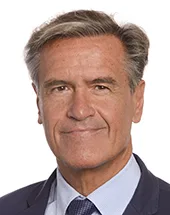
Lukas Sieper | Germany DEU | Non-attached Members (NI) | 390 |
| 2 |
|
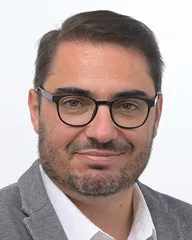
Juan Fernando López Aguilar | Spain ESP | Progressive Alliance of Socialists and Democrats (S&D) | 354 |
| 3 |
|
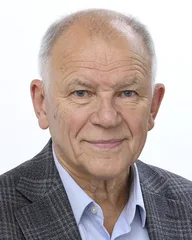
Sebastian Tynkkynen | Finland FIN | European Conservatives and Reformists (ECR) | 331 |
| 4 |
|
João Oliveira | Portugal PRT | The Left in the European Parliament (GUE/NGL) | 232 |
| 5 |
|
Vytenis Povilas Andriukaitis | Lithuania LTU | Progressive Alliance of Socialists and Democrats (S&D) | 227 |
All Contributions (57)
Fundamental rights and the rule of law in Slovenia, in particular the delayed nomination of EPPO prosecutors (debate)
Mr President, this is not the first time we have discussed Slovenia. Since Prime Minister Janša took power there, we have seen a gradual and systematic deterioration in many areas, from media freedom to judicial independence. The Ljubljana government did not even have the time or the will to appoint European prosecutors. But these little tricks designed to disrupt the work of the EU institutions to protect EU money will not succeed. My question to the Commission is very simple. How long will you tolerate such behaviour on the part of the Member States? Isn’t it time you put rule of law issues at the top of your agenda? If someone does not care enough about protecting the European Union, they probably do not need their money. I have a lot of questions for the Council. But I do not think that the Slovenian Presidency has the credibility to respond to this. I can only hope that the incoming Presidency will dare to make a difference in the area of the rule of law.
European Union Agency for Asylum (A8-0392/2016 - Elena Yoncheva) (vote)
Mr President, ladies and gentlemen, today we are voting for a stronger European Union, for a Union that remains united in the face of challenges and difficulties. Your support for the new European Asylum Agency is support for a more effective, cohesive and united Europe. The new Regulation will mark the start of the reform, if necessary, of the Common European Asylum System. Today's vote ensures the establishment of a European Asylum Agency capable of providing adequate support and equipped to respond to challenges on the ground. Colleagues, we have spent long hours debating how to solve the migration problem, update our legislation, ensure a future asylum system. After all these debates, we must no longer just talk. Today, we must act and finally contribute to real reform. Thank you for your support. Together – I am sure – we can achieve a new asylum system. Let’s do it today.
The Rule of law crisis in Poland and the primacy of EU law (debate)
Mr President, Madam President of the Commission, Prime Minister Morawiecki, you launched an attack on Europe, an attack on the very foundation, on the values of the European Union: equality, freedom, human dignity. You consider it possible to abolish democracy while remaining in our European family. Only one word can describe this situation, Mr Morawiecki, and that is shame. Yes, the European Commission can deprive Poland of significant funds from the European budget. But Europe is not only a source of financial flows. Cooperation among States is based on mutual trust. Authoritarian regimes are already emerging in Europe, based on the judiciary they control. The European Commission can no longer remain silent. It wasted precious time because it failed to detect the warning symptoms of these authoritarian governments: brandishing the slogan of national sovereignty, seizing the media and businesses, destroying civil society... Poland and Hungary are on this path. In Bulgaria, the former Prime Minister has established an authoritarian regime whose consequences will be difficult to bear. We European citizens do not deserve this. We must act, Madam President, and we must act now.
European Union Agency for Asylum (continuation of debate)
Mr President, ladies and gentlemen, thank you for this constructive debate. This agreement called for ten Council presidencies, but it has become a reality today. I look forward to the vote at one of our next sessions. This agreement is a first step, but we also need to ensure that the new mandate is implemented as soon as possible and that all new opportunities are used to the fullest. I firmly believe that with the agreement we are responding very effectively to the ever-increasing expectations of support on the ground. I am confident that with its improved function and new mandate, the Asylum Agency will become a leading agency, taking asylum support to a higher level. Today, we need to make sure that the Agency will receive the necessary human and financial resources to respect its new legal framework, because we need a really strong Agency, and we need it now. Again, thank you for your support and trust. Today, ladies and gentlemen, we are building the foundations of solidarity in Europe, because the frontline countries, such as Bulgaria, Greece, Italy, Malta and Spain, cannot take full responsibility on their own. I hope that we will soon see similar agreements in other asylum-related cases and that by the end of the current legislature we will have fully reformed the European asylum system, an asylum system that we deserve.
European Union Agency for Asylum (debate)
on the Regulation of the European Asylum Agency. The proposal was submitted in May 2016 as part of the legislative acts to fundamentally reform the Common European Asylum System. However, despite intense negotiations during the previous legislature, the work was not finalised. The draft regulation was submitted to the new Parliament and negotiations resumed on the mandate of the old Parliament. After a series of negotiations at the end of June, we reached an agreement with the Council at a political level on the whole text. This agreement marked a historic moment for the reform of the Common European Asylum System, establishing the first cornerstone of the new system. With this agreement, we have succeeded in proving that the reform itself is possible. This is very important, because over the years we have heard many skeptical voices trying to prevent reform and condemning solidarity. The common European asylum reform is indeed possible. Negotiations have not always been easy, but we have continued to explore new legal possibilities and compromises. And what is most important: We have focused more on what unites us. On the substance of the compromise text, I would like to highlight a few elements that are very important. The 2017 agreement has been fully preserved. Asylum liaison officers will be deployed to each Member State to assist national authorities on the spot and monitor the situation on the ground, to ensure that EU assistance is provided on time. The Agency’s expert assistance will also be increased to a new level and the Agency will be able to deploy asylum assistance teams. The Agency will also have a pool of 500 experts at its disposal. Thus, there will be no further delay in providing the necessary support. The Agency will carry out tasks to support relocation and resettlement. The new regulation puts the protection of fundamental rights at a higher level. There will also be a fundamental rights officer and strategy, and a constitutive forum with civil society. But more importantly, there will be a completely new complaints mechanism to ensure that any reports of fundamental rights violations are transmitted directly to the Agency. Cooperation with the Office of the United Nations High Commissioner for Refugees and with civil society will be strengthened. Colleagues, I believe that the agreement reached ensures the establishment of a strong European Asylum Agency, capable of providing adequate support. I would like to thank all colleagues for their passion and constructive work. Special thanks to the last three Presidencies, in particular the Portuguese and German Presidencies for their leading role in the Council. And of course, a word of appreciation for Commissioner Johansson, whose personal dedication has been of great importance. We, the three institutions, have succeeded together.
United States sanctions and the Rule of law (debate)
Madam President, at the beginning of June, one Member State, Bulgaria, was shaken by sanctions imposed by the US administration on several Bulgarian citizens for corruption and influence trading. Bulgaria this year became the country with the largest sanctions imposed on a single day under the Magnitsky Act. Bulgarian citizens know very well the problems with corruption in the country. Bulgarian citizens protested against the seizure of the judicial system in the country, against rigged public procurement and corruption, and when they did so, they were beaten and humiliated, threatened and dragged through courtrooms. Today, Commissioner, on behalf of all Bulgarian citizens who are waiting for answers from Europe, I would like to ask you the following: Bulgaria is subject to monitoring in the area of justice and home affairs and despite the availability of all instruments, no report has so far identified what the US authorities are talking about. Why? Where does the difference come from, that your report, Commissioner, talks about progress, about results. Criticism, however, is overly cautious, while the U.S. openly speaks of systematic bribery of high-ranking officials, including an acting political leader. Who is this political leader, Commissioner? Let me be clear, I am not calling for European sanctions, but for effectiveness in your actions, so that we can detect the problems and help Member States like Bulgaria to overcome them. This is my second question: Did the European Commission have similar information to that disseminated by the US administration? If not, what action has been taken by the European Commission to establish the facts? Because if the information given by the US authorities is correct, then we have a serious problem with the rule of law in the European Union. Not only because of the situation in Bulgaria, but also because apparently our instruments are not effective. However, if what the American side has said is not true, how should we react in order to protect the image of the European Union and the leading role of the Member States in this area internationally?
Situation in Afghanistan (debate)
Madam President, after 20 years of war in Afghanistan, we are facing many mistakes that we have made. We need to have an effective EU foreign policy. First, we must not let Afghanistan serve as a base for all kinds of terrorist organisations targeting Europe. We need to monitor threats ourselves and have our own sources of information. Also, we will need to strengthen our collaboration with countries in the region and partners on the ground, including Russia and China, to have a much greater influence on the Taliban. Second, the Taliban have sources of funding such as opium production and trade and we need to find a way to reduce them. The negative impact of opium is known in Europe. The number of people dying each year from heroin overdose in NATO countries is ten times higher than the total number of NATO soldiers killed in Afghanistan - ten times higher! Last but not least, we must ensure that the return of the Taliban does not lead to large-scale migration to Europe. We need humanitarian corridors, humanitarian visas. Our asylum systems must be ready. My Member State, Bulgaria, will be one of the first to face newcomers and I urge the Council to start focusing on how to work together as a Union, based on shared values and solidarity.