


| Rank | Name | Country | Group | Speeches | |
|---|---|---|---|---|---|
| 1 |
|
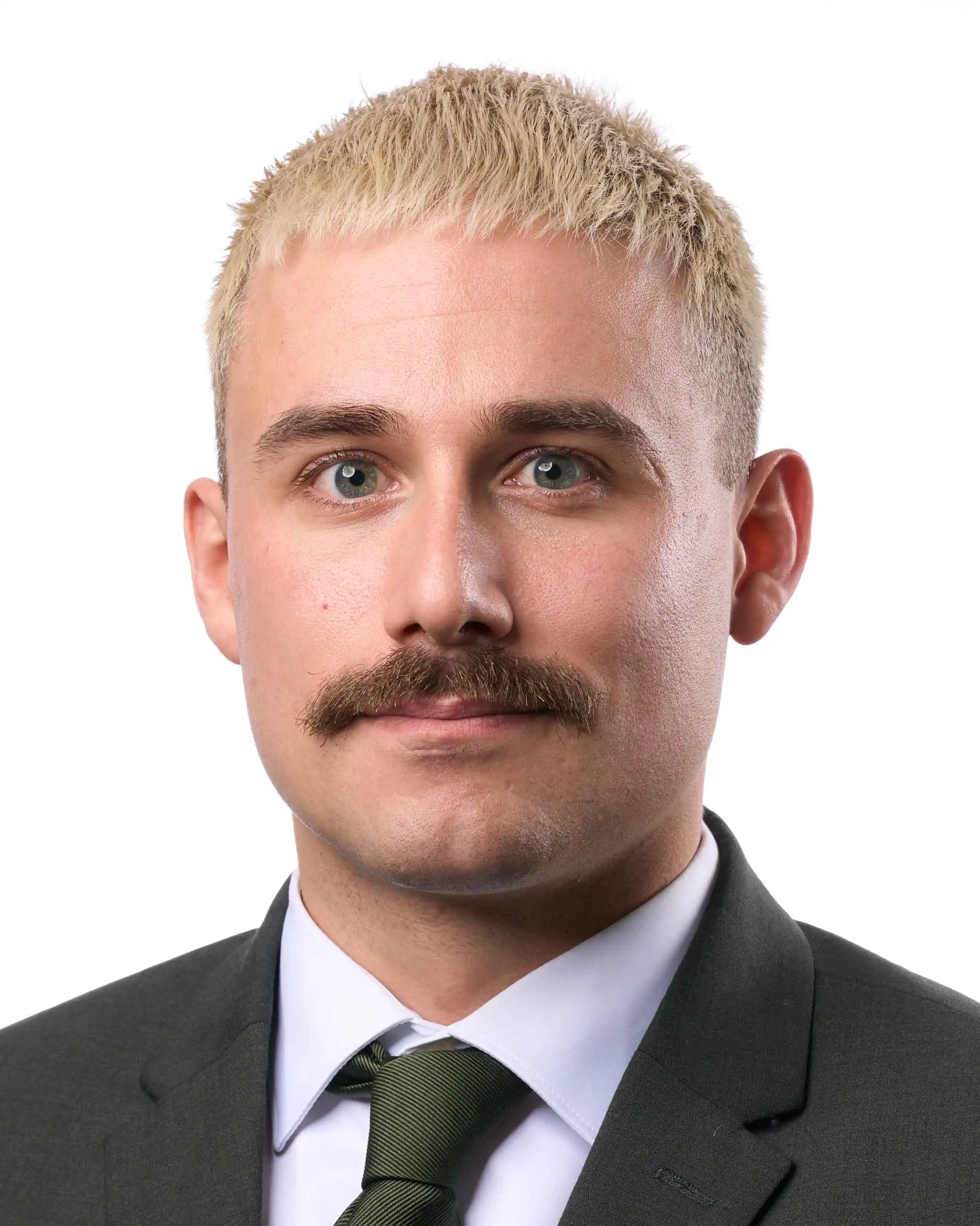
Lukas Sieper | Germany DE | Renew Europe (Renew) | 494 |
| 2 |
|
Juan Fernando López Aguilar | Spain ES | Progressive Alliance of Socialists and Democrats (S&D) | 463 |
| 3 |
|
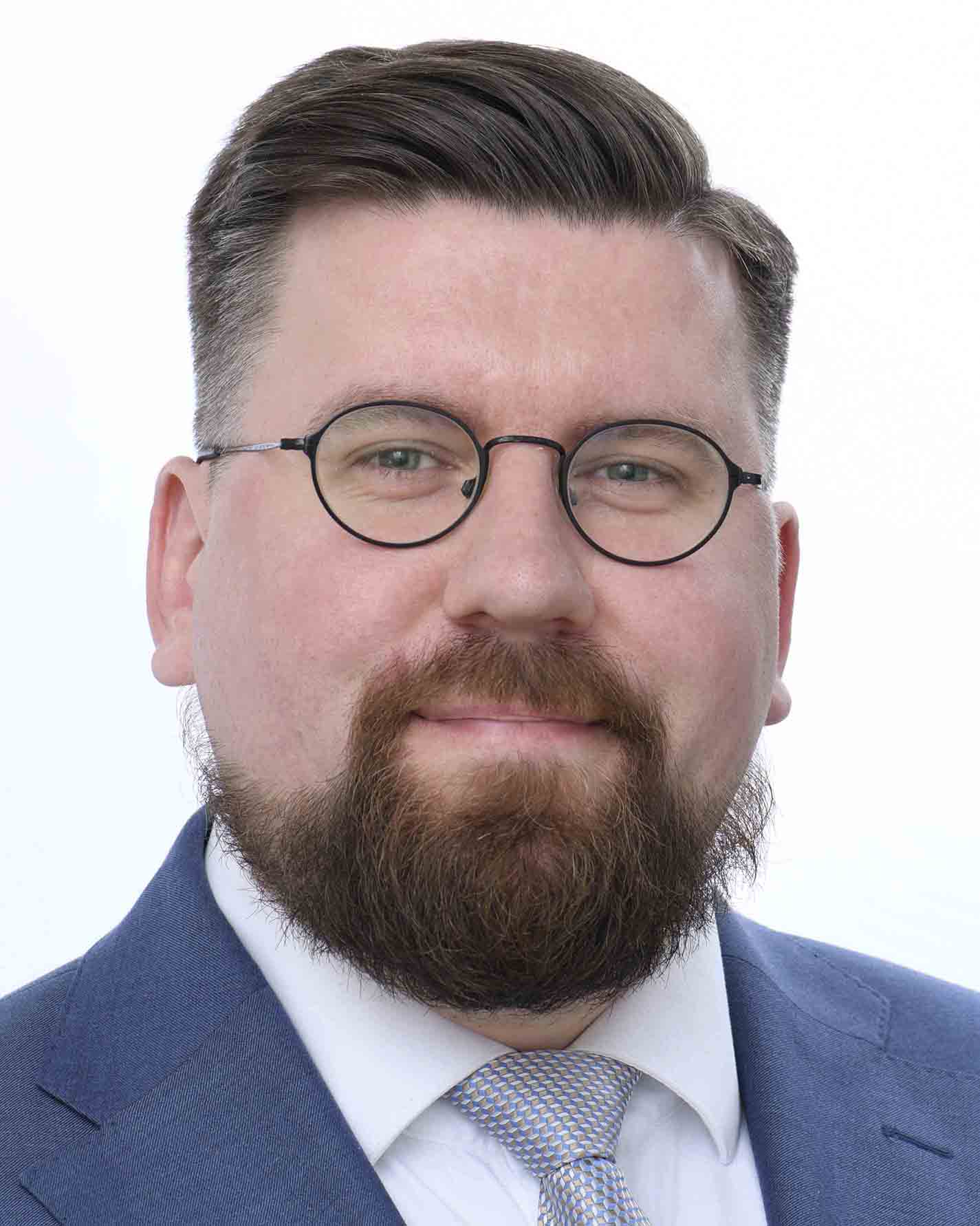
Sebastian Tynkkynen | Finland FI | European Conservatives and Reformists (ECR) | 460 |
| 4 |
|
João Oliveira | Portugal PT | The Left in the European Parliament (GUE/NGL) | 288 |
| 5 |
|
Vytenis Povilas Andriukaitis | Lithuania LT | Progressive Alliance of Socialists and Democrats (S&D) | 276 |
All Speeches (115)
Implementation of the New European Agenda for Culture and the EU Strategy for International Cultural Relations (debate)
Date:
13.12.2022 13:18
| Language: ES
Speeches
Mr President, Commissioner, the political priorities of the European Union in the cultural field must first be to give culture the centrality it deserves. In this regard, we welcome the fact that we have this particular debate, and that what we have now and not on the last item of the agenda, as often happens when we talk about culture in this Chamber. In terms of cultural policies, we have a lot of work ahead of us. A status of the artist, which contributes to the best working conditions and remuneration for all cultural workers, is a priority. And so is promoting a culture model that recognizes that women, migrants, racialized people, LGTBIQ+ are not only recipients, but also active creators of culture. But cultural policies must be open and democratic, not only in Europe but also in its external project. The European Union cannot relate to the world from a Eurocentric or neocolonial model, because culture is just the opposite: is to build bridges, transform power relationships and contribute to creative ways of addressing collective challenges.
Madam President, Commissioner, this European Year of Youth has put our institutions in the mirror and, unfortunately, we do not like everything that the reflection gives us back. Young people continue to face precariousness and an almost always difficult transition to working life. The impacts of the pandemic, the recent war in Ukraine, the rising cost of living, energy poverty and a climate emergency that makes it difficult to imagine a future, have only contributed to worsening the already critical mental health situation of our girls and adolescents. Being a young woman, being a young person from the LGTBIQ+ community, being a young migrant, young person, refugee, young person with disabilities or several of these things at the same time, poses great challenges such as having fewer opportunities. But, as a summary, I would say that this year leaves us with good news, a lesson and several challenges. The good news is, for example, this debate, which allows us to name problems that have often been relegated to the margins and put young people at the center of the agenda. The lesson: A European year that is not prepared in advance can hardly set solid targets and achieve ambitious targets. And the challenges: we need to materialise what we in this Parliament have strongly called for, namely a common framework to ensure fair remuneration for traineeships, accessibility to stigma-free mental health care and, ultimately but perhaps most importantly, to involve and listen to young people in the preparation of all European policies and also in the assessment of their impact. Ultimately, we need to push for structural changes to build a more inclusive European political system with young people from anti-racism, free from discrimination and gender-based violence. We need mechanisms and policies that positively reflect the position and role that young people play as active members of society. During the European Year of Youth we have called for young people's voices to be put at the centre and now we are calling for these voices to remain.
Madam President, think of three women among your mothers, aunts, daughters or co-workers. One of them has been or will be physically or sexually assaulted. The picture is chilling. Just a year ago in this House, a majority voted to include gender-based violence in the list of Eurocrimes. Still, we're still waiting. The intention to move forward is clear from Parliament. But we need, or rather demand, that the Commission and the Council do their part. Without a shared strategy between the different institutions, we will not be able to move forward with the urgency that the situation requires. We value the Commission's proposal for a directive, but we must be more ambitious. Because, if we want to combat all violence - physical, sexual, economic, emotional, obstetric, psychological - we have to go a little further. The challenge is huge and time is scarce because what is at stake are our lives. We have no alternative, we must advance by giant steps.
Cultural solidarity with Ukraine and a joint emergency response mechanism for cultural recovery in Europe (debate)
Date:
20.10.2022 09:43
| Language: ES
Speeches
Madam President, Commissioner, let me start with a proper name: Yuri Kerpatenko. Kerpatenko was the conductor of the Kherson Philharmonic Orchestra and was killed only a few days ago after refusing to give a concert in a territory occupied by Russia. The invasion of Ukraine is leaving a trail of open, tangible and intangible wounds, from the harshest dangers facing artists, journalists and academics, to the destruction of cultural heritage. The costs of this war are unaffordable for humanity as a whole. That is why, in our roadmap, to contribute to peace, reconstruction and recovery, art and culture must be a cornerstone and a safe place. The cultural and creative sector must have cooperation and financing mechanisms that allow it to continue its work, because art and culture can be tools for peace, because its voice will be essential to transit the post-conflict.
Fighting sexualised violence - The importance of the Istanbul Convention and a comprehensive proposal for a directive against gender-based violence (debate)
Date:
19.10.2022 17:34
| Language: ES
Speeches
Madam President, Commissioner, it is crucial that the European Union has ambitious European legislation in place to tackle gender-based violence, one of the main human rights violations on the planet, affecting no more and no less than one in three women. Europe must be a world leader in the fight against this scourge. That is why, on the one hand, I would like to welcome the Commission's proposal to provide the Union with a directive on violence against women that establishes common minimum standards in all Member States. But, on the other hand, I have to tell you that it is not enough. The Commission knows that here in this House a report was adopted calling for the inclusion of gender-based violence in Article 83 of the Treaties, a fact that would allow us to build a much more ambitious legislative proposal than the one they have put forward. We know there's reluctance. We know that the context is not easy. But I am very afraid that, when we talk about women's rights, these reluctances will always exist and the context will never be the right one. That is why it is time to join forces, to be politically courageous. Let's work together for a new directive that makes history, but, above all, saves lives.
Whitewashing of the anti-European extreme right in the EU (topical debate)
Date:
19.10.2022 13:54
| Language: ES
Speeches
Mr President, Commissioner, in Italy we contemplate how the far right will govern with the unpayable support of the party of Berlusconi, a member of the EPP. In Spain, the Popular Party – again, PPE – opens the doors of regional governments to Vox, a party that does not condemn Francoism, which is anti-European and an ally of Putin and which preaches a xenophobic and misogynistic ideology. And in the face of this whitewashing of fascism, we hear nothing but the silence of the EPP, but when the far right really wins it is when those who call themselves democrats adopt their language and their mental frameworks. And this is happening even within the Commission itself. It is unacceptable that Vice President Borrell speaks of the West as a garden and the rest of the world as a jungle that seems to have to be civilized. A metaphor that gives off its intolerable supremacism. Combating this phenomenon is a collective cause that challenges all Democrats and forces us to respond with a courageous proposal based on inclusion, equality and the common good.
The Rule of Law in Malta, five years after the assassination of Daphne Caruana Galizia (debate)
Date:
17.10.2022 19:14
| Language: ES
Speeches
Mr President, Commissioner, last Friday, two days before the fifth anniversary of the murder of Daphne Caruana Galizia, the Degiorgio brothers were each sentenced to 40 years in prison after confessing to the crime. An undoubtedly important step for justice to be done, but without forgetting that those who ordered the authorship of the crime remain free. The climate of impunity and cover-up that still surrounds this case shows that insufficient reforms have been carried out during these five years to improve the rule of law in Malta. We cannot allow journalists, activists and political opponents in the European Union to be harassed and threatened by the powerful with the aim of silencing them and preventing them from participating in democratic debate. Daphne was a fighter and a heroine. We owe him an anti-SLAPP law at European level that is as ambitious as possible and that prevents cases like his from happening again. Let's make it possible.
The death of Mahsa Amini and the repression of women's rights protesters in Iran (debate)
Date:
04.10.2022 18:42
| Language: ES
Speeches
Mr President, High Representative: "Woman, life and freedom", much more than a cry of struggle and resistance from Kurdish women. It's a spell, a warning for sailors: There can be no free society without free women. Today, in a world where conflicts, authoritarianism and inequalities are on the rise, freedom, equality and hope are named after women: Mahsa Amini, Hadith Najafi, Ghazale Chelavi, Hanane Kia and Mahsa Mogoi. Women in Iran are risking their lives for their right to live on their own terms and to destroy the patriarchy, state and religion that oppresses, dominates, subdues and discriminates against them. His struggle, his resistance, is an example for all of us. From here I want to send you a message of admiration and solidarity: We are by your side. We will always stand by women who demand freedom for themselves and their societies. (She concluded her speech in an unofficial language of the Union.)
Situation of fundamental rights in the EU in 2020 and 2021 (debate)
Date:
14.09.2022 16:31
| Language: ES
Speeches
Mr President, Commissioner, we must admit that the health of fundamental rights in Europe is not at its best: From the heart of the Union to our borders, fundamental rights are not guaranteed, and this is undoubtedly bad news for the European project. This report is also a wake-up call on the impact that the pandemic had and still has on our societies: We have seen increasing inequalities and worsening structural deficiencies and regressive trends in rights and freedoms that already existed in many countries, and, with no time to recover, we are on the verge of a new crisis stemming from the war in Ukraine and the climate and energy emergency. From here, the only institution representing all European citizens, I would like to appeal to the Member States: put the dignity and rights of people, especially the most vulnerable, at the centre of their political action. It is now more than ever that Europe has to show that it really is an area of rights and freedoms, as we praise it in our speeches.
Mr President, Commissioner, the New European Bauhaus has enormous potential to provide us with answers in today's complex context. This initiative should allow us to rethink our private and public spaces in line with an energy transition that is fair and equitable and takes into account the perspectives of the communities it aims to transform. And, for this, a truly transversal, intersectional and gender approach is essential to speak not only of accessible spaces, but also of culture and creativity as key elements in the conception of public services, education and social and economic life. This report is a very clear call to the Commission. We need our own resources and clear objectives to translate ideas into facts.
Mr President, the current energy crisis highlights, once again, how important it is to put a gender perspective in each and every public policy, and, in this case, in energy and green transition policies. We know that women, and in particular those who experience intersectional discrimination, whether based on origin, race, religion or social status, are more likely than men to live in energy poverty, so it is important that energy efficiency improvement measures, in turn, help empower and protect low-income households and the most vulnerable people. Let us remember: A just and inclusive transition towards a climate-neutral Union is only possible if we take into account the impact that climate change has on inequalities.
Surveillance and predator spyware systems in Greece (debate)
Date:
12.09.2022 19:42
| Language: ES
Speeches
Mr President, I would like to begin by showing all my solidarity to our colleague Nikos Androulakis, because also, as a victim of Pegasus, as a Member of the European Parliament, I fully understand the anger, indignation and helplessness he feels. We are witnessing a serious attack on democracy and rights. The lack of transparency on the part of the Member States and the lack of forcefulness on the part of the European institutions in demanding accountability and taking measures to protect European citizens are unacceptable. But, ladies and gentlemen, I am now addressing you directly. With what authority can we criticise the Commission or the Member States if a mission, for example to the Spanish State, is being blocked here in this House for purely political reasons? Let us remember that it is the country where the Catalangate, the biggest mass espionage scandal in Europe. If we want to be credible, let's start by being honest.
Loss of life, violence and inhumane treatment against people seeking international protection at the Spanish-Moroccan border (debate)
Date:
04.07.2022 18:40
| Language: ES
Speeches
Madam President, Commissioner, the extreme right wins when even those who call themselves progressives verbalize their own speech, because that is when they manage to impose their agenda, their language and their mental frameworks. An example of this is the embarrassing words of Spanish President Pedro Sánchez to define what happened in Melilla in a police action in which 37 migrants were murdered: He spoke of a "well-resolved" operation and of "organized and violent assault", thus criminalizing people fleeing misery and terrible war conflicts such as that in Sudan. We demand that the facts be investigated and that they be held accountable. We want to know what the pact with Morocco is and at what price these crimes are being defended. With what face can Europe dare to talk about human rights if it tramples on them with cold-blooded murders at the same gates? We showed it with Ukraine: If we want, we can. Let us tear down this fortress Europe by creating legal and safe pathways for those fleeing horror, regardless of the colour of their skin.
Global threats to abortion rights: the possible overturn of abortion rights in the US by the Supreme Court (debate)
Date:
08.06.2022 19:32
| Language: ES
Speeches
Madam President, unsafe abortions account for almost half of the total and are the leading cause of maternal death. If the Supreme Court repeals the 1973 ruling guaranteeing the right to abortion in the United States, we would be facing one of the most important setbacks in terms of our sexual and reproductive rights, and that will have effect throughout the world, because let us not forget that we are facing a global attack that has a name and surname; in the United States, Alliance Defending Freedom or Federalist Society, but they also have a name here, in Europe: Ordo Iuris in Poland; HazteOir in Spain, or La Manif Pour Tous in France, ultra-funded entities by ultra-Catholic organizations and coordinated worldwide with the sole purpose of imposing their reactionary agenda; let's not allow it. Illegalizing abortion does not end abortions, it only makes them more deadly: What is at risk here is not the moral or religious values of a few with a lot of power, what is at risk here are our lives, and this is not at stake.
Establishing the European Education Area by 2025 – micro credentials, individual learning accounts and learning for a sustainable environment (debate)
Date:
19.05.2022 08:47
| Language: ES
Speeches
Mr President, Commissioner, in 2020, 46.1% of the adult population needed training and retraining. Without this or it is clear that we will not have quality jobs, let alone a just green and digital transition. That is why we need a successful, but above all inclusive, accessible and cohesive European Education Area. A space that promotes a lifelong learning mindset, which, in addition to skills and competences, puts people at the centre and takes into account the soft skills and sustainability and include the creative and cultural sectors. We need to go beyond formal education and integrate vocational training, volunteering and informal modes of learning, so that we can all be truly active in a more inclusive and sustainable society.
Madam President, Commissioner, the health of the rule of law in Europe is not at its best. Neither that of fundamental rights nor that of democracy. That is why, in this robust report produced by my colleague Terry Reintke, we call for the annual report to also cover these two fundamental principles which constitute the essence of the European Union. Similarly, for this annual report to be a useful exercise, the Commission should provide solutions for each problem and should also ensure adequate follow-up, including infringement procedures, Article 7 procedures of the Treaty on European Union and budgetary conditionality procedures. Because, in this house, the rule of law and fundamental rights are upheld. And not just to point to Poland or Hungary. There are many European countries with worrying democratic shortcomings and a serious deterioration of the rule of law. It is time for the Commission to take this issue seriously and act firmly before it is too late. Are they the guarantors of the Treaties? Prove it!
The impact of the war against Ukraine on women (debate)
Date:
05.05.2022 10:51
| Language: ES
Speeches
Madam President, Commissioner, in Ukraine we are once again facing a devastating reality: War has always had a woman's face. Girls and women in war settings are objectified, brazenly instrumentalized and almost always systematically omitted in decision-making places. This violence, which disproportionately affects women and girls, escalates when different forms of discrimination are combined. Being a Roma, stateless, disabled, migrant, racialized or LGBTIQ+ woman exacerbates this vulnerability. We see this with particular concern in the case of transgender women, for whom the recognition of their identity may mark, among other things, the possibility or not of fleeing war. That is why we are not content to call for a humanitarian response in general terms. In this crisis, the European Union must respond to the specific needs of women and girls by ensuring, for example, the availability of support services on gender-based violence and access to all sexual and reproductive health services, including emergency contraception and abortion. But above all, our response must be based on the conviction that women are not just witnesses and victims or weapons of war and loot. Women in Ukraine are fighters and caregivers, leaders of their communities and providers. Just a few days ago they were teachers, journalists, civil servants. That is why we claim the pre-eminence of his role, but above all his capacity as an agent of change. Without women's voices there will be no peace or reconstruction possible.
Use of the Pegasus Software by EU Member States against individuals including MEPs and the violation of fundamental rights (topical debate)
Date:
04.05.2022 16:00
| Language: ES
Speeches
Mr President, I have been spied on by Pegasus as a Member of the European Parliament. Therefore, all of you in this room are also collateral victims of this espionage. My political rights, your political rights have been violated, and the integrity and independence of this House have been compromised. My case is not unique, of course. Hundreds of journalists, activists and politicians, including colleagues in this Parliament, have also been victims. Now we know that, supposedly, so have been the president of the Spanish Government and the Minister of Defense. In the Spanish case, when the spies were sixty-five independentistas, the Executive's response was null. They even hinted that we deserved to be spied on because, of course, we are pro-independence. We won't say the same thing. No one should suffer massive and illegal espionage. It is a question of democratic principles. If it is true that members of the Spanish government are victims of Pegasus, let us hope that now they do act at once. The Spanish Government is solely and ultimately responsible for clarifying this scandal. It has already admitted that it acquired Pegasus and, therefore, given the gravity of the situation, the Spanish Government has no alternative but to report who is using it in the State, how it is being used, against whom and what is being done with all this stolen information. If the Executive were involved in this scandal, the situation would be very serious. But if not, the situation would be even more serious, because this would mean that there are reactionary sectors that are still anchored in pre-democratic dynamics, which have a political agenda of their own. So, you know what? The biggest opposition, the biggest resistance to authoritarian dynamics in Spain are the independence movement. That is why we are imprisoned, financially ruined and now spied on. I would like to appeal to the European institutions: stand alongside those fighting for democracy, transparency and fundamental rights, not only in Poland and Hungary, but throughout Spain.
Cooperation and similarities between the Putin regime and extreme right and separatist movements in Europe (topical debate)
Date:
06.04.2022 15:39
| Language: ES
Speeches
Madam President, Commissioner, yes, we are concerned about Russian influence in Europe. We are concerned that the Popular Party will incorporate the extreme right of VOX – Putin’s puppets in Spain – into the government of Castile and Leon and that this will only be the prelude to a future reactionary government. We are concerned that Josep Borrell, in 2018, as foreign minister, thought that the best idea to fight against fake news to agree with the Putin regime on the creation of a security group against disinformation. I bring bad news for those in this House today who are trying to do what Russia so skillfully knows how to do: misinforming and manipulating. Catalan independentism shares the consensus we have in this House today: peace, the defence of European values and the fight against the far right. Our political commitments are transparent: We work to be a full member state in a federal, diverse, socially just, green, feminist and radically democratic European Union.
Situation in Afghanistan, in particular the situation of women’s rights (debate)
Date:
05.04.2022 19:15
| Language: ES
Speeches
Madam President, Commissioner, over the past 20 years, some 3.3 million Afghan girls had gained access to education and women had been able to participate actively in the political, economic and social life of the country. They were timid advances, but in spite of everything, advances. Since the Taliban came to power, the situation of vulnerability of girls and women in Afghanistan has continued to worsen. The vast majority of them have been forced to leave school, university or their jobs, and those who dare to raise their voices face torture or death. For all this, the European Union must make any contact with the regime conditional on respect for human rights, with special attention to girls and women. And we also have to apply the same empathetic attitude and willingness to welcome that we have shown in the case of Ukraine. Let's leave behind the double standards. Europe must move towards a genuine asylum and migration policy that prioritises rights and people.
EU Protection of children and young people fleeing the war against Ukraine (debate)
Date:
05.04.2022 10:13
| Language: ES
Speeches
Mr President, Commissioners, the war in Ukraine has already killed thousands of civilians, including young people and children, and forced more than four million people to flee and seek protection in Europe. Of these four million, two million are of school age and, according to UNICEF, 90% of refugees are women, boys and girls. According to NGO reports, there are many unaccompanied minors among the refugees, who are particularly vulnerable to trafficking, abuse and sexual exploitation. It is essential to ensure the protection of all these children and to ensure the full implementation of their rights, including with a gender perspective. The work being done by UNICEF and UNHCR, together with governments and civil society organisations in the border countries, to create the so-called "blue dots" is therefore vital: safe spaces along border crossings for children and women. The devastating consequences of this war will not be resolved by immediacy alone. We need anticipation and a long look to implement reception and integration policies at the national and local levels, such as access to education and job opportunities, family reunification, psychological assistance and basic services. We are not only losing lives, but also future ones, and it is our obligation to ensure the conditions for all children fleeing war in Europe to find the peaceful and safe environment to which they are entitled. For all of them to return to the classrooms. To make the European Union a place where it is possible to imagine a future.
The situation of journalists and human rights defenders in Mexico
Date:
10.03.2022 11:12
| Language: ES
Speeches
Madam President, Commissioner, on 5 July last year, Simon Peter was shot dead by an individual on his way to the market. He was killed in a cowardly manner, in the eyes of his own son. Simon Pedro had been president of Las abejas de Acteal, an indigenous organization that denounced structural violence in Chiapas, through the most radical pacifism. In Mexico, defending freedom of expression, the environment or human rights is extremely risky work that can cost lives. According to the latest figures, provided by the Ministry of the Interior of Mexico, since December 2018, 98 human rights defenders and 54 journalists have been killed and more than 90% of cases remain unpunished. Let's be clear: The messages that the Mexican president himself launches criminalizing journalists and civil society organizations must cease and all efforts must be required to build a comprehensive public protection policy that addresses prevention, protection, investigation and reparation. These demands must be a condition in the reform of the Comprehensive Agreement between the European Union and Mexico, because believing in the rule of law is precisely this: demand it within our borders, but also from our closest partners.
The deterioration of the situation of refugees as a consequence of the Russian aggression against Ukraine (debate)
Date:
08.03.2022 15:50
| Language: ES
Speeches
Madam President, Commissioner, Madam Minister, since the beginning of the Russian invasion of Ukraine, 1.5 million people have fled to neighbouring countries and the UNHCR estimates that this figure could rise to 4 million. Faced with this great humanitarian challenge, the European Union is finally up to the task of activating the Temporary Protection Directive for the first time. An activation which, let me recall, the Greens/EFA Group had already unsuccessfully called for in crises such as Syria or Afghanistan. Millions of people are leaving their lives behind under Putin's bombs. And in the face of this cruelty, Europe has no choice: We must be a refuge. That said, I think it's time to ask ourselves some questions that may have uncomfortable answers. Let us ask ourselves why we are now committed to a humanitarian response and why we did not do so in past conflicts. Let us ask ourselves why, as the UNHCR acknowledges, cases of racial discrimination are being detected at Ukraine's border with the EU. Let us ask ourselves why, while welcoming the Ukrainian brothers with a hug, this same weekend we received the sub-Saharan brothers with batons on the border of Melilla. The answer is as hard as it is clear. And it's in the color of the skin. Discrimination based on race, religion or immigration status is inadmissible. Solidarity is a fundamental value that has no exceptions. We all have the right to escape the horror of war and poverty. The conflict with Ukraine is tearing down several taboos. Let us seize this moment to move towards a lasting asylum policy, which prioritises solidarity and human rights. A Community policy that makes refuge one of Europe's great strengths.
Mr President, all over the world, civil society organisations and individual citizens are seeing civil and political freedoms restricted and threatened. The deterioration is evident on multiple fronts, but I will focus the intervention on two points that I am especially concerned about. On the one hand, the increasingly widespread practice of resorting to "gag" lawsuits or strategic lawsuits against public participation by economic and political powers to threaten and silence members of civil society. We will soon begin work on putting a brake on it at European level. On the other hand, the lack of an adequate European protection and monitoring framework that makes it impossible for Member States such as Spain, with its gag law still in force, to adopt laws that curtail rights and demobilize those who act in defense of human rights. By making civil society's space for action smaller, we are also making our democracies smaller.
The EU priorities for the 66th session of the UN Commission on the Status of Women (debate)
Date:
16.02.2022 19:48
| Language: ES
Speeches
Mr President, Commissioner, let me start by putting a few more facts on the table: According to the UN Development Programme report, the proportion of deaths among women in extreme weather events over the past 20 years has increased by 60%, and 80% of those displaced by climate change-related causes since 2010 have indeed been women and girls. Of course, the climate crisis also has a gender bias. Gender equality and climate change are two of the great challenges that can condition our future from a social and even existential point of view. And while we often treat these issues in isolation, they are intimately related. The answers to these global challenges have to address the links between gender, climate and security, with a look, that yes or yes, will have to be feminist and involve the empowerment of each and every one of the women of this planet.