
| Rank | Name | Country | Group | Speeches | |
|---|---|---|---|---|---|
| 1 |
|
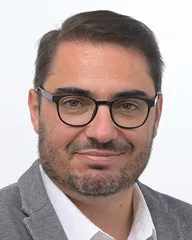
Lukas Sieper | Germany DEU | Non-attached Members (NI) | 390 |
| 2 |
|
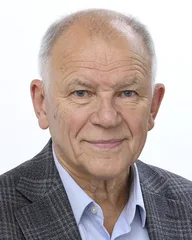
Juan Fernando López Aguilar | Spain ESP | Progressive Alliance of Socialists and Democrats (S&D) | 354 |
| 3 |
|
Sebastian Tynkkynen | Finland FIN | European Conservatives and Reformists (ECR) | 331 |
| 4 |
|
João Oliveira | Portugal PRT | The Left in the European Parliament (GUE/NGL) | 232 |
| 5 |
|
Vytenis Povilas Andriukaitis | Lithuania LTU | Progressive Alliance of Socialists and Democrats (S&D) | 227 |
All Contributions (119)
State of play of implementation of the European Media Freedom Act in the Member States (debate)
Mr President, Commissioner, adopting the European regulation on media freedom was an act of democratic victory. For the first time, Europe has a regulation that guarantees the right of citizens to receive free and plural information. But there is a risk: have a historical Regulation that is not complied with. The Liberties organization has already alerted us: there are Member States that are not prepared to implement it or do not directly intend to do so. Because yes, today in the European Union there are governments that have turned public media into propaganda apparatuses and that use spyware against journalists, and the most cynical of all is that they are the same people who here today dare to talk about censorship. Look, if the far right is uncomfortable with this regulation, it's that we're doing something very well. But the anti-democratic wake is spreading: the Spanish Popular Party approves laws in Galicia to control the TVG, and in Valencia, with Vox, they make laws of the same with À Punt, which violates a European Regulation that they themselves approved in this Parliament. How can you sign the Regulation with one hand and break it with the other? Therefore, what we claim is very simple: effective monitoring by the Commission and ensuring that free and pluralistic journalism is not left alone again. We need the momentum of democratic forces - those we saw in Budapest - also to defend freedom of the press, to defend democracy.
Safeguarding the rule of law in Spain, ensuring an independent and autonomous prosecutor's office to fight crime and corruption (debate)
Mr President, Commissioner, in 2018, Ignacio Cosidó – then the PP’s spokesperson in the Senate – wrote a WhatsApp: We will control the Second Chamber of the Supreme through the back door. The same Chamber that judged and condemned for sedition the leaders of the Catalan Government. Ladies and gentlemen of the PP: You have to have your face made of reinforced cement so that, precisely, you are the ones who denounce. You, who have used and politicized the judicial system. Please read the reports of the Group of States against Corruption of the Council of Europe, which have been warning for years of the lack of independence of the Spanish judicial system. There is a profound problem of separation of powers. Yes, we are talking about judges who refuse to apply the laws passed by Parliament. That's what we're talking about. But there is also a profound problem of corruption, and citizens must be hallucinating seeing how the PP and the PSOE accuse each other, because I understand that these names sound to them: Gürtel, Nóos, Filesa, Fabra, Mercasevilla, Taula, Palma Arena, ERE, Marea, M. Rajoy... Corruption is structural. Ladies and gentlemen, the king emeritus is exiled for corruption. Out of respect for people: stop throwing corruption at the head and propose necessary reforms to protect democracy. You can rule without stealing. And, today, our demand is maximum with the PSOE: Put an end to corruption, fall whoever falls, both corrupt and corrupt.
Resilience and the need to improve the interconnection of energy grid infrastructure in the EU: the first lessons from the blackout in the Iberian Peninsula (debate)
Madam President, we can draw three key lessons from the great blackout. The first is that our daily life is electric. Without energy we do not communicate, trains, traffic lights or elevators do not work, we can not pay with a credit card in a store. This vulnerability forces us to strengthen the resilience of the system with intelligent and decentralized infrastructures and to comply with key directives that this Parliament has approved and have not been transposed in the Spanish State. The second lesson is that the essential, the critical, like the electric ones, must be mostly public. That is key to ensuring that access to energy is a right and not a business with stratospheric benefits. We need to invest in storage, smart grids and interconnections. These are key investments to ensure the safe, fair and sustainable service that the private interest leaves out because it is not profitable in the short term. The third and final lesson is that, in the face of attacks on renewables by those who defend returning to the nuclear past, we tell them something very clear: renewables are the only future, they are the only real way to energy sovereignty that we talk about so much in this House. In Europe we have neither gas nor uranium, but we do have sun, wind, water and biomass. Betting on clean energies frees us from external dependencies and secures the future of this planet. While some do politics looking to the past, we will continue to look to the future.
EU Preparedness Union Strategy (debate)
Madam President, Commissioner, preparing Europe for the crises before us is not an option, it is a necessity. But we are surprised that, of all the security challenges, the Commission has decided to focus its communication on a survival kit, a kit that was proposed in a report in this Parliament a year ago and which appears now. We wonder why, and I think you don't have to be very bright to see that what they are trying to do is create a climate of urgency that makes the investment in armaments that they have proposed to us indisputable. We – as you did very well today, Commissioner – want to talk about security: energy security. We need massive investment in renewables because, if not, we will continue to be in the hands of Russia, the United States or Qatar. We want to talk about digital security, because 90% of our companies depend on the services that are in the cloud from Amazon, Microsoft or Google, or the main social networks that all of us and also all European citizens use and are properties of American technoligarchs, so we need to boost European technology and networks. We also want to talk about food security, which we are reducing with free trade agreements that condemn our primary sector. Therefore, let us talk about security with maturity in all its breadth and not transfer responsibility to our citizens by asking them to buy a survival kit.
Action Plan for the Automotive Industry (debate)
Madam President, today, when I talk about the European automotive industry, my first thought goes to those workers who have suffered the consequences of relocation and, among them, I think of the more than 20 000 people who lost their jobs with the closure of the Nissan plant in Barcelona. The Commission knows that the crisis in the automotive sector does not come overnight. We have spent years, ERE after ERE, seeing the relocation of our production and how Europe does not anticipate the challenge of electrification or stimulate the necessary public and private investment. Europe has let China acquire our technological knowledge and compete unfairly. While we welcome the Commission's Action Plan, we also know that haste now cannot be an excuse to reduce emission reduction targets. Let's focus on providing legal stability to investment, boosting the supply of affordable electric cars, charging infrastructure and building a resilient European value chain. And all this creating safe and quality workplaces.
European Council meetings and European security (joint debate)
Madam President, the European Union spends 1.9% of its GDP on defence, almost the famous 2%. And what does this mean? I will give two examples so that it is better understood: firstly, the European Union spends three times more on defence than Russia and, secondly, the European Union and the United Kingdom together spend more than global powers such as China. In fact, if Europe were a state, it would be the second largest global power in terms of military spending. Ladies and gentlemen, the problem is not how much is spent, but how it is spent. The dilemma is that we have 27 different defensive systems without effective coordination. We are inefficient and we will not solve this with a rain of millions on national budgets; But this rain of millions may calm Donald Trump and the U.S. arms industry. Representatives of the Commission, analyse how we can be more efficient, coordinate the strategy and investment from the European Union and let us talk without taboos about how to finance this effort, for example with our own European taxes, taxes on the richest and the most polluting, because, otherwise, we know that it will be the citizens who will pay this bill. And this is a red line. We cannot allow state or European Union budgets to see social and climate spending reduced, because fifteen years ago in the European Union social rights were cut in the name of austerity. Today they will not do it in the name of war.
Repression by the Ortega-Murillo regime in Nicaragua, targeting human rights defenders, political opponents and religious communities in particular
Mr President, Commissioner, the first message we want to send is to Nicaraguan citizens, to all those citizens and to those civil organizations that see their rights and freedoms trampled on day after day. To all of them - especially political prisoners - we say that there is a broad consensus in the European Union to accompany and advance their struggle for a freer society. Unfortunately, the situation in Nicaragua continues to deteriorate alarmingly. The systematic persecution of opponents and human rights defenders demonstrates the increasingly authoritarian nature of the Ortega and Murillo regime and the recent constitutional reform – which we condemn exhaustively – consolidates a power without counterweights and eliminates de facto the division of powers, political pluralism and the rule of law. Nicaragua has a very complex recent history and that is why there will be no simple solutions. The European Union needs to step up its diplomatic action and political pressure to be one of the drivers of change in the country, which has already suffered too much.
Preparedness for a new trade era: multilateral cooperation or tariffs (debate)
Madam President, Commissioner, President-in-Office of the Council, the global geopolitical situation leads us to reformulate our alliances, to find new partners. And in this I think there is a consensus. But what we can't do is cheat. We cannot talk about the strategic sovereignty of the European Union and, at the same time, want to ratify trade agreements that bury our primary sector and, therefore, one of our most important sovereignties: food. We're in a new era, yes. And, therefore, the European Union must promote fairer, more sustainable agreements that help to expand rights and not reduce them. Multilateral agreements that benefit the majority and not the privileged minority as always. Agreements that do not use the primary sector or what we eat as a currency. A good structural proposal is better than twenty conjunctural ones. The global situation is no excuse to pass through the funnel agreements such as the one concluded with Mercosur or any other agreement that puts our food system, our climate and our labour rights at risk.
Need to enforce the Digital Services Act to protect democracy on social media platforms including against foreign interference and biased algorithms (debate)
Madam President, Commissioner, it is unlikely that you will end up listening to my speech today in plenary on a social platform; and this is precisely the power that these platforms and their algorithms have in our day to day: your ability to influence or decide what you see, what you read, and eventually what you buy, what you think, and what you vote for. And this is their business model: keep us hooked to the screens with a formula that mixes disinformation and racist, sexist and deeply reactionary discourses; algorithms that bombard us with content that seems taken from a fascist manifesto; A model that fills the pockets of the big tech companies while destroying democratic values. And, behind him, a club of tech bros that yesterday they sat on Trump's right, that they used Nazi salutes without qualms and that they openly supported anti-European and anti-democratic political forces. We must act forcefully and with a clear message, also for the extreme right that speaks here of censorship: In the European Union we have rules of the game that must be respected, and those who endanger our democracy will have to face the consequences. Demanding compliance with the Digital Services Act – which demands transparency and accountability from platforms – is existential to tackle this populist and reactionary wave that jeopardises all democratic safeguards.
Presentation by the President-elect of the Commission of the College of Commissioners and its programme (debate)
Ladies and gentlemen, Commissioners, was it possible to have a Commission without the presence of the far right? Certainly, probably, it wasn't. If there are states governed by the extreme right, we know that there will be commissioners of the extreme right. But what was in their hands, President von der Leyen, was to decide what role these commissioners were going to play. And, faced with this election, you have decided to give a vice-presidency – with great responsibilities – to Meloni's envoy, no more and no less than the cohesion policies that, through their funds, manage one third of the European budget. And we can't go through there. We cannot support what the normalisation of the far right clearly implies. We know that, in your Commission, there are people who are as uncomfortable as we are with this decision. We tell them that we will oppose them constructively and that they will always find us ready to work for a Europe of rights and freedoms. These are not easy times for democracy, but they are also not times to lower your arms.
International Day for the Elimination of Violence against Women (debate)
Mr President, Commissioner, today, 25 November, we must raise our voices for all those who do not have the strength to do so. And let's not deceive ourselves, sexist violence does not have to occur in a lonely alley, in a poorly lit park or in a parking underground. It can be in our work, in our classes or in our own room. And the aggressor doesn't have to be a stranger: is our boss, our classmate and our partner. And, if it were not enough, after the aggression, we have to rebuild a life torn to pieces and marked by aggression, and we will have to make ourselves heard. And they question us, for example, and they ask us: "What were you wearing that day?" "Why were you there?" "What did you do to provoke?" As one referent, Gisèle Pelicot, has already said, "shame has to change sides" and it is time to ask them: "Why did you think you had the right to do so?" "Who allows you to act with this impunity?" "Where are the laws that have to protect us?" We don't want more empty words or minutes of silence, we want laws that are enforced, policies that protect, and a society that doesn't tolerate one more act of violence.
The devastating floods in Spain, the urgent need to support the victims, to improve preparedness and to fight the climate crisis (debate)
Madam President, Valencia is asking for help from the muddy streets, from the shattered homes and from the devastated fields. He yells at us from the pain of the one who has lost his loved ones. In Valencia we have seen very starkly the devastating effects of climate change, with a devastating impact on people's lives. But in Valencia we have also seen in a very crude way the effects of climate denialism. boom urban planning and political incompetence and irresponsibility. And both one thing and the other must be addressed urgently. What we regret today are not coincidences, but are the result of a long chain of decisions and omissions that have prioritized economic profitability over sustainability, security and the common good. That must have consequences at all levels, not just policies. It is time for the European Parliament. It's time for Europe to stand by the Valencians (She ended her speech in a non-official language of the Union.)
Managing migration in an effective and holistic way through fostering returns (debate)
Madam President, Commissioner, they stumble again and again on the same stone and fail to learn their lesson: this Parliament has repeatedly denounced the blackmail suffered by the European Union by third countries such as Turkey or Morocco, which you have decided to make our border guards; In fact, we have seen, in a very crude way, how the Moroccan Government, to give an example, turned thousands of human beings into political weapons and pushed them against the border of Ceuta and Melilla, to put pressure, in this case, on the Government of the Spanish State. And, on top of that, they get things - we continue to send billions of euros of European funds - and also political achievements, such as, for example, that Spain today recognizes Moroccan sovereignty over the Sahara. We are also particularly concerned that we should heed President von der Leyen's letter, which has endorsed Meloni's ideas around Albania as an innovative and creative way of thinking, when it comes to the same old recipe. Ladies and gentlemen, if you are able to agree with Mohamed VI or Erdoğan, we can agree to establish effective, fair migration policies...
Facing fake news, populism and disinformation in the EU - the importance of public broadcasting, media pluralism and independent journalism (debate)
Madam President, Commissioner, the idea had long been established that disinformation was an external attempt at destabilisation. But the reality is more complex: Truthful information is also being attacked from within by those who seek to undermine democracy, sowing doubts and fuelling hate speech to impose undemocratic values. This is not just a KESMA problem in Hungary. We see clear examples in the Italy of Meloni with the RAI or also in Spain, where in Galicia, under the Government of the PP, a preliminary bill is promoted to politically control the Radio and Television Corporation of Galicia. For all of them, this debate is our answer. Know that we will not look away. We work tirelessly to ensure that the European Framework for the Protection of Media Pluralism and Journalists is complied with. This must be the commitment of democratic parliamentary groups during this legislature. This is the first line of defense of democracy.
The case of José Daniel Ferrer García in Cuba
Madam President, Commissioner, I belong to a parliamentary group, Verts/ALE, which never bothers to talk about human rights; In fact, we always want to talk about human rights because it is at the basis of our political action: We work for a Europe and a world where people can enjoy a dignified life and where their rights and freedoms are respected, wherever they may be. The problem is that some groups in this Parliament, I mean those in the bench of the right and the extreme right, are only interested in talking about human rights when the government that allegedly violates them is opposed to their political color: They were silent before Uribe, they were silent before Bolsonaro, they were silent before Milei; They will shut up and shut up to any autocrat of their political color. And this, ladies and gentlemen, is cynicism, because the last thing that matters to you is the lives of Cubans. The Greens/EFA Group is never silent in the face of injustice. Regarding the situation of José Daniel Ferrer García, this parliamentary group demands that the Cuban authorities immediately release him: No one, under any circumstances, should be persecuted and imprisoned for their political ideas, neither in Cuba nor in Europe. The Cuban Government must fulfil its human rights obligations under the Political Dialogue and Cooperation Agreement between the European Union and Cuba and the international human rights treaties to which Cuba has acceded. But, ladies and gentlemen, if we want to take steps forward to improve the lives of the citizens of Cuba, we cannot close this debate without talking about what severely drowns them with catastrophic humanitarian consequences; We are talking about the blockade to which the country is subjected by the United States and the fact of being part of the list of this of countries that sponsor terrorism: two measures aimed at suffocating the regime but, at the same time, suffocating the entire population. And on this, ladies and gentlemen of the right, we have not heard you say anything, perhaps because for you the suffering of Cubans is nothing more than collateral damage of the struggle against a Government that you want to fight at any cost, even at the cost of the lives of Cubans.
Situation in Venezuela (debate)
Madam President, Commissioner, who cares about Venezuela and why? It matters to the right and the European extreme right, especially the Spanish one, that in Venezuela it finds a battering ram, a political weapon to manipulate to extract revenue from the rivalry of domestic politics. By the way, very silent right-wingers when it has been necessary to raise their voices against sinister characters who represent a public danger such as Uribe, Bolsonaro or Milei. Venezuela also imports the great powers, China, Russia or the United States, because in Venezuela they find a rich land, where they can provide themselves with natural resources and oil at a low price. Therefore, a Venezuela as a business. Unfortunately, what does not matter to most of those who today demand virtual recognition and without any real consequences are Venezuelans. We do, the Greens care about Venezuelans, their rights and freedoms, we care about the democracy they deserve and, therefore, we denounce the persecution against the political opposition and demand the immediate publication of the electoral records. The European Union must play a constructive role and act to bring about tangible changes in the Venezuelan reality. Let us help to open a process of dialogue that will lead to a new political scenario of understanding and agreements. Venezuela has been punished for a long time and the right-wing bench of this Parliament has done nothing to help, rather the opposite: He poured gasoline on the fire. The following shall be responsible: Venezuelans deserve a future of peace and dignity.
Continued financial and military support to Ukraine by EU Member States (debate)
Mr President, Ukraine has shown unwavering courage and resilience in the face of unprecedented adversity in recent decades and from the outset we have shown them our strong support. Support that is not limited to words, but is reflected in our actions, in humanitarian aid, in economic sanctions against those who perpetuate this aggression and military assistance. But history also shows us and has taught us that lasting solutions emerge from dialogue and diplomacy. That is why, as we continue to provide this essential support, we must not lose sight of the fact that lasting peace is not built by force. War can sometimes be won by one side on the battlefield, but peace is forged at a negotiating table, and so everyone wins. In order to move towards a safer Europe and the just solution that will ensure Ukraine's survival, it is crucial that we also step up our diplomatic efforts.
Combating violence against women and domestic violence (debate)
Mr President, Commissioner, today is a very important day for all European women. It is the day on which this House will vote for the first European law against violence that discriminates against and kills us for the simple fact of being women. And before the transcendence of this vote, one feels the pressure of history and gives many turns on what to say in a moment like this. I could spend my speaking time denouncing the fact that the Council, led by governments such as those in France and Germany, has prevented rape without consent from being criminalised at European level. History will judge them, but I think it is more honest and fair to dedicate these words to all the women who have spent decades of struggle building a more just and equal society, where women can live without fear. A society where we do not have to call our friends to accompany us with their voice when we walk alone at night, where we do not have to grab the keys in our pockets with force and rage or where no woman fears, ever again, to enter her own house because her home is no longer her home, but her hell. With fear there is no freedom. And today, without a doubt, we take a big step to break the fear in Europe. We have the law, the tool, and now we have to fight to make it more ambitious, even if it bothers the gentlemen of the Council. For all of us.
Inclusion of the right to abortion in the EU Charter of Fundamental Rights (debate)
Mr President, access to safe and legal abortion is a human rights issue and, as such, it is obvious that it should be included in the Charter of Fundamental Rights of the European Union. But being obvious doesn't take away from the fact that this possible inclusion is a victory for feminism. Because we live in a historical moment in which we have to fight for the most basic and the most obvious. According to WHO data there are 25 million unsafe abortions every year, which cause the death of 39 000 women, 39 000 lives. It seems obvious that we have to act, doesn't it? Don't expect us to be grateful to Macron today for putting this proposal on the table. This House also did so last year. Today we thank all those women who have left their skin fighting for our rights. By the way, let us hope that the French Government, as well as the German Government, will reconsider their position of vetoing the incorporation of rape on the basis of lack of consent in the Gender-Based Violence Directive, something that should also be quite obvious, right? (She refused to have Margarita de la Pisa Carrión ask her a question under the "blue card" procedure.)
Creation of a European initiative for an annual designation of European capitals for children (debate)
Madam President, it will be the children who in the future will be directly affected by the decisions we, the adults, make today. So we must ensure not only that their voices, their needs and their priorities are taken into account, but also that they can fully participate in those processes that will shape their lives. This should also be done in coordination and cooperation with local authorities, Member States and civil society organisations led by or working with children. In this sense, cities must be the first safe and protective environments. That is why we welcome initiatives such as the European Children's Capitals, although we must ensure that, in order for them to reach their full potential, they are complemented by other existing initiatives – such as the European Youth Capital – and that they are co-led by children themselves through their organisations and clubs. After all, as Antoine de Saint-Exupéry reminds us, all the elderly people were children at first, although few of them remember it.
European Media Freedom Act (debate)
Mr President, Commissioner, today is a historic day in this Parliament. With the adoption of the European Media Freedom Act, the European Union adopts a crucial instrument for the protection of its democracy. This first European Media Freedom Act will be instrumental in ensuring a free, independent and pluralistic communicative space, which is a fundamental condition of any democratic system. The European Media Freedom Act includes measures that will trigger positive changes in those Member States where plurality is already in decline, but which will also be a safeguard where democracy still works. And this safeguard is no less if we see, for example, how the results of the elections in Portugal confirm that there is no society immune to the virus of the extreme right. Faced with the historical crossroads in which democracies are in the world, we need to remember, as Rigoberta Menchú said, that democracy is not a goal that can be achieved to be dedicated later to other objectives, it is a condition that can only be maintained if every citizen defends it. And with this Law we have one more instrument to do so.
Council decision inviting Member States to ratify the Violence and Harassment Convention, 2019 (No. 190) of the International Labour Organization (debate)
Mr President, Commissioner, violence and harassment in the workplace is a problem that affects one in five people in the world. This means that for all these people the workplace, where they spend many hours each day and where they develop professionally, has ceased to be a safe place. It is crucial for all of them that the European Union takes action on the matter and moves from good words to action. Today we take a very important step by inviting all Member States to ratify the Violence and Harassment Convention and the accompanying Recommendation of the International Labour Organization. And I think it's important to underline one aspect. We know that the risk of violence at work is not evenly distributed. That is why the Convention also recognises the gender dimension of this harassment and violence in the workplace very often. Today we reaffirm our commitment to equality and non-discrimination and take another step towards feminist protection policies and labour rights for all Europeans. Decent work is an inherent part of a decent life. And what do we do here but work to make people's lives dignified? And in the face of the advance of increasingly reactionary forces, defending rights and freedoms, defending dignity, will be our top priority.
EU/Chile Advanced Framework Agreement - EU/Chile Advanced Framework Agreement (Resolution) - Interim Agreement on Trade between the European Union and the Republic of Chile (joint debate - EU-Chile agreements)
Mr President, Commissioner, it has been weeks since our peasants, the nostres pagesos, have been asking for help. Don't they see it? This group, the Verts/Ale, will always be on your side. That is why our vote today is clear. We will vote against this agreement and all those free trade agreements that lethally harm our primary sector. We are against an agreement that some of you intend to present as an opportunity for prosperity and growth, but which actually ends up being a threat to our labour rights, our food sovereignty, the environment and the security of our peoples. Today many large corporations are watching and following this vote, waiting for their ambition to be cleared. This vote is our message: A free trade agreement is not a blank check. Trade, yes; but not against the environment. Trade, yes; but not above dels nostres pagesos and at the expense of the primary sector. Trade, yes; but not with human rights.
Report on the Commission’s 2023 Rule of Law report (debate)
Mr President, Commissioner, this is the fourth year of this exercise and, although we recognise that the Commission has been improving the methodology of these reports, we are far from having an effective and effective instrument to protect the rule of law in the European Union. If the Commission does not provide solutions to every problem identified and applies sanction mechanisms to States that ignore it, we will run the risk of turning this report into a mere repetitive procedure, full of euphemistic and artificial language, or, what is worse, into an airstrip for partisan and national politics. We saw it in the debate on the rule of law in Spain a few months ago and we are already seeing it today. Ladies and gentlemen of the PP, VOX and Citizens: Are you so afraid of a draft law that will pass all the political and constitutional filters that you have always defended? Now, all of a sudden, are you worried about the rule of law in Spain? They didn't tell us the same thing when it was solid, when we denounced the dirty play of the Minister of Interior in "Operation Catalonia". Did they not say that Spain was a full and consolidated democracy, while justifying the use of Pegasus to spy on us illegally, while there were political prisoners or while blocking the reform of the General Council of the Judiciary? Let's see if one of the main problems that the rule of law has in Spain is that there is no minimally democratic right.
Recent revelations of spying on Members of the European Parliament and the lack of follow up on the PEGA committee recommendations (debate)
Mr President, I must begin by saying that I am very surprised at how little attention this news has received in the European Parliament. Ladies and gentlemen, we are talking about espionage: of espionage against Members of this House who enjoy parliamentary immunity. It seems that there is carte blanche to spy on because no one - not the President of this House, not the Commission, not the Council - takes any action on the matter. President Metsola, we demand an investigation into who is behind the attack, with what software has been attacked, that appropriate legal and diplomatic measures are taken to clarify the matter and hold them accountable. Ladies and gentlemen, representatives of the Council and the Commission, the Committee of Inquiry of this House put on the table a number of proposals aimed at establishing an appropriate regulatory framework to limit the use of these technologies and to do so in the most human rights-friendly way, and I would venture to say that, to date, none has been taken into account. Every day that passes without concrete proposals on their part, only the climate of helplessness of the victims and impunity for the perpetrators increases.