
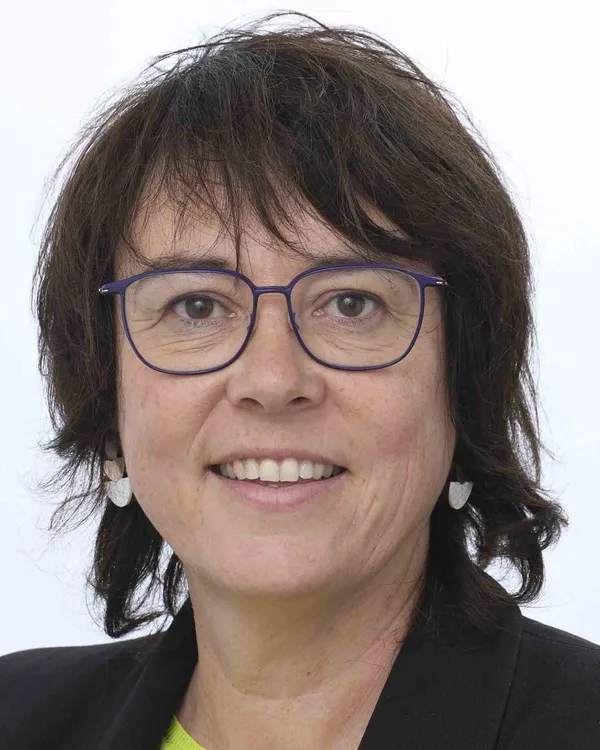
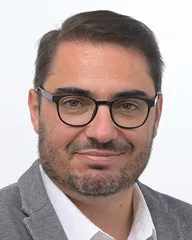
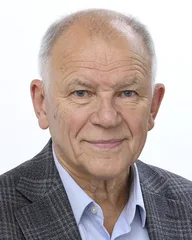
| Rank | Name | Country | Group | Speeches | |
|---|---|---|---|---|---|
| 1 |
|
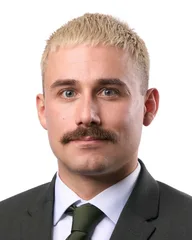
Lukas Sieper | Germany DEU | Non-attached Members (NI) | 390 |
| 2 |
|
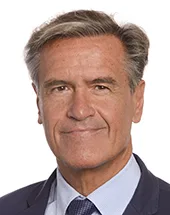
Juan Fernando López Aguilar | Spain ESP | Progressive Alliance of Socialists and Democrats (S&D) | 354 |
| 3 |
|
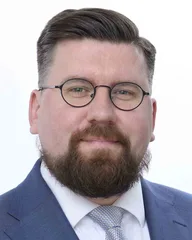
Sebastian Tynkkynen | Finland FIN | European Conservatives and Reformists (ECR) | 331 |
| 4 |
|
João Oliveira | Portugal PRT | The Left in the European Parliament (GUE/NGL) | 232 |
| 5 |
|
Vytenis Povilas Andriukaitis | Lithuania LTU | Progressive Alliance of Socialists and Democrats (S&D) | 227 |
All Contributions (119)
The situation of journalists and human rights defenders in Mexico
Madam President, Commissioner, on 5 July last year, Simon Peter was shot dead by an individual on his way to the market. He was killed in a cowardly manner, in the eyes of his own son. Simon Pedro had been president of Las abejas de Acteal, an indigenous organization that denounced structural violence in Chiapas, through the most radical pacifism. In Mexico, defending freedom of expression, the environment or human rights is extremely risky work that can cost lives. According to the latest figures, provided by the Ministry of the Interior of Mexico, since December 2018, 98 human rights defenders and 54 journalists have been killed and more than 90% of cases remain unpunished. Let's be clear: The messages that the Mexican president himself launches criminalizing journalists and civil society organizations must cease and all efforts must be required to build a comprehensive public protection policy that addresses prevention, protection, investigation and reparation. These demands must be a condition in the reform of the Comprehensive Agreement between the European Union and Mexico, because believing in the rule of law is precisely this: demand it within our borders, but also from our closest partners.
The deterioration of the situation of refugees as a consequence of the Russian aggression against Ukraine (debate)
Madam President, Commissioner, Madam Minister, since the beginning of the Russian invasion of Ukraine, 1.5 million people have fled to neighbouring countries and the UNHCR estimates that this figure could rise to 4 million. Faced with this great humanitarian challenge, the European Union is finally up to the task of activating the Temporary Protection Directive for the first time. An activation which, let me recall, the Greens/EFA Group had already unsuccessfully called for in crises such as Syria or Afghanistan. Millions of people are leaving their lives behind under Putin's bombs. And in the face of this cruelty, Europe has no choice: We must be a refuge. That said, I think it's time to ask ourselves some questions that may have uncomfortable answers. Let us ask ourselves why we are now committed to a humanitarian response and why we did not do so in past conflicts. Let us ask ourselves why, as the UNHCR acknowledges, cases of racial discrimination are being detected at Ukraine's border with the EU. Let us ask ourselves why, while welcoming the Ukrainian brothers with a hug, this same weekend we received the sub-Saharan brothers with batons on the border of Melilla. The answer is as hard as it is clear. And it's in the color of the skin. Discrimination based on race, religion or immigration status is inadmissible. Solidarity is a fundamental value that has no exceptions. We all have the right to escape the horror of war and poverty. The conflict with Ukraine is tearing down several taboos. Let us seize this moment to move towards a lasting asylum policy, which prioritises solidarity and human rights. A Community policy that makes refuge one of Europe's great strengths.
Shrinking space for civil society in Europe (debate)
Mr President, all over the world, civil society organisations and individual citizens are seeing civil and political freedoms restricted and threatened. The deterioration is evident on multiple fronts, but I will focus the intervention on two points that I am especially concerned about. On the one hand, the increasingly widespread practice of resorting to "gag" lawsuits or strategic lawsuits against public participation by economic and political powers to threaten and silence members of civil society. We will soon begin work on putting a brake on it at European level. On the other hand, the lack of an adequate European protection and monitoring framework that makes it impossible for Member States such as Spain, with its gag law still in force, to adopt laws that curtail rights and demobilize those who act in defense of human rights. By making civil society's space for action smaller, we are also making our democracies smaller.
The EU priorities for the 66th session of the UN Commission on the Status of Women (debate)
Mr President, Commissioner, let me start by putting a few more facts on the table: According to the UN Development Programme report, the proportion of deaths among women in extreme weather events over the past 20 years has increased by 60%, and 80% of those displaced by climate change-related causes since 2010 have indeed been women and girls. Of course, the climate crisis also has a gender bias. Gender equality and climate change are two of the great challenges that can condition our future from a social and even existential point of view. And while we often treat these issues in isolation, they are intimately related. The answers to these global challenges have to address the links between gender, climate and security, with a look, that yes or yes, will have to be feminist and involve the empowerment of each and every one of the women of this planet.
One youth, one Europe (topical debate)
Mr President, Mr President-in-Office of the Council, Commissioner, the youth unemployment figures in the European Union are just a symptom of a fundamental problem: For many young people, the social elevator has stopped working. They pursue long years of studies to subsequently encounter unstable and poorly paid jobs and an endless loop of unpaid internships. In this sense, work in exchange for experience is not only a source of inequality – as not everyone can afford this luxury – but it is also a violation of labour rights. In Spain, 85% of children under the age of 30 cannot emancipate themselves because experience does not yet pay the bills. And because precariousness makes it impossible to be independent or think about the future. The solution is easy, comrades: If you work, you collect. In this European Year of Youth we must say loud and clear that being young can no longer be synonymous with precariousness. Let us be courageous, because young people – as they should be – will not settle for less.
Sexual and Reproductive Health and Rights in the European Union (continuation of debate)
Madam President, for too long women have not decided freely on political, cultural, economic or social issues that directly affected our lives; Even some, today, are still obsessed with advocating that we cannot decide on our bodies: We have seen it in recent years in Poland or Slovakia. To understand the importance of this debate, it is crucial to put some facts on the table: According to the WHO, forty-seven thousand pregnant women die each year in unsafe abortions, and more than sixteen million adolescents give birth mainly through forced relationships and unwanted pregnancies. That is why last September the European Parliament adopted a report calling for the inclusion of sexist violence in the list of Eurocrimes, and the text, based on the jurisprudence of the European Court of Human Rights, was very clear on the subject at hand today: Lack of access to safe and legal abortion is a form of gender-based violence. For all this, it is essential that today we reiterate in this institution, which represents the will of European citizens, that in this House fundamental rights are defended, and this includes, of course, our sexual and reproductive rights: They are our bodies and therefore we decide.
European Year of Youth 2022 (debate)
Mr President, Commissioner, the figures are clear. Last August the youth unemployment rate almost tripled the overall unemployment rate in the European Union. The social and economic crisis caused by the pandemic has affected young people disproportionately. And if we talk about young women or young people from the LGTBIQ collective, migrant or racialized young people, the indicators are even more devastating. The European Year of Youth must also enable us to focus on issues such as the blatant abuse of unpaid traineeships. We have a big challenge: overcoming adultcentrism to highlight the plurality and complexity of young people's interests and concerns, which go beyond the labour market and also go through the climate crisis or economic policy. In the European Year of Youth, we are calling for their voices to be central to building the future of Europe.
The European Education Area: a shared holistic approach (debate)
Mr President, for the European Education Area to succeed it must be inclusive, accessible and cohesive. For this reason we are pleased to have reached an agreement where we talk about education alongside concepts such as climate crisis, green and digital transition, gender gaps or discrimination and where, beyond the purely economic perspective, we highlight continuous learning, non-formal training or volunteering. This report is a clear message for the Commission to turn words into action; that is why we call for adequate funding, as well as the improvement of working conditions in the education sector and the inclusion of all teachers in training and exchange programmes: Reclaiming the value of teachers and the centrality of the role of education in the European strategy is the best guarantee for the future of all. European values, including diversity, must also be the backbone of shaping education in Europe. It is therefore good news that this text speaks resolutely of multilingualism and underlines the importance of learning all the languages of the Member States, languages that go beyond English and, of course, beyond the restrictive definition of the 24 official languages that we unfortunately still have in this room and that does not correspond to the fertile linguistic reality of Europe. That is the Europe we stand for: which recognizes in each language a vision of the world worthy of dignity, which sees in each language a source of wealth and strength. The future of Europe will also be shaped in the configuration we give to its education: We have an opportunity and we must not miss it.
Strengthening democracy, media freedom and pluralism in the EU (debate)
Mr. President, Goliath against David. These are the strategic lawsuits against public participation: harassment and intimidation imposed by the great economic and political powers through the filing of lawsuits against journalists, human rights defenders, political opponents, activists and all those who are dedicated to informing, investigating or encouraging public debate. This has a silencing effect with devastating consequences for the proper functioning of democracies and the rule of law. With this robust report that we will adopt tomorrow we call on the Commission to be as ambitious as possible with its proposal for a directive to put an end to these gag demands in all the countries of the European Union. Let's give David the tools to defend himself against Goliath.
The first anniversary of the de facto abortion ban in Poland (debate)
Madam President, Commissioner, once again, today we have to talk about Poland. Surely we would have to denounce again the authoritarian drift of the Polish Government and that of its executive arm, the Constitutional Court. But I won't give you another second today. On the contrary, I will focus my minute of intervention to talk about them. To talk about the fighters, to talk about Polish women and to send a very loud and clear message to all of you from the European Parliament: We won't leave you alone. We have seen with great pride and admiration how you mobilized to defend your rights, your bodies and your freedoms. I'll be clear. Denial of sexual and reproductive rights is a form of gender-based violence and a violation of human rights. And in this house human rights are defended. No woman shall be free as long as there are still women subjected. For this, comrades, we promise you that we will continue to fight at your side, defending your rights, which are also the rights of all of us. (Applause)
The Rule of law crisis in Poland and the primacy of EU law (debate)
Mr President, Mr Prime Minister: crossed a red line. The latest challenge from Poland's institutions is another unacceptable attack on democracy, the rule of law and the European Union. President von der Leyen, there is an urgent need to react to the model of illiberal democracy that has already planted too many seeds in Europe. For this reason, today I would like to invite you to look up. In the European Union, he has been imprisoned for demonstrating, organising a referendum or rapping. The right to asylum is violated. There are MEPs who can exercise their mandate throughout the territory except in their own home. In the European Union, journalists have been killed for investigating power and the corruption of escaped monarchs is covered up. All this happens in the European Union. Let us set aside double standards. We need an effective rule of law monitoring mechanism for all Member States. The seeds of authoritarianism are already germinating and are cracking the foundations of the European project. Being pro-European today is not accommodating inaction.
The situation of artists and the cultural recovery in the EU (debate)
Mr President, the cultural sector has been hit by the pandemic, and that is why for months we have been calling urgently for a European framework to guarantee artists decent work: Without this framework there is no cultural health or democracy possible because artistic creation is much more than an entertainment or a trade, it is a fundamental part of the social debate. That is why we are concerned that freedom of expression is threatened by an economic context that hinders the creative process, but also by the rise of increasingly reactionary forces. Just a few days ago, in the Spanish State, a judge, at the request of an ultra-Catholic organization, ordered the removal of dozens of books on the LGTBI theme in eleven educational centers. Improving the situation of culture means improving the situation of artists, yes, but also guaranteeing the freedom of expression that is the raw material of their work; Otherwise, what will urgently need to be saved will be our democracy.
European Union Agency for Asylum (debate)
Mr President, last June the countries of the European Union reached an agreement to strengthen the European Asylum Support Office and make it a fully-fledged European agency. An agreement that we have concluded, because it has made it possible to reduce the delay in the entry into force of some key articles in the Regulation. While we welcome the new roles assigned to it, we are aware that the agency's work will be valued based on the policies it will eventually implement. And these policies will be those set out in other legislative initiatives contained in the EU Pact on Migration and Asylum. And for the moment, we regret to tell you that the proposals published by the Commission fall far short of what the Greens/EFA Group expects. We ask them to be more ambitious and, above all, sensitive to the humanitarian crises that exist. Work towards legislation that protects the right to seek asylum, ensures effective and efficient asylum procedures and ensures a fair sharing of responsibilities between Member States. Faced with the reactionary project of the fortress Europe, based on fear and populism, we defend the Europe of empathy, solidarity and human rights. Let's be the ones who build bridges and not the ones who build walls.
The impact of intimate partner violence and custody rights on women and children (debate)
Mr President, Commissioner, it is a source of pride to see how this House, little by little but without pause, is increasingly addressing the causes and consequences of this scourge of gender-based violence. Violence that, as we have explained in the report we are voting on today, not only affects women, but also has a profound impact on the lives of children, sometimes even by taking it away. This is why the text is clear: it is important that legislation considers children who have witnessed intimate partner violence or who have experienced vicarious violence as victims of gender-based violence. We need the European Union and its Member States to legislate in this regard and to guarantee the rights and best interests of children, so that they are protected in all situations and in all places. Unfortunately, this is not always the case at present and there is a wide disparity of policies and legislation in the Union. Last but not least, the report we are voting on today makes it clear that cases of intimate partner violence must be taken into account when determining custody rights and visitation arrangements. And this is crucial – let us be clear – because a batterer will never be a good father.
Identifying gender-based violence as a new area of crime listed in Article 83(1) TFEU (continuation of debate)
Madam President, firstly, thank you all for your speeches and for this very fruitful debate, which has once again contributed to putting sexist violence on the political agenda. But we know that, after the debates, it is time to legislate and, in order to take steps forward, we must act through unappealable parliamentary majorities; And this is what we all have to build today, beyond our political colors, our country, our language. Today and tomorrow we have to vote to defend a higher good, which is our lives, the lives of each and every girl and woman in Europe, and this should be above any difference or discrepancy. I would like to thank the co-rapporteur, Malin Björk, and also the shadow rapporteurs from The Left, Verts/ALE, S&D and Renew for their full cooperation, commitment and involvement so that this report can be adopted. But I would especially like to address my colleagues in the EPP Group, who, from your legitimately critical standpoint, have also made a decisive contribution to the preparation of this report. For this reason, I ask you to continue together in this shared struggle. Compañeras, it is much more what unites us than what separates us and, therefore, I appeal to the responsibility of all for this crucial vote. We cannot end this debate without a meaningful memory for all those girls and women who have been victims of femicides, the most egregious expression of sexist violence, and also for all those who today, now, are suffering it. From here we tell you that you are not alone, that we are here for you and that we will live up to it. Angela Davis says that we must not accept things that cannot be changed, but change things that we cannot accept. Well, today we have the opportunity to say that we do not accept more violence and that change has come.
Identifying gender-based violence as a new area of crime listed in Article 83(1) TFEU (debate)
Mr President, I would like to start this speech by thanking the MEPs and the teams of the different groups who have contributed to the fact that in this plenary session we can vote on an ambitious, inclusive and, above all, much-needed report. I think it is fair to highlight the collaboration and constructive attitude that has prevailed throughout the negotiation of a report that will help to draw the way towards the eradication of sexist violence, a scourge that the United Nations has come to define as a pandemic in the shadows, which kills us for the simple fact of having been born women. We talk about the violence suffered by our daughters, our sisters, our mothers and our grandmothers. A violence that we suffer ourselves in our streets, homes and workplaces. The figures are tragic. One in three women in the European Union has experienced physical or sexual violence. Half of us have been harassed and one in twenty have been raped. Behind these chilling figures there are already millions of names. Millions of truncated lives with which, as public servants, we have an inescapable duty. I would ask this House to be aware of the moment. This is a vote that can be historic. We can and must turn today into the day when the European Parliament overwhelmingly called for the inclusion of gender-based violence in the list of criminal areas with a European dimension. This fact, as you all know, would allow the European Union to have legal definitions, rules, minimum and common criminal sanctions throughout the European territory, and for all forms of gender-based violence, not just hate crimes on the basis of gender, as the Commission sometimes proposes in its work programme. The Commission's proposal is not enough if it does not include forms of gender-based violence in Article 83, and it differs from the commitment that President von der Leyen, in her speech, made when she was a candidate and defended what we are going to vote for in this House today. We are not naive, we know that several countries will show their reluctance in the Council. But this cannot be an excuse for us here today not to do our job; so that we do not live up to our commitment to the well-being, security, freedom and even happiness of this 50% of the population that we represent women. Furthermore, the amendment of Article 83 could also serve as a legal basis for the directive on gender-based violence that the Commission has committed to adopt and which we will press for to be adopted this year without delay. By amending this Article, the Directive could not only act in the fields of prevention, accompaniment or training in line with the Istanbul Convention, but this Directive would have the capacity to go further, be much more holistic and ambitious, and could also address the criminal aspect of gender-based violence. Ultimately, the EU would have more and better tools to fight against forms of gender-based violence, which are one of the most serious and persistent human rights violations in human history. Who could be against this goal, beyond the far right, which we know today will not support this report. Honestly, we weren't expecting you. We did not expect any votes from those who day by day show that they only work to cut the rights and freedoms that our ancestors earned by hand. Today is also a day to tell the far right that, in the face of their intolerance and contempt for fundamental rights, a majority of this House will be found representing the Europe of the common good, prosperity, freedom and sorority.
The Pegasus spyware scandal (debate)
Madam President, Commissioner, several countries around the world have used the Pegasus spy program to unlawfully monitor journalists, political dissidents and activists. In this Europe that claims values such as democracy, the rule of law and respect for fundamental rights, we find that its Member States are using this technology. The Spanish state uses Pegasus to investigate political rivals, including the president of the Parliament of Catalonia, Mr Torrent, or a former colleague of all of you, Ernest Maragall. We demand independent investigations and accountability in countries where there has been any case of illegal surveillance. Finally, the use of surveillance technology should be suspended until the European Union has a regulatory framework that ensures full respect for fundamental rights.
Breaches of EU law and of the rights of LGBTIQ citizens in Hungary as a result of the adopted legal changes in the Hungarian Parliament - The outcome of 22 June hearings under Article 7(1) of the TEU regarding Poland and Hungary (debate)
Mr President, Commissioner, Minister, last Saturday a young Galician man, Samuel, was killed after a beating. The same night in my city, St. Cugat, another young man was assaulted unconscious. The two attacks were carried out with the cry of "maricon!". The escalation of violence against the LGTBI collective is an emergency that we must combat without palliatives. And this means combating all those movements, organizations and governments that throughout Europe normalize persecution and stigmatize people for their way of wanting or thinking. The law passed in the Hungarian Parliament is an example of the institutionalization of this reactionary drift, as is the fact that political parties in this House, such as Vox, point to the workplace of the editor of the satirical magazine. Thursday, thus inciting violence against him. They point to others to act. The extreme right always works against freedom with the cry of "Go for them!" or "Maricon!" But we assure them, again, that "they will not pass."
Asylum, Migration and Integration Fund 2021-2027 - Integrated Border Management Fund: Instrument for Financial Support for Border Management and Visa Policy 2021-2027 (debate)
Madam President, Commissioner, Madam rapporteur, since the summer of 2015, when Europe experienced an unprecedented humanitarian and political crisis, we have witnessed a systemic lack of solidarity towards forced migrants. We have suffered the absence of a narrative that combats exclusionary discourses. In this context, strengthening integration policies is imperative. In many cases it is the regional authorities that are responsible for implementing these policies and, while we welcome the increase in the budget for AMIF, we regret that the Regulation only sets a minimum allocation of 20% for the solidarity objective of the Fund and an allocation of 5% for local and regional authorities. It is more evident than ever that Europe's challenges can only be tackled from a multi-level perspective, where all actors, including local and regional authorities and civil society, contribute to building a stronger and more supportive Europe.