

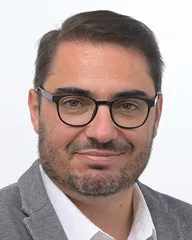
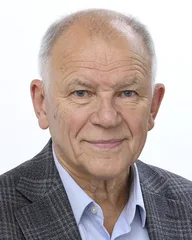
| Rank | Name | Country | Group | Speeches | |
|---|---|---|---|---|---|
| 1 |
|
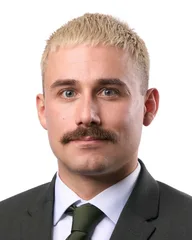
Lukas Sieper | Germany DEU | Non-attached Members (NI) | 390 |
| 2 |
|
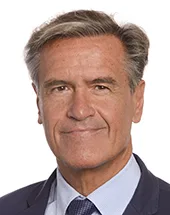
Juan Fernando López Aguilar | Spain ESP | Progressive Alliance of Socialists and Democrats (S&D) | 354 |
| 3 |
|
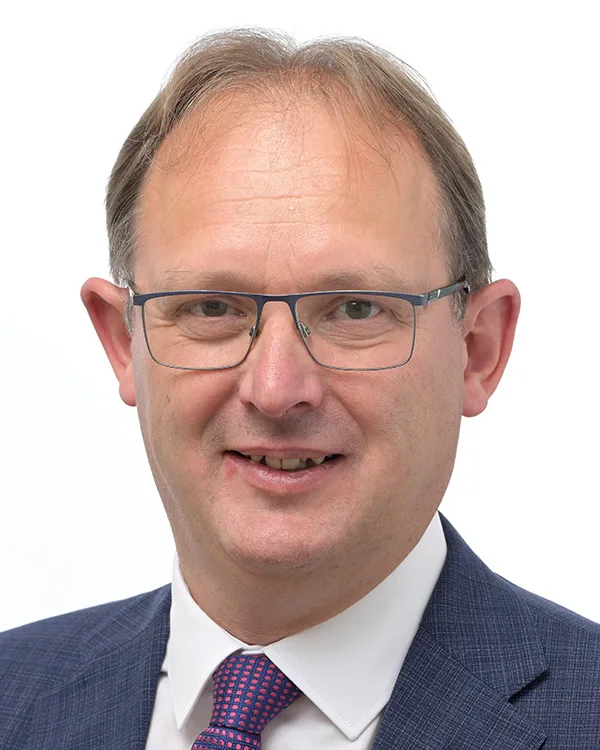
Sebastian Tynkkynen | Finland FIN | European Conservatives and Reformists (ECR) | 331 |
| 4 |
|
João Oliveira | Portugal PRT | The Left in the European Parliament (GUE/NGL) | 232 |
| 5 |
|
Vytenis Povilas Andriukaitis | Lithuania LTU | Progressive Alliance of Socialists and Democrats (S&D) | 227 |
All Contributions (237)
Inclusion of the right to abortion in the EU Charter of Fundamental Rights (debate)
Mr President, Mr Matić talks, among other things, about women's rights. I would like to ask him a question about children's rights. My question is as follows: Are you aware of the UN Convention on the Rights of the Child? Are you aware that that convention states that every child has the right to care and that this applies both before and after birth? How do you view this duty of care and how does it relate to your position on abortion?
The immediate risk of mass starvation in Gaza and the attacks on humanitarian aid deliveries
Mr President, ladies and gentlemen, the humanitarian situation in Gaza is extremely worrying and we must therefore do everything we can to ensure that the aid reaches the people, and I think we all agree on that. But who actually causes the biggest problems here? Is that Israel, as is constantly being claimed, or is that Hamas? Certainly: Israel has a responsibility here. Israel is aware of this and is doing what it can to allow goods through and facilitate help. There is absolutely no deliberate obstruction of aid by Israel. Hamas, on the other hand, hijacks food shipments for its own fighters and leaves the Palestinian civilian population to its own fate. Hamas is a terrorist organization that terrorizes not only Israel, but its own people. Initiatives to get more humanitarian aid to Gaza quickly, such as the sea corridor, certainly deserve our support. But what would certainly help is that Hamas releases the hostages. Today, too, we demand their immediate release! For more than five months, they have been held under appalling conditions in Hamas' dark tunnels. Talk about people who need help! Why isn't the Red Cross doing more to gain access to them? What does the Commission do specifically for them? I'd like a response.
Energy performance of buildings (recast) (debate)
Mr President, ladies and gentlemen, energy saving, and therefore also the insulation of buildings, deserves all the attention. After all, everything we save on energy does not have to be generated. However, the question is: How do we send this? The package now before us is full of detailed EU rules. That's not sensible. Many national initiatives are already under way. With a detailed European approach, you could just cross it. In the Netherlands, for example, we are looking at where we can best situate charging points for electric cars per district. Brussels dictates on the number of charging points per building as currently proposed do not help. After all, no neighborhood is the same. Moreover, I strongly question the choice of legally binding targets in this regulation. Goals that are also very ambitious and therefore unrealistic. Making our buildings more sustainable requires a different approach, a bottom-up approach and a more realistic timeline.
Need for an urgent Council decision in favour of amending the protection status of wolves in the Bern Convention (debate)
Mr President, the wolf's protection status must be reduced. Our adopted resolution of 2022 was crystal clear on this. The Commission now supports this request. Now the Council. To ministers who are still struggling and still think they can solve the problems with social dialogues, I would like to say: The time of talking is over. We need to act now. Especially when we realise that there are now more than 20 000 wolves in Europe and that the wolf population can grow by 30% every year. The damage caused by wolves is already very significant in some areas of the European Union: some 65 000 sheep, goats and other farmed animals per year that are horribly torn open. If we do nothing, the situation is in danger of becoming truly unmanageable. So, Council, you're failing us tonight – look, the box is empty – but I'm assuming you're following us online or you're looking back at this debate. Counselor, take your responsibility.
War in the Gaza Strip and the need to reach a ceasefire, including recent developments in the region (debate)
I can certainly explain that. What do I mean by this? I mean that in Gaza and in the Palestinian territories a generation is growing up that is filled with hatred and with Jew-hatred. That's what we need to break through first. It is also clear that as long as Hamas is in charge, there can be no lasting peace. I sincerely hope that a solution can be found when it comes to a deal with Hamas on the release of the hostages, in the form of hopefully a temporary ceasefire, but I really think that in order to achieve a lasting peace in this region, Hamas will really have to disappear from the scene.
War in the Gaza Strip and the need to reach a ceasefire, including recent developments in the region (debate)
Mr President, ladies and gentlemen, the release of the more than 100 hostages in Gaza must be a top priority in the ongoing negotiations. Increasing humanitarian aid to civilians in Gaza is also of great importance. A temporary fight break can certainly help, but it is up to Hamas to take responsibility, in the interest of the people in Gaza. However, this has been lacking for decades. Let's be realistic: As long as Hamas continues to prioritize the destruction of Israel, there can be no permanent ceasefire. Even if Hamas were defeated, the spirit of Hamas still lives on. This problem must be tackled at the root. The EU also has a responsibility to do so. As long as Europe continues to co-finance Palestinian textbooks full of Jew-hatred and as long as the UN pays bodies where terrorists work, a sustainable solution is unfortunately not in sight. (The speaker agreed to answer a blue card question)
Protection of the environment through criminal law (short presentation)
Mr President, while the EPP is trying to take the edge off the Green Deal in the light of the elections, there is now a report by an EPP rapporteur that presents us with a deal whereby entrepreneurs are forced with the hard hand of criminal law to stay within the framework of the Green Deal. There's something contradictory about that. In the Netherlands, farmers are facing administrative fines because they do not have a nature permit, the so-called PAS detectors. With his deal, does colleague Manders now also open the way for criminal prosecution of these farmers? I hope not, but the extension of the definition of environmental crime does not give me complete peace of mind. Surely serious environmental crimes, such as the dumping of drug waste in the forest, should be severely punished, totally agree, but do we not make the scope of this regulation too broad? Incidentally, I regret, Mr President, that with this deal the principle that criminal law is something of the Member States, that we are discarding that principle with this regulation, this directive.
Tackling the inflation in food prices and its social consequences and root causes (debate)
Mr President, Commissioner, the fact that our daily messages have become much more expensive does not stand alone. It is linked to the overall inflation that was partly caused by a failing ECB that has continued to pump money into the economy for far too long. Lesson one is therefore: ECB, stick to your mandate, namely to ensure price stability. Lesson two is: Let's take care of our agriculture and fisheries. To provide consumers with good and affordable food, we need modern competitive businesses. Give space to entrepreneurship and stop the ever-growing jumble of regulations. And lesson three: Let's take a closer look at the distribution of margins in the chain. What about the profit margins at the supermarkets, for example? After all, everything points to the fact that prices have been increased not by the farmers, but by the links further down the chain.
Recent attacks on Christmas Eve in Plateau State in Nigeria
Mr President, ladies and gentlemen, the horrific attacks on Christian villages in Nigeria on Christmas night last year are a new low point in the ongoing violence. Those who say that it is merely a conflict between shepherds and farmers ignore the other causes. They are Muslim extremists who sow death and destruction here. That is the harsh reality and our resolution is clear on that. I call on the Nigerian authorities to arrest and condemn the perpetrators, to step up security measures, to generously compensate the victims and to guarantee freedom of belief. I also call on the Commission and the High Representative to pay more attention to the seriousness of increasing persecution of Christians. Not only in Nigeria, but also elsewhere in the world. The fact that the High Representative did not even bother to condemn the attacks at the end of December is downright shameful in this regard. Victims deserve better.
Need to fight the increase of antisemitism and anti-Muslim hatred (debate)
Mr President, Commissioner, ladies and gentlemen, the dramatic events on 7 October also have an impact on our society. We see a huge polarization. But what worries me the most is the resurgence of anti-Semitism. We have to stop this. Namely: a) By being very clear. You may protest, but as soon as you start shouting that Jews should be expelled from their land, you cross a border. We won't tolerate that. b) By continuing to invest in our young people. As recently entrusted to me by the director of a school in Molenbeek – a school with over 80% Muslim youth: We teach our students to respect dissenters. That's the way it should be. c) By setting a good example. The fact that the European Union is still transferring money to the Palestinian Authority and UNRWA for anti-Semitic teaching materials cannot therefore be explained. Commission, stop it!
Plants obtained by certain new genomic techniques and their food and feed (debate)
Mr President, plant breeders are doing a fantastic job. They know how to use the potential that lies in creation effectively and thus create new variants. Ranging from beautiful lilies to potato varieties that still generate good yields even under very dry conditions. The problem, however, is the long duration of the breeding process, while we need to speed it up, given climate change and disease pressures. With new breeding techniques, the process of breeding can be significantly shortened. And that without introducing alien genes as is the case with GMOs. New breeding techniques therefore offer a welcome addition to classical breeding. However, we must ensure that the patent right does not get a grip on the plant material. It should remain freely available for further breeding. I am pleased that my amendment on this has been accepted and I call on the rapporteur to secure this point in the negotiations.
EU Action Plan: protecting and restoring marine ecosystems for sustainable and resilient fisheries (debate)
Mr President, Commissioner, today it is not a green light for the action plan for the protection and restoration of marine ecosystems, but a resolution with a number of fundamental concerns about both the approach and the content. The Commission requires Member States to close all natural areas for bottom-contacting fishing from 2030 onwards, while having no legal basis at all, but only a non-binding communication. Moreover, there is no impact assessment. It is therefore an approach that raises major questions alone. In terms of content: Natural areas are very different. Where soil disturbance can be harmful in one area, it does not have to be so in another area. This is not sufficiently taken into account in the action plan. In addition, we will make ourselves even more dependent on imports. For example, for the Dutch shrimp fishery, which is 80% active in Natura 2000 sites, there would be no future with this plan. The action plan is therefore insufficiently thought out and not proportionate. Fishing deserves better.
Implementation of the Common Fisheries Policy and future perspectives (debate)
Mr President, Commissioner, ladies and gentlemen, with Mr Mato's very balanced report on the CFP, we call on the Council and the Commission to pay more attention to the socio-economic importance of fisheries, as well as to the important role that fisheries play in our food supply. This is urgently needed, because the fishing industry has been hit hard in recent years. That's why the helm really needs to change. Unnecessarily restrictive measures that go beyond their purpose, such as the landing obligation and the pulse ban, must be removed. Fishermen must have sufficient access to their fishing grounds. The TAC and quota system has certainly proved its worth, but the current implementation with sometimes very drastic annual reductions creates a lot of uncertainty. I therefore wholeheartedly support the rapporteur's call for a multi-annual quota.
EU-India relations (debate)
Mr President, Commissioner, ladies and gentlemen, at a time of geopolitical tensions and uncertainty, it is very important to establish new strategic partnerships and strengthen existing ones. The European Union and India can do a lot for each other in this regard. In the field of trade and investment, but certainly also in the field of digitalisation and maritime security. In particular, to counterbalance China's increasing influence and aggression in the Indo-Pacific region. The rapporteur makes good recommendations in all these areas, but with her report we are also putting our finger on the sore spot, namely the human rights situation in India, which is becoming increasingly worrisome in many areas, especially around religious minorities. I am thinking of the anti-conversion laws and the inadequate action against Hindu extremists that sometimes make the lives of Christians and other religious minorities quite difficult. In recent years, attacks and intimidations against religious minorities have increased sharply. Ethnic conflicts also have an increasing religious component, as in Manipur. India needs to step up its efforts to investigate and prosecute those responsible for violence against religious minorities. Our message today is crystal clear: We support intensified cooperation with India, but only on condition that India takes our concerns about human rights seriously and actually solves the problems mentioned.
Humanitarian situation in Gaza, the need to reach a ceasefire and the risks of regional escalation (debate)
( – Mr President, ladies and gentlemen, while we are talking here, 136 hostages are being held by Hamas and other terrorist organisations. For over a hundred days. Hamas does not allow the Red Cross and other organizations to access the hostages to provide medical care. Ondertussen frustreert Hamas de humanitaire hulpverlening door hulpkonvooien te kapen om zo haar eigen strijders te bevoorrechten en de burgerbevolking aan haar lot over te laten. All this is unacceptable. Meanwhile, the unfounded lawsuit against Israel at the International Court of Justice has turned the world upside down. Well, what's to be done? 1. Unconditional release of all hostages and immediate access to the Red Cross. 2. Humanitarian aid through Israel and Egypt must continue. 3. Do not call for a permanent ceasefire yet, because as long as Hamas is not eliminated, there is no peace and no perspective, including for the civilian population in Gaza.
One-minute speeches on matters of political importance
Mr President, for the Christian community in Plateau State in Nigeria, Christmas night ended in a nightmare this time. Two hundred of them were brutally murdered by Muslim extremists. Many hundreds were seriously injured. And what did we hear from the European Commission and the High Representative? No conviction, no statement, not even a post on X. Nothing at all. That is, of course, very bad, Mr President. All the more so as these attacks do not stand alone, but fit in with the pattern of increasing extremist violence in the region. I therefore call on the Commission and the High Representative to break the silence, to convey our concerns to the Nigerian authorities and to urge them to prosecute the perpetrators and to improve the protection of Christian villages. We must not leave the Christians in Nigeria to their fate.
Order of business
Madam President, I would like to thank Mr Gahler for their support for our proposal, and we can agree to postpone this debate to the next session in February.
Order of business
Mr President, last Christmas recess we were startled by reports of horrific attacks by extremists on Christian villages in Nigeria. Two hundred innocent villagers were killed and many hundreds seriously injured. Unfortunately, these attacks are not isolated. The region is increasingly confronted with extremist violence. No matter how you look at this situation, looking away from the ECR group is in any case not an option. The situation is too serious for that. We therefore propose that a statement by the Commission and the Council be put on the agenda on this subject with the title: “Recent attacks on Christian villages in Nigeria”. This is to reflect together on how we as Europe can contribute to stopping the violence there in the region.
Jurisdiction, applicable law, recognition of decisions and acceptance of authentic instruments in matters of parenthood and creation of a European Certificate of Parenthood (debate)
You ask what a healthy and stable family is. I am convinced that it is in the best interest of a child to grow up with a father and with the mother. And I do not believe that it is in the best interest of a child not to be informed and not to grow up with the biological mother. I believe in the classic marriage and family with the father and the mother. I think that is the best way we can deal with our families in the European Union. And again, I think it is primarily a matter in which the Member States themselves have to make their own choices.
Jurisdiction, applicable law, recognition of decisions and acceptance of authentic instruments in matters of parenthood and creation of a European Certificate of Parenthood (debate)
Mr President, with the Parenting Regulation, the European Union is on a slippery slope. After all, it enters an area that belongs to the Member States, namely family law. I know: this Regulation is limited to cross-border situations involving relocation to another country. But we can't ignore it: This regulation will soon force Member States to recognise parenting relationships that they consider to be inappropriate on the basis of their own considerations. For example, parent-child recognitions where the biological mother is kept out of the birth certificate. I am talking about surrogacy, in which many Member States are rightly very reluctant, partly because of the exploitation that goes with it. I can't possibly go along with this. I therefore very much hope that you will be able to support our amendments which seek at least to exclude surrogacy from the regulation. In the meantime, let's continue to invest in healthy and stable families. (The speaker agreed to answer a blue card question)
EU-China relations (debate)
Mr President, the report on which we are going to vote this week is crystal clear: Europe needs to rethink its relationship with China. We have become too dependent on China. Concrete measures are also needed against Chinese interference and espionage in Europe. The report also rightly pays due attention to the continuing violation of human rights. Take religious freedom, for example: the one-party state's control of religious activities is becoming increasingly strict. In the meantime, the sinification of religion continues unabated, among other things by prescribing party propaganda in religious buildings. Camera surveillance, intimidation and arrests of believers are the order of the day, whether Christians, Uyghurs or Tibetans. There is nothing less fitting here than a strong condemnation. I hope that you, the Council and the Commission, will actively address this in your dialogue with China. In this context, it is also of strategic importance to improve EU-Taiwan relations. After all, Taiwan is a reliable partner with which good business can be done.
Need to release all hostages, to achieve a humanitarian ceasefire and prospect of the two-state solution (debate)
Mr President, Mr High Representative, ladies and gentlemen, in our search for solutions in this terrible war, we must not leave any possibility unexploited. I'm thinking of the hostages. If there is room to free them again, for example through humanitarian breaks, then we must of course take advantage of that opportunity. However, the one-sided pressure on Israel to achieve a long-term ceasefire is not justified. This is especially true of Hamas. Hamas is the biggest obstacle to peace. And speaking of obstacles, let's also look at the bad role of UNRWA in this conflict. Through the system of inheritance, in which refugee status automatically passes from parents to children, UNRWA artificially maintains a gigantic refugee problem. As a result of this approach, 70% of Palestinians in Gaza are now refugees in their own country. As a result, UNRWA has actually become part of the problem. It's time for you to face that, too.
International day for the elimination of violence against women (debate)
Madam President, Commissioner, ladies and gentlemen, in the Netherlands there are often watchers at abortion centres. Volunteers who let women know that there are alternatives. They offer financial, practical, social and psychological help, help to mother and child. And that saves lives. A European directive on combating violence against women and domestic violence is currently being negotiated. An important theme, certainly, but there is a very bad provision in this package. In our negotiating mandate there is a proposal to also qualify preventing or trying to prevent an abortion as a crime. So if I soon have a good conversation with a woman who is considering an abortion, and I suggest that she think about alternatives or offer her a leaflet on the street, am I punishable? That can't be true! Then we're going to punish someone who's trying to protect an unborn child, someone who's helping women in need. I call that really merciless. Instead of providing care, we are going to ban an outstretched hand. I therefore call on the negotiators to reconsider this part of the package. What's going on here is a really bad road.
Humanitarian situation in Gaza, the need for the release of hostages and for an immediate humanitarian truce leading to a ceasefire and the prospects for peace and security in the Middle East (debate)
Mr President, Mr High Representative, Commissioner, I would like to ask the following questions to all those who today feel that they should criticise Israel in particular, including Mr Borrell: Who has held more than 200 innocent civilians hostage for more than six weeks? That's right, Hamas. Who sowed death and destruction on October 7 at a peaceful music festival and in many kibbutz? That's right, Hamas. Who uses innocent civilians as a human shield? That's right, Hamas. Certainly, everything must now be aimed at getting all hostages free as soon as possible. We have seen the despair and sadness in the eyes of their relatives who told us their harrowing stories. The fact that there is now an agreement on the release of a first group is hopeful in this respect. But let's not forget: In order to achieve a lasting peace, Hamas will really have to disappear from the scene. Israel deserves our continued support in this fight.
Sustainable use of plant protection products (debate)
Mr President, Commissioner, ladies and gentlemen, on reducing the use of plant protection products, I see interesting developments in agriculture and horticulture: the use of natural fighters in closed crops, for example. Or look at innovations in mechanical weed control. Developments that we need to facilitate as much as possible. However, the proposed 50% reduction in 2030 raises major questions, leaving enough room to intervene in the event of diseases and pests? I'm afraid not. The definition of sensitive areas is also problematic. It leads to a total ban on the use of plant protection products in large parts of Europe, with all the consequences for food production. A different approach is therefore needed. No rigid, unachievable objectives, but above all support for initiatives from the sector. Certainly initiatives that reduce the environmental impact, such as precision farming and the use of low-risk resources.