
| Rank | Name | Country | Group | Speeches | |
|---|---|---|---|---|---|
| 1 |
|
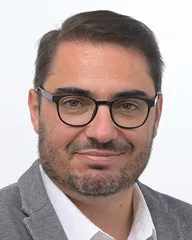
Lukas Sieper | Germany DEU | Non-attached Members (NI) | 390 |
| 2 |
|
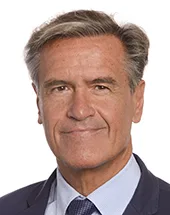
Juan Fernando López Aguilar | Spain ESP | Progressive Alliance of Socialists and Democrats (S&D) | 354 |
| 3 |
|
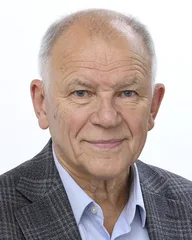
Sebastian Tynkkynen | Finland FIN | European Conservatives and Reformists (ECR) | 331 |
| 4 |
|
João Oliveira | Portugal PRT | The Left in the European Parliament (GUE/NGL) | 232 |
| 5 |
|
Vytenis Povilas Andriukaitis | Lithuania LTU | Progressive Alliance of Socialists and Democrats (S&D) | 227 |
All Contributions (237)
Human rights and democracy in the world and the European Union’s policy on the matter – annual report 2025 (debate)
Mr President, the human rights situation in the world is crying. I think we'll soon agree on that tonight. But the question is: What can we do about it? Military intervention, as Trump recently did in Nigeria, is not really obvious. But what is? I have three concrete recommendations for the Commission and for the High Representative: 1. Be more assertive in trade agreements. For example, in the case of India, do not settle for a non-committal human rights dialogue, but demand firm guarantees about repealing anti-conversion laws and addressing Hindu extremists; 2. also bring more focus into the policy. Stop promoting abortion. This is not a human right at all. Focus on violations of real human rights. Think about Christian persecution. Finally, appoint the EU Envoy for Freedom of Religion; 3. also look at human rights violations in Europe. Exploitation in prostitution, for example. We really need to tackle human trafficking much harder.
Mass kidnapping of children in Nigeria, including from St Mary's Catholic school in Papiri
No text available
Recent developments in Palestine and Lebanon (debate)
Mr President, ‘If the Arabs put down their weapons today, there would be no more violence. If the Jews lay down their weapons today, there would be no more Israel.” This statement is attributed to Golda Meir, Prime Minister of Israel since 1969. And so it is. But unfortunately, 55 years later, this is still the sad situation. Jews and Israel are threatened by Hezbollah, Hamas, the Houthis and, not to mention, Iran. As long as these threats continue, there will be no peace. In Gaza and Lebanon there is now a ceasefire, but the danger has not evaded. On the contrary. Priority for Europe – but also for Israel and the region – should therefore be: Disarm Hamas, the second phase of the peace plan. Disarm Hezbollah, an important task for the Lebanese army. But also: Hezbollah and the Iranian Revolutionary Guards are classified as terrorist organizations. It is truly incomprehensible that the EU has still not done so. Only in this way can a basis be laid for a lasting peace in the region, including for Palestinians and Lebanese.
Condemnation of the terrorist attack against the Hanukkah celebrations in Sydney and solidarity with the victims and their families (debate)
No text available
European Citizens’ Initiative ‘My voice, my choice: for safe and accessible abortion’ (debate)
Mrs Strolenberg, it is not at all unbelievable that we have this debate. It is very important that we have this debate. There is more than freedom, there is more than women's rights. Women also have a responsibility. Society has a responsibility, and I am convinced that the unborn life is God-given life. That we bear the responsibility for that, that we have to protect it and that we cannot freely dispose of it. And that is why I say "no" to abortion today.
European Citizens’ Initiative ‘My voice, my choice: for safe and accessible abortion’ (debate)
No text available
European Citizens’ Initiative ‘My voice, my choice: for safe and accessible abortion’ (debate)
I wanted to ask a question to Mr Gómez López. You are talking about women's rights, and of course I fully understand that. But what I'm genuinely curious about is how you look at the unborn life. The baby in the mother's womb. Doesn't that have rights? Do you think of that as a clump of cells? Is that a human being? I sincerely look forward to seeing how you look at this, also in the light of what the European Charter says, namely that everyone has the right to protection. How do you view unborn life?
Amending certain CAP Regulations as regards the conditionality system, types of intervention in the form of direct payment, types of intervention in certain sectors and rural development and annual performance reports, data and interoperability governance, suspensions of payments annual performance clearance and controls and penalties (debate)
Mr President, Commissioner, ladies and gentlemen, if we want to preserve agriculture in Europe, the regulatory burden on farmers will have to be drastically reduced. The simplification package we are voting on this week is a step in the right direction. This will increase the scope for Member States to adapt or suspend rules in the event of unforeseen circumstances. Member States may also grant compensation for the conditionality requirements in peat meadow areas, or GAEC 2. I call on the Member States to make use of this possibility without delay. However, to actually alleviate the regulatory burden on all farmyards, this package is not enough. More is needed. In order to really reduce the regulatory burden, it is necessary to revise the many outdated European directives, such as the Nitrates Directive, the Habitats Directive and the Water Framework Directive. I therefore call on the Commission to work swiftly on this and to come forward with proposals for amendments quickly.
Fishing opportunities 2026: ensuring the sustainability of fish populations, marine ecosystems and coastal communities
No text available
The situation of Christian communities and religious minorities in Nigeria and the Middle East, and Europe’s responsibility to protect them and guarantee freedom of conscience (topical debate)
No text available
Political situation in Myanmar including the humanitarian crisis of the Rohingya (debate)
Mr President, the people of Myanmar are suffering so much and you hear and read very little about it. It's sad! The military junta has a real reign of terror against its own population. Known are of course the stories about the Rohingya, who sought a safe haven in surrounding countries and now reside in the overcrowded camps under often very degrading conditions. Less well known is that among those 2 million Rohingya in the camp at Cox's Bazar are about 2,500 Christians. Life is extra hard for them. They have to deal with subordination, humiliation, destruction of property, rapes and even murder. Radical Muslim groups thwart church services and commit destruction. Even the UN does not take their complaints seriously. This injustice should not be ignored. That is why I call on the Commission to pay attention to this forgotten group of Christians in all its diplomatic efforts.
Combating violence against women and girls, including the exploitation of motherhood (debate)
Mr President, I must tell you that I am very disappointed with the input of both the Council and the European Commission, because they have not at all addressed the exploitation of motherhood, in particular surrogacy, when that is indeed on the agenda today. Look at the exploitation of vulnerable women, which often involves surrogacy. A lively trade has developed in babies. And that's not okay, of course. Children are not a commodity. But I also look at the fact that with surrogacy, the biological mother often becomes completely out of the picture, immediately after birth. And that while a child is in principle really best off when it grows up with its own biological father and mother. So here very clear ethical boundaries are being crossed. All the more reason to move towards a global ban on surrogacy. I challenge the Council and the Commission to take a clear position on this. I have the impression that the Minister has not listened to me, but her officials are certainly willing to brief her.
Presentation of the Court of Auditors' annual report 2024 (debate)
Mr President, ladies and gentlemen, this time too, the European Court of Auditors flawlessly puts its finger on a number of sore spots: the huge indebtedness (EUR 900 billion by 2027), rising interest payments (EUR 30 billion per year), but also the still too high error rate and the very poor supervision of the Recovery and Resilience Facility (RRF). Often it is not even known who the final beneficiaries are and does not even take into account the actual costs incurred, but only vague milestones and targets. My call today is: let us stop taking out new loans, let us considerably tighten up financial supervision and let us also establish with each other that the performance-based approach in its current form under the RRF cannot serve as a model for the new Multiannual Financial Framework (MFF). This approach will have to be thoroughly overhauled. The taxpayer deserves better.
Recent peace agreement in the Middle East and the role of the EU (debate)
We were able to see them all: the images of hostages coming home, the intimate embraces, the intense joy. Life was celebrated there. However, we also saw other images, those of kneeling Gazans who were summarily executed by Hamas. A frenzied crowd around it, cheering at death. It's chilling. And what a contrast! Once again it became poignantly clear how evil the Hamas ideology is and how it still holds many in Gaza in its grip. It is therefore important to give priority to two important parts of the peace plan, namely disarmament of Hamas and deradicalisation of Palestinian society. Now the European Union has played no significant role in the conclusion of the peace agreement. We have to be honest about that. But now that there is an agreement, we can certainly help to achieve it. I therefore ask the Commission to do three things: to ensure that no euro of European taxpayers’ money benefits Hamas; demand that all incitement to hatred and violence be removed from Palestinian textbooks; Immediately withdraw the proposed package of sanctions against Israel. Especially now that Israel is complying with the agreements, there is no reason to continue with this.
Order of business
Mr President, it is indeed a request from the ECR Group on the initiative of our French colleagues and our group. Monday morning there was a break-in at the Louvre. Invaluable French national treasures were stolen after a series of malfunctions and questionable decisions that endangered the museum's security. This is not the first time that European museums have been broken into. The Netherlands was also confronted with such a theft in January at the Drents Museum in Assen, in which masterpieces from Romanian history were stolen. We also regularly see historic buildings or churches that are left to decay or become targets of destruction. Therefore, the ECR Group would like to propose an additional debate entitled: “Intrusion into the Louvre: the importance of protecting Europe’s cultural heritage against theft and destruction’.
Rising antisemitism in Europe (debate)
Mr President, ladies and gentlemen, on a day like today, we cannot ignore it: Growing anti-Semitism has everything to do with October 7th. And especially with the wrong attitude that the West has adopted in response to this. Europe should have stood around the Jewish community as one man. Instead, activists were given ample jobs to shout the most terrible things about the Jews in stations, squares and universities. Attempts to tackle extremist groups, such as the Muslim Brotherhood, stumble upon a wall of political unwillingness and administrative impotence. Colleagues, it is not too late, but it is five to twelve. Look at Manchester. With some extra letters in schools, we're not there. The rudder has to change. Anti-Semites should not be walking around on the street, but behind bars. A zero-tolerance policy is what we need.
Common agricultural policy (joint debate)
Mr President, Commissioner, ladies and gentlemen, today we are discussing two very interesting topics: the simplification of the common agricultural policy and adjustments to the market organisation. Both proposals are important in order to improve the profitability of farms. It is good to see that more attention has been paid to this under the new Commission. However, there are two caveats. Note 1: the simplification of the common agricultural policy is good, but we absolutely need to look more broadly. We also have to deal with unnecessarily tight regulations in the sphere of environmental and nature legislation. I am thinking of the European Parliament's recent call for a genuine revision of the Nitrates Directive. We must give farmers much more room to realize the social goals at their own discretion based on responsible craftsmanship. This requires room for target control as an alternative to overly detailed means control. Note 2: it is indeed important to strengthen the position of the farmer in the chain. Written contracts can certainly help with this. However, all this must not come at the expense of sound market forces. We should therefore not want to regulate everything legally. Before you know it, you are going to undermine good practices, for example agreements within cooperatives or other value chains. That really doesn't serve anyone. Hence my plea for appropriate exceptions. It is important to keep a close eye on this in the trilogue.
The EU’s role in supporting the recent peace efforts for Gaza and a two-state solution (debate)
Mr President, ladies and gentlemen, anyone who really wants peace for Jews and Palestinians – and that is what we all want – must embrace Trump’s peace plan. After all, all the ingredients to achieve a lasting peace are in it. Israel already agrees, while Hamas still agrees. Are they finally ready to release the hostages? Everything stands or falls with that. If this door doesn't open, the road to peace will remain closed, I'm afraid. Instead of sanctioning Israel, therefore, everything should be aimed at Hamas letting the hostages go. The sequel will probably be a road full of pits and new obstacles. The traumas on both sides are immense. However, we must not let go of the opportunity offered by the present plan to relaunch something of a peace process and prevent a new 7 October.
Motions of censure (joint debate)
Madam President, I would like to refer to Rule 150 of Parliament's Rules of Procedure. As we speak, Nigerian singer Yahaya Sharif-Aminu is facing a death penalty for sharing a song on the Prophet Muhammad. During a recent hearing, the public prosecutor spoke explicitly about the intention of the state to publicly execute Sharif-Aminu. This is now in the hands of the Supreme Court, but the situation is very urgent. We have, in my opinion, to act now. As the European Parliament, we have called for the immediate release of Yahaya twice, in 2023 and 2025. So, I would like to urge you to contact the Nigerian authorities again and call again for his immediate release.
China’s unjustified decision to impose duties on imports of pork products from the EU and the need to support European farmers and workers (debate)
Mr President, Commissioner, last week China announced that it would introduce import duties on pigmeat from the European Union as of today. The levies will have a serious impact on European pig producers and the internal market. I am particularly concerned about the cooperatives that appear to be subject to extra high levies. I would therefore like to make an urgent appeal to the European Commission to use all possible diplomatic instruments and to convince China to at least postpone the introduction of the levy and to come to a solution. The WHO agreements should also be taken into account. Take advantage of the opportunities to challenge these levies. And if China does not reverse these measures, then, as far as we are concerned, we should certainly also look at how we can mitigate the distortive effects on the internal market.