
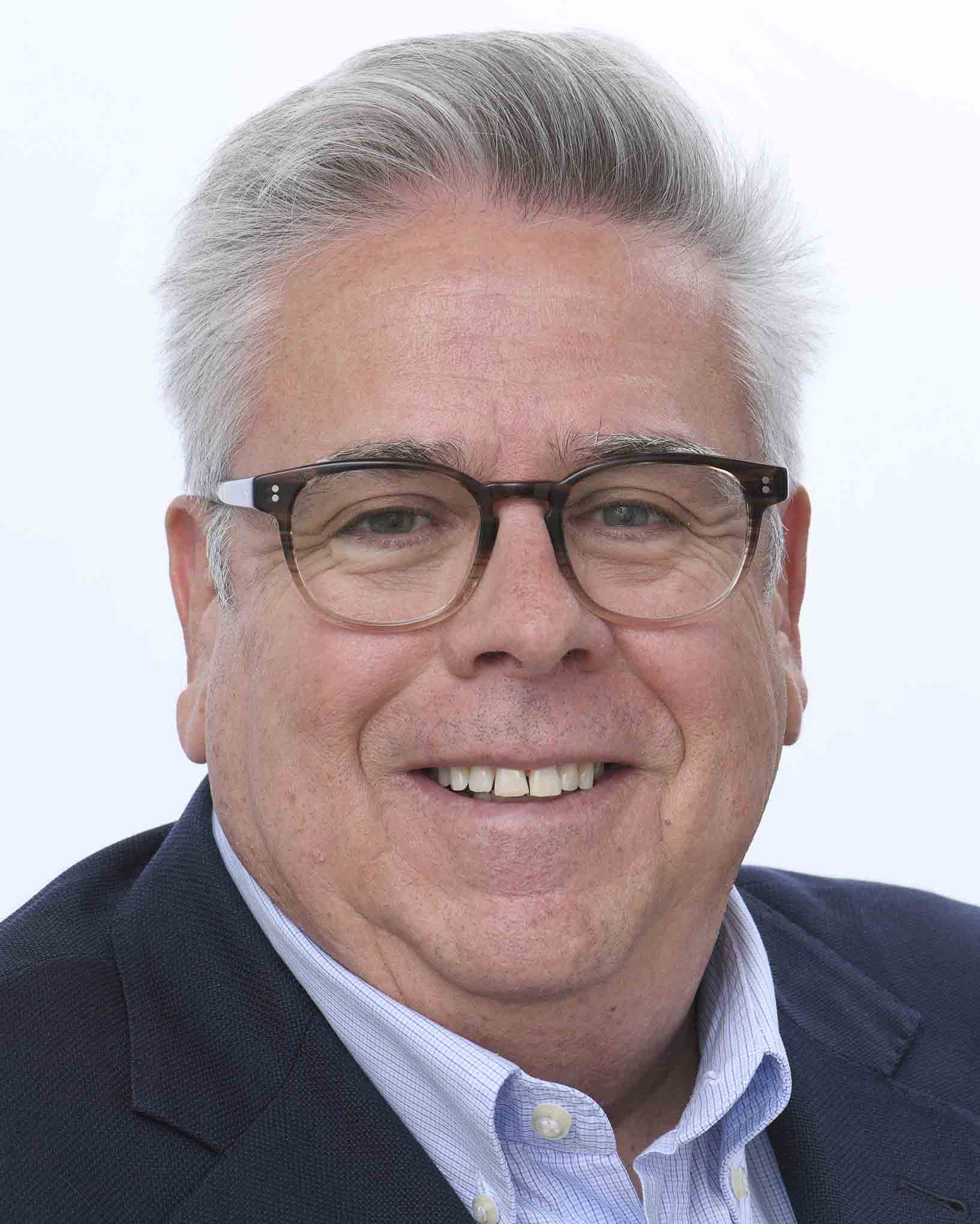

| Rank | Name | Country | Group | Speeches | |
|---|---|---|---|---|---|
| 1 |

|
Lukas Sieper | Germany DEU | Non-attached Members (NI) | 390 |
| 2 |

|
Juan Fernando López Aguilar | Spain ESP | Progressive Alliance of Socialists and Democrats (S&D) | 354 |
| 3 |

|
Sebastian Tynkkynen | Finland FIN | European Conservatives and Reformists (ECR) | 331 |
| 4 |

|
João Oliveira | Portugal PRT | The Left in the European Parliament (GUE/NGL) | 232 |
| 5 |

|
Vytenis Povilas Andriukaitis | Lithuania LTU | Progressive Alliance of Socialists and Democrats (S&D) | 227 |
All Contributions (167)
2021 Report on Turkey (debate)
Mr President, I would like to thank the shadow rapporteurs for their work. This is a complicated, devilish dossier, but the truth is that working with them has made it very easy. Our commitment, ladies and gentlemen, is to a country, not to a government. And when we think about the relationship with the country, let us think about its civil society, because we are of the little that is left to that civil society. Let's not forget that when we talk about Turkey. As I usually say: Turkey is not Erdoğan and Erdoğan is not Turkey. And we're going to this bazaar diplomacy of NATO's veto of Sweden and Finland, which is an irresponsible veto, because it's a political gift to the Kremlin. Does Turkey think that Sweden and Finland are happy to join an alliance in which one of its members has Russian missiles of the same type that could theoretically be used against them? Isn't it a mockery that Turkey is allowed to lecture Sweden on its anti-terrorism legislation when there is a universal outcry over Turkey's use of its own? Perhaps Turkey is missing its penultimate chance, but it will have been this government, let us not forget, not Turkish civil society.
2021 Report on Turkey (debate)
Madam President, ladies and gentlemen, the periodic report on the candidate countries describes their progress towards European standards of all kinds, and at its core, of course, is the examination of the situation of rights and freedoms and the rule of law; It is not trivial to recall it in an environment where principles and values often give way to crudely geopolitical considerations. The European Union remains a club of advanced democracies, as evidenced, rather than denied, by measures against current partners who deviate from that principle. This introduction is very convenient when we talk about Turkey because there everything seems to be based on a wrong calculation: Since we are geopolitically useful, any Western criticism must relent and the accession process must be accelerated. This is a very damaging blur; It is, I hope, for all the institutions, but it certainly is for this Parliament, and that is why at the heart of the report is the current disastrous situation of democratic standards in Turkey, but it is more serious: It is not just that sorry level, but that the consolidated trend is to get worse. Other authoritarian systems are so because they have not matured enough or because they have stopped their democratizing momentum; in the case of Turkey it is not about that, but about a deliberate regression from a better situation: the majority of adult Turks have lived a better Turkey, a more democratic, more advanced, more open, less isolated Turkey; An incipient democracy is not an intellectual aspiration in Turkey, but the life experience of several generations of Turks, Turks and Turks who see their democratic hopes go down the drain in an authoritarian spiral that seems to have no end. An authoritarian character that is, at this point, when all the alibis have disappeared, a fully deliberate state policy, programmed and executed with terrifying coldness by the ruling elite: repression on an increasingly unarmed society, sectarianly informed and maintained with pathological media doses of a nationalism that puts above the rights and happiness of citizens the rights of the nation. The core of the report reflects this situation; in addition, in recent days we have had to add new cases of violation of rights and, if we waited two weeks, we would have another handful of new cases, some even announced: In a few months it is likely that the third party in the country, the HDP, which voted almost six million citizens and got a hundred mayors, and all to go more comfortably to the elections. If that trend is confirmed in those future elections, I do not personally believe that the accession process can survive five more years, even if that is the best spring we have to defend that civil society. The report also examines other aspects of the relationship and in the period under review there has been a better tone than in the previous period and some modest progress has been made, but again in recent weeks tensions and aggressive statements about Greece have been back on the table, reinforcing an impression of unpredictability that helps to understand Turkey's very costly political isolation. Then, the war has offered Turkey an opportunity to claim itself as a major security actor: Turkey’s mediating attempt was welcome, even if it failed, but what Turkey cannot do is pretend that, given that geopolitical role, it is time to accelerate repression, trying to de-escalate external criticism; in reality, what Turkey is doing is wasting its scarce international credit, reinforcing its bad image and underlining its isolation, and this Parliament, of course, will not be silent in the face of outrages such as those of Kavala, Kaftancıoğlu, Kılıç or Boğaziçi University, whatever Turkey's geopolitical role. A role, by the way, not clear at this point; It is not only not to follow the sanctions, it is to expressly invite the Kremlin kleptocrats to enjoy and invest on the Turkish coast, to issue credit cards for Russian citizens by the thousands, to the exponential increase in flights between Russia and Turkey, to the passage through the straits of civilian merchants that can carry weapons or to the lack of progress in the export of Odessa grains: measures which, taken as a whole, closely resemble a system for circumventing sanctions. If war clearly marks the division between democracies and authoritarian systems, it is obvious that Turkey is not in our camp, because the model of society it offers is the Russian model; if the war clearly marks the division between countries that defend international relations based on law and not on force of arms, it is obvious that Turkey, with its operations in Nagorno-Karabakh, Iraq or Syria, is not in our camp; If the war clearly marks the division between military allies and rivals, it is obvious that Turkey, with its irresponsible veto of Sweden and Finland, is making a gift to the Kremlin. I'm done, Madam President. Turkey does not have a problem with Sweden and Finland: Turkey has a problem with any democracy, and that is what this report demonstrates.
The fight against impunity for war crimes in Ukraine (debate)
Mr President, the aggression against Ukraine represents in the most dramatic way the contrast between two models of society and two attitudes towards the centrality of international law. This has to be evident also in the different approach to the criminal consequences of the Russian aggression. We – and, in this ‘we’, of course, including Ukraine – have to be extremely careful in our procedures. We have to be determined, given the gravity of the facts, but we also have to be irreproachable, exemplary, transparent and always be anchored in legality. Any mistake in this area will be more gasoline for the Russian disinformation machine regarding Ukraine and the Western world. Commissioner, this Parliament, as the budgetary authority, approved two years ago the creation of a European observatory to combat impunity. The Commission has been dragging its feet for two years and apparently has only one study, and in this situation the European Union's anti-impunity observatory would have been very useful. The European Union must equip itself with this observatory and other mechanisms that, although not permanent, can be activated immediately in situations such as the one we are experiencing.
The case of Osman Kavala in Turkey
Mr President, the Kavala trial has culminated in the most serious sentence possible, aggravated life imprisonment, on a person who until a few years ago was a philanthropist practically unknown to his public opinion. A process that, in addition, has dragged seven other citizens, equally innocent, in the same wave of blind revenge. The Turkish authorities were well aware of the political consequences of their resistance to release Kavala by order of a court of justice that is part of the Turkish judicial system by decision of Turkey itself, the European Court of Human Rights of the Council of Europe. When a political system, when a whole political system culminates in a single person, in a vertex without balances and counterweights, in the end everything can be reduced to prejudices or personal manias, but that contaminates the whole State and its international image. It is the current Government of Turkey that has deliberately decided to dynamite any prospect in order to resume the accession process. It was not this Parliament, nor the Commission, nor the Council, nor the Member States. The current Turkish Government has closed that door, a door that cannot be opened with this Turkey. There are many aspects of the relationship in which we can continue to work with Turkey, but certainly not in the accession process. What is not worth is to take advantage of the role of mediation in the war as an alibi to accelerate the domestic authoritarian process. Not, at least, waiting for the silence of this Parliament. And, I hope, neither does the silence of the Commission or the Council. Release Kavala and reverse the current destructive trend of a not-so-distant nascent democracy in Turkey.
Foreign interference in all democratic processes in the EU (debate)
Madam President, I would like to thank the initiative and leadership of Raphaël Glucksmann and the work of Mrs Kalniete and the shadow rapporteurs, including my comrade Andreas Schieder. I want to comment on one aspect that I have insisted on during my work in the committee, which is interference in electoral processes. Electoral processes: not on election day, not even just the campaign, but the long period of an electoral process, because, as I have had the opportunity to explain on many occasions of election observation, democracy is what happens between elections and a correct election does not save an electoral process in which there has not been a level playing field. It is something that illiberal regimes are very much aiming at, pretending that the urn cures everything. Interference in electoral processes, of which we have plenty of examples, is especially dangerous for many reasons. First, because the objective is to have immediate effects on the vote of citizens, to condition them. But the second objective is to delegitimize our electoral processes. It is not necessary to manipulate an electoral count, since introducing doubt about the cleanliness of an election contributes to that same objective. It is also a mechanism based on the fact that not all citizens follow politics on a daily basis. Many citizens are re-engaged in politics when an electoral period arrives and at that time, when there is more appetite for political information, there is greater vulnerability. We have to adapt our election observation mechanisms to this new type of growing threat, more discreet than published disinformation, because it is information based on the profiling It ends up on every citizen's mobile phone and is harder to follow. Therefore, let us use our entire arsenal to fight malicious interference, also and especially during electoral processes.
A statute for European cross-border associations and non-profit organisations (debate)
Mr President, Mr Vice-President, I would especially like to thank Mr Lagodinsky for his perseverance, because taking a dossier stuck since the 1980s, putting it on track, resurrecting it and securing the political agreements necessary to put it back on the table of the Commission and the Council seems to me to be of great value. He said this is the right time. In Spain we say "better late than never". Because the problems that this dossier wants to fix were already obvious in the 80s. It was already known that this forest of different regulations between countries greatly hindered the European functionality of these associations in tax, registration, registration and control aspects. So, let's stop talking a lot about civil society and do what that civil society needs. Mr Vice-President, the European Union was very quick to regulate European political parties. We were in a hurry because it was our dossier, but we have not achieved it with the foundations and we have not achieved it with societies of this type. So let's get those reluctances you expressed and that shyness resolved. European civil society will not wait another 35 years for its needs to be met by this Parliament. And please do not hide behind subsidiarity. No national regulation can replace a European statute. Therefore, no one can regard subsidiarity as being violated by such European legislation.
Human rights and democracy in the world – annual report 2021 (continuation of debate)
Madam President, Mr Borrell, I would like to congratulate the rapporteur and the colleagues who have worked on the dossier, because it seems to me that, once again, it reinforces an already classic position of this Parliament, and that is precisely what I wanted to talk to you about, because there seems to be a perverse division of roles between the institutions of the Union. A perverse distribution of roles that seems to reserve almost exclusively to Parliament, the defense of human rights in the world. While the Council, on many occasions, considers itself completely alien to this approach and sometimes subscribes to a hard realpolitik in which this type of human rights issue is annoying. An example: the offer of a positive agenda to Turkey (October 2020), without any reference to the human rights situation in that country. It is true that Mr Borrell then corrected the matter in March 2021. And although it is not so far from Parliament's position, the Commission also sometimes seems to leave this role of denouncing human rights to Parliament. Some missteps by Commissioner Várhelyi in relations with Israel or with the Palestinians are a good test. Some embassies, Mr Borrell, whose model of economic diplomacy is forgetting the human rights agenda. I want to say that defending our values and our principles is a constitutional task of the Union. From the Union. And, therefore, of all its institutions. It is not an exclusive task of this Parliament. A Parliament in which we are already taking some risks, one of which has been said by Mr Pineda. This Parliament is only responsible for some human rights agenda. The right wing of Parliament prevents other issues from being dealt with. Another risk? The location in plenary of the human rights emergencies at the end of Wednesday night. We've corrected it this time. I hope it's a correction forever. And, I conclude, President, thank you: the very status of the Subcommittee on Human Rights, which should be a full-fledged committee. (Applause)
Situation in Kazakhstan
Mr President, with this resolution agreed by the main groups, the European Parliament is sending a clear message to the Kazakh people and authorities: a message of solidarity with Kazakh society, which is facing a critical economic situation, aggravated by the pandemic, and a rise in prices in a political context of lack of freedoms and corruption that has lasted for decades, a combination of tiredness and hopelessness that has resulted in the largest protests in the country's history. And a message, too, from Parliament condemning violence: indiscriminately perpetrated by the security forces in the repression of the protests, with an unspeakable call by President Tokayev to shoot without warning the people who were in the street, which will unfortunately accompany him throughout his political life, and also the violence of armed groups of suspicious origin who used the demonstrations to sow chaos and who were the excuse precisely for this brutal repression. It is difficult to know some details of what has happened and that is why it is important that there is an international investigation; I believe that the OSCE, as Kazakhstan is a member of that organization, would surely be the most capable international actor. If it is true that this has been a clan struggle, apparently President Tokayev has come out reinforced, freeing himself from the shadow of his predecessor, Nazarbayev: that would be the time to demonstrate this supposed reformist will by implementing a program of rapid and profound democratic economic and political reforms. And the European Union has to be very demanding: 225 dead, 10,000 detained and, in addition, the repression against human rights activists in a twist to that authoritarian situation. And this, with a huge lack of coherence: If peaceful demonstrations were instrumentalized by armed groups with some political agenda, by terrorists, where are the terrorists, why are human rights leaders who theoretically demonstrated peacefully arrested? It is time to impose sanctions on those responsible for these grave violations and it is time for our delegation to have excellent communication with civil society and to abandon that idea of silent diplomacy that we have pursued so far in Kazakhstan.
Human rights violations by private military and security companies, particularly the Wagner Group
Madam President, it is not always hybrid warfare, sometimes it is hybrid actors in traditional or conventional conflicts that accelerate this flight from the law in an international framework of already weak and frequently unfulfilled legislation on war. But whatever the actors and whatever the overlapping labels with which they are hidden, at the end of the chain of command and payment there is always a political power; there is a government; There is a state. These hybrid actors are policy makers who decide in official offices. Many colleagues have spoken of this chain of impunity. I would like to ask you, Commissioner, do you know that this Parliament approved the creation of an observatory against impunity in the field of human rights and that the Directorate-General for Budget has boycotted the creation of such an observatory against impunity? Is the Commission aware that it may unwittingly be complicit in so many human rights impunitys around the world? Commissioner, please convey the outrage of this budgetary authority which ordered the Commission to set up an anti-impunity observatory for this and many other cases.
The Council's lack of will to move the European cross-border mechanism forward (debate)
Mr President, some Members have expressed here their personal and political experiences in cross-border cooperation. This is my case, and that is why I also know that advances in cross-border cooperation always initially find misgivings and reluctance in ministries and capitals – an environment of suspicion. That is why it is good to remind governments that Europe has been legally built with treaties between capitals, but it has been sewn and socially legitimized at every border. And that the logic and historical inertia of Europe are precisely overcoming the unwanted effects of borders and that there are many non-state actors on those borders: regions, municipalities, civil society, who expect sensitivity to their problems. The Commission and Parliament must insist on this formula and the Council must know that its reluctance will be swept away by the inertia of European construction. Governments tell us that there are other ways to solve these problems. Why haven't they done it for decades? Why do we keep talking about problems that you say you could have solved? Or is subsidiarity the excuse for inaction? The Commission must continue with this project and Parliament must give it its full political support.
Implementation report on the EU Trust Funds and the Facility for Refugees in Turkey (continuation of debate)
Madam President, Commissioner, the problem is still there, I mean that we have not managed to bring down that huge number of people in Turkey, and it seems that the problem is going to get worse and there is no realistic prospect that those people will be able to return, for example, to Syria or Afghanistan. That is why special care must be taken in the guarantees of return, always under the advice of the United Nations. And one issue, Commissioner, is the balance between what is money for humanitarian purposes and money for development cooperation. Because, following the Afghan thesis, humanitarian money must be sent without taking into account the democratic quality of the political system. This is the case in Afghanistan. But the less money goes to humanitarian and the more to cooperation, the more democratic conditionality we have to have. I therefore support the continuation of these funds in the case of Turkey, but with some guarantees: strengthen a very weak legal basis – the 2016 agreement – and ensure management always by our delegation, international institutions and NGOs. Commissioner, come out here and repeat: No money is being transferred to the Turkish Treasury. Money is being spent in Turkey. Because ten Members have said: "Money in Erdogan's Pockets". And it seems that no one tells them that this situation is not the real one. And finally, since all the money is going to be Union money, much greater control of this Parliament.
Government crackdown on protests and citizens in Cuba
Madam President, a single-party system in the 21st century is a historical anomaly, it is an old one and it is an undemocratic system. As the European Union has a role to play in promoting democracy, we have to be very critical of that political system in order to protect citizens and try to help bring about peaceful change. To respect citizens' rights, think what you think. Being counter-revolutionary is a right, as it is, and therefore a right to think, to express one's opinion and to express oneself peacefully, and the authorities are expected to protect those rights. To have sent some citizens against others on the street is a tremendous irresponsibility. Let us therefore maintain a critical view of the system and protect the citizens. With what instruments? Our big debate. For us, the Political Dialogue Agreement remains the best option to address this situation, but not to put it in a niche and serve no purpose but to use all its mechanisms. For example, Decree 35 and Resolution 105 must already be put by the European Union on the agenda of the next dialogue with Cuba on human rights. And the embargo has to be ended, not only because the embargo is obviously unfair, but because it is the great alibi of the regime to provoke the sensation of a society and a besieged country that has to defend itself from enemies around it. We must therefore have a critical dialogue on Cuba with the United States, and the United States and the European Union must help make the changes for Cubans much sooner and much deeper.
The Pegasus spyware scandal (debate)
Madam President, I would like to draw attention to one aspect of which little has been said: the consideration of Pegasus as a software for military use or a "military grade of spyware" because, indeed, if to sell Pegasus you need the permits of a weapon, it is because Pegasus is one more weapon in this hybrid war. And, on the international handling of the arms trade, there is a great deal of historical experience with conventional weapons, with nuclear weapons, with biological and chemical weapons. That is the path we have to take with the digital weapons that are part of this hybrid war. And it is true that the problem is that while international regulation arrives, while the global moratorium on sale, transfer and use arrives, absolute transparency is needed in commercial licenses, the use of the domestic mechanisms of each country, more frequent public reports and due diligence by creative or marketing companies, and here, in the European House, it has been said, to create a true culture of security in each institution. Also a culture of shared intelligence. And, today, Mrs. von der Leyen said it from this rostrum: We need to share intelligence, all European intelligence services, while creating an intelligence of the European Union's own, and consider digital sovereignty as sacred as geographical sovereignty.
Situation in Afghanistan (debate)
Madam President, Mr Borrell, even at the risk of looking heavy, I will insist on one idea: We will not be a global player if we do not have our own intelligence services. And I understand that it is very difficult to think about it when Denmark spies on the German chancellor on behalf of the United States. But what surprises me is that no one has reacted to your announcement today, very important. How are we going to look at the situation on the ground? You cleared it today: Let's get our representation back on track. And it is politically very important because it avoids having to rest, for that task, in the embassies for example of Qatar, Pakistan or Turkey, giving them again a capacity for influence over the European Union, which I think it is good that we avoid. I think there is a very passionate and very shock from the images we have seen of Kabul airport, but the analysis and revision of our model of democracy promotion cannot be done in this hot climate: our analysis of the role of the military, our role of external institution-building and the role of the often corrupt local elites and our model of democracy promotion have to be revised, but I do not think it has to be done as a Pavlovian reaction to the unfortunate images of Kabul airport.
EU global human rights sanctions regime (EU Magnitsky Act) (debate)
Madam President, I agree with the satisfaction expressed by the other Members. I agree with some of the demands of this Parliament expressed by David McAllister, Maria Arena and other Members. And I recognize the limitation that the High Representative has to act in this framework, in which there is still a need for that unanimity that sometimes becomes a simple veto. I would like to talk about the coherence of the mechanism. Consistency with other sanction mechanisms, so that this is not only chosen for human rights issues, avoiding other types of sanctions. Consistency with national policies, and this is very important: It cannot be that the face of sanctions is the face of Mr Borrell and under the table the states are making a policy of contemporizing with some government that the European Union has sanctioned. And coherence in objectives: Similar human rights situations should have similar sanctioning treatment, unless we want to make a system of human rights sanctions except when our commercial interests compel us to do otherwise. Therefore, coherence so that the mechanism, even with these current limitations, works in the way that this Parliament wants.
Foreign interference in democratic processes (debate)
Madam President, we are talking, Mr Borrell, about interference in democratic processes, and there is no democratic process more important than elections. That is why my proposal in this committee and to you is that the risks of interference in elections, in elections in the broad sense, should be specifically identified and addressed: in the electoral process. For its transcendence and also for the existence of greater vulnerability. Many citizens connect with politics during the electoral period, disconnect and reconnect, and at that time they are much more vulnerable, with greater avidity for political information and greater exposure to that disinformation. The aim of these interferences – as we have said many times – is not to change the figures of the vote cast. That's very difficult. It is delegitimizing the electoral process itself. The only figure that interests those who interfere in elections is the figure of a growing abstention, because it will serve to delegitimize mature democracies. And that is why, Mr Borrell, we must also change the way we observe elections. Before and after a vote there are the new risks to electoral integrity and that is why we have to study them and propose new ways to defend ourselves in the elections against these foreign interferences.
The repression of the opposition in Turkey, specifically HDP (debate)
Madam President, Mr Borrell, it is a pleasure for you to come to this debate, because you are a politician and, therefore, you are able to respond in your second speech to what we say here, which is something I must regret that does not always happen. I am going to speak to you against the backdrop of what is called the Council's 'offering of a positive agenda' to Turkey, and I would like to thank you for the enormous harmony between the groups in this House, because everyone has understood that it is not a question of supporting or not supporting the particular political agenda of the HDP, but its right to defend it, its right to express it peacefully and its right to participate in elections and ask for electoral support and to defend the institutions. However, as one more part of a determined policy of dismantling all checks and balances the political system, the idea and the objective is to put an end to any critical bubble in Turkish public life, both in civil society and in institutions; institutions already reduced to a minimum by an authoritarian interpretation of the presidential system. The massive suspension of parliamentary immunities is a line of attack. The use of the Prosecutor's Office and the courts is the second, for simple political criticism. The leader of the main opposition party has an indictment, with a request for four years in prison, for saying "the alleged president" to refer to Mr Erdoğan. The strategy against HDP is a bit more elaborate, always with extensive coverage of anti-terrorism legislation: banning the party and outlawing it and disabling almost 500 leaders of that party to prevent it from being refounded, as happened in the past, and doing so near an election. It is unjust and undemocratic - yes, Mr Borrell - and it is a serious political mistake. As you and I, who are Spanish, know from our historical experience, keeping people who decided to abandon a violent path in the institutions is key to resolving the conflict. Keeping the HDP in the institutional game is key to overcoming the Kurdish conflict in a democratic and definitive way. But in the meantime, Mr Borrell, we have to defend your right to act as such parties and that must be part of the framework of the so-called 'positive agenda' offered by the Council to Turkey.