
| Rank | Name | Country | Group | Speeches | |
|---|---|---|---|---|---|
| 1 |
|
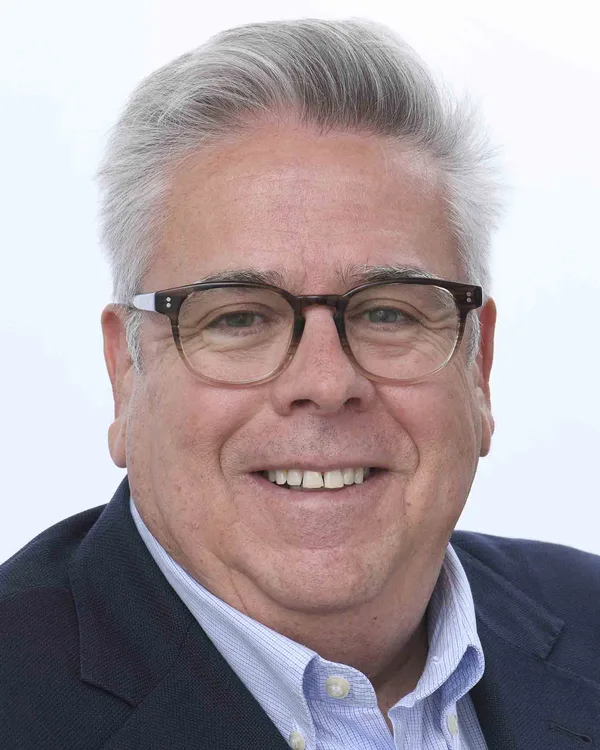
Lukas Sieper | Germany DEU | Non-attached Members (NI) | 390 |
| 2 |
|
Juan Fernando López Aguilar | Spain ESP | Progressive Alliance of Socialists and Democrats (S&D) | 354 |
| 3 |
|
Sebastian Tynkkynen | Finland FIN | European Conservatives and Reformists (ECR) | 331 |
| 4 |
|
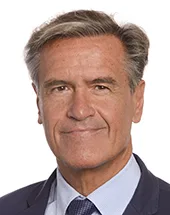
João Oliveira | Portugal PRT | The Left in the European Parliament (GUE/NGL) | 232 |
| 5 |
|
Vytenis Povilas Andriukaitis | Lithuania LTU | Progressive Alliance of Socialists and Democrats (S&D) | 227 |
All Contributions (167)
CFSP and CSDP (Article 36 TUE) (joint debate)
Madam President, I shall try to concentrate three matters in one minute. First, a lack of adjustment between our foreign policy expectations and the means we employ. There is a chronic underfunding of the European External Action Service but, at the same time, there is a chronic inflation of expectations. We all ask you for everything and you have to worry so that, in the new financial framework, you do not follow that situation: financial reinforcement should be requested every few months in the Commission. Secondly, your obligation is always to try to agree to 27, to have everyone on board. That's his role. But if it is not achieved within a reasonable time to reach crises in time, it is necessary to normalize work to twenty-six or twenty-five. I don't insist on Deputy Gahler's idea. Any measure except to continue giving an impression of paralysis or being late. Third, double standards are the cancer of our foreign policy. And I know that it is not always possible to achieve unanimity but, with your public statements, you can try to limit the damage that makes us appear before the world in some cases by raising our voices a lot and, in other cases, by being very timid.
The need for EU support towards a just transition and reconstruction in Syria (debate)
Madam President, after a bloody weekend that tells us about the fragility of the new institutions and the danger inherent in uncontrolled militias, last night we had good news that seems to clear, even provisionally, one of the most urgent unknowns of the Syrian labyrinth: the national assemblage of the northern Kurdish minority, of its institutions de facto and its military strength. As far as Kurdish communities are concerned, there seems to be hope on both sides of the border, albeit with different logics and rhythms. The initial agreement reached last night has at least two roots: the massacres of the attack of these days and the risk of uncontrollability, and Öcalan's call for the disarmament and dissolution of the terrorist organization PKK, whose waves have reached the Turkish militant forces of northern Syria. It is an initial agreement and therefore subject to shocks, but our political will towards that framework is for there to be a united, sovereign, inclusive Syria in the hands of the Syrians themselves. So, it was Turkey, it was Israel and it was Russia.
Recent dismissals and arrests of mayors in Türkiye
Mr President, the removal by administrative means of democratically elected mayors to impose commissars of the losing governing party is one of the clearest proofs of the abyssal level of democratic deterioration in Turkey. The origin of the rule was emergency legislation after the 2016 coup, a coup attributed to a religious sect; an anti-coup law that immediately began to be used against the Kurdish movement, which had nothing to do with the coup; exceptional legislation that remains in force eight years after the reason that gave it meaning and that is activated after each local election. The rule is undemocratic, but the practice is even more so, because nothing in the law prevents the government from appointing a local adviser to the party that won the elections, and not a commissar of the party that lost them. Despite so much cruelty and so much pain, the ridiculous character of Turkish authoritarianism reaches literary limits: Accusing an actress of terrorist propaganda for playing a terrorist in a television series is like accusing Charles Chaplin of a hate crime for having played Hitler, or recommending from power to the media that they do not broadcast so much negative news because that goes against the general interest. And with these and other practices they keep knocking on the door of the European Union.
Further deterioration of the political situation in Georgia (debate)
Mr President, Commissioner, on the elections, some colleagues have stated here that the international election observation considered the elections to be perfect. It's not like that. I cannot go into detail, dear friend Mariani, but the OSCE harshly criticized many conditions and also the violent pressure on voters. But there is one element that is little talked about: the hidden agenda of the elections. Georgian Dream ran for election without telling voters: "I'm going to get the country off the European path". Surely many Georgians would have voted differently if they had known that what the government was proposing was "outside Europe, welcome Russia". There is therefore an element of legitimacy that needs to be re-stated. Some comrades have also referred to the attack on Giorgi Gajaria, the country's former prime minister, by armed people from the government party. That fact and many others reflect an element of absolute impunity. Activists are persecuted, tried and put in jail immediately. There is still no court ruling on the aggressors of pro-European activists. That's obviously no coincidence. It's not just some policemen, Commissioner, it's also a lot of activists...
Human rights situation in Kyrgyzstan, in particular the case of Temirlan Sultanbekov
Mr President, Commissioner, in Kyrgyzstan, as in so many other countries, Mr Zdechovský has just said, the regression in democratic standards has been pointed out by many international reports. The case before us today is further evidence of this worrying drift: filming by the security services has served to arrest the leader of the opposition party and – beware – to ban that party’s participation in local elections. We do not know – and we have asked – whether that recording had been made with judicial authorisation. Nor do we know how to go from a conversation between two people who do not quote any other third person to arresting a third party, the leader of the party, and, beyond that possible criminal responsibility, prohibiting in administrative, not judicial, the participation of a party in an election. Today that leader is on hunger strike and in jail when he could be under house arrest. This Parliament must give its consent to a new political and trade agreement with Kyrgyzstan. An agreement based, like everyone else, on the protection of human rights. We hope, for the sake of relations, that this case will be resolved before that parliamentary procedure.
Need to ensure swift action and transparency on corruption allegations in the public sector to protect democratic integrity (debate)
Mr President, ladies and gentlemen, another Spaniard, I'm sorry. At the beginning of the session there were twenty-two colleagues in the Chamber and eleven were Spanish. One hour should be set aside for the Spanish national debate as a permanent matter. And all you needed, Mr. Gonzalez Pons, was to join the group of Spaniards. Indeed, Spain has been very much mentioned in the debate, but I believe that there is a certain time lag because it was before 2018 that this House should have been concerned about corruption in Spain, because it was in 2018 that the Spanish Parliament expelled the Popular Party from the Government and because in those years there were many cases that led to the Spanish Popular Party being the only political party definitively condemned for corruption. There is a long list of issues that I will avoid reading because the Spaniards who listen to us will know them. The Spanish Government is not besieged by corruption; the Spanish government is besieged by the media and judicial terminals of the right and the Spanish far right. With little success, by the way, as is shown in every vote in Parliament and every time the polls are called.
Continued escalation in the Middle East: the humanitarian crisis in Gaza and the West Bank, UNRWA’s essential role in the region, the need to release all hostages and the recent ICC arrest warrants (debate)
No text available
Question Time with Commissioners - Challenges in the implementation of cohesion policy 2021-2027
No text available
Signature of acts adopted in accordance with the ordinary legislative procedure (Rule 81)
Madam President, last Friday there was a session of the EU-Kyrgyzstan Human Rights Dialogue. Obviously, the European Union asked for explanations on the case of the leader of the country's social democratic party, Temirlan Sultanbekov, arrested three days before the local elections were held on the 17th. On the basis of a conversation recorded by the intelligence services – it is not known whether with judicial authorization – the party leader was arrested, the party’s participation in the elections was prohibited and its social networks were closed. Mr Sultanbekov has been on hunger strike for thirteen days and his health is deteriorating day by day. However, his first court hearing has not been set until January. Many international bodies have been mobilised and so must this Parliament. This Parliament is going to negotiate and approve a new cooperation agreement that includes a chapter on human rights and democracy and will be an excellent opportunity to assess the political will of the Kyrgyz authorities in the case of Mr Sultanbekov and others like him.
The case of Bülent Mumay in Türkiye
Madam President, Commissioner, Turkey has been recognised for many years in all press freedom reports as the country with the most imprisoned journalists. This is not the case now, because now the strategy has changed. It is not a question of imprisoning, but of silencing through sustained judicial harassment whose armed wing is the Prosecutor's Office, which, in Turkey, unfortunately, is not at the service of the law but of political power. Bülent, Isabel said, works for Deutsche Welle and the Frankfurter Allgemeine, that is, reference media in Germany and in Europe, which will be able to protect their journalist and will be able to hold long trials in defense of their rights. Do you know what Mr. Bülent's judicial problem is? He posted on a social network the first page of a court ruling. A photo on the front page of a court ruling has led a journalist into this Kafkaesque situation. He is going to be able to be protected judicially by those strong journalistic companies, but what about so many journalists from small rural media whose companies cannot sustain long judicial processes? This, unfortunately, is the situation of freedom of the press in Turkey.
Presentation of the programme of activities of the Hungarian Presidency (debate)
Madam President, Mr Orbán, the European Union is not a prison and the foreign policy of the European Union is not a corset that suffocates national foreign policies. In reality, boundaries are the principles of sincere cooperation, loyalty, active support and mutual solidarity. They're in the Treaties. I quote: ‘[Member States] shall refrain from any action contrary to the interests of the Union or likely to impair its effectiveness’. Your commitment to be a Jones broker was violated from the first minute of his presidency. Your international tour with the excuse of peace should have been done with your legitimate Hungarian T-shirt and well before or after this semester, but not using the European T-shirt or the logo of the rotating Presidency, because you had no European mandate to prostrate yourself before Putin or greet Xi Jinping. Thank you anyway, Mr Orbán, for your essential effort in favour of the system of qualified majorities. You have done more than any European federalist to put on the agenda the need for a system of qualified majorities in foreign policy.
The democratic backsliding and threats to political pluralism in Georgia (debate)
Mr President, Commissioner, in politics it is not only about the substance of a matter, but also about the sense of opportunity, about when. And this resolution, like the previous one on Moldova, days before the elections in these two countries, is inopportune and can be counterproductive. Parliament has always avoided pronouncing itself on countries where elections are to be held in order not to be accused of interference in those elections. This resolution, regardless of its critical content which we support, as my colleague Mikser has said, is going to be used by the Georgian Government and by Russia as a test of Western interference. It is, in fact, a gift to nationalist and anti-European forces, as we have been prophesied by far-right colleagues who have spoken. This is a debate about democratic backsliding. There are thirteen mentions of elections. Thirteen mentions of the election! Under these conditions, how will the election observers of this Parliament appear in Georgia in a few days' time? Will they be considered objective, professional and neutral? And are the negotiators, amenders, speakers and those who are going to vote on this reference going to be considered neutral by those countries? I doubt this and, therefore, the consequence is damage to the image of the European Union and Parliament, damage to the credibility of our election observations and the risk of being accused of interfering. We could have waited a month and approved exactly the same without incurring these risks.
Escalation of violence in the Middle East and the situation in Lebanon (debate)
Madam President, Mr Borrell, Israel's ambassador to the European Union, in an interview last week, advised the Union of two partially contradictory attitudes: pragmatism and moral clarity. Of course, in this dilemma, the European Social Democrats will always bet on moral clarity, which you have shown during these last months and for which many of us thank you. It is a moral clarity that compels us to say that the unjustified suffering of civilians, those killed by Hamas a year ago, is not of better quality, nor is it preferential, nor is it superior to the unjustified suffering of Palestinian civilians. We don't understand why we have to choose between two moral evils or why empathy with civilian victims disables us from feeling the same way about other equally innocent civilian victims. Mr Borrell, we must continue to talk about Gaza, which has disappeared from the title of this debate by the vote of the right and the extreme right, with the intention of creating a vacuum, a logical leap, from October 2023 – the Hamas attack – to Lebanon, ignoring a year of disproportionate aggression and 40,000 dead. Because Iran is a more presentable enemy in the West than Palestine.
The case of Rocío San Miguel and General Hernández Da Costa, among other political prisoners in Venezuela
Mr President, Commissioner, I would like to thank you for the tone, content and text of the negotiation on a subject that until recently was divisive in this House. Surely Mr Mato's good coordination work has also maintained that agreement. And it is that Maduro is doing everything possible so that again we vote all or almost all together. It happened already in February and I think this time it will be similar, because I have now known, this afternoon, that there were no amendments. The gravity of the situation of the opposition there, the open, naked repression of any critical opinion, has a side effect outside the country, and that is that it agrees with international organizations, the United Nations, the European Union. Everyone is in a close of ranks with the opposition's right to a fair election. The penultimate turn of the nut – unfortunately we must always talk about the penultimate turn of the nut – have been the cases that call us here today: Rocío San Miguel and General Hernández de Acosta. But there have been more these past few days. All against the backdrop of a transparent, sustained attempt to silence any critical voice. The disqualification of María Corina Machado has not been enough. It is not enough to lead the opposition electorally. We must continue to pursue any critical voice, even from people in the academic world recognized as the teacher to whom we refer today. It proves, by the way, all this - and perhaps an element of hope - of the regime's fear of those ballot boxes that will be the way to end this disastrous period in Venezuela's history.
European cross-border associations (debate)
Mr President, I would like to thank Sergey Lagodinsky for something that has been more than coordination. It has been, in my opinion, a leadership shown by the constancy with which it has maintained this agenda and that it has managed to unlock an issue that had been stuck for many years. Last year, this Parliament took the initiative to call for a directive and in the end the Commission understood that it had to take the step. It is true that we lack the fiscal aspects, but I announce that they will arrive, as everything in Europe arrives when maturity is reached. But, in addition to the issues dealt with by the Commissioner and the Members who have preceded me, I would like to make a reference in the deepest sense of what Mr Lagodinsky was talking about. Europe is built on top in the capitals, in the chancelleries, with great treaties. But it is sewn socially at the borders. It is lived at the borders and legitimized at the borders: physical border policies and legal border policies. Surely there is no better social perception of what it is to be a European citizen than the current possibility of crossing the border without having to show a passport and without having to change currency. That directive is a kind of Schengen area for collective persons, just as we created a Schengen area for the mobility of natural persons. And, as Mr Lagodinsky said, it is also something to do with the creation of a new political actor, because this is the embryo of the creation of a future European civil society. It's not yet the demos We have talked so much about it, but it is the beginning of a civil society different from the disorderly overlap and with different regulations of national civil societies. It is the birth of a European civil society. And that is the news brought to us by a proposal for a directive which, when read, seems a more technical thing, but which in essence is precisely one more step in European integration.
Statements by the President
Madam President, you mentioned it: We commemorate the European Day of the Victims of Terrorism every 11 March because 11 March 2004 was the deadliest jihadist attack on European soil in Madrid. One hundred and ninety-one people died directly from the attack, plus two policemen died later, as a result of the assault on the floor where the terrorists were hiding. One hundred and ninety-three fatalities and more than two thousand wounded. The ten bombs exploded in four trains that in the early morning carried thousands of workers, workers and students from the outskirts to the center of Madrid. And I would like to highlight a fact perhaps less known to the Honourable Members: There were the deaths of seventeen nationalities, immigrant workers who were striving to find a better future among us. From that horror emerged the best of our society. An immense wave of solidarity toured the entire city, all of Spain and all of Europe from the very first minute. It was our best response to barbarism, as it was after other attacks in Brussels, Nice, London, Paris or Oslo. There were elections three days later and they were held normally, although in a climate of pain, showing the resilience of Spanish democracy. The same resilience we showed... (the Chair took the floor from the speaker).
Closer ties between the EU and Armenia and the need for a peace agreement between Azerbaijan and Armenia (debate)
Mr. President, Azerbaijan recovered what it had lost by force. The problem is that the war didn't end there, that this is a postwar one that looks like anything but a postwar one. With what has happened in Nagorno-Karabakh, with the non-fulfilment of many of the clauses of that declaration, which is not a peace treaty, with that completely extraordinary request to create a kind of extraterritorial corridor, completely violating the sovereignty of Azerbaijan, which Nathalie Loiseau referred to as a plan of Baku, Moscow and Ankara, because that would allow a departure of Turkey to the Caspian. I believe that we must work for a peace treaty that is not humiliating, that is fair and that does not hypothesize the future of Armenia. And then we can get into that other ambitious agenda, which Viola von Cramon-Taubadel was talking about, deepening the relationship of the European Union – perhaps with a future perspective – towards closer rapprochement in all aspects.
Human rights and democracy in the world and the European Union’s policy on the matter – annual report 2023 (debate)
Mr President, a methodological warning about the report: traditionally, we have always done so without geographical or personal references. That has always been the scope of the report. We included Ukraine two years ago and this year we are going to include Gaza. There is widespread agreement that it is a worthwhile matter but there is no reference to Navalny, no reference to Assange, no reference to personal cases. In the same way that if we defend the right of LGTBI people, we do not promote any type of sexual preference. We defend the freedom of creation and do not force anyone to write a novel. What we are defending is a right. I want to get into an issue such as the inevitable tension between a geopolitical approach to our foreign policy and a value-based approach. But I think that also the people who work in the field of human rights have to renew a little our narrative and start saying something that is said little. Mr Borrell, the geopolitical Commission, the language of power... we are not a world apart, angelic in which we do not realize what is happening in the world. I think we have to find a lace and the one I would propose would be the following: a policy of human rights and the promotion of democracy in the world is very important from a security point of view. Democracies are predictable. There is critical press, there is freedom of the press, there is free thought and public opinion. And that makes democracies predictable. Those who are unpredictable are autocrats, in which greed, stomach ulcer or fear of their future leads them to do things that turn the entire area in which they work upside down. So let's tell people that a world of democracies is a safer world. It's not just a fairer world, it's also a safer world. And we will be approximating those two logics: geopolitics and values that are sometimes – it has to be recognised – not easy to coordinate or put together.
Human rights and democracy in the world and the European Union’s policy on the matter – annual report 2023 (debate)
Madam President, as was foreseeable – unfortunately – the report on human rights and democracy in the world and the European Union’s policy on this matter this year reflects the disastrous reality of the human rights situation in the world, and – perhaps for that reason – it is useful to make a political reflection on what the framework is, what are the underlying currents that feed this situation. The fact that a person, by the simple fact of being one, has a set of inherent, inalienable, individual, indivisible rights is a conquest of civilization. It has probably taken thirty centuries of history for us to reach that conviction. However, that framework, which has generally not been questioned – the existence of rights inherent in being a person was not publicly questioned – is now beginning to find an antagonistic model, clearly. Thus, authoritarian and liberal regimes are questioning the universality of rights with many accounts, but they come to agree on the idea that this universal rights is a new strategy of cultural hegemony of the West or a neocolonial strategy to continue influencing other parts of the world with this ideological approach. That tension extends to all spheres of international relations. Therefore, it is – if I may say so – a kind of culture war, because there are two completely opposite models: that of democracies and that of authoritarian systems. It is an ideological fight in which sometimes I think we have missed a more defiant, more open, more challenging attitude of democracies that reaffirmed the commitment to human rights. These are the challenges that give rise to this report. We have to work with civil society, we have to defend human rights defenders – especially in many more hostile environments where they have to move – we have to work with international cooperation and tackle human rights violations together and we have to remain fully anchored in human rights policy in the European Union’s foreign policy and diplomacy. The promotion of human rights and democracy in the world is not an option, it is not a policy, it is a legal obligation derived from the Treaties and, therefore, that affects all institutions. When I say all the institutions I mean the ones we are in this part of Belliard Street and the part over there of Belliard Street, because sometimes it seems that in the part over there of Belliard Street the logic is the Realpolitik pure and hard; And in this part of Parliament's Belliard Street everything is an approximation of values. We need to agree on the tone we take in the world to address our interlocutors in the international arena on the issue of human rights. And the same in Parliament: the human rights agenda in this Parliament has suffered a lot lately with the conservative policies that have called into question some of the work of the Subcommittee on Human Rights and the need to make human rights emergencies, which have tried to bury the emergencies at the end of Wednesday afternoons, which have even - some groups - not participated in the drafting and negotiation of human rights emergencies. Another element is an exaggerated promotion of the institutional role of the Subcommittee on Security and Defence to the detriment of the Subcommittee on Human Rights. Another is the attacks and difficulties of human rights NGOs - with the excuse of the human rights scandal. Qatargate— to work in this house and the lack of protection of an essential element of our human rights policy. I would also like to say that another element is the fact that this report on human rights and democracy in the world and the European Union's policy on this subject, one of the three reports made by the Committee on Foreign Affairs, is being dealt with here today and, tomorrow, issues relating to security and foreign policy are being dealt with in another format in this House. I would like to thank my fellow shadow rapporteurs, some of whom are here, for the work they have done. It has been a very gratifying job, but our description of the human rights situation is sadly terrible.
War in the Gaza Strip and the need to reach a ceasefire, including recent developments in the region (debate)
Madam President, Commissioner, the disproportion of the Israeli military response destroys any hint of the right to self-defence. It is now pure impunity. For those who justify that answer, think about whether or not it is proportionate. Israel has killed 30,000 people, 70% of them women and children, to neutralise – that is the word used – 6,000 terrorists: a ratio of five to one, five civilians per terrorist. That is, if tomorrow a terrorist in a European city kidnaps five people - two women, two children and one adult - for many people in this House the solution is to kill all six. That's the ratio and that's the logic that seems to be ethically acceptable when you've asked here what the limit is. But of course, I am talking, in my example, about European women and children, not Palestinian women and children. And that hierarchy between victims is ethically rotten.
Role of preventive diplomacy in tackling frozen conflicts around the world – missed opportunity or change for the future? (debate)
Madam President Hautala, Commissioner Schmit, I would first like to congratulate Željana Zovko on her leadership and the shadow rapporteurs on their flexibility, and to connect this dossier with another one that is voted on tomorrow without debate, which is that of Jordi Solé's parliamentary diplomacy and which has just been mentioned by Lukas Mandl. Overall, I believe that they complete a political reflection that we have carried out throughout the legislature and that has a certain value, in which we have dealt with many topics: cultural diplomacy, intelligence, sanctions, the Diplomatic School - an initiative coming out of this Parliament - which make up a good reflection package. In Mediterranean areas we usually say that fires go out in winter. That is the spirit of preventive diplomacy, a diplomacy more necessary than ever in this devilish reactive international scenario to which the Commissioner referred. The report is very comprehensive, it is impossible to go over it, but I want to highlight a point of view that is the need for the cultural adaptation of our diplomacy to the different scenarios in which it has to act.
30 years of Copenhagen criteria - giving further impetus to EU enlargement policy (debate)
Mr President, Commissioner, Madam Secretary of State, in matters of enlargement there always seems to be a traditional tension that sometimes becomes a kind of false dilemma between geopolitical considerations and those of the examination of values and principles. Unfortunately, the geopolitical situation always plays to lower the demands on the coincidence of values. It is true that, historically, the processes of enlargement of the Union have taken place in geopolitical situations: the three democracies of the South after their transitions, the rapprochement of the whole East after the fall of the Soviet empire... But the path of adherence is a normative and values-focused path, in which there are no shortcuts. I use the same expression that Mr Bilčík used. It is normative, non-transactional and merit-based. Beware, therefore, of excessive flexibilities for geopolitical reasons: because, in addition, some other candidates, such as Turkey, will play any flexibility in favour of their conditions. And, of course, it will have to be considered, at some point, whether an accession process can last forever without any progress as is the case with Turkey.
Humanitarian situation in Gaza, the need for the release of hostages and for an immediate humanitarian truce leading to a ceasefire and the prospects for peace and security in the Middle East (debate)
Mr President, Mr Borrell, I would like to thank you for your impeccable political position, but also for your moral position in the not-too-easy management of such a poisoned conflict. I regret that the Commission (which started fatally), after the damage that Commissioner Várhelyi's initial position did to the European Union, today has dedicated itself only to describing the situation without establishing any political responsibility for what is happening. Mr Borrell, I would like to warn you and my colleagues of the enormous risk we run from accusations from the Global South that the Union acts with double moral standards in its judgments on the many recent conflicts. Some accusations rightly and others not, but the risk of the ultimate disarmament of our soft power is there. We, so exhibitionists of our principles and values, cannot offer the world a dangerous picture of moral incoherence, judging conflicts or military operations across international borders differently with preemptive excuses. For this House, respect for international law is our compass, without preferences or exceptions. And it hurts us whether dead children are Israelis or Palestinians.
Strengthening the right to participate: legitimacy and resilience of electoral processes in illiberal political systems and authoritarian regimes (debate)
Madam President, thank you, Commissioner, for remembering that naivety of the end of history and that we were heading for a world of democracies. Thank you, Mrs Hautala, for remembering that we met a few years ago on an electoral mission in Armenia. I also agreed with Mr Mariani on some other election mission and I wanted to address precisely some of the issues to which he referred, and in a different way also Mr Wallace. When we are going to make an electoral observation we do so at the invitation of the Government, so it is difficult to argue that this is an interference with the sovereignty of a country or is an interference in internal affairs. In fact, the problem that the European Union now has is that we are no longer receiving invitations because these illiberal regimes do not want witnesses to their practices around elections. And it is true, as Mr Wallace said, that perhaps we appear as someone who wants to act in a paternalistic way, but we do so at the invitation of the countries, and the countries invite us and ask us to make recommendations to them to improve their electoral system, which is what we dedicate ourselves to. And I would like to recall that we exercise this function of electoral observation, together with others of promoting democracy, not only because of a conviction about the universality of the values we defend, but also because of an interest. This is not just the export of the Western world, of its values, sometimes labeled neocolonial. What I remind you is that a world of democracies is a safer world because democracies are predictable, because democracies have systems of checks and balances, have a free press and critical public opinion, and therefore their decisions are generally quite predictable. And yet authoritarian systems are characterized because a single person's humor can provoke war or disaster. I would therefore like to recall that these recommendations that we issued (and which I believe should be placed more high on the European Union's foreign policy agenda) are made at the invitation of the countries we visited. Thank you to all the negotiators. I think the recommendation has turned out very well. And thank you for the excellent debate.
Strengthening the right to participate: legitimacy and resilience of electoral processes in illiberal political systems and authoritarian regimes (debate)
Madam President, in this intimate last-minute atmosphere I am grateful for the attention of Members, with some of whom I have negotiated as shadow rapporteurs and with whom it has been a real pleasure to draft this document, which I would like to frame in what has been the legislative policy of some committees in this legislative period. Because, in foreign policy, we sometimes jump from crisis to crisis without there being an adequate time to reflect on the horizontal aspects of politics or on the instruments of foreign policy. And yet, in this last part of the legislature I believe that we have produced a good package of documents and recommendations, among which I would point out the one on preventive diplomacy and others on parliamentary diplomacy, the defence of multilateralism, the functioning of the European External Action Service, the idea of the European Diplomatic School, cultural diplomacy and collaboration with intelligence services in external crises. And now we would like, with this recommendation, to unite the concern of the Committee on Foreign Affairs and the Subcommittee on Human Rights, in which we have wondered for years how to deal with the growing presence and assertiveness of authoritarian and illiberal regimes, regimes that continue to maintain a very essential characteristic despite the democratic deterioration, which is to pretend that they make elections, in such a way that the urn remains a kind of totem of the tribe even in some of the most brutal dictatorships: We must pretend that we have democratic legitimacy. And that is why the nature of election observation itself is changing. Election observation has for many years been a form of assistance to countries to make elections better and in this climate it is becoming a kind of early warning system about the legitimacy of authoritarian regimes. This Recommendation addresses the issue from a different perspective from the ones we have used so far: from the point of view of the right of every citizen to participate in fair and free elections. The right of participation is not a right that has as much tradition as the right of expression, demonstration, or assembly, but it is in all international treaties of rights and allows us, therefore, to use it as another element in the ideological confrontation with authoritarian and illiberal systems because we can activate it as a citizen right. Therefore, in this Recommendation we link with the fact that elections are a process: Beware of an impression, given in authoritarian systems, that elections are a thing that happens one day, while the entire lengthy process of registration of participants, party financing, access to media, access to the judiciary, preparation of censuses, seems to be out of the spotlight or what ordinary citizens consider an election. Therefore, we must connect this right of participation with other rights of which I have spoken: meeting, demonstration... Care must be taken to ensure that the right of participation avoids any discrimination between voters and the question of information, which in these authoritarian regimes is in many cases mere propaganda by regimes, must be addressed. And for that we have tools, such as the dissemination of a counter-story against the narrative of democracies always about to fall, a new idea of international and internal electoral observation, the fight against disinformation (especially serious in electoral periods), the inclusion of electoral integrity in the human rights dialogues of the delegations of the European Union in other countries, and sanctions for those people who in illiberal systems hinder the right to participate, all within the framework of a policy that I believe we must continue to frame in the United Nations Human Rights Council. I thank the shadow rapporteurs, and it will be a pleasure to participate in the debate.