
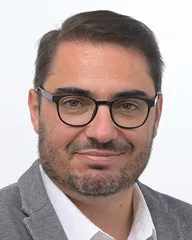
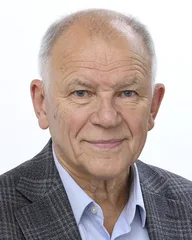
| Rank | Name | Country | Group | Speeches | |
|---|---|---|---|---|---|
| 1 |
|
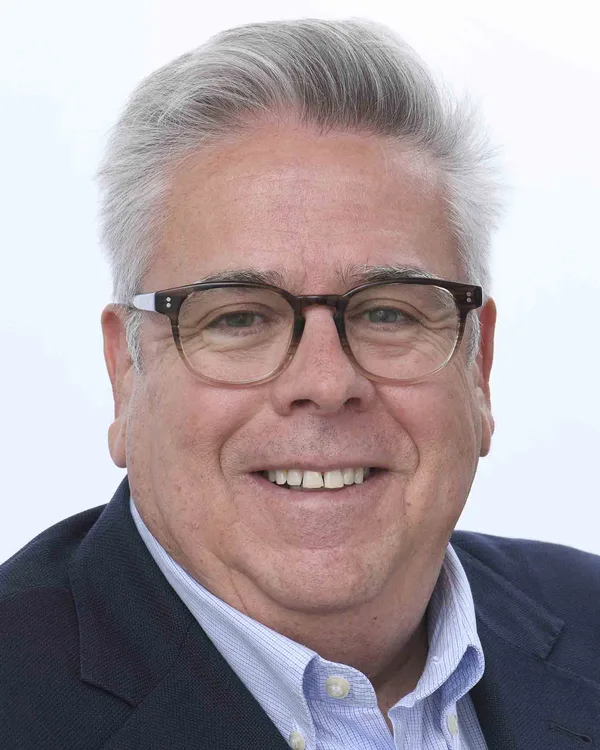
Lukas Sieper | Germany DEU | Non-attached Members (NI) | 390 |
| 2 |
|
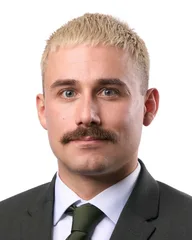
Juan Fernando López Aguilar | Spain ESP | Progressive Alliance of Socialists and Democrats (S&D) | 354 |
| 3 |
|
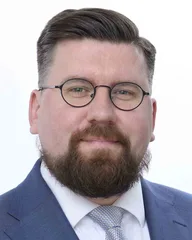
Sebastian Tynkkynen | Finland FIN | European Conservatives and Reformists (ECR) | 331 |
| 4 |
|
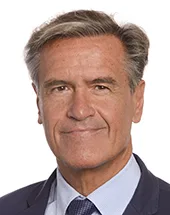
João Oliveira | Portugal PRT | The Left in the European Parliament (GUE/NGL) | 232 |
| 5 |
|
Vytenis Povilas Andriukaitis | Lithuania LTU | Progressive Alliance of Socialists and Democrats (S&D) | 227 |
All Contributions (167)
2022 Rule of Law Report - The rule of law situation in the European Union - Rule of law in Greece - Rule of law in Spain - Rule of law in Malta (debate)
Socialists are firmly committed to upholding the rule of law. We therefore advocate the early adoption of an interinstitutional agreement to monitor the rule of law framework. At the same time, we regret that, once again, the Spanish right and ultra-right hand in hand with the Catalan independentists have once again forced a non-existent debate to try to damage the image of their own country and, what is more regrettable, a few months after the Spanish Presidency of the Council begins. What the Popular Party tries to hide, in addition to the corruption they have been dragging for years, is that they have been blocking the renewal of the General Council of the Judiciary for five years and therefore refusing to comply with the law.
Case of Elene Khoshtaria and political prisoners under the Georgian Dream regime
No text available
Four years of Russia's war of aggression against Ukraine and European contributions to a just peace and sustained security for Ukraine (debate)
Madam President, this is a sad anniversary, but it is a sadness softened by the widespread conviction that we are doing what is morally right. Acting politically with that moral security is important. I want to pay tribute to a whole generation of Ukrainians who have suspended the realization of their dreams in order to have a homeland in which to fulfill them, especially the young people and so many martyrs who will no longer be able to dream and whose photos we saw on the walls of St. Michael in Kiev. We have to make so much pain not useless. An essential element of our moral strength regarding war is the permanent remembrance of the basics: There's an aggressor and an aggressor. And the moral equidistances of the present American Administration are intended to obscure this origin. That is why peace is not enough: It must be a just peace consistent with the abysmal difference between aggressor and aggressor. Of course, it is the Ukrainians who have to measure the terms of that longed-for peace. But, for this, they need our help, not to prolong the conflict, but to negotiate in a position that guarantees a just and lasting peace: "fair" means military aid now, "durable", guarantees for the future.
Resumption of the sitting
Madam President, this is a point about the same Rule, Rule 188, on the admissibility of amendments. Our group believes that the President's services have applied this rule in a way that is not fair concerning an amendment tabled by our group and others from the Greens. The title of this urgency is 'Christians in Türkiye'. My group has tabled an amendment that tries to modify a paragraph to include a reference to religious minorities other than Christians in Türkiye, but that has been declared inadmissible, apparently because it goes beyond Christians. At the same time, there is an amendment from the ESN Group that makes a reference to Christians all over the world, not in Türkiye, that has been declared admissible. Strangely, nobody noticed that the amendment goes beyond Türkiye. This is clearly unfair and unequal treatment, and my group will likely formally protest against the decision, and we reserve our right to address this matter at all appropriate levels. The administration should always apply the rules consistently and impartially.
Situation in Northeast Syria, the violence against civilians and the need to maintain a sustainable ceasefire (debate)
Mr President, Commissioner, some friendly advice for the institutions of the European Union: not interfere in the constitutional and territorial design of the country if it is inclusive, if there is a chair for each minority, as Hannah Neumann has said. War and the power vacuum have created realities on the ground that must now be translated into a Constitution, into legal cover. Therefore, it is not a blank page, but the country has to decide how it translates these realities on the ground into its new constitutional framework. We must not continue to give a blank check to the Government to continue playing this double game of national army against uncontrolled militias. When something goes wrong, they are uncontrolled militias – such as the death of the Alawites – and when something, in their view, goes well – such as the offensive on Kobane – it is the national army. That has to be part of our conditionality. The government has to stop playing that when things go wrong it does not control its militias and when they go well it is a national army. Because... Are we asking Kurdish forces to join a national army or a disorderly constellation of uncontrolled militias? I think it is a matter for reflection. And in the transition, Commissioner, we must support minorities, who have an agenda more similar to the European Union's values agenda.
Preparations for the EU-India summit (debate)
No text available
Human rights and democracy in the world and the European Union’s policy on the matter – annual report 2025 (debate)
Mr President, this is Parliament's annual report on human rights at the political moment of absolute prevalence of the crudest realpolitik and in the midst of a global reversal of the approach to principles and values. Therefore, it is also good to highlight the enormous contribution of this approach to principles and values in realpolitik. The defence of human rights, the rule of law and the promotion of democracy is not an optional policy of the European Union; is a mandate of the Treaties. It is a legal obligation, but it is also that a world of democracies is not only a fairer world, it is also a safer world. Democracies are boringly predictable; autocracies are unpredictable. Democracies have checks and balances, free press, critical public opinions, real systems of guarantees... Democracies do not militarily invade a neighbour at night – and if they do, they are no longer democracies. Therefore, our contribution to the stability of the world also lies in our policy of promoting democracy; They are not only the values of our civilization, they are also an instrument of stability and security for all.
CFSP and CSDP (Article 36 TEU) (joint debate)
Mr. President, I want to thank David and Thijs for the effort, for trying the impossible: a description of European foreign and defence policy at a time of heightened volatility and uncertainty over the past 75 years. As difficult as photographing a Formula 1 car. It is impossible to foresee some updates, David and Thijs, for example, the convenience of not publishing private messages between heads of state. In this panorama, which seems to be the end of the era of rationalism and the Enlightenment of which the European Union is the daughter, we must return to the basics, to the essentials: a period of essential consensus in foreign policy here, between the central groups of Parliament, between Parliament and the Executive, in the institutions of the Executive and between the Member States. Anything that weakens us must be rejected outright, and there we must speak of unanimity, as Hilde has done; find an acceptable term in the tone and volume of our public statements in foreign policy; and addressing European citizens when talking about foreign policy, because European citizens are starting to see their heads of government more than European foreign policy leaders.