
| Rank | Name | Country | Group | Speeches | |
|---|---|---|---|---|---|
| 1 |
|
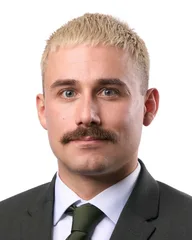
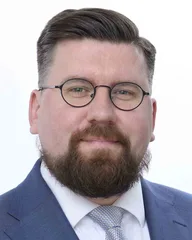
Lukas Sieper | Germany DEU | Non-attached Members (NI) | 390 |
| 2 |
|
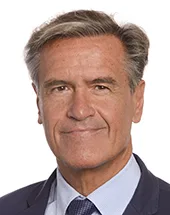
Juan Fernando López Aguilar | Spain ESP | Progressive Alliance of Socialists and Democrats (S&D) | 354 |
| 3 |
|
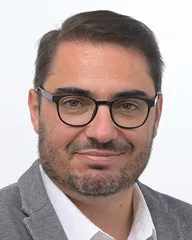
Sebastian Tynkkynen | Finland FIN | European Conservatives and Reformists (ECR) | 331 |
| 4 |
|
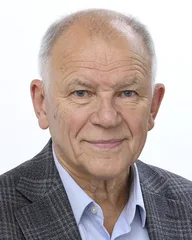
João Oliveira | Portugal PRT | The Left in the European Parliament (GUE/NGL) | 232 |
| 5 |
|
Vytenis Povilas Andriukaitis | Lithuania LTU | Progressive Alliance of Socialists and Democrats (S&D) | 227 |
All Contributions (143)
State of play of the EU-Moldova cooperation (debate)
Mr President, Moldova made a key choice in 1994: neutrality. This choice is the guarantee of the development of this country. This is the choice of a country that must help us maintain bridges between eastern and western Europe. The great generosity of the Moldovan people in welcoming Ukrainian refugees is of course a credit to this country and deserves to be commended. It is quite normal, therefore, for the solidarity of European nations to be exercised with those who welcome the victims of war. However, I have the greatest concern when I hear the words of some of my colleagues. Moldova is the fruit of a complex history of friendship and coexistence between the West and the Russian world. Anything that would shake that balance can become a danger to that area. It is the huge mistake of the European Union to have followed all American strategies and become dependent on NATO. If we had built a genuine tool to support the independence of European nations, then perhaps we could be a regional stabilization actor. Unfortunately, this is not the case. This is not the case when the Eastern Partnership is instrumentalised to align beneficiary countries with Western positions. This is not the case when we turn a blind eye to the practices of pro-European business circles, as was the case during the 2014 banking scandal in Moldova. This is not the case when the European Union openly interferes in the elections of a third country by designating the good and the bad, as Brussels did to support the election of Maia Sandu. The last European elections have shown in my country that the French people are currently opposed to any further enlargement. This was clearly stated by the main political parties present in this Parliament. To deceive Moldovans by telling them that there will be unanimity in favour of a new rapid enlargement is not honest. I remember that we had exactly the same scenario in 2014, when a number of my colleagues went to Maidan and explained that Ukrainians would be in Europe the day after tomorrow. Ten years later, we see where we stand! I therefore support the necessary aid to Moldova, but I absolutely refuse the instrumentalisation of this country by powers that want to drag a large part of Europe into the chaos of a generalised confrontation. We must work for peace and dialogue, not seek to expand proxy wars that will serve no one on our continent.
Threats to stability, security and democracy in Western and Sahelian Africa (debate)
Madam President, the European Union has long left France alone in the Sahel. This abandonment was a strategic absurdity and as Mr Gahler said – for once, I agree with him – this debate should have happened a long time ago. While French soldiers were dying to fight Islamism in the Sahel and neighbouring countries, Brussels, for years, was looking elsewhere. As usual, excuses were always found: it was necessary to promote integrated European action, it was not necessary to give priority to France, it was necessary to promote NATO’s ambitions. Unsurprisingly, France ended up getting tired of this generous mission, which it led in almost complete isolation, even if in recent years, let’s be honest, there has been a minority European participation. Tomorrow, the French people will be tired of being the only one to accept compromises to underpin the idea of strategic autonomy in Europe, when others have already put their destiny back in the arms of NATO. The junta in Mali no longer wants the action of France and its soldiers. It is unfortunate, but it is his right. In five years, Emmanuel Macron’s France will have pushed back France’s influence in Africa, in the very countries where we had historical allies. This backsliding should also ask us about the ability of Europeans to influence the African continent. While China, Russia, Turkey and the Arab world are increasing their influence on the African continent and even in the Sahel, Europe, Commissioner, no longer knows how to act. The impact of the war in Ukraine on African economies is going to be terrible and I am willing, as I have heard now, for the new leader to be the Wagner militias, but I think that the destabilisation of Libya has been much more important in the fatal chain for Africa. Migration pressure, radicalisation against a background of impoverishment, risk of famine, the European Union is now losing its tools of influence at a time when crises are looming. Yes, we need a new policy, but we need a new policy urgently.
The continuous crackdown of political opposition in Cambodia
Madam President, Cambodia has a special connection with our continent. It is probably the South-East Asian country that has maintained the most relations, in particular with France. It would therefore be perfectly normal for the European Union to have good relations with Phnom Penh. Yet the EU persists in refusing to maintain these correct relations with Cambodia, while once again having a double standard. In neighbouring Vietnam, we are signatories to a free trade agreement, which is no problem. Fundamental rights are far less advanced than in Cambodia and I do not even dare to talk about the conditions of the elections. But on the other hand, in Cambodia, sanctions are imposed, in Vietnam, a free trade treaty is signed. Once again, double standards. Of course, Cambodia does well to demonstrate the double standards of the European Union in this matter. One may even wonder if part of the European left is trying to erase its past friendship with the Khmer Rouge by attacking Cambodia. Cambodia has real challenges ahead of it, including the normalisation of the relationship between the state and opposition parties. It is not by imposing sanctions that we will support its progress. Moreover, while the UN Human Rights Committee issued a critical periodic report on the country last March, it is clear that at least it is working with the country’s political power: national plan against violence against women, campaign to improve access to administrative identity, continuation of trials against the Khmer Rouge, reform of juvenile justice, establishment of a committee against torture. Not everything is excellent in respecting human rights in Cambodia, but reforms are at least on track. Instead, let us try to encourage them instead of blaming them and being once again, in this region as elsewhere, in a two-point, two-step policy.
Outcome of the EU-China Summit (1 April 2022) (debate)
Madam President, the EU-China summit could have been a strategic step forward for European nations. However, this is a disappointing result. First, because the Chinese do not want to follow our crazy escalation of sanctions against Russia. They do not want to, because they know that in reality they will ultimately benefit. As you try to make people believe that economic suicide is the best way to build a strong Europe, the world looks at us with dismay: neither Africa, nor South America, nor Asia stand with us. Despite a costly policy of collaboration, despite our pretension to dictate morality to the world, we often find ourselves closed doors. The strategic challenge for the coming years is: Will Europe still count tomorrow or will we now be a wasteland between Beijing and Washington? To answer this question, we must maintain the diplomatic power of European states and adapt our economic policy. Maintaining our diplomatic power is a reminder that our strength lies in the diplomatic traditions of the Member States and their military independence. In our diplomatic traditions, there is the weight of experience. When we sanction a country, it inevitably imposes counter-sanctions on us. Only minds disconnected from reality can hope otherwise. We're in a never-ending escalation. The Brussels project is to put pressure on China to align with our policy towards Russia. Obviously, this project is unlikely to be realized. On the contrary, we should have negotiated with China new outlets and new supply chains for our economies. We did not, because we are obsessed with one thing: always and always bring us closer to the positions of the United States. If we really want to trade with China, it will be necessary to return to an attitude of conciliation with it, otherwise we are dependent on the slightest American communication campaign to block our markets, constrain our diplomacy, vassalise our armies. Yes, we need to negotiate with China in the interest of nations. The European Union refuses to do so, again preferring an ideological view of the world.
Need for an urgent EU action plan to ensure food security inside and outside the EU in light of the Russian invasion of Ukraine (debate)
Madam President, thank you. Let us be careful, Commissioner, that the European sanctions taken in response to the war in Ukraine and the sanctions against Russia do not lead to a real food crisis. When we take sanctions, I always ask myself the question: Are their costs and impacts assessed? Today, I would just like, in the short time I have, to take an example: the sanctions that were imposed on Belarus almost two years ago. What was their result? Has the Belarusian system and regime collapsed? No, no. On the other hand, what was the main sanction against Belarus? The ban on potash, Belarus’ main resource. As a result, the price of potash fertiliser in 2021 increased threefold. Since the beginning of the year, this fertiliser has increased further by 40%. In the end, has Belarus lost money? No, no. It even seems to be earning more, because it has reoriented its market, because there is a global shortage and prices, I repeat, have tripled. On the other hand, our farmers – I hear the talk about replacing with natural fertilisers and I fully agree, but it takes time – are now paying three times more for their synthetic fertilisers. Our consumers see the price of this fertiliser reflected in the prices of the materials they consume. So I'm just saying: When taking sanctions, try to assess their impact. It is always difficult to measure the political effects on the target country. I don't know of any country that has plagiarized because of sanctions. On the other hand, I see the effects for the consumer and for our farmers. Excuse me, but in the example I took on potash, it is a total failure.
Political crisis in Sudan
Madam President, the interest of Europe, like the interest of the Sudanese, is that calm and order prevail in their country. We have all welcomed the departure of Omar al-Bashir and the Identity and Democracy Group is calling for his presentation before the International Criminal Court in its alternative resolution. The Government of Sudan has since been divided among several political forces who have great difficulty in coming to an agreement. The international community must refrain from interfering in Sudanese affairs and avoid repeating its mistakes in Libya or Egypt in Khartoum. Civil war in Ethiopia, people fleeing Eritrea, high-risk presidential elections in Somalia. Threats of migratory surge from the Horn of Africa are high. The triggering of US or EU sanctions on Sudan would only exacerbate these risks. I am particularly concerned, moreover, about the European Union's inaction and silence on Ethiopia's filling of its dam on the Blue Nile. President Abiy Ahmed could accelerate this process and thus endanger thousands of human lives in Sudan and Egypt. His bloody repression against the populations of Tigray shows that he is quite capable of it. And when I read in the joint resolution that some are afraid of border surveillance measures in Sudan, I can only be appalled. While the Muslim Brotherhood could use the situation to try to turn Sudan into a refuge for Islamists around the world, we must guard against any hasty condemnation. We see in Libya that speeding up elections is not always the best way to improve the situation. It is in our interest to work with neighbouring countries, including Egypt and Chad, to prevent any dangerous consequences in this turbulent period in Sudan.
Situation in Kazakhstan
Mr President, Almaty, Nursultan and many other cities in Kazakhstan have been the scene of deadly clashes. Kazakhstan even had to appeal to the Common Security Treaty Organization to restore order. And I note that almost all foreign troops have already returned to their country. It is therefore with some surprise that I learned of the inclusion of this debate on the agenda. I rejoiced at the beginning. I thought that perhaps our Parliament would talk about the stability of this country since independence. No bloody civil war like in Tajikistan. No conflict with neighbouring states as between Armenia and Azerbaijan. Perhaps I imagined that we would encourage the development that prevails there. I thought that reminds us of the importance of our trade relations for raw materials with this great Central Asian country. I was perhaps naively saying that we would congratulate Kazakhstan on its religious peace in a part of the world plagued by Islamist radicalization. But no, I forgot that these resolutions really only serve to give our Parliament a good conscience. It is necessary to condemn and if possible condemn quickly. Even if we have absolutely too little information. We do not know exactly what happened in Kazakhstan. Other speakers have pointed this out before me. We do know, however, that there have been far too many lives lost among demonstrators and security forces alike. Is it a riot because of inflation? Is this a new manipulation of Mr. Abliazov thanks to the billions of dollars he stole from the Kazakh people and which he uses to finance organizations to destabilize the country? Is this the result of political tensions? We don't know for sure at this time. And yet, a majority of MPs proudly brandish these condemnations. Because Kazakhstan's progress, its central role in the new Silk Roads, its political evolution, obviously, are taking a back seat. What seems to interest the majority of this Parliament is to use all situations to attack Russia or China. I express my condolences to the military and civilian victims of these events and I hope that the light will be shed and that Kazakhstan will resume its economic and democratic development.
Forced labour in the Linglong factory and environmental protests in Serbia
Mr President, everything is good in this Parliament to attack Serbia. Belgrade, shamefully bombed by NATO forces, is like a permanent bad conscience on our doorstep. Serbia refuses to comply with the European Union’s forceful Atlanticism? The Commission then makes it a condition for accession to the European Union, without these provisions being included in the Treaty on the Functioning of the European Union. Serbia refuses to recognize the dismemberment of its territory with the creation of Kosovo? So this Parliament is trying to impose the recognition of Pristina. Does Serbia welcome all international investors, be they Chinese, European or Russian? So Brussels would like to make it dependent on our subsidies alone. I am the first to defend the right to fair competition on the European continent. However, I want these human rights resolutions to be comprehensive and transparent. Where does the information on the Linglong plant come from? An association funded by George Soros’ Open Society and whose representative is a former employee of George Soros in Serbia. Colleagues, it must be said that Mr Soros’ interference in the affairs of this Parliament is a constant insult to our constituents. The Balkans attract a huge number of investors and diverse networks. Turkey, the Gulf countries, Russia, the United States and China are in constant competition. What does the European Union stand against them? Money rains on the less virtuous leaders, like Mr Đukanović in Montenegro. This attitude inevitably results in failures, because we pass for an actor more ideologue than realistic. This resolution, I fear, will therefore remain a dead letter. Instead of inciting an impartial and full investigation, this resolution condemns without specific elements. Instead of engaging with Serbia, we are exploiting a biased investigation against Belgrade.
Plans to undermine further fundamental rights in Poland, in particular regarding the standards of the European Convention of Human Rights and Sexual and Reproductive Health and Rights (debate)
Madam President, after the regular debates on Hungary, now it is the regular debates on Poland. Poles have the right to sovereignly choose their definition of the family, their conception of the unborn life, their education system and the place they are willing to give to the state in the direction of their lives. These areas, as has been said, are not within the competence of the European Union. And the defence of the rule of law – the rule of law, a concept which does not appear in the Treaties and which is not precisely defined – cannot be a pretext for arrogating to itself, at European level, prerogatives which belong only to the constitutions of the various countries. We were discussing the fall of the USSR on Monday: Solzhenitsyn warned us that there would be seeds of totalitarianism in the powers that would rule the world after the Cold War. The European Union does not have to determine what a man, a woman, a family is. The European Union does not have to behave like a deity that would force its followers to follow a new gospel. It is the Constitution of a country that must define it, and this Constitution today does not have to comply with a rule of law that has never been clearly defined in the Treaties.
Cooperation on the fight against organised crime in the Western Balkans (continuation of debate)
Mr President, of course I share the concerns of previous speakers: The fight against crime in the Balkans is a priority. But where I cannot follow them is the reasoning that without a European perspective, we would not be able to fight effectively and sustainably against the mafias in this region. First, because this argument is the door open to an unlimited extension of the European Union. Tomorrow, which will prevent the people of the Caucasus or Anatolia from saying ‘if we do not enter the European Union, crime will explode in our country’. Secondly, because this report, which deals with a very specific subject, organised crime in the Balkans, which is rotting the lives of so many of our compatriots, has been treated – as is often the case in this Parliament – from an ideological point of view. This disconnection from reality is not the only weakness of the report. Indeed, we are trying to use the fight against crime to obtain international recognition of Kosovo, while the will of EU Member States, against the historical reality, opposes such recognition. I ask a simple question: Has the recognition of Montenegro made it possible to combat organised crime and its links with the authorities in power? I ask another question: Has entry into the EU stopped Roma mafias from a number of our countries? It is therefore not, of course, a question of combating crime, but of advancing an ideological agenda through this report. And then, there is a great absence in this text, the migration route of the Balkans: How can we address the fight against crime in this region without mentioning the Balkan migration route and the Turkish influences there? How can we abandon the EU’s external borders in Croatia, when they are so regularly discussed? The Kosovo and Albanian vendettas and networks are taking Europeans hostage - it has been said: settlement of accounts, continuous flow of drugs, modern slavery, exploitation of women, organ trafficking are a scourge for our nations. These tragedies deserve better than a petition of ideological principle. Yes to the fight against mafias, but no to their instrumentalisation to bring certain countries into the European Union.
Situation at the Ukrainian border and in Russian-occupied territories of Ukraine (debate)
Madam President, I have searched in vain for what territory Ukraine is now occupied by Russia, Ms Loiseau. Yes, there is a territory, Crimea, where the inhabitants made the choice in 2014 to join Russia through a referendum won with an overwhelming majority. Moreover, have you seen, Ms Loiseau, a massive wave of migration from Crimea sweeping across Europe? No, no. And why? You know this very well, because this referendum reflected the will of the majority of the population. In eastern Ukraine, where people have risen up against the Kiev government, residents are waiting for the Minsk agreements granting them special status in Ukraine to finally be respected. Yes, we all know that there was a solution to defuse this Ukrainian conflict. This solution was the outright application of the Minsk agreements negotiated by Ms Merkel and Mr Hollande. Unfortunately, they have always remained a dead letter. It is well known that the Ukrainian government and the Rada did not intend to apply them and, logically, Russia has not shown more willingness to apply them as well. For example, the Ukrainian government has still not taken the slightest step to deliver on its promises in Donbass, namely to establish a status that guarantees more autonomy. Today, worse, Ukraine is picking up the most belligerent accents against the Russians. Do you have to remember that some supporters of the Ukrainian government have their hands full of blood? The blood of dozens of victims of the burning of the House of Trade Unions in Odessa in May 2014, passed over in silence. The blood of those beaten to death by Mr Bandera's nostalgic militias, a notorious Nazi sympathizer. Is it necessary to recall that the Donbass crisis was triggered by the decision of Mr Poroshenko's government to abolish regional languages in 2014, Russian, but also Hungarian, Romanian and even Crimean Tatar? Today, 13,000 Ukrainians, regardless of their ideas, have lost their lives in this conflict. The European Union must stop veiling its face in Ukraine. The latest report of the Court of Auditors of the European Union begins with the following words: “Ukraine is undermined by great corruption”. President Zelenskyy, who has been chasing failures, is also playing on rising tensions to save the little popularity he has left. Censorship of the press, denunciation of false coups d’état: Obviously, we are ready to do anything to guarantee his situation. The only peaceful path today is compliance with the Minsk agreements. This is the respect that the European Union should demand from all parties to avoid a new war. And it is this respect that you make fun of, whatever you say.
Situation in Bosnia-Herzegovina (debate)
Madam President, the situation in Bosnia and Herzegovina is a clear demonstration of the European Union’s diplomatic failures. Neighbourhood policy, political accession process for the Western Balkans: None of this has allowed Europe to be an effective actor in Bosnia. For 30 years, we have known that the country stands on a compromise in which all foreign powers are engulfed. Organised crime, migration routes from the Balkans to Trieste, human trafficking... the list of dangers on our doorstep is long. Turkey, the United States, Albania... Everyone is trying to play their score on the backs of the two Bosnian republics. Why would they do the opposite? They know that Brussels does not say a word against the provocations of Albin Kurti in Kosovo and Edi Rama in Albania. Unfortunately, everything is now participating in a real implosion of Bosnia. The sectarian actions of the US representative and the anti-Serb prejudices of Western statements have obviously aggravated tensions in the country. It is even rumoured that Brussels and Washington are working on sanctions against the representative of the Bosnian Serbs. If, what I fear, it were confirmed, can we still believe that we will improve the situation and obtain legitimacy and effectiveness by imitating American policy everywhere? Who can believe for a second that sanctions are the beginning of a solution in the countries concerned? Nobody. The European Union is a humiliated actor in Bosnia. Only an emancipated US policy and a return to a fair and balanced relationship with Serbia can, I hope, avoid the flare-up.
Situation in Tunisia (debate)
Madam President, Tunisia, through its history, culture and geography, is unwaveringly linked to Europe. The recent period in the country has been particularly deplorable for our relations. The coming to power of a party linked to Islamism has precipitated migratory, security and cultural tensions. As everywhere the followers of the Muslim Brotherhood have led, the result has been catastrophic. Impoverishment, gabegie, corruption have been Ennahdha’s track record and political implosion has long been on the horizon. As everywhere, the Arab Spring gave birth only to a socio-political catastrophe. All observers were particularly concerned. The most serious therefore welcomed with immense relief the election and the decisions of Kaïs Saïed. Kaïs Saïed is the opposite of Islamists, those who, in sneakers, sell to Turkey and are not able to read the Koran. He speaks literary Arabic, he won the last presidential election with more than 70% of the vote and I admit that he develops sovereignist arguments. I see a lot of women in her new government, including the Prime Minister. This should be welcomed by the European Parliament. Instead, obviously, some prefer to relay the propaganda of the Muslim Brotherhood. They would like the rule of law to benefit Islamist parties. They continue to support the solutions that have plunged Tunisia into this economic decline and accelerated migration flows. A strong and prosperous Tunisia would be an asset for EU Member States. Let us give the opportunity to this new government, which has all the qualities to right Tunisia by finding the way back to an effective democracy at the service of its people.
The Arctic: opportunities, concerns and security challenges (debate)
Madam President, one of the biggest flaws of this Parliament is that it is a prisoner of its obsessions. There would be so much to say about the Arctic: the effects of globalisation on maritime transport, the preservation of biodiversity, the need to maintain cooperation between nation states in the Arctic. Unfortunately, this Parliament does not serve this purpose. Once again, we serve to justify symbolic and military investment in NATO. The European Union’s interest is rather to encourage our nations to develop strategic relations with Beijing and Moscow in this region of the world, which is one of the last where we still have a peaceful dialogue with these two partners. Who can seriously believe that the European Union is in a position to dictate the conduct of countries directly bordering the Arctic Ocean? Who can believe for a moment that the nations would have to go through Brussels to defend their specific interests in this region? Nobody. Once again, our Parliament is distinguished by a report that is completely indifferent to the principle of reality. It is neither good for our trade nor good for our continent.
Humanitarian situation in Tigray (debate)
Madam President, Ethiopia is one of the first Christians in history. It is one of the pivotal countries of the Horn of Africa. It is also a key link in Europe’s migratory perils. This is why the fate of Ethiopia has always been of interest to European nations. This is why the international community must also be particularly cautious, especially when it rushed to award the Nobel Peace Prize to Prime Minister Abiy Ahmed a few months after his election. It is true that in recent years, awarding the Nobel Peace Prize to war triggers has tended to become a habit. As far as Ethiopia is concerned, our recklessness is certainly even more culpable. Abiy Ahmed decided to fight a bitter battle against Tigray province when it refused to delay the general elections on 4 November. Since then, the constant assaults by government forces on the region have been marred by numerous war crimes. The Christian heritage, so prolific in the Tigray region, is particularly at risk. Ethiopian monks were even massacred. This observation, which is already overwhelming, is compounded by two other points. First, Abiy Ahmed himself admitted that he had asked the Eritrean army for help in invading northern Ethiopia. This army multiplies massacres and defends the interests of one of the most closed states on the planet. Secondly, Ethiopia is now a very fragile country, as other hotbeds of ethnic protest against the central government are emerging. However, between the Islamist hotbeds in Somalia and Sudan, and Turkish influence in the region, the worst is to be feared in terms of migration and security for the entire Horn of Africa and tomorrow, perhaps, for Europe.
Hong Kong, notably the case of Apple Daily
Mr President, of course, we can only understand people who seek to preserve their freedom, in Hong Kong or elsewhere. Who wouldn't? Who does not feel a certain sympathy when they see students, priests and journalists standing up to maintain the very special spirit that prevails in Hong Kong? Diplomacy, however, is not about sympathy or feelings. This is a matter of national interest. In 1997, England decided to hand over Hong Kong to China and de facto surrender sovereignty over the island. And everyone already knew the rest of the story... We can regret it. It is regrettable that European nations have been and continue to be encouraged to reduce their influence around the world. But I'm also realistic: the European Union has no influence in Hong Kong and our nations have no interest in adopting hawkish rhetoric against China, as can already be seen in some statements. Let us open our eyes and seek our own path, the interest of Europe, amid the adversity between China and the United States. Let us not allow ourselves to be dragged back into a new Cold War.
Foreign interference in democratic processes (debate)
Madam President, ladies and gentlemen, there is an influence that we never talk about in these walls, an influence that everyone knows but nobody talks about. This influence in our parliamentary life is that of a series of very political NGOs that advocate transparency for others and hide their very concrete interests behind a cosmetic of human rights. Foreign interference is inseparable from international life. Our European neighbours are well aware of this, who, under Louis XIV or Napoleon, under de Gaulle or under the Third Republic, had never ceased to interfere in the French political process. It was precisely the strength of our great leaders to resist them. It is the weakness of our current leaders to have given up being a great power. That it seems far away the time when Jacques Chirac and France could refuse to participate in the invasion of Iraq. If a President of the Republic did so again, I wonder whether he would not be condemned by this Parliament. Yes, Mr Glucksmann, there are foreign interferences which you have denounced. But I think you have forgotten a country whose interference in our institutions is permanent. A country that is officially manoeuvring and yet is thousands of kilometres from our borders. A country that has no interest in the European Union becoming, as its founders dreamed, a true global economic power. This country, of course, is the United States of America. They co-opt the elites, fund scholarships and programmes for political staff of European nations, they express their opinion on the outcome of elections in the very heart of Europe, they even interfere in the presidential election in France, where Barack Obama had officially indicated that he was calling to vote for Emmanuel Macron. Moreover, their action is redoubled by ideological groups financed by billionaires. And if we call them NGOs, they are actually political pressure groups trying to impose their agenda on our institutions. So what I am asking for, quite simply, is also the same transparency requirement for those NGOs that have now taken up so much space in Parliament. If you do, Commissioner, then I will believe in your will to combat interference. Finally, I am concerned about the climate in this Parliament, where when one is wrong to have a different opinion from the majority, one is immediately taxed as an agent from abroad. I wonder if we are not revisiting a period of intolerance that McCarthyism symbolised in the 1950s.
The repression of the opposition in Turkey, specifically HDP (debate)
Madam President, her name was Ebru Timtik, a lawyer specialising in politically sensitive cases. She died on August 27, 2020, after 238 days of hunger strike. She was about 40 years old. Helin Bölek also died in his 28th year, after 288 days on hunger strike. His body no longer held. She was a musician, like İbrahim Gökçek and Mustafa Koçak, who also died in prison during their hunger strike. I could mention other detainees who died in the silence of Turkish prisons because of their opinions or political commitment. I could also tell you about the Diril family: Simoni and Hurmuz Diril, a Christian couple from the Sirnak region of southern Turkey, both abducted. The wife was found dead and no one knows where her husband, Hurmuz, is. We try to alert every plenary session about this couple, but some refuse to pass an amendment that only mentions this situation. This sectarianism is also evidence of our institution’s dual discourse on human rights and international politics. I would point out that it was following the death of one man, one man – of course, one too many – in a Russian prison that the United States adopted the Magnitsky Act. The European Union quickly imitated them. The numerous deaths of political opponents in Erdoğan do not provoke the same reaction. Mr Erdoğan continues to receive billions from the European Union. Mr Erdoğan still does not find the door closed and definitively closed in the accession negotiations. Mr Erdoğan is still NATO’s pillar for the Middle East. Colleagues, our attitude towards Turkey shows all the hypocrisy of our institution. Mr Erdoğan is necessary for the interests of the United States and therefore sanctions, threats, reactions slip on him, because he knows that he fears nothing from the international community. For other countries, the less well-crafted stories are enough to provoke hysterical reactions. People are watching us. They analyze the roots and consequences of our actions. They note that in the face of the Erdoğan threat, we are not acting. We remain paralyzed.