
| Rank | Name | Country | Group | Speeches | |
|---|---|---|---|---|---|
| 1 |
|
Lukas Sieper | Germany DEU | Non-attached Members (NI) | 390 |
| 2 |
|
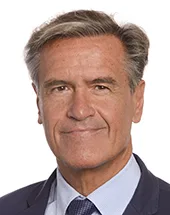
Juan Fernando López Aguilar | Spain ESP | Progressive Alliance of Socialists and Democrats (S&D) | 354 |
| 3 |
|
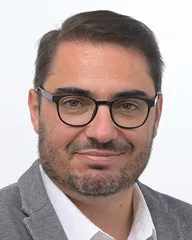
Sebastian Tynkkynen | Finland FIN | European Conservatives and Reformists (ECR) | 331 |
| 4 |
|
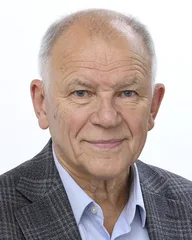
João Oliveira | Portugal PRT | The Left in the European Parliament (GUE/NGL) | 232 |
| 5 |
|
Vytenis Povilas Andriukaitis | Lithuania LTU | Progressive Alliance of Socialists and Democrats (S&D) | 227 |
All Contributions (143)
Children forcibly deported from Ukraine and the ICC arrest warrant for Vladimir Putin (debate)
Mr President, "Iraqi soldiers snatched the babies from the incubators and let them die on the cold ground". This testimony of a nurse in October 1990 moved the whole world. There was no longer any doubt. The war against Iraq was a moral duty. A few months later, we will discover that these incubators were as imaginary as weapons of mass destruction. Because crimes against children in times of war are absolute horror. This is something no one can accept. And of course I am thinking of all those families, regardless of the country, who are desperately looking for their children. "Deportation of children". The choice of words is not innocent. ‘Deportation of children’: We immediately think of the deportations organized by the Nazi regime. But if one simply said "evacuation", perhaps it would be much less shocking. But in wartime propaganda, the choice of words is something of capital importance. Because the first duty of a soldier finding a child in a combat zone is to evacuate it to protect it. Yes, we must encourage the return of these children. And the Russians started repatriating them when the families are clearly identified. If we want them to return quickly today, let’s organise a peace conference, that’s the best way.
The need for a coherent strategy for EU-China Relations (debate)
Mr President, obviously Emmanuel Macron caused great emotion among supporters of a total submission of the European Union to Atlanticism on the occasion of his recent visit to China in April 2023. By reaffirming France’s traditional position – a position that has been constant since 1964 – on single China and by asserting that an ally is not a vassal, he simply took over France’s position from General de Gaulle. This has obviously angered many Member States and all those who want to embark Europe on a crusade against Beijing. This reaction is once again a blatant illustration that the European Union cannot become an independent geopolitical actor. Peoples, nations with such different histories and interests cannot produce a unique response to the challenges of the world, and we must, at times, accept this diversity. France, free thanks to its nuclear weapon and its seat on the Security Council, must keep a different voice in the international concert. This is the paradox, moreover, of Emmanuel Macron in international politics, who solemnly likes to take up Gaullist accents in his speeches to quickly forget them and to cede everything in practice to supranational institutions such as the European institutions. This is the paradox of the European Union, which would like to be a geopolitical player, but which is concerned as soon as France takes a position that diverges from that of the United States. France and the European Union have every interest in ensuring their independence, both from the United States and from China. The US Inflation Reduction Act is a head-on attack on our jobs and businesses, and for now we are very quiet. The extraterritoriality of US law is much worse than Chinese soft power. The US semiconductor strategy is also dangerous for European strategic autonomy. Yes, the European Union must come out of its naivety, both vis-à-vis China and vis-à-vis the United States.
One-minute speeches on matters of political importance
Mr President, on 26 September 2022, the energy supply – and therefore the competitiveness of European industries – was under attack by a foreign power, which sabotaged the Nord Stream pipelines. Josep Borrell said: “A deliberate disruption of Europe’s energy infrastructure is totally unacceptable and will be met with a strong response.” Such a hostile attack on the economic security and independence of the peoples of Europe must not go unnoticed. Joe Biden had announced that there would be no Nord Stream in case of war in Ukraine. The US journalist Seymour Hersh, Pulitzer Prize winner, has clearly accused the US in his investigation of this sabotage, because the attack on Nord Stream is actually sabotage, sabotage of the European energy market in times of conflict. In short, it is an act of war. Our Parliament must urgently launch a committee of inquiry into this hostile act and cannot back down from the breaking of the truth, even if it is inconvenient. Our so-called best ally may actually be our worst competitor.
Tunisia: Recent attacks against freedom of expression and association and trade unions, in particular the case of journalist Noureddine Boutar
Mr President, Madam, the promise of 2011 has brought this country to the brink of chaos, to the brink of chaos where Ennahda and the Islamist movements have dragged it. President Kaïs Saïed has simply been wrong in recent days to say that, to reside in Tunisia, you have to have documents and be in compliance with Tunisian law. That doesn't make him a racist at all. It is now a question of returning to the arrest of Mr. Boutar, director of a Tunisian radio station charged with money laundering. The European Parliament is therefore able to determine whether or not he is guilty a few weeks after his arrest. I admire all those who have this faculty. To believe that the European Parliament would benefit from almost divine lights, allowing it to know which judicial decision is well-founded and which is not. It should therefore not be surprising if Tunisia disgusts our interference like Morocco and Egypt before it. It is to be believed that Parliament wants to organise our definitive break with all the Mediterranean powers. So yes, I say it, we must rather today accompany Tunisia on the road to its recovery. When we see the economic situation in which Ennahda left this country, it is above all the priority.
The EU Guidelines on Human Rights Defenders (debate)
Madam President, defending human rights, yes. Use this cause to build a new class of citizens, no. This is how I could summarize our position on a text that instrumentalizes good feelings to promote a questionable policy. You even push the provocation to congratulate the work of the DROI committee while the latter is splashed by the qatargate, which reveals almost a decade of alignment with this work at the level of Qatar's interests. All too often, in the texts of the European Parliament, we see the same ambiguity. Is it the defense of human rights that really concerns you or the deployment of an ideological agenda? Let's take an example. You propose in your text more and more sanctions against countries that do not correspond to your policy. Sanctions regimes are often the cause of the worst possible human rights abuses. Famine, the impossibility of healing. In Syria, for example, sanctions by the international community have driven 90 per cent of the population below the poverty line, for example, while the war has been over for several years. Human rights do not grow in ruins or cemeteries. On the contrary, your text passes extremely quickly on the fundamental rights of human beings: feeding, housing, caring. What interests you is to support the defenders of gender theory, those who propose a woke culture, to grant visas to any category claiming that it is discriminated against, to constantly create new rights to defend. Not all minority political demands are necessarily good to defend and, above all, it is not always desirable for the European Union to associate itself with them.
One-minute speeches on matters of political importance
Mr President, the earthquake that devastated entire regions in Syria and Turkey on 6 February 2023 left more than 50,000 people dead. The United Kingdom, the United States and the European Union have agreed to suspend part of their sanctions mechanism to facilitate the delivery of humanitarian aid to Syria, including Aleppo and Latakia governorates. These measures were necessary, but they are also an admission. Yes, the sanctions imposed on Syria have terrible effects on local populations, even if they have no effect on the political authorities. Hungry children, families who can't rebuild their homes, sick people who can't heal themselves: This is the most important consequence of the Western sanctions regime on Syria. Human rights are not born on a field of ruins or in cemeteries. Sanctions on the Syrian people will have to be renewed or not by 1 June 2023. It is urgent that we refuse their extension if we do not want to add a political drama to a natural disaster.
Energy performance of buildings (recast) (debate)
Madam President, there are two forms of ecology: one wants to preserve the planet to serve people, the other wants to put green ideology before human lives. In the European Parliament, since the Green Deal, we have been accumulating texts that completely ignore their impact on our societies. No one, of course, is opposed to the thermal renovation of buildings, whether private or public. But the text proposes uneven indicators between states to justify building classes. Worse, this text will impose on owners impossible deadlines to meet to bring their property into compliance. A real crisis in the French real estate market is looming. A crisis that will endanger many households whose loans will not be enough to meet the demands of Brussels. What is the point of imposing these force requirements, without worrying about the reality of our economic and artisanal landscape to actually put them in place? Does the resolution take into account the difficulties of our craftsmen in recruiting? No, no. Does the resolution take into account sufficient time for owners to have their work carried out? No, no. To avoid creating a real estate crisis in France, we will vote against this resolution.
Tensions between Rwanda and the Democratic Republic of Congo (debate)
Mr President, France and the European Union have regularly given in to Paul Kagame’s propaganda. It is therefore not surprising that he now feels that he is allowed to do so. He proved this by continuing to arm a militia that is terrorising the Kivu region: M23. Everyone is now convinced of Rwanda’s military interference in the affairs of the Democratic Republic of Congo. The European Union, France and other powers have demanded that Mr Kagame finally cease his hostile policies. Terror in front of the M23 group is causing massive population displacements: 5 million Congolese have already left the area for ten years. The M23, Rwanda’s armed wing, is therefore taking part in a further destabilisation in the Democratic Republic of Congo, a country that does not need additional difficulties. The United Nations has been present in the country for decades; However, the war in the eastern part of the Democratic Republic of the Congo has never ceased. The words of Pope Francis, who visited the country a few days ago, resonate particularly. He told us: “Remove your hands from the Democratic Republic of Congo, remove your hands from Africa, stop suffocating Africa, it is not a mine to be exploited or a land to be robbed!” It is well known that Rwanda is enriched, in particular, by the illegal trade in illegally exploited resources in the Democratic Republic of the Congo, and in particular in the Kivu region. Thus, we can clearly see that without strong international pressure on Rwanda, it will absolutely not cease to participate in the destabilisation of eastern Democratic Republic of Congo. While, session after session, we are indignant at foreign interference in Africa, it is time to question our mistakes, which are rushing African states into the arms of other powers.
Response to the situation in Tunisia (debate)
Mr President, the parties linked to the Muslim Brotherhood and which have participated in the institutional and economic devastation of their nation have for years enjoyed the favour of our institution. It was believed here that the Arab Spring would bring peace and prosperity – in short, new democracies to the West. What were the results of this policy? In Egypt, we supported Islamism, together with Mohamed Morsi. In Libya, we have supported militias linked to Islamism and thrown the whole of West Africa into chaos for a decade. In Syria, our illusions and chimera have turned twelve years of civil war into a springboard for a rebellion quickly passed under the banner of Islamists. None of the countries where the EU and the US Democrats supported the Muslim Brotherhood lieutenants was spared chaos. Yet our foreign policy and human rights resolutions had a compass: Qatar's interests. While our Parliament still refuses an immediate committee of inquiry on its alignment with Doha, we therefore decide to return to the subject of Tunisia. President Kaïs Saïed’s efforts to restore state authority and combat Islamist abuses in part of Tunisia’s political arena should be welcomed. However, it is clear that it is facing a complex economic and political situation, which no one knows if it will succeed in resolving, and which the Tunisian people are now bearing the brunt of. Here we hear the worst accusations against President Saïed, as if it were up to the European Parliament to establish and remove the leaders of the Mashreq countries. However, it is up to the Tunisian people to decide their future, without suffering from interference and European institutions. Of course, nobody can rejoice at the extremely low turnout in the last parliamentary elections in Tunisia. It indicates, in my opinion, much more desperation than disavowal, and requires solutions rather than condemnations.
One-minute speeches on matters of political importance
Madam President, relations between the European Union and Morocco are at their worst. The vote on the European Parliament resolution calling into question the Moroccan court decision on Omar Radi was the trigger for a long-running crisis. While the Kingdom of Morocco is a pillar of our policy in Africa and the Mediterranean, this situation is particularly worrying. At a time when all the meetings are being analysed as to whether or not it falls within the scope of foreign interference, I also note that the Western Sahara Study Group continues to regularly promote the views of the Polisario Front and to relay those of Algeria in that part of the world. After the judicial events this weekend, the EU-Morocco Joint Committee is no longer in a position to continue its work. It is absolutely necessary for Parliament to appoint a new co-president as soon as possible. The last meeting of this committee was in May 2022 and today it would be particularly useful for parliamentary diplomacy to play its role amidst tensions. Our relationship with Morocco is essential in terms of migration, economics, security and geopolitics. It is imperative that we preserve it and re-engage in dialogue.
EU response to the humanitarian situation following the earthquake in Türkiye and Syria (debate)
Madam President, since the tragic night of 6 February, all Europeans have expressed their solidarity with the Turkish and Syrian peoples, both of whom are going through a terrible ordeal. Immediately, the European Chancelleries and the European Union announced their support for Turkey through various mechanisms, to our credit. On the other hand, our procrastination at the fate of the inhabitants of northern Syria is abject. Yes, we must lift the sanctions against the Syrian people. Yes, in the name of European humanism, we must not back down from any partnership to save human lives. 90% of Syrians lived below the poverty line before the earthquake. EU and US sanctions keep them in a perpetual economic crisis that increases their migration and costs human lives. These conditions were already revolting, they are now politically disastrous and morally unbearable. Even the US is now announcing the easing of its coercive measures. So what is Europe waiting for? The European Union cannot continue to make the Syrian people pay for Bashar al-Assad’s victory over the Islamist rebellion and thus continue to keep the Syrian people in misery, even after this disaster. Today, people in Aleppo are still on the streets for fear of their buildings collapsing. Humanitarian organisations are taking huge legal risks to get the help that the people of Europe generously want to give to the victims. And we close our eyes by pretending that the sanctions would not affect humanitarian aid. But you know that this is not true, because all banks refuse to make any transfers. So all those involved in emergency aid are telling us the opposite and asking for this change in policy, the victims of the earthquake are asking us to do so: Let us lift the sanctions for Syria.
Situation in Afghanistan (debate)
Madam President, the European Union is quite paradoxical about Afghanistan. We knew perfectly well that the Taliban would not respect anything the Western powers wanted. These men live, fight and die to challenge our countries, which they consider barbaric and decadent. The place of women, religious freedom, Shia or ethnic minorities in Afghanistan will never be stable under their yoke. It took all the naivety of our institutions to believe that their retrograde ideology would subside in contact with the emissaries of Brussels. In 2009-2010, I had the honour of being France’s Special Representative in Afghanistan. I met Afghan women who imposed much more than our institutional set-up. Educated, free, courageous, they did not fight against windmills, but for their dignity and their future. They have been the forgotten of our institutions. For to help Afghan women, concretely, it was necessary to ensure a geopolitical compromise in Kabul. We had to stop pampering Pakistan. It was necessary to work with all components of Afghan political life, and not only with a puppet government that had fled the country by ruining the army and robbing the people. In a nutshell: In Afghanistan, standing up for women needed to be realistic – everything we have not often been able to do.
Situation of journalists in Morocco, notably the case of Omar Radi
... this speech saying that we are coming together to condemn the practices of a country that is undermining human rights, oppressing protest voices and contributing to the destabilisation of Africa. But then that would mean that we are talking here about Algeria. However, the European left never condemns Algeria and the European Union passes it while hoping for its gas. Instead, we are debating Morocco, which is one of the pivots of our strategic partnership in Africa. What is in this resolution? The claim that Mr Radi is not a rapist. Like all of you, I do not know. On the other hand, unlike the majority of this assembly, I do not consider that the Moroccan judicial decisions, that the rape victim’s accusations are worth less than Amnesty International’s or Human Rights Watch’s statements. The recent example of the practices of the NGO Fight Impunity should have alerted all of us to the credit we systematically give to NGOs. Like States, they have their interests and limitations. If Mr Radi is the victim of a conspiracy, it is up to his lawyers and the Moroccan people to prove it, and it is not up to the European Parliament to wipe its feet on the Moroccan justice system.
Human rights and democracy in the world and the European Union’s policy on the matter - annual report 2022 (debate)
human rights for the European Union is a single expression that no one has spoken: Qatar Gate. The scandal in this Parliament is historic: For at least ten years, an Islamist dictatorship has been able to orient our institution's resolutions according to its interests. This is an unprecedented humiliation for a European Parliament that gives lessons to the whole world and claims to subject state policy to the opinions of NGOs. What lessons have we learned so far from this scandal? None. Worse, you even refused the immediate creation of a committee of inquiry, as proposed by the Identity and Democracy Group. A whole system is being unveiled by the Qatar Gate, corrupting NGOs, more arrogant than honest European institutions, lesson-giving socialists working with an Islamist dictatorship. No one will take this report seriously, as it comes from an institution that is currently discredited by an unprecedented scandal. Yes, there is an urgent need to set up a real committee of inquiry without waiting for a judgment for years.
Implementation of the common foreign and security policy - annual report 2022 - Implementation of the common security and defence policy - annual report 2022 (debate)
Madam President, this report is a quality report, but I have the impression at times that it is also a report that could be that of a communication agency. It is a historic plea for the erasure of nations in favour of a Brussels superstate. We are not here to celebrate the European Union’s foreign policy and the decisions of the European External Action Service. We are here to control the initiatives and represent the will of our compatriots. As you know, the French do not want the enlargement of the European Union. They do not want the move to a qualified majority to know if we are going to war, if we are cutting off our diplomatic relations or if we are selling weapons. Nor do they want sanctions to replace diplomacy. Even less do they want to be drawn into a war in Ukraine today and perhaps tomorrow in the Balkans. While yesterday Nicolas Sarkozy was able to secure peace in Georgia in 2008, François Hollande and Angela Merkel were able to build the Minsk agreements in 2014, Emmanuel Macron is now following the instructions of the European institutions rather than launching a French initiative. This is a step backwards for our sovereignty. It is also a step backwards for peace.
Military Junta crackdown on peaceful demonstrations in Chad
Madam President, after the break-up of Libya, after the abandonment of France and the soldiers of Operation Barkhane, the European Union is now taking part in the destabilisation of Chad. At Fort—Lamy, Chad hosts a French air base. In N’Djamena, he coordinates with the French military forces to fight mafias, jihadist groups and human traffickers. It is true that the European Union is not embarrassed by these considerations. For her, an African country deserves to be condemned. In my opinion, the European Parliament is currently in a very poor position to lecture a government that is negotiating with its opposition, under the – guess – aegis of Qatar. Yes, the events of October 20th are a very difficult ordeal for all Chadians. Yes, all victims are to be regretted and regretted. Yes, the transformation of these demonstrations into what the Chadian authorities see as an insurgency has been the occasion for bloody clashes. I note, however, that the African Union has refused to sanction Chad. It is urgent that we renew our alliances with African partners who have a tradition of trust with France. While Chad declared a food emergency last summer, faces numerous security challenges in both the North and South, and has faced the worst floods in its history, this new debate, in my view, is deplorable. Open your eyes, ladies and gentlemen: our ideological policy in Africa is erasing our friendships and destroying our interests there. Vote for this resolution, but tomorrow it may come as no surprise that this void will be filled by other countries in Africa.
Turkish airstrikes on northern Syria and the Kurdistan Region of Iraq (debate)
Mr President, in Syria, the European Union is only contributing to the deteriorating situation. After denying the powerful Islamist involvement in the Syrian rebellion, the EU has poured into a revanchist policy that is exhausting the entire region. Thus, by refusing to organise the repatriation of Syrian refugees present in Lebanon, you are destroying the balance of that entire country. Our insane policy of sanctions against the Syrian people is both a resounding political failure and a historic humanitarian scandal. The mafia galaxy of Qatargate, which is shaking the European Parliament, had obviously multiplied the initiatives in support of the Syrian rebellion. Moreover, for the past ten years, our policy towards Syria has been fully aligned with Doha’s interests in the area. Today, whether we like it or not, the Syrian people gave victory to Bashar al-Assad. Syria's worst enemy for ten years, Erdoğan, is now multiplying the signals to reconnect with Damascus. You are well aware that when Erdoğan puts forward a pawn in the Levant, NATO may well want it. To make it clear: Instead of supporting Syria’s territorial unity and policy, our foreign policy has paved the way for an inevitable bloodbath. As always in history, the US ended up abandoning the Kurds. And as always in history, the Turks absolutely refuse to allow Kurdish factions to organise at the border. Let's sum up this aberrant situation: Turkey is currently successfully moving closer to Damascus, while supporting the illegal occupation of the Idlib region by Islamists and supporting all enemies of the Syrian government. As for the Europeans, who have suffered Islamist attacks directly organized since the fiefdoms of the Syrian revolution, why could he not restore a balanced relationship with Syria? Yes, the clash between the Kurds and Erdoğan can only move us. However, we must be hypocritical to deny that we are indignant, but that we will do nothing else.
Prospects for the two-State solution for Israel and Palestine (debate)
Mr President, after the ‘Qatargate’ affair, the European Parliament is not in a position to be credible on this file. Qatar regularly takes hostile positions against Israel in front of international institutions. This was again the case on 21 September at the 77th United Nations General Assembly. Neither Israel, nor Palestine, nor any country will be able to take our debate seriously in this matter. Our European Parliament and especially its Subcommittee on Human Rights have been under the influence of Qatar. There is currently no reason to say that this is no longer the case. To maintain this debate is to continue the humiliation of an institution that has failed to protect itself from the obvious interference of a state sponsor of Islamism. I would like France to spearhead a new dynamic in favour of two viable states. This is the only solution, as we know, for peace to come one day between Israel and Palestine. But it has nothing to gain from doing so through the European Union, which has neither the will nor the credibility to support such an initiative.
One-minute speeches on matters of political importance
Madam President, we are all destroying a country with the best of conscience. I was last week with a delegation of French Members in Lebanon; All parties, all faiths and all actors have conveyed the same message to us, whether they are Shia, Sunni or Christian. Today, almost 2 million Syrian refugees are present in a country of 6 million people. This is an intolerable burden. Imagine tomorrow that in France we were receiving 22 million refugees. Today, schools in Lebanon are exploding, hospitals are failing and all this is compounded by the economic crisis. We must act quickly and according to a very simple roadmap. Today, it is enough to accept that Syrian refugees return to their country. The European Union and the West refuse to acknowledge their failure in Syria, and we are making sure that a country keeps a third of its population on its territory when it does not have the means to do so. Madam President, ladies and gentlemen, in a few months it will be too late: more schools and hospitals in a country than we are, I repeat, murdering. It is enough simply to allow NGOs to accompany refugees to Syria, for themselves and to save Lebanon.
Human rights situation in Egypt (debate)
Mr President, Egypt has just organised COP27 brilliantly. Obviously, the content of the discussions is subject to many political debates. However, we can agree on one thing: Cairo has done things perfectly. Our Parliament spends its time giving ecological lessons to the whole planet. At least the opportunity of this debate could have been used to congratulate Egypt and its people. But the opportunity was too good. The opportunity was too good to take up the speech of the associations that did not digest the removal of the Muslim Brotherhood from power. The opportunity was too good to serve soup to the Soros network, which is attacking France for its privileged relationship with Cairo. It is also fascinating to note the difference in treatment in this Parliament between Egypt and Qatar. Qatar has participated in the destabilization of the entire Middle East. He has supported some of the bloodiest Islamist rebellions in history. It continues to house the most fundamentalist preachers in the Arab world. The European Parliament will soon present a resolution which forgives him everything and congratulates him on many points. President al-Sisi’s Egypt is making progress on religious freedom, fighting Islamism on its soil, influencing its neighbourhood to resist jihadists. The European Parliament is presenting a resolution with terms that are as unfair as they are violent against it. Once again, the Arab world will read these initiatives as a model of the duplicity and hypocrisy of the European Union. Again, the rest of the world will wonder how Europe can be so wrong in choosing its regional partners. Once again, the citizens of the Member States will ask themselves a legitimate question: Why such submission to Qatar, Europe, when it finances associations and media that interfere in public life? Of course, Egypt must be encouraged to continue its human and economic progress, to modernise its infrastructure and to continue to be involved in the fight against illegal immigration and, above all, to have a courageous policy to combat terrorism. For that, we must be by his side.
Promoting regional stability and security in the broader Middle East region (debate)
Madam President, the European Union’s action in the Middle East can be summed up in two words: ideological and catastrophic. In Lebanon, you interfere in political life by offering no solution to the economic slump that afflicts the country. In Egypt, you insult a state that fights the Muslim Brotherhood and brilliantly organized COP27. In Syria, you refuse to draw the consequences of Bashar al-Assad’s victory and punish the Syrian people for not throwing themselves into the arms of the Islamist rebellion. You now want to review our agreements with Dubai. You exasperate Iran as much as Saudi Arabia. And I am not even talking about the Christians of the East, whom you are softly defending and who are the forgotten ones in your politics. The European Union has a genius. It spends taxpayers’ money without counting, and it only manages to make enemies. Whatever the religious denomination, geopolitical orientation and institutional nature of our Eastern partners, their response is always the same: the EU is arrogant, blind and unrealistic. Yesterday, France could negotiate peace in Lebanon. It could move the world by refusing to join the intervention in Iraq. It could propose ways of conciliation in Palestine. The EU is the tomb of French foreign policy. Its rise corresponds to our disappearance in Africa and our eclipse in the Middle East. A policy dating back to Saint Louis, Francis I, Napoleon III and up to General de Gaulle was liquidated in a few years to make way for the Brussels technocratic structure. Your diplomacy has only one face, that of sanctions. Your balance sheet has only one measure: the pace of France’s disappearance from its areas of influence.
Political situation in Tunisia (debate)
Madam President, having heard these urgent debates on human rights and the Mediterranean world, I have a question: Is there a preferential option for the Muslim Brotherhood here in the European Parliament? We are entitled to ask ourselves this question, given the statements made today by the EU and the so-called human rights associations on Tunisia, as was the case yesterday with Egypt. When this country was ruled by the Muslim Brotherhood of Ennahdha, under infusion of Western money, we found nothing to complain about. Fortunately, the Tunisian people have been more courageous and have said stop to the regression of their morals and their finances. President Saïed has arrived. He arrived with extremely important popular support. He is trying to restore political authority and presidential authority. It is trying to re-establish the Tunis dialogue with the international financial institutions. It is also trying to restore some political stability. What is Tunisia suffering from today? First, a complicated neighbourhood. Secondly, an inflationary crisis in which the priority for the Tunisian people is to live rather than to survive. While Tunisia has just reached an agreement – as has been said – with the IMF, we should rather reflect with it on how to cooperate in order to strengthen regional cooperation in the Mediterranean. It is our interest in terms of migration, it is our interest in terms of security, it is our interest in terms of geopolitics, as the cultural ties with this country are so strong. We need a strong Maghreb, able to offer economic opportunities to its children, to fight Islamists and to participate in the balance of this entire region of Africa. Since 2019, President Saïed has been trying to strengthen the state, an essential condition for Tunisia to regain its regional and international scope, and I do not think that increasing interference to force it to follow certain revenues that have systematically failed since 2011 is a good thing. Dear colleagues, for you, Tunisia is facing Europe, for us, it is with Europe, in a shared interest for our common good: the Mediterranean.
Gas storage (debate)
Mr. Speaker, federalists like to repeat Jean Monnet's quote: "The European Union will be the sum of the solutions to crises". Yet Europe has not waited for the European Union to learn from its history. De Gaulle understood this at the time of the Cold War: organising an economic and industrial policy of mistrust towards Russia is never, in the long run, a good solution for our continent. Transferring control of our strategic gas stocks to technocracy without democratic legitimacy is neither the will of the French nor their interests. Emmanuel Macron has consented to a plan negotiated in catimini and which awaits our sovereignty. European states must retain the right to strategic independence, to the energy security policy of their choice. If tomorrow one country, France or another, wants to continue to source gas mainly from one country or another, it must be able to continue to do so. Commissioner, the European Union will not make us believe that storing Algerian gas or Qatari gas will mean, tomorrow, better defending European culture or democracy. Similarly, buying more and more shale gas from the Americans will not, I think, make us progress in protecting the environment.
The EU’s Foreign, Security and Defence Policy after the Russian invasion of Ukraine (debate)
Mr President, as was the case with the COVID crisis, the European Union and Mrs Loiseau, Emmanuel Macron's spokesperson in this Parliament, are using the war in Ukraine to create a European superstate. Solidarity with the Ukrainian people must not make us forget another reality. You are sacrificing nations to accomplish a federalist project. You do this without consulting the people, by deciding on sanctions that will ravage our economy. You do this by forgetting the other nations that, from China to India, from Senegal to Mexico, refuse to align with our policy. You do this by hiding your proposals from the French. After the destruction of the French diplomatic corps, you want to set up a Ministry of Foreign Affairs of the European Union. You now want to impose a diktat of Brussels on our defence industry. After the disappearance of our strategic independence in the hands of the European Union, you want Brussels to be able to embark us in conflicts and sanctions policies without the rule of mandatory unanimity. You practice a real strategy of shock by exploiting the legitimate emotion of the war in Ukraine. You put us at extreme risk by giving in to all the injunctions of the Ukrainian president, who now comes to lecture in Paris or to lecture in Berlin. I think you are dragging us into an economic and geopolitical catastrophe through a policy of sanctions that no one wants to follow outside the West. As you continually demand the application of multilateralism, you are building a system that isolates us in an almost exclusive relationship with the United States.
Prosecution of the opposition and the detention of trade union leaders in Belarus (debate)
Madam President, Commissioner, you referred to 'robust' sanctions. But can we look once at the economic effects of the sanctions we have taken? Because political effects, you never see them. So far, I do not know of any country that has changed its position after sanctions. The result of these sanctions? As you know, the main sanctions against Belarus have been on nitrogen and potash, which are its main products. Belarus, together with China and Russia, produces 60 per cent of the production of these potash fertilizers. Result: After these sanctions, prices quadrupled. Quadrupled. When I take – and I invite you to do the same – Eurostat statistics, I see that Belarus has never made so much money from this potash fertiliser. Never. So I would like sanctions to be added to the sanctions. I have the impression that this Parliament is drunk on sanctions. But if sanctions are added, what is their effect? Is it just to have fun in this Chamber? So I say that, of course, the situation in Belarus must change. But if it evolves, I think, contrary to some, that it will be by re-establishing dialogue rather than adding sanctions to sanctions. Result of these sanctions today: the countries I mentioned are earning more, our farmers are seeing fertiliser prices skyrocket and consumers are seeing the price of some of the agricultural products skyrocket.