
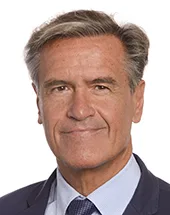
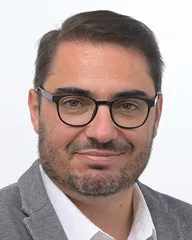
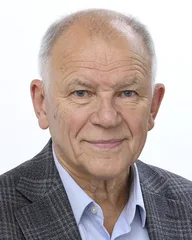
| Rank | Name | Country | Group | Speeches | |
|---|---|---|---|---|---|
| 1 |
|
Lukas Sieper | Germany DEU | Non-attached Members (NI) | 390 |
| 2 |
|
Juan Fernando López Aguilar | Spain ESP | Progressive Alliance of Socialists and Democrats (S&D) | 354 |
| 3 |
|
Sebastian Tynkkynen | Finland FIN | European Conservatives and Reformists (ECR) | 331 |
| 4 |
|
João Oliveira | Portugal PRT | The Left in the European Parliament (GUE/NGL) | 232 |
| 5 |
|
Vytenis Povilas Andriukaitis | Lithuania LTU | Progressive Alliance of Socialists and Democrats (S&D) | 227 |
All Contributions (143)
Escalation of violence in the Middle East and the situation in Lebanon (debate)
Madam President, like many French people, my thoughts are with our Lebanese friends, once again caught up in the suffering of the war. This war is now regionalized, as Israel has engaged its army on seven different fronts and is fighting Hezbollah. However, let's be clear, Lebanon is not just Hezbollah. This political and military party undeniably exerts its influence, but today it is the Lebanese people who pay the high price. Everywhere, civilians are trapped in this conflict, victims of an unlimited confrontation between great powers fighting to divide the world. In Beirut and Lebanon, Israeli shelling has already killed more than 2,000 people, including two Frenchmen, according to official figures, and displaced more than a million people, nearly a fifth of Lebanon's population. So, if Europe and especially France want to reconnect with their diplomatic tradition, we must resume the initiative and engage in respectful mediations, in order to reverse the logic of war. Yes, Israel must be able to live in peace within borders recognized by all. Yes, the same is true for Lebanon. Yes, the Palestinians, rid of their Islamist demons, must also, in the long run, be able to benefit from a state.
The deteriorating situation of women in Afghanistan due to the recent adoption of the law on the “Promotion of Virtue and Prevention of Vice”
Mr President, in Afghanistan, women have ceased to exist. This is the last horrific find of the Taliban who have just completed their entry into the cabinet of nothingness and hell. In 114 pages and 35 articles of a surrealist law, they have just imposed this summer a new human madness, that of the enslavement of Afghan women. I say it with gravity, the gravity of impotence, the one that the West has long shaped on its own initiative in the region. Because yes, for 40 years we Europeans have been offering Afghan women to the vindictiveness of these furious madmen by pursuing an interventionist and geopolitical agenda in this country that is still at the helm of the Anglo-Saxons. Who remembers the Afghan program initiated by the CIA in the 1980s? Six to 12 billion dollars poured directly into the pockets of Islamist movements via Pakistan and Saudi Arabia, the very ones that will give birth to the Taliban. Who remembers the disbandment of NATO in Kabul after 20 years of sterile occupation? Who will remember the sums we are pouring into Afghanistan today with the United States, one of the Taliban's main donors: 21 billion dollars distributed since 2021 and kindly transported by the United Nations, as recalled a few days ago by the newspaper The World. Certainly, Afghan women will remember this, since they, despite the silence that this new law imposes on them, will eventually understand that we are all partly responsible for the sad fate that awaits them. So, to the chaste ears of many of my colleagues who are advancing on this subject with limited vision, I want to offer some advice. Let us immediately stop subsidizing the Taliban through European humanitarian aid, almost 126 million euros this year, which can be directly credited to the enslavement of these women. Finally, let us stop financing at home, in the European Parliament, Islamist pharmacies such as Femyso, an NGO close to the Muslim Brotherhood and whose program converges with that of our worst enemies.
Pre-enlargement reforms and policy reviews (debate)
Madam President, you have decidedly only the enlargement of the European Union in your mouth. After trying to bring Turkey into the forceps, you are now proposing Ukraine, the Balkans and soon the non-European Caucasus. The founding countries of the European Union continue to pay the high price of successive enlargements, such as France, of course, which sees the European Union turning away from the Mediterranean basin and leaning ever further to the East. Emmanuel Macron brings together the last quarteron of his admirers at the Sorbonne today. He embarked on his favourite exercise: pretentious monologues who do not hide the catastrophic balance sheet of the duo he forms with von der Leyen. Five years ago you promised prosperity. What is the assessment five years later? European growth is one of the lowest in the world. Inflation has broken our families. The European demographic winter continues. The migratory flood is multiplied tenfold by your migration pact and the choice you made not to use Frontex as it would be possible to do. The French suffer from your decisions, but you have no intention of hearing them or influencing your policy. Most of all, you're hiding the truth. For once, I listened carefully – and I almost wanted to applaud you, Mr Verhofstadt, because you are right. Under the current Treaties, we cannot operate at 20, 30 or 35, and that is what I criticise the Commission and Emmanuel Macron for: They hide the truth from the French, because everyone knows that in this Chamber, as in the Commission, there is a hidden programme. The hidden agenda is indeed the abandonment of the veto. On Wednesday 24 April, 50 leading French intellectuals spoke in The Figaro against the abolition of the Member States’ right of veto in the European Council. Removing this right of veto means that France no longer controls its nuclear weapon or its seat on the Security Council. This would be a real betrayal of French sovereignty. Like these 50 intellectuals, we will not let this coup against democracy and against the French pass. If the veto is abandoned, we will call for a referendum in France.
EU-Egypt strategic and comprehensive partnership and agreements with key third countries (debate)
Mr President, Egypt is a key partner for France and the European Union in Africa. Cairo now faces immense challenges. Egypt must aim for food, energy, economic and financial sovereignty in the midst of a particularly degraded neighbourhood. The European Union therefore has everything to gain from being at its side. While everyone sees Cairo's decisive action in the search for peace in the Holy Land, Egypt's action is also beneficial elsewhere, for its region and for the European Union. In Sudan, Egypt plays an essential humanitarian and diplomatic role, while welcoming refugees from the civil war that is tearing the country apart. On its Libyan border, Egypt is fighting terrorism, as it has done for years in Sinai. As the dark hours of Mohammed Morsi's Muslim Brotherhood rule of the country are barely blurred, Cairo has regained its pivotal role in international negotiations. I can therefore only welcome Egypt’s participation in Horizon Europe. I hope that this progress announces more, in particular on the partnership for the prevention of migration. It is also an excellent signal for European companies, which benefit from the new opportunities that are opening up in this territory. France is already at the forefront of works related to the Cairo metro, but would benefit from investing more in the Egyptian markets under development, such as the construction of the city of New Cairo. In Egypt, because of the strong demographic pressure of the population, huge projects are flourishing, in which our companies must be supported. As competition rages with Chinese, American and Arab groups, it is important that European companies play a leading role in the country. At the heart of the emergence of a multipolar world, the European Union must support the intensification of its relations with its historical partners. While this legislature has been marked by several resolutions, particularly badly felt by the Egyptian Parliament and many associations, I can only rejoice to end this final plenary session with good news for our relations with Egypt.
Withdrawal of the Union from the Energy Charter Treaty (debate)
Madam President, France has chosen to withdraw from the Energy Charter Treaty. The Member States did the same collectively a month ago. We will therefore vote in favour of an exit from the European Union decided by the sovereign choice of the Member States. However, contrary to the broad statements we hear here, the withdrawal from the Energy Charter Treaty is neither an ideological advance nor an assurance of the success of our energy policy. There is no feat in voting for the exit of a treaty abandoned by all. There are just a few governments that, like Emmanuel Macron’s, excuse the failure of their energy policy by incriminating a treaty that would come to an end anyway. Yes, Mrs Vedrenne, you smile, but you know that this is the reality. It is easy to denounce only the Energy Charter Treaty, not to tell the people of Europe that the European Union is not delivering on its energy promises. As you know, the best way to convert our energy model is to massively support investments in the nuclear field. There is no other way to hope to achieve our climate goals. However, for five years, the Rassemblement National had to fight on all the texts in order to defend French nuclear power, on the financing of hydrogen and on direct state aid for our power plants. We were the first to encourage low-carbon hydrogen, which France can produce with a decisive comparative advantage. Unfortunately, the European Union is still reluctant to make it a major asset in the development of our continent’s sector. The French are still deprived of access to cheap electricity because of the absurd rules of the European electricity market. Our country is doomed to gas price changes, rather than being able to benefit freely from the production of its nuclear power plants. Once again, the European Union of Macron and von der Leyen has put the interests of the European Union ahead of those of our compatriots. The decreasing ideology, which acts as the Commission's energy compass, condemns us to economic and industrial decommissioning. Quickly, let us reform this European Union so that it becomes one of growth and support for nuclear power.
One-minute speeches on matters of political importance
Mr President, after due diligence for European companies, this week the European Parliament will discuss a text to combat forced labour. At the same time, many in Africa accuse the European Union of hypocrisy. For example, the signing of an agreement with Rwanda for a partnership on rare metals raises the worst concerns. On 22 February, the announcement of this agreement provoked the reaction of the President of the Democratic Republic of the Congo, Félix Tshisekedi, who stated, I quote: “It is as if the European Union is waging war on us by proxy.” He added: ‘When you buy a product from a receiver, you are guilty of the theft yourself.’ No serious international observer explains Rwanda’s support for militias ravaging eastern Congo other than through its appetite for the region’s mineral resources. This Parliament should therefore call on the European Commission as soon as possible, so that it finally commits itself not to fuel one of the worst conflicts in the world by supporting the Kigali regime, which is raping and plundering Congo with impunity.
Energy performance of buildings (recast) (debate)
Mr President, on 19 February, Bruno Le Maire announced that he was withdrawing EUR 1 billion from the MaPrimeRénov’ tool for the coming year. This week, in the European Parliament, the European Union of Emmanuel Macron and Ursula von der Leyen is voting on a recast of the directive on the thermal performance of buildings, whose objectives are absolutely unattainable. In Paris, the Minister of Economy said: "You will receive less money than expected to renovate your houses." Meanwhile, in Brussels, the French government gave in to negotiations and let pass a text on the renovation of real estate that will ask our compatriots for sacrifices impossible to keep. Making commitments that he knows he cannot keep has become the disease of macronism. Tomorrow, in Brussels, Macron will accuse the French of not caring enough about ecology. But in Paris, on the other hand, he would say that the European Commission was addicted to the norm. In fact, Mr Macron never changed his strategy. At the same time, he is lying to the European Union and the French, and hopes that no one will notice. The European Union claims to put solar panels on all public establishments, while French hospitals are in tatters. The European Union wants to ban oil-fired boilers, but it allows 80% of French people to reduce heating during the winter because they can no longer pay their bills. The European Union claims that the State will accompany the owners, while France is indebted to the tune of more than EUR 3 trillion. As with the Green Deal, you confuse ecology with demagogy. You will always find us on your way to tell the French the truth.
Order of business
Madam President, the renewal of the customs exemptions granted to Ukraine for agricultural products is raising a huge protest movement, both in France and elsewhere in Europe. The European Commission validates, for example, unfair competition in the poultry sector, even though Ukrainian chicken is exploited by a company headquartered in Cyprus whose profits fatten a tax-exiled oligarch in London. Poultry, eggs, sugar, wheat: This unfair competition accelerates our agricultural crisis and undermines French food sovereignty. There is no real brake on Ukrainian imports, as the rapporteurs propose to trigger the return to customs duties only if our market is submerged in the same proportions as last year, the year when our markets were flooded as never before by Ukrainian products. That is why the Identity and Democracy Group is calling for a debate to be opened at this plenary session so that European farmers know who is betraying them and who is defending them in our Parliament.
EU/Chile Advanced Framework Agreement - EU/Chile Advanced Framework Agreement (Resolution) - Interim Agreement on Trade between the European Union and the Republic of Chile (joint debate - EU-Chile agreements)
Mr President, as the whole of France turns to the Agricultural Fair, our Parliament is once again discussing a free trade agreement that this time sounds like a provocation for our farmers. 9 000 tonnes for pork, 2 000 tonnes for beef, 4 000 tonnes for sheepmeat and 18 000 tonnes for poultry, the new import quotas granted to Chile will be a new step in the descent into the abyss of French farmers. I particularly warn my compatriots of the immense responsibility of those who will vote for the interim agreement with Chile. This will be implemented directly after Parliament’s vote and will have a direct impact on French farms already subject to unfair competition due to the customs exemptions granted to Ukraine. Half of the chickens consumed in France are already produced abroad. Today, 30% of the meat consumed in France is imported. We are therefore in a situation where any new import quotas are a new nail planted in the coffin of French livestock. You tell us that these quotas represent only a fraction of European consumption. You said the same thing with New Zealand, you tell us the same thing with Kenya and tomorrow, of course, you will tell us the same thing with Mercosur, which will be paradise for European agricultural producers. France has just experienced two record years of trade deficit: €160 billion deficit in 2022, €99 billion in 2023. The European Union of Macron and von der Leyen has not kept any of the promises made to the French. Our farmers are on the front line to suffer their failure. On 9 June, it is time for Europe to take a different direction.
Deepening EU integration in view of future enlargement (debate)
Mr President, the French are opposed to the enlargement of the European Union and further abandonment of sovereignty to the benefit of the European Union. France is a member of the UN Security Council and France has nuclear weapons. France cannot see the independence of its foreign policy abandoned in favour of nations that have a history and interests that are simply different from our own. The fight against the supranational domination of the French people is the foundation of the entire history of France. Our entire national novel protests against such abdication. The Alliance of French people from the Gaullist, Communist and Nationalist resistance had already made it possible to prevent the advent of the European Defence Community in 1954. Already at the time, after the Nazi horror and in the face of the Eastern Bloc, we heard fine minds say that we had to consent to the weakening of France in order to strengthen Europe. We have heard this argument many times in our history, and we have always resisted it. Mrs von der Leyen and Mr Weber, who want to submit France to Brussels, unfortunately have relays in France with Mr Macron's friends and those of Mr Ciotti. Today they are demanding qualified majority voting in the Council on foreign policy issues and tomorrow they will be calling for French nuclear weapons to be placed under EU supervision. Already, successive enlargements have served France by forcing our country to solidarise itself with the geopolitical interests of Eastern Europe by abandoning our natural area of influence in the Mediterranean. Tomorrow, removing the Member States' right of veto on foreign policy would therefore make us even more dependent on diverging interests from our own. On June 9, the French will send you a clear message... (The President withdrew the floor to the speaker)
The current situation in the Eastern Democratic Republic of Congo (debate)
Madam President, disgust is the prevailing sentiment in the Democratic Republic of the Congo and in many African countries about the European Union’s double standards policy. While we should welcome the fact that we are finally debating the situation in eastern DRC, I cannot forget that we are doing so after the European Commission announced a few days ago the signing of a shameful partnership with Rwanda on raw materials. Indeed, where do the raw materials that transit through Rwanda come from? From eastern Congo, where these resources are plundered, delivered to mafias all more bloodthirsty than each other. When it comes to partnering with Kagame, all the main principles of the European Union give way. Kagame is militarily violating the sovereignty of the DRC without any European sanctions. While the M23 militia disrupted the Congolese elections, it was the Kinshasa government that mainly received criticism from the European Union. Worse, at the same time, as the Congolese people were fighting for elections to take place, what was Mrs von der Leyen doing? It inaugurated a BioNtech vaccine plant in Rwanda on December 18, two days before the election in the DRC. The European Commission was therefore arm-in-arm with the Rwandan president, whose support for his militia and criminal militia has been denounced by the UN. This was obviously felt as a contemptuous provocation by our Congolese friends. So what are we waiting for to condemn the real culprit? What are we waiting for to condemn Rwanda? What are we waiting for to sanction Paul Kagame?
Recommendation to the Council, the Commission and the EEAS on the situation in Syria (debate)
Madam President, thirteen years! Thirteen years since the European Union and successive French governments persisted in making mistakes about Syria. I remember the time when Laurent Fabius explained that Jabhat al-Nusra should not be put on the list of terrorist organisations. I remember when Brussels, like Paris, praised a Syrian opposition that was either fantasized or already powerfully Islamist. Since then, we could have learned a bit from our mistakes. But when I read Mrs Loiseau's report, I think that in the end, if the terrorists have lost the majority on the ground, they have won in their minds. They have won, because we prefer our moral comfort to the concrete lives of millions of Syrians who are just asking to rebuild their homes, get back to work, in short, get back to normal life. They won because the friends of Ursula von der Leyen and Emmanuel Macron are the architects, at the moment, of the implosion of Lebanon, crushed under the weight of a million and a half Syrian refugees and whose Western capitals refuse to return. The EU continues to apply sanctions mechanisms to Syria that are suffocating a population that already lives more than 90% below the poverty line. Against the views of Syria’s neighbours, we refuse to follow the path of negotiation initiated by the Arab League, which returned to Damascus last summer. Madame Loiseau, there will remain a fact that exasperates you. You have been promising the revolution to Syrians for 13 years and that this revolution only benefits Islamists, arms dealers and Americans who plunder Syria’s oil. Let us lift the sanctions and resume diplomatic dialogue! It's already very late...
The fight against hate speech and disinformation: responsibility of social platforms within the Digital Services Act (topical debate)
Mr President, a few weeks ago, the Identity and Democracy Group proposed that Elon Musk be awarded the Sakharov Prize for Freedom of Expression. His name was not retained by the other political groups. We are not surprised, but it is a shame, because the Twitter boss’s fight for freedom of expression has never seemed so necessary to us. Today, in the European institutions, freedom of expression is the first of the rights that the Commission wants to take down in the Member States. Freedom of expression seems absolutely unbearable to some of you and to the parties that relay it in this Parliament. Of course, I want to speak for the French about the Republicans, the Socialists and Emmanuel Macron’s friends. You defend freedom of expression only if it is limited to the dissemination of your opinions. Otherwise, at best we are idiots, at worst we are dangerous people. I was even going to say that you think a lot of hate speech and disinformation on social media has nothing to envy to what we hear here. Moreover, the legal translation of your excesses of language often derogates from the most basic principles of the constitution of the Member States. Because before the regulation on digital services, there had been in France its ideological matrix, the Avia law of Mr Macron's friends, which was largely invalidated by the Constitutional Council on June 18, 2020. In a European Parliament where we hear some people say about foreign affairs that some of our colleagues should be monitored, there is cause for concern. This is a real soft totalitarianism that we are imposing in this House.
State of play of the implementation of the Global Gateway and its governance two years after its launch (debate)
Mr President, the European strategic gateway could be an excellent idea. Indeed, we can only support the fact that European nations are coming together to better defend the interests of their peoples in a multipolar world. The whole problem is the place of the European administration in the development of this strategy. While the presentation of this strategy provided, I quote, 'to forge links and not to create dependencies', we are faced with a European Union rejected as never before. African states no longer support our moral lessons. We demand the solidarity of Africans with Volodymyr Zelenskyy, but the European Union does not support the Democratic Republic of Congo attacked by Rwanda at all. Middle Eastern states criticise our systematic alignment with the US, Emmanuel Macron’s government has been humiliated in the Indo-European area by the AUKUS alliance, and Brussels is panicked every four years because it is terrorised by a possible election of Donald Trump. In reality, what this European Union lacks is the experience of long periods of time. Investing to confront the new multipolar world, yes, but never at the cost of our foreign policy delegation in Brussels.
Tajikistan: state repression against the independent media
Madam President, since its independence, Tajikistan has made tremendous efforts to ensure the economic progress that is essential for its people. After suffering the tragedies of a civil war, Dushanbe established himself as an essential actor for all of Central Asia. An actor who has also managed to advance dialogue about their border tensions between Kyrgyzstan and Uighur Islamists in the east, the Taliban in the south, as well as the continued presence of the Islamic State in the region. Tajikistan must fight jihadism without mercy. The mountains of Badakhshan are still shaken by jihadist activities that the Tajik state bravely fights. Numerous terrorist actions hit the population, who need the support of the central state to protect themselves from barbaric attacks and the influence of criminal organizations. So instead of supporting Tajikistan, this resolution uses a few ill-informed cases based solely on a report by an NGO hostile to the government to attack a key ally of European nations in the area. In the face of jihadism, our solidarity with Dushanbe must be total and we must support its action. This is the only way in the long term for there to be a little more democracy in this country.
Situation in Serbia following elections (debate)
Madam President, I participated for fifteen years as a French Member of Parliament in OSCE observation missions. And one thing I learned is that we can know the balance sheet when the report is delivered. Now, today, you are all discussing an election where there is no ODIHR report. This report will be in a month or even a month and a half. You're talking about testimonials. I do not question them, but there were 5,000 observers and I think that the least caution, Commissioner, would be first of all not having had this debate before hearing the ODIHR report. You talk about the rule of law, but there are institutions on election observation. These institutions, I remind you, normally have to deliver the report. However, we see that this debate is used by a part of the opposition that questions the outcome of the elections. I am worried because this region needs appeasement. It is well known that this debate will serve a part of the opposition to probably continue to maintain unrest. The question I ask myself is: What are you looking for in organizing such a debate? Aren't you looking once again for some kind of second Maidan?
Role of preventive diplomacy in tackling frozen conflicts around the world – missed opportunity or change for the future? (debate)
Madam President, it is paradoxical to discuss preventive diplomacy in a Parliament that is distinguished by its constant rejection of realism in foreign policy. The best way for the European Union to carry out preventive diplomacy is to support peace efforts. To say the least, Brussels has done nothing to enforce the Minsk agreements and avoid the war in Ukraine. Worse, the European Union imposes on nations guidelines that are contrary to their history and their neighbourhood. For example, in the Balkans, Brussels is trying to impose an Atlanticist tropism on Serbia and the Republic of Bosnia that unnecessarily increases tensions throughout the area. The project of a European superstate that would nibble on national prerogatives in stages has been rejected by the peoples on many occasions, because the peoples of Europe know that peace is always the result of realistic negotiations between states and never the result of an ideological project developed by a few technocrats. Let us leave diplomacy to nations whose sovereignty it is, and to diplomats whose profession it is. This will be our best contribution to peace.
EU-India relations (debate)
Madam President, President Modi’s India is a key player in the multipolar world. As a guest of honour at the celebrations on 14 July in France, the Indian Head of State is now recognised as a major player in international diplomacy. Moreover, States always have more wisdom than the European institutions. A few months ago, our Parliament increased the number of attacks on the Indian President. It is therefore to be welcomed that our relations with India are finally receiving the investment they deserve. The meeting between the European Union and India, announced in the first half of 2024, must be a success. For this success to happen, Brussels must adopt a realistic attitude towards New Delhi. So let's be clear: our relationship with India must be based on mutual interest and cannot be presented as a challenge against China or Russia. One in five people on our planet is Indian. We must be at the forefront of the greatest democracy in the world. If we make our relationship with India a challenge to emerging powers, we would show New Delhi that our interest is only cyclical, even though India is the G20 economy with the most consistent growth since 2014. Such a policy requires that we support India’s fight against Islamist terrorism in Jammu and Kashmir, and against the interference of Pakistani networks in the conflict. Europe must stand with those fighting the development of Islamist separatism in Jammu and Kashmir. We will support this resolution because it recognises the urgency of deepening our relations with India.
One year after Morocco and QatarGate – stocktaking of measures to strengthen transparency and accountability in the European institutions (debate)
Mr President, there is something rotten in the European Parliament. It is not, first of all, a ‘Qatargate’: it is our Parliament that is at the heart of the scandal. There are a majority of honest people here, regardless of the party. But what we have learned is that in the political group that gives the most lessons to the whole world, some have monetised their indignation. For some foreign powers, the tears of the left were paid for, and the least we can say is that European socialists are experts in lamentations of all kinds. What has the European Parliament done following this case? He used the scandal to prolong the committee on the interference of Mr Glucksmann, who had managed the feat of not realising that it was in his own group that this mafia system was born. Since then, revelations have followed one another, especially in Politico, who does a real job. Then, quickly, Parliament resumed its usual hallucinations. Parliament claims to have become aware of foreign interference, but it has refused to set up a special committee of inquiry into the ‘Qatargate’ proposed by our group, Identity and Democracy. Parliament is attacking Morocco, but it is letting Algeria use our study groups to support the Polisario Front terrorists. You denounce Qatar, but you continue to hold the same speech as Doha on Egypt, Tunisia or Syria. Definitely, there is something rotten in the European bodies, but nothing is really being done to make that change. In six months, this mandate will end, dust will be pushed under the carpet, you will have managed to stifle the case, and our Parliament will have lost its credibility.
EU-China relations (debate)
Mr President, in January 1964, through General de Gaulle, France recognized China. On 31 January, Mr de Gaulle stated: "In truth, it is clear that France must be able to hear directly from China and also be heard. And why not talk about what can be fruitful in the relations between the two peoples thanks to the relations between the two states?’ This Gaullist view of our relations with China is jeopardised by the European Union’s blind follow-up to the US crusade against Beijing. This is particularly evident in the report we are discussing today. It reads that the one China remains the principle of our relations, but everything is done to undermine this principle of foreign policy. Of course, we must protect ourselves from China's trading power. Chinese exports alone account for 15% of world trade. The French trade deficit with China is close to EUR 40 billion and that of the European Union, as you said, Mr Borrell, EUR 400 billion. This reality leads to two conclusions: Without a serious policy of reindustrialisation, our gap with China will widen. And it is not the policy of signing all-round free trade agreements that will help us reindustrialise. The other conclusion is that our diplomatic relationship with China will only be effective if it is based on realism. However, the European Union of Macron and von der Leyen is aligned with the United States. It is therefore, in essence, hostile to realistic politics. Only the Europe of Nations will be able to build the right balanced partnership with China.
EU-US relations (debate)
Mr President, the United States is our best ally, but also our worst competitor. We should all know this historical lesson. In France, American industrial predation is constant. We followed with dismay the acquisition of the French flagship Exxelia by the American Heico, without the government of Emmanuel Macron intervening to repatriate this company under French capital. This buyout is just another episode of the US razzia against European businesses and elites. France, for example, lets itself be plundered without ever defending itself. In 2022, 131 French companies, 131 French companies considered sensitive, were bought by foreign funds. At the top of the buyers, whose files are validated by the Minister of Finance, we find neither Russia nor China, but the United States, of course. With its Inflation Reduction Act, the United States of America now poses a historic challenge to European nations. While the European Parliament has been praising Washington for the length of speeches since Joe Biden’s election, he has made absolutely no fun of our declarations of love. For him, it is:America FirstAnd he's right. Joe Biden knows that the European Union is terrified as the end of American hegemony over the world approaches. He knows that in Brussels, Uncle Sam’s friends are unable to take note of the emergence of a multipolar world, where Europeans can arbitrate in various poles of power rather than always rely on him. A new world awaits us. Let us help our nations to benefit from it instead of rejecting the inevitable.
Need to release all hostages, to achieve a humanitarian ceasefire and prospect of the two-state solution (debate)
Mr President, Hamas' Islamist terrorism has once again demonstrated its barbarism. Women, children, elderly, hostages: None of the moral barriers that make up our common humanity have been respected in Hamas’ evil fury. Israeli society is permanently traumatized. Since then, the Israeli government has pursued the objective of destroying Hamas. We can only share this project and regret that the European Union, like France, refuses to open its eyes to the existential danger that all movements from the Muslim Brotherhood pose wherever they are. If we recognized this danger, Europeans would be more credible interlocutors to participate meaningfully in the restoration of peace. Today, Israelis consider that we have been naive towards Hamas, and neighbouring states consider that we are doing nothing to interrupt the unbearable cohort of civilian casualties in Gaza. Peace must return to the Holy Land. War must absolutely spare Lebanon, already subject to perils that risk imploding it. Moreover, as Christmas approaches, I say all my friendship to the Christian communities in Gaza and the West Bank, which must be protected. Everywhere, the voice of diplomacy must prevail. France's position is well known and it is constant: a two-state solution, consolidation of a Palestinian Authority, respect for the 1967 lines with mutually agreed exchanges of territory. Israel has the right to security. Palestine has the right to respect for international law. Not everyone who deviates from this balance seeks peace.
Small modular reactors (debate)
Madam President, finally. Finally, the European Union realises that the nuclear crusades were one of the Commission’s most fatal mistakes. At the same time, in France, Emmanuel Macron understood that his commitments of 2017, where he announced that he wanted to drastically reduce the share of nuclear power in our electricity production, were an economic suicide for France. While the French economic fabric is paying the high price for the State abandoning our nuclear industry for years to meet the anti-nuclear campaigns of the European Commission and Germany, it is to be welcomed that this Parliament is finally supporting the small modular nuclear reactors sector, where French start-ups are at the forefront. However, this report itself admits that, in the race for small modular reactors, European blindness led us to the second division: Americans, Chinese and Russians have already taken a big lead. It is obviously essential that investment and research for small modular reactors be integrated into the Just Transition Fund. More generally, we call for a complete end to the EU’s hostility towards nuclear energy. For too long, the French have suffered the double penalty. As net contributors to the EU budget, they were the first to be penalised for EU subsidies in the field of energy. Support for small modular nuclear reactors is a first step in the right direction, but it will be insufficient to ensure our energy independence. Maintenance and investment in conventional nuclear power plants is more necessary than ever, both in France and elsewhere.
30 years of Copenhagen criteria - giving further impetus to EU enlargement policy (debate)
Mr President, for France, the enlargement of the European Union in 2007 was not only a disappointment, but the accelerator of an exit from history. As the European Union wants to continue on the path of obesity, it is important to remember that the promises of peace, social progress and increasing our influence in the world were misleading. The anniversary of the Copenhagen criteria is, moreover, particularly paradoxical, since the European Commission has issued a favourable opinion for Ukraine’s candidacy, even though it is clear that Kiev does not meet those criteria. All the credibility of the European construction is therefore damaged, since the European Union sets up major principles that it hastens to forget and sweep away depending on the circumstances. The integration of the Balkan countries into the European Union is increasingly a mafia in the French countryside. Ukraine in the EU is war in the EU. And to speed up all this, you also want France to agree to give up its sovereign functions so that qualified majority votes are systematised in the European Council. It seems inconceivable to me that a country that is a member of the UN Security Council should become dependent on the decisions of states that have delegated their independence to NATO. With your proposals, France could be dragged into all the war follies of each other tomorrow if there is a majority against it. Many French people do not want a new enlargement of Europe, they already regret the previous ones enough and they are right to fear the next ones.
EU/New Zealand Free Trade Agreement (debate)
Madam President, 18 534 km separate Paris from Auckland. This free trade agreement with New Zealand is not a new generation agreement, but a continuation of old mistakes. Worse! Your text is not an opportunity. This is an aberration. Ideological first. This shows that your Green Deal is quickly forgotten when it comes to free trade. Agricultural aberration then, since European agriculture is open to all winds of unbridled competition with the increased import of sheep and beef, milk, cheese, butter, apples, kiwis and so many others. 38 000 tonnes of sheepmeat, 10 000 tonnes of beef, 15 000 tonnes of butter, 25 000 tonnes of cheese, 15 000 tonnes of milk powder... These are the staggering numbers of New Zealand production that will pour into our supermarkets. Finally, it is an economic aberration. There are 5 million people in New Zealand, 448 million in the European Union. There are therefore 90 times more potential consumers won by New Zealanders than by us in this partnership. Behind some artifices of communication, it is always the same ideology that works, that of container ships that ravage the planet, unfair competition that massacres local sectors and Macron who does not defend our interests. The Europe of Macron and Van der Leyen is perfectly synthesized in this new economic betrayal of the French people. They want globalized free trade at all costs. We will unconditionally defend farmers and the interests of the French.