
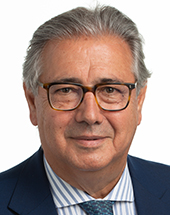





| Rank | Name | Country | Group | Speeches | |
|---|---|---|---|---|---|
| 1 |
|
Lukas Sieper | Germany DE | Renew Europe (Renew) | 487 |
| 2 |
|
Juan Fernando López Aguilar | Spain ES | Progressive Alliance of Socialists and Democrats (S&D) | 454 |
| 3 |
|
Sebastian Tynkkynen | Finland FI | European Conservatives and Reformists (ECR) | 451 |
| 4 |
|
João Oliveira | Portugal PT | The Left in the European Parliament (GUE/NGL) | 284 |
| 5 |
|
Vytenis Povilas Andriukaitis | Lithuania LT | Progressive Alliance of Socialists and Democrats (S&D) | 273 |
All Speeches (83)
Mr. President, Mr. Borrell, Ortega seems to have followed all the steps in the manual to dismantle a democracy and impose a dictatorship. First, pretending to keep up appearances, he began to buy loyalties and subsidize the hungry stomachs of the underprivileged. When he saw that the dignity of the Nicaraguan people was not for sale, the tyrant turned to threats and resorted to violence. Following Machiavelli's teachings, Ortega preferred to be feared to be loved. It promoted attacks on journalists and the media. He imposed police brutality, consented to torture against numerous opponents and went so far as to order the killing of activists. Despite the oppression, there were still Nicaraguan political leaders who decided to step forward and stand for election. But faced with the mere possibility of an alternative emerging, Ortega did not hesitate to imprison them all, without worrying about maintaining a minimal facade of democracy. Ortega has long since removed his mask as a Democrat. Every step he has taken has stifled Nicaraguans' freedoms a little further until they are completely extinguished. For many elections that Ortega pretends to hold, nothing can hide that Nicaragua has become an absolute dictatorship. Nothing can hide the economic and humanitarian collapse to which it has condemned Nicaraguans. The European Union and the Member States cannot continue to allow this. It is time to use all means at our disposal to combat Ortega's oppression.
Common agricultural policy - support for strategic plans to be drawn up by Member States and financed by the EAGF and by the EAFRD - Common agricultural policy: financing, management and monitoring - Common agricultural policy – amendment of the CMO and other regulations (debate)
Date:
23.11.2021 11:08
| Language: ES
Speeches
Mr President, just over a year ago, the Spanish delegation of the European People's Party voted against the CAP proposal put forward by this Parliament: the proposal was too rigid in its environmental requirements and jeopardised much of the income Spanish farmers currently earn. Thanks to our failure, we put a stop to the most radical measures and supported a more reasonable and flexible reform; thanks to our failure, we have also avoided attempts to discriminate against sectors, such as cattle farming, which will be able to continue to receive their help as usual. However, I recognise that this proposal we are voting on today is still not the ideal CAP for the Spanish People's Party: mainly, it remains a CAP with far fewer funds than the previous one precisely when they are most needed by farmers, but now the ball is on the roof of the Member States. Today, the European Parliament will give the Spanish government the tools it needs to once and for all support farmers: the Government of Sanchez must use all the flexibility that we have obtained from Brussels to adapt to the needs of the Spanish countryside. The Spanish countryside is going through critical moments, with raw material prices skyrocketing and the electricity bill breaking records. It is time for the Government of Sanchez to pay attention to farmers and ranchers, stop boycotting them and take advantage of the money that this PAC has to be able to help them in such complicated moments.
The outcome of the EU-US Trade and Technology Council (TTC) (debate)
Date:
11.11.2021 09:41
| Language: ES
Speeches
Mr President, with 780 million inhabitants and 40% of global GDP, Europe and the United States have developed the most important economic relationship in the world. But our relationship goes far beyond the purely commercial aspect: Europe and the United States are the two main pillars underpinning the liberal democratic order and the rule of law; a democratic order increasingly threatened by dictatorial regimes that have greater technological capabilities and greater economic weight. If we Europeans and Americans intend to preserve this liberal order, cooperation is no longer an option but an obligation. We must shore up the shared institutions that regulate trade and the international order, but we must also look to the future. We must design the necessary rules to protect our privacy, preserve our cybersecurity and regulate artificial intelligence. The Brussels effect is no longer enough for us. If we want to continue leading the 21st century, democracies need the Brussels-Washington effect.
Madam President, Commissioner, this strategy suffers from a major imbalance. It has an excess of ideology and a great lack of scientific backing. This has been shown by numerous studies, including the study by the European Commission itself, whose worrying conclusions they tried to hide from us. And it is that Mr. Timmermans is willing to approve it falls whoever falls. But those who fall, Mr Timmermans, are the millions of European farmers and their families, who will see their incomes diminish. The fall is the European agri-food sector, which will lose its export share while European supermarkets are filled with lower quality products from outside Europe. Those who fall, Mr Timmermans, are the millions of European consumers, who will have to pay ever higher prices to fill the shopping basket. The Spanish People's Party and the Spanish delegation in the European People's Party are not prepared to allow it.
Mr President, Commissioner, today the European Union is taking a step forward to address the common challenge of immigration and asylum. With today's decision, we are strengthening the European Union Agency for Asylum, providing it with better organisation and better means, capacities and effectiveness. As mentioned above, the Agency will have a total of 500 asylum experts – including security analysts, interpreters and legal professionals – ready to support receiving States. This commitment to a consolidated agency aims to improve the coordination of all Member States and accelerate the response in times of crisis. It is intended to show, in short, that when Europeans work together we are not only more efficient, but that we can face greater challenges. And in this line we must continue to move forward with the other blocks that make up the new Pact on Migration and Asylum that we defend, because in the face of European problems we need European solutions. Every time an immigrant, or a refugee, sets foot on the Greek islands, the problem is not Greek, but European. Every time a boat full of immigrants arrives on the shores of Lampedusa, the problem is not Italian, but European. And every time a child crosses the border of Ceuta irregularly, the problem is not Spanish, but European. The European Commission, led by Vice-President Schinas, has understood this perfectly and has supported us in times of crisis. Now is the time for the rest of the Member States to also understand that the countries of the South need coordinated and European solutions on a permanent basis. I trust that they too will do their part in the coming months and we will succeed.
Government crackdown on protests and citizens in Cuba
Date:
16.09.2021 10:29
| Language: ES
Speeches
Madam President, Commissioner, ladies and gentlemen, since the protests last July, the Cuban regime is trying to eliminate the minimum loophole of freedom that remained on the island. It is no surprise that communism is incompatible with freedom, but the Government of Havana has redoubled its efforts to prove it in recent months: State repression has skyrocketed with hundreds of illegal arrests, beatings, torture and a disproportionate use of force against opponents. In addition, after making numerous Internet shutdowns to prevent Cubans from communicating freely, the government has approved Decree Law 35. It is a telecommunications law that curtails freedom of expression and seeks to criminalize the opinions of dissidents on the network. But the Havana regime does not tolerate freedom even on this side of the Atlantic. Just over a month ago, the Cuban dictatorship sent paid saboteurs to blow up a peaceful demonstration that we organized in Brussels in favor of a free Cuba. And in the face of all this, the European Union has, unfortunately, responded with tepidity and hesitation. To limit ourselves to showing our deep concern, as Mr Borrell said, is not only useless, it is turning us into a caricature, into an impotent power. The European Union and the Spanish people in particular have a moral commitment to the Cuban people and we cannot stand by this situation with our arms crossed. The sooner we assume that the Cuban government has no real interest in dialogue, the sooner we can act. What we urgently need are sanctions. Sanctions against the tyrants who are subjecting the Cuban people with total impunity. We need and can enter the island, as we have repeatedly requested from the European People's Party, to examine reality firsthand and denounce the abuses that occur. In short, we need to accompany our deep concern with effective action.
Madam President, Commissioner, cyber-surveillance tools are fundamental to the work of state security forces. As a career judge and magistrate and as a minister, I have been able to see first-hand how the fight against terrorism, against organized crime, drug trafficking and many other threats to our security depends on these cyber-surveillance tools. But we must be aware of its enormous power and its risks. A software As Pegasus has come to be categorized as a weapon by the Israeli government itself and, like any weapon, Pegasus can be used for good or evil. The problem lies not in the weapon itself, but in who wields it and for what. Unfortunately, if the recent revelations were confirmed, it would prove that this software It has ended up in the wrong hands and has been destined for spurious purposes. It is unacceptable that governments use these tools to spy on journalists rather than terrorists, and that they use them to persecute political opponents rather than drug traffickers. However, as it is impossible to control the use of this software, once it is acquired, democratic countries must establish tighter controls for its sale. The European Union, together with countries such as Israel, must ensure that only those countries with sufficient democratic credentials and respect for the rule of law, such as Spain, have access to this technology.
Madam President, Mr High Representative, Cristiana Chamorro, Arturo Cruz, Félix Madariaga, Juan Sebastián Chamorro, Miguel Mora and, since last night, Medardo Mairena; six are already the pre-candidates for the presidency of Nicaragua, imprisoned by the satrap Ortega; six people who have been denied access to their lawyers and prevented from visiting their families to bring food and food to prison. They are the faces of a drama of enormous dimensions. We are talking about 108 000 Nicaraguans condemned to flee their country and at least 124 political prisoners. We are talking about a dictator who has institutionalized repression and who intends to establish a ministry of truth and eliminate the free press. And Ortega now aspires to a fraudulent fourth term, after 25 years of oppression. Europe cannot remain unmoved. That is why today I join my comrades' calls for new sanctions, for new and reinforced pressure against the regime, until Nicaraguans can demonstrate freely and democratically.