
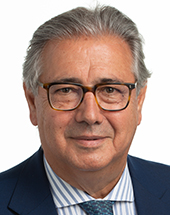





| Rank | Name | Country | Group | Speeches | |
|---|---|---|---|---|---|
| 1 |
|
Lukas Sieper | Germany DEU | Non-attached Members (NI) | 390 |
| 2 |
|
Juan Fernando López Aguilar | Spain ESP | Progressive Alliance of Socialists and Democrats (S&D) | 354 |
| 3 |
|
Sebastian Tynkkynen | Finland FIN | European Conservatives and Reformists (ECR) | 331 |
| 4 |
|
João Oliveira | Portugal PRT | The Left in the European Parliament (GUE/NGL) | 232 |
| 5 |
|
Vytenis Povilas Andriukaitis | Lithuania LTU | Progressive Alliance of Socialists and Democrats (S&D) | 227 |
All Contributions (90)
Implementation of EU-US trade deal and the prospect of wider EU trade agreements (debate)
Mr President, I think it is becoming clear that the agreement with the United States is not what we Europeans would have wanted, but, as Bismarck said: Politics is the art of the possible, not the desirable. The agreement reached is probably the best possible with the current Trump Administration: with it we avoid a major clash with our main trading partner and gain certainty for our producers. For all these reasons, we value the work of the negotiating team in a clearly adverse context. However, there are still fundamental problems that we have to try to solve: Tariffs on steel and aluminium continue to threaten our industry and sectors such as agri-food could lose competitiveness if we relax the rules for the entry of American products. If certainty is the argument in favour of this agreement, we need it for all sectors and for it to be prolonged over time. Europe cannot settle for half-measures: If this is the agreement chosen to defend our interests, we cannot leave any sector behind.
EU-US trade negotiations (debate)
Mr President, Commissioner, we have three weeks to reach a tariff agreement with the United States, but we must not accept a "salvese" negotiation in which we try to save some sectors while others are unfairly punished, especially when it comes to sensitive sectors such as agriculture, especially with products, such as olive oil or wine, so dependent on the US market. I must confess that I am very concerned about Spanish products, products that have been in the spotlight since Mr Trump discussed with Pedro Sánchez – or had different points of view – and since he refused to contribute financially to NATO like the rest of the partners. I sincerely hope that Spanish producers will not end up paying for Mr Sánchez's lack of solidarity. But beyond the specific tariff threshold, we need to put an end to this uncertainty that is already hurting exporters and importers and is putting both future investments and new hires on hold. We need to ensure that the agreement is robust and durable over time, so that no new concessions are demanded from the White House or threatened with new tariffs in a matter of months. We therefore need a definitive solution, we need to restore stability for producers on both sides of the Atlantic, but, above all, we need to restore confidence in trade as a source of shared prosperity.
Preparation for the 2025 EU–China Summit - Tackling China's critical raw materials export restrictions
Madam President, in two weeks' time we will hold a historic summit: the 50th anniversary of the establishment of diplomatic relations between the European Union and China, which have brought trade benefits by promoting investment and creating jobs. But in recent years, the relationship has accused a turbulent geopolitical concept, as well as the emergence of growing asymmetries. That is why this Summit – beyond the anniversary – must serve to rebalance this relationship with reciprocity as a basis. First, we must work to maintain the multilateral international order and institutions such as the WTO. Secondly, we must stop the negative impact of industrial overcapacity. We have to put an end to artificially low prices that prevent our companies from competing on an equal footing. Thirdly, we need to tackle unsubstantiated investigations into European products as sensitive as pig products. brandy or dairy. Fourthly, we need to bring about an end to selective restrictions on the export of critical raw materials that jeopardize our own economic security. And finally, we must move towards a more responsible position on the part of China in the framework of the war in Ukraine. Based on these premises, China and Europe will be able to take a renewed momentum and ensure that the relationship continues to be mutually beneficial. We cannot and must not miss this opportunity.
Safeguarding the rule of law in Spain, ensuring an independent and autonomous prosecutor's office to fight crime and corruption (debate)
Mr President, Commissioner, I would need at least an hour to be able to list Pedro Sánchez's attacks on the rule of law in Spain, but I only have one minute. A minute to denounce that Spain is experiencing an unprecedented crisis of gravity: a prosecutor-general of the State prosecuted for his political interferences – prosecuted; judges and prosecutors who are engaged in a historic strike in the face of the assault they are suffering; a government that persecutes judges investigating the trappings of the president’s family; a Socialist Party that has tried to decapitate the anti-corruption unit of the Civil Guard, which was investigating its mafia practices ... not to mention the scandalous plot of bites and bribes of the top socialist leaders. Spain is reaching the limit. The institutional seams of our country are about to burst. It is time to stand up to Sanchez's corruption and institutional degradation. Above all, the European institutions can no longer tolerate...
Upcoming NATO summit on 24-26 June 2025 (debate)
Madam President, Mrs Kallas, congratulations. Next week's NATO summit should mark a turning point. We Europeans must demonstrate our strategic coming of age and our responsibility for self-defence. Unfortunately, not all partners seem willing to do their part. The government of my country, Spain, has already declared that raising defence investment to 5% of GDP is a huge mistake and that 2% is more than enough, but I could not be more wrong. The 2% target corresponds to a very distant reality: the reality of 2014. A decade later, the war has reached the gates of the European Union and flies over our eastern flank. There are attacks on our critical infrastructure, from submarine cables to hospitals. We have reached a record number of cyberattacks, up to 45,000 every day, in Spain alone. That's why we can't hide our heads. It is time to be responsible, to speak to citizens as adults, and to invest in a safer Europe.
A unified EU response to unjustified US trade measures and global trade opportunities for the EU (debate)
Mr President, ladies and gentlemen, the fact that tariffs lead us to disaster is no surprise. The most basic economic theory says it, the history of international trade says it and now the data confirm it again. The price of the products concerned has increased by around 12% for consumers. If this increase continues, it will cause a loss of 7.3 billion dollars per year, something that is already being noticed in employment with the destruction of 40,000 jobs on the other side of the Atlantic. The failure of tariffs is therefore already evident. That is why the suspension has finally been a rational measure on the part of Mr. Trump, necessary for both Americans and Europeans. But we can't settle for it: we need its final elimination, including the 10% rate, which is still in force. We cannot allow the tariff threat to hang over our heads like a sword of Damocles. We cannot continue to jeopardise the legal certainty of hundreds of thousands of European producers.
European Steel and Metals Action Plan (debate)
Madam President, Commissioner, two billion tonnes. This is the amount of steel that has been produced in 2024. A real tsunami of metal that, far from being reduced, is expected to increase an additional one hundred and forty million next year. An exorbitant overcapacity that has brought down prices and is dynamiting the European market. And, as if that were not enough, the United States has reactivated its tariffs and countries such as Turkey, Canada or South Africa have imposed new trade barriers. Protectionist measures that will help redirect this oversupply to the European market, further undermining the competitiveness of our producers. That is why we believe that the Action Plan proposed by the Commission is a step in the right direction, but it is not enough. We cannot continue to patch a safeguard that does not respond to the current reality of the market. We need a new instrument to provide structural solutions to the crisis in the sector, and we need it now. If we keep waiting until mid-2026, it will be too late for many factories and for many of our workers.
White paper on the future of European defence (debate)
Mr President, Commissioner, after a few weeks of geopolitical storm, few doubt that we need a strong, joint and well-funded European defence. However, there are still some, from the left, who present a dichotomy as false as dangerous: We either invest in hospitals or we invest in tanks. Ask the Ukrainians, who suffered hundreds of bombings and cyberattacks in their hospitals, what they think of their dichotomy. Ladies and gentlemen, putting public opinion at this crossroads is, in addition to an attempt to infantilise it, irresponsible at a critical moment for our democracies. The future of European defence will require efforts, such as new budget items, better use of existing resources and closer cooperation with our partners. But no one here is talking about eliminating social protection, pensions or health care. As much as Sanchez and Zapatero say, we have neither the Ministry of Defense nor the Army. Investment in defense is not only necessary, but it is the best shield to continue enjoying the welfare state.
Presentation of the proposal on a new common approach on returns (debate)
Madam President, Commissioner, we have been building a new migration policy for years: the Pact on Migration and Asylum which occupied us long afternoons and mornings during the last legislature. But we were missing his vault key: the new return legislation. The reality is unappealable, it has already been said several times this afternoon. Every year, European justice orders the expulsion of half a million irregular migrants, but only one in five ends up leaving Europe. We therefore urgently needed to speed up these expulsions and we must do so before the most extreme cases can pose serious threats to our security. That is why I very much appreciate the fact that the European Commission has decided to focus on returns. We need a legal framework with measures for non-compliance, measures to prevent evasion, re-entry bans, establishment of return centres and, especially key, increased cooperation on readmission with countries of origin and transit. The Pact will not be complete until we have achieved an effective return system. The ball is now on our roof. Let's get to work.
EU-Mercosur Trade Agreement (debate)
Mr President, in the United States, tariffs; in China, unfair competition; and, in Russia, simply war. This is the balance sheet of the trade relations we are currently facing. For Europe, trade has always been an economic tool, but Trump, Xi Jinping and Putin have turned it into a political weapon and are thereby putting our competitiveness, our prosperity and even our security at risk. That is why we need alternatives, we urgently need new markets and Mercosur is an opportunity to boost our exporters and diversify our supply chains. But we cannot make the same mistakes of the past and ignore the needs of our farmers and ranchers. We have a responsibility to give them assurances. That is why I think it is good news that the Agreement has strong safeguards and reciprocity measures in place to protect our primary sector. And even more importantly, the Commission is betting this legislature on reducing green bureaucracy. Trade, yes; simplification, too.
Preparedness for a new trade era: multilateral cooperation or tariffs (debate)
Look, you've given me a series of reflections on what you think should be done. It is precisely what I have just asked for here, in my speech, that we should have a moderate approach, that we should not reach an uncompromising position on one end or the other; I just said that we have to be firm to react, but very flexible to negotiate. On the concrete extremes, it is a reflection that you have made: I think that is one of the issues that you mentioned that should be addressed. But I insist: The important thing is that we have our autonomy to react and to negotiate. We must be, without a doubt, and continue to be, as I have also said, protectors and, above all, collaborators of the great partners that we have had throughout our history.
Preparedness for a new trade era: multilateral cooperation or tariffs (debate)
Madam President, Commissioner, Donald Trump does not leave anyone indifferent, this is undeniable. He is a polarizing figure and the extremes of this Parliament are using him as a throwing weapon to defend their partisan interests. On the one hand, the left is dedicating itself to insulting and vilifying him. They have come to call him a Nazi and a fascist, qualifiers that - in addition to being cartoonish - are probably not the best way to diplomatically persuade the leader of our greatest ally. And, at the other extreme, they don't hesitate to get rid of praise for Trump. And they do so despite the damage it has already done in the past to our farmers and ranchers, and despite the tariffs with which it is threatening our companies. I must admit that covering with praise those who intend to harm your compatriots is, honestly, very unpatriotic. That is why we need a moderate, firm approach to react, but above all flexible to negotiate. Regardless of who sits in the White House, we cannot afford any breakup, because the United States has been, is and must remain our main ally. As President Reagan said on the beaches of Normandy, the transatlantic alliance is the best shield for freedom, prosperity and peace. Let's all work from Brussels and Washington to keep that shield alive.
Uniting Europe against actors hostile to the EU: time to strengthen our security and defence (topical debate)
Madam President, Commissioner, ladies and gentlemen, last week the Secretary-General of NATO said that we have three defence options: invest more, move to New Zealand or learn Russian. As New Zealand is 19,000 kilometres away and Russian has six declensions and a different alphabet, you will agree with me, ladies and gentlemen, that the most reasonable thing is to invest more in defence, especially when Germany's Federal Intelligence Service is warning that Russia will be ready to attack NATO by 2030. If someone doesn't see the threat, it's because they prefer to live blind. The European Union has a clear roadmap: invest more, invest better and in a European key. Ladies and gentlemen, we have little time to bridge a billion-dollar investment gap and we already know Trump's intentions with NATO. We Europeans must therefore show responsibility and reliability to our transatlantic partners in all facets, including defence.
Geopolitical and economic implications for the transatlantic relations under the new Trump administration (debate)
Mr. President, Donald Trump last night put Spain in the BRICS group, the allies of China and Russia, that is, as one of the rivals of Washington and the Western bloc. His conclusion can be reasonable if we consider that Pedro Sanchez has tried to negotiate for free with China in an unsuccessful way, has made us the European country that buys more gas from Putin and has labeled NATO's efforts to invest more in defense as a "militaristic drift". The consequence of our international alignment, according to Trump, will be 100% tariffs on Spanish products, a real economic catastrophe. The European Union is trying to avoid it by negotiating already with Trump, quite the opposite of Sanchez, who has preferred to insult the president of the United States and call to rebel against his allies. Their recklessness will have disastrous consequences for our companies and workers and, unfortunately, we will see it soon. I hope that the Government of Spain will reflect urgently and put the interests of all Spaniards ahead of its ideology.
Need to ensure swift action and transparency on corruption allegations in the public sector to protect democratic integrity (debate)
Mr President, Commissioner, on 24 December, when Pedro Sánchez sits at the table on Christmas Eve, it will be very difficult for him to know if he is at a family dinner or on the bench of the courts: his wife is charged with misappropriation, professional intrusion, influence peddling and business corruption; His brother is charged with influence-trafficking, prevarication and a continuing crime against the public treasury, a complex corruption plot that splashes not only the president's family, but several of his ministers, the presidency of Congress and the Socialist Party's senior leadership. President Sanchez has allowed corruption to infect the main institutions of the state and is now completely cornered. Therefore, when the European Commission demands Sanchez to reform the Criminal Procedure Law to combat corruption more effectively, he turns a deaf ear. Therefore, when the European Commission asks him to equate the European Public Prosecutor's Office in Spain to the standards of independence, he hides his head. Because he's embarrassed, and he's normal. Let it be known in Europe that its attorney general has been charged for leaking data reserved for the Socialist Party with clearly political motives. Sanchez is dragging Spain to levels of corruption unfit for a European Union country. Our responsibility as representatives of the European institutions is to denounce you and, above all, to stop you.
Restoring the EU’s competitive edge – the need for an impact assessment on the Green Deal policies (topical debate)
Mr President, in recent years, Europe has faced the four riders of the economic apocalypse: pandemic, war, Frans Timmermans And now Teresa Ribera. After endangering the future of Spanish industry and agriculture, Mrs Ribera disembarks in Brussels ready to replicate in Europe the failed and ideological model she imposed in Spain. But we still have time to rectify, to stop his feet. Today we pay a very high price for not having foreseen the damages of the green regulatory tsunami imposed by the Commission in the previous legislature, often without even having impact assessments. Or, worse still, ignoring them and going so far as to hide them from this House, as was the case with the Farm to Fork Strategy. That's why it's time to learn the lessons of the past and change course. The European Commission must listen to the voices of alert and work, together with the European Parliament, hand in hand with our productive sectors. And this goes through an urgent regulatory simplification, since we cannot continue to burden businesses, let alone SMEs with more administrative costs, and a substantial reduction in green bureaucracy, especially that affecting farmers, especially if we want them to accept the new trade agenda.
Tackling the steel crisis: boosting competitive and sustainable European steel and maintaining quality jobs (debate)
Madam President, we could sum up the challenges facing the steel sector in one word: overcapacity. Over the past two decades, China has increased its production by 639%. You have heard correctly, ladies and gentlemen: 639 %. Far from reducing this excess capacity, Chinese manufacturers continue to expand it. According to the OECD, by 2026, China will increase its production by an additional 630 million tonnes, five times the total of all European production. Vertigo figures that are not only generating fear about the future of the European sector, but also factory closures and layoffs of millions of workers already in the present. If we want to ensure the survival of the sector in Europe, we need urgent measures, measures that go through an assertive trade policy that makes it possible to reduce this overcapacity, using trade defence instruments more effectively, putting an end to the avoidance of tariffs via third countries and reviewing the safeguarding of steel until it responds to the reality of the market. We must act and we must act now.
Prevention of drug-related crimes, their effect on European citizens and the need for an effective European response (debate)
Madam President, Mr Vice-President Schinas, thank you very much for the legacy of your effort and dedication over the past five years. Let's face it, since 2020 drug trafficking in the European Union has doubled: There are twice as many addictions, twice as many vulnerable young people and twice as many families destroyed in just four years. And with it, the threats to our security have also increased. Behind the narcotrafficking lies the rise of street violence. Brawls, shootings and robberies are more common today than ever in our cities. Behind the drug traffickers there are also human traffickers on the migratory routes of the Mediterranean and the Canary Islands. And there are also jihadist groups that use the proceeds of drug trafficking as a source of financing. That is why, in order to face a threat that is twice as dangerous, we too must double the resources of agencies such as Europol, double European funding for the fight against drug trafficking and double the protection that our police and security forces deserve. Otherwise, the narco threat will continue to grow until it puts the Member States of the European Union themselves in check.
The crisis facing the EU’s automotive industry, potential plant closures and the need to enhance competitiveness and maintain jobs in Europe (debate)
Mr President, Commissioner, the European Commission has finally confirmed the tariffs on Chinese electric vehicles, a well-intentioned measure that responds to the will to end the illegal subsidies that are threatening the very survival of the European automotive industry: the survival of up to 13.8 million jobs across Europe. However, we must not forget that the European Union is the economic power that most depends on international trade, at around 50% of GDP, compared to 20% in China or 10% in the United States. A trade war never benefits anyone, but it would be especially catastrophic for the European Union and our most vulnerable sector is, once again, the agri-food sector. That is precisely why he is being used as a scapegoat to blackmail us. Without going any further, this morning the Chinese Ministry of Commerce has announced measures anti-dumping against brandy European in retaliation. The Commission has a responsibility to protect a sector that exports worldwide not through unfair competition, but through the highest quality standards.
Organised crime, a major threat to the internal security of the European Union and European citizens (topical debate)
Madam President, Commissioner, the fight against drug trafficking in the European Union is increasingly similar to the fight against hydra: When you cut off one of the monster's heads, three others grow. When police persecution in one country escalates, as is happening in Belgium or the Netherlands, drug traffickers easily move the activity to other latitudes within Europe: As the Commissioner for Home Affairs has confirmed to us, the drug flows that reached the ports of Rotterdam and Antwerp are moving to the ports of other Member States such as Spain, an increase in activity that is causing in recent months a resurgence of violence in areas of southern Spain such as the Campo de Gibraltar or the Costa del Sol, and all in the face of the frustration of security officials, who are overwhelmed in number and resources. Some criminal networks already have more sophisticated means than the security forces themselves in charge of combating them: narcolanchas, drones, communications encryption systems, satellite geolocation, etc. In short, a full-blown threat that, as public officials, we cannot tolerate. Firstly, because of the serious risk it poses to our police and civil guards, which all too often ends with tragic consequences for them; and, secondly, because it is a breach of the rule of law, the very foundation of the European Union. We simply cannot allow organised crime to be better organised than States; That is why we must urgently invest in the protection of law enforcement agencies, equip them with all the necessary means and recognise the dangerousness of their work, and we must do so in a coordinated manner in all Member States, facing a shared threat together. Otherwise, the narco hydra will continue to stick its heads out across Europe perpetuating an unaffordable escalation of violence.
Madam President, Commissioner, Commissioner, today we are celebrating a historic day. After more than a decade of blockade, the European Union has reached an agreement on the Pact on Migration and Asylum, or I hope it can be reached. The time cannot be more opportune, since the figures of the last year bring us closer to a crisis similar to that of 2015. That is why the EPP Group supports this pact to strengthen the protection of our external borders and prevent threats to the security of our citizens. It is a balance between responsibility and solidarity that alleviates the pressure on countries of entry, such as Spain, while giving guarantees to those who truly need international protection. United against the pact, as expected, are the extremes: naive goodism on one side and alarmist fatalism on the other. Despite this, for the EPP group today a stable and lasting solution is presented for the benefit of all Europeans.
Promised revision of the EU animal welfare legislation and the animal welfare-related European citizens’ initiatives (debate)
Mr President, Commissioner, hundreds of thousands of farmers have been on the streets all over Europe for months calling for urgent measures for the survival of the primary sector in the European Union, but it seems that many do not want to find out. There are still those who insist on tightening the nuts much more, on continuing to add to the primary sector more demands, more requirements. On this occasion, with the legislation on animal welfare. And, in addition, without taking into account the special geographical and climatic conditions of southern Europe, such as Spain, Portugal or my own region, Andalusia. Because, despite the fact that in the European Union we have the highest standards of animal welfare around the world, for Timmermans' heirs it is never enough. That is why we in the Group of the European People's Party insist on the need to stop this legislative overload. Let us no longer harm the livestock sector for reasons of mere ideology. (He refused to have Niels Fuglsang ask him a question under the ‘blue card’ procedure.)
Empowering farmers and rural communities - a dialogue towards sustainable and fairly rewarded EU agriculture (debate)
Let me tell you, first of all, that the European People's Party is very clear that, in order to make further progress in improving the quality of products and also contribute to curbing climate change, it is necessary to be guided by scientific criteria and not by ideological criteria, which is what you do. You first put ideology before each and every technical report and scientific report. Look, I'm gonna tell you something. I consider very serious what Mr Timmermans did when he presented the Farm to Fork Strategy and concealed from us the technical report in which he came to acknowledge and in fact stated that less was going to be produced, that more expensive was going to be produced, that the shopping basket would go up as it has gone up, and that, in addition, the products from outside would come, which do not have the quality that the products we have here and manufacture in Europe have. Therefore, that is what the People's Party intends. You come here today to side with the farmers, when you are seeing that they have just demands for the limitations and conditions that you are putting on them ideologically and never scientifically.
Empowering farmers and rural communities - a dialogue towards sustainable and fairly rewarded EU agriculture (debate)
Madam President, Mr Vice-President, last week many were alarmed to see the streets around the European Parliament full of tractors and farmers protesting with just demands. This week, fortunately, the Commission has reconsidered and started to address farmers' demands, reversing the implementation of some of the most radical measures of the Green Deal, such as the new Pesticides Regulation. Today, therefore, we welcome the attempt to carve out the legacy of the socialist Timmermans. But it is time, ladies and gentlemen, to make further progress in defence of European farmers. We need to make the criteria for accessing CAP support more flexible. We need to support the construction of water infrastructure to alleviate drought and we need to introduce mirror clauses to end unfair competition. We hope, Mr Vice-President, that this time you will get down to business in the right direction. (He agreed to answer a question under the "blue card" procedure.)
Russiagate: allegations of Russian interference in the democratic processes of the European Union (debate)
Madam President, the plot that connects Catalan secessionism with Putin seems to be taken from a spy novel. But, unfortunately, it is not fiction, but facts contrasted and investigated by justice. Puigdemont's meeting with a Kremlin emissary is under investigation just twenty-four hours before the failed declaration of independence. The transfer of explosives in Catalonia by spies from Moscow days after the illegal referendum is being investigated. And the Kremlin's offers to secessionism are investigated, such as the settlement of Catalonia's debt, payments in cryptocurrency to finance a hypothetical independent republic or, even, the deployment of 10,000 Russian soldiers in Barcelona. All this to turn Catalonia into a satellite of Russia in the heart of Europe. And in this plot, Puigdemont was, in Leninist terminology, Putin's useful fool. But a useful fool who poses a grave danger to the unity and security of the whole of Europe. That is why we must remain vigilant and isolate all those who seek a weak and fragmented Europe.