
| Rank | Name | Country | Group | Speeches | |
|---|---|---|---|---|---|
| 1 |
|
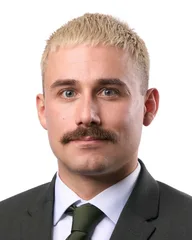
Lukas Sieper | Germany DEU | Non-attached Members (NI) | 390 |
| 2 |
|
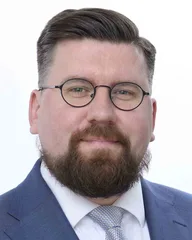
Juan Fernando López Aguilar | Spain ESP | Progressive Alliance of Socialists and Democrats (S&D) | 354 |
| 3 |
|
Sebastian Tynkkynen | Finland FIN | European Conservatives and Reformists (ECR) | 331 |
| 4 |
|
João Oliveira | Portugal PRT | The Left in the European Parliament (GUE/NGL) | 232 |
| 5 |
|
Vytenis Povilas Andriukaitis | Lithuania LTU | Progressive Alliance of Socialists and Democrats (S&D) | 227 |
All Contributions (120)
The need for a coherent strategy for EU-China Relations (debate)
Mr President, dear colleagues, ‘China is a big country and you are small countries, and that is a fact’ – that’s what China’s foreign minister said in 2010. And because, individually, we are 27 proud but small countries, formats like 14+1 and flashy state visits of national presidents are playing right into the hands of Beijing. And if the Commission President or High Representative are coming along but are clearly playing a side role, I wonder if this benefits us Europeans at all and how much it harms our Taiwanese allies or Uyghur friends. Increasing international tension is forcing us to become serious about European foreign policy. That means qualified majority votes in the Council and Treaty change. That means EEAS with a mandate. That means that we can discuss content, hopefully, next time, and not how disunited we stand globally at the moment.
EU-Azerbaijan relations (debate)
Madam President, dear colleagues, Commissioner, I believe that EU—Azerbaijan relations need to be updated. However, I must underline that any deepening of ties with the EU must be conditional. That is not happening. There is no progress in respecting citizens’ rights and freedoms, no improvement in ceasing repression of the political opposition and civil society, and no advancement in the rule of law, corruption and independence of the judiciary. On top of that, there has not been a solution to the Lachin corridors ongoing blockade, for which Azerbaijan is responsible and should take all measures at its disposal to ensure unimpeded movement of persons, vehicles and cargo in both directions. For those reasons, I cannot agree that the EU renewed its relations based on its energy needs. By now, we should have learned the lesson that support of authoritarian regimes does not pay up, not for us, and definitely not for Azerbaijani citizens.
Situation in Georgia (debate)
Mr President, dear colleagues, I have to say that after four years intensely working on getting Georgia closer to us, knowing it is also something that the citizens want, I am at a loss with the situation now. It seems that whatever we do, it’s a reason for Prime Minister Garibashvili to accuse us of foul play or for other representatives of the government to personally attack each of us. Now, after doing the right thing and reconsidering this version of the Foreign Agents Law, there is no humility; on the contrary: horrible claims about how the opposition would kill a person just to cause chaos, and that we are the foreign agents interfering. I’d like to remind the Georgian Government of one thing: we are not here against your will. You have an association agreement, the DCFTA. You are eager to get candidate status. You do everything to get closer to us. But at each step, you throw a stone at us. So if you want to get closer to the EU just to be able to throw stones from a short distance, I don’t think we have an agreement. Pick a side, or we will stop being a choice.
The further repressions against the people of Belarus, in particular the cases of Andrzej Poczobut and Ales Bialiatski (debate)
Mr President, dear colleagues, since Lukashenko has installed himself in power again in 2020, we voted for six resolutions related to Belarus and its systemic repression of any opposition. That is quite an unprecedented number, let me say. Our attention to the people of Belarus is unwavering in this House. But it also shows that our hard power is obviously not sufficiently used. Are the sanctions truly targeting those responsible and are there? Or is Belarus perceived by Member States just as the some bothersome buzzing fly on the problem called Putin? I am proud of our commitment and our debates, and I am grateful we can today voice our support to Ales Bialiatski and Andrzej Poczobut. But I don’t see the same determination on the side of our colleagues in Council and Commission. Why wasn’t, in the proposal, named Belarus and its people? Let me first remind you, you wield the power to deal with Lukashenko. You just need to decide it matters.
The recent deterioration of the inhuman imprisonment conditions of Alexey Navalny and other political prisoners in Russia
Madam President, arrested, imprisoned and poisoned for his political activism and yet he returns to Russia and continues to fight for what he believes in, risking his own life. Aleksei Navalny and all political prisoners are the visible symbol for the millions of Russians who want a better future for themselves and for their country. This symbol grows every day, and as a paranoid 70—year—old tries to violently break Russia away from Europe and bind it with the dictatorships in the East. Europe is with Navalny and all the dreamers and believers in a free and democratic Russia. Colleagues, let us help those who want to show to Putin that they will not be intimidated or silenced and that every dictator needs at one point to learn that you cannot silence ideals. And, dear Aleksei, I hope the guards play Beethoven’s Ode to Joy next time during mealtimes as a punishment too.
Corrigendum (Rule 241) (action taken)
Madam President and colleagues, I want to bring to your attention the situation in Moldova. Moldovan President Maia Sandu just revealed that the Ukrainian intelligence services intercepted a document clearly showing Russia’s plan for a coup d’état in Moldova. Putin has an apparent goal to forcefully change the legitimate power from Chișinău to an illegitimate one, while also destroying Moldova’s European aspirations. Three days ago, the Moldovan pro-European prime minister stepped down, also creating a turmoil which Russia can potentially use to destabilise our partner to whom we granted candidate status just a few months ago. Madam President, on behalf of the Greens/EFA group, I would thus urge you to issue a statement of support to Moldova on its European path.
Situation of the former President of Georgia Mikheil Saakashvili (debate)
Madam President, dear colleagues and dear Georgians who are listening, there are far too many challenges ahead of Georgia. The Commission will be now evaluating the 12-point recommendations and how the Georgian authorities were able to fulfil them. At the end of the road, there might even be a candidate status waiting for them. Yet we already know that there are some persisting issues, although we all appreciate attempts at legislation tackling oligarchisation. We also hear varying messages from Georgian authorities regarding which persons in the country will be affected by the legislation and which thus suggest that the legislation won’t really solve the problem. Another issue is, of course, polarisation of the political spectrum and consequently society. I have no signals of improvement, maybe even on the contrary – the longer there is infighting, the more it’s being fuelled by various disinformation and manipulation. Why am I talking about it now? Because these are the challenges all of us in this House want to focus on and want to keep focusing on. However, the case of Mikheil Saakashvili is so overwhelming that we cannot look away. It represents everything we are talking about when we talk about problems and reforms, mistrust in judiciary, polarisation, disinformation. There is no big conspiracy such as that we are being paid by the UNM, or coerced by Saakashvili – yes, I have heard that. That is nonsense. We care because we have to care, because there is a highly politicised case and the person is dying in prison. So I urge the Georgian authorities: keep in mind not only the political points you can gain by keeping him in prison, but also the points you are losing, because we have to have a debate today about a political prisoner instead of, for instance, the candidate status.
Preparation of the EU-Ukraine Summit (debate)
Madam President, dear colleagues, I am an unapologetic fan of EU enlargement, which is why I welcome Presidents Zelinskyy’s commitment to reforms – changing legal, social and political reality to align with our European acquis, even during wartime. I have high hopes for the upcoming summit to bring Ukraine even closer to the EU family. In the European family, they already are. Furthermore, the summit must convey strength and commitment also from the EU – in political, economic and military assistance. But it must also reinforce its humanitarian support, especially on the issue of forced filtration of people in Russian-occupied territories and deportation to the Far East, as well as forced re-adoption of children into Russian families. The summit also brings an opportunity to discuss all necessary instruments to try Russia for all the committed crimes, which is a must for the international order.
Humanitarian consequences of the blockade in Nagorno-Karabakh
Mr President, dear colleagues, the problem is quite clear: the current blockade of Nagorno-Karabakh leads to many people being left without the basic needs, causing a severe medical situation, risking starvation and endangering any agreed commitments. Whatever the reasons for the blockade, no protests should deny Nagorno-Karabakh residents their access to freedom of movement and necessary goods. Moreover, in line with its commitments, it is Azerbaijan’s responsibility to ensure that the Lachin corridor strategic road remains open, whether genuine environmental concerns exist. I insist that Azerbaijan refrains from undermining the corridors functioning and allows for the unhindered movement of goods and civilians. And I urge both countries that only continuous peaceful dialogue without sabotaging can lead to consistent peace.
Defending democracy from foreign interference (debate)
Mr President, dear colleagues, Commissioner, foreign interference in all democratic processes, including disinformation. That is what our name INGE (Special Committee on Foreign Interference in all Democratic Processes in the European Union, including Disinformation) stands for. Now Europe shakes in its core due to these issues. The Chinese police stations in our Member States are yet to become a huge scandal. We have among us people corrupted by hostile foreign powers. Attacks on our infrastructure are increasing, not that any of this is surprising. It would be surprising if authoritarian, non-democratic regimes did not try to exploit our openness. What is quite terrifying, though, is that, especially at the outset of the European elections, there is still not enough action against foreign interference, against disinformation. I hoped that, when disinformation during COVID killed people, there would finally be a legislative proposal. I hoped that, when Russia attacked Ukraine, we would be eager to strengthen our resilience. I still hope now that, when so much foreign influence emerges, we will see a strong plan – no package, no codes without obligations. No offence to those activities. I would like to hear where the problem is. Is it the Commission? Is it some Member States, digital corporations, lobbyists? What exactly needs to happen so that there is some enforceable, clear measure that will make it urgent for you, if dead people, politicians in prison and cyber—attacks are not enough?
Annual implementing report on the EU association agreement with Georgia (debate)
Madam President, Commissioner, colleagues, Georgia is one of our most important partners, which is close to many of our hearts. We have been pointing out for years that the areas of democracy, rule of law, fundamental freedoms and human rights in Georgia have significant issues without improvement on many elements, which is why the report on Georgia is somewhat critical. Implementing genuine and thorough reforms and addressing the shortcomings of the current legislation is a must. There is no space for rushed laws and politically motivated processes. If there is a will for a European future, for candidate status, there will be a path. That’s why it’s essential to undo the injustices done. Georgia needs to take the next steps towards its goal of EU membership. Now I am addressing the Georgian politicians directly: put aside your differences; work towards the assignment – the unique opportunity that would fulfil so many aspirations of so many of your citizens of Georgia.
The continuing repression of the democratic opposition and civil society in Belarus
Mr President, dear colleagues, when I say 1 400 political prisoners in Belarus, do you imagine a face? I do. I will probably never forget Kasia Budzko, now 21 years old. She studied to become a teacher and now, for two years of her still so very brief life, she is in a penal colony because of challenging the authorities. I have the same activist nature. I can’t stand oppression and injustice. If I live one day in dictatorship, I am certain I will end up the same as her, or dead. Maybe then someone will read my name in a room like this. But can it change anything? I’m trying not to lose hope. With every resolution like this, naming those who suffer under dictators, with every euro we block from the hands of Lukashenko and his sugar daddy, Putin, with support to democrats in an out of Belarus who keep fighting, I believe Kasia will become a great teacher for future generations – maybe with her work, but mainly with her example, attaining freedom. Let’s help her get it!
Amending Council Regulation (EU, Euratom) 2020/2093 of 17 December 2020 laying down the multiannual financial framework for the years 2021 to 2027 - Amending Regulation (EU, Euratom) 2018/1046 as regards the establishment of a diversified funding strategy as a general borrowing method - 'Macro-Financial Assistance+' instrument for providing support to Ukraine for 2023 (debate)
Mr President, dear colleagues, Minister, Commissioner, I welcome this proposal, and especially now that we are discussing – or we already discussed – Russia as a state sponsor of terrorism, and this package for Ukraine. We are being cyber—attacked by a pro-Russian hacker group – they already admitted it – so I think we do not really have to discuss here very thoroughly why we are doing it and why it is important that we continue our swift and efficient support to Ukraine. But also I do have some concerns about this proposal and I would like to voice the criticism. Firstly, I think it would be really better to also support Ukraine in the form of some grants, not only loans. So we help them ultimately to alleviate the debt burden they have. Additionally, I also encourage the Commission to focus on internal structural reforms in Ukraine to their objectively capable extent. And lastly, I urge the Commission to at least inform the European Parliament, the co—legislator, ahead of time, notably given the limited time to consider the proposal.
Resilience of critical entities (debate)
Mr President, dear colleagues, dear Commissioner, the geopolitical climate for Europe is getting harsher and we step up our efforts to secure vital entities in our single market as a whole. We respond to the growing impacts of climate change and to gaps and vulnerabilities that opened up in the pandemic. And this directive really well complements our new DORA Act on financial services and our newly updated NIS 2 Directive for the resilience of digital infrastructure. And my colleagues already mentioned several other important legislation that has been built up in this House, and this is one of them. This is where the magic happens, too. It lowers the bureaucratic burden by creating a single point of contact for businesses on these three and more legislations and streamlines requirements and reporting. This is a huge success and showcases the true potential what benefits the EU and cooperation in general can bring. I am also happy to see that the risk assessment by Member States will now include cyber threats and risks for cross—sectoral or cross—border nature. This has been an important addition as we see our adversaries increasingly blurring the lines in their attacks and switching between domains. I was hoping that this period of security cooperation and open access will prevail. In the form which I proposed, we will find ways to regularly publish findings of the Critical Entities Resilience Group for the general public for use in academia and security research, of course, adequately anonymised. Unfortunately, we still have some trust to build in this, I see. That, of course, does not does not hinder the important work that has been done. This directive is timely and relevant, and it is my hope that Member States will diligently transpose it into their national laws, together with DORA and NIS 2.
A high common level of cybersecurity across the Union (debate)
Madam President, dear colleagues, Commissioner – really difficult to go after this amazing speech, by the way – thanks to this legislation the number of essential and important entities we will need to protect just in my country, the Czech Republic, will be around 6 000. Currently we protect 350. Now imagine other Member States. The scope and enforceability of this regulation is unprecedented and is a success. In a world where ransomware attacks increased by 600% last year and where cyber teams in Ukraine just so protected 1 million households from an attack on their power grid, I don’t have to talk about the importance of cybersecurity. It has never been clearer and I am proud we react. Let me also express pride that open source and end-to-end encryption are finally getting the recognition in our fight they deserve. I do hope this House won’t go against itself in the future.
Lukashenka regime's active role in the war against Ukraine (debate)
Madam President, dear colleagues, Commissioner, do you remember the rigged elections in 2020? Those massive protests in civil society and international organisations claiming Lukashenko is not a legitimately elected president. So here we are now, two years later, talking about Lukashenko’s helping a regime, a war criminal, and dragging Belarusian people to the war, just to please his puppet master in the Kremlin. This is what you get if you don’t stop dictators once you have a legitimate chance. Lukashenko is partially a product of our own weakness. I am thinking every other day about Kasia Budzko, whether I could walk into her cell and get her out. I can’t because I don’t have the power. But the Member States show on the example of Putin that they have the power to stop Lukashenko. And even though they are not here and they are not listening to either me or Kasia or... (speech off mic)... please do not make the same mistake again. Lukashenko and Putin must be stopped. We owe it to the victims of the war, and we owe it to all free people in the region.
Question Time (Commission) - Protecting critical infrastructure in the EU against attacks and countering hybrid attacks
Thank you very much for the answer. I do understand that, of course, the European Union cannot have its own intelligence services. And I thank you for the information about the cooperation for national Member States. But if we were very specific and let’s say there was a Russian spy in the European Commission, who is the one who would uncover that?
Question Time (Commission) - Protecting critical infrastructure in the EU against attacks and countering hybrid attacks
Mr President, Mr Commissioner, well, of course, we know all that this debate we are having today is partially because of the Nord Stream attacks, but our critical infrastructure is vulnerable and has many vulnerabilities towards other means rather than physical attacks, also coercion, sabotage, espionage, etc. And partially because some colleagues already covered, let’s say, the physical aspects, we will be discussing next plenary the NIS 2 Directive. So cybersecurity will be also done in our session. I want to focus on the aspect of espionage. Our information services in the Czech Republic, where I am from, uncovered a certain Russian spy within our institutions. But this is a problem for even European institutions, for national Member States and, of course, for our companies. And I don’t hear often that we are dealing with espionage and how are we dealing with it? Not only, of course, from Russia, from China, too. And I would like to hear from your perspective and from the Commission what is being done in this regard.
Countering the anti-European and anti-Ukrainian propaganda of Putin’s European cronies (topical debate)
Mr President, dear colleagues, Commissioner, Minister, two interesting reports came out recently. One is from a Europe—based NGO, another one is from the company Meta, and they are together painting quite an ominous picture of how we are not tackling Russia’s propaganda. First, let’s talk about Google and Twitter. There are thousands of tweets, YouTube videos and posts flagged as Russian propaganda, and the companies have grown really less responsive to the requests to remove such content. According to Ukraine’s StratCom, they are avoiding even taking their calls or responding to emails for several months. Meta’s report reveals quite horrifying numbers: USD 105 000 spent on anti—Ukraine propaganda, 60-plus websites impersonating European news organisations and a network of amplifying fake social media accounts. We know there are technical ways to limit the impacts of this online war. But let’s understand one thing: this hydra has more heads than we can cut off only by depending on technical solutions and, therefore, these companies. We see now that if we leave the sole responsibility on these private companies, they might start lacking the will to fight or, of course, the means to fight. They are also not democratically elected. We are the ones who bear the responsibility over the security of our citizens. We don’t need any more hybrid tools, voluntary codes and vague promises. We need a proper legislation with a sanctions system right now. You have the basics in our INGE report, and I trust you can build on it quickly.
The death of Mahsa Amini and the repression of women's rights protesters in Iran (debate)
Mr President, ‘Women, Life, Freedom!’. I observe with deep admiration the breathtaking courage with which Iranian women stand these days against the dictatorship of Khamenei and his morality police. The message of the Iranian protests is universal and resonates across the world. It is heard by women in Poland and the US, who are denied the right to their own bodies; it is heard by women in Italy, where ultra—conservative forces are coming to power. It is heard by women everywhere, where the same obscurants under different symbols wait for the nearest opportunity to trap free women in predetermined roles. That is why I think it is essential that their slogans are heard today in this room over and over again: (the speaker used a slogan in a non-official language).
Statute and funding of European political parties and European political foundations (debate)
Madam President, do we find it democratic that, for instance, the Pirate Party, active in 14 Member States and counting four MEPs in this Chamber, is not permitted to register as a European political party? I don’t. Genuine and inclusive citizen representation can only be achieved once we lower the threshold for registration. However this report does not mention it. Do you find it transparent enough if only the identity of bigger donors which donate over EUR 3 000 is to be published? I don’t. Accountability is only achievable through full transparency. The EU should follow the standard of mandatory transparent bank accounts for all political parties. It doesn’t hurt, I know it by experience. And do we find it safe that foreign entities are allowed to donate money to these non—transparent accounts of European political parties? I don’t. We are in a time of war, and donations coming from foreign powers which seek to destabilise our democracies should be seen, and stopped. I and my Pirate colleagues will thus not vote in favour of this report.
The relations of the Russian government and diplomatic network with parties of extremist, populist, anti-European and certain other European political parties in the context of the war (debate)
Madam President, Commissioner, Minister, Russian tactics to get into European democratic institutions are not very secret, nor are they very elaborate, if we look at the evidence we already have. Last Monday, Ms Le Pen and Mr Salvini, together with other lesser-known Russian finest members, were roaming this House and advocating for Russia’s interests. Of course, this practice is ongoing, even after Russia started the war in Ukraine. In our Special Committee on Foreign Interference, we outlined what should be done: Follow the money, overhaul Member States’ election finance laws, expose and deport known Russian agents. Our reporters, investigative journalists, off-scene specialists and our police and intelligence services must also get all necessary means and support to continue to find and expose Russia’s attempts to poison our democratic systems. The best defence against Russia’s tactics is transparency and the efforts of our collective European civil society. A také v češtině, protože nevím, zda umí anglicky, si dovolím se obrátit na přítomného slovenského poslance. Spousta zemí má extremisty, zjevně spousta zemí má i hlupáky. Jenom jedna ale proti Evropě vede válku. A Ukrajina to opravdu není.
Violations of media freedom and safety of journalists in Georgia
Yes, thank you very much. I would like to make an additional statement, which is also connected to, let’s say, the position of S&D, so I do hope that Mr Cozzolino doesn’t mind to follow up on him with that. It concerns an amendment that will be upcoming tomorrow in relation to the resolution. And I really just want to make a personal statement towards Georgian friends, towards the government and towards this body. I do think that Bidzina Ivanishvili is an oligarch, that we can find proof of his links to the Kremlin and that possible sanctioning would be possible in the future. However, it has no place in this very concise and very important resolution on media freedom, and therefore our group will have to vote against this. However, that doesn’t mean that we in any way don’t think that Bidzina Ivanishvili is a problem behind many problems in Georgia, and I want our Georgian friends to hear this.
Violations of media freedom and safety of journalists in Georgia
Madam President, dear colleagues, friends of Georgia, Georgian citizens, if you are listening. The media situation in Georgia has been dire. Journalists are violently attacked in unprecedented numbers. There are cases of intimidation, threats and persecution of journalists, and many criminal investigations against media workers and owners. Moreover, I’m very disappointed that the government and other politicians are joining in the media witch—hunt instead of safeguarding the pillar of democracy and society. Therefore, I remind the Georgian Government and authorities that the citizens of Georgia have expressed their wishes of European aspirations. That includes upholding the highest standards of democracy, the rule of law, judicial independence and fundamental freedoms, including free and independent media. Candidate status is not a one—way deal. We want to fulfil your citizens’ wishes. Do you? If yes, you need to uphold some standards.
Security in the Eastern Partnership area and the role of the common security and defence policy (debate)
Madam President, Commissioner, dear colleagues, upgrading the Eastern Partnership is a necessity, and I believe that it’s imperative to develop a strategy to address better security aspects of the EU’s Eastern Partnership policy, taking the security needs of the relevant partner countries as a starting point. The EU must strengthen the security dimension of the Eastern Partnership, make closer cooperation with CSDP and create a security dialogue to enhance security and stability, but to mainly develop a more active role, especially in the peaceful resolution of the ongoing conflicts and prevention of future ones. I welcome enhancing cooperation through collaboration on building resilience to disinformation and Russian state propaganda to counter the strategic weakening and fragmentation of societies and institutions. Moreover, I strongly encourage the Member States to cooperate with our EaP partners on cybersecurity, including mutual intelligence, experience sharing on cyber threats and assistance in critical infrastructure. Now more than ever, we must stress the EU’s commitment to all Eastern Partnership countries’ sovereignty, territorial integrity and political independence within their internationally recognised borders. I believe that the result we are presenting today provides just that.