
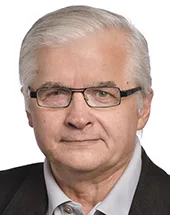

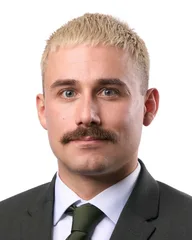
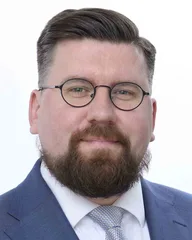
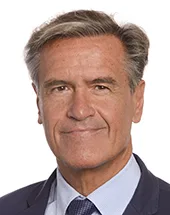
| Rank | Name | Country | Group | Speeches | |
|---|---|---|---|---|---|
| 1 |
|
Lukas Sieper | Germany DEU | Non-attached Members (NI) | 390 |
| 2 |
|
Juan Fernando López Aguilar | Spain ESP | Progressive Alliance of Socialists and Democrats (S&D) | 354 |
| 3 |
|
Sebastian Tynkkynen | Finland FIN | European Conservatives and Reformists (ECR) | 331 |
| 4 |
|
João Oliveira | Portugal PRT | The Left in the European Parliament (GUE/NGL) | 232 |
| 5 |
|
Vytenis Povilas Andriukaitis | Lithuania LTU | Progressive Alliance of Socialists and Democrats (S&D) | 227 |
All Contributions (27)
The use of Russian frozen assets to support Ukraine’s victory and reconstruction (debate)
– Madam President, High Representative. Not often are the moral, legal, political and economic arguments for action as strong as in the case for confiscating Russia’s state assets to help Ukraine. Far too much time has been spent on the separate issue of taxing profits from those assets. Europe needs to seize all of Russia’s underlying assets, and it must do so now. Morally, everyone agrees that Russia must pay for its crimes. A lot of legal analysis arrives at the same conclusion we reached in the European Parliament a couple of months ago. On Saturday, the US House of Representatives adopted a bill authorising the US President to do that. From a political perspective, the time to seize these assets is also now, not in some distant future as part of peace negotiations. If we wait, we are unlikely to ever do so. Some critics of confiscating state assets say that doing so would disrupt financial markets and lead to the withdrawal of assets by countries like China, but where would these assets go? It doesn’t make sense at all. However, the idea of transferring to Ukraine the expected ten or more years—worth of profits can also be studied. Finally, let us also consider the consequences of the failure to seize these assets. Ukraine may simply run out of money to sustain its defensive efforts. Plus, the post-war economy and situation in this country, with hundreds of thousands of veterans struggling to find jobs, looking for jobs and to reintegrate into society. Europe needs to anticipate the potential political consequences. For all the talk of strategic autonomy in recent years. It would be ironic if even on an issue like this, nothing happened until the US made a move.
The murder of Alexei Navalny and the need for EU action in support of political prisoners and oppressed civil society in Russia (debate)
Mr President, thank you very much. Russia is a country where people fighting Mr. Putin's corrupt clique live a short life. They die, shot under the walls of the Kremlin, in the stairwell of their home, on the streets of Berlin. They die, poisoned in London hospitals or allegedly for no reason at all in a gulag, located by the ruling sadists north of the polar circle. Alexei Navalny knew what had happened to Nemtsov, Politkovskaya and many others. And yet, after saving his life in a German hospital, directly threatened as a result of poisoning by military agents of the Kremlin, he decided to return to Russia. Like a true patriot, he wanted to fight for an honest and democratic Russia, trying by his example to awaken his compatriots from lethargy, fear, hopelessness and indifference. Honesty and freedom are the greatest threats to the current dictator of Russia, his thieving, criminal octopus. Navalny was imprisoned by servile judges. He was sent to other prisons, where he was treated inhumanely by bandits in uniforms of prison guards. We pay tribute to an honest and courageous man. Let us hope that the citizens of Russia will finally wake up. Russia, which for centuries has been the world's largest prison, persecuting its citizens as well as conquered and enslaved nations, does not have to be like this. All the Russians have to do is believe it.
The need for unwavering EU support for Ukraine, after two years of Russia’s war of aggression against Ukraine (debate)
Mr President, it’s been two years since the full-scale Russian aggression against Ukraine started. It’s been two years of heroic defence of Ukraine and Europe. It’s been two years of unprecedented help for Ukraine and Ukrainians by the democratic world. But it’s also two years of manoeuvres by opportunistic political leaders who have done a lot not to let Russia be defeated and have not done the right things in the right time. And that policy continues with protecting aggressors’ frozen assets against confiscation and using them to support the victim. It’s a shame that, instead of confiscation, misleading formulas are invented, offering to Ukraine a fraction of what can be given. It’s a shame that the US Congress blocks necessary arms and ammunition supplies, betraying Ukrainian soldiers facing growing Russian pressure. Once again in history, it’s a choice between law and peace on the one hand, and disgrace and war on the other.
Keeping commitments and delivering military assistance to Ukraine (debate)
Mr President, thank you very much. The most serious threat to Ukraine fighting Russian aggression is the reduction or cessation of financial and military assistance from democratic countries. Orban in Europe and Republicans in the US Congress play the role of Putin's allies. This is a critical moment. There is a simple way to help Ukraine and deprive our own blackmailers of their strength: Russia’s frozen assets must be urgently confiscated and transferred to Ukraine. Last week, the White House backed the move. Let us stop listening to those who claim that there is no legal basis for this. We do not defend the dirty interests of companies that derive extraordinary profits from the disposal of this property. Let's do what is reasonable, decent and effective. Let us remember that the defeat of Ukraine will be our defeat.
Effectiveness of the EU sanctions on Russia (debate)
Mr President, thank you very much. Mr. Commissioner, I'm sorry. The main objective of the sanctions was to reduce Russia's ability to continue its aggression against Ukraine. Have we achieved this goal? To a small extent. Undoubtedly, the revenues of the Russian budget have decreased, the production of military equipment and ammunition is more difficult, but this does not have a large enough impact on warfare. In some cases, sanctions have paradoxically had the opposite effect, for example, freezing the assets of some oligarchs has led to the return of around EUR 50 billion to Russia. The reasons are known. Russia is reorganizing its economy. Countries that do not recognise sanctions by the EU and other Western countries, such as China and India, are seizing the opportunity for extraordinary benefits. It is quite common to circumvent technological sanctions, also involving European companies. A number of large companies from our countries continue to Business as usual. Limited imports of gas and oil from Russia into the EU continue. Is the limited effectiveness of sanctions an argument for their abolition? Of course not. Nothing has happened to justify such a move. It's the opposite. Consistent behaviour is a measure of the credibility of our policy. But we need more determination and unity. Exceptions made for certain Member States cannot be permanent. The use of secondary sanctions against countries that disregard our efforts should be seriously considered. The war is at our border and supporting the aggressor means disregarding our security. Finally, it is becoming increasingly urgent to apply the most serious sanction, which should be the confiscation of Russia's frozen state assets. It is not true that this cannot be done legally. Well, you can. The Commission's position on this issue, at least so far, is erroneous, both legally and politically. The money should go to Ukraine. Strengthening the victim of aggression is also a form of weakening the aggressor.
Establishing the Ukraine Facility (debate)
Mr President, thank you very much. Mr. Commissioner, I'm sorry. Continuous and predictable financial assistance to Ukraine is essential. The Commission's proposal is a good starting point. Parliament has enriched this proposal in the course of its work and I hope that our position will be understood by the other EU institutions. We want to support Ukraine's current budgetary needs, its reconstruction and preparation for membership of the Union. We're spending a lot of money on this. However, we must be aware that the scale of the current budget shortfall is colossal and here a huge part of our help is likely to come. At the same time, Ukraine may soon lose its ability to borrow from international financial institutions. This means that the financing of the reconstruction is now becoming illusory. The damage caused by the Russian aggressor is many times greater than the help we can provide. In this situation, it is of paramount importance to confiscate Russian state funds frozen in our countries. The claim that it cannot be done legally is false. The aggressor does not enjoy any immunity. This is what Parliament is proposing, and I am calling on the Commission and the Member States to go in that direction. To return the money of the perpetrator of the most serious crime of international law would be an unforgivable mistake. I know some governments are against confiscation. The reason may be erroneous legal expertise or pressure from business fearing Russia's confiscation of assets. I would like to point out that Russia, on its own initiative, has so far nationalised the wealth of Western companies worth tens of billions of euros. Let us finally be firm. Procrastination is the path to failure.
Parliamentarism, European citizenship and democracy (debate)
Mr President, thank you very much. The report we are talking about contains a number of very valuable proposals. I would like to pay particular attention to the proposal of the European Parliament to launch a pan-European consultation using the internet for voting. Such action by Parliament would not require Treaty changes. Consultation costs would be negligible and the benefits very high. After proper media promotion and interest, Parliament, by asking important questions to Europeans, would make millions of our citizens feel involved in deciding on common issues. The role of Parliament would become more visible and comprehensible. A supranational European public opinion would gradually develop. Based on this consultation, the activities of the European Parliament would gain an extremely strong political mandate. It would be very good for Parliament to make use of this instrument before next year's elections.
Establishment of the EU Ethics Body (debate)
Madam President, Madam Vice—President, I’m afraid we have a problem with the Commission’s proposal. When we worked in Parliament on our proposal on a more effective ethical scrutiny procedure, most of us believed that the often-repeated declarations of the necessity to strengthen the transparency and accountability of the EU institutions have been serious. As a result of a compromise, we proposed to replace the existing ineffective mechanism by a new body for all institutions, equipped with some investigative powers and the right to suggest sanctions if needed. The Commission proposes to leave everything as it is and just add a kind of small discussion club. Just as Parkinson suggested, if you don’t know what to do, create a new body to discuss the issue. Our common problem is not the lack of understanding as to what is ethical and what is not, but rather the lack of will to eliminate unethical behaviour. With recent scandals in mind, Parliament cannot accept the Commission’s proposal. In either case, we are going to risk the reputation of all of us.
Humanitarian and environmental consequences of the destruction of the Nova Kakhovka dam - Sustainable reconstruction and integration of Ukraine into the Euro-Atlantic community (debate)
Mr President, thank you very much. Ukraine and Ukrainians deserve great help in rebuilding the country. Today they are defending themselves, but they are also defending us. Helping millions of victims is also a moral imperative. Finally, if the destroyed Ukraine did not receive extraordinary assistance, it would itself become a source of enormous destabilisation in Europe. The greatest reconstruction plans will be worth nothing without money. We will certainly reach for our own resources, but this is not enough. A significant part of the costs must be borne by Russia. However, without a fundamental regime change, it is difficult to imagine that he will voluntarily agree to give money. Meanwhile, Western countries control very large amounts of Russia's central bank. I have read various legal studies on the subject. None of them indicate how to confiscate. They all make the mistake of focusing on the domestic law of our countries rather than on international law. Meanwhile, the answer lies right there. It is included in the Charter of the United Nations. Without seeing it, we will be helpless.
Foreign interference in all democratic processes in the European Union, including disinformation - Election integrity and resilience build-up towards European elections 2024 (debate)
Madam President, the content of the second INGE report shows that while the threat of foreign interference remains high and ever present, the methods and techniques of our adversaries are evolving. And now, on the day of adopting the updated report, we are already facing a new challenge: misinformation and disinformation fuelled by artificial intelligence, most famously the recent example of ChatGPT. We cannot be naive: technology will keep evolving and we are already starting to witness AI-created fake photos and videos that are nearly indistinguishable from reality. As their creation and distribution becomes easier and cheaper, bad actors will become more sophisticated in their use, just like they had mastered the use of fake news before. This time we cannot be just reactive. It is crucial that the defence of democracy package and the Artificial Intelligence Act not only cover existing and known issues, but also are forward—looking enough so that new laws and regulations will not become obsolete the day they are adopted. The health of our democracies depends on it.
Threat to democracy and the rule of law in Poland, in particular through the creation of an investigative committee (debate)
Mr President, Senator McCarthy is dancing with joy in hell. After decades of oblivion, his spirit has reborn – this time in my country, in Poland. Witch hunting is back. The ruling party decided to eliminate its competitors before this year’s general election, by a special body which has been placed above the law, authorised to neglect the law and guaranteed impunity. Using the pretext of eliminating Russian influence on public figures in Poland, leaders of the so—called Law and Justice Party, many of whom had very dubious relations with Russian intelligence in the past, are trying to secure staying in power by disgracing the opposition. The bill adopted last Friday and immediately signed by the so—called Head of State, breaks several articles of our Constitution. It neglects the most fundamental principles of law, like lex retro non agit or nullum crimen, nulla poena sine lege. The political body has been authorised to limit or suspend the political rights of individuals. There is no real possibility to appeal, and so on. All democratic forces in Europe should react to that. After leaving the community of countries respecting the rule of law, Poland is one step away from becoming another anti—democratic autocracy.
Order of business
Madam President, the Renew and ECR proposal speaks about two very important but separate issues: the reconstruction of Ukraine, which needs an urgent working—out of the programme, and the Euro-Atlantic integration of that country. Although my political group believes that it would be beneficial to prepare this debate better, we can agree to add that point to our agenda as Commission and Council statements on the need for a fair, inclusive and sustainable reconstruction and recovery of Ukraine.
Repression in Russia, in particular the cases of Vladimir Kara-Murza and Alexei Navalny
Madam President, I'm sorry. A Russian pseudo-judge sentenced Vladimir Kara-Murza to 25 years in the gulag for telling the truth about Putin's dictatorship and opposing Russia's aggression against Ukraine. I want to present in my voice the reaction of Adam Michnik, a Polish intellectual and former dissident who was imprisoned for many years for the courage to fight for a free and democratic Poland. I quote part of his article in Gazeta Wyborcza, especially meritorious for the creation of such a Poland: Putin's regime is at war with an independent Ukraine. At the same time, the Putin regime is at war with the remnants of Russian democracy. This war between the dictatorship and Russian freedom is traumatic, but this free Russia exists. Russia of Sakharov and Kovalev, Russia of Khodorkovsky, Navalny, Yashin or Kara-Murza. They all paid a heavy price for their disagreement with the imperial dictatorship and their opposition to conformity. Sakharov condemned the Russian aggression against Afghanistan, Kovalev condemned the bloody war in Chechnya, Nemtsov condemned Putin's aggression against Crimea and Donbass, Navalny, Yashin and Kara-Murza condemn the bandit attack of Putin's regime on Ukraine. Kara-Murza, accused of anti-Russian activity, repeats that the real anti-Russian activity is carried out by Putin, as he pushes Russia into catastrophe. He is a Russian patriot because he wants freedom for his people. Kara-Murza's dispute with Putin and his butlers, who are creating a new totalitarian system in Russia, is a conflict over Russia's future. And it is they, the best of the Russians, who claim the right of Ukraine to live in a sovereign state, today imprisoned and powerless when Ukraine flows in blood, who are, after all, hope for the future Ukraine, for the future Russia, for all of us. He will remain after Putin and his butlers as much as after Hitler and the whole Nazi gang. So Putin will remain a symbol of banditry, murder and looting. Navalny and Kara-Murza will remain the glory of our time forever.
The recent deterioration of the inhuman imprisonment conditions of Alexey Navalny and other political prisoners in Russia
Madam President, I'm sorry. Russia's adventure with democracy was short. It was ended by FSB-induced explosions in residential buildings that were used by Putin to start the Second Chechen War. Later, the new ruler of Russia proceeded to liquidate all real opposition. Corrupted, killed, put in gulags and prisons. Today, most independent politicians, social activists and journalists who have not left Russia are behind bars. The intensification of political repression was part of the preparation of the aggression against Ukraine. All protests against the war were brutally suppressed. Political prisoners, including Alexei Navalny, are being treated cruelly and unlawfully. They are tortured, deprived of medical assistance, contact with families and lawyers. With our resolution, we want to let you know that we remember them and strongly condemn the conduct of the Russian authorities. We demand the release of political prisoners and a change in the way they are treated. People responsible for persecution from the police, prosecution, judiciary and prisons should be sanctioned by the Union. At the same time, we should support all those involved in Russia and beyond in activating civil society. Russia can only be changed by the Russians themselves. Those who want a democratic and law-abiding Russia, a Russia without imperial ambitions, should be able to count on our support.
One year of Russia’s invasion and war of aggression against Ukraine (debate)
Mr President, thank you very much. Dear Guests, Dear Colleagues, Agresja Rosji trwa. It has horrific effects. Tens of thousands killed and destroyed Ukraine's economy. None of us wanted or wanted this war. But it's about us. We must help Ukraine for humanitarian and legal reasons, but also for our own security. The Ukrainians are defending themselves and us. There are often calls, also in this room, for a diplomatic solution. There is never a way who and what price would pay for a room. It is true that diplomacy is often the best solution. But it is not true that it is always so. In Munich, France and Britain traded the Czech Sudetenland for the illusion of peace. A year later, Germany conquered Poland and soon other countries, including France. Are Donbass and Crimea the Sudetes of Ukraine? Will the rewarded aggressor attack more countries in a year and two? We only have one reasonable choice: This is a full aid to Ukraine to stop the aggressor.
Establishment of an independent EU Ethics Body (debate)
Mr President, thank you very much. Vice-President of the Commission, A year and a half ago, the European Parliament completed its work on the Ethics Body project and adopted a resolution to that effect. It was sent to the Commission with a view to opening interinstitutional negotiations which would result in the establishment of this body. As part of our work on the project, we discussed a number of issues regarding competence and mode of operation, as well as the composition of the Ethics Body. We had to deal with a lot of disagreements, but in the end we defined a reasonable compromise. This was our response to the Commission's declarations of the need to establish an effective mechanism to verify that all those employed and operating within the European institutions comply with the principles and standards of ethical behaviour. We waited a long time, many months for an answer. Finally, the Commission replied to that question. She was polite, but actually negative. Comments on the European Parliament's proposal amounted to deprivation of Ethics Body ability to operate effectively. I must admit that I have recently noted with some embarrassment the Commission's declarations on the need to act vigorously in this regard. Today, Commissioner Jourová announced that we will soon receive the Commission's proposal. We waited a year. Of course, we can wait a few more weeks. You mentioned some rules that must be met by Ethics Body. I would add at least two more. A prerequisite for real success must be a willingness to set up an independent body with real powers to investigate and clarify legitimate doubts about the conduct of all those working in the institutions of the European Union. The result of these studies must be either decisions or publicly presented proposals for such decisions. In the current context of a corruption scandal involving several MEPs, it is our political and ethical duty to demonstrate to the citizens of the Union that we have nothing to hide, that our declarations on the fight against corruption and conflict of interest, as well as unethical behaviour, are serious and that it is not our intention to drown the scandal in a sea of meaningless words. The problem is, among other things, that the existing procedures and bodies dealing with ethics issues in individual institutions have proved to be ineffective or completely ineffective. Changing this situation during this term is a prerequisite for our credibility. The eyes of the public in Europe are not only on the European Parliament, but on all the institutions of the Union. And that is our shared responsibility.
Preparation of the EU-Ukraine Summit (debate)
Madam President, I'm sorry. The war continues. By the time it's over, it'll be even sharper. Ukraine cannot lose because it will destroy the European law-abiding order. We will continue all our assistance to the Ukrainian people. We will help rebuild this country after the war. We want Ukraine to join us as part of the Union and we are ready to open the way for a swift start to accession negotiations. This will be important to maintain optimism and faith in a good future for Ukraine. However, everyone must understand that the enlargement of the European Union is not just a political process and we cannot make unrealistic promises. This risks disappointment. The heroism of Ukrainian soldiers arouses admiration. The suffering of millions of citizens generates compassion, but also solidarity. Humanitarian aid for refugees is also a moral test for Europe. We will persevere. Ukraine will win. The European dream of millions of Ukrainians will come true.
The humanitarian situation in Ukraine due to Russia’s attacks against critical infrastructure and civilian areas (debate)
Mr President, thank you very much. As a result of Russia’s criminal aggression against Ukraine, many thousands of its citizens lost their lives or were wounded. Millions have been forced to leave their homes, often losing their entire lives. In recent weeks, Russia has been carrying out a terrorist attack on energy and transport infrastructure in full knowledge that with the onset of winter, the lives and health of millions of Ukrainians are threatened. No country is prepared to respond quickly and effectively to a crisis of this magnitude. In order to prevent the tragedy, we must provide even more assistance to Ukraine than we have done so far. It is about both financial and material support, helping these people to survive the next few difficult months. Clothes, heating appliances, warm clothing, durable food, medicines, sanitary and dressing products are the goods of the first need. We must support the Ukrainian health service by taking care of the wounded and sick. It is necessary to take into account the risk of a sharp increase in the incidence of various diseases. Remember that Ukrainian children are particularly affected. Let's try to imagine the trauma they are experiencing. It would be extremely good if the Member States of the Union agreed urgently on a programme for welcoming millions of young Ukrainians, even for a few weeks, allowing them to forget about the constant threat of bombing. Today we are all taking an exam in humanity and the ability to resist criminal assault. Evil cannot win.
90 years after Holodomor: Recognising the mass killing through starvation as genocide (debate)
Madam President, I'm sorry. In the 20th century, many acts of genocide were committed. Belgian Congo, Armenians in 1915, Japanese crimes in China, Holocaust, China Mao, Nigeria, Cambodia, Rwanda, Srebrenica and many others. People were gassed, shot, beheaded with a sword or machete. 90 years ago, by Stalin's order, a different method was used. The simplest. It was decided to kill millions of people by taking away all their food. The subsequent translation that the whole country needed food was and is an obvious lie. They didn't take any food, but everything. People were brutally prevented from moving to other parts of Ukraine. This tragedy was unknown or little known for a long time. The USSR and its successor Russia never confirmed this crime. Even in an independent Ukraine, for some time this was not a topic taken up by the authorities. This state of affairs has changed significantly, but not completely. In many countries, the victims of the Holodomor were honored, and this crime was also considered genocide. 90 years after the start of this criminal operation, it is high time that we too, here in the European Parliament, representing our societies, consider the Holodomor an act of genocide. We urge those who have not yet done so to follow the same path. We call on Russia to clearly confirm that the Holodomor took place as a result of deliberate decisions of the USSR authorities and to apologize to the Ukrainian people. We urge everyone to make archival materials available so that the truth about the Holodomor can be described as fully as possible and used in the education of future generations. There is only one thing we can do for Holodomor victims: remember them.
Russia’s escalation of its war of aggression against Ukraine (debate)
Mr President, Russia continues its centuries-long tradition of conquering new lands and other nations. It neglects the fact that it is a brutal breach of international law. Being an economic dwarf feeling that in the future its main sources of wealth will lose much of their present significance, it wants to strengthen its international position with use of force. Having little to say in scientific and technological competition, Russian leaders, supported by many ordinary people, want other nations to feel fear. Then there is a personal obsession of their leader who would like very much to rebuild something similar to the Soviet Union. Aggression against Ukraine is a step in this direction. This is a major violation of law. Aggressors are responsible for a terrible number of killed people, demolished cities and villages, bombarded infrastructure. To hide compromising battle failures, they decided to officially steal part of Ukraine and threaten the rest of the world with the use of nuclear arms. We all, not only Europeans, must understand that this is equal to the final termination of life on Earth. Giving up is not an option. It will not stop Russia. The only thing we can and should do is to support the victim, Ukraine, as much as possible and as much as needed to defeat an aggressor and to show that we are able to defend life, law and liberty.
Existence of a clear risk of a serious breach by Hungary of the values on which the Union is founded (debate)
Madam President, the AFCO Committee expressed in its opinion a deep concern about the deliberate and systematic efforts of the Hungarian Government to undermine the founding values of the Union, in particular through the removal of constitutional checks and balances, by the limitation of the independence of the judiciary, intentional alterations of the national electoral system, hampering fundamental rights such as freedom of expression, university autonomy, media pluralism, and by challenging the right to equal treatment, as well as rights of migrants. It also underlined the systemic misuse of EU funds to the benefit of members of the government and affiliated circles. Today we may add ostentatious lack of solidarity with Ukraine, the victim of Russian aggression, and with our reaction to that crime. When we try to deprive Putin of money for the war, Hungary just the opposite – makes a profitable business with the aggressor. There is no other way for the Commission and the Council than to make full use of the mechanism of conditionality. We insist on that.
The EU’s Foreign, Security and Defence Policy after the Russian invasion of Ukraine (debate)
Mr President, thank you very much. Three brief remarks. First, the democratic West must continue its current assistance to Ukraine, which is the victim of Russian aggression, and impose further sanctions on the aggressor. Today's support from our societies can erode as a result of both war fatigue and Russian manipulation of public opinion. One day the tragedy will inevitably come to an end. Russia – the perpetrator – cannot receive any prize. Any violation of Ukraine's territorial integrity must never be accepted. Thirdly, once again after the war in the Balkans, it turns out that without the participation of the US, Europe is not able to effectively defend itself and its immediate environment. This requires rethinking strategic autonomy projects. Under the current circumstances, nothing can replace the transatlantic alliance.
EU-Russia relations, European security and Russia’s military threat against Ukraine (debate)
Mr President, thank you very much. Regardless of how the current crisis caused by Russia's threat of invasion of Ukraine ends, it is high time to learn from this next lesson. Russia has been conducting adventurous foreign policy for several years, constantly surprising other countries, especially the Western ones, with its actions. The initiative is always on her side, and this condemns our policy to reactivity. If we add to this a fairly common opportunism dictated by financial and economic interests, as well as the desire to keep troubles apart, if we spill this mixture of Russia's ignorance and naivety suggesting that it is always possible to somehow communicate, we will end up with an ineffective policy, treated by Russia with contemptuous contempt. For the first time, the West's declared response to Russia's possible aggression contains the threat of truly serious and costly sanctions, which Mr Putin cannot ignore in his profit and loss account. In my opinion, it is necessary to go further and credibly threaten the interests of the corrupt elites. Europe must also vigorously seek to become independent of Russian energy supplies. A country that violates international law, robs its neighbors of part of their territory, refers in its policy to brutal armed force, corrupts the party and politicians in our countries, runs an intensive campaign of lies in the digital space, cannot be treated as a reliable partner. The security of our energy system cannot depend on the whim of Russia's autocratic leader. Time for your own initiative, for a comprehensive and joint action. Today, we urgently need to help Ukraine. Tomorrow, let us seriously consider how to eliminate the causes of our helplessness in the face of threats from adventurous to neighbor.
Continuous crackdown on civil society and human rights defenders in Russia: the case of human rights organisation Memorial
Madam President, I'm sorry. The history of Russia, and especially of the Soviet Union, is full of incredible crimes and atrocities. Millions of people were killed, millions were sent to inhumane conditions in the East. Millions were starving, dying and dying in the gulags. Despite all the official, pseudo-patriotic propaganda, despite countless monuments, the state did not take seriously its moral obligation to remove the black spots of history, restore dignity to the victims and name known perpetrators. The hope to change this situation arose with the creation of the Memorial organization. It is thanks to the enormous work of the Memorial's people that Russia and the world know much more, and millions of victims have their names and memories restored. Russians, Ukrainians, Lithuanians, Latvians, Estonians, Belarusians, Poles and many other nations owe Memorial such important knowledge. That is why today's repression of the Memorial is not only a fight against an independent association, it is a fight against historical truth, it is to deprive millions of victims of the crime of the last right to restore each of these persons to human dignity. How much contempt must one have for people, for one's nation and for one's country in order to eliminate historical truth by means of state violence? Hiding criminals is more important than paying tribute to their victims. Should the Memorial be outlawed, the Union and the Member States should lend hospitality to the organisation and its staff. They need to be given the conditions to continue their work. Their findings are important for the whole of Europe. Truth cannot be forbidden.
The Rule of law crisis in Poland and the primacy of EU law (debate)
Mr President, thank you very much. For 25 years, Poland was considered a model of a democratic and law-abiding state: the separation of powers, the independence of judges, freedom of expression and assembly, respect for minorities, dialogue with the opposition, European solidarity. Over the past six years, most of these achievements have become history: the tripartition of power is a fiction, all decisions are made by one autocrat, the parliament is made into a cabaret in which the voting system breaks down when members of the government are in the minority. Opposition MPs are punished for almost everything, judges are persecuted for complying with the constitution and judgments of the CJEU. The Constitutional Court and the Supreme Court are puppets. Public television is constantly lying, there is almost no independent media. The police brutalize the protesters and protect the nationalist militias. During this time, Poland dropped 40 positions in the press freedom rankings. All those who criticize these governments are traitors. The division of society has never been so deep in history. Major politicians of the ruling camp repeatedly attacked the European Union. Today, threatened by the loss of European money, without which the next elections will lose, they want dialogue and compromise. This is false. There will be no compromise. A few days ago, their leader openly announced the total destruction of the judiciary. Europe needs a Poland that respects common principles and values. Poland and Poles need a Europe in which opportunism does not prevail for the sake of peace.