
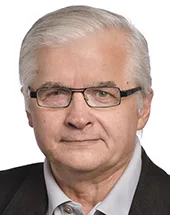

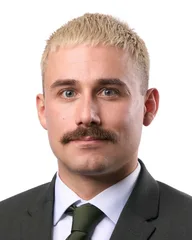
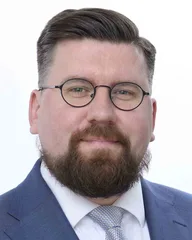
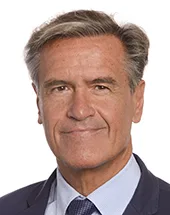
| Rank | Name | Country | Group | Speeches | |
|---|---|---|---|---|---|
| 1 |
|
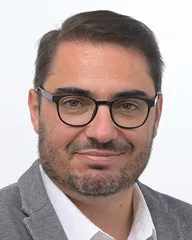
Lukas Sieper | Germany DEU | Non-attached Members (NI) | 390 |
| 2 |
|
Juan Fernando López Aguilar | Spain ESP | Progressive Alliance of Socialists and Democrats (S&D) | 354 |
| 3 |
|
Sebastian Tynkkynen | Finland FIN | European Conservatives and Reformists (ECR) | 331 |
| 4 |
|
João Oliveira | Portugal PRT | The Left in the European Parliament (GUE/NGL) | 232 |
| 5 |
|
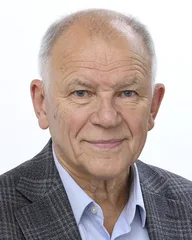
Vytenis Povilas Andriukaitis | Lithuania LTU | Progressive Alliance of Socialists and Democrats (S&D) | 227 |
All Contributions (27)
Direction of EU-Russia political relations (debate)
Mr President, thank you very much. For more than 20 years, Russia's domestic and foreign policy has become increasingly brutal and based on the use of force, initially against its own citizens, as in Chechnya, and gradually also against other countries. Attempts to answer the question about the reasons for such behavior indicated that apart from the armed force, Russia has very limited means of influencing foreign countries, that Mr. Putin does it to discipline Russian society and to strengthen the personal popularity or support of his party. Without rejecting these interpretations, I want to point to another, perhaps the most important reason. Russia is rebuilding a traditional empire and is striving to recreate the former USSR to the maximum extent possible. Where force can be used at low risk, it does so – as in the case of Crimea. Where it can achieve its goal without the use of force, it does so, for example, through economic and political dependence, as in the case of Belarus. Russia is interested in weakening its surroundings and stopping or blocking the rapprochement of its former territories with the West. The maintenance of numerous frozen conflicts serves this purpose. Disinformation aggression against us is meant to weaken the West, as is the corruption of states, parties and politicians. What was only a possibility is a reality. This is a very dangerous action, long-term destabilizing the situation around Russia, increasing the risk of conflicts, including armed ones. It is also necessary to understand this fact so that our concepts of relations with this country are devoid of naivety.
Foreign interference in democratic processes (debate)
Madam President, I'm sorry. Interference in foreign affairs has always been an element of competition. In the past, when it was usually about gaining control of foreign territory, intrigue, fraud and corruption were auxiliary tools. Today, when it comes to controlling the consciousness of foreign societies, they have become the main weapon of constant confrontation. The Internet has created a unique opportunity to operate effectively on a large scale. Democratic states are an attractive target because manipulating voter awareness translates into important political decisions. At the same time, it is difficult for democracies to fight this without violating their own principles and values. Democracies need to be more resilient and more effective in deterring perpetrators, including through painful sanctions. Disinformation, corruption, the acquisition of agents and influence in EU countries are some of the sources of the increase in the popularity of populism, intolerance and authoritarianism. The European Parliament should create a permanent mechanism to address this issue, as foreign interference will not stop.