
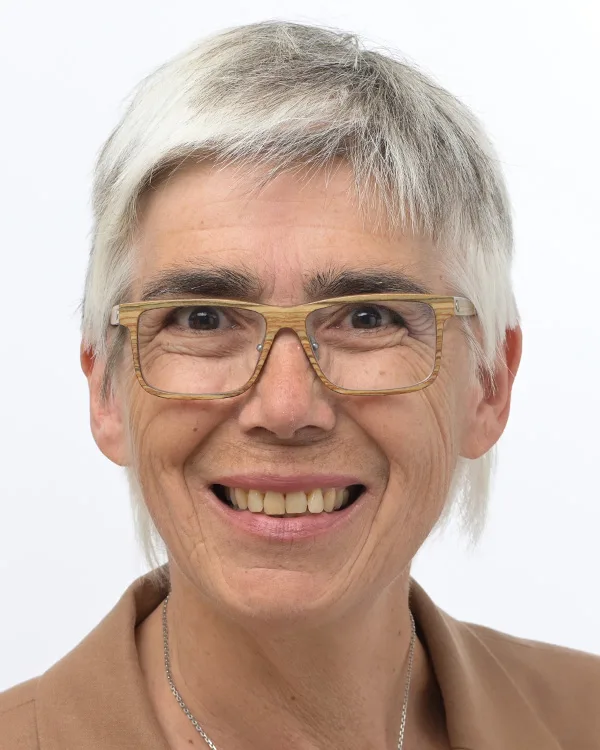

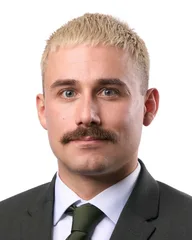
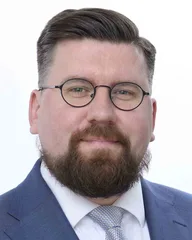
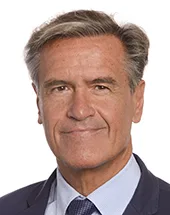
| Rank | Name | Country | Group | Speeches | |
|---|---|---|---|---|---|
| 1 |
|
Lukas Sieper | Germany DEU | Non-attached Members (NI) | 390 |
| 2 |
|
Juan Fernando López Aguilar | Spain ESP | Progressive Alliance of Socialists and Democrats (S&D) | 354 |
| 3 |
|
Sebastian Tynkkynen | Finland FIN | European Conservatives and Reformists (ECR) | 331 |
| 4 |
|
João Oliveira | Portugal PRT | The Left in the European Parliament (GUE/NGL) | 232 |
| 5 |
|
Vytenis Povilas Andriukaitis | Lithuania LTU | Progressive Alliance of Socialists and Democrats (S&D) | 227 |
All Contributions (92)
Keeping people healthy, water drinkable and soil liveable: getting rid of forever pollutants and strengthening EU chemical legislation now (topical debate)
Madam President, Commissioner, ladies and gentlemen! The weaknesses of the current chemicals regulation for PFAS became over-clear last year, when more than 17,000 contaminated sites with PFAS in the EU were made public. More than 50 years ago, the manufacturer Dupont found out that its products – per- and polyfluorinated alkylated substances, PFAS – are highly harmful to health and hazardous to the environment. When registering under REACH, this data was also duly provided to the European Chemicals Agency. And indeed, the European Union has managed to restrict some of these substances. But this restriction affects less than one percent of the 5000 PFAS. If we continue at this pace, we will not be finished in the next century. There is an urgent need for action here, but also on other points for which my speaking time is not sufficient – UVCB, polymers, sanction possibilities, production must be energy-efficient, speed of procedures. I hereby call on the Commission to finally deliver on its repeatedly given promise in the context of the chemicals strategy – in the Plenary of Commissioner Šefčovič, at the hearing in the Environment Committee of Director Ciobanu-Dordea – and to present the proposal for the REACH revision by June at the latest. Mrs von der Leyen, the citizens, but also the progressive players in the industry, who finally need investment security: You are waiting for your initiative. Resolve the blockades so that we can vote on the parliamentary position for this important law in this legislature.
Energy storage (debate)
Madam President, Commissioner, dear colleagues, I have heard a lot of calls not only in this House, but also at home in Germany, that we should not go forward with the ramp—up of renewable energy while we don’t have enough storage for two weeks of no wind and no sun. The first problem we will run into when ramping up renewable energy is not the famous Dunkelflaute of those two weeks, but the first challenge will be how to sensibly use the renewable energy which is oversupplying at times of little demand. There we have a plethora of possibilities already today, with the simplest one being a simple heating rod inside your warm water boiler and the more sophisticated ones being energy storage as electricity or as heat. I agree very much with the colleagues that say we need a common European framework for that so that we have the possibility to trade also storage units over borders in the same way that we are doing with electricity today. But please don’t let yourselves be fooled that we have to wait for sufficient storage units – which are already coming online, by the way – in order to have grid balancing, in order to wait for more renewable energy in Germany and in Europe overall. We can do it already today and we need only a regulatory framework.
Revision of the EU Emissions Trading System - Monitoring, reporting and verification of greenhouse gas emissions from maritime transport - Carbon border adjustment mechanism - Social Climate Fund - Revision of the EU Emissions Trading System for aviation (debate)
Mr President, Commissioner, ladies and gentlemen! Two and a half years ago, in this House, as rapporteur for the MRV regulation on CO2 emissions from international maritime transport, I presented Parliament's position, and already at that time the European Parliament voted by a large majority in favour of the inclusion of shipping in emissions trading. Tomorrow is finally here! For the first time in the world, the sixth-largest emitter of greenhouse gas emissions, maritime shipping, will be included in climate action. Of course not as fast and of course not as complete as we Greens would have liked. But it's a start. But now it is time to stick to it, because pricing alone is not enough to decarbonise this sector. Clear rules for efficiency measures are needed and climate-neutral fuels are needed. For the latter, we reached an agreement in the trilogue a few weeks ago – a timid, but at least a step in the right direction. However, there are still no requirements for efficiency measures. I will continue to fight for that!
Energy performance of buildings (recast) (debate)
Madam President, Commissioner, ladies and gentlemen! The cheapest energy is the one we don't use. This has never been so true as in today's times, when far too many people had to choose between warm apartments and warm meals, because Russia's war of aggression and the associated energy crisis has multiplied their heating bills. That's why it's not just our climate goals that require rapid action. It is also about reducing our dependence on fossil imports and protecting our citizens from high costs. Yes, that will require investment. For Germany, the Kreditanstalt für Wiederaufbau expects EUR 254 billion – that is a lot of money. But may I remind you that EUR 200 billion was made available last year for the German gas price brake alone? Money that does not increase the value of houses, jobs or better quality of living, but flows to a not inconsiderable extent to countries where no one would want to live here in the room! That is why, ladies and gentlemen, we need these guidelines for improving the energy requirements of buildings. I ask you to vote tomorrow.
Surge of respiratory infections and the shortage of medication in Europe (debate)
Mr President, Commissioner, ladies and gentlemen! After two years of coronavirus, in which wearing masks and lockdowns prevented many infections, we are now witnessing a massive increase in respiratory diseases, and Member States' health systems are already being put to the test again. Now I often hear that this is due to the obligation to wear masks, which has weakened the immune system of citizens. This is a fallacy: The immune system is not a muscle to train, and I'm not just saying that, but that's what epidemiologists and immunologists around the world say. In addition, many infants and young children are affected, who have never worn a mask. In fact, however, there is a growing body of evidence and studies that coronavirus infections have a lasting impact on the immune system. There are a lot of studies around the world and more are being done every day. That is why I ask the Commission: When will you finally launch a programme to investigate the long-term consequences of coronavirus infections – both long-covid and immune damage – and promote research into possible therapies?
A post-2020 Global biodiversity framework and the UN Convention on Biological Diversity COP15 (debate)
Mr President, Commissioner, ladies and gentlemen! 69 %: Global populations of wild birds, fish, amphibians and reptiles have declined by 69% over the past 50 years. These numbers are dramatic, and species extinction is even more threatening than the climate crisis, because biodiversity on our planet ensures us drinkable water, clean air and fertile soils. The upcoming World Biodiversity Conference must mark a turning point. Just as the 2015 Paris Agreement finally enshrined the need for global climate action, we need a Montreal Agreement to protect biodiversity. However, the main cause of species extinction is habitat loss. It is not just a matter of establishing protected areas, it is not just a matter of renaturalising, but of addressing the main cause: the conversion of wetlands, primeval forests, grasslands into arable land to feed the ever-increasing consumption of meat. Mr Sinkevičius, Mr Bek, will you not only advocate measures to protect at least 30% of the land and sea, but also to regulate activities that further fuel biodiversity loss?
A truly interconnected Energy Single Market to keep bills down and companies competitive (topical debate)
Madam President, Commissioner, ladies and gentlemen! The whole of Europe is feeling painfully what dependence on fossil imports means. And while our citizens, our industry, our craft businesses suffer from the high prices, those who would like to leave everything and everyone to the market are complaining of a market failure. The market follows the models exactly. It depicts scarcity, and it does so relentlessly. I think we need to change the design of the market. We need a much stronger link between all types of energy use: electricity, heat, mobility; there must be better incentives for sector coupling and storage; and there is a need for more uniform pricing of networks across Member States. The current study of network operators clearly shows that network charges are so different that there can be no question of a genuine internal market in the electricity sector. And it is absurd if the electricity customers in the exporting country have to bear the costs of transporting electricity to the importing country. That's why I'm looking forward to working together on a new market design.
UN Climate Change Conference 2022 in Sharm-el-Sheikh, Egypt (COP27) (debate)
Mr President, Commissioner, ladies and gentlemen! Glasgow has been a year now, and not a single one of the promises made there has been kept. Only 19 countries have submitted new climate targets, although everyone had promised to finally get on the under-2-degree path. A Global Methane Pledge was signed with great gesture to reduce methane emissions. But so far, not a single country has a functioning legislation on how this should be done. Here in the EU, too, we find it difficult to negotiate, because so far it is mainly the oil and gas industry that sets out what such a limitation should look like in the energy sector. We already have a lot about loss and damage heard. I don't want to repeat this. We should be clear: Each tonne of CO2 causes a follow-up cost of 180 euros in damages. This was calculated by the Federal Environment Agency. Every fossil subsidy we spend in the current crisis has that 180 euros on top of it, and we should be so honest as to tell that to our citizens who are calling for subsidies.
Sustainable maritime fuels (FuelEU Maritime Initiative) - Deployment of alternative fuels infrastructure (debate)
Mr President, Commissioner, ladies and gentlemen! Maritime shipping has so far been excluded from all climate protection measures. The Sustainable Marine Fuels Regulation would – I say consciously: we would have had the chance to put a hard-to-decarbonise area on the path to climate neutrality, which according to all available studies and scenarios will even grow in the coming decades. However, even the Commission's proposal fell short of the ambition of climate neutrality in 2050, as fuels should still have 25% of the emission intensity of today's fuels in 2050. This is absurd, because on the other hand, the Commission has written a draft for the next meeting of the international shipping organization IMO for climate neutrality 2050. However, such a proposal is not credible if the EU itself does not seek to do so in its legislation on shipping. The Environment and Industry Committees of this Parliament have corrected this fundamental shortcoming and have also made many well-founded proposals on how shipping can become climate-neutral faster, how sustainable fossil-free fuels can be promoted and emissions in ports can be reduced. But unfortunately, after the rather unusual negotiations, the plenary now has a text that not only misses the higher goals, but also introduces many, many exceptions for icebreakers, for trips to peripheral areas, for companies with few ships and so on. In addition to us Greens, many other colleagues, such as dear Catherine Chabaud, have therefore made suggestions for changes to how we can put shipping on the path to climate neutrality. And I ask you to accept these amendments.
Energy efficiency (recast) (debate)
Mr President, yes, Madam Grapini, I closely listened to you because I was a shadow on the directive and, to me, it’s also very, very important that all Member States are looked at according to their situation, to their socio-economic situation, to the gains which they have already made. But, exactly this is laid down in the formula in the annex where – what you have talked about, the BIP, the situation of the people – is recognised. So, of course Romania will not have the same goals as my home country, Germany. And we were making sure that this formula stays safe and that Member States cannot voluntarily change it in order to make it easier for Romania.
Energy efficiency (recast) (debate)
Mr President, Commissioner, ladies and gentlemen! Ever since I became involved in energy policy, and that was at a time when I was still able to count my gray hair, people have been talking about the sleeping giant of energy efficiency. However, it has never been possible to achieve national or European objectives. Why? Because all the beautiful goals were never binding. Because it has always been argued that governments, companies, homeowners would do everything by themselves to use as little energy as possible. The sad truth is: That's not true. That is why we Greens are fighting for a binding and ambitious energy efficiency directive. I would like to thank the whole negotiating team for a strong compromise text, which we Greens will fully support. We will also discuss the Renewable Energy Directive this week, and many have expressed doubts as to whether a higher target for renewable energies is even achievable. I'll tell you today: Yeah, that's it. Because if we now turbocharge efficiency, we will have to replace much less gas, coal and oil. We need much less windmills and solar parks. Our citizens save money. We are meeting our renewables targets and our climate targets. And efficiency is also the way out of fossil dependence. Why did Putin describe energy efficiency in his strategy papers as a threat to the Russian economy? Let's show him what this threat looks like. And last point: I am addressing the Commission directly here. Please ensure that energy efficiency, and not just a vague reduction in energy demand, is at the heart of any measure you propose to address this crisis. I demand that you absorb the excess profits of fossil energy companies and invest primarily in energy efficiency. Because we have to act now.
Sustainable aviation fuels (ReFuelEU Aviation Initiative) (debate)
My question is, actually when you’re talking about that we need to keep the cost at bay and we need to democratise aviation, are you aware that about 20% of the world’s population are in a situation to be able to enter a plane on economic reasons and that 1% of the world’s population is responsible for more than 50% of emissions, and that the ticket prices reflect less than one third of the cost which is actually inflicted on society by aviation? How do we judge that?
Sustainable aviation fuels (ReFuelEU Aviation Initiative) (debate)
Mr President, Commissioner, ladies and gentlemen! There is no doubt that flying has brought people together and enabled international exchange to a degree that could not have been imagined 100 years ago. But equally undoubtedly, flying is the most energy-intensive form of mobility and relies entirely on fossil fuels. With ReFuelEU Aviation, the switch to more sustainable fuels is now to be heralded. But it is not sustainable for new fuels to be counted on the basis of problematic raw materials such as palm oil distillate or catch crops. Rather, we should rely on the only scalable solution, and these are synthetic fuels made from renewable electricity. And it is precisely in terms of industrial policy that we should strengthen the pioneering role of European companies and set ambitious but realistic quotas. The potential for sustainable biofuels is limited. We will not discover new continents with buildable land. I don't have a problem with technology openness, but it has to take physical reality into account. That's why I ask you: Vote in favour of our amendments and ensure a sustainable future for aviation! A little follow-up to Mr. Gade: If the deadlines are so short, it is clear that the Committee on Industry, Research and Energy cannot submit applications.
Recent heat wave and drought in the EU (debate)
Mr President, ladies and gentlemen, A few days ago, a study was published that the current heat wave in the south and southwest, southeast of Europe and the associated drought will occur much more frequently in the future. This means that not only do we need to become much faster in climate protection, but we also need to push ahead with adapting to changing conditions. We must tackle this gigantic task together. And I mean, the first thing that needs to be done is to curb waste. It cannot be that we simply continue to overuse groundwater resources, which are already being used to an extent that they do not replenish, by spraying over wide fields in bright weather. In other words, we need to be much smarter with these limited resources. And it goes without saying that we are going to the roots of this crisis much faster when it comes to the expansion of renewable energies and energy efficiency. This is the only way we can do it together.
Taxing windfall profits of energy companies (debate)
Mr President, ladies and gentlemen, It must seem like mockery to the citizens. Ukraine is fighting for its survival. Russia's curtailment of oil and gas supplies leaves many fearful of being cold in the winter. Huge amounts of tax are being mobilized to support Ukraine, but also to support the economy, which is suffering from these high energy prices. But those who benefit from the enormous price increases should not be held accountable? Shouldn't they have to participate? There are already agreements at OECD level to be able to extract exactly such random profits. This is not about innovation, as is the case with vaccines. It's not about anyone being particularly smart. It is simply, simply and simply about a monopoly, about the people who have largely put the tank discount – which the German government has paid out to help the people who need to be mobile – into their own pockets. This has nothing to do with the fact that we need a free market that can also react to such things.
Objection pursuant to Rule 111(3): Amending the Taxonomy Climate Delegated Act and the Taxonomy Disclosures Delegated Act (debate)
I would be very interested in knowing how nuclear energy can actually lower the prices for our citizens because, as I just told you, in the UK nuclear energy is only viable when you pay a premium which is about three times the premium which is paid for wind or solar energy. And all the more, I would like to know where in Europe would we be able to source the uranium we need to run those nuclear power plants?
Objection pursuant to Rule 111(3): Amending the Taxonomy Climate Delegated Act and the Taxonomy Disclosures Delegated Act (debate)
When you talk about affordable prices – I often hear this from supporters of nuclear energy: Do you happen to know what has been promised to the future operator of Hinkley Point 3, which is now the most modern nuclear power plant to be connected to the grid in Europe? That he gets 11.3 cents per kilowatt-hour, 35 years, inflation-protected - do you really find that cost-effective?
Question Time (Commission) Increasing EU ambitions on biodiversity ahead of COP 15
Thank you very much for giving me your space. And I’ll be very brief in trying to make the circle to come back to where we started, because the question was EU ambitions on biodiversity ahead of COP 15. And I think if we’ll look at the restoration law which you presented last week, it is already quite good. But the crucial point is, what means of governance do we have? What means of actually enforcing what is there as an ambition? And it’s a bit the same on the global level, whereas it is much easier within the European Union because there we have the structures where the Commission can actually tell Member States, well, if you do not abide by the law, then we might start writing letters and later infringement procedures, which is not possible on the global level. So how do you think might the restoration law influence the negotiations at the COP 15? And especially, how can it be perceived in the Global South that the EU, or generally spoken the Global North, does not come forward as colonialist, telling the Global South how to act on biodiversity?
Binding annual greenhouse gas emission reductions by Member States (Effort Sharing Regulation) - Land use, land use change and forestry (LULUCF) - CO2 emission standards for cars and vans (joint debate – Fit for 55 (part 2))
Mr President, ladies and gentlemen, In its latest report, the Intergovernmental Panel on Climate Change (IPCC) put the importance of healthy ecosystems in very clear terms: Restoration and the end of ecosystem destruction are central to all climate change mitigation scenarios and essential in adapting to their impacts. We in the European Union, which has already destroyed or irreversibly damaged most of our ecosystems, are therefore particularly called upon to protect and renaturalise bogs, forests and grasslands. Because we are already experiencing how drought, heat, heavy rain affect our continent. People suffer, lose their home or their economic livelihood. No one denies that technological progress on the path to climate neutrality is absolutely necessary. But technology alone will not save us. We need nature as an ally. Therefore, do not let yourself be persuaded that you can get a forest by deforestation, and vote tomorrow at LULUCF for the position of the Environment Committee!
Question Time (Commission) Reducing the use of pesticides and strengthening consumer protection
Madam President, Thank you, Commissioner, for being ready to give answers at this late hour. I also do it very briefly. I have been wondering for some time why we must always agree or be informed that residue levels of pesticides, which have long been banned in the European Union, are allowed on products that can still be bought in our shops. In some cases, these quantities are even increased, as in a current case – apparently because we cannot live without zucchini from the USA. I now ask the Commission: How does it intend to deal in the future with the fact that pesticides, which are banned in the European Union due to their dangerous nature, are nevertheless permitted on imported foods?
The REPowerEU Plan: European solidarity and energy security in face of Russia's invasion of Ukraine, including the recent cuts of gas supply to Poland and Bulgaria (debate)
Mr President, ladies and gentlemen, dear Kadri! Thank you very much! In March, the Commission considered which autocrats it would beg next to get fossil energy. Now she has turned around and it says: save, switch, search – save energy, switch to renewables and then look where we need to look for more fossils. Savings are the most important: It alleviates our dependence, it relieves our citizens and businesses, and it brings sustainable climate protection. It is also good that the REPower package focuses on cooperation and solidarity. But something is still missing. We are still waiting for the implementation of the citizens' energy rights from the Clean energypackage of the last legislative period. The Commission must finally call on and encourage the Member States to: Step on their feet, but also give them a blueprint on how to best implement this package so that everyone can invest in renewables, share their energy with neighbors, and face Putin together.
Building of a wall on the Polish – Belarus border in the Białowieża primeval forest (debate)
Madam President, ladies and gentlemen, This is not the first time that Białowieża has been a topic here. We know that the Commission is in a position to act decisively, as it has done when illegal deforestation took place in this strictly protected world heritage site. Now it's just a wall. But this wall is 5 meters high and almost 200 kilometers long. For the construction, trees are felled, roads are widened. There is more traffic, more noise, more risk of fire. And bison, moose, coniks, lynx – all of them will not be able to overcome this wall. The populations in Poland and Belarus are thus genetically isolated. This is a blatant breach of the Habitats Directive, which the Directorate-General for the Environment cannot accept. The Polish government is now making the absurd claim that public security is endangered by a few hundred desperate people stranded in the no-man's-land between Poland and Belarus in search of exactly that security for themselves and their children. Isn't it rather that, according to the Polish government, these people have the wrong skin color or the wrong religion? After all, we are witnessing the terrific assistance that the Poles are willing to provide at the Ukrainian border. I therefore thank the European Commission for finally advocating the rescue of one of our last primeval forests and call on it to return to the European Court of Justice if necessary.
Question Time (Commission) Europe’s Energy Autonomy: The strategic importance of renewables and energy interconnections and efficiency
So as a follow up, if I may. You are totally right. If we want smart, active consumers being part of the electricity market, we, of course, would need a smart meter rollout in order for them to be able to sell their energy. So this is maybe the follow up question because the smart meter rollout was also due to be completed already, but not every single Member State has succeeded in doing so. So my question is when will the Commission act on this and put a bit more pressure on Member States to get going on the digitalisation of the energy sector?
Question Time (Commission) Europe’s Energy Autonomy: The strategic importance of renewables and energy interconnections and efficiency
Madam President, Commissioner, dear Kadri, thank you very much for this opportunity! My questions relate to the objectives of our European energy policy. Not only for fossil fuels, but also for uranium, the EU is highly dependent on imports. But among the eight scenarios that the Commission has modelled, there is not a single one that represents 100% renewable energy, even though such scenarios have already been modelled by other research institutions and several actors outside the Commission. Will the Commission back up here? Moreover, none of these scenarios illustrates how a greater participation of citizens in the energy transition could accelerate the process. Will the Commission provide guidance to Member States to ensure that the rights of European citizens are respected? prosumers, the active consumers, which are guaranteed by European law, will finally be implemented in the Member States? The deadline for this has already expired in June last year. What action will the Commission take to ensure that citizens can also actively take action against the Russian war against Ukraine?
Trans-European energy infrastructure (debate)
Mr President, ladies and gentlemen! Yesterday, the IPCC presented its new report, and Mr Guterres, but also Inger Andersen, have found very clear words. We need to act now. Not next year, not next month, not tomorrow, but today. But today we are voting on a regulation on trans-European energy infrastructure that has fallen out of time, cementing investments in fossil gas for years, if not decades. Moreover, the current fossil price crisis shows how risky these dependencies are. I am also unsure whether Qatar and Azerbaijan are such flawless democracies from which we would very, very much like to continue importing fossil fuels. In the case of gas, methane emissions are added, which, according to the IPCC, must also be reduced by at least one third by 2030. There are also good points in this regulation – they have been mentioned – but with this set of rules, far too much funding will go into fossil projects and not into the future. That is why I ask you, my dear colleagues: We must reject it as it is now.