
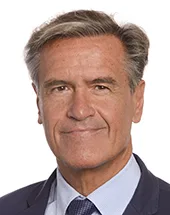
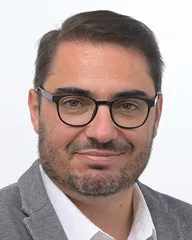
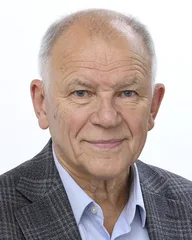
| Rank | Name | Country | Group | Speeches | |
|---|---|---|---|---|---|
| 1 |
|
Lukas Sieper | Germany DEU | Non-attached Members (NI) | 390 |
| 2 |
|
Juan Fernando López Aguilar | Spain ESP | Progressive Alliance of Socialists and Democrats (S&D) | 354 |
| 3 |
|
Sebastian Tynkkynen | Finland FIN | European Conservatives and Reformists (ECR) | 331 |
| 4 |
|
João Oliveira | Portugal PRT | The Left in the European Parliament (GUE/NGL) | 232 |
| 5 |
|
Vytenis Povilas Andriukaitis | Lithuania LTU | Progressive Alliance of Socialists and Democrats (S&D) | 227 |
All Contributions (92)
U-turn on EU bureaucracy: the need to axe unnecessary burdens and reporting to unleash competitiveness and innovation (topical debate)
Mr President, Commissioner, ladies and gentlemen! From my previous life in management, I can of course list a number of examples of unnecessary bureaucracy. You have to enter some numbers in papers, which the tax authority already has a long time ago anyway, which it could actually add up itself. You have to report to some statistical institutes, which could actually collect them from macroeconomic figures. And one is inspected by several authorities to one and the same thing, all checking the same things. And of course, that costs time, that costs money, and that costs nerves above all else. That is why I am very much in favour of reducing unnecessary bureaucracy, bringing together things that can be brought together, not complicating things further, as we have unfortunately done now with the Supply Chain Act, which will then be formulated differently at the national level. Congratulations to the companies that are active in the single market, which then have to do different things for the supply chain law in France than in Germany or Spain or Finland – not a good idea. But what we are experiencing is that, under the pretext of cutting red tape, elementary legislation that serves to preserve our livelihoods is to be polished. Prevention of pollutants, climate protection, conservation of biodiversity: These are not luxury products. nice-to-have points. This is directly linked to the health of all of us, to the maintenance of a stable climate and to the maintenance of our food security, and we should not play with that. This is not part of cutting red tape; These are basic resources that we need to secure.
The extreme wildfires in Southern Europe, in particular Portugal and Greece and the need for further EU climate action on adaptation and mitigation (debate)
Madam President, ladies and gentlemen, ladies and gentlemen! If you want to know the state of play of the climate debate here in Europe, it is very interesting to listen to this debate. As has been rightly said, we have achieved a lot in the last legislature in the area of climate protection. But in terms of climate adaptation, there is still a lack of it. The Commission has now said: All right, we'll make one Climate Adaptation PlanA climate adaptation plan. But if I listen to the suggestions that have been given here for the best way to prevent forest fires, then I think it should rather be a climate adaptation law. Because if these proposals are implemented, I do not see how this could help us in the future. After all, the point is that we no longer cultivate the forests so intensively that we do not plant non-local tree species. Especially in Portugal, it is quite important that there are so many eucalyptus trees that cause forest fires. This means that if we continue to intensify this management, then we can still do so much climate protection, then these natural disasters will continue to haunt us.
Droughts and extreme weather events as a threat to local communities and EU agriculture in times of climate change (debate)
Mr President, Commissioner, ladies and gentlemen! Not thousands, millions of people are affected by extreme weather, this year, last year and next year probably as well. It is obvious, of course, that the floods we are currently seeing in Poland, in the Czech Republic, in Austria, which occurred earlier this year in Germany and which hopefully will not devastate northern Italy tomorrow. But there are also quieter disasters. The silent killer heat killed nearly 50,000 people in Europe last year alone, and there would have been much more if adaptation had not already taken place. Of course, our farmers are the most affected, and that is why it is so important that we adapt – that we operate less intensively, that further crop rotations are made, that we give more space to the rivers, that is, that we finally implement the law to restore nature. Commissioner, I am counting on the Commission to present not just a climate adaptation plan, but a climate adaptation law, because one plan alone will not suffice for us in Europe.
State of the Energy union (debate)
Mr President! Dear Kadri, thank you very much for everything you did in the last mandate. I will always like to think back to the joint work and wish you all the best for the future. We have achieved a lot: Dependence on Russia has fallen, emissions have fallen, and the path for 2030, for Fit for 55 is shown, is designed; We have made a lot of legislative proposals on this. But there are still big hurdles. One hurdle is the expansion of the grid, and – beware, now it is becoming technical – proper planning is also needed for the 110 KV level. So far, we're just talking about the extra-high voltage level without looking at what we already have down there. Secondly: Memory. California is doing it. In California, security of supply has increased, prices have fallen, and the last nuclear power plant is likely to be dismantled before 2030, simply because it is no longer economical. And thirdly: implementation. Unfortunately, the Member States are not on track, not in terms of renewables, not in terms of efficiency and not in terms of working together. Here I hope that the next Commission will get a bit into trouble and put pressure on it.
Type-approval of motor vehicles and engines with respect to their emissions and battery durability (Euro 7) (debate)
Mr President, Commissioner, ladies and gentlemen! Dear Sascha, congratulations! They have managed to eliminate what is likely to be the last chance to keep the European automotive industry competitive for at least a few more years. Because one of the most important sales markets – China – has long since adopted stricter limits, which means that the cars awarded the wonderful new Euro 7 standard will not be available for sale in China. And to the CDU, CSU and FDP who are taking part in this tragedy: They have argued that no new standards should be set for the industry now, because in 2035 only emission-free new cars should be put on the market anyway and the necessary investments would then not pay off at all. That sounds plausible at first. But now you have let the cat out of the bag last week and decided a program that you want to undo the burner-off. And if you still have this grandiose greenwashing organise here – because Euro 7 is no better than Euro 6 – then show that you do not care about the health of citizens and also about the problems of cities, because cities will then have to impose driving bans again in order to comply with the limit values. It goes without saying that we... (The President withdrew the floor from the speaker.)
EU climate risk assessment, taking urgent action to improve security and resilience in Europe (debate)
Madam President, Commissioner, ladies and gentlemen! It is overdue for the Commission to present a strategy to adapt to climate change and address the risks threatening survival; That's why I want to praise it explicitly. But questions arise. First question to the Commission: Why do these risks appear to have played no role in the climate impact assessments? After all, 55% emission reductions by 2030 are not enough to meet the 1.5° limit. Second question to the EPP: The European Environment Agency's report makes it clear that our ecosystems are massively threatened by climate change, but at the same time they are our best allies to protect against heat and flooding. Two weeks ago, you wanted the law to save nature to fail, and according to your European election program, you want to abolish Natura 2000. How does this fit together? Third question to Mrs von der Leyen, who is unfortunately not here: They started with the promise to make Europe climate-neutral, to focus all areas of the economy on sustainability. Five years later, your own party wants to cut off the Green Deal; They are smiling as time runs out. What should we think of it?
Water crisis and droughts in the EU as a consequence of the global climate crisis and the need for a sustainable, resilient water strategy for Europe (debate)
Mr President, Commissioner, ladies and gentlemen! It is good that the Commission will now present a strategy to better address the future water crises. But I lack faith, because in principle we already have something like a strategy. For example, we have the Water Framework Directive. It celebrated its 20th anniversary last year, and unfortunately we are far from achieving these goals. As far as water in the landscape is concerned, for example, with the Fauna-Flora-Habitat Directive we already have a nature conservation legislation that also means that we keep water in the landscape, that we form more groundwater. In other words, it will depend on implementation. And many colleagues have raised the farmers' protests in the last debate and have justified them by saying that the farmers are against climate policy. I don't think so, because these farmers' protests have started with the fact that there is a shortage of water in this sector, which is dependent on water like no other. And that's why I think: We must not leave it to one strategy, we must also do more, for example in the field of ecodesign; that we must assume: We need stronger regulations to waste less water.
Outcome of the UN Climate Change Conference 2023 in Dubai, United Arab Emirates (COP28) (debate)
Mr President, Commissioner, ladies and gentlemen! Two days ago, the climate summit came to an end. And there is good news: For the first time, the obvious is mentioned in the final agreement, that we have to get out of the fossils. It's crazy that it took 30 years to acknowledge that. There are binding financings for the fund for damages and losses, which more or less crashed the climate summit in Sharm el-Sheikh. And OPEC is panicking and writing a fire letter to its member states. That's good for the cold feet, because it's all about their business model, which puts the global climate at risk. And Team Europe held together until the end. It was super important to get a good ending here. But now it is also necessary to deliver: We have to do it Green Deal Completely implement. Emissions trading, the efficiency directive, the renewable energy directive – all this needs to be implemented. And we, as Parliament, are also obliged to remind our Member States and also to remind the Commission to demand this. And we need an interim target for 2040 based on science. The European Union must not only find beautiful words at climate summits, it must also implement what science demands at home. And we, as the Parliament of the Commission, will also look to the fingers for this.
Sustainable use of plant protection products (debate)
In my view, the term ‘plant protection products’ is indeed misleading, particularly in the case of herbicides, which are intended to kill plants. In that respect, I find the term ‘plant protection products’ to be a bit misleading. One could speak of ‘cultural protection products’ because of me, that would come closer to the matter. But let us stick to the English term ‘’, which is also very well established scientifically. For the new breeding methods: I am a bit doubtful whether we will actually achieve a reduction in pesticides in the end, and I am also not sure whether the farmers are so happy when these new breeding methods lead to the fact that the seeds are patented and they themselves cannot breed anything.
Sustainable use of plant protection products (debate)
So, of course, the Commission assumed that we would not change anything else, that we would continue to throw away one third of our food, that we would continue to grow animal food on 60% of the land and not food for human consumption. I think we could do much better than think about which countries we don't want to import anything from now. I should also like to point out that, on a regular basis, when I raise objections to the increase of limit values in order not to endanger imports, the EPP Group votes against it. (The speaker agreed to answer a question on the blue card procedure.)
Sustainable use of plant protection products (debate)
Madam President, Commissioner, ladies and gentlemen! It is interesting that every speaker here emphasizes that their own country is already a pioneer in the reduction of pesticides. Then you need not be afraid of this regulation, because the progress made will be taken into account. Now let's go back to the scientific facts. The European Environment Agency has clarified in many reports: Our biodiversity, the biodiversity is massively endangered. And biodiversity is not a value in itself, it is our survival basis for drinking water, for clean air, for fertile soils. And according to the Environment Agency, one of the main drivers is the massive use of pesticides in the countries of the European Union. Therefore, it is important and correct to reduce the use of pesticides. And the Committee on the Environment, Public Health and Consumer Protection has presented a very good report here, in which farmers are supported – through independent advice, through financial support. And it is quite interesting that the Committee on Agriculture, of all people, wants to cancel this financial support. Yeah, that can't work. And as you rightly said: Farmers do not do this for the fun of the Freud, that they endanger their own health. That's why we want to take them along this path. (The speaker agreed to answer a question on the blue card procedure.)
UN Climate Change Conference 2023 in Dubai, United Arab Emirates (COP28) (debate)
Madam President, Commissioner, ladies and gentlemen! We go to the COP and have something with us: The EU has managed to agree on the methane regulation; we will substantially reduce methane emissions from the energy sector and we will – this is particularly important: We will also extend this to our imports. That's a big shot. This means that all importers of gas, oil and coal into the European Union will have to comply with this regulation. I would like to remind you once again of last year's report by the UN Environment Programme, which stated that if we manage to reduce methane emissions by 50% by 2030, we will save ourselves 0.3°C of earth heating. That's why methane emissions are so important. I'm still incredibly happy that we managed to get a good result here last week. I will also have a lot of talks with delegates from other countries at the COP to see how we can move forward quickly together, because the large agriculture sector is still pending.
Water scarcity and structural investments in access to water in the EU (debate)
Mr President, Commissioner, ladies and gentlemen! Water is life. Our blue planet is 70 percent water-covered, but only a fraction of it, a tiny fraction is freshwater – and we must finally adequately protect this elementary resource. Without clean water, we have nothing to drink. We cannot grow food, nor can we build a functioning economy. But for decades we have been dealing with the precious water as if there were no tomorrow. We pump more groundwater out of the soil than can be reproduced, we discharge toxic wastewater into our rivers with insufficient clarification, we destroy bogs and wetlands, which are the kidneys of our landscape, which store water, which degrade pollutants and which can protect us from heavy rain events because they can only release water slower. And unfathomable amounts of water are still being wasted in industry and agriculture, instead of us finally investing in more economical processes. It's close to twelve, because climate change will exacerbate the water crisis. Waiting until the last drop is not an option.
The proposed extension of glyphosate in the EU (debate)
Mr President, Commissioner, ladies and gentlemen! Incredible 4,000 tons of glyphosate are sprayed on our fields every year in Germany alone. Our citizens are rightly concerned, because it cannot be ruled out that glyphosate is carcinogenic, as the World Health Organization's Cancer Committee suspects, they should know: Probably carcinogenic. Against this background, I find it very worrying that the European Chemicals Agency has used only part of the existing cancer studies in its assessment. Because I think with such a topic, you should look at the entire evidence. Regardless of the risk of cancer, it is undisputed: Glyphosate is highly dangerous to aquatic organisms. And the assumption that this herbicide does not get into the water is, to say the least, optimistic. Because if we find pesticide active ingredients in remote mountain regions, then it could also be that the glyphosate enters the waters directly at the field. Soil life: Glyphosate was originally developed as an antibiotic. What does it do with our soil fertility? We don't know. And EFSA itself said at the hearing, both in writing and in committee: “We lack data for a final assessment of the risks.” So I have been working in a scientific laboratory for the longest time of my life. If we had written to the client in a final report: "We lack data for this, we cannot assess it", no customer would have accepted, that is clear. And "no critical areas of concern" This does not mean that there are no concerns, but only that none of the concerns have occurred in all 23 use cases. That's a slight difference. This proposal clearly shows for me: We need a new authorisation procedure for pesticides, because the previous one seems to allow substances with data gaps, potentially harmful to health, potentially harmful to biodiversity, to continue to enter the market, and at the same time a renaturation law is being negotiated to repair the whole thing. I think we need to do better.
Classification, labelling and packaging of substances and mixtures (debate)
Mr President, Commissioner, ladies and gentlemen! I'm happy! I am really pleased that we have come to good compromises in these negotiations on the Regulation on classification, labelling and packaging of substances and mixtures. I would like to thank Maria Spyraki for the fair and constructive negotiations, because this is really an important step for consumer protection. Labelling hazardous chemicals is really important for the health of workers in the respective sectors, but also for the health of citizens. I am very happy that we will get a label for hormone-like chemicals for the first time. This has not yet been done, this is really a novelty, and I am building on the fact that this will also be accepted and accepted globally. Chemicals with long-term risks are also labelled, and we have been able to achieve that there is a meaningful and consistent labeling of mixtures. So far, there has been a regulatory gap. It has also succeeded - as colleagues have already said - in taking due account of the concerns of, in particular, small producers of essential oils, without compromising health protection. We close the loopholes of the previous regulation for online sales, for refill stations. And all around I have to say, ladies and gentlemen, with this regulation we show: Europe takes seriously the health of its citizens and the risks that chemicals can pose. I trust that the other elements of the Chemicals Strategy for Sustainability will also be presented in this legislature. Dear Maria, I believe that we will also achieve a good result in the negotiations with the Council of the Member States. So thank you very much at this point!
Sustainable aviation fuels (ReFuelEU Aviation Initiative) (debate)
Madam President, Commissioner, ladies and gentlemen! In terms of CO2 emissions, aviation is responsible for 3% of global greenhouse gas emissions. It is one of the fastest growing sectors, with more than 10 million people flying every day. That is why it is good and important that we have negotiated a law that at least creates the entry into the phase-out of fossil fuels in aviation. But let's not fool ourselves: Firstly: We only take care of one third of the emissions, because the climate impact of the contrails is excluded. Secondly: The e-fuel quotas that we really need in aviation are far too low. And electric flights – José, which indeed already exist today – are completely excluded and are not counted. In doing so, we are missing out on an opportunity for our industry to become an international pioneer. Thirdly: We want to be climate neutral by 2050, but we still want 30% of fossil kerosene to fly away. It remains to be hoped that the next version of this regulation will focus more on the real needs and not on the concerns of the aviation industry.
Towards a more disaster-resilient EU - protecting people from extreme heatwaves, floods and forest fires (debate)
Mr President, ladies and gentlemen. We will experience extreme weather events every year, century and millennium. This is what science has been predicting for years. Contrary to what many people claim to be just computer models, we have very powerful models, we have very powerful parameters, and this is compared with what has been observed in the past. This is not pure speculation. As I said, reality shows us that it is happening. And many have now said: We need a better adaptation strategy. Yes, that's right, we need to give more space to nature, because natural solutions are usually the most cost-effective in such cases. But we also have to think about reconstruction, where do we build something up again? It makes no sense to build new infrastructure in places that will be repeatedly affected by flooding. Our means will simply not be sufficient for this. A look at the United States also shows: Insurance companies will refuse to continue to insure and cover such infrastructure. This means that it is also up to us – the politicians – to act and set guidelines so that we do not waste capital.
COVID-19 pandemic: lessons learned and recommendations for the future (debate)
Mr President, Commissioner! A year and a half of work is behind us. All facets that have occurred in this pandemic have been highlighted. We have acquired a lot of knowledge, a lot of knowledge. But we have also seen abysses in how successfully disinformation, misinformation, which is probably responsible for tens of thousands of deaths, can work. And the people who suffer from Long COVID or ME/CFS, which is very closely related, are still victims of such misinformation and discredits to the point of mistreatment. That is why I am very glad that the report makes it very clear that we have a responsibility for these people who have been made to hell by a downright malignant disease that deprives them of all joy of life. But I would also like to make it clear – my colleagues Ms Metz and also Kathleen have just mentioned it: This report is very problematic in terms of the EU's role vis-à-vis the Global South, and that is why I ask colleagues: Take your responsibility and accept our amendment.
Nature restoration (debate)
Mr President, Commissioner, ladies and gentlemen! Europe's nature is bad. 80% of protected ecosystems are not in good condition, 1 500 species are on the Red List, and field bird populations are in free fall. I'm old enough to know what it was like when the sky was full of larks in spring. If you have such a huge problem in front of you, there are three possibilities. The first option is the one chosen by the Commission and the constructive groups in this Parliament: A law is made to alleviate the pressure on nature, to create refuges for pollinators, to ensure that the diversity that is our protection is preserved in the rapid climate changes that we are experiencing. Without healthy ecosystems, we cannot do climate protection. If CO2 is no longer stored in forests and bogs, but if sick forests and sick soils emit CO2, then we will not achieve our climate goals. We also need a revitalization of ecosystems for climate adaptation. We have seen what happens when rivers that have been pressed into a concrete corset cross the shores and people die. That should be a lesson for us. On days like today, cities are real hotspots of climate change. For this, too, we need this law to protect citizens from these changes. Then there is the second option: You can simply ignore the consequences of the problem. It was like in the 80's when people had the sticker on their car: "My car runs without a forest." If we run out of drinking water and oxygen at some point, that's a bit dumb. The third option is to negate the problem and run a disinformation campaign, as the EPP has unfortunately done. They have claimed that villages would be demolished for peatland restoration, that hydroelectric power plants would have to be dismantled. This is not in any place in the law. And it is also nowhere that the state of 70 years ago would have to be restored. This is fake news that is spread here. This populist fear-mongering instead of naming the real problems – these are the threats to our long-term food security. Mr Weber, stop campaigning at the expense of nature, at the expense of citizens, at the expense of our livelihoods! This Parliament must not become a playground for playthings. We have a responsibility here for 450 million European citizens and for future generations. Tomorrow we have a choice.
Industrial Emissions Directive - Industrial Emissions Portal - Deployment of alternative fuels infrastructure - Sustainable maritime fuels (FuelEU Maritime Initiative) - Energy efficiency (recast) (joint debate - Fit for 55 and Industrial Emissions)
Madam President, Commissioner, ladies and gentlemen! I could also talk here for half an hour, because of the laws we are discussing here, I have negotiated four. I will start with the Energy Efficiency Directive, which is the key instrument to finally put an end to energy waste, because here the fruits are so low that you have to bend over them. We have achieved a lot, but if you look at the developments in renewables, in electromobility, in building heat, then you have to state that the goal that you could finally agree on is pretty much half of what would potentially be possible. But I am optimistic that we can always be better than the directive. My colleague Rasmus Andresen has already said the most about sustainable marine fuels. Also here: The investments, the planned investments of the largest European shipping company alone, are sufficient to meet the e-fuel quota. That is, I think, quite a bit said about the ambition of this law. The Industrial Emissions Directive, as we have just heard from colleagues, is on the brink of being politicised on the backs of man and nature, which is one of the most effective instruments for reducing pollution and protecting the health of citizens. So where do we stand on the Green Deal? We have made good progress in the climate. But the second central pillar, the preservation of our livelihoods, threatens to be undermined here. If we do not contain pollution, our ecosystems will continue to perish. If we do not ensure that fewer emissions, especially from large livestock farms, are released into the environment, we will not achieve our climate targets. The Nature Restoration Regulation, which we will vote on Wednesday, falls into the same category. Anything that is not original climate or energy is incited, politicized, made the subject of populist attacks, and sand is scattered in people's eyes. Because if we continue as we have done so far, that is the safe way to meet neither our climate goals, nor our biodiversity goals, nor the zero pollution goal, and thus the Green Deal is de facto castrated. Ladies and gentlemen, don't do that! Support the Nature Restoration Regulation and also the Industrial Emissions Directive, because this is about more than populist debates and election campaigns!
Social and economic costs of climate change in light of the floods in Emilia Romagna, Marche and Toscana and the urgent need for European solidarity (debate)
Madam President, ladies and gentlemen, dear Commissioner! My sympathy goes first and foremost to the people of Emilia-Romagna who have lost their lives, lost their loved ones, lost their belongings. And I know what I'm talking about, because two years ago we had a similar catastrophe in my homeland in Rhineland-Palatinate in the Ahr Valley, where over 100 deaths were also to be lamented. And, ladies and gentlemen, this will not stop, it will not go away. We will see an increase in these events. That's what science tells us. Only today is a study of Stockholm Resilience Centre It shows that we are moving in unsafe space at several of the planetary boundaries. That's why I appeal to all those who haven't heard it yet: Nature is our ally when it comes to limiting climate change and protecting us from the consequences of climate change. With the renaturation of rivers, wetlands, we can impactmitigate the impact of these heavy rain events, but we also need to do something about it. Please, dear EPP, come back to the negotiating table. Participate in the democratic processes and stop blocking, because that will not help the people of Europe.
The role of farmers as enablers of the green transition and a resilient agricultural sector (continuation of debate)
Mr President, Commissioner, ladies and gentlemen! It looks like a piece from the Tollhaus. We are in the midst of humanity's greatest crisis, the twin crisis of climate change and species extinction. The scientific community agrees on how rare it is. The Intergovernmental Panel on Climate Change, the World Biodiversity Council, the World Food Organisation and the United Nations all urge action to preserve our food security. To do this, we need effective measures to stop the collapse of ecosystems and insect populations, because without clean water, fertile soils, living pollinators, there will be no future for our agriculture and food. And now the Union faction is seriously proposing to put an end to the two key legislative proposals we need for this – the Pesticides Ordinance and the Nature Savings Act, the Restoration Act. The pressure on our ecosystems is higher than ever. How much must one close one's eyes to reality in order not to realize that droughts, insect deaths, declines in soil fertility will first and foremost affect our farmers? How irresponsible is it to set the mood with populist falsehoods while the future of food security is at stake? Dear EPP, remember, come back to the bottom of the facts! Work constructively on solutions! No nature, no farmers, no food.
Methane emissions reduction in the energy sector (A9-0162/2023 - Pascal Canfin, Jutta Paulus) (vote)
Madam President, colleagues, according to Rule 59(4) of our Rules of Procedure, I would like to ask you for a vote to refer back to the responsible committees for interinstitutional negotiations. And thanks to all the colleagues for this very nice birthday present for me.
Methane emissions reduction in the energy sector (debate)
Mr President, thank you Commissioner, thank you colleagues for a great work of good cooperation on this file. And I think it is a file where each and every political group, where each and every Member State, has their own preferences, has their own special issues, which have to be taken into account. And I think, having concluded the negotiations within the two biggest committees in this House, within all political groups for several months with, let’s say, some difficult circumstances, this shows very clearly what European democracy looks like. European democracy means that there is not ruling government parties having their way and other parties working for the draw. European democracy means working together for these important issues. And coming back to methane, I want to repeat myself, the IPCC, the world’s leading climate scientists’ association, says if we don’t manage to stop methane emissions quite quickly, we can forget about 1.5 degrees or even 2 degrees. And what that means everyone can see in Spain today, well, we have droughts hitting a heat-ridden country where agriculture will simply not be possible in maybe a couple of decades if we don’t act now. And this is why I’m so glad that we had this great cooperation in this House. And I’m really looking forward to you all supporting me, supporting Pascal and me as your rapporteurs when it comes to the negotiations with the Council of Member States, because whoever has had a glimpse into the position of the Council has seen that Council is not quite so ambitious. That Council says, well, let’s delay things even further and never mind about international reputation, never mind about being the EU that have initiated the global methane pledge two years ago in Glasgow, renewed in Sharm el-Sheikh last year. Shall we go this year to the next COP saying, well, we have this global methane pledge, but we thought that you might start doing something and when you have finished, then maybe we will come along. That is not the way Europe should go forward with the Green Deal worldwide. That is not the way we should shift responsibility to others. Therefore, thank you, colleagues, for everyone who has spoken in favour of this important regulation. And I am really also happy that you, Commissioner, are a strong supporter of acting on methane and I am sure that we will see in due time a very ambitious delegated act on a methane performance standards that will see bilateral agreements between the EU and other states worldwide – because whoever has signed the global methane pledge will now have to act. As a last word, UNEP, the United Nations Environmental Programme, has brought out their global methane assessment. They said if the world manages to cut methane emissions in half by 2030, this would save us 0.3°C of global heating. Never again will climate action become so cheap and so effective. Let’s work on it!
Methane emissions reduction in the energy sector (debate)
Mr President, Commissioner, dear Pascal, ladies and gentlemen! It has already been said: Methane is our second most important climate gas and over 20 years 80 times more potent than CO2, and methane concentrations in the atmosphere are at record highs and continue to rise every year. Time is pressing. In its latest report, the Intergovernmental Panel on Climate Change said: If we don't want to break the 1.5-degree limit, we need to implement rapid and comprehensive reductions in methane emissions. We are now starting with the energy sector with this regulation. Methane is the main component of natural gas – known to all – and the beauty is that reducing emissions in this sector is practically cost-neutral. Because any molecule that does not escape leaking valves, leaking pipelines, which is not simply released into the atmosphere, can be sold and used – and that helps us, especially in the current energy crisis. I am often asked: ‘Isn't that pushing up prices?’ My answer is: The International Energy Agency says very clearly: “There is no excuse for not acting. 3% of last year's profits of fossil fuels would be enough to remove 80% of emissions." 3% of last year's profits! That is, there is no argument that the money is not there. But now to the content: We have rules for monitoring, reporting and verification, i.e. that we first know how much methane exactly comes out of the individual sectors. These rules already exist at the international level. In our proposal, we have aligned the deadlines with this international agreement at the UN level. When it comes to leak detection and repair, we are finally setting requirements so that these long-available standards and best practices can also be implemented throughout Europe. Because far too often it takes too long for such a leak to be detected, and until it is repaired, much longer. That has to change! Venting and flaring, i.e. venting or flaring of methane: It's an environmentally harmful practice, it's an absolute waste, and there's no reason to keep doing it routinely. I'm not talking about emergency situations; When it comes to safety – no question at all – it is of course still allowed to flare methane. That's logical. But simply letting it go, because you don't want to implement the appropriate modern infrastructure, that can't be. Yes, the issue of coal: We have had difficult negotiations here, and I believe that in the end we have found a very good compromise, which takes into account the situation in all the Member States, and in particular in Poland, and takes into account what has been agreed there for the many workers in this sector and the agreement that has also been reached there at the social level. I am glad that we have now found this compromise and I would like to thank all those involved once again. Pascal has already said a lot about imports. It only makes sense if these rules also apply to all imports; Most of our emissions are outside our borders. We also need this Level playing field. There must be equality for all. And, ladies and gentlemen, there are already a number of countries around the world that have adopted such regulations. As the European Union, let us say: "Well, against such a strong economic power as Nigeria, of course we can't do anything." If Nigeria does something like that, then we can too, please. In particular, because the European Union in Glasgow Global methane pledge Initiated by. The words are cheap. Action must now follow, and I call on everyone to fully agree with the good compromise we have found between the two major committees tomorrow in plenary.