
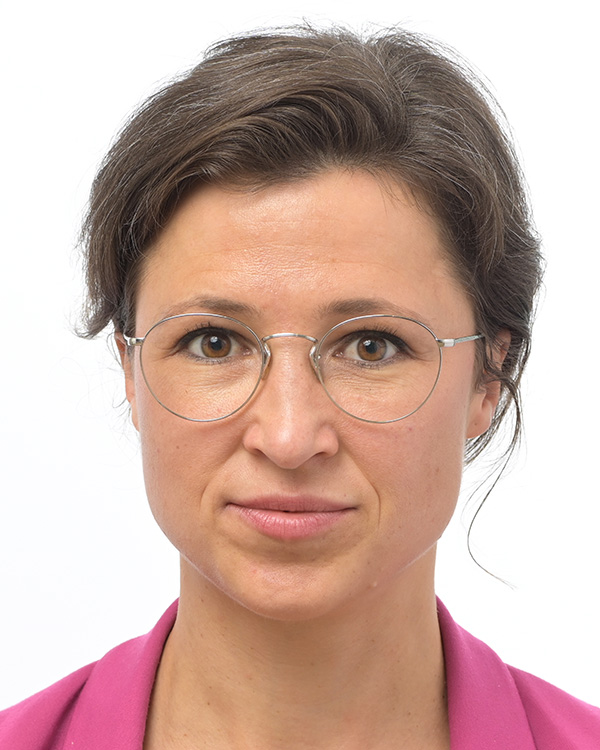


| Rank | Name | Country | Group | Speeches | |
|---|---|---|---|---|---|
| 1 |

|
Lukas Sieper | Germany DE | Renew Europe (Renew) | 487 |
| 2 |

|
Juan Fernando López Aguilar | Spain ES | Progressive Alliance of Socialists and Democrats (S&D) | 454 |
| 3 |

|
Sebastian Tynkkynen | Finland FI | European Conservatives and Reformists (ECR) | 451 |
| 4 |

|
João Oliveira | Portugal PT | The Left in the European Parliament (GUE/NGL) | 284 |
| 5 |

|
Vytenis Povilas Andriukaitis | Lithuania LT | Progressive Alliance of Socialists and Democrats (S&D) | 273 |
All Speeches (111)
EU strategy in response to the ongoing Middle East crisis, its implications on energy prices and the availability of fertilizers (joint debate)
Date:
29.04.2026 09:58
| Language: EN
Speeches
Mr President, obey or we will make your life miserable, resist and we break, you flee and we find you even in Europe, speak up and we come after your family – this is how the Iranian regime has ruled for decades. Now, they are expanding this model from holding their own people hostage to holding the world hostage in the Strait of Hormuz. You sanction us, we close the strait. You want negotiations, we make you wait. You resist, we create an economic crisis. Pure blackmail! And if they get away with this, dear colleagues, others will follow. This is not only about Iran, it is about freedom of navigation and whether blackmail wins, and this is why Europe needs to get engaged: for a reliable solution for freedom of navigation, against blackmail on the international stage –Trump is not going to get this done! – but also against blackmail in Iran. Because while we debate geopolitics here, millions of Iranians live a different reality: more brutality, more executions, more censorship. And yet some in Europe speak of sanctions relief in return for opening the Strait of Hormuz, which would give the very wrong signal that blackmail works and that Europe turns a blind eye on repression. Dear colleagues, these sanctions were imposed for massive human rights violations, and they must remain until these violations stop. So no handshake, no deal, no lifting of sanctions as long as people are silenced, executions continue and political prisoners remain behind bars. This is what Europe must bring to the negotiation table. (The speaker concluded her speech in a non-official language).
Madam President, this is a point of order in line with Rule 202 of the Rules of Procedure. Nasrin Sotoudeh was awarded the Sakharov Prize in 2012, and she was abducted by the Iranian regime just 25 days ago, and is now held in an unknown location. She was abducted because she denounced the January massacres. She was abducted because she spoke out against executions, because she protested against mandatory hijab, and because she defended those in court who refused to support the tyranny of the Islamic regime. Nasrin is also a mother of two, and she has already spent too many years in prison. And yet she never bowed, and nor should we. Therefore, I urge you, President Metsola, as you announced, to convey this Parliament's deepest outrage to the Iranian regime and to formally demand Nasrin's immediate release and the release of all political prisoners. Dear colleagues, let us send a clear signal to those negotiating in Islamabad right now: no deal, no handshake will get our blessing unless this regime opens the internet, stops the executions and releases all political prisoners, including Nasrin and Narges.
Imminent death penalty threats in Iran in the light of the latest executions, including on 18 and 19 March 2026, by the Iranian regime (debate)
Date:
25.03.2026 21:23
| Language: EN
Speeches
Madam President, this war has raised hopes among many Iranians, hopes for change and hopes for freedom. But today, there is a real threat that it may end in a disaster, leaving them with nothing but an emboldened, even more repressive and aggressive regime. While the world is watching missiles and internet memes, the Islamic regime is tightening its grip at home. Political prisoners are held in overcrowded cells, executions rising, a regime determined to destroy every little bit of resistance, of hope, of life under a nationwide internet blackout designed to control reality, to kill in the dark. And now there is Donald Trump's 15-point plan. A plan without a single point on the people of Iran, a rush for a quick deal, an attempt for Donald Trump to save Donald Trump, by replacing mullahs with mullahs and selling out the future of an entire nation. We have seen this before, dear colleagues. In 2020, in Doha, Trump rushed to a deal with the Taliban. He celebrated it as a good one, when in reality he got nothing. And the people of Afghanistan are paying the brutal price for this until today. This is not a game. This is about the lives of millions of human beings. And that is why Europe, together with our partners in the Gulf, must push back. Any serious path forward must begin with two non-negotiable demands to the Islamic regime: stop the executions, stop the internet blackout. And we need to find a way to get the real Iranians to sit at these tables and to have a say in all of this. Nothing less. For women, for life, for freedom.
Madam President, dear colleagues, the people in Iran did not choose this war, the regime did. Yet they are the ones paying the highest price, trapped between missiles from above and repression from within. Trump and Netanyahu are gambling with the lives of 90 million Iranians and with the future of an entire region. How are we supposed to endorse a war when the goal is unclear and the strategy changes by the hour? A war in which desalination plants and historical sites are considered legitimate targets. A war in which the death of 150 schoolchildren is not even worth an apology. The Islamic regime chose this war, and the regime should be its sole target. This regime will fall. It is politically, economically and morally bankrupt. The only question is when, and how many will it drag into the abyss before it does, in Iran and across the region? So to those still supporting this machinery of repression and death, choose Iran over ideology. Defect and end this madness. Dear colleagues, this is not our war, but its consequences are already ours to deal with. So Europe must engage, in close coordination with partners in the Gulf, in support of the Iranian civil society and the diaspora, to stop escalation and prepare for a day after. Our Union was built on the ashes of the most brutal war in human history. It is proof that freedom and peace are possible. The people in the region deserve nothing less. For freedom. (The speaker concluded in a non-official language)
Tackling barriers to the single market for defence - Flagship European defence projects of common interest
Date:
10.03.2026 21:58
| Language: EN
Speeches
Madam President, dear colleagues, everyone says Europe needs to become more independent in defence, and I agree. For years now we have been putting forward concrete ideas at the European level on how to get there, like these reports that show, for example, how flagship projects can strengthen European security by building a European drone defence, by reinforcing the eastern border, by developing European air defence capabilities. All of these are good proposals. At a time when Trump is firing more missiles in the Middle East than he has delivered to Ukraine, flirting once again with Russian oil and threatening to throw Ukraine under the bus, Europe must move forward together. Many times in this House we have set the direction only to be faced with hesitation from Member States or ignorance, as their absence today shows. So if capitals continue to say that Europe does not deliver, let me be clear: we do. You only need to walk your talk. And please hurry up.
One-minute speeches on matters of political importance
Date:
09.03.2026 21:36
| Language: EN
Speeches
Mr President, in the shadow of war, danger for political prisoners does not disappear. It grows. Iran's prisons are full of protestors, from Nobel Peace Prize laureates to tens of thousands whose names we may never know. Bombs are falling and they are locked in. Reports suggest chaos inside Evin prison: food is running out, prisoners are being transferred to unknown locations, families have no contact. Outside the prison gates, they wait, desperately hoping for the smallest piece of news, fearing the worst. Dear colleagues, we have seen this before. During the Iran‑Iraq war, this same regime ordered the killing of thousands of political prisoners. In the face of such brutality, let us at least speak their names, tell their stories, keep up the world's attention on their fate because the day will come when the world will need their persistence, their knowledge and their courage to rebuild a free Iran.
Madam President, this is a point of order on our urgency that we will vote on later regarding the situation of Christians and journalists in Türkiye. When we usually work on human rights resolutions – urgencies – in this House, it is common practice when we talk about certain human rights defenders, opposition figures, to extend our solidarity in the text to other persons and groups at risk. For example, three months ago we had an urgency resolution on Baha'i in Iran. And of course we also addressed the repression against Christians in Iran. So I thought it would be a normal thing, if we discussed the situation of Christians and journalists in Türkiye, that we also extend our solidarity to other religious groups, or at least that we are able to vote if we want to do so. For some reason that I don't get, the services said that our amendment in this regard is inadmissible. This, dear colleagues, is a political question and not a bureaucratic one, so I call on you, President, to allow us to vote on this one today, and on the subject matter, dear colleagues, for God does not show favouritism...
Systemic oppression, inhumane conditions and arbitrary detentions by the regime in Iran
Date:
11.02.2026 21:12
| Language: EN
Speeches
Mr President, tens of thousands shot, body bags piling up in silence, grieving families forced into false confessions – the Islamic regime has one goal: to ensure that no one ever dares to take to the streets again. And they are not done yet. Iran's prisons are full of protesters, from Nobel Peace Prize laureates to thousands whose names we may never know. There, the regime tries to break those they did not kill. They use rape as an interrogation tactic against women and men alike. Those who refuse to obey are threatened with execution. Dear colleagues, whether there is an Iran–Trump deal or not, our responsibility does not change. Iranians did not die for deals; they rose for freedom, and Europe must stand by their side. The IRGC terror listing is there – finally. Now we must enforce it. Follow the money, freeze assets, dismantle networks and transnational repression, bring perpetrators to justice and support Iran's opposition in all its diversity. This regime will fall. Let us all help. It falls fast. (The speaker concluded in a non-EU language)
Situation in Northeast Syria, the violence against civilians and the need to maintain a sustainable ceasefire (debate)
Date:
10.02.2026 14:49
| Language: EN
Speeches
Mr President, dear colleagues, the brutal attacks on the North East are a painful reminder of Syria's darkest chapters. An entire generation in Syria has grown up under al-Assad's cruel dictatorship and civil war. Every new escalation opens wounds that never had the time to heal. The violence must end once and for all, and this is the responsibility of all sides. And it is al-Sharaa's responsibility, if he wants to be the president of Syria, to be a president for all Syrians, and to ensure that Syria is safe for everyone. For decades, majority-Kurdish areas have been the most democratic and inclusive parts of Syria. They are a blueprint for the future many Syrians hope for. Kurdish rights are now written into a decree, but real guarantees must be enshrined into the constitution, and Kurdish representatives need to have a seat at the table in Damascus. We also have some homework of our own, dear colleagues. For years, I have called on our governments to repatriate Daesh fighters and families to bring them to justice in Europe. Now the risk of Daesh regrouping is higher than ever. I would rather see these fighters in European prisons than back on the battlefields. All of this clearly shows that Syria is not safe for forced returns. Instead of scaring Syrians in Europe and fuelling toxic migration debates, let's all focus on helping rebuild a country that finally has a chance to heal its wounds and become free for everyone.
Brutal repression against protesters in Iran (debate)
Date:
20.01.2026 16:34
| Language: EN
Speeches
Madam President, people in Iran are back on the streets because of poverty, because of repression and because they cannot survive like this. The regime responds with brutality beyond comprehension. They deliberately shoot peaceful protesters in the face. Thousands have been killed, many more injured, their faces turned into permanent warnings, a message written in blood: 'do not dare to resist'. Many families still wait for calls that never come. They do not know whether their loved ones returned home, vanished into prisons or lie unnamed among the dead. Political prisoners have been cut off for weeks. The internet has been shut down to keep everything in the dark. This regime has lost every last inch of legitimacy. It is politically bankrupt, it is economically hollow and morally dead. It will fall: the only question is when, and how many more lives will it destroy before it does? Dear colleagues, it is our responsibility to shorten that timeline, and it is on Iranians to then decide what's next. I know this is not the usual toolbox, but nothing about this regime is normal. Compared to the risks that people take in the streets of Iran every day, what I'm asking for, High Representative, is very little: designate the Revolutionary Guard as a terror organisation. We know who is blocking: Spain, Italy and France. Dear colleagues with your nice speeches, reach out to your governments, make them reconsider so we can do this by 29 January. Fully enforce sanctions – not selectively, not symbolically, but completely. Expel Iranian diplomats who abuse their diplomatic privileges to spread disinformation and intimidate Iranians here in Europe. Why should we tolerate their repression on our soil any longer? Invest in technologies that bypass internet shutdowns. Autocrats are already learning from this. We must learn faster and let us all together send an unmistakeable sign to Tehran. Release the prisoners, stop the executions, we will keep shining light where you seek darkness. This regime will fall. Let us all help it fall fast. Baraye Azadi.
Recent developments in Palestine and Lebanon (debate)
Date:
16.12.2025 22:06
| Language: EN
Speeches
Mr President, dear colleagues, we all have a right to hope, but we also have the duty to face reality and to act accordingly. There is a ceasefire in Gaza on paper, but for Palestinians, little has changed: airstrikes continue, the Israeli Government severely limits humanitarian aid, children sleep in rain-soaked blankets, cold, fragile, hungry. While the world focuses on Gaza, violence by the Israeli military and settlers is escalating in the West Bank with complete impunity. People are shot while harvesting olives. Just last month, the Israeli military shut down the last Palestinian seed bank after they had destroyed its seed production facility in Hebron this summer. Seeds are not terrorists. This is not about Israel's security; this is an attack on Palestinian food sovereignty. And it's systemic. Good roads for Israelis only; broken roads and endless checkpoints for Palestinians on their own land. One set of laws for Palestinians; another one for Israelis. An Israeli child throwing a stone might get an angry look at worst, while a Palestinian child can be shot dead or held for years in administrative detention without due process. All of this is meant to send a single chilling message: you have no future here. We may have grown used to this reality, dear colleagues, but we should never accept it. That is why I urge the Commission and Member States to finally implement the measures announced in the State of the Union: suspend the association agreement – at least its trade provisions, impose targeted sanctions on ministers, on settler organisations and their donors, and finally, protect those who uphold international law by activating the blocking statute to defend the International Criminal Court. I was in Palestine with six colleagues last week. I encourage all of you to go and see for yourselves – because if we allow one terror to justify another terror, only terror.
Mr President, dear colleagues, in Iran, repression against Baha'is has reached a new level of cruelty: raids, arrests, confiscations, even executions. Picture this scene repeated a thousand times across in Iran today: a woman – Baha'i, Kurdish, Baloch, Azeri – standing in her doorway, her door forced open by men who fear her voice more than she fears their violence. Her crime? She teaches, she believes, she simply refuses to disappear. Doors shattered, bodies beaten, families torn apart: all that only to preserve the power of a small circle of clerics who build their rule on repression and fear, on erasing identity, belief and freedom. But the state that imprisons people for their faith or gender is not strong, it is terrified. A regime that seizes Baha'i homes is not powerful, it only shows how fragile its own worlds have become. When you silence one woman, her voice returns through millions, through Kurds, Baloch, Baha'is, Azeris, women and men across Iran and in Europe – all those who refuse to be divided, all those whose hearts beat for freedom. Iranians say: 'from heart to heart there is always a path'. Our solidarity is with the people of Iran, and our pressure on this regime will only increase. 'Woman, life, freedom'. My heart goes out to my Baha'i friends up there.
European Defence Industry Programme and a framework of measures to ensure the timely availability and supply of defence products (‘EDIP’) (debate)
Date:
25.11.2025 09:30
| Language: EN
Speeches
Madam President, dear colleagues, today we will adopt EDIP. And while the result is acceptable, the path to reach it explains all too well why we are once again in a mess when it comes to Ukraine. Donald Trump has presented his 28-point 'peace plan'. Let's be clear: this is not a peace plan. It is a demand for capitulation designed to distract from the Epstein scandal closing in on him back home. And he appears perfectly ready to sacrifice Ukraine's security – and Europe's – in the process. In Europe, our leverage over Trump is minimal because we remain dependent. Our defence industry is fragmented and we still lack key capabilities Ukraine urgently needs – from air defence to military intelligence. While, on the macro level, every head of state decries the lack of strategic autonomy, of European sovereignty, on the micro level, Member States still turn every attempt to fix this mess into an exercise in protecting national perks and business as usual. First SAFE, now EDIP: Member States are carving out loophole after loophole, instead of strengthening a truly European defence industry and working together to close capability gaps. Dear colleagues in the Council, by the way, where are you? Strategic autonomy does not come from Sunday speeches. It comes from Monday to Friday actions. I thank the rapporteurs and the colleagues who stood firm in the trilogue – because either we defend the European project together or there will be soon no more project to defend.
Preparation of the European Council meeting of 23 October 2025 (debate)
Date:
22.10.2025 10:26
| Language: EN
Speeches
Madam President, dear colleagues, we are no longer at peace, and Putin moves us closer to war week after week. Drones shut down our airports. Russian fighter jets cross our skies. Disinformation divides our societies. And the US? A shaky ally at best. This challenge is far too big for any Member State to face alone. Whenever national governments feel overwhelmed, they call on the EU to fix the problem. Strategic autonomy, European serenity, a true defence union – the speeches of heads of states are grand. The actions? Not so much. Transfer the necessary powers to the EU? No. Provide the budget we need? A sure no. But when Europe then can't perform miracles with this non-support, the same capitals are the first ones to point the fingers. Dear colleagues in the Council, we don't have time for these games anymore. Together, we are 500 million people with one of the world's strongest economies. Either we defend every inch of the European project together or there will be no more European project. And when that happens, by the way, your handy European scapegoat will be gone as well.
Recent peace agreement in the Middle East and the role of the EU (debate)
Date:
21.10.2025 09:19
| Language: EN
Speeches
Madam President, dear colleagues, Donald Trump may get a ceasefire signed, but for sure he has neither the ability nor the patience to build lasting peace. His plan is riddled with flaws: no path for Palestinian self-determination, no timeline for Israel's full withdrawal, no agreement on disarming Hamas, no word on accountability for the crimes of the past two years. Trump wants the applause and counts on everyone else to deal with the messy reality, and on the Gulf countries and Europe to pay the bill. But who says we need to just nod along? It's time for Europe to move from being the passive payer to using our leverage, to finally break the cycle of rebuilding what will only be destroyed again. The hostages are free. May they, and their families, find the strength to heal. But for civilians in Gaza, little has changed. They still suffer from Israeli attacks, from Hamas violence, from starvation. The Arab states need to keep the pressure on Hamas; Europe needs to keep the focus on the Israeli Government. Netanyahu still turns aid on and off at will. As long as food and medicine do not reach everyone, consequences – from the suspension of the EU-Israel Association Agreement to sanctions – need to be back on the table. While the world watches Gaza, our attention needs to extend to the West Bank. Settler violence grows, in an open attempt to undermine the two-state solution. Palestinians have a right to their own state and to ownership of reconstruction. Europe was too divided to stop the war. Let us at least be united now, to protect and nurture the fragile hope that remains.
EU strategy with regard to Iran’s nuclear threat and the implementation of EU sanctions resulting from the snapback mechanism (debate)
Date:
08.10.2025 19:47
| Language: EN
Speeches
Madam President, finally: the snapback. For too long, the Iranian regime bent the rules, mocked our patience and profited from our hesitation – that, at least, is over now. But sanctions only matter if they are fully implemented. So we need to close the loopholes that EU companies still use for dual-use goods, end the golden visa schemes that the regime still exploits, ensure that countries fully comply as UN sanctions apply to everyone and above all, sanctions must hit the regime, not the people. Dear colleagues, this snapback alone will not bring security. The regime still hides enriched uranium, it supplies Shahed drones to Russia, killing Ukrainians, and expects fighter jets in return, threatening Saudi Arabia and Israel – a partnership of repression that fuels instability far beyond Iran's borders. Inside Iran, repression gets worse. Three people are executed every day, each one a message of fear to a generation that dares to dream of freedom. Political prisoners are on hunger strike, risking their lives to end this madness. They need our attention and our solidarity. The best way to stop a nuclear Iran is to break this cycle of violence and fear that sustains the regime is to finally put the IRGC on the EU terrorist list. Our support belongs not to the mullahs, but to the people in Iran who risk everything for freedom and dignity. (The speaker concluded in a non-EU language)
Situation in Afghanistan: supporting women and communities affected by the recent earthquakes (debate)
Date:
07.10.2025 18:58
| Language: EN
Speeches
Mr President, dear colleagues, Afghanistan is the only country where girls are forbidden to go to school, where women are banned from work, from travel – even from speaking. Half a nation erased from public life. This is not culture. It is not internal affairs. It is gender apartheid. While rescuers work to save families buried by earthquakes, the Taliban cut the internet, isolating 40 million in a deliberate digital darkness. This is calculated cruelty. Dear colleagues, three years ago, all of us in here said we will not turn our back on Afghanistan. Today, that promise is being broken. Instead of standing with Afghan women, European governments travel to Kabul in secret, bargaining with terrorists over deportations, trading away rights and promises for short-sighted deals and a handful of votes. But our duty is the opposite: to name the Taliban's crimes, not to normalise them; to speak up for Afghan women, not to silence them; and to codify gender apartheid as a crime against humanity, so that evidence is preserved, justice is possible, and these shady deals are denounced as what they are – complicity.
The EU’s role in supporting the recent peace efforts for Gaza and a two-state solution (debate)
Date:
07.10.2025 13:24
| Language: EN
Speeches
Mr President, as we speak, families in Israel mourn the victims of 7 October while hostages remain in captivity, enduring hell. As we speak, families in Gaza cannot grieve. More bombs are falling and settlers terrorise those in the West Bank. As we speak, Jews in Europe face anti-Semitic attacks, racism against Muslims is rising and Palestinians worldwide wonder on which they their victims will be mourned. Dear colleagues, we all hope for a deal to end this suffering. But negotiations do not feed the starving. We need to increase pressure for more humanitarian aid to reach Gaza. And even if an agreement comes, our work will not be over. Rebuilding will need resources. Peace will need protection. Healing will need specialists. And justice will need accountability. Europe was too divided to pressure ceasefire. Let us at least be united and lead to protect and nurture whatever fragile hope may soon emerge.
Gaza at breaking point: EU action to combat famine, the urgent need to release hostages and move towards a two-state solution (debate)
Date:
09.09.2025 11:09
| Language: EN
Speeches
Madam President, dear colleagues, famine has reached Gaza City. People are told to leave but have nowhere to go. Children are starving. Families are bombed. While Trump and Netanyahu dream of turning Gaza into the Riviera, the European Union is paralysed by shameful infighting. While we debate, they create facts on the ground. And yes, it's above all the German Government that blocks action in the Council. That is unacceptable. Because if we are serious about ending the suffering, about offering a real alternative to the Trump-Netanyahu alliance, we must stand united, and with our regional partners, and with the hundreds of thousands in Israel demonstrating for an end to this brutal war. The Israeli Government has promised again and again to let in more humanitarian aid. Before the summer, High Representative Kallas, you announced another such deal. But people in Gaza are still starving. Isn't it time to suspend the EU-Israel Association Agreement, then? For months, Israeli ministers have incited violence and pushed new settlements to bury a two-state solution. Isn't it time to sanction them, then? So instead of shouting at each other in here, let's unite behind a simple truth. From the river to the sea, all people should be free. Free from hunger. Free from bombs and missiles. Free from hostage-taking and terror attacks. Free from repression, antisemitism and racism. Free to love, live and to raise their children in peace.
Urgent need to protect religious minorities in Syria following the recent terrorist attack on Mar Elias Church in Damascus
Date:
09.07.2025 21:29
| Language: EN
Speeches
Mr President, dear colleagues, Assad may be gone, but the hate and division he sowed still poison Syria. The massacres of Alawites on the coast, the brutal attack on Christians praying in Mar Elias Church, hundreds of violent flashpoints across Syria – no community is untouched. Syria's authorities must act. Heal the deep wounds, pursue real justice, dismantle armed radicalism and rebuild trust shattered by war. We Europeans have a responsibility too, not to use Syrians as pawns in a political game, but to stand with them and to say it clearly: today's Syria is not safe. We must restart asylum processes, allow family reunification, create safe ways to visit Syria without forcing return. There are many in this Chamber who speak so passionately for persecuted Christians. But why don't you show the same passion extending Christian values to all Syrians seeking refuge in Europe? As in Leviticus 19, verse 33, it says: 'the foreigners residing amongst you must be treated as your native-born. Love them as yourself, for you were foreigners in Egypt too.'
Madam President, Minister, Commissioner, dear colleagues, the Iranian regime fuels terror at home and abroad, through executions, through proxies, through a nuclear programme built for impunity. Hamas, one of its proxies, committed the horrific 7 October attacks. Netanyahu's government responded with brutal force in Gaza, blocking humanitarian aid, expanding illegal settlements in the West Bank. But what did Netanyahu's and Trump's bombs achieve? The centrifuges will spin again. The hate has deepened. This is not good versus evil. It is a tragedy of leaders abusing power and of people caught in between. Because Israel is also the protesters in the streets. Palestine is also the civilians trapped between occupation and Hamas. Iran is also the women who burn their hijabs and whisper 'azadi'. These people are not collateral to geopolitics; they are the path to peace. And if we centre our foreign policy on them, on human dignity and international law, we can support their call for a lasting peace rooted in freedom for everyone. And because I was somehow just awarded 30 seconds, allow me to raise my frustration with the fact that Kaja Kallas is not here today to discuss this crucial topic for us here in the European Union and for the future of the region, and I would hope that she could be here with us a bit more often.
Madam President, as we discuss next week's NATO summit, I can't help but think of the old fairy tale 'The Emperor's New Clothes'. A vain ruler parades around in invisible garments, and everyone nods along, too afraid to point out the obvious. Welcome to The Hague, 2025. Enter Donald Trump, emperor extraordinaire, complete with 19th century parades and self-glorifying AI videos. The summit lasts just one day, because that's his attention span. Everything is carefully choreographed so he won't be bored, or worse, offended. No talk of climate, gender or disinformation – too risky. Real security threats – too complex. Instead, capitals around the alliance are called in a bidding war over percentages. Simple numbers may be Trump's favourite dress, but they for sure won't make us safer. While we all tailor new imaginary suits of statistics to flatter the emperor, hybrid attacks, military conflicts, climate risks, and authoritarian threats only grow. Yet no one dares to lift the veil and say he's actually not wearing any clothes. Dear colleagues, we don't need kings; we need security. If the ruler from Washington needs to be told that he wears the best of all dresses, fine. But let's make sure that before all, we need a dress of real security for our citizens and our friends in Ukraine.
Madam President, in Israel, families sleep in bunkers. In Iran, people are trapped between bombs and a regime that dragged them into a war they never chose. They feel relief because the IRGC was hit, because the nuclear programme was set back, but they are also afraid of Israeli escalation. Where should 10 million Tehranis evacuate to in just a few hours? This crisis didn't just start last week. It's the result of years of failure. Trump walked away from the nuclear deal, the Islamic regime advanced its programme, and Borrell and Mora were played again and again by Tehran. This isn't your fault, HR/VP, but you are in charge now, and Europe must finally lead. The window for a free Iran is wider than it has been in years. We must prevent further escalation, we must ensure that this regime never gets a nuclear bomb, and we must support all those inside Iran that are risking everything for freedom. While the situation between Iran and Israel is complex, the one in Gaza is not. What the Israeli Government is doing is brutal. It is unlawful. It does not free the hostages, it serves only the cynical agenda of a few clinging to power while children starve beneath rubble in Gaza. If the review of the EU-Israel Association Agreement is honest, it must lead to suspension, and at the same time, our support for Israeli civil society must grow because they too are under attack. We need all hands on diplomacy, all eyes on those struggling in Gaza, in Israel and in Iran. The region has suffered far too long under men who mistake violence for strength.
State of play and follow-up two years after the PEGA recommendations and the illegal use of spyware (debate)
Date:
16.06.2025 18:17
| Language: EN
Speeches
Mr President, dear colleagues, spyware abuse is a massive threat to our fundamental rights, it corrodes democracy from within – we all know it. Yet, Member States again and again say they need it for 'national security'. Well fine, then let's talk national security, because spyware companies claim they make us safer, while evidence proves the opposite. The exploits they use are later on picked up by Russia and others and used against us. The highest number of targets are lawmakers, military officials, even governments – the odds are high that people in this very room are infected right now. This is absurd, dear colleagues, given the security threats Europe is already facing. And AI is just turbocharging this danger: combining, analysing, exploiting data at a scale we have never seen. If we don't act now, the problem will be a hundred times worse in a year's time. And we know how to stop this – we spelled it out in the Pegasus report two years ago. So to the Council: get your act together and fix this before it is too late. You in Poland above all should know this.
The EU's response to the Israeli government's plan to seize the Gaza Strip, ensuring effective humanitarian support and the liberation of hostages (debate)
Date:
21.05.2025 17:06
| Language: EN
Speeches
Madam President, dear colleagues, Europe has been too cautious for too long. What we see in Gaza is unbearable. Every day, children are dying from hunger, journalists shot for doing their job, doctors and nurses killed trying to save lives, entire neighbourhoods turned to dust. Netanyahu's war has long past the bounds of self-defence, yet we still deliver weapons – also weapons used in Gaza and to expand illegal settlements – and this needs to stop. The review of the EU-Israel Association Agreement is long overdue, and it has to lead to the suspension of programmes. Criticising a government, dear colleagues, is not the same as attacking a country and its people. And I want the people of Israel to know: we remain committed to our friendship and our partnership, but the horror in Gaza is damaging our relationship with your government. Dear colleagues, if we allow horror to justify new horror, only horror can grow.