
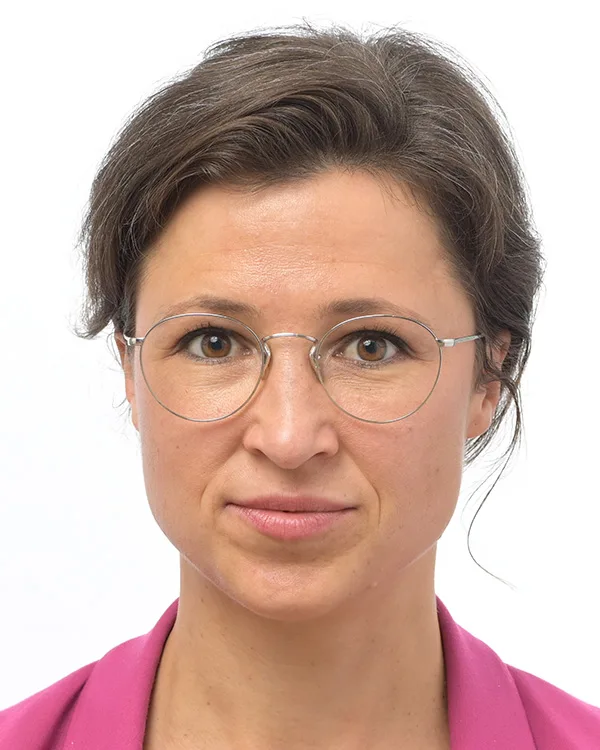






| Rank | Name | Country | Group | Speeches | |
|---|---|---|---|---|---|
| 1 |
|
Lukas Sieper | Germany DEU | Non-attached Members (NI) | 390 |
| 2 |
|
Juan Fernando López Aguilar | Spain ESP | Progressive Alliance of Socialists and Democrats (S&D) | 354 |
| 3 |
|
Sebastian Tynkkynen | Finland FIN | European Conservatives and Reformists (ECR) | 331 |
| 4 |
|
João Oliveira | Portugal PRT | The Left in the European Parliament (GUE/NGL) | 232 |
| 5 |
|
Vytenis Povilas Andriukaitis | Lithuania LTU | Progressive Alliance of Socialists and Democrats (S&D) | 227 |
All Contributions (125)
Recent peace agreement in the Middle East and the role of the EU (debate)
Madam President, dear colleagues, Donald Trump may get a ceasefire signed, but for sure he has neither the ability nor the patience to build lasting peace. His plan is riddled with flaws: no path for Palestinian self-determination, no timeline for Israel's full withdrawal, no agreement on disarming Hamas, no word on accountability for the crimes of the past two years. Trump wants the applause and counts on everyone else to deal with the messy reality, and on the Gulf countries and Europe to pay the bill. But who says we need to just nod along? It's time for Europe to move from being the passive payer to using our leverage, to finally break the cycle of rebuilding what will only be destroyed again. The hostages are free. May they, and their families, find the strength to heal. But for civilians in Gaza, little has changed. They still suffer from Israeli attacks, from Hamas violence, from starvation. The Arab states need to keep the pressure on Hamas; Europe needs to keep the focus on the Israeli Government. Netanyahu still turns aid on and off at will. As long as food and medicine do not reach everyone, consequences – from the suspension of the EU-Israel Association Agreement to sanctions – need to be back on the table. While the world watches Gaza, our attention needs to extend to the West Bank. Settler violence grows, in an open attempt to undermine the two-state solution. Palestinians have a right to their own state and to ownership of reconstruction. Europe was too divided to stop the war. Let us at least be united now, to protect and nurture the fragile hope that remains.
EU strategy with regard to Iran’s nuclear threat and the implementation of EU sanctions resulting from the snapback mechanism (debate)
Madam President, finally: the snapback. For too long, the Iranian regime bent the rules, mocked our patience and profited from our hesitation – that, at least, is over now. But sanctions only matter if they are fully implemented. So we need to close the loopholes that EU companies still use for dual-use goods, end the golden visa schemes that the regime still exploits, ensure that countries fully comply as UN sanctions apply to everyone and above all, sanctions must hit the regime, not the people. Dear colleagues, this snapback alone will not bring security. The regime still hides enriched uranium, it supplies Shahed drones to Russia, killing Ukrainians, and expects fighter jets in return, threatening Saudi Arabia and Israel – a partnership of repression that fuels instability far beyond Iran's borders. Inside Iran, repression gets worse. Three people are executed every day, each one a message of fear to a generation that dares to dream of freedom. Political prisoners are on hunger strike, risking their lives to end this madness. They need our attention and our solidarity. The best way to stop a nuclear Iran is to break this cycle of violence and fear that sustains the regime is to finally put the IRGC on the EU terrorist list. Our support belongs not to the mullahs, but to the people in Iran who risk everything for freedom and dignity. (The speaker concluded in a non-EU language)
Situation in Afghanistan: supporting women and communities affected by the recent earthquakes (debate)
Mr President, dear colleagues, Afghanistan is the only country where girls are forbidden to go to school, where women are banned from work, from travel – even from speaking. Half a nation erased from public life. This is not culture. It is not internal affairs. It is gender apartheid. While rescuers work to save families buried by earthquakes, the Taliban cut the internet, isolating 40 million in a deliberate digital darkness. This is calculated cruelty. Dear colleagues, three years ago, all of us in here said we will not turn our back on Afghanistan. Today, that promise is being broken. Instead of standing with Afghan women, European governments travel to Kabul in secret, bargaining with terrorists over deportations, trading away rights and promises for short-sighted deals and a handful of votes. But our duty is the opposite: to name the Taliban's crimes, not to normalise them; to speak up for Afghan women, not to silence them; and to codify gender apartheid as a crime against humanity, so that evidence is preserved, justice is possible, and these shady deals are denounced as what they are – complicity.
The EU’s role in supporting the recent peace efforts for Gaza and a two-state solution (debate)
Mr President, as we speak, families in Israel mourn the victims of 7 October while hostages remain in captivity, enduring hell. As we speak, families in Gaza cannot grieve. More bombs are falling and settlers terrorise those in the West Bank. As we speak, Jews in Europe face anti-Semitic attacks, racism against Muslims is rising and Palestinians worldwide wonder on which they their victims will be mourned. Dear colleagues, we all hope for a deal to end this suffering. But negotiations do not feed the starving. We need to increase pressure for more humanitarian aid to reach Gaza. And even if an agreement comes, our work will not be over. Rebuilding will need resources. Peace will need protection. Healing will need specialists. And justice will need accountability. Europe was too divided to pressure ceasefire. Let us at least be united and lead to protect and nurture whatever fragile hope may soon emerge.
Gaza at breaking point: EU action to combat famine, the urgent need to release hostages and move towards a two-state solution (debate)
Madam President, dear colleagues, famine has reached Gaza City. People are told to leave but have nowhere to go. Children are starving. Families are bombed. While Trump and Netanyahu dream of turning Gaza into the Riviera, the European Union is paralysed by shameful infighting. While we debate, they create facts on the ground. And yes, it's above all the German Government that blocks action in the Council. That is unacceptable. Because if we are serious about ending the suffering, about offering a real alternative to the Trump-Netanyahu alliance, we must stand united, and with our regional partners, and with the hundreds of thousands in Israel demonstrating for an end to this brutal war. The Israeli Government has promised again and again to let in more humanitarian aid. Before the summer, High Representative Kallas, you announced another such deal. But people in Gaza are still starving. Isn't it time to suspend the EU-Israel Association Agreement, then? For months, Israeli ministers have incited violence and pushed new settlements to bury a two-state solution. Isn't it time to sanction them, then? So instead of shouting at each other in here, let's unite behind a simple truth. From the river to the sea, all people should be free. Free from hunger. Free from bombs and missiles. Free from hostage-taking and terror attacks. Free from repression, antisemitism and racism. Free to love, live and to raise their children in peace.
Urgent need to protect religious minorities in Syria following the recent terrorist attack on Mar Elias Church in Damascus
Mr President, dear colleagues, Assad may be gone, but the hate and division he sowed still poison Syria. The massacres of Alawites on the coast, the brutal attack on Christians praying in Mar Elias Church, hundreds of violent flashpoints across Syria – no community is untouched. Syria's authorities must act. Heal the deep wounds, pursue real justice, dismantle armed radicalism and rebuild trust shattered by war. We Europeans have a responsibility too, not to use Syrians as pawns in a political game, but to stand with them and to say it clearly: today's Syria is not safe. We must restart asylum processes, allow family reunification, create safe ways to visit Syria without forcing return. There are many in this Chamber who speak so passionately for persecuted Christians. But why don't you show the same passion extending Christian values to all Syrians seeking refuge in Europe? As in Leviticus 19, verse 33, it says: 'the foreigners residing amongst you must be treated as your native-born. Love them as yourself, for you were foreigners in Egypt too.'
Situation in the Middle East (debate)
Madam President, Minister, Commissioner, dear colleagues, the Iranian regime fuels terror at home and abroad, through executions, through proxies, through a nuclear programme built for impunity. Hamas, one of its proxies, committed the horrific 7 October attacks. Netanyahu's government responded with brutal force in Gaza, blocking humanitarian aid, expanding illegal settlements in the West Bank. But what did Netanyahu's and Trump's bombs achieve? The centrifuges will spin again. The hate has deepened. This is not good versus evil. It is a tragedy of leaders abusing power and of people caught in between. Because Israel is also the protesters in the streets. Palestine is also the civilians trapped between occupation and Hamas. Iran is also the women who burn their hijabs and whisper 'azadi'. These people are not collateral to geopolitics; they are the path to peace. And if we centre our foreign policy on them, on human dignity and international law, we can support their call for a lasting peace rooted in freedom for everyone. And because I was somehow just awarded 30 seconds, allow me to raise my frustration with the fact that Kaja Kallas is not here today to discuss this crucial topic for us here in the European Union and for the future of the region, and I would hope that she could be here with us a bit more often.
Upcoming NATO summit on 24-26 June 2025 (debate)
Madam President, as we discuss next week's NATO summit, I can't help but think of the old fairy tale 'The Emperor's New Clothes'. A vain ruler parades around in invisible garments, and everyone nods along, too afraid to point out the obvious. Welcome to The Hague, 2025. Enter Donald Trump, emperor extraordinaire, complete with 19th century parades and self-glorifying AI videos. The summit lasts just one day, because that's his attention span. Everything is carefully choreographed so he won't be bored, or worse, offended. No talk of climate, gender or disinformation – too risky. Real security threats – too complex. Instead, capitals around the alliance are called in a bidding war over percentages. Simple numbers may be Trump's favourite dress, but they for sure won't make us safer. While we all tailor new imaginary suits of statistics to flatter the emperor, hybrid attacks, military conflicts, climate risks, and authoritarian threats only grow. Yet no one dares to lift the veil and say he's actually not wearing any clothes. Dear colleagues, we don't need kings; we need security. If the ruler from Washington needs to be told that he wears the best of all dresses, fine. But let's make sure that before all, we need a dress of real security for our citizens and our friends in Ukraine.
Situation in the Middle East (joint debate)
Madam President, in Israel, families sleep in bunkers. In Iran, people are trapped between bombs and a regime that dragged them into a war they never chose. They feel relief because the IRGC was hit, because the nuclear programme was set back, but they are also afraid of Israeli escalation. Where should 10 million Tehranis evacuate to in just a few hours? This crisis didn't just start last week. It's the result of years of failure. Trump walked away from the nuclear deal, the Islamic regime advanced its programme, and Borrell and Mora were played again and again by Tehran. This isn't your fault, HR/VP, but you are in charge now, and Europe must finally lead. The window for a free Iran is wider than it has been in years. We must prevent further escalation, we must ensure that this regime never gets a nuclear bomb, and we must support all those inside Iran that are risking everything for freedom. While the situation between Iran and Israel is complex, the one in Gaza is not. What the Israeli Government is doing is brutal. It is unlawful. It does not free the hostages, it serves only the cynical agenda of a few clinging to power while children starve beneath rubble in Gaza. If the review of the EU-Israel Association Agreement is honest, it must lead to suspension, and at the same time, our support for Israeli civil society must grow because they too are under attack. We need all hands on diplomacy, all eyes on those struggling in Gaza, in Israel and in Iran. The region has suffered far too long under men who mistake violence for strength.
State of play and follow-up two years after the PEGA recommendations and the illegal use of spyware (debate)
Mr President, dear colleagues, spyware abuse is a massive threat to our fundamental rights, it corrodes democracy from within – we all know it. Yet, Member States again and again say they need it for 'national security'. Well fine, then let's talk national security, because spyware companies claim they make us safer, while evidence proves the opposite. The exploits they use are later on picked up by Russia and others and used against us. The highest number of targets are lawmakers, military officials, even governments – the odds are high that people in this very room are infected right now. This is absurd, dear colleagues, given the security threats Europe is already facing. And AI is just turbocharging this danger: combining, analysing, exploiting data at a scale we have never seen. If we don't act now, the problem will be a hundred times worse in a year's time. And we know how to stop this – we spelled it out in the Pegasus report two years ago. So to the Council: get your act together and fix this before it is too late. You in Poland above all should know this.
The EU's response to the Israeli government's plan to seize the Gaza Strip, ensuring effective humanitarian support and the liberation of hostages (debate)
Madam President, dear colleagues, Europe has been too cautious for too long. What we see in Gaza is unbearable. Every day, children are dying from hunger, journalists shot for doing their job, doctors and nurses killed trying to save lives, entire neighbourhoods turned to dust. Netanyahu's war has long past the bounds of self-defence, yet we still deliver weapons – also weapons used in Gaza and to expand illegal settlements – and this needs to stop. The review of the EU-Israel Association Agreement is long overdue, and it has to lead to the suspension of programmes. Criticising a government, dear colleagues, is not the same as attacking a country and its people. And I want the people of Israel to know: we remain committed to our friendship and our partnership, but the horror in Gaza is damaging our relationship with your government. Dear colleagues, if we allow horror to justify new horror, only horror can grow.
EU support for a just, sustainable and comprehensive peace in Ukraine (debate)
Madam President, Donald Trump claimed he would end the war in Ukraine in days. One hundred days later, he didn't get anywhere except that we in Europe now see how dangerously dependent we are on a man who wants Europe to fail. But we can stand up to this, dear colleagues. We need to strengthen Ukraine militarily and close our own capability gaps, and I urge all Member States to get behind Kaja Kallas' initiative. We must further weaken the aggressor, Russia. The initiative by the Commission to end Russian gas imports by 2027 is a good start. Dear colleagues, let's make it bolder in this House. We have to deepen Ukraine's EU integration, starting with defence, and ensure that significant amounts of SAFE and EDIP money are used to build this win‑win cooperation, and we must support Ukraine consistently in its path to get closer to EU membership fast. Europe has always been stronger together and it will be even stronger with Ukraine.
Execution spree in Iran and the confirmation of the death sentences of activists Behrouz Ehsani and Mehdi Hassani (debate)
Mr President, on Tuesday mornings, I kiss my kids goodbye as they leave to school. On Tuesday mornings in Iran, hope is hung from cranes. 975 executions last year, 230 already this year. In the Islamic Republic, death is declared a necessity to protect power against the will of the people. This regime builds gallows where bridges are needed. It intimidates when people ask for freedom. It harasses when people ask to choose their own path, it kills when its power is questioned. In this system, people are not meant to live freely. They are meant to serve, to obey, to stay silent until death, if need be. This regime terrorises its own people. It spreads terror across the region, and the long arm of the IRGC brings this terror to Europe. Spying. Intimidating. Kidnapping. Killing. What more do Member States need to put the IRGC on the terror list?
CFSP and CSDP (Article 36 TUE) (joint debate)
Madam President, colleagues, what a time to shape European foreign policy. Russia and China are launching one hybrid attack after another on the one side, the US Government preoccupied with weakening us through trade wars and bullying on the other – both trying to tear European unity apart. And here we stand between a rock and a hard place, or we finally wake up and become a power of our own. We hold all the cards, dear colleagues: the people, the money, the skills. We are seen as the reliable, the predictable partners. So many governments, so many individuals are waiting for us to rise to the challenge. So let us stand united – united in our commitment to the values this Union is built upon: democracy, international law and the burning desire for freedom. But what credibility do we have if we only help the most vulnerable when their governments accept forced returns? When the same people that demand the ICC to act more forcefully against Putin attack it over its arrest warrants against Netanyahu? When the Commission deepens security cooperation with Türkiye while Erdoğan jails his main opponent? Like many, dear colleagues, I am ready to defend this Union with weapons if need be. Not the territorial notion, but the vision of its founding fathers and mothers, the values enshrined in the first articles of the Lisbon Treaty: freedom, justice, democracy. Dear colleagues, let's not lose sight of what we are here to protect in the days, weeks and years to come.
Conclusions of the European Council meeting of 20 March 2025 (debate)
Madam President, dear colleagues, Europe needs to spend more on defence. And we, Commission, Council and this House, need to make sure that more spending actually leads to more security – security for European citizens and for Ukrainians – and not to higher profits for the defence industry. Let me be clear, we, Greens, are ready to support the defence industry where it matters: access to finance and raw materials, securing supply chains, less bureaucratic hurdles, more skilled workers. But this isn't a one-way street. I expect you, in the Commission and the Council, to make this very clear in the strategic dialogue that you are going to have with the defence industry. All this extra money must result in extra security and not in extra shareholder returns. And if there will be no serious answer, no fair contribution from industry, then yes, expect our calls for an excess profit tax to grow only louder in this House, across party lines, as it does in the UK already.
The need for EU support towards a just transition and reconstruction in Syria (debate)
Madam President, 14 years of war, of bombs, torture, people disappearing without a trace: Syrians have gone through hell. Today, Assad is gone and many have a fragile hope for a brighter future. At the same time, violence is erupting again. The country clearly stands at a crossroads. Those working for peaceful transition are asking us, the EU, for support, not to steer the wheel, but to be the wind in their backs; to support decisively, but not naively – decisively, because hesitation means losing this window of opportunity. We must ease sectoral sanctions that are crushing ordinary citizens. We need to support reconstruction, back democratic reforms and transitional justice, and ensure that the Syrian diaspora can contribute. If we don't, others will fill the void, dear colleagues. But we must not support naively, because support must come with conditions: no new dictatorship, no new violence, no carving up the country like warlords, no exclusion of women opposition voices. And to the foreign powers still meddling in Syria – Turkey, Israel, Iran, Russia – this is not your chessboard. Let Syrians finally reclaim their own future. None of this is easy. None of this is quick. Fighting erupted again over the weekend, fuelled yet again by external interference and foreign fighters. This is exactly the vicious circle that Syrians want to break and that this new government must break. That's why we need to step up our support – so that Syrians can rebuild their homes, heal their wounds and turn their country into a country for everyone.
White paper on the future of European defence (debate)
Mr President, I guess you all remember those painful images from the Oval Office when Trump and Vance openly joined the autocrats' camp, bullying and humiliating President Zelenskyy in front of cameras? If this, dear colleagues, is not the world we want to submit to – and I certainly don't – then we must be the alternative. We must defend the rules-based international order, basing decisions on facts, treating partners with respect, and we must finally stand on our own feet. This means weapons and funding, but most crucially, it means attracting the brightest minds in science, tech and engineering. And here, dear colleagues, is the perfect match because many in the US also reject this administration's agenda – they too, are desperately looking for an alternative. So let's roll out the red carpet, launch a new blue card for a new era, a fast-track visa for skilled professionals from the US who want to work in Europe and build a future based on ethics, sustainability and fair growth. And to the scientists, engineers and innovators in the US: come to Europe. When autocrats embolden autocrats, democrats stand with democrats.
Commission Work Programme 2025 (debate)
Madam President, Commissioner, that is quite a poor start – 10 minutes for the whole work programme, no President here, no Kaja Kallas, again. My colleagues were polite, but let's spell it out: this is disrespectful, disrespectful to European citizens and to us, their elected representatives in this House. Now, in foreign and defence policy, you announce plenty of good strategies – we stand with Ukraine, we push for enlargement, a European Defence Union, cyber security, Middle East strategy and, hidden in the fine print, finally a review of our Iran policy. But the main strategy is missing, Commissioner – how do we make Member States understand that they are weak if alone in a world of bullies? That these are joint European strategies and not papers that they can bluntly ignore, like they are ignoring us today, by the way. And one last thing: we cannot fix every Trump mess, but one we must, and we can, is supporting and protecting human rights defenders and free journalists wherever they are under threat, be it in Russia, Venezuela, Iran or in exile in the European Union. USAID has long led the way. Now, we need to step in. These people aren't just activists. They are our biggest allies in the fight against bullies, autocrats and warmongers.
Wider comprehensive EU-Middle East Strategy (debate)
Madam President, Commissioner, dear colleagues, people in the Middle East have endured violence and protracted displacement for decades. There is zero appetite for Iranian terrorism, Russian destabilisation, Chinese exploitation or the chaos that Trump has unleashed in just two weeks, announcing the withdrawal of security from ISIS camps, threatening massive forced displacement of Palestinians from Gaza, or cutting all funding to human rights defenders in the region. And the European Union? Too often we stood by divided or distracted while people on the ground begged us to step up. But it doesn't have to stay that way and there are clear opportunities of what we can do. Let's use the EU‑Israel Association Council to urge Israel to uphold the ceasefire. Let's strongly support UNRWA and its humanitarian work and the United Nations in the region as a whole. Let's engage with Lebanon's new leadership. Let's support a green growth strategy for the Middle East in coordination with the Gulf states. Let's step up our support to local civil society and all those that promote human rights, freedom and democracy in the region. And this time, dear colleagues, let's get it right in Syria. The country is in transition with a blatant power vacuum. Iran and Russia are ready to step back in. Yet, the people that I met on the ground are fighting for an inclusive, for a peaceful future. For years, dictators in the region crushed calls for democracy, warning: do you want to end up like Syria? Let's rewrite that narrative and let's show what the European foreign policy supporting local partners and stepping up to regional bullies can achieve: turning the region from our biggest worry to our strongest partner.
One-minute speeches on matters of political importance
Mr President, even loving your parents is a crime under the brutal rule of the Iranian regime. Nima was three years old when his mother, Sakharov laureate Nasrin Sotoudeh, was thrown into prison. Her crime? Defending women's rights. Nima grew up visiting her through glass barriers. His father, Reza, held the family together while the regime tried everything to tear it apart. And now they have come for Reza to punish Nasrin for not wearing hijab. Nima, now 17, wanted to see his father in prison. But in Iran even that is a battle. When he protested the sudden cancellation of an in-person visit, they beat him up, smashed his head against the stairwell, ripped out his earring, left him handcuffed and bleeding. Nasrin screamed until she lost her voice. For years, Nasrin and Reza have tried to shield their children from the horrors of the regime, but in that moment it all collapsed. Yet Nasrin's message is clear: she will not surrender. She will keep fighting for a future beyond this darkness. And we will stand with her. We will stand with Nima, with Reza, with the countless families shattered by this regime. Until the mullahs open the doors of Evin. Until no child goes up into the shadows of prison walls anymore. (The speaker concluded in a non-official language.)
The Universal Declaration of Human Rights: the need for the European Union to contribute to resolving the humanitarian crisis of persons missing in wars and conflicts (debate)
Mr President, 'Bring out the dead dogs'. That's how prison guards ordered inmates to carry out the bodies of those who died overnight in Sednaya Prison in Syria. What happened to those bodies? Nobody knows. For decades, the Assad regime has used forced disappearances as a tool of repression. More than 100 000 people have disappeared under his rule. Over 100 000 remain missing today. Now, for the first time in decades, there is a real chance to uncover the truth. Syrian experts are already on the ground, documenting crimes, exhuming mass graves, protecting evidence. But they need our support, financially and politically, to fund Syrian civil society working for truth, justice and reconciliation, to press Syria's new rulers to make transitional justice a priority, to strengthen the UN mechanism on missing people, to ensure independent investigations. Because this is the only way to hold perpetrators accountable, to help families find out what happened to their loved ones, and to support Syrians rebuilding a country that heals its wounds and will be a free country for everyone.
Systematic repression of human rights in Iran, notably the cases of Pakhshan Azizi and Wrisha Moradi, and the taking of EU citizens as hostages
Madam President, Pakhshan Azizi cared for the wounded and displaced in Rojava, helping those fleeing from the brutality of ISIS. Wrisha Moradi fought against ISIS herself on the frontlines in Kobane, defending not only lives but also human dignity. In a normal country, these two would be heroes. In Iran, they face death row. For the first time in years, the regime threatens to execute women political prisoners, and these death sentences are nothing but acts of revenge by the Islamic regime against women, against Kurds and against the ideals of women: life, freedom, self-determination and bravery. Revenge because so many still dare to speak out, and the only response this regime knows is to crush dissent by brutal force. Yes, the henchmen of this regime can imprison people, but this will only amplify the unstoppable call for freedom. Pakhshan Azizi and Wrisha Moradi embody everything this regime fears. (The speaker concluded in a non-official language)
Uniting Europe against actors hostile to the EU: time to strengthen our security and defence (topical debate)
Madam President, dear colleagues, a 155 mm shell of a German manufacturer can't be used in a French howitzer, making it even more difficult for Ukrainians to defend their country against Russian aggression. That is where we stand, 25 years into the Common Security and Defence Policy. For five years, I have been a Member of this House. We have written strategies, handed out subsidies, backed Member States to cooperate. And their response? Thanks for the money, but leave the rest to us. All of them putting national egoism above the security of European citizens and that of our friends in Ukraine, failing to come together to fix the problems we have. Nowhere is this failure more apparent than in cybersecurity. We are building our digital societies on technology controlled by a man in the White House threatening to annex Canada along with his Nazi‑saluting sidekick. Attribution of cyber attacks? We need to ask the Americans storing our data. Our companies do it in the US. Secure processors? We buy them from the US IT experts. We are lacking 1 million. This, my dear colleagues, is beyond naive. What use are another 4 000 battle tanks if Russians can hack our command and control structure? What use are another 4 000 battle tanks if our elections are manipulated by algorithms of TikTok and X? There is only one response to Russian aggression and to Make America Great Again – it's Europe united, including in defence. When we speak of defence, let's not forget cyber.
Presentation of the programme of activities of the Polish Presidency (debate)
Madam President, you put security and defence at the heart of the Polish Presidency, Prime Minister. Quite timely, I would say. I have been working on these issues for more than ten years. You even longer. And all this time, we have heard countless heads of state showing up here, speaking of European autonomy, strengthening European defence, a true European defence Union... Well, let me tell you, this House is ready. And we both know that the problem is political will in the Member States. So I'm asking you what I have been asking all these previous heads of state. What competences are you willing to transfer from the national to the European level, so that we will finally walk tangible steps towards this end? And a little spoiler: so far the answer has always been silence. So maybe today is a good moment to change that. It's cheaper and it will make us safer.
Need to detect and to counter sabotage by the Russian shadow fleet, damaging critical undersea infrastructure in the Baltic Sea (debate)
Mr President, dear colleagues, for too long have we treated the Baltic Sea as a tourist destination, a quiet periphery of Europe. Well, it turns out it's not. Hundreds of vessels of Russia's shadow fleet pass through the Baltic, lacking proper insurance and sailing under ever‑changing flags. These worn‑down, uninsured tankers are creating the conditions for an environmental disaster of unimaginable scale. The recent breakdown of two such ships just in front of the island of Rügen offered us a glimpse of the potential magnitude. These ships are severing energy and communication lines, deliberately attacking the very arteries that connect the European Union. Last week, Europe stepped up. NATO's Baltic Sentry initiative uses advanced drone fleets to patrol and protect critical undersea infrastructure. It is the first NATO mission led solely by European troops and capabilities and it proves that Europe can lead in securing its regions. But we must go further than monitoring: sanction shadow fleet vessels and their owners; ban tanker sales to states undermining the oil price cap; and automatically stop sanctions and uninsured ships entering EU waters. We shouldn't wait for a blackout or an oil spill before we act decisively to protect our waters and our citizens.