
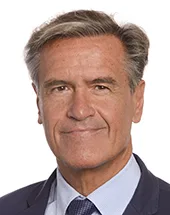
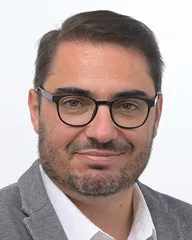
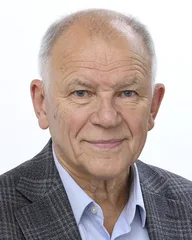
| Rank | Name | Country | Group | Speeches | |
|---|---|---|---|---|---|
| 1 |
|
Lukas Sieper | Germany DEU | Non-attached Members (NI) | 390 |
| 2 |
|
Juan Fernando López Aguilar | Spain ESP | Progressive Alliance of Socialists and Democrats (S&D) | 354 |
| 3 |
|
Sebastian Tynkkynen | Finland FIN | European Conservatives and Reformists (ECR) | 331 |
| 4 |
|
João Oliveira | Portugal PRT | The Left in the European Parliament (GUE/NGL) | 232 |
| 5 |
|
Vytenis Povilas Andriukaitis | Lithuania LTU | Progressive Alliance of Socialists and Democrats (S&D) | 227 |
All Contributions (125)
EU response to the protests and executions in Iran (debate)
Madam President, yesterday, 12 000 people came to Strasbourg to demonstrate for a free Iran and against its brutal regime. And this regime is under pressure because people in Iran are even willing to die for a brighter future. And we, the European Union, should not be the one stabilising a regime while its own people fight for its downfall. So how can our High Representative on the one side denounce executions and at the same time meet the Iranian Minister of Foreign Affairs on the red carpet in Amman? How can he speak about reviving the JCPOA if the only thing that comes out of it is the international reputation and recognition that the regime urgently needs? So the time for this ambiguous policy is over. As long as the brutal crackdown on protests continues, we should not negotiate. As long as the Revolutionary Guards terrorise their own people and the whole region, we should treat them as terrorists and put them on the sanctions list. The Iranian people have taken to the streets in Iran and all over the world, and they ask for our support. I stand with them. And so should all of us. (The speaker concluded in a non—official language)
The case of human rights defender Abdulhadi Al-Khawaja in Bahrain
Madam President, dear colleagues, in Europe we take the right to freedom of expression for granted, but people in the Gulf region risk their life for it. In Bahrain, human rights defender Abdulhadi Al-Khawaja was sentenced to life in prison because he led pro-democracy protests and is still in prison today and our urgency resolution is about his case. But his case is by far not the only one in the region: 34 years in prison for PhD scholar Salma al-Shehab in Saudi Arabia for her tweets on women’s rights. Life imprisonment for the Qatari lawyers Hazza and Rashed bin Ali Abu Shurayda al-Marri, who had organised so—called unauthorised meetings. Ten years for human rights defender Ahmed Mansoor in the UAE for his social media activism. And lawmakers in Iran have just called on the judiciary to sentence protesters to death. For what? For calling for political freedoms and the freedom of expression, and two of them have already been executed. So in every encounter with the Gulf region and beyond, we have to speak up on behalf of those who are not allowed to speak up. And we must call for the release of those unjustly detained again and again and again, and especially and continuously in this European Parliament. Because if we are silent, they will be forgotten in their dark prison holes, but theirs are the voices that the world needs to hear.
Chinese government crackdown on the peaceful protests across the People's Republic of China
Madam President, I would like, first of all, to make the statement that whatever Ms Zovko just said was totally out of scope of the debate. So please allow me to also make a remark a bit out of the ordinary. I have to say that I am quite surprised by the fact that the EPP now decides not to table, not to negotiate and not to vote on urgency resolutions. The fact is that apparently, third countries, autocratic regimes, are trying to interfere with us. They are trying to influence with illegal means, with bribery and corruption, the way we work here. I don’t think that our political answer to this should be to no longer criticise their human rights atrocities. So I really think we have to debate this in a proper way and not under the point of the Chinese Government crackdowns. We have also to honour the human rights defenders in China that we are supposed to be talking about here today.
Suspicions of corruption from Qatar and the broader need for transparency and accountability in the European institutions (debate) (debate)
Mr President, we have all been elected to represent European citizens and entrusted to protect European democracy. And that is the very foundation of our mandate, and it is so across party lines. And colleagues, until last Friday, I was pretty sure that the dissent that we have, the debates that are sometimes hard, but always the core of democratic decision-making were based on political opinions, on different political opinions and not on suitcases full of money. And this trust now is deeply shaken. We are all standing in the middle of a crime scene with offices sealed, colleagues in prison confronted with the allegation that at least one of us has become a Trojan horse of corruption and foreign interference. And I have no illusions. Autocratic regimes have tried to bribe us before, and they will continue to do so in the future, and that is why I want this inquiry committee of the Parliament to know more, to know better what has happened more, to better prevent it in the future, and yes, to build trust again. Our response to this scandal, dear colleagues, has to be clear to the inside as well as the outside. We are not for sale and nor is European democracy.
Promoting regional stability and security in the broader Middle East region (debate)
Madam President, and because a number of colleagues have spoken about the role of women in the region, allow me to read out a small list to you, who are the EU heads of EU delegations in the region. Israel: Mr Dimiter Tzantchev, Syria: Mr Dan Stoenescu, Lebanon: Mr Ralph Tarraf, Libya: Mr Jose Antonio Sabadell, Egypt: Mr Christian Berger, Yemen: Mr Gabriel Munuera Viñals, United Arab Emirates: Mr Andrea Matteo Fontana, Saudi Arabia and Bahrain: Mr Patrick Simonnet, Qatar: Mr Christian Tudor, Kuwait: vacant for a change, Iraq: Mr Ville Varjola, Turkey: Mr Nikolaus Meyer-Landrut, and the new special Envoy to the Gulf, well, maybe Mr Luigi Di Maio – for sure it will be another man. And there’s just one little surprise I have for you, Ambassador to Jordan: Maria Hadjitheodosiou. And it may be worth noting that the ambassadors of Jordan and Oman to the European Union are women and so will be the new ambassador of Saudi Arabia to the European Union. So maybe we should also start to walk our own talk dear colleagues.
EU response to the increasing crackdown on protests in Iran (debate)
Madam President, schoolchildren burying their classmates shot by the regime, reduced liberties, electricity cut-off, people screaming, gunshots, and then, silence. It’s always the same patterns: the regime shuts down the internet, it kills in darkness, and that is why it is our job to put the spotlight on what is happening in Iran. There are even testimonies that the Revolutionary Guards picked the most beautiful protesters, boys and girls, and then raped them – so that others no longer dare to raise their voices. And colleagues, I want to know what happens, and I don’t want those responsible for these atrocities to get away with it. This Thursday – the day after tomorrow – the UN Human Rights Council will hold its first ever special session on Iran and it will vote on the establishment of an independent fact-finding mission. Colleagues, this is a key vote. We have to document the atrocities. We have to fight impunity. And I want us to make sure that it’s the broadest possible majority coming out of this special session. And then there will be 12 December – it’s another Foreign Affairs Council. And the 227 Iranian members of parliament who asked for severe punishment are still not on the sanctions list. We have their names. We know their offence. And the colleagues pointed it out – how much more does this need to happen before we finally put the whole Revolutionary Guard on the sanctions list? And maybe someone can send this message to Mr Borrell because, once again, he’s not showing up in this debate. I understand well, there’s only so much we can do from the outside. But that is why it is needed that we fully dedicate ourselves to doing just so much. This is the least we owe to the brave protesters who stand up against that oppression in Iran every day. Colleagues, our attention and our determination are the best protection we can give to them, and that is what we should do with all the energy we have.
Situation of human rights in the context of the FIFA world cup in Qatar (debate)
Madam President, earlier this year, I visited a refugee camp near Duhok in Iraq – the place that is right now being bombed by Iran and Turkey at the same time. Even five years after the defeat of ISIS, Yazidi families still live there in confined places in an environment of unhealed trauma and limited possibilities. But that day I played soccer with the Scoring Girls, a team of girls that practice every afternoon, and the day I visited their fathers and brothers – even them – were watching their kids, their girls playing proudly. There was laughter, there were hugs, there was hope and the clear message that girls can do everything – even Yazidi girls in Iraq. That is the power of soccer, dear colleagues. And then there’s this FIFA show happening right now – money, bribes, migrant workers dying on construction sites and big bosses celebrating their toxic privileges. Yes, the laws for migrant workers in Qatar have improved – and we will follow up if implementation will happen once the spotlight moves on, believe me – but no one needs a championship where even messages as simple as ‘One Love’ are penalised with a yellow card. Dear colleagues, this is just a lost opportunity for soccer and for the sad world in which we live today.
EU response to the increasing crack-down on protests in Iran (debate)
Mr President, what would a world without the so-called Islamic regime look like? This is exactly the question I asked Iranians on Twitter after 227 members of the Iranian Parliament asked for their execution. I got thousands of replies. I could use my real name on Twitter. I could walk in the streets without fear of being beaten up. I could finally go back home to my homeland, hug my old mother. Ukrainians wouldn’t be killed by our drones. A peaceful Middle East. 14 000 Iranians who took to the streets for these demands are at the moment at imminent threat of execution. And the President of Iran is no stranger to that. He has killed in 1988. He has slaughtered thousands of political prisoners in Iran already. It is not on us to change the regime. But, colleagues, it is on us to be very clear that those who fight for political freedoms in the streets of Iran have our full solidarity and support. We need to sanction all 227 members of the parliament who made this outrageous call to execute political prisoners. And we need to designate the Revolutionary Guards as what they are – a terror organisation. We need to convene a special session of the UN Human Rights Council to set up a reporting and accountability mechanism. And dear colleagues, each and every one of us has to do everything possible to make sure that those dying at the moment in Iran every single day, for a different future, do not die for nothing.
Order of business
Madam President, colleagues, last Sunday, 227 out of the 290 members of the Iranian Parliament called on the Iranian judiciary to severely punish protesters and political prisoners, including with executions. So people in the streets, people in prisons are beaten up, are raped, are killed – not by criminals but by people who claim to be the government of this wonderful country. And, colleagues, this needs a very strong signal from the European Union that we don’t accept this, including targeted sanctions against exactly these 227 Members of Parliament. And we cannot have this debate some other time, colleagues, because the Council is right now preparing the sanctions package to be issued by the Foreign Affairs Council next Monday. And, as of now, this package has only 31 individuals. So we have to have this debate this week and not in two weeks or in a month. So now it was brought to our attention that apparently we cannot have this debate this week because neither the High Representative nor the Council would be able to be present. I mean, dear colleagues, imagine this in a national context! A parliament cannot have a crucial debate because the officials responsible are not showing up. We should not accept this and I really call on the Council or the HR / VP to make themselves available for this debate today or tomorrow.
Ecological Disaster in the Oder River (debate)
Madam President, In the summer I stood in the water of the Oder to collect dead fish. That was disgusting, and it was also insanely sad. I did this for two hours. Others did it for two weeks. No one does this voluntarily. And first of all I want to say: Thank you – for all those who have done this work. What happened this summer was a man-made disaster. And that means people have to do something now that doesn't happen again. No blame, but above all concrete steps forward. Firstly, we are no longer allowed to introduce as many chemicals into the Oder – even now that the bivalve molluscs that were the filtration system of the river are dead. We need common, transparent monitoring of the state of the river and cross-border alert systems so that we know before what happens, before it tilts, before the fish die again. And yes, just like this summer, the Oder is not navigable for months every year. And no matter how deep someone digs, the Oder does not become a Rhine. Therefore, the German-Polish government agreement must be re-negotiated in accordance with the European Water Framework Directive. Until this agreement is up to date, we need a construction stop, so that more is not destroyed senselessly along the Oder. I know, Commissioner, there were many points on your note. But that is why the Commission should also critically examine the use of EU funding at the Oder. Every day, things are built here that harm the river rather than protect it – with EU money against EU rules. Dear colleagues, this summer has shown us one thing: The Or is above all a very, very vulnerable ecosystem. That is why we must finally sit around the table together and rationally – Germany, Poland, the Czech Republic and the EU – and consider how to proceed, in the sense of the river and, above all, in the sense of the people who live and work there.
Surveillance and predator spyware systems in Greece (debate)
Mr President, we knew it from the very beginning, spyware is a dangerous technology, it’s prone to misuse, which is why it needs to be regulated extra carefully. And so far we've failed on all levels. What's with the regulatory frameworks put in place to make attacks on journalists from members of parliament impossible? Well, apparently they collapse, at least in Hungary, Poland, Spain and Greece. The parliamentarian judicial control mechanisms, they are not working. And until today it's civil society and journalists that expose these scandals and not us. And the victims are left alone with often the only option to complain to the very same institutions that illegally spied on them in the first place. So you would think the governments responsible of this would like to become clean and fix it? Well, so far, they refused to cooperate with us in the committee, they cover on national level, they hide behind security interests, as if the protection of national citizens from illegal spying is not a security interest. So, in short, the use of spyware is out of control inside the European Union, and there can only be one consequence. We need a moratorium on the sale and the use of spyware until these problems are fixed.
Use of the Pegasus Software by EU Member States against individuals including MEPs and the violation of fundamental rights (topical debate)
Mr President, the Pegasus scandal has finally reached the European Union. We have seen at least one Commissioner and his staff members being spied on. We have seen five members of the European Parliament of this House being infected. This is an attack on EU institutions and it’s an attack on our parliamentary immunity. Mr Commissioner, if you say it’s Member States in charge, would you mind telling me which Member State is actually in charge of investigating this and protecting us from these attacks? I have to admit that I was expecting quite some outcry about what happened. But what do we have? The Commission is here with neither the Commissioner attacked nor the Commissioner in charge. The Council? They don’t even bother showing up. And, here in the Parliament, it was only the Greens and GUE who requested this debate. Maybe this is because nearly all political groups have their own skeletons in the cupboard, with revelations coming in from Hungary, Poland, Spain and Greece. But, dear colleagues, these days we are at a crossroads. Either we remain silent and we continue ‘business as usual’ because everyone somehow has their problems and we just accept that, from now on, everyone, even in Europe, will be spied on, or we finally, and collectively, acknowledge that things are spiralling out of control – and Spain is just the best example to show this – and we start exposing this and stop it. I really want us to go down this second road because, just imagine for one minute, that it were your worst political enemy at the disposal and in the possession of these tools, spying on lawyers, on journalists, maybe even on you. Zemmour in France, AfD in Germany, Vox in Spain – this list can continue for quite a bit. Would that not provoke the kind of outcry that at least I have been waiting for for the last two or three weeks? I don’t think we should wait for this to happen, but take a very principled stand, altogether across political groups, Commission and Council. Now.
Situation in Afghanistan, in particular the situation of women’s rights (debate)
Madam President, it is now 8 months since the Taliban takeover in Afghanistan. Girls are not going to school, activists are in hiding and families remain torn apart. Everyone has the responsibility to change that, especially the Taliban leadership; so this goes to you. In August, in your famous press conference, you promised to respect women’s rights and media freedom; but now, for 200 days, girls have been banned from going to school. This is self-sabotage on a national scale, and we all know that many of your daughters are actually going to schools and universities abroad. So why shouldn’t all Afghan girls have the same rights as your daughters? Why don’t you just allow them to go to school? And then, dear colleagues, it is also about our own responsibility. What happened to our promise to protect human rights defenders, activists and journalists? If this Union can set up a clearing house and raise EUR 1 billion to send weapons to Ukraine – and don’t get me wrong, I am all for that – why can’t we do the same to evacuate those at high risk from Afghanistan? Why do we put the burden on the most vulnerable? Why do we force NGOs to run from Member State to Member State with lists, begging for attention, dealing with opaque processes with little to no success? Civil disobedience on the ground in Afghanistan is growing. The diaspora is getting organised. It is not too late for us to step up, to organise coordinated evacuation for those who need to leave, and to put in place a fund to support those who decide to stay. We all have a responsibility to Afghan women and girls, and there is no withdrawal from that.
EU Gender Action Plan III (debate)
Mr President, do you still remember how we chuckled at Putin’s horse riding pictures, his long table that just got longer the more lies he was telling us? Well today we know this man is peak toxic masculinity. And what we see in Ukraine is the suffering that comes with a foreign policy that focuses on domination and aggression. What hides behind the term feminist foreign policy, on the other side, is the foundation for a badly needed different approach to foreign policy: one where the security of humans is more important than that of nations or empires; one where the diversity of perspectives is seen as an asset and not as a threat by those in power. So while we fight Putin’s aggressions, while we define sanctions, while we increase military spending, let’s not lose sight of the kind of change to change the kind of foreign policy that got us in this mess in the first place. If you want peace, we will need to get rid of the patriarchal structures dominating today’s foreign policy, also in our own institutions. The Gender Action Plan III is an ambitious tool in the right direction: let’s implement it with full force, exactly because of the crisis we are seeing today.
The recent human rights developments in the Philippines
Mr President, some of you may remember it, 17 months ago, we already had a resolution on the Philippines. Like many of you, I spoke back then and for some reason my video was dragged all over Filipino news. Troll armies were sent out against me, I had 35 000 hate comments on my Facebook page and I have to admit I was glad I could just close my laptop and turn all of this off. I was glad I was not in the Philippines and it was just cyberattacks. That’s a privilege our activist and politician colleagues in the Philippines do not have. My friend, the Nobel Peace Prize winner, Maria Ressa, faces dozens of lawsuits, so—called SLAPP cases made up just to intimidate her. And only yesterday she was once more denied to travel outside of the country. My training partner in the Parliamentarian solidarity programme of this Parliament, Sarah Elago, is being attacked. It means the government initiates campaigns against her to brand her as communist, as terrorist, even her minor siblings are drawn into it, with their pictures all over fake news sites. And we know that these kind of attacks lead to also attacks in real life and sometimes even murder. The Philippines, the country that was once known for the most vibrant civil society in Asia, has seen more than 220 killed human rights defenders in the last six years. Maria Ressa often says democracy dies by a thousand cuts. Frankly said, this country has seen more than one thousand cuts. In May, there will be presidential and parliamentary elections. They could bring about change if only the process behind it were free and fair. The EU has offered to send an election observation mission. I want to thank EAS for that. But the Philippine government has bluntly ignored this request. It’s important now that the EU delegation, but also the embassies of all Member States, do everything they can to support local election observations and raise problems that they observe with the Philippine authorities. And it is important, and all my colleagues have underlined that, that we send a clear signal to any new government. If the human rights situation in the Philippines does not improve significantly, the country’s special privileges under the GSP+ scheme will be revoked. We have a very broad majority in the Parliament behind this. Last time, dear Commissioner, you ignored it. We will not let this happen again.
The EU priorities for the 66th session of the UN Commission on the Status of Women (continuation of debate)
Mr President, our response to climate change is a magnifying glass for gender discrimination around the world, but also in our own institutions. Eighty per cent of the people displaced by climate change are women. Only 10% of the aid provided for local solutions goes to women, and only 0.2% of the funding goes to women—led organisations. While women are most affected by climate change, they receive the least support. And even though women prioritise climate action higher than men, they still do not sit at the key decision—making tables. In recent COPs women only received one quarter of the speaking time in plenary, and amongst the chief negotiators, women are largely absent, packed off into informal track-two workshops. So when it comes to climate change or climate action, we are doing the same old mistakes on resources and representation. I hope the upcoming UN Commission on the Status of Women is the moment to change that, because it needs to change profoundly.
Human rights and democracy in the world – annual report 2021 (continuation of debate)
Madam President, if we are serious about all these things that have been said today, about the promotion and protection of human rights, it’s actually human rights defenders who are our closest allies. They may not fight with weapons, they use the power of the word, they need a lot of persistence, but they are the only key we have to a sustainable change on the ground. And last year was clearly not a good year for them. The use of Pegasus and other spyware shakes the foundations of how they do their work and their networks. Afghanistan is just the most dramatic case of a global backlash on women’s rights and on political freedoms and many of us have lost friends and colleagues who were killed only because they protect and defend human rights. And we tend to move on, as if that’s a risk that comes with the job. It’s not. Being harassed, being kidnapped, being tortured, being killed because of doing human rights work is something we should never accept, and that’s the line we need to hold. So, in the year to come, I hope we manage to move up the protection of human rights defenders on our political priorities and we ourselves will be better allies to our allies on the ground.
Violations of fundamental freedoms in Hong Kong
Mr President, Chow Hang-tung was sentenced to 15 months’ prison in Hong Kong for organising an event to light candles on 4 June. Like her, so many activists and journalists fight to protect civil liberties in Hong Kong, but more and more of them end up in jail, they are being beaten up with no due process inside. So dear colleagues, what we have here – the freedom to raise our voice freely – is quite a privilege. I truly believe that this privilege comes with a responsibility: to use this voice to support and protect those who fight for democracy and freedom. Well, it’s not as easy as it is here. We need flexible visa schemes for these activists; we need to increase our pressure on China. But there’s one concrete thing we all need to do: as long as our democratic allies are in prison in Hong Kong, as long as Uyghurs keep disappearing in Xinjiang, and as long as people can’t even light candles in China, none of us should participate in a political show in which the Olympic flame is misused to cover up grave human rights abuses. Dear colleagues, I can’t go to China anyway, because I’m under sanctions. Others are as well. But it needs more; it needs a very clear political message: a joint European political boycott of these 2022 Olympic Winter Games, and, Mr Commissioner, we have two more weeks to work on that one.
MeToo and harassment – the consequences for the EU institutions (continuation of debate)
Mr President, turning to my dear colleagues, especially those to my right, let me say I know it’s hard to be a man these days with all this uncertainty about what you can do, what you can say, where old school manners stop and harassment starts – but no need to panic; I’m going to womensplain a few things to you. One. Welcome to the club! Women have grown up policing their own behaviour for centuries – can I sit like this? Is my skirt too short? So what may feel like discrimination to you is actually just losing some privilege. Two. Sexual harassment, even if done unintentionally, is an abuse of power, so the powerful that we clearly are, we have to ask ourselves the question: do we want to use the power to intimidate and degrade, or to encourage and uplift those who do not have the privilege that we do? And three, as with all things in life, non-offensive behaviour can be learned. This is why this House offers anti-harassment training courses. This is why we should all do them mandatorily, including us as MEPs. I hope this was of some help.
Human rights violations by private military and security companies, particularly the Wagner Group
Madam President, if private military and security companies behave like warlords, it’s time we treated them like warlords. The original job of these companies is actually to protect people and buildings, but what some do is smuggle arms, rape, torture, kill and do the dirty jobs for other governments. In return, they are allowed to use and to loot countries’ natural resources. The Wagner Group is present in this kind of business in half of Africa, rapidly expanding; new companies are mushrooming, and even private military and security companies (PMSCs) employed by Western governments have been involved in these kinds of crimes. So it’s time that we got this under control. We have to sanction – and very thoroughly sanction – these PMSCs, but also those who contract them, for being involved in these kinds of human rights abuses. We should no longer support governments that rely on the services of PMSCs that commit human rights violations. Finally, we need to work on a very solid international framework that focuses on the accountability of these organisations and clearly restricts the legal tasks in which they are allowed to be involved.
The case of human rights defender Ahmed Mansoor in UAE
Madam President, Ahmed Mansoor is so many things: he’s a father of four, he’s a poet, he’s an Emirati engineer, he’s a husband. This sounds like a rich and fulfilled life. But Ahmed Mansoor is also a prisoner. He’s serving a 10 year prison sentence because he was running an opposition blog, calling for human rights and political reform. And he’s by far not the only one in the United Arab Emirates who is behind bars because of his peaceful political engagement. And it is by far not the first time that we are discussing this issue here in Parliament, that we call for the immediate and unconditional release of all those peaceful activists. But despite the many years of international calls for their release, the United Arab Emirates leadership has not moved an inch. Even worse, since the arrest, the second arrest, of Ahmed Mansoor in March 2017, he has been in solitary confinement. His wife has only been allowed to visit him a few times. This is unacceptable. In early October, I will nevertheless be going to Dubai to visit the Expo. I will be speaking for the European Parliament. I will be discussing the EU Green Deal, and how we can work together to stop the climate crisis. And as much as such an engagement and cooperation on the side of climate is necessary, we cannot and should never remain silent on the human rights issues. This is why, with the same visit, I have put in a request to visit Ahmed Mansoor and other political detainees in the UAE prisons. As much as the Expo 2020 is an opportunity for the government, the leadership of the United Arab Emirates, to present itself as an international host and actor, it should extend the same courtesy and hospitality to its own citizens, including those that dare to be critical.
The Pegasus spyware scandal (debate)
Madam President, this is my phone. I take it everywhere, apparently. I do 1 000 things with it, to a degree that sometimes my husband is even jealous about the intimate relationship the two of us are having. But now imagine your biggest enemy sits in this phone. The person now wants to know everything about your contacts, the person now wants to see you dead, and there’s nothing you can do about it because you don’t even know it. And that is what Pegasus is about. It’s about deliberately targeting human rights defenders. It’s about deliberately targeting EU citizens. It’s maybe about deliberately targeting one of us because of the human rights work we do. This is a whole industry gone rogue, in a deadly alliance with the worst dictators of this world, making human rights work impossible. The Commissioner had many nice words and strategies. First of all, it’s about enforcement. Second, Commissioner, this whole thing has a foreign policy and human rights dimension you haven’t even spoken about. We need a global ban on the export of these kinds of spyware and we need to ask tough questions of other governments, including those in Israel and Saudi Arabia.
Situation in Afghanistan (debate)
Madam President, we made mistakes in Afghanistan in the last 20 years, but what we are doing right now is much worse. Two weeks ago, it was our ministers of home affairs who met and they didn’t pledge a single, a single resettlement place because they were afraid of bad opinion polls back home. Bad opinion polls, while the women are marching in the streets of Afghanistan, although they know they will be beaten up by Taliban. While our local partners are stuck in refugee camps in Pakistan, although we promised them safe passage. What we are doing right now is betraying the foundations on which our foreign policy is based: the trust of our local partners and our commitment to human rights. But there is a chance to get things right. Commissioner Johansson announced another resettlement conference and we need pledges in the tens of thousands. So every one of you who spoke about the protection of human rights and of activists today: as you walk out this room, pick up your phones, call your colleagues in the governments and make sure there will be substantial pledges. This one, it’s not about political power games and party politics. This one, it’s about responsibility.
The death penalty in Saudi Arabia, notably the cases of Mustafa Hashem al-Darwish and Abdullah al-Howaiti
Mr President, Commissioner, dear colleagues, diplomatic engagement with Saudi Arabia is quite a tightrope walk. They have made progress on women’s rights and announced substantial legal reforms. That’s good news. But we also know that blatant human rights violations are still a reality. It’s a reality for most in prisons that their situation is very, very bleak and we describe it all in our resolution. But again, Saudi Arabia is a key regional player. We need to engage with Saudi Arabia, be it to improve security in the Middle East or to fight the climate crisis. Saudi Arabia made it quite clear they want to engage with us and we need and should engage with Saudi Arabia. But all of our actions need to be guided by three questions. How can we strengthen and support all those who want to change Saudi Arabia towards more human rights, more rule of law and eventually democracy? How can we contain and ostracise those responsible for human rights violations? And how can we make sure that European companies do not enable, or even worse, profit from the suffering of human rights defenders in Saudi Arabia? This is how we can have an impact as parliamentarians, as diplomats, as Team Europe, but often enough we are not using it. For many years, European companies have exported surveillance technology to Saudi Arabia that is used to track dissidents. Some Member States are still exporting arms to Saudi Arabia, despite the violations of humanitarian law that are committed with these weapons in Yemen. There are still no sanctions on those responsible for the murder of Jamal Khashoggi and political delegations shake hands and sign business deals without a word of support for those in prison. It is important to engage with Saudi Arabia and it is important to also name perpetrators, denounce oppressive structures and show solidarity with victims. We can do both. We should do both. And Charles Michel, I wish you a safe and successful trip to Saudi Arabia.
EU global human rights sanctions regime (EU Magnitsky Act) (debate)
Madam President, dear colleagues, it has been quite a struggle, but now we have the EU global human rights sanctions regime. And you may have realised, especially with regards to China, it has created some effect and some impact. So I think it’s good that we finally debated it here in the European Parliament because it was actually the Parliament that initiated this mechanism. It is the Parliament that was mainly targeted by Chinese retaliation. And it’s the Parliament that we use to debate issues on human rights and EU foreign policy. So, Mr Logar, it may be the prerogative of the Council to decide on sanctions alone, but this is not how it should be. And this is part of our questions and our resolution as well, because at the moment we have an EU global human rights sanction regime where the European Parliament doesn’t have a say in it. So I think it’s good that, as a start, we agreed across all political parties that it’s time to establish a dedicated working group looking at the implementation of sanction regimes and making proposals for possible persons or organisations to be sanctioned. And I also call on the Council and Commission to reach out more strongly to civil society organisations, to journalists, to human rights defenders. They are our allies in the fight against human rights violations and I think they should also have a formal mechanism in which they can include their proposals, their ideas, their discussions into this mechanism, and not just random consultation whenever it pleases the Council and the Commission. That’s the second call. I think that is very important in our resolution. So after seven months of this mechanism, I think it’s good that we say congratulations, we have it and it has an impact. But I think now it’s time to join forces to make the best use of it. We here in the Parliament are ready. Civil society is ready and I have high trust in the Commission and the Council that they are equally willing to join forces with us to make the best use of this instrument.