
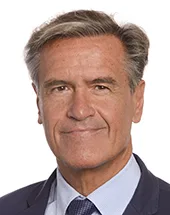
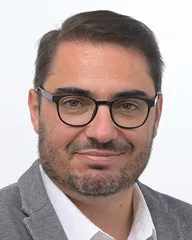
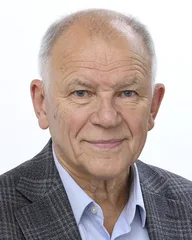
| Rank | Name | Country | Group | Speeches | |
|---|---|---|---|---|---|
| 1 |
|
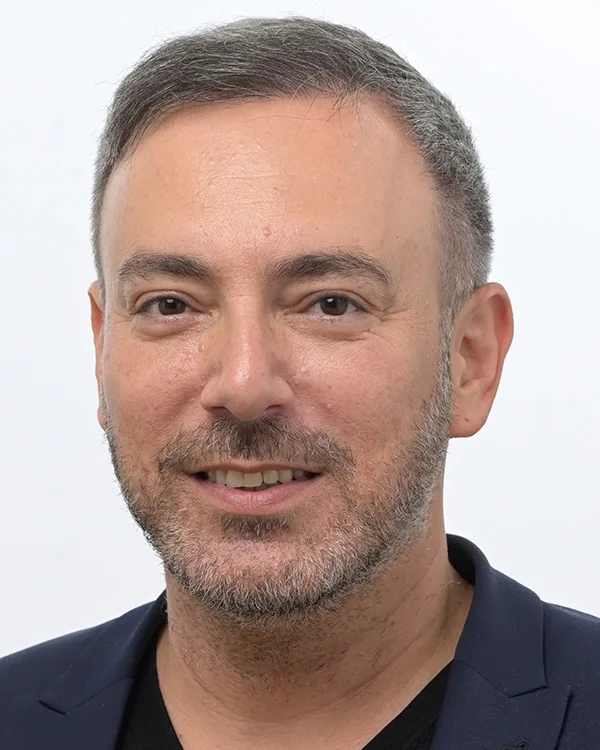
Lukas Sieper | Germany DEU | Non-attached Members (NI) | 390 |
| 2 |
|
Juan Fernando López Aguilar | Spain ESP | Progressive Alliance of Socialists and Democrats (S&D) | 354 |
| 3 |
|
Sebastian Tynkkynen | Finland FIN | European Conservatives and Reformists (ECR) | 331 |
| 4 |
|
João Oliveira | Portugal PRT | The Left in the European Parliament (GUE/NGL) | 232 |
| 5 |
|
Vytenis Povilas Andriukaitis | Lithuania LTU | Progressive Alliance of Socialists and Democrats (S&D) | 227 |
All Contributions (163)
A statute for European cross-border associations and non-profit organisations (debate)
Mr President! An American constitutional judge stated in the 19th century: Law and law are what creates, protects and holds a society together. They are the essence of every civil society. Ladies and gentlemen, dear Vice-President! Today, together, we all have the opportunity to create the essence of our European civil society: a legal basis, minimum standards for its operation, a secure legal form. This House recognised 30 years ago that this is not just a formality, but a necessity. At that time, our predecessors called for European NGOs to be given what they deserve: Recognition, legal certainty, protection and an option – an option to constitute and operate as cross-border and truly European. This is what we want to finally deliver after 30 long years. The road to here was long and rocky. And I am aware of the concerns of our fellow Members and also from the Commission that we are far from reaching our goal. But, ladies and gentlemen, the time is ripe. It is ripe because the EU has long since become not just a marketplace, but a place for democracy. A European civil society is part of this democracy. The time is ripe because so many NGOs and charitable foundations have long since understood themselves European, but are still unable to act European. In my region in Brandenburg I travelled along the Polish-German border. I talked to a lot of people, I met a lot of NGOs from both countries: Some are close to the government, others are critical of the government. They all told me in agreement about difficulties – difficulties in being able to engage across borders. This report will address these difficulties. Whether in Gubin or Guben, whether in Frankfurt or Słubice, whether in Strasbourg or Kehl: Citizens want to get involved in Europe. And that is exactly what this report wants. With a regulation, we want to give these citizens an opportunity to unite and set up European associations. We want these associations to register as European NGOs, to think European about their non-profit status and to manage their activities according to common transparent rules and, if necessary, to have them terminated. With a directive, for the first time in the history of the EU, we want to secure minimum standards for charitable foundations and associations and demand them from the Member States, against discrimination and pressure from public authorities, to facilitate cross-border charitable service. We have a lot to do. There are still hurdles in many countries. This report will not deprive Member States of the possibility of continuing to regulate associations and foundations according to national needs. But it creates more clarity, more security and more options for European civil society. This is a suggestion and a bit of a vision. We have worked hard on this vision across political groups, but very constructively. And for that, I am very grateful to all colleagues and shadow rapporteurs. And I invite the Commission to pour the results of this work into a legislative proposal. Let's finally implement this vision together after 30 long years!
Situation in Kazakhstan
Mr President, congratulations on your new function. First and foremost, let me, let us, express our condolences to those Kazakh people who suffered during the recent crisis. When I see the crowds looking for the bodies of their loved ones, my heart weeps tears. When I see the demolished streets of Almaty, hear the voices of people who are scared, my heart weeps tears. So, we must express our solidarity with the Kazakh nation, and this is the starting point of any discussion about the current situation or about the future of the country. But I would also like to express hope. Hope that the new government and the president of this wealthy and large country would use this crisis for a chance – not to grab power, but a chance to introduce reforms; reforms for law-enforcement authorities based on civil rights and political reforms based on freedom and pluralism, and yes, foreign policy reforms based on a vision of Kazakhstan as a truly independent country in the region – a country facing Europe and European values, and yes, the green reforms that this country started in order to rid itself of the dependency on fuels that it has. There are many hopes that we share. These weeks will decide whether these hopes will ever materialise. You, President Tokayev, have a chance to prove to us all, everyone who spoke today, that we are wrong about our fears. We are waiting for a sign from you.
Continuous crackdown on civil society and human rights defenders in Russia: the case of human rights organisation Memorial
Madam President, I don't want to speak instead of Memorial, I prefer to use the words of Memorial founder Andrei Sakharov. He said at the founding: “The only thing that can heal our people is the undiscovered truth.” There are many victims of the new Russian government policy in Russia – some are people, others are organisations. But the biggest victim, the most important target of the attacks is them: The unadulterated, unadulterated truth. Truth about corruption, truth about the motives of prosecuting activists, truth about the scale of the epidemic, truth about neighboring countries and truth about Memorial's work. As in earlier times, the mildew of lies lies about the everyday life of the people in Russia – fake news, alternative facts or simply the old good propaganda. Memorial was the therapy for the consequences of past state crimes and an antidote to the virus of today's lies. That's why Memorial is under attack. Sakharov was right, as always. Memorial is a guarantee of truth, and that's why we will do everything we can to keep Memorial what it is. We'll stay on Memorial's side.
Situation at the Ukrainian border and in Russian-occupied territories of Ukraine (debate)
Madam President, I have prepared a speech, but I will not use it now, I will react to the circus that took place here. It was juggled, it was juggled with fake facts. The great defender of democracy Mariani from our ‘loved’ group talks about referenda in Crimea. How democratic were the green men and Russian mercenaries in Ukraine? The great peacemaker Mariani speaks of the Minsk agreement. Excuse me, but the Minsk agreement says: The heavy weapon must be withdrawn. Russia did not do that. It says that the OSCE observers should go in. Russia did not allow this. So please don't juggle fake facts here. The great internationalist Mariani speaks about the language, the Ukrainian language, which is being persecuted. But what is happening now in Crimea with the Crimean Tatars under Russian rule? And the anti-corruption activist Mariani talks about corruption in Kiev. He would rather look at Putin's Russia and talk about it. I don't want to talk about Mr. Krah's empathy. Where is your empathy for the Ukrainian people? I don't see them.
The 30th anniversary of the dissolution of the Soviet Union and its importance for the future of Russia and Europe (debate)
Mr President! Dear friends, dear friends! Yesterday I was able to see a recent documentary by the Russian director Witali Manski. The film shows the everyday life of an aged, sick Mikhail Gorbachev. Aged, sick, but still convinced that it was right for the Soviet Union, that it was right for Russia to choose democracy and against violence to save the unity of the Soviet Union. At that time, I personally remember very well, there was little frustration and not so much grief, but much hope. The thought started later. History is not black and white. What was legitimately a liberation for many was a loss of home for many others. They were proud Soviet citizens for decades, and then they were the last Soviet citizens. We must accept this pain and grief of decay as much as we celebrate the joy of many over liberation and democracy. History is not black and white. But the story is also not a grey uniform porridge. What is black must also be called black. And that is what Memorial does every day, every week – black as the crimes against its own people under the name of the Soviet Union. What is white must also be called white. White were the opportunities and hopes associated with it – hopes that the end of the Soviet Union would mark the beginning of democracy. Now, from a distance of thirty years, we see that the end was not the beginning. But this symbolic week here in the European Parliament also shows that we continue to stand with the Russians and the many other citizens of the successor states of the Soviet Union. The Soviet Union is not over, it is still in the system. But our common dream remains the dream of the final end of the Soviet Union.
Fundamental rights and the rule of law in Slovenia, in particular the delayed nomination of EPPO prosecutors (debate)
Mr President, Commissioner, Minister! The days are long gone when it was natural for everyone in the EU to stand for democracy. The speed at which we see anti-democratic developments in Poland and Hungary is breathtaking. And it's no wonder that we're looking closely at what's been happening in Ljubljana for months and years. The example of Hungary and Poland must not go to school. And it is good that we are now moving forward with the prosecutor's office. It is also good that the news agency STA has found a solution. But this must not remain a lip service due to the Presidency of the Council. We are looking very closely, and I would like to emphasise one thing here again, and the truth also includes the following: For far too long, the sister parties have covered for this behavior from you, not only in Ljubljana, but also in Hungary and also in other countries. And that is why I call on the colleagues who have spoken before: Don't just watch, but act and profess to be a democratic family! Also act and watch exactly what is happening in Slovenia with the sister party!
The proposal to build a ‘single market for philanthropy’ (debate)
Mr President, dear colleagues, it’s a great pleasure to talk to you on this topic. I am, as some of you know, rapporteur of the Committee on Legal Affairs on European associations and non—profits, and it’s of special urgency and special importance for me to address this topic. Why? – and I think that the chairing President also shares this view and shares this concern and perspective – because if we talk about European civil society, we have to talk about European associations but, yes, we also have to talk about European cross—border philanthropic organisations. They are participants and they are enablers of European cross—border civil societies. Some of them are themselves civil society actors and NGOs, there are many small and large foundations that dedicate their work to combating hate, supporting people in need or fighting climate change, as NGOs being foundations themselves. In fact, this sector has been growing – and the preceding speakers mentioned this – it’s been especially growing in the post—COVID world where we need sources of finance to support civil society after the crisis. Yet a legal, fiscal and administrative environment for cross—border philanthropy is not there yet, at least not in the form that would enable us to support this sector. Instead, cross—border philanthropy capital is used by some governments of Member States to discriminate against NGOs, which is unacceptable, and therefore we should talk about what needs to be done. I am grateful to the representative of the Commission, but also to the colleagues from the Parliament that they talked about specific things that then they and we can do. For example, we should emphasise and strengthen the non—discrimination principle based on the free flow of capital principle in our European Union, as the European Court of Justice has strengthened and proposed. We need to lower or to mitigate financial burdens for cross—border finances. Only by doing so will we be able to strengthen cooperation across borders in the European Union. And, yes, we should also create special, supranational legal forms and regulatory regimes. It is of utmost importance not just to have a European company as a special status and regulatory regime, but also a regime which would help civil society, not just the economy, to be a real European and, yes, real European market player. So, dear colleagues, let’s start the work. I’m looking forward to continuing our conversation and cooperation.
The Rule of law crisis in Poland and the primacy of EU law (debate)
Mr President, I am a huge fan of Poland. Just recently, I travelled in my constituency in Brandenburg, the constituency of Ska Keller as well, along the Polish border and looked at cross-border cooperation. I can’t wait until we in my hometown of Berlin get a memorial for the victims of Nazis who were Polish. I work tirelessly with your colleagues here in the Parliament to strengthen us, as the European Union, in the face of the threat from Eastern Europe, those colleagues whom I respect as diplomats, but who today behaved as clowns. But the point is that we cannot project power internationally if we do not have power within ourselves, power of democracy, power of integrity and power of unity. And this is what it is about. It is not just about the primacy of EU law. It is about what you have been doing with your government for years. How can we confront global authoritarians if we don’t have independent courts and we don’t have a judiciary, and the judiciary has to complain to us here, coming to the European Parliament?
The situation in Belarus after one year of protests and their violent repression (debate)
Mr President, just a couple of years ago, we thought we were living in the age of authoritarians. Now we know better. We live in the age of heroes. The Belarusians, the Russians and the Turks have proved to us that heroes are amongst us, the heroes of our times. But calling them heroes alone will not help them much. It will not save their lives and will not bring them back their freedom. The European Union has made strategic mistakes during this hero journey. Too timid, too slow, too late and too weak. Those were our responses. Too little Europe on the side of Belarusians and, frankly, too many Belarusians that told us not to be on their side at the beginning of this process. It is time to correct the past mistakes. We must use comprehensive sanctions, close the loopholes for exporters to the EU and stop financing the regime by international organisations. We must start legal proceedings against Lukashenko himself and indict him for the torture of his own citizens. The evidence is there. It’s evident. Last but not least, the European external services must start centralising and coordinating the national policies vis-à-vis Belarus. Just like in the case of climate, our ability to act internationally will decide whether the EU will survive or implode in the coming years. Our policy vis-à-vis Belarus is a case in point.
The impact of intimate partner violence and custody rights on women and children (debate)
Mr President, gender violence has dramatically increased as the lockdown measures have been lifted. So has the level of stupidity, dehumanisation and instrumentalisation that we heard from the right-wing parties here today, from the AfD and from Fidesz. In many countries like Spain and Germany, the number of fatal incidents has risen. One in two women in the EU have experienced sexual violence. What is your response to that? Well, our response to that is the huge achievement of this Parliament that we all agreed in this report to emphasise the role of the Istanbul Convention, the convention that all Member States should sign and enforce. It is an important step forward that we all – except for you – agreed that access to justice and access to safety for victims and their children must be secured, regardless of economic and financial burdens. We must uphold the conclusions of this report that ‘parental alienation syndrome’ should never serve as an obstacle to such justice. And yes, we, my group and myself as rapporteur in the Committee on Legal Affairs, we continue to insist that same-sex partnerships should be treated equally in cross-border cases. We are living in difficult times. Let’s not forget about those who become victims of their domestic and intimate partners. Those attacks are not just everyday trivialities. Don’t trivialise them. Those are grave crimes. It’s time that we in the EU recognise them as such.
Direction of EU-Russia political relations (debate)
Mr President, today we are finalising Parliament's report on Russia. It's not just one document among many. Our European political capacity is decisive in dealing with Moscow. So far, the government in the Kremlin has managed all too well to play us off against each other. My own government in Berlin is the best example of this: The latest agreement with the Americans Nord Stream 2 – over the heads of Ukrainians. The last failed attempt by Merkel and Macron to sit down with Putin – over the heads of Europeans. Something is constantly being decided over the heads of others. It is always about serving one’s own interests – but not self-confidently and strategically, but submissively and short-sightedly: Gas, market access, a friendly smile from Moscow. But it's different, too. And yes, it's better. We in Berlin must learn to derive German foreign policy interests from the European interest situation. We must learn to be European policy-makers rather than selfish policy-makers: Less gas, more European solidarity. And this solidarity is what we need now. After all, the upcoming Duma elections clearly show that the Kremlin has finally broken with democracy. It's not just a nuisance to us. This is a common strategic risk. And we have to face this risk unexcitedly, but confidently.
Conclusions of the European Council meeting of 24-25 June 2021 (debate)
Madam President, This European Council has once again demonstrated the ambivalence of European domestic and foreign policy. On the one hand, we have seen clear signals towards Minsk. Here we need more creative solutions, including solutions that help people who have to flee to us. On the other hand, we have also seen that the cold geostrategy vis-à-vis Turkey prevails over the values we represent. It must be clear to us that the rule of law and human rights are a priority in Turkey. But we also saw something else. We have seen the difference between leadership responsibility in the EU and power arrogance. With the surprising advance from Berlin and Paris on Russian policy, we have seen how it should not be possible for us to push forward in Russian policy on the backs of the smaller Member States. The advance from Berlin and Paris was rejected, and we see: The EU sticks to what the Greens, as a European party, have always said in relation to Russia: Dialogue yes, but with red lines. Dialogue and hardship.
The repression of the opposition in Turkey, specifically HDP (debate)
Madam President, nothing can justify the death of democracy, nor fear of terrorism, nor allegations of disloyalty. It is not the HDP that the Turkish authorities are attacking. It is the foundations of pluralism in the country itself. When I met with HDP members in a small Turkish town a couple of weeks ago, I sensed what it means when democracy dies. Those were simple people, not big political shots. We talked about politics, about their life, about covid. I told them about the work of the Parliament. Together, we mourned the death of Deniz Poyraz, who was cold blooded killed in Izmir. I looked into those people’s eyes, young and old, I looked for something that I couldn’t find. I couldn’t find hope. No wonder. Mayors like Ahmet Türk - sacked. Leaders like Selahattin Demirtaş - imprisoned. Members of parliament like Ömer Faruk Gergerlioğlu - stripped of their parliamentary duties. We’re expecting his release in the coming hours. Democracy cannot survive if political pluralism is suffocating and pluralism is no pluralism at all if the only space left is for oppositions to the government’s liking. The banned procedure against HDP is just a final chord in a sad story of suppressing political pluralism in Turkey. We all want a positive agenda with Turkey. But how positive can an agenda be against the background of this persecution? It’s not about the HDP, it’s about Turkey’s democratic future.