
| Rank | Name | Country | Group | Speeches | |
|---|---|---|---|---|---|
| 1 |
|
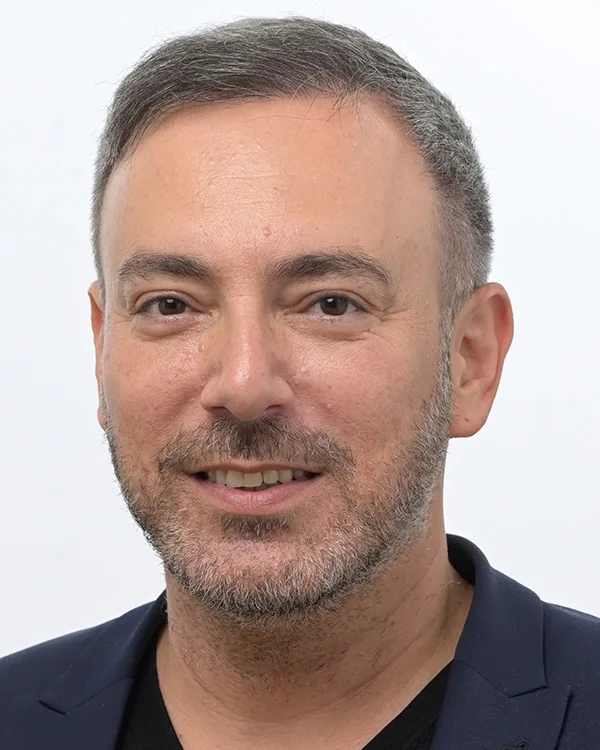
Lukas Sieper | Germany DEU | Non-attached Members (NI) | 390 |
| 2 |
|
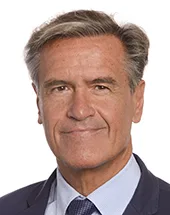
Juan Fernando López Aguilar | Spain ESP | Progressive Alliance of Socialists and Democrats (S&D) | 354 |
| 3 |
|
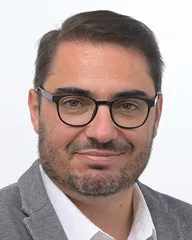
Sebastian Tynkkynen | Finland FIN | European Conservatives and Reformists (ECR) | 331 |
| 4 |
|
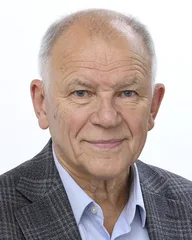
João Oliveira | Portugal PRT | The Left in the European Parliament (GUE/NGL) | 232 |
| 5 |
|
Vytenis Povilas Andriukaitis | Lithuania LTU | Progressive Alliance of Socialists and Democrats (S&D) | 227 |
All Contributions (163)
Data Act (debate)
Madam President, Commissioner, dear friends here in the Chamber! There is no data economy without data protection. For us, it must be clear that nothing about the Internet of Things and nothing about this specific regulation changes or reduces the already existing standards of the GDPR. The personal data remain personal data and the rules for dealing with them remain in place. The fundamental right to the protection of personal data requires high standards and sets high standards, and we, as the LIBE Committee, have successfully and resolutely defended them here. Our fundamental right to data protection is not only defensive, but also empowers our citizens so that we can access our own data and do what we, citizens, want with it. With the data law, we are even going a bit further than with the data protection regulation, by also giving a right of access to the data directly on the Internet of Things devices that we use. This is not an obstacle to regulation. This is the basis for innovation and economic growth because it promotes consumer confidence. This is about something. The value of the data economy is immense. The Commission has also explained this. What is important to me is that this is not just about promoting the economy and innovation, this is about the EU's ability to position itself as a global player and standard-setter in the global market for technologies. This is a geostrategic imperative. This is also the confidence of the citizens.
The recent deterioration of the inhuman imprisonment conditions of Alexey Navalny and other political prisoners in Russia
Madam President, What else is there to say on this subject? The inhuman face of the Putin system is reflected in the persecution of Alexei Navalny. I remember this man when he was still free. Big, always smiling, a passionate jogger who knew how to make jokes and enchant people, even in the hospital room in the Charité, where I visited him after his coma. Now I see the people on the screens of the Russian judicial authorities: a thin man with eye rings and fallen cheeks, held in a cage. And I say to myself: I recognize you, Alexei, because I recognize your spirit of life, your desire for freedom, your love for your wife and your family. And I recognize your devotion to your people, who have just gotten morally absolutely lost and cracked, your belief that it is worth fighting for their freedom and their soul. This Parliament, this continent, thinks of you, Alexei, as well as others: Ilya Yashin, Vladimir Kara-Mursa, Alexei Gorinov. We demand the self-evident for you: Freedom, a doctor, visiting the family, talking to lawyers. We demand because we know that this black period, this war of aggression against the proud people of Ukraine will soon be over. And then what? Then strike your hour, dear friends, in the Russian camps – the hour of freedom, the hour of justice.
EU response to the humanitarian situation following the earthquake in Türkiye and Syria (debate)
Madam President, Dear friends, dear friends, dear political partners, citizens in Turkey and northern Syria! Dear party friend from Europe, who revealed to me yesterday that she has lost four relatives in Turkey. Dear best friend in Berlin, who confided to me yesterday how much she misses her two cousins, who only survived because they took a smoking break. And she will always miss the other 14 family members who were not smokers and therefore did not survive. Dear brothers and sisters in Idlib, Hatay, Afrin, Diyarbakır, Adıyaman, Gölbaşı! Dear brothers and sisters in Kassel and Cologne, in Barcelona and in Stockholm, who weep for their brothers and sisters. We stand with you, we cry with you. But we also have to act. It is good that the Commission and Member States are sending money and equipment to Turkey and Syria. But – I just spoke to some people from Turkey and Syria; They all demand one thing: Make sure that this help really reaches those in need! Ensures that those in need can also enter the EU for treatment – not at some point; immediately, as soon as possible, without bureaucratic hurdles! And finally distribute European money among organizations that are not recognized by Assad's regime! In particular, I'm talking about White Helmets. Let's not let Assad choose who survives and who doesn't! Let us stay straight in this hour of humanity!
Preparation of the EU-Ukraine Summit (debate)
Madam President, Who would have thought that a year ago? This European Union has shown that we are fit for the challenges of the historic moment. Who would have thought that? Now we need to make our EU fit for the important challenge of enlargement and Ukraine – Ukrainian society and economy – fit for the Union. This will be a long way, and our Ukrainian friends know this, but we are going this way together. And this is our logic of peace, this is our logic of peace. We do not always agree with the Commission, but this time – this Commission trip to Kiev is on behalf of all citizens of the Union. It wants to show our logic of peace and our will for peace, because it supports the country that has been attacked, humiliated, looted, but has bravely confronted this aggression, because this country wants one thing: peace. And we stand by that.
The establishment of a tribunal on the crime of aggression against Ukraine (debate)
Madam President, Crimes don't start with ultrasonic missiles on apartment blocks in Dnipro that bury 40 people alive. Crimes do not start with bombs on a maternity hospital in Volnyansk that kill a two-day-old infant. Crimes do not start with the dead in Butsha, not with torture cellars in Kherson, not with filtration camps in Donbass. Crimes started with the Russian troops attacking Ukraine – only in 2014, then in 2022. Dnipro, Butsha, the small – two-day-old – killed Serhij: All of these victims are the result of the criminal decision to commit aggression. We are speechless in the face of images from Ukraine. International law seems to have lost its language. We may be speechless, but inactive – we do not remain inactive. And just as we have been calling for months for the protection of Ukrainians with our weapons, we are now calling for the creation of a completely different weapon: The Weapon of Justice, the Weapon of a Special Tribunal. It won't be an easy way. But as German Foreign Minister Baerbock said: We need a clear message to the Russian leadership that a war of aggression in this world will not go unpunished. There's nothing to add to that. Now the confessions must be followed by deeds. We owe it to the people of Ukraine. The many relatives, the orphans and the parents who weep for their children, in Dnipro, in Butsha, in Volnyansk.
Legal protection for rainbow families exercising free movement, in particular the Baby Sara case (debate)
Mr President, I wonder if anyone from Bulgarian authorities ever looked into the child’s eyes – into child Sara’s eyes or into eyes of other children who are affected like the one we’ve heard the story today as well, who is risking to end up as orphan because one parent is terminally ill and the other parent is not even recognised as a parent across the EU just because they are of same sex. Have you ever looked into children’s eyes? If you did, you would see children stripped of their rights, of their origin, of their childhood, of their families; parents discriminated beyond imaginable because they’re stripped of the most natural – of the ability and right to raise their children. It’s not just LGBTIQ community rights, it’s children’s rights and it’s parents’ rights. The European Court of Justice said this on multiple occasions, and I urge the Commission to start acting now and to be ambitious in the law that it will propose to the Parliament. We in the Legal Affairs Committee are waiting for this law and we will be ambitious ourselves.
Gender balance among non-executive directors of companies listed on stock exchanges (debate)
Madam President, it’s a nice try to distract the debate here. Of course, we have 50%, more than 50%, of women as part of our population. And I think after the thousands of years of discrimination against this part of our population, our main goal now is to create legislation that will put the numbers right here. And this is what we are discussing. And don’t accuse me of being unbalanced here. I work tirelessly, just as many colleagues here, to improve the proportion of minorities of all different kinds in the leadership positions. For that, we will have different, other approaches, some of them legislative, others not. I think there is a variety of ways and instruments to improve diversity on our boards. And now we are talking about gender and diversity. And by saying that, I mean the representation of women on the board. This is a great, great legislation and we all support this. The majority of this House supports this. The majority of the European population supports this. And, please, stop instrumentalising this issue in order to be populist as so often.
Gender balance among non-executive directors of companies listed on stock exchanges (debate)
Madam President, numbers do matter. One in ten, less than one in ten board presidents and CEOs are women. Numbers do matter. Ten, ten years this Council has been blocking this project. Ten more years when young female employees, young and old, did not know what are their chances to get into leadership positions. Ten more years when schoolgirls and young women did not know what are their chances to be leaders of companies. Well, now it’s going to get better. For us three elements are especially important. Number one, we want a guarantee, the guarantee that women are treated fairly throughout the whole selection procedure, the whole selection procedure including preparation of vacancy notices, pre-selection phase, the shortlisting phase; and this holistic approach is in this legislation. Number two, access to justice. The shift of the burden of proof is essential. It is up to the companies to prove that they do not discriminate. And this is an important step in this legislation, and our conservative and right wing colleagues: do not manipulate. It is not about putting gender over expertise because only equally, equally qualified candidates will be preferred if they are women. So it is about qualification. Numbers do matter. Thirty-three per cent – only 33% of non-executive and executive directors combined are the target in this legislation and that means that this number should be improved and it will be improved by us when we will evaluate this legislation very soon. There is a bigger target to aim, and this is our goal as the Parliament in the future. (The speaker agreed to respond to a blue-card speech)
Lukashenka regime's active role in the war against Ukraine (debate)
Madam President, dear friends, dear colleagues, dear Commissioner, we are talking about Belarus today and many things have been already said, but I wanted to emphasise one thing: this is the new three—fold structure of the Belarusian regime. The unholy trinity of Belarus as we see it now. First of all, Belarus is a dictatorship, and we know the names, some of them were mentioned here today. Second, Belarus is an aggressor power. It is a war power, and it is a responsible power in this war, the brutal war that we are experiencing. Number three, Belarus is also no more an independent subject of international law, Belarus is an occupied territory, and this we have to recognise. From that, we follow three things. We should double and quadruple our support for the Belarusian opposition, civil society and the officially recognised and elected President and her team. This was already mentioned here. Number two, we should make it very clear that a special seat will be reserved for Lukashenko in the tribunal against Russian crimes. This is something that we have to do now. We have to design the tribunals so that Belarus is also covered by them. Number three, we should cut our ties with Lukashenko, because not only he is a criminal against his own citizens, he is also not an independent state anymore.
Impact of Russian invasion of Ukraine on migration flows to the EU (debate)
Mr President, the future of Russia is no longer at home. The future of Russia is sitting in the cold corridors of our migration agencies, in our towns and villages where Russian dissidents try to escape. The future has different faces, different genders, different origins and professions, but they are all united by their unwillingness to live in a murderous state. I know prominent journalists and renowned writers, many of whom were trying to help. I know politicians who grabbed their children, small kids, and drove away before the police raided their homes, searching for them in order to imprison them for criticism of the war. Two women raising a child went crazy, fearing that this child will be taken away from them just because they are anti-Putin. We tried to help, but we have to do more in order to help those who always opposed this war and opposed Putin. This Parliament has already called for introduction of a European—wide humanitarian visa programme. This is what we have to do. It is not only our moral duty; it is in our interest to save Russia, with which we will have to deal in the future.
Russia’s escalation of its war of aggression against Ukraine (debate)
Madam President, We have sent out long enough flowery expressions of solidarity for Ukrainians. The hasty pseudo-referenda in the occupied Ukrainian territories and the mobilization of the Russian population, which Putin never wanted, show: Putin does not understand the flowery language of speeches, but the determined language of deeds. Not words, financial aid, not regrets, tribunals, not the unconventional statements of mourning to the Ukrainian people, but the conventional weapons that Ukrainians need. So I'm not going to make any big speeches here. The others have already done so. Perhaps a few points from the resolution we have adopted. Firstly, and most importantly: The incorporation of the occupied territories may change something for North Korea, but it does not change anything for us, for the international community. The Occupied Territories remain the Occupied Territories, the War of Liberation remains a War of Liberation, and Ukraine remains within the borders as it is entitled to, that is, including the Eastern borders in the territories of Zaporizhzhia, Donetsk, Luhansk, Kherson and the southern tip of Crimea. This is the reality, and it remains so! Secondly, the personal sanctions, which must be extended. I appeal to the Member States and the Commission: Put the office holders from the Duma to regional parliaments and the district parliaments of Russia on the list. All who belong to the Duma parties are those who carry the war, those who support the war and Putin. They have to be on the list. Thirdly: The security of our infrastructure is not a game. It can't be that we monitor up to 100% of our data traveling around the world through a few ships. It cannot be that we pass this on to the companies as corporate responsibility. We are in the midst of an attack on us that is taking place. And here we have to be prepared. And finally: Our steadfastness for the coming months will determine the outcome of this confrontation. Yes, we are in a confrontation. We did not allow ourselves to be divided by aggression, nor should we allow ourselves to be divided by economic problems. This means: Some Member States have already advanced with economic subsidies. We need a Europeanization of these efforts. We need a common and green-oriented solution that would be European. Yes, the individual states can lead the way, but we must, we must complement it at European level. Only then will we win this confrontation.
The situation in Tajikistan’s Gorno-Badakhshan Autonomous Province
Madam President, I will start with a quote on keeping silent against evil and keeping silent about evil. ‘We are implanting it and it will rise up a thousand fold in the future.’ This is a quote by Solzhenitsyn – a famous quote that also guides us in this debate. We want and we accept the moral duty to address the injustices happening in Tajikistan, in the autonomous region of Gorno-Badakhshan, where those who dare to speak out are branded as terrorists by the authorities, where human rights and freedoms are under unprecedented attack. Human rights defenders risk political prosecution, torture or even death. That’s why we appeal to the European Commission to do everything possible to show and to signal that we do not accept ethnic cleansing under the pretext of fighting terrorism and do not accept closing our eyes on human rights violations against minorities, unlimited mass surveillance and information blockades. This is our duty. We are watching and we are speaking out.
The relations of the Russian government and diplomatic network with parties of extremist, populist, anti-European and certain other European political parties in the context of the war (debate)
Madam President, here is the latest war news: in the middle of aggression and genocide, a leader of the extreme right in Italy has been meeting with the Russian ambassador four or five times in recent times. What for? To discuss what? This is not the first time that the extreme right is cooperating and doing business with Russia. The name is Konstantin Malofeev. He is a Russian billionaire who has been investing in both the criminals of Donbas, but also in consolidating right—wing networks in the European Union. But to be fair, this is not just a right—wing problem. We have left—wing politicians who have been apologising about Putin’s behaviour, and it doesn’t bring much to forbid foreign influence and foreign financing if Hungarian banks are now financing the right wing in France. How are we going to deal with that? So we have to start de—Putinising ourselves and our parties and it should be an aim and a task for the extreme parties just as much as for the mainstream. Let’s question ourselves. Let’s do it better.
The rule of law and the potential approval of the Polish national Recovery Plan (RRF) (debate)
Madam President, Mr Vice-President. We are grateful to the Polish citizens for their support of the Ukrainian refugees. These are lived solidarity and European values. But European values are not just a culture of welcome. What does our gratitude bring to the people of Poland when they have to fear that judges who are intimidated will judge them? That's a simple question. Should Polish citizens be less afraid of judicial arbitrariness? If we are honest, my question remains unanswered. The money, the money is promised. Now we can be outraged by this and wade with demands for resignation. But I'll try something fundamental: Where's your strategy? We see a patchwork of half-hearted measures. We see a competition between institutions. We see big announcements and small steps. That has to change. The Commission must sit down with this Parliament and draw up a common strategy. Independently of this, we need two things: a lawsuit against Poland over the partisan National Council of the Judiciary and, if reconstruction funds are already flowing, then the way remains through the conditionality mechanism. The Commission must launch this against Poland. That's the only way we can get on. This is the only way to save our democracy.
2021 Report on Turkey (debate)
Madam President, Mr Commissioner, dear rapporteur, dear colleagues, it’s the same procedure as every year – almost every year – and honestly, this procedure is getting more and more tiring. Every year we speak about human rights, democracy, about the situation in south—eastern Turkey, about Cyprus, about Greece. And even those of us who are most open towards European perspectives for Turkey are getting tired and are getting frustrated. But this year there is one more topic, a topic that has a potential not to damage but to destroy our relationship, because it is about security. It’s about existential issues for EU members. It’s about reliability of Turkey as a defence partner. Turkish support for Ukraine has been an important cornerstone of Ukraine’s defence and we did applaud Turkey for this. But Turkey is blocking NATO’s membership of two countries bordering or close to Russia, to the aggressor now. This is an issue of collective security, and this is a question of solidarity with two EU members. And we cannot rely on supportive and understandable behaviour of Turkish government here. And if we can’t rely on Turkey in the matter like this, if Turkish Government is using the NATO accession issue to leverage their own agenda, then we have to say to our Turkish partners, this is not the right way to go. The damage that is being done here to Turkey’s reputation as an alliance member is immense and goes beyond what this government imagines. All of us, those who believe in Turkey’s European future, are losing our faith. We’re losing our faith when we see the ruling on Gezi case. We’re losing our faith when we see the position on NATO accession. We call on our Turkish friends, and this report is one of the last calls, to stop this path away from the European Union. Let’s work together. Let’s return to the same European table.
The fight against impunity for war crimes in Ukraine (debate)
Mr President, I say to our Ukrainian friends, first and foremost, we owe you our support in fighting back against this war of aggression. That’s why military deliveries are necessary to fight back and to push back. But in cases of murder, rape, torture, ‘fighting back’ means for families of victims, for survivors and also the fact that the perpetrators must be brought to justice. This is why it is important that any Russian soldier, private, any commander, any politician in Russia knows that they will be held accountable for their crimes. If not today, then tomorrow. If not tomorrow, then in the face of history, in front of tribunals and in the history books. They will not be remembered as glorious heroes, but as criminals who tied people’s hands behind their back before shooting them in the neck. We say to you, you will be held accountable. Wars are not a free pass for atrocities. Even wars have rules. And breaking them is a severe crime. It’s that simple. That’s why we applaud the Commission’s efforts to secure evidence to support investigation teams and task forces. We call on Member States who practise universal jurisdiction to practise it actively. We call on those who don’t to join universal jurisdiction and to support the International Criminal Court, Eurojust and Europol. We owe it to survivors and to the families of victims, and we owe it to ourselves.
The case of Osman Kavala in Turkey
Mr President, what did Osman Kavala do? He lived his life of a free man. He dedicated his work to promoting culture, civil rights, diversity – no more than that. What did the architect Mücella Yapıcı do? What did the lawyer Can Atalay do? And the city planner Tayfun Kahraman? And director of the Boğaziçi European School of Politics, Ali Hakan Altınay, a good friend? And what about the founder of Istanbul Bilgi University, Yiğit Ali Ekmekçi? Film producer Çiğdem Mater Utku? Documentarist Mine Özerden? All of them lived their normal lives, worked their normal jobs, even if fascinating. And now, the seven have been sentenced to 18 years of imprisonment immediately, on the spot. Why? We seem to live in the age of asking ‘why?’ in many areas of the world. And here, we ask also, why did the Turkish Government decide not only to keep Kavala in prison, but to sentence him to lifelong jail without parole? Why a philanthropist? Why did the Turkish Government decide to do so and risk our bilateral relationship – a relationship that we were trying to put on a better track because we, both sides, need it now more than ever? Osman Kavala’s case stands for the arbitrariness of the judicial and political system in Turkey. We knew about its flaws, but we hoped that, through dialogue, we would be able to change our relationship for the better. Well, unfortunately, this ruling was another crude awakening. And that’s why I don’t address the Turkish Government in this speech; I address Kavala, I address his wife, Ayşe, and his seven comrades who were also jailed. And I’m telling them very firmly: we will continue to stand on your side and fight for your freedom.
Increasing repression in Russia, including the case of Alexey Navalny
Mr President! Ladies and gentlemen, this resolution is a sign – a sign that we are looking closely at how the Russian government is waging not only a criminal war against Ukraine, but also a campaign against the remnants of its own civil society. This resolution is a message, a message to the many artists, journalists and activists who come to us because they can no longer live safely at home. It is a message to the Russian government that the fate of our Sakharov Prize winner Navalny remains an important political concern for us. This resolution is a promise, a promise that we will always stand with the Ukrainian people and be with the small minority of Russian citizens who bravely oppose this war. With this resolution, we say two things to our friends: (The speaker speaks a few words in a language that is not an official language of the EU) and Slava Ukrajini!
Data Governance Act (debate)
Madam President, ladies and gentlemen, ladies and gentlemen, I would like to thank the rapporteur-in-chief, Mrs Niebler, for the good, trusting cooperation. And this cooperation between industry experts on the one hand and civil rights activists and data protection activists on the other hand is more necessary than ever today. Because Europe needs data for innovation, for research, for development. But Europe also needs data protection. And we tried this balancing act with this law. And I think we have managed this balancing act quite well. Because we are designing the possibility for citizens to make their data available and at the same time to keep the last word when using this data, to strengthen the negotiating position, for example by the data cooperatives. We allow the use of data by anonymization, but at the same time we say: We strongly want deanonymization to be prevented. So data economy innovation on the one hand, but not past the GDPR, not past data protection. This is an ambition with which we should continue to work, for example on a data law that is imminent. And we have a lot to do. Let's tackle it together!
The deterioration of the situation of refugees as a consequence of the Russian aggression against Ukraine (debate)
Madam President, when I volunteered in a large registration facility in Berlin-Reinickendorf last Sunday, I saw the scars of war. Those were people, but they looked like scars. I saw the eyes of young women and old babushka holding their grandchildren, looking lost in the cold and grateful for a cup of warm soup and shelter in the container. Just two weeks ago, they had been happy. There were families, workers, teachers, lawyers. They had a life, a different life. It is instrumental that we help them to fight their way back to a life that is a little bit normal. I heard so many of them who are grateful that they could benefit from the Temporary Protection Directive that will allow them to stay, live and work in safety. But there are issues that go beyond the obvious. We must make sure that Russian and Belarusian citizens fleeing from Ukraine have also a chance of safety here. They had escaped from Lukashenko and Putin, and now Putin and Lukashenko are getting to them. They must also be safe in Europe. We must also remember the new wave of Russian immigrants after the TV Dozhd and Echo Moscow radio stations were banned and it has become impossible and penalised to talk the truth about the war in Russia. Those waves of refugees are fleeing a country sliding to despotism. When I volunteered and I looked at those refugees, I felt sad and horrified, but I also felt proud, proud that this time the European Union seems to be on the right, on the humane side of history. Let’s continue helping, and let’s do it right.
Shrinking space for civil society in Europe (debate)
(start of speech with microphone switched off) ... for weeks: What are you afraid of? What is the Bulgarian government afraid of if it wants to ban a renowned human rights organization, the Helsinki Group? What is the Cypriot government afraid of when it bans a well-known anti-racism organization? What is the Orbán government afraid of when it bans organisations simply because they – these organisations – want to help other people, people on the run or the LGBTI community? I know what: Fear that there will be people helping people and empowering them, people who are a democracy that makes up our democracy. And Mr Fest can repeat this for as long as he wants – this is part of our democracy. These organizations are not dependent on the goodwill of their governments. This is not a privilege, this is a right, a guaranteed right to freedom of association. That is what the report stands for, and I thank the rapporteur for that.
Russian aggression against Ukraine (debate)
Mr President, Slava Ukraini! We did not ask for this confrontation. Ukrainians did not ask for this confrontation. Ukrainians didn’t spread hate. Ukrainians didn’t dream of empires. Ukrainians did not dictate their neighbours what policies to follow and which alliances to join. Ukrainians did not occupy, did not annex and did not blackmail. Those actions came from Moscow, and my heart is bleeding when I say those words. But Ukrainians, all they want is to live a free life in a free country. This is not much to ask, but this is a lot to defend. And this is why it is our European moral imperative to help, to help Ukrainians with refuge and money, but yes, also with military equipment to help them defend their own choice, to help them save their children, their families, their loved ones, the loved ones who take arms and walk to battles, help them to return. And yes, this is why we have no other options than to put a clear alternative in front of President Putin. Either you stop this war now, or you will have to bear the consequences that will be devastating. We did not ask for this confrontation. You did.
The Rule of Law and the consequences of the ECJ ruling (debate)
Madam President, ladies and gentlemen, dear representatives of the Commission and the Council! Today's ruling of the European Court of Justice was incredibly important for all of us. Important because the court stated in detail: The commitment to European values does not cease with accession to the EU. The verdict was incredibly important because it refutes what some government officials keep repeating to us: The rule of law is too abstract for some. No, she's not. Fortunately, the ruling found that the conditionality mechanism applies and has always applied, among other tools. And yes, today's judgment was important for all of us, but for you, dear Commission, this judgment was unnecessary. Because the assumption that we have to wait for the verdict is just as pointless as the assumption that we have to wait for application guidelines or we have to wait for Hungarian national elections. What are we waiting for? The rule of law cannot be postponed. That's why this house sued you for omission. That is why we continue to insist that governments be notified without delay. You don't owe it to us, you owe it to our EU citizens. You owe this to those people whose money and freedoms are collected by their governments.
EU-Russia relations, European security and Russia’s military threat against Ukraine (debate)
Mr President, the one positive thing about this week is that we are talking, but history will judge us only if we think beyond short-term. Yes, in the short-term, we have to overcome the current crisis and talking and negotiating, especially the tough negotiations that we are experiencing is a great, great step forward. But what about the mid-term? How do we make sure that we have a sustainable solution and we do not allow Russia to repeat its threatening posture vis-à-vis Ukraine and its other neighbours again and again and again? We must make clear that we can only return to business as usual if Russia will cease its propaganda crusade against Ukraine, its threats against Ukraine and its lies against Ukraine – just as we heard the lie about an alleged genocide or discrimination of Russian speakers, which are not true. We have to do everything possible that the blackmail that we are experiencing will not be repeating itself. And yes, we must start thinking about how to develop the Minsk Agreement beyond the mantra that we have been repeating so far, because we need a tool that is effective in the mid-term and in the long-term we will have to engage with Russia where we can, but we must disengage where we must, and we must disengage also in the energy area. That’s why Nord Stream 2 is not part of sanctions. Nord Stream 2 is unacceptable no matter what.
A statute for European cross-border associations and non-profit organisations (debate)
– Mr President, I wish to thank my colleagues, regardless of their positions and affiliations, and I also thank the Vice—President for taking this issue seriously – there is no doubt about that. I would like to go back to what Mr Manders said, in a very eloquent way. He asked what it is about, what we are discussing here. The litmus test about what it is comes from our ID and ECR colleagues – unfortunately ECR, though many colleagues actually supported it and were part of many compromises in the negotiations: it is about the value of Europeanisation and it is about the value of civil society, and this is what we saw during the debate. I honestly ask you, Vice-President, and your colleagues from the Commission, what side do you want to be on? I don’t want to simplify it, of course, as there is plenty to discuss and we are open to this discussion, but I would like to remind you how many large parties and how many representatives of the large majority of this House spoke for this form of fighting for, and creating, civil society in Europe. That is an overwhelming majority. We will see how the vote is going to go, but if this is reflected in the vote, then the majority is overwhelming. I would like to remind us all about the promise of the Commission to consider the legislative proposals coming from this House with such majorities seriously, in the form that they are proposed. Yes, things are changing. Colleague Toia said this right. If you look at the position of the German Government and the new coalition agreement, even that has changed. Germany was the one who opposed this proposal, but now, knowing where we stand and having others who are responsible now, part of the coalition agreement explicitly says that Germany would support this proposal – and many countries, I’m sure, will follow suit. I am looking forward to our cooperation and discussion and I am looking forward to the vote tomorrow. What we are doing here is for Europe and for our civil society, and that makes me very proud and very grateful for this opportunity.