

| Rank | Name | Country | Group | Speeches | |
|---|---|---|---|---|---|
| 1 |
|
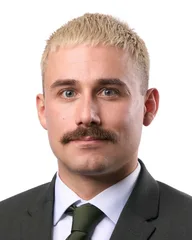
Lukas Sieper | Germany DEU | Non-attached Members (NI) | 390 |
| 2 |
|
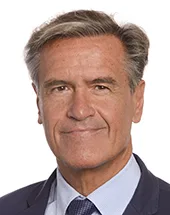
Juan Fernando López Aguilar | Spain ESP | Progressive Alliance of Socialists and Democrats (S&D) | 354 |
| 3 |
|
Sebastian Tynkkynen | Finland FIN | European Conservatives and Reformists (ECR) | 331 |
| 4 |
|
João Oliveira | Portugal PRT | The Left in the European Parliament (GUE/NGL) | 232 |
| 5 |
|
Vytenis Povilas Andriukaitis | Lithuania LTU | Progressive Alliance of Socialists and Democrats (S&D) | 227 |
All Contributions (28)
Mercury: dental amalgam and other mercury-added products subject to manufacturing, import and export restrictions (A9-0002/2024 - Marlene Mortler) (vote)
– Mr President, I request the plenary to refer the file back to ENVI for interinstitutional negotiations.
European protein strategy (debate)
Madam President, Commissioner, ladies and gentlemen! Proteins are essential for human and animal nutrition. In addition to carbohydrates and fats, they form the most important nutrient group, and the bioavailability of proteins from animal products is, by the way, particularly high. The deficit has been addressed: In fact, only 29 percent of protein-rich feed comes from Europe. But at the latest with the COVID-19 pandemic and then with the Russian war of aggression, we had to recognise the need for the EU to diversify its food supply chains. A comprehensive protein strategy is long overdue. With the Bavarian Protein Initiative launched in 2011, my state of Bavaria has created a successful model. The Bavarian protein strategy draws its strength from the interaction of research, consulting and knowledge transfer. To date, imports from overseas have been reduced by 300,000 tonnes of soybean meal for cattle and pig feed. The legume area has risen to 80,000 hectares and, and. Domestic protein, ladies and gentlemen, saves high imports, but the market has to pull along. Better coordination and cooperation between supply chain actors is therefore needed. I strongly reject laboratory meat as a protein substitute.
Reviewing the protection status of wolves and other large carnivores in the EU (topical debate)
Madam President, Commissioner! Do we want to keep grazing animals in the future? If we answer this question with a clear yes, we must not hide the fast-growing wolf population. Because more and more grazing animals are torn, injured or missing, 4,400 last year alone in Germany. And a short word to the Greens: I really prefer black humor to your green humor today. With a friend: Marlene, we're doing what politics wants us to do: closed circuits, short distances. We keep grazing animals, we market them in our butcher's shop or in our inn. But every day we are afraid that the wolf will strike again. And we are increasingly asking ourselves the question: Should we and can we continue? Herd protection fences, herd protection dogs have their limits – technically, temporally, financially and, above all, psychologically. Unfortunately, the German government has been deaf so far. It is therefore all the more important that we as MEPs, together with Mrs von der Leyen, make a clear statement to all Member States: Please provide your data in full. The high protection status of the wolf must be checked quickly, seamlessly and unbureaucratically. Securing grazing livestock ensures not only biodiversity in grassland, but also agriculture and tourism in rural areas.
European Citizens’ Initiative ‘Save Cruelty Free Cosmetics – Commit to a Europe without animal testing’ (debate)
Madam President, ladies and gentlemen. We have been silent for far too long. We have not provided enough public information: Therefore, even if we stop animal testing in Europe, even if it is still necessary, this research will not stop. Then it takes place just outside Europe, on worse conditions, on lower standards, and these in turn lead to further dependencies on third countries – according to top scientists last week in Brussels. Thank goodness only 4% of the experiments are severely stressful for the animals. But all knowledge benefits the people or the patients. Chemicals such as solvents, plasticizers, preservatives and industrial chemicals must also be tested for toxicity before people come into contact with them. Replace, reduce, refine: The REACH Regulation requires the testing of thousands of substances. However, it explicitly states that animal experiments are limited to a necessary minimum. However, computer modeling cannot yet replace basic research, and organoids cannot replace the entire human body with its complex cell system. In any case, I do not want us to transfer our problems to other cultures and be tested on people who depend on money instead of animals.
Ensuring food security and the long-term resilience of EU agriculture (debate)
Madam President, ladies and gentlemen. I would like to thank my colleagues for their constructive cooperation. And dear Mr. Häusling, if you continue like this, then you will still become a fairytale narrator. And addressed to Mr. Waitz: You should go home again and look at practical agriculture. Food security is not self-evident. Food security must not become a geopolitical tool for targeted destabilisation of the EU, especially in the most disadvantaged and vulnerable groups. The objectives of the Green Deal must be implemented in such a way that food security is not jeopardised and that the economy, ecology and social aspects are balanced. Commissioner, I am grateful to your proposal - or indeed mine - that the European Commission will work on a holistic strategic plan. Only those who win the youth win the future. This is a key for me: Do we succeed in motivating and activating enough young people who are willing to ensure our food security in the future? We should take this question seriously, that is to say, we should also, in principle, relieve farmers more of the burden instead of burdening them, transporting them instead of hindering them. Finally, a sentence: Those who, like us, the EPP Group, stand up for our farmers are in the middle of society and not somewhere else, which other colleagues wanted to impute to us here. In this sense: Food security is not self-evident. That is why we will continue to work on this issue.
Ensuring food security and the long-term resilience of EU agriculture (debate)
Mr President, ladies and gentlemen. ‘And when I'm born again, I'll be a farmer again.’ My husband said this out of conviction. And this positive attitude towards our farmers must also be our goal in Europe, because food does not fall from the sky. Creating good raw materials for our food is often hard, demanding work. In its foreword to the Farm to Fork Strategy, the European Commission rightly writes: We have the best, the safest foods with the highest quality in worldwide comparison. This was and is due to our policy. I say: But this is mainly due to our farmers, our organic farmers and our traditional farmers. Without diligence no price, but without price also no diligence. Our farmers need reliable political and practical framework conditions. They are happy about consumers who appreciate it and also say that they are grateful for the great diversity of the farm. And it needs responsible media, which not because of a black sheep the whole agri-food industry under general suspicion, but best practice in the center. These are key points to inspire young farmers for the future. They want innovation, they need motivation. We must not allow more and more agricultural land to fall into fewer and fewer hands, and in the end multinational corporations can only conceive of our farmers as employees. A widely dispersed property is a guarantor of social stability. This requires access to land. We have also devoted an international chapter to our report. Food security needs to be considered globally. Every month our world grows by 9 million people. This means: How can we still feed more and more people sustainably in the future on less and less available space? We want a comprehensive EU protein and feed strategy. We need to reduce dependence on imports and at the same time exploit synergies for renewable energies offensively. Anyone who is open to improvements knows that precision agriculture can help to supply plants with fertilisers and plant protection products as needed with the help of digitalisation. Access to high-quality and diverse seeds is extremely important. The seeds of the future must be more resilient to climate change, new pathogens, harmful organisms, drought and water shortages. In this way, we should take advantage of the opportunities offered by new breeding methods. But I say quite clearly: No patents for biological material. Patent rights must be limited and plant variety rights strengthened, especially for our small seed breeders. We rely on agriculture that preserves natural resources such as water and soil and uses renewable raw materials intelligently in the sense of the bioeconomy. I think there's a lot of music in there. A food supply chain that strengthens the primary producer, the farmer in the chain and addresses unfair trading practices and food speculation is essential. The latest findings from research and development should be brought to farms faster, more targeted and more regularly. The mutual exchange of knowledge is essential. Grassland is a living humus body and carbon reservoir due to the root mass in the soil, and at the same time meadows and pastures are the most species-rich habitats we have - thanks to pasture animal husbandry. Only with cattle will grassland be made usable and preserved for people in the future. Unlike humans, ruminants eat grass and at the same time provide us with valuable food such as milk and meat. Finally: As a trained master of housekeeping, I say: It must also become our permanent task to raise and improve awareness of food waste and food losses.
The role of farmers as enablers of the green transition and a resilient agricultural sector (continuation of debate)
Mr President, ladies and gentlemen, And when I come back into the world, I become a farmer again, there is no better profession. My husband has said this phrase so many times. The change, the transformation on our farm is still normality and reality to this day. More than 20 years ago, we received the Grüner Oskar, a Bavarian environmental award for innovative ideas. I know that millions of businesses in Europe deserve this award because they do their best for our consumers every day. Thank you and respect! Whether fish farmer, forester, animal farmer, winegrower or housekeeper - the 14 classic green professions show the diversity in our industry. My husband learned the farmer as a newcomer with a lot of love. And, dear Siggi, you've been watching us from above for a long time now. You were my biggest critic, my best counselor. I know what you're thinking: Marlene, you can't let that happen in Europe. You are driving our agriculture to the wall with your worldly politics. It's enough! Wake up! Listen to me at last! Because we have the safest food with the best quality. At the same time, we throw our farmers in the pan, put them under general suspicion and tell them that they have no idea about their profession. This is thin ice on which the EU Commission is moving, it threatens to break in with this bombardment of bad laws. We shouldn't kill our farmers, we should support them. And we, dear Greens, are the courageous ones. You are the fear-mongers. We work for Farmers for Future.
European Citizens’ Initiative "Save bees and farmers! Towards a bee-friendly agriculture for a healthy environment" (debate)
So I think, Mr. Colleague, you can't shy away from that. For example, I come from Bavaria, where beekeepers, especially young beekeepers, grow bee colonies. So we have more encouragement than ever, because everyone knows: We're all in a boat. But I do not presume to say that industrial agriculture is to blame. The question is: What is Industrial Agriculture? We agree that the use of pesticides must be further reduced. But with the plant, it's just like with humans: When I'm sick, the doctor says: You need medicine. And if we want to harvest a healthy crop, healthy plants, then the plant also needs medicine, in this case plant protection products. So that's the basic requirement so that we can continue to harvest well in the future. In this sense, we are happy to talk bilaterally. But for me, your equation is too simple.
European Citizens’ Initiative "Save bees and farmers! Towards a bee-friendly agriculture for a healthy environment" (debate)
Mr President, Commissioner! With over a million signatures, citizens are calling for decisive action against the loss of pollinators. Thank you very much! The European Commission also wants to tackle the causes of insect deaths. That's fine! Bees and farmers save a promising headline – at first glance. At second glance, synthetic plant protection products are to be banned altogether. Alternatives are hardly interested. However, farmers need alternatives in order to be able to produce high-quality food in the future. Insect deaths, ladies and gentlemen, concern us all. Let us think of urbanization, of bare gardens, of gluttony, of bright street lighting, or even of the influences of the weather. That's why we rely on natural gardens, parks or, on a small scale, insect hotels. The renunciation of land use, however, means less yield and higher costs. We need solutions instead of prohibitions, cooperation instead of confrontation. Only with the cultivation of land will we produce sufficient insects and pollinator feed. Blühbrache mixtures such as the Veitshöchheimer hemp mix or the prairie mix are well proven and suitable. This species-rich and perennial wild plant mixture has recently European Bee Award won. These are positive signs and examples. Our farmers are not our enemies, but our friends. Agroecology only goes with them. That's why we pull together in the interests of our bees, but above all our farmers. (The speaker agreed to respond to an intervention under the blue card procedure.)
Question Time (Commission) - Food price inflation in Europe
Mr President, Commissioner! The issue today is not just a problem for the Member States, because the war against Ukraine has a global impact. China is hoarding 50 percent of the world's wheat stocks, and India has stopped exports altogether. We have hidden price increases, international companies make huge sales and good profits, low-income earners and farmers fall by the wayside. My question: In these circumstances, why is the Commission pushing for the continuation of the Nature restoration law? And secondly: On the one hand, they talk about fertilisers, natural fertilisers, and on the other hand, the EU Commission is doing almost everything it can to massively reduce animal husbandry in Europe.
Protection of livestock farming and large carnivores in Europe (debate)
Mr President, ladies and gentlemen. The wolf has meanwhile refuted everything that has been tried to persuade us – that he does not jump, that he lives in the forest as an eco-police and feeds on the animals there, that he does not go to large animals such as cattle or horses or that a good fence prevents him. Herd protection and herd protection fences often fail miserably when a wolf or pack of grazing animals tear because they have long licked blood. More and more wolves kill thousands of animals every year. The survival of European grazing animals and their owners is at stake. The fact that grazed grassland is one of the most species-rich areas has been proven many times over. We must not sacrifice this wealth of species for this one species, the wolf. Let us face reality and call on the Commission to finally do its overdue homework. The protection status of the wolf has to be adjusted and thus the wolf management has to be facilitated.
Global food security as follow-up to the G20 Agriculture Ministers meeting (debate)
Mr President, Commissioner, ladies and gentlemen. We don't need less, we need more agriculture. Yes, I share this assessment from Prof. Dr. Dr. Rademacher of the Club of Rome. If we leave the mega-topic of global food security to ideologues and activists, we will move further and further away from the human right to food for all. The world is growing by 9 million people every month. This is also not possible with more bans and decommissionings, such as in Europe. Let's trust our farmers more. More science, more innovation, more investment for sustainable agriculture, for resilient agri-food systems. The availability of fertilisers and plant protection products for healthy plants, their efficient use and also the reduction of food losses and less waste are essential. We must avoid that a food access crisis also becomes a food availability crisis, said the Director-General of the FAO. Rising food prices for consumers and rising input prices for farmers are already having a devastating impact on global food security. This makes it all the more important for us to ensure and promote available and affordable food for all. The EU Commission must finally become aware of its responsibility here, from the bottom of its heart and not just halfway through.
International Day for the Eradication of Poverty (debate)
Madam President, Commissioner, ladies and gentlemen. Those who are fed up have a lot of problems. If you're hungry, you only have one. As well-off people and politicians, we have to keep this in mind. For example, let's think about the jeans we wear. Whether designer jeans or cheap jeans - the seamstress in Bangladesh or elsewhere always receives the same inhuman hourly wage. This is and will remain a scandal. We can still pump so much money into poor countries. If the money gets into a few hands and stays there, then few get richer and many get poorer and poorer. Yesterday was World Food Day. According to the World Hunger Index, 828 million people suffer from chronic hunger alone. Leave no one behind – the guiding principle of the 2030 Agenda is therefore pure hypocrisy for me if, for example, we set aside arable land on favoured agricultural sites such as in Central Europe instead of promoting sustainable management. Let's finally wake up! Let's use our potential in business, research, politics, society for good education, for more health for the poor people in Europe and worldwide.
The urgent need for an EU strategy on fertilisers to ensure food security in Europe (debate)
Mr President, Commissioner, ladies and gentlemen! Mr. Waitz, keep dreaming, we need solutions now. The variety of important nutrients is essential for good yields and high-quality foods. A balanced diet is the be-all and end-all for our arable soils, for our arable crops, but also for us humans. Putin's war has brought us more suffering, more hunger, more inflation, higher prices. And I see a global food crisis on the way, because fertilizer manufacturers are reducing production, they are closing down completely. The market power of fewer suppliers is slowly becoming a monopoly power. Whether gardeners, winegrowers, animal owners and feed producers, everyone is deeply concerned and looks with great hope to us, to Europe. Mineral nitrogen fertilizer, for example, is not replaceable by other substances in the medium term, but alternatives are needed. The nitrogen from manure and manure is becoming less because the EU Commission wants to distribute animal husbandry on a flat-rate basis. And the EU Commission must do everything in its power to diversify, identify and secure fertiliser sources for Europe. Farmers need practical offers instead of bans. Let's get research and science on board, because food security means prosperity and peace at the same time. Let's not ruin our Europe and our farmers with a misunderstood Green Deal. Commissioner, you are now advocating a European fertiliser strategy. Healthy foods need high-quality, efficient fertilization.
New EU Forest Strategy for 2030 – Sustainable Forest Management in Europe (debate)
Mr President, Commissioner! Whether it's the agricultural, food, transport or energy transition, the Greens in Germany have been trying to re-educate us with these buzzwords for years. At the same time, the green economy minister is kneeling in front of the sheikh in Qatar. I want to break a lance for our forest owners today, because wood is the most important renewable resource. Forests are key in the fight against climate change, jobs for millions of people, timber suppliers for construction, heat and electricity – and they are a recreational space for all of us. Sustainable forest management means making intensive use of the wealth of experience of private and state forest owners as well as foresters. They know best which type of farming suits where best. A centralisation of the forestry strategy to Europe and new certifications are therefore a mistake. Those who want the Green Deal must use domestic potential in these times of war, reduce bureaucracy, and simply trust the people who act on the ground more.
Recent heat wave and drought in the EU (debate)
Mr President, ladies and gentlemen, Commissioner! The total amount of precipitation per square metre per year is not the only decisive factor. Rainwater must fall from the sky at the right time of year. In Germany, 99% of rainwater is still used in agriculture, i.e. green water. However, extreme weather events are on the rise, whether extreme precipitation or drought, as is currently the case in Italy and large parts of Europe. We need good and, above all, quick answers. Sustainable water management and an efficient irrigation structure are therefore essential. Groundwater and surface water, i.e. blue water, have an important task here. Water-saving technologies, more inter-company cooperation projects, more consulting and research for humans, animals, plants and the environment are essential. The provision of water, food and energy must under no circumstances be pitted against each other for ideological reasons. Everything has to go hand in hand. That is why I support my colleagues in their demands.
Addressing food security in developing countries (debate)
Dear Mr President, Colleagues! For a long time, the Greens in Germany were of the opinion that only a weak army is a good army. The European Commission's agricultural policy makes a similar impression. Mr Timmermans has launched a study on food security. The goal is probably already clear: How can we further weaken European agriculture? On the other hand, my question is fundamental: What humanitarian contribution can we make in Europe for starving people worldwide? More and more are fighting for naked survival because of war, hunger in North Africa, in parts of Asia. We in the Western world are fighting for calories and kilograms. 40% of food is thrown away in private households. And the Commission wants "bio" instead of "conventional" and further set-asides from 2023. But Schickimicki discussions do not interest the poor and starving people. Reality will catch up with us very quickly here too. People want to know who delivers grain when and how fast, how they get full. We must not continue to watch how warmongers make Putin geopolitical and bring stolen Ukrainian grain as a hesitant among his friends. I therefore call for a food summit as soon as possible. We do not need less but more agriculture – globally.
Revision of the Market Stability Reserve for the EU Emissions Trading System (debate)
Madam President, ladies and gentlemen, Mr President! Successful climate protection is only possible in the sum of the different solutions. The decisive approach for a climate-friendly and greenhouse gas-neutral future is technological solutions and future-oriented innovations. Thus, on the one hand, value creation can be secured at the business location and, on the other hand, an effective limitation of global warming can be achieved. Emissions trading alone does not help to solve the problem of global warming. After all, a system that allows emissions and allows trading in emissions must always be questioned. Higher prices do not automatically lead to better climate protection, but initially deprive companies of liquidity for much-needed investments. Further tightening of the ETS and so-called burden-sharing needs to be thoroughly analysed in terms of their impact on the competitiveness of our companies, but also on our people. It would be grossly negligent to rely only on border adjustment mechanisms. In view of the high energy prices in the context of the war of aggression against Ukraine, further burdens on European industry are poisonous. That's why we need a stress moratorium. On the other hand, we need much more renewable technologies for the climate-friendly supply of energy even faster. In this sense, I call for a reliable political framework with clear priorities. They are the be-all and end-all, so that decisive technological solutions can also be implemented in practice.
Need for an urgent EU action plan to ensure food security inside and outside the EU in light of the Russian invasion of Ukraine (debate)
– Madam President, Commissioner, ladies and gentlemen! When this brutal war began in the middle of Europe, the first reaction of a representative of the Commission was: Putin wants to distract from the climate problem, and: Parliament is abusing the Putin war because it calls for more production. Let me tell you clearly: We are not only responsible for what we do, but also for what we do not do. Our real world is not a healthy world. That is why it is our duty to provide humanitarian aid. And the tears of the Ukrainian Minister of Agriculture yesterday were not only real, they were a real cry for help. Our farmers in Europe are in the starting blocks to help. That is why I welcome all the measures that are being decided now and in the future to deliver our potential and our contribution to food security for the people of Ukraine and for starving people worldwide. This is sustainable policy. Thank you all political forces for your insight and foresight.
General Union Environment Action Programme to 2030 (debate)
Madam President, Commissioner, ladies and gentlemen. Over the past decades, EU environmental policy has brought significant benefits to both people and the planet. That is why I welcome the Eighth Environment Action Programme for European environmental policy up to 2030, with its ambitious goals and projects for people and our planet. We want to be pioneers. But the criminal Putin war in Ukraine poses huge challenges for Europe: Food security and energy supply are at risk. The war in the middle of Europe will have a brutal short- and long-term impact on the people of Ukraine, on us Europeans and, last but not least, on world markets, especially on developing countries, which are in dire need of wheat exports from Ukraine. When the German Minister of Agriculture says that food is enough for us, he simply ignores the reality in the countries that need our help now and in the future. If Ukraine and Russia fail as suppliers, we are responsible for the people who cannot help themselves. The rich must not play the poor. Reversal of time also means reversal of production. The EU needs to revise its approach to food security and resilience. We cannot afford to set aside land when there is a threat of large crop failures due to war. This is particularly urgent for products most affected by shortages due to the suspension of Ukrainian exports, such as cereals, oilseeds, protein crops and fertilisers. It is urgent for our farmers to be able to make future-oriented decisions for future cultivation in their fields in the coming weeks. Agriculture does not work at the touch of a button. We must now do everything we can to avoid supply bottlenecks.
EU Gender Action Plan III (debate)
Mr President, Commissioner, ladies and gentlemen! What do you expect from the 21st century? That was the question I asked Horst Köhler at the time. It will be the century of women, he said. And I: Why? His answer: Because they are more capable of suffering. Horst Köhler was, among other things, President of the Federal Republic of Germany and Managing Director of the International Monetary Fund for four years. During his numerous trips to Africa, he spoke out in favour of making the fight against poverty on the continent a major task of the IMF. And he has always talked with respect and esteem about the role of women there, fought for it – a strong ally, not just today on International Women’s Day. Oksana Sabushko, the Ukrainian writer, also opened our eyes here in Parliament today. Putin's bombs, she says, we can't stop. But we are stronger in spirit. This is also what the Gender Action Plan is about. Gender equality is not only a fundamental human right, but a necessary prerequisite for a peaceful, prosperous and sustainable world. This is what the United Nations is calling for: reducing poverty, reducing multiple discrimination, recognising and remunerating real working time, reducing gender-based violence, improving access to healthcare, empowering women in leadership roles and so on. I would like to thank all those who have contributed to the report – the rapporteur – and I will vote in favour of this report, although I do not agree on all the points at once.
Implementation report on on-farm animal welfare (debate)
Madam President, Commissioner! What do farmers need in order to do their job well for animal welfare? You need the same as all other professions: fewer obstacles, fewer obstacles, less bureaucracy. The following principle must apply: First the animals, then the papers, because good work must be visible and transparent. That is why I am calling for mandatory labeling of holdings and origins in Europe. We need benchmarking. Good work and more performance must be rewarded in the market. Higher standards in Europe must not be sold to the outside world and leakageEffects are imported. Fairness in competition and animal welfare is needed. So let's not chase our farmers in the butt when they are standing in front of a steep wall. Farm to Fork It has to work differently. What good is a ring tail in a pig, if there are no buyers or court cases around animals, because they were delivered with too long tails? So we need as soon as possible a team with safety ropes, not penalties and controls, a team with the Commission at the forefront that empowers, activates and motivates our farmers. Because only if we support our farmers will we get even closer to our goal for more animal welfare. (The President interrupted the speaker) ... permanent transfer of knowledge in order to continuously clear the way to the top. So let's put on One welfare, on Animal and on Farmers’ Welfare.
Protection of animals during transport - Protection of animals during transport (Recommendation) (debate)
Madam President, Commissioner, ladies and gentlemen! In recent months, the ANIT Committee has heard numerous experts, discussed ideas and sought solutions. We often disagreed on the solutions. However, we agreed that the protection of animals during transport is not negotiable. Thanks to Isabel, to Daniel, but also to Tilly! All actors involved in transport must ensure that they correctly and fully implement the existing rules. The responsibility for the welfare of the animals therefore lies with each individual along the chain. Farmers raise the animals and must be able to guarantee the transportability and health of the animals. For many of these farmers, breeding, rearing and selling their animals is also a means of subsistence. As we used to do on the farm: First the animals, then the family. For the majority of families and businesses across the EU, this is still the case today. They rely on the transport companies to bring their animals safely to their destination. Unfortunately, the pictures and reports in the committee meetings have often shown us cruel things. Some implement regulations or even exceed legal standards. The others work as low-cost providers at the expense of the animals and accept injuries and supply gaps. I therefore say the following: First of all, we want a uniform, full implementation of the existing rules, compliance with the rules on temperatures and rest periods, prioritisation of the transport of genetic material and carcasses as far as possible and the special protection of unweaned calves and highly pregnant animals. I therefore call on the Commission to take our recommendations seriously. We have already heard the first positive news that, on the basis of our proposals, it is revising the existing regulation in order to ensure legal certainty for transport and stakeholders and to ensure animal welfare in the future.
Outcome of Global Summit Nutrition for Growth (Japan, 7-8 December) and increased food insecurity in developing countries (debate)
Mr President, Commissioner, ladies and gentlemen. Health, nutrition and resilience – these three commitments were at the heart of the Global Summit on Food for Growth on 7 and 8. December in Japan. It's a hit! These are at the heart of economic and social development in every country. They are key to eradicating poverty, hunger and malnutrition. More than 140 million children suffer from underdevelopment and malnutrition. Malnutrition is the cause of nearly half of deaths in children under the age of five. These figures are devastating. COVID-19 also has us firmly under control. Our food security is under threat worldwide. The so-called Year of Action (‘the Year of Action’)Year of Action“) also provided important impetus for the final decade of SDGs in Tokyo: increased investment in food services, health, producers’ livelihoods, tackling malnutrition in fragile and conflict-affected areas. It is our opportunity for greater engagement and a shared vision for 2030. No one should be left behind. Women and children in particular need safe access to a healthy and balanced diet. This is the only way to reach your full potential in life. Now is the time to act, Japanese Prime Minister Fumio Kishida said. Rightly so, because Japan is leading by example. The world's healthiest children live in Japan. At school, we pay attention to balanced food. Japanese students develop appreciation, pick and harvest themselves, whether crops from the region or in school lessons. It is important that the self-harvest always comes on the plate or the table of the school. This is what the future looks like, or this is what the future looks like.
Common agricultural policy - support for strategic plans to be drawn up by Member States and financed by the EAGF and by the EAFRD - Common agricultural policy: financing, management and monitoring - Common agricultural policy – amendment of the CMO and other regulations (debate)
Mr President, Commissioner, ladies and gentlemen! The biggest reform of EU agricultural policy in 30 years has arrived at its target. The negotiations were turbulent, intense and conflictual. The challenges for our farmers remain diverse and great. For the first time, there is a mandatory redistribution of direct payments in favour of smaller farms. To some colleagues: I find it disrespectful if you constantly denounce the best agriculture in the world here. We need dedicated and motivated young court successors. It is a special concern of my heart to support them permanently. Without them, there is no future for this systemically important and versatile profession. Without them, there is no food from home. And for me, agriculture is clearly part of the solution for more climate and environmental protection. A quarter of direct payments will be used exclusively for the new eco-schemes from 2023 to 2027; They are at the heart of the CAP. Therefore, I consider excessive regulations within the framework of the Green Deal for counterproductive and unsuitable, because we must also and always keep an eye on the social and economic sustainability of the companies. Cooperation instead of confrontation and well-founded impact assessments instead of ever new demands, balanced compromises, a constant budget - that is what we have achieved, which is why I am convinced that I am voting yes today.