

| Rank | Name | Country | Group | Speeches | |
|---|---|---|---|---|---|
| 1 |
|
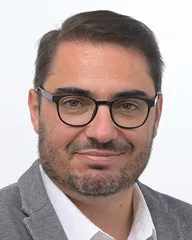
Lukas Sieper | Germany DEU | Non-attached Members (NI) | 390 |
| 2 |
|
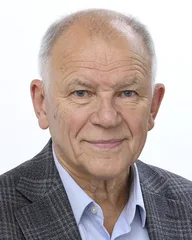
Juan Fernando López Aguilar | Spain ESP | Progressive Alliance of Socialists and Democrats (S&D) | 354 |
| 3 |
|
Sebastian Tynkkynen | Finland FIN | European Conservatives and Reformists (ECR) | 331 |
| 4 |
|
João Oliveira | Portugal PRT | The Left in the European Parliament (GUE/NGL) | 232 |
| 5 |
|
Vytenis Povilas Andriukaitis | Lithuania LTU | Progressive Alliance of Socialists and Democrats (S&D) | 227 |
All Contributions (28)
The role of development policy in the response to biodiversity loss in developing countries, in the context of the achievement of the 2030 Agenda (debate)
Mr President, Commissioner, ladies and gentlemen, Biodiversity is an indispensable basis for human life and sustainable climate protection worldwide. It is the diversity of all living organisms, habitats and ecosystems on land, in the air, in fresh water and in the oceans. It plays a central role in agriculture and food security. Nature conservation is not possible without agriculture and vice versa. Agriculture does not exist without nature. Biodiversity directly regulates oxygen production, climate and soil formation, promotes nutrient cycles and insect protection, and it also has a positive effect on pest control. Especially in Bavaria, we have been working successfully with various agri-environment- and nature conservation programs for decades. And so people, animals and the environment benefit from it. It applies to us in Europe and worldwide: Protecting biodiversity requires global action and global solutions. Especially the developing countries, whose budgets for environmental protection are often very small, need our support. Thank you, Mrs Rivasi, for your comments. There are a variety of strategies in Europe and worldwide that all aim to stop the increasing loss of biodiversity. With the Biodiversity Strategy, we are ambitious to ensure that all ecosystems are healthy, resilient and rich in biodiversity by 2050 at the latest. Internationally, too, there is great willingness to further advance this goal in Kunming, China, in the context of the upcoming Conference of the Parties on Biological Diversity, COP 15. There is no lack of clear goals. Only the links between the loss of biodiversity, its causes and its control are complex. Individual consumer choices and consumption patterns also play an important role. That is why we need secure funding based on sound scientific economic impact assessments.
EU contribution to transforming global food systems to achieve the Sustainable Development Goals (debate)
Madam President, Commissioner, ladies and gentlemen, I am very pleased with today's debate. The upcoming “” Summit is a unique opportunity to make global food systems more resilient, equitable, efficient and sustainable. The UN Secretary-General has made him the chief of staff. Especially, ladies and gentlemen, because we are full, sometimes oversaturated, we must not lose sight of the world. 15,000 children die of starvation every day. It's a horror. A global issue needs global responses and global responsibility. Not only in theory, but also in practice. The Green Deal and, in particular, theFarm-to-Fork“The EU strategy has played a leading role. Rightly so, because our partners in developing countries are urgently waiting for support, for our knowledge, our experience. For example, in research partnerships for sustainable food systems. The COVID-19 shock has thrown developing and emerging countries back. Therefore, our goal must be to overcome hunger, eliminate malnutrition and overeating worldwide and protect our planet. Because there is no area where the human rights of so many people are violated as in the food system. Farmers, small farmers and women are of central importance. Innovations combined with consulting have already achieved the best results at the lowest cost. What they still need is investment in education and training, good agricultural practices and scientific exchanges, and thus access to jobs and minimal social protection – at least. The entire food chain, from the use of resources to the consumer, must be put to the test. And there needs to be a willingness to overcome encrusted structures, for example in relations between Europe and Africa, which we need to put on new and fair feet. We have a key role to play, we are preparing for this summit and beyond! I'm intensely involved.
General Union Environment Action Programme to 2030 (debate)
Mr President, ladies and gentlemen, Commissioner! The Environmental Action Programme to 2030 is an important pillar in our fight against climate change and for greater sustainability. And in this crucial decade, the environmental action programme must not be primarily a monitoring programme. Innovative solutions are needed. Courage for future-proof content instead of headlines. In this sense, we also need a realistic and pragmatic approach. All actors must be involved. That is why I am in favour of a holistic concept. No one should be left out, especially our farmers. The potential of agriculture and forestry, Commissioner, as well as that of the various actors in food systems and supply chains, must be taken into account in this systemically important sector. This is the only way to achieve genuine and honest change. So let's unleash our many opportunities in Europe!